And Behold! He Comes With Ten Thousands Of ⌈His⌉ Holy Ones (1 Enoch 1:9) Art

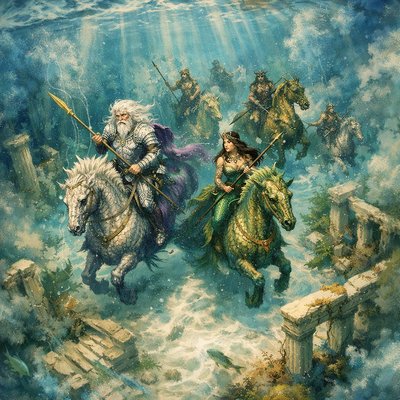
Golden Age Fantasy Illustration Style, Painterly Realism, Crystalline Underwater Photography Aesthetic. A stunning view looking straight down through impossibly clear, glassy ocean water, as if peering over the edge of a ship. Below, on the white sand seabed, are the seaweed-covered ruins of a sunken, ancient civilization.

The Merpeople: A royal hunting party of Narnian Mermen and Mermaids are riding through the submerged streets on the backs of sea horses with their own tails astride the seahorse sitting side saddle. They are not gentle, fairy-tale creatures, but possess a wild, fierce majesty. They ride large, powerful, scaled hippocamps (mythical sea-horses). 

Key Figures & Details: The Mer-King, with flowing white hair and a stern expression, wears armor crafted from iridescent pearl and abalone shells, brandishing a long spear tipped with gold. His powerful tail is deep amethyst. A fierce Mer-Queen rides beside him, her colors shimmering emerald and gold. Smaller merfolk follow, shaking spears.

Lighting & Atmosphere: Bright shafts of sunlight pierce the deep water, illuminating the underwater dust motes and making the scales of the merfolk and their mounts sparkle intensely. The mood is silent, ancient, and awe-inspiring.
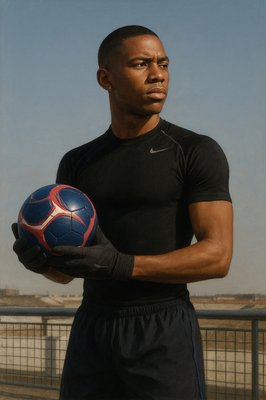
a man holding a soccer ball in his hands
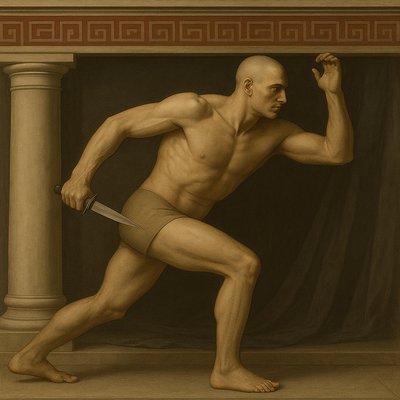
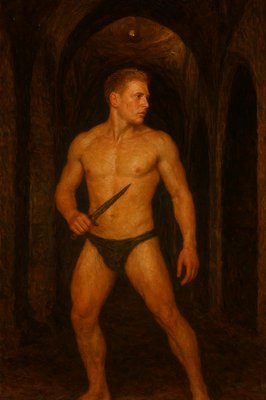
a painting of a man with a knife in his hand
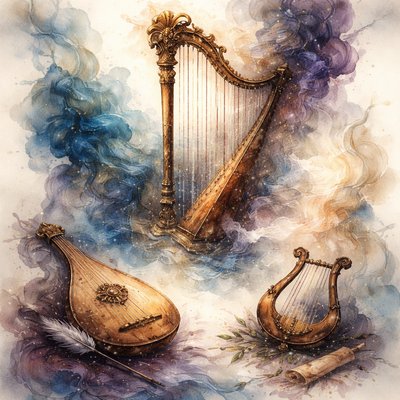
Express without words “Upon an instrument of ten strings, and upon the psaltery; upon the harp with a solemn sound.” (Psalms 92:3, KJVA) Make sure the harp has only 10 strings.
a painting of a man with a knife in his hand
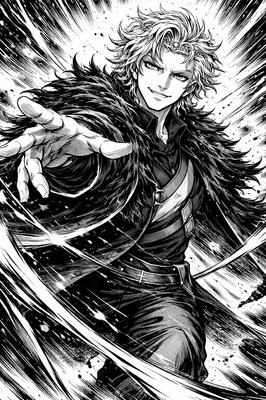
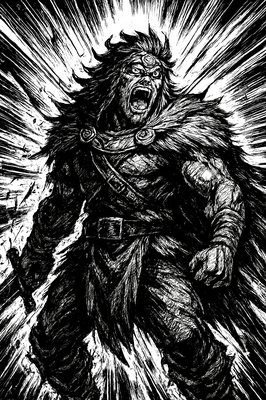
a black and white drawing of a man with a sword
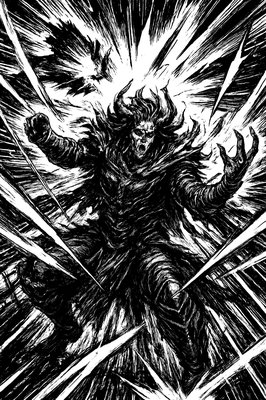
a black and white drawing of a demon
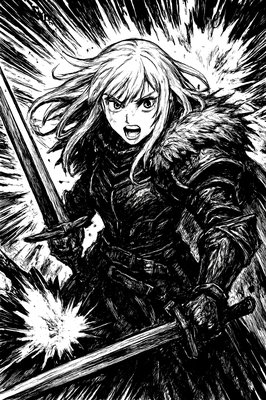
a black and white drawing of a woman holding a sword
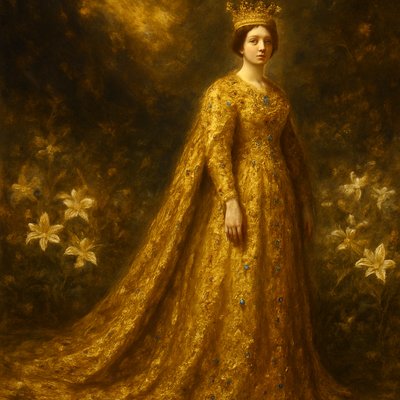
Oil Painting Art Style, Baroque Art Style, a breathtakingly majestic and regal full-length portrait of "The Queen in Gold of Ophir," inspired by Psalm 45. The Queen stands with impeccable grace and royal dignity, her posture radiating quiet power. Her expression is serene, gentle, and profoundly gracious, with a subtle, noble peace. She is adorned in an exquisitely elaborate gown woven entirely from the finest, purest gold of Ophir, which shimmers and gleams with unparalleled brilliance, featuring a magnificent, flowing long train that sweeps gracefully behind her across the ground. Her attire is intricately embellished with countless precious jewels—sapphires, rubies, and emeralds—each sparkling intensely with Baroque dynamism. A delicate yet regal golden crown, also ablaze with light, rests upon her head. The setting is a serene yet grand sacred garden abundant with white and golden lilies, which bloom richly around her feet and extend into the softly focused background. The scene is bathed in dramatic, warm, golden ambient light that creates striking highlights on her golden gown and the lilies, making her and her lavish garments glow amidst the natural beauty. Focus on the unparalleled brilliance, texture, and radiant shine of her golden gown and its sweeping train, the intense sparkle of her jewels, her majestic yet gentle presence, and the luxurious, sacred atmosphere created by the golden light and the symbolic lilies, befitting a queen in God's presence.
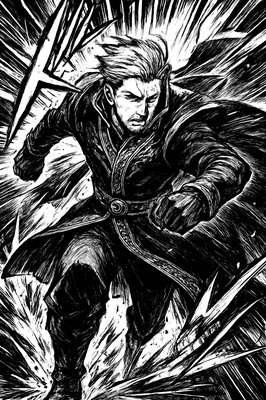
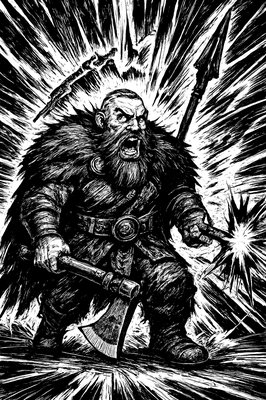
a black and white drawing of a man with a hammer
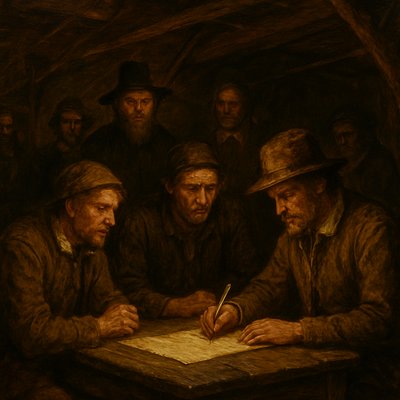
A historically accurate and atmospheric depiction of the signing of the Mayflower Compact aboard the ship in November 1620. The scene is set in the dimly lit, cramped cabin of the Mayflower, with the ship's timbers and rigging subtly visible, conveying the challenging conditions of the voyage. A simple table or chest serves as the signing surface. The primary focus is on a small group of the last individuals signing the document: specifically, the indentured servants (or 'strangers' not directly part of the Separatist congregation) approaching or at the table. Their expressions show a mix of weary determination, understanding of the necessity, and perhaps a hint of quiet apprehension or resignation to this new social contract, given their status. They are dressed in the plain, practical clothing typical of 17th-century commoners and laborers. Figures of prominent Pilgrims or 'Saints' (like William Bradford or John Carver) are visible in the background, observing the proceedings with a sense of gravity and leadership, but they are not the central focus. The lighting is low and warm, perhaps from a lantern, creating a chiaroscuro effect that highlights the faces of the signers. The atmosphere conveys the momentousness of the act under difficult circumstances, the diverse composition of the group, and the early seeds of self-governance in a new world. The artistic style is a realistic, historically detailed oil painting, capturing the solemnity and human element of this pivotal historical moment."
Greek hero's triumphant return
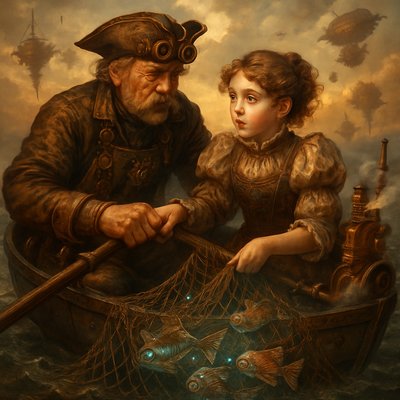
A highly detailed steampunk fantasy reimagining of Émile Renouf's "The Helping Hand" (1881), where an elderly fisherman with a weathered face, bushy mustache, brass-rimmed goggles perched on his forehead, a leather apron adorned with gears and pouches of tools, and a tricorn hat fitted with a small steam whistle,  assists a wide-eyed young girl in a frilly Victorian dress modified with corseted bodice, puffed sleeves of oil-stained fabric, and tiny mechanical bird brooch row an old sailboat with the mast down. They sit together in a compact, riveted iron sailboat propelled by a hissing steam engine at the stern, with exposed copper pipes, whirring pistons, and a propeller churning the ethereal, mist-shrouded waves of a fantastical ocean dotted with floating clockwork islands and distant airships billowing smoke. The pair collaboratively hauls a massive, enchanted fishing net woven with glowing aether filaments and brass weights, teeming with bioluminescent mechanical fish hybrids—scales of etched metal and fins like unfolding fans—symbolizing intergenerational ingenuity and wonder. Render in intricate digital art style blending Victorian engraving precision with fantastical whimsy, warm sepia tones accented by burnished golds, verdigris greens, and sparks of arcane blue energy, dramatic chiaroscuro lighting from a setting sun filtered through industrial haze, ultra-detailed textures on leather, rust, and fabric, cinematic composition with dynamic tension in their clasped hands
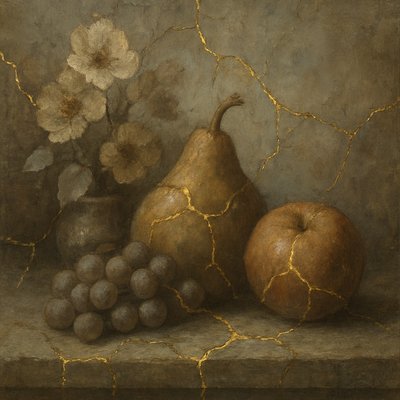
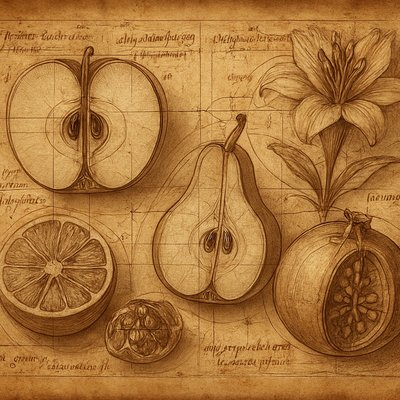
still life arrangement of fruits and flowers
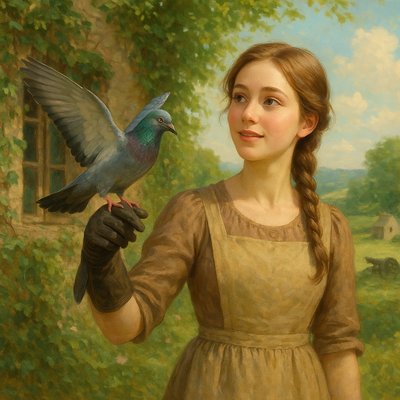
A beautiful young woman with fair skin, light brown hair styled in a braid, and rosy cheeks stands outdoors in front of a rustic stone and ivy-covered building. She is wearing a simple, practical light brown dress with an apron-style overlay, suggestive of a farm setting. Her right arm is extended, and she is wearing a dark leather glove on her hand, upon which a messenger pigeon has just landed. The pigeon is a classic racing pigeon type, with iridescent green and purple neck feathers, and it has its wings slightly spread as if in the act of landing or adjusting. A small message capsule or scroll is clearly visible attached to one of its legs. The woman looks slightly upwards and to the right with a soft, warm expression, her lips slightly parted, as if acknowledging the pigeon or looking towards the message. In the background, to the right, is a picturesque green landscape under a bright sky with scattered clouds, featuring rolling hills, a small, distant stone building, and what appears to be an old cannon or piece of artillery, hinting at a historical wartime context. The overall lighting is warm and natural, creating a serene yet significant atmosphere.
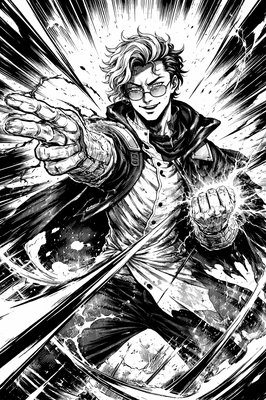
a black and white drawing of a man with glasses
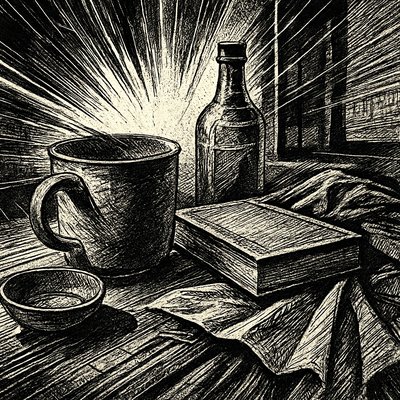
still life with everyday objects
“abstract fluid art with deep blues and gold seams inspired by kintsugi, no recognizable objects, high resolution, seamless texture”
Forasmuch then as the children are partakers of flesh and blood, he also himself likewise took part of the same; that through death he might destroy him that had the power of death, that is, the devil; And deliver them who through fear of death were all their lifetime subject to bondage. For verily he took not on him the nature of angels; but he took on him the seed of Abraham. Wherefore in all things it behoved him to be made like unto his brethren, that he might be a merciful and faithful high priest in things pertaining to God, to make reconciliation for the sins of the people. For in that he himself hath suffered being tempted, he is able to succour them that are tempted. 
(Hebrews 2:14-18 KJV)
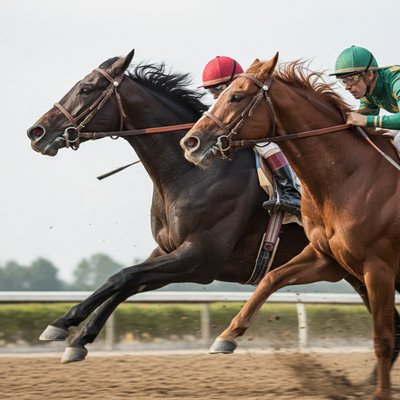
Seabiscuit vs. War Admiral (The Gaze)

    A hyper-realistic, high-resolution photograph capturing the apex of the 1938 match race between Seabiscuit and War Admiral.

    Focus: The composition is tight, showing both horses running neck-and-neck, dominating the frame. The camera angle is side-on and slightly low, emphasizing their size and muscle. The critical focus is on the space between the horses' heads as they are running stride for stride.

    Details: War Admiral (the dark bay) should show determination and slight surprise, with his head stretched out. Seabiscuit (the smaller bay) should display his characteristic "game" look—intense, focused, and seemingly looking directly into War Admiral's eyes (or toward his rival). Both jockeys (Red Pollard or George Woolf for Seabiscuit; Charles Kurtsinger for War Admiral) are visible, leaning low and urging their mounts on.

    Atmosphere: The light should be bright but slightly diffused, suggesting an autumn afternoon at Pimlico. Dust and track debris are kicked up behind them, blurred slightly by the horses' tremendous speed. The image must convey the raw power, intense rivalry, and the exact moment when the smaller horse asserts his dominance.

    Style: Cinematic photography, realistic texture, sharp focus on the horses' eyes and muscle definition.
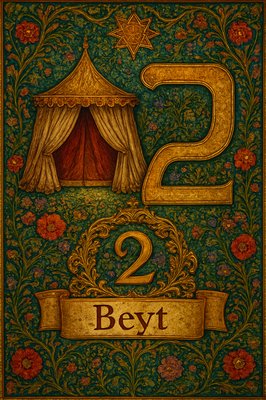
a painting of a circus tent with the number two on it
a black and white drawing of a demon
still life arrangement of fruits and flowers
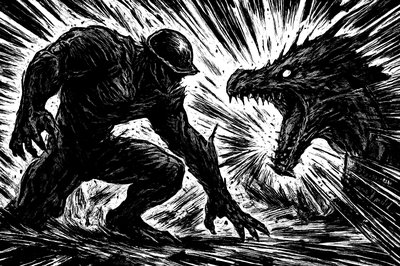
a black and white drawing of a monster attacking a man
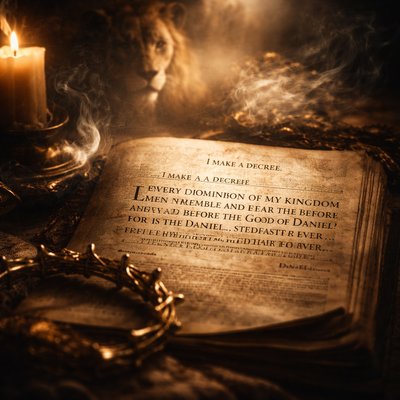
“I make a decree, That in every dominion of my kingdom men tremble and fear before the God of Daniel: for he is the living God, and stedfast for ever, and his kingdom that which shall not be destroyed, and his dominion shall be even unto the end.” (Daniel 6:26, KJV)
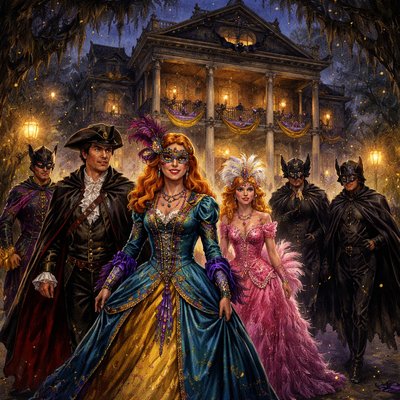
Exterior nighttime scene from Nancy Drew book #81 The Mardi Gras Mystery, the group in full festive costumes arriving at the grand, shadowy Seaton Mansion known as 'Bat Hollow' in New Orleans during Mardi Gras. Teenage detective Nancy Drew leads the way with reddish-blonde hair, wearing an elegant masquerade gown in blue and gold with purple accents, feathered half-mask, strands of colorful beads, and a mysterious smile. Beside her, Ned Nickerson in a dashing tuxedo or pirate-inspired costume with cape and tricorn hat. Bess Marvin (blonde, glamorous) in a sparkling pink feathered ball gown and elaborate headdress, George Fayne (short dark hair, sporty) in a fun jester outfit or adventurous explorer costume with mask. Brian Seaton and his father Bartholomew nearby in partial bat-themed costumes—dark capes, bat-wing collars, eerie masks with pointed ears. The historic Southern mansion looms behind: tall columns, wrought-iron balconies draped with Mardi Gras lights and purple/green/gold banners, flickering lanterns at the entrance, Spanish moss in ancient oaks, subtle bat motifs in the architecture, warm glowing windows hinting at antique interiors and the stolen portrait. Festive yet slightly eerie atmosphere—confetti in the air, distant parade sounds implied, dramatic twilight sky with stars, vibrant colors against gothic shadows. 1980s Nancy Drew book illustration style, adventurous and exciting, detailed costumes and group dynamic, cinematic wide-angle composition, lively holiday energy mixed with subtle suspense."
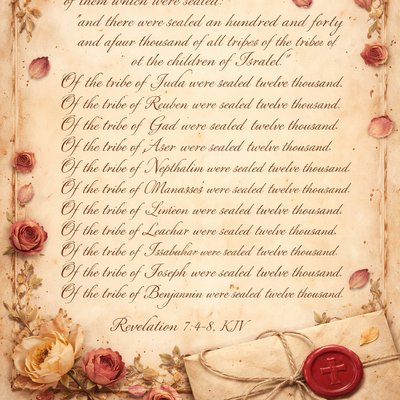
“And I heard the number of them which were sealed: and there were sealed an hundred and forty and four thousand of all the tribes of the children of Israel. Of the tribe of Juda were sealed twelve thousand. Of the tribe of Reuben were sealed twelve thousand. Of the tribe of Gad were sealed twelve thousand. Of the tribe of Aser were sealed twelve thousand. Of the tribe of Nepthalim were sealed twelve thousand. Of the tribe of Manasses were sealed twelve thousand. Of the tribe of Simeon were sealed twelve thousand. Of the tribe of Levi were sealed twelve thousand. Of the tribe of Issachar were sealed twelve thousand. Of the tribe of Zabulon were sealed twelve thousand. Of the tribe of Joseph were sealed twelve thousand. Of the tribe of Benjamin were sealed twelve thousand.” (Revelation 7:4-8, KJV)
still life arrangement of fruits and flowers
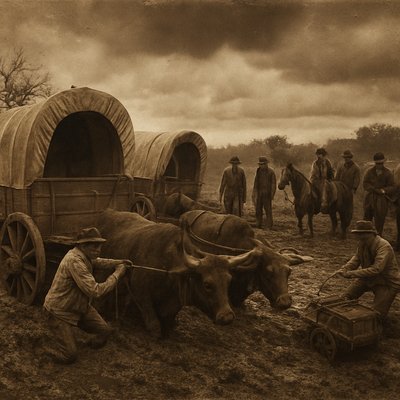
A highly realistic and historically accurate image set in the deep, waterlogged mud of the Texas Cross Timbers (Montague County) in 1840. The scene captures the frustrating moment when the Chihuahua Traders caravan is completely stuck.

Foreground focus is on several heavy, wooden Conestoga freight wagons, mired up to their axles in dark, thick mud. Exhausted oxen are straining and distressed, their drivers in rough frontier attire attempting to free the wheels with ropes and levers.

In the mid-ground, a small group of the American equestrian circus performers stands next to their distinctive, high-quality riding horses, which are visibly more refined than the typical pack animals. The performers are dressed in sturdy but distinct traveling clothes—perhaps featuring slightly tailored jackets or vests—rather than performance costumes, looking ill-equipped and frustrated by the muddy conditions. One performer is carefully securing a small, colorful carriage or cart containing unique circus props, struggling to keep it from sinking. The overall mood is one of miserable delay and hardship. Cloudy, oppressive sky; detailed realism; wide-angle shot; dark, moody lighting.
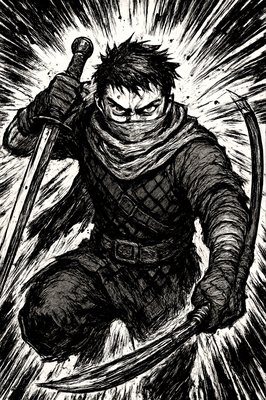
a black and white drawing of a man holding a sword
portrait of a person with expressive eyes
still life arrangement of fruits and flowers
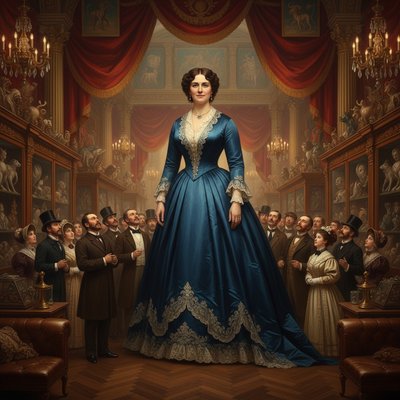
Victorian Oil Painting Art Style, Historical Digital Art Style, a rich and detailed full-body portrait of the famous giantess Anna Swan standing in the center of a lavish, gaslit exhibition hall at P.T. Barnum's American Museum in the 1860s. She is towering over the surrounding crowd of average-sized gentlemen in top hats and ladies in bonnets, whose heads only reach her waistline; they look up at her with expressions of awe and curiosity. Anna is dressed with immense dignity in a fashionable, expansive Victorian silk gown with a crinoline hoop skirt, tailored bodice, and lace trim. Her face is gentle, intelligent, and composed. The background is crowded with heavy red velvet drapery, gilded architectural details, curiosities in glass cases, and painted circus banners faintly visible. The lighting is warm, dramatic gaslight, creating deep shadows and highlighting the rich fabrics and the incredible scale of Anna Swan compared to her environment.
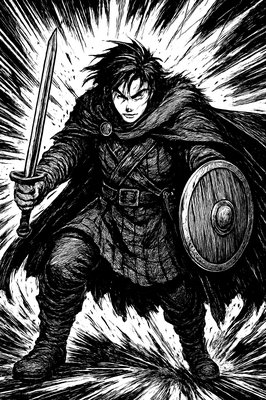
a drawing of a man with a sword and shield
a drawing of a man with a sword and a shield
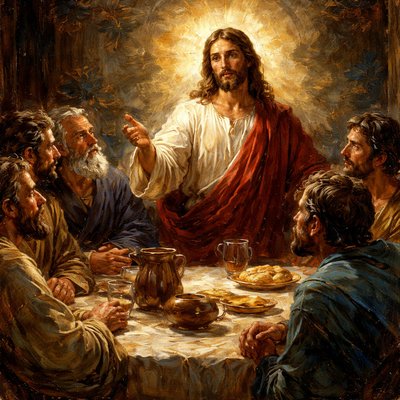
John 14:6 Jesus addressing His disciples at the last supper
Factory workers at shift change
a drawing of a man with a sword and a shield
a black and white drawing of a demon