A Wooden Sailing Ship, The Mayflower, On A Tempestuous Open Sea Under A Dark, Stormy Sky With Lightning. The Ship Is Listing Art

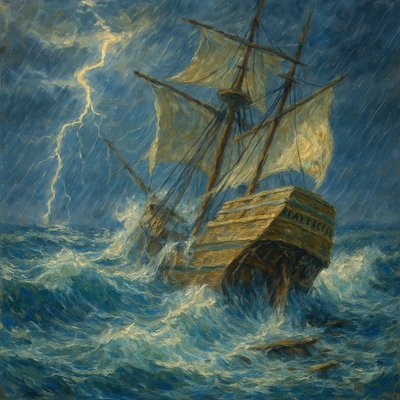
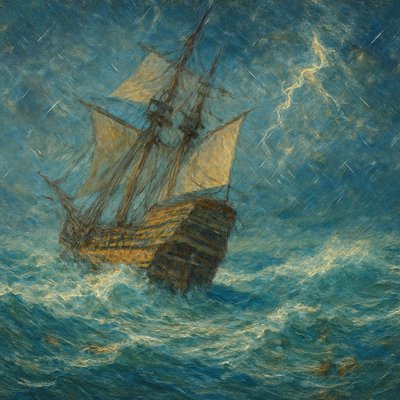
A wooden sailing ship, the Mayflower, on a tempestuous open sea under a dark, stormy sky with lightning. The ship is listing dramatically amidst huge, crashing waves. Rain lashes down. The stern of the ship shows significant damage, with splintered wood and water pouring into the broken transom. Debris from the ship's stern is visible in the churning water around it. The overall mood is one of peril and a desperate struggle against the elements.
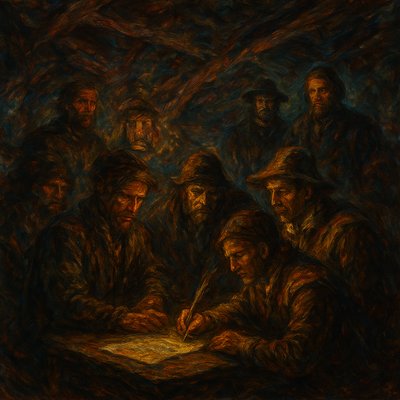
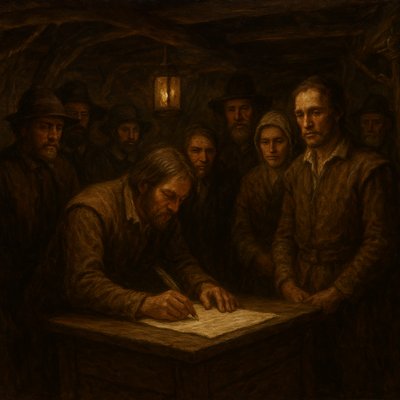
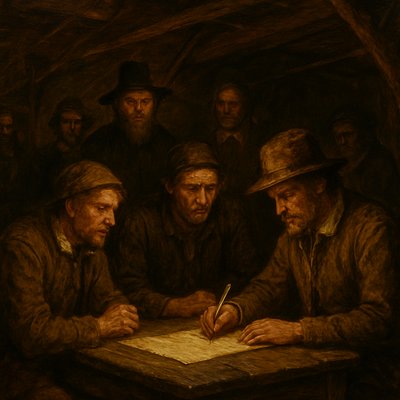
A historically accurate and atmospheric depiction of the signing of the Mayflower Compact aboard the ship in November 1620. The scene is set in the dimly lit, cramped cabin of the Mayflower, with the ship's timbers and rigging subtly visible, conveying the challenging conditions of the voyage. A simple table or chest serves as the signing surface. The primary focus is on a small group of the last individuals signing the document: specifically, the indentured servants (or 'strangers' not directly part of the Separatist congregation) approaching or at the table. Their expressions show a mix of weary determination, understanding of the necessity, and perhaps a hint of quiet apprehension or resignation to this new social contract, given their status. They are dressed in the plain, practical clothing typical of 17th-century commoners and laborers. Figures of prominent Pilgrims or 'Saints' (like William Bradford or John Carver) are visible in the background, observing the proceedings with a sense of gravity and leadership, but they are not the central focus. The lighting is low and warm, perhaps from a lantern, creating a chiaroscuro effect that highlights the faces of the signers. The atmosphere conveys the momentousness of the act under difficult circumstances, the diverse composition of the group, and the early seeds of self-governance in a new world. The artistic style is a realistic, historically detailed oil painting, capturing the solemnity and human element of this pivotal historical moment."
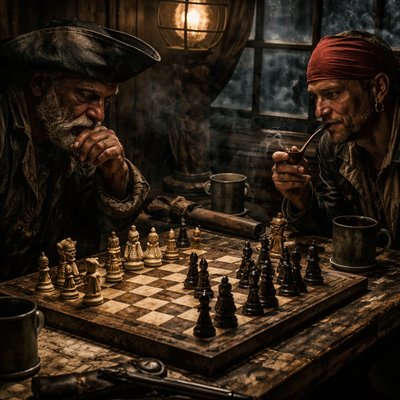
Cinematic Historical Photograph, Gritty Realism, Chiaroscuro Lighting. A tense, high-stakes chess match taking place between two seasoned pirates inside the cramped, dimly lit stern cabin of a rocking galleon at sea during the night.

The Players: On one side sits a grizzled, older Pirate Captain with a heavy grey beard and a scarred face, leaning over the board, his hand rubbing his chin in deep concentration. Opposite him is a younger, cunning Quartermaster with a gold tooth and a confident smirk, holding a clay pipe.

The Board & Pieces: Between them is a heavy wooden table stained with grog. The chessboard is carved directly into the tabletop, with squares made of inlaid mother-of-pearl and burned wood. They are playing with the custom pirate-themed chess set (previously designed): The Captain's side uses pieces carved from yellowed whalebone (King with tricorn, Ship Rooks), and the Quartermaster's side uses pieces cast from dark, tarnished iron. A bone "Knight" piece is currently threatening an iron "Queen."

The Atmosphere: The cabin is lit by a single, swaying oil lantern hanging overhead, casting long, moving shadows and illuminating the smoke in the air. Mugs of rum, a flintlock pistol, and rolled charts are cluttered around the board. Outside a stern window, a dark, stormy ocean is visible. The photo has a film grain texture.
A historically accurate and atmospheric depiction of the signing of the Mayflower Compact aboard the ship in November 1620. The scene is set in the dimly lit, cramped cabin of the Mayflower, with the ship's timbers and rigging subtly visible, conveying the challenging conditions of the voyage. A simple table or chest serves as the signing surface. The primary focus is on a small group of the last individuals signing the document: specifically, the indentured servants (or 'strangers' not directly part of the Separatist congregation) approaching or at the table. Their expressions show a mix of weary determination, understanding of the necessity, and perhaps a hint of quiet apprehension or resignation to this new social contract, given their status. They are dressed in the plain, practical clothing typical of 17th-century commoners and laborers. Figures of prominent Pilgrims or 'Saints' (like William Bradford or John Carver) are visible in the background, observing the proceedings with a sense of gravity and leadership, but they are not the central focus. The lighting is low and warm, perhaps from a lantern, creating a chiaroscuro effect that highlights the faces of the signers. The atmosphere conveys the momentousness of the act under difficult circumstances, the diverse composition of the group, and the early seeds of self-governance in a new world. The artistic style is a realistic, historically detailed oil painting, capturing the solemnity and human element of this pivotal historical moment."
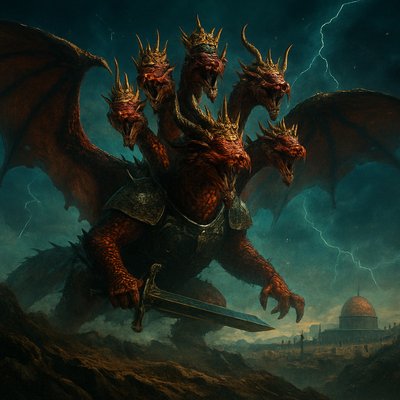
A colossal 7 headed red dragon with kings crowns on each head, and ten horns, on rugged hills outside Jerusalem under stormy dark sky with lightning strikes, hyper-realistic surreal style immaculate details on armor weapons and dragon,
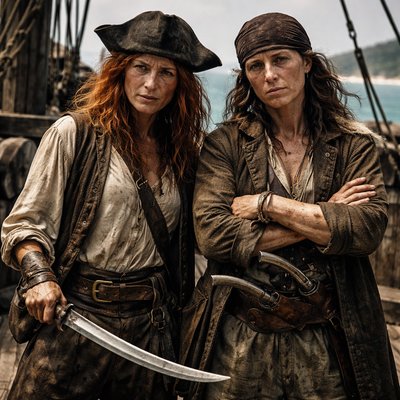
Gritty Historical Realism Style, Cinematic Film Photography, Natural Daylight. A powerful, candid medium shot of the infamous pirate duo, Anne Bonny and Mary Read, standing side-by-side on the weathered wooden deck of the sloop Revenge in the Caribbean Sea (circa 1720).

The Subjects: Both are dressed in practical, worn 18th-century male sailor's attire—loose canvas breeches, oversized linen shirts, heavy leather waistcoats, and bandanas—scruffy clothing that disguises their gender at a distance but reveals them as fiercely capable women upon closer inspection. Their faces are sun-weathered, dirty, and determined.

Specific Details: Anne Bonny (left) has fiery red hair escaping a dark bandana and a tricorn hat pushed back; she holds a drawn cutlass and has a defiant, volatile expression. Mary Read (right) looks sturdier, wearing a heavy wool coat, arms crossed over her chest with two flintlock pistols visible in her sash, looking steady and calculating.
The Setting: The background is a chaotic, working pirate ship deck with coils of tarred rope, rigging, barrels, and a cannon. Beyond the rail is the turquoise ocean and a hazy tropical coastline. The lighting is harsh, midday sun, with salt spray in the air. The mood is tense, rebellious, and authentic. Film grain texture.
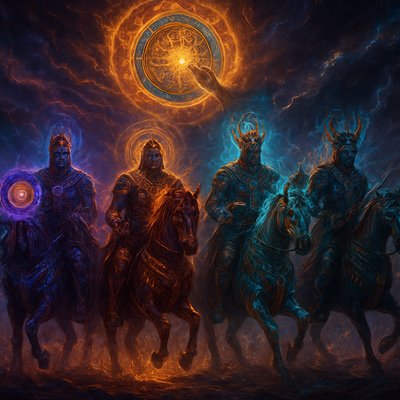
“Create an epic, dramatic depiction of the Four Horsemen of the Apocalypse from Revelation 6:1–8. Show four powerful riders emerging with force as the Lamb opens the seals in the heavens. Highlight the sacred Seals being opened—radiant, glowing, and releasing divine power. Set the scene in a storm-torn sky filled with swirling dark clouds, flashes of supernatural light, and a trembling landscape beneath their arrival. Use a dark yet vivid apocalyptic color palette with intense contrasts and dramatic, celestial lighting to emphasize the sense of unstoppable divine judgment. Style should blend high-detail fantasy realism with majestic biblical grandeur.”
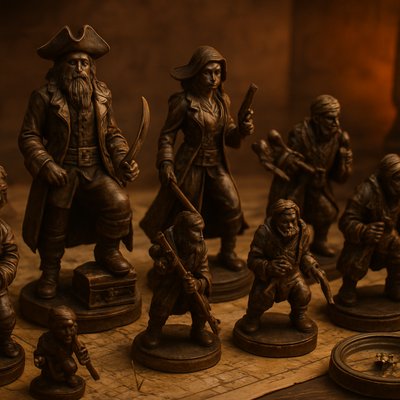
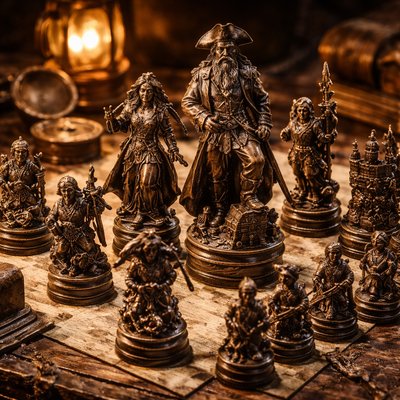
Macro Product Photography, Museum Archival Style, Warm Lantern Light. A detailed photograph of a complete, hand-carved set of unique pirate-themed chess pieces arranged loosely on a weathered wooden captain's desk alongside old charts and a compass. The pieces are crafted from a mix of dark aged oak, tarnished cast brass, and accents of stolen gold and rough rubies.

The Ranks:

    The King (Captain): The tallest piece, an imposing Pirate Captain figure with a grand tricorn hat, a long beard, a detailed cutlass, and one boot resting on a miniature treasure chest.

    The Queen (Quartermaster/Pirate Lord): A fierce, elegant female figure with dual flintlock pistols, a flowing coat, and a stern, commanding expression.

    The Bishops (Navigators/Voodoo Priests): Hunched figures holding sextants and mystical skull staffs, adorned with beads and feathers.

    The Knights (Boarding Party): Dynamic pieces showing a pirate mid-swing on a rope, holding a grappling hook and a boarding axe.

    The Rooks (The Ship/Fort): Heavy, fortified pieces shaped like the barnacle-covered stern castle of a galleon, bristling with tiny cannons.

    The Pawns (The Crew): A group of smaller, identical scruffy deckhands holding mops, buckets, and simple daggers.

The focus is sharp on the intricate textures of the wood grain and metalwork.
Macro Product Photography, Museum Archival Style, Warm Lantern Light. A detailed photograph of a complete, hand-carved set of unique pirate-themed chess pieces arranged loosely on a weathered wooden captain's desk alongside old charts and a compass. The pieces are crafted from a mix of dark aged oak, tarnished cast brass, and accents of stolen gold and rough rubies.

The Ranks:

    The King (Captain): The tallest piece, an imposing Pirate Captain figure with a grand tricorn hat, a long beard, a detailed cutlass, and one boot resting on a miniature treasure chest.

    The Queen (Quartermaster/Pirate Lord): A fierce, elegant female figure with dual flintlock pistols, a flowing coat, and a stern, commanding expression.

    The Bishops (Navigators/Voodoo Priests): Hunched figures holding sextants and mystical skull staffs, adorned with beads and feathers.

    The Knights (Boarding Party): Dynamic pieces showing a pirate mid-swing on a rope, holding a grappling hook and a boarding axe.

    The Rooks (The Ship/Fort): Heavy, fortified pieces shaped like the barnacle-covered stern castle of a galleon, bristling with tiny cannons.

    The Pawns (The Crew): A group of smaller, identical scruffy deckhands holding mops, buckets, and simple daggers.

The focus is sharp on the intricate textures of the wood grain and metalwork.
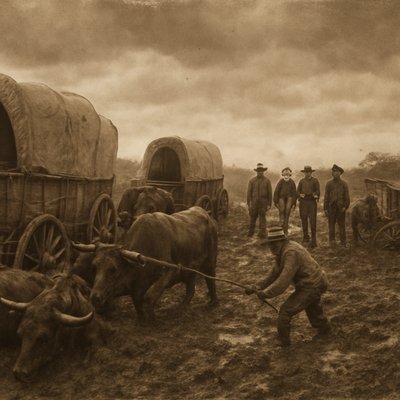
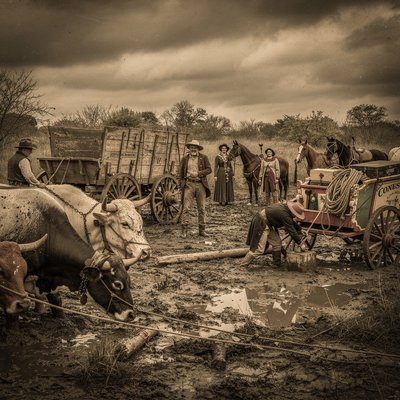
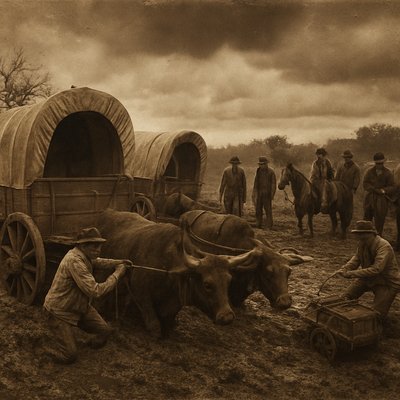
A highly realistic and historically accurate image set in the deep, waterlogged mud of the Texas Cross Timbers (Montague County) in 1840. The scene captures the frustrating moment when the Chihuahua Traders caravan is completely stuck. Foreground focus is on several heavy, wooden Conestoga freight wagons, mired up to their axles in dark, thick mud. Exhausted oxen are straining and distressed, their drivers in rough frontier attire attempting to free the wheels with ropes and levers. In the mid-ground, a small group of the American equestrian circus performers stands next to their distinctive, high-quality riding horses, which are visibly more refined than the typical pack animals. The performers are dressed in sturdy but distinct traveling clothes, looking ill-equipped and frustrated by the muddy conditions. One performer is carefully securing a colorful carriage or cart containing unique circus props, struggling to keep it from sinking. The overall mood is one of miserable delay and hardship. Cloudy, oppressive sky; detailed realism; wide-angle shot; dark, moody lighting.
A highly realistic and historically accurate image set in the deep, waterlogged mud of the Texas Cross Timbers (Montague County) in 1840. The scene captures the frustrating moment when the Chihuahua Traders caravan is completely stuck.

Foreground focus is on several heavy, wooden Conestoga freight wagons, mired up to their axles in dark, thick mud. Exhausted oxen are straining and distressed, their drivers in rough frontier attire attempting to free the wheels with ropes and levers.

In the mid-ground, a small group of the American equestrian circus performers stands next to their distinctive, high-quality riding horses, which are visibly more refined than the typical pack animals. The performers are dressed in sturdy but distinct traveling clothes, looking ill-equipped and frustrated by the muddy conditions. One performer is carefully securing a colorful carriage or cart containing unique circus props, struggling to keep it from sinking. The overall mood is one of miserable delay and hardship. Cloudy, oppressive sky; detailed realism; wide-angle shot; dark, moody lighting.
A highly realistic and historically accurate image set in the deep, waterlogged mud of the Texas Cross Timbers (Montague County) in 1840. The scene captures the frustrating moment when the Chihuahua Traders caravan is completely stuck. Foreground focus is on several heavy, wooden Conestoga freight wagons, mired up to their axles in dark, thick mud. Exhausted oxen are straining and distressed, their drivers in rough frontier attire attempting to free the wheels with ropes and levers. In the mid-ground, a small group of the American equestrian circus performers stands next to their distinctive, high-quality riding horses, which are visibly more refined than the typical pack animals. The performers are dressed in sturdy but distinct traveling clothes, looking ill-equipped and frustrated by the muddy conditions. One performer is carefully securing a colorful carriage or cart containing unique circus props, struggling to keep it from sinking. The overall mood is one of miserable delay and hardship. Cloudy, oppressive sky; detailed realism; wide-angle shot; dark, moody lighting.
A highly realistic and historically accurate image set in the deep, waterlogged mud of the Texas Cross Timbers (Montague County) in 1840. The scene captures the frustrating moment when the Chihuahua Traders caravan is completely stuck.

Foreground focus is on several heavy, wooden Conestoga freight wagons, mired up to their axles in dark, thick mud. Exhausted oxen are straining and distressed, their drivers in rough frontier attire attempting to free the wheels with ropes and levers.

In the mid-ground, a small group of the American equestrian circus performers stands next to their distinctive, high-quality riding horses, which are visibly more refined than the typical pack animals. The performers are dressed in sturdy but distinct traveling clothes—perhaps featuring slightly tailored jackets or vests—rather than performance costumes, looking ill-equipped and frustrated by the muddy conditions. One performer is carefully securing a small, colorful carriage or cart containing unique circus props, struggling to keep it from sinking. The overall mood is one of miserable delay and hardship. Cloudy, oppressive sky; detailed realism; wide-angle shot; dark, moody lighting.
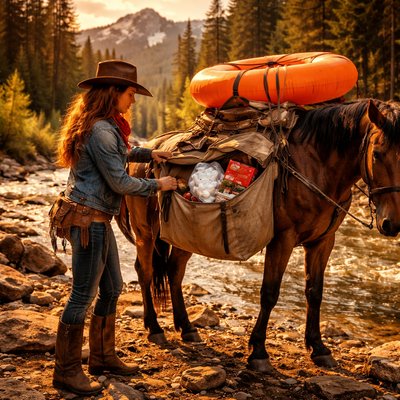
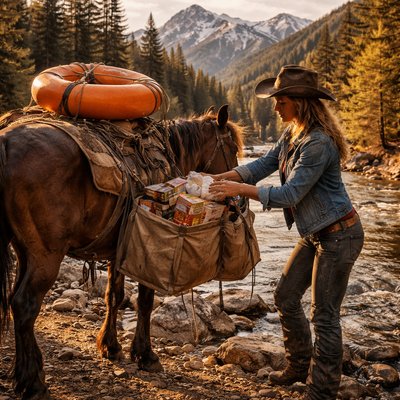
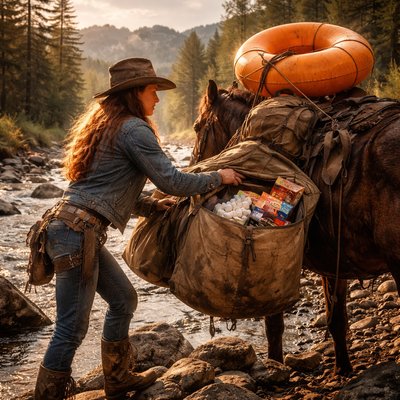
Cinematic Nature Photography, Americana Style, Golden Hour Lighting. A candid, detailed shot of an authentic cowgirl with long red hair in a worn leather hat, denim jacket, and dusty boots. She is standing beside a sturdy pack horse in a rocky creek bed, actively stuffing, rugged canvas panniers.

The details of the load are clear: A large bag of jumbo marshmallows and a red box of graham crackers are peeking out of one open saddlebag, next to chocolate bars. Strapped awkwardly to the very top of the pack saddle with ropes is a large, bright orange inflatable river tube.

The environment is stunning Colorado high country: Towering ponderosa pines and aspen trees line a rushing clear mountain river. Rugged, snow-capped Rocky Mountain peaks rise in the background under a rich blue sky. The light is warm and late-afternoon, catching the dust in the air and the textures of the horse's coat and the leather gear.
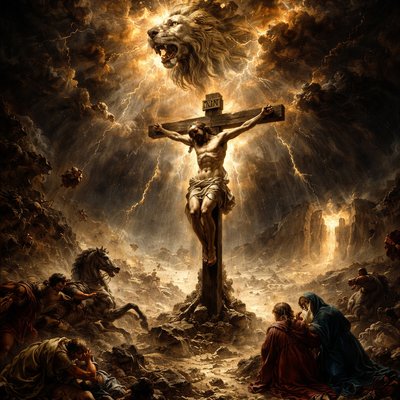
Epic Biblical Baroque Painting Style, High-Contrast Tenebrism Lighting, Supernatural Realism. A monumental, earth-shattering scene at Golgotha at the precise moment of death.

The Central Figure: Jesus hangs lifelessly on a rough wooden cross, head bowed in finality, his body pale and scarred. A subtle, fading divine light emanates from him. The titulus above his head reads "INRI."

The Manifestation of the Roar (Jasher 54 influence): At the very instant of his death, the environment is violently convulsing, visualizing the "roar" of Judah echoing through time. Behind and above the cross, the dark, stormy clouds are being ripped apart by a massive, translucent ethereal manifestation of a roaring Lion's head formed from dust, lightning, and golden spiritual energy.

The Environmental Impact: The ground beneath the cross is cracking open with deep fissures. Massive boulders are shattering into dust mid-air. The temple veil in the distant city background is visibly tearing top-to-bottom.

The Human Reaction: Below the cross, the scene is one of absolute supernatural terror (as described in Jasher). Roman centurions are cowering on the ground, covering their ears, their helmets knocked off. Horses are rearing wildly, throwing their riders. The few followers present (Mary, John) are driven to their knees, not just in grief, but overwhelmed by the physical force of the cosmic event. The lighting is a chaotic mix of deep eclipse shadow and blinding bursts of supernatural golden-red light from the roaring manifestation.
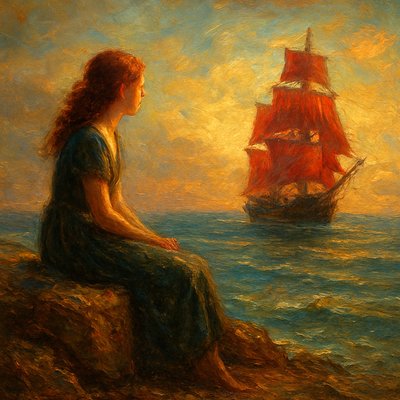
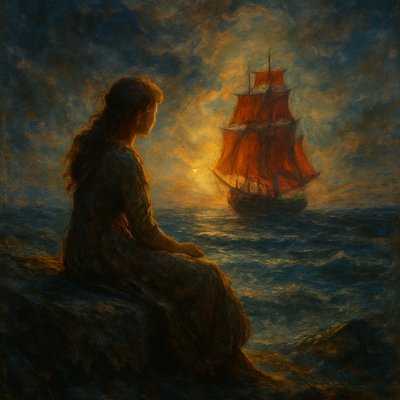
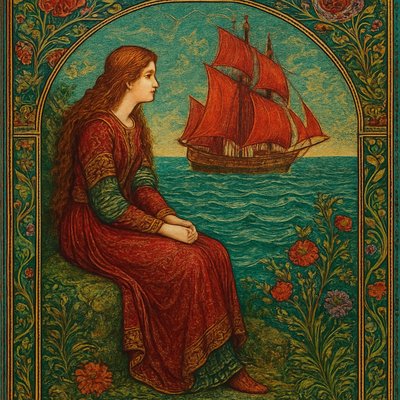
a girl sitting on a rock looking at the sea with a big ship with red sails on the horizon
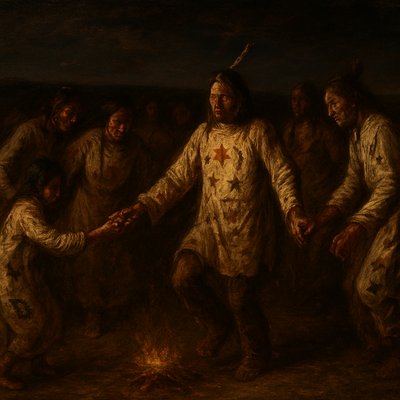
"A historically accurate depiction of a Ghost Dance, focusing on the late 19th-century context, specifically around 1890-1891. The scene shows Lakota (Sioux) or Northern Paiute people (specify one or include elements of both, but avoid anachronisms) participating in the ceremony.

Setting: A vast, open prairie or high desert landscape, under an expansive sky. The time of day could be dusk or night, with a prominent moon or stars, or a bright, clear day. Avoid overtly spiritual or ethereal elements like floating spirits unless explicitly requested for a later, more symbolic iteration. The focus should be on the earthly ceremony.

Participants: A circle of men, women, and children, hand-in-hand, moving in a slow, rhythmic shuffle or circular motion. Their faces show a mixture of devotion, hope, and determination. Some may have expressions of trance or deep concentration.

Attire:

    Ghost Dance Shirts/Dresses: Emphasize the unique Ghost Dance shirts and dresses, which were typically made of muslin or canvas. These garments should feature painted designs such as stars, crescents, birds (especially eagles or crows), buffalo, human figures, or crosses. The designs should appear hand-painted, not mass-produced.

    Hair and Adornments: Participants should have braided hair or wear it long. Some may wear feathers (e.g., eagle or hawk feathers) in their hair. Minimal traditional adornments, as the focus was often on the Ghost Dance shirt itself. Avoid overly elaborate or Hollywood-esque depictions of war bonnets unless relevant to a specific individual and context.

    Footwear: Moccasins or bare feet.

Action/Atmosphere:

    The dancers are moving in a counter-clockwise circle, with a central figure or a small group often leading.

    The overall mood is one of earnest prayer and communal spiritual effort. The dance should convey a sense of hope for renewal and the return of the old ways, rather than aggression or despair.

    There might be a central pole or small fire as a focal point, around which the dance takes place.

    Avoid any signs of direct conflict or violence; the Ghost Dance itself was a non-violent spiritual movement.

Specific Considerations for Accuracy:

    Wovoka's Influence: The teachings of Wovoka (the Northern Paiute prophet) emphasized peace, hard work, and the return of the buffalo and deceased ancestors. The scene should subtly reflect this hopeful, redemptive spirit.

    Regional Variations: If focusing on Lakota, consider their specific interpretations, which sometimes included more imagery related to their warrior traditions on the shirts, but still within the peaceful framework of the dance.

    Respectful Portrayal: Ensure the depiction is respectful and avoids any stereotypical or caricatured representations of Indigenous people. Focus on their human dignity and spiritual sincerity.
a girl sitting on a rock looking at the sea with a big ship with red sails on the horizon
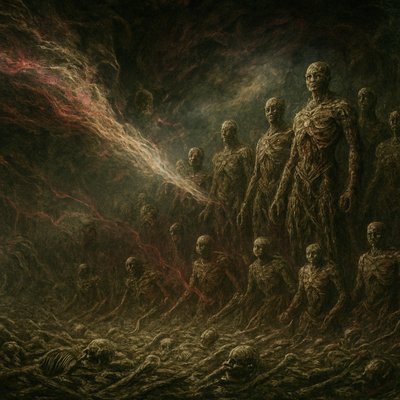
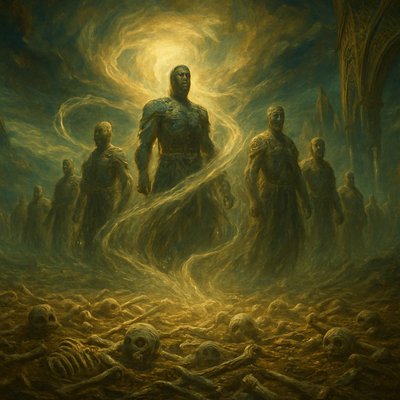
A profound and epic scene depicting the Vision of the Dry Bones from Ezekiel 37. In a desolate, vast valley, countless dry human bones are scattered, stark white and ancient. A powerful, divine wind (ruach) swirls through the valley, imbued with a sacred, ethereal glow, causing the bones to rattle and miraculously knit together. Tendons, flesh, and skin rapidly form over the skeletal structures, transforming them into fully-formed human figures. As the divine breath enters, the figures rise, not as individuals, but as a colossal, awe-inspiring army standing upright, gazing forward with renewed life and purpose. The sky above is dramatic, perhaps with stormy clouds breaking to reveal a divine light. The overall mood is one of miraculous resurrection, immense power, and hopeful restoration."
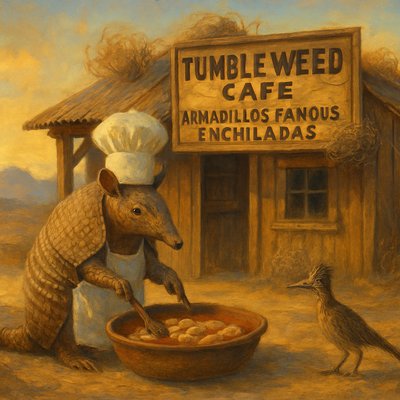
An armadillo wearing a chef's hat and apron, making enchiladas at a rustic desert cafe called "Tumbleweed Cafe - Armadillo's Famous Enchiladas." The cafe is a small wooden shack with a corrugated metal roof, adorned with tumbleweeds. In the background, there's a desert landscape and distant mountains under a warm, late afternoon sky. A roadrunner is nearby, curiously watching the armadillo cook
A whale breaching
Cinematic Nature Photography, Americana Style, Golden Hour Lighting. A candid, detailed shot of an authentic cowgirl in a worn leather hat, denim jacket, and dusty boots. She is standing beside a sturdy pack horse in a rocky creek bed, actively stuffing overflowing, rugged canvas panniers.

The details of the load are clear: A large bag of jumbo marshmallows and a red box of graham crackers are peeking out of one open saddlebag, next to chocolate bars. Strapped awkwardly to the very top of the pack saddle with ropes is a large, bright orange inflatable river tube.

The environment is stunning Colorado high country: Towering ponderosa pines and aspen trees line a rushing clear mountain river. Rugged, snow-capped Rocky Mountain peaks rise in the background under a rich blue sky. The light is warm and late-afternoon, catching the dust in the air and the textures of the horse's coat and the leather gear.
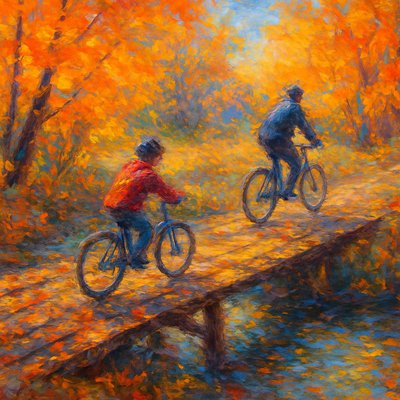
A vibrant and atmospheric impressionistic painting capturing the essence of the provided photograph: two figures on bicycles, a child in the foreground and an adult behind, crossing a rustic wooden bridge over a flowing stream. The scene is transformed into a glorious autumn landscape, where the surrounding trees are ablaze with rich, impressionistic brushstrokes of brilliant golds, fiery oranges, and deep reds, intermingled with patches of lingering green.

The wooden bridge itself is rendered with textural, broken brushstrokes, suggesting its weathered planks, with scattered fall leaves painted in warm, detached dabs of color. The stream below glimmers with soft reflections of the autumn light and foliage, depicted with fluid, expressive strokes. The figures on the bicycles are captured with a sense of movement and energy, their forms suggested rather than precisely detailed, blending into the lively, shimmering atmosphere.

The sky above, if visible through the canopy, is a soft, luminous blue, hinted at with delicate washes. The lighting is soft and diffused, characteristic of a pleasant autumn day, creating a radiant and inviting mood. The overall effect is one of fleeting beauty, captured light, and the joyful freedom of a crisp fall ride, rendered with the characteristic loose, vibrant brushwork and subjective color of impressionism.
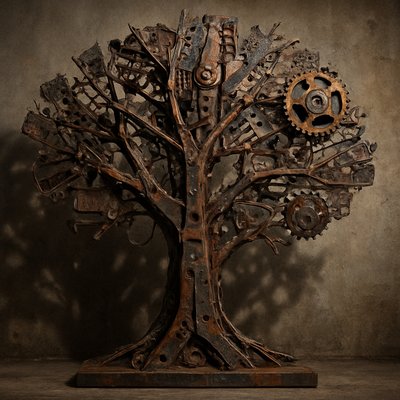
a tree in nature
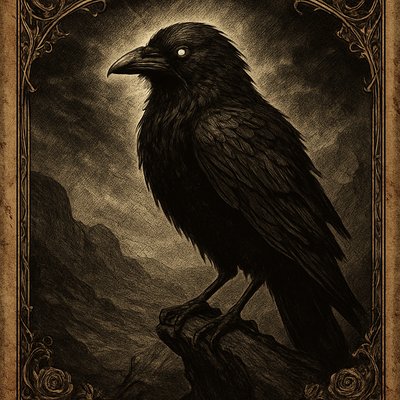
A solitary and intensely symbolic image depicting a magnificent, large black raven as the embodiment of judgment from Proverbs 30:17. The raven is portrayed with immense detail and an almost mythical presence, its feathers dark and glossy, its eyes glowing with a profound, ancient wisdom or stern disapproval. It is perched on a jagged, weathered tree branch or a sharp, craggy rock formation within a desolate, mist-shrouded valley.

The background is stark and emphasizes desolation, featuring barren, rocky slopes and a stormy, oppressive sky with heavy, dark clouds. The lighting is dramatic and stark, perhaps a single shaft of pale, cold light illuminating the raven, casting long, deep shadows around it. The focus is entirely on the raven, its sharp beak, and its piercing gaze, conveying a sense of ultimate, inescapable consequence. The overall mood is one of profound, somber judgment and the quiet, heavy weight of natural law, expressed through the powerful symbolism of the bird."
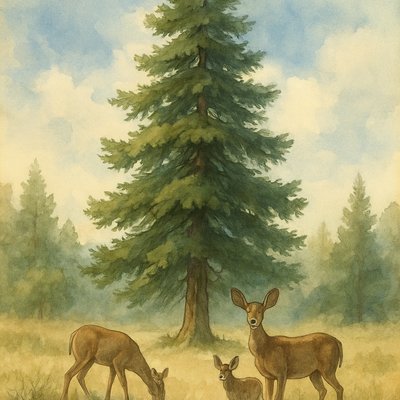
A serene and majestic watercolor painting, capturing the essence of a grand, towering evergreen tree (like the dominant one in the provided image) standing proudly in a sun-dappled, open forest glade. The tree's deep green needles are rendered with varying washes, showcasing its immense height and full, tiered branches that reach towards a partly cloudy, bright blue sky.

Around the base of this glorious tree, two or three graceful mule deer are depicted. One might be grazing peacefully, another looking up towards the viewer with its large, expressive ears, and a fawn possibly tucked nearby. Their coats are rendered in soft, earthy watercolor tones of grey-brown, with delicate highlights and shading to suggest their gentle forms and distinctive white rumps and tails.

The surrounding landscape features a subtle ground cover of dry grasses and scattered undergrowth, characteristic of a high-desert or mountain forest floor, painted with soft, blended washes of ochre, sage green, and light brown. The sky above is a classic watercolor blend of soft blues and wispy white clouds. The overall mood is one of tranquil natural beauty, quiet majesty, and a harmonious coexistence of wildlife and ancient trees, rendered with the flowing, luminous quality of watercolor art."
a tree in nature
Cinematic Nature Photography, Americana Style, Golden Hour Lighting. A candid, detailed shot of an authentic cowgirl in a worn leather hat, denim jacket, and dusty boots and long red hair. She is standing beside a sturdy pack horse in a rocky creek bed, actively stuffing overflowing, rugged canvas panniers.

The details of the load are clear: A large bag of jumbo marshmallows and a red box of graham crackers are peeking out of one open saddlebag, next to chocolate bars. Strapped awkwardly to the very top of the pack saddle with ropes is a large, bright orange inflatable river tube.

The environment is stunning Colorado high country: Towering ponderosa pines and aspen trees line a rushing clear mountain river. Rugged, snow-capped Rocky Mountain peaks rise in the background under a rich blue sky. The light is warm and late-afternoon, catching the dust in the air and the textures of the horse's coat and the leather gear.
A profound and epic scene depicting the Vision of the Dry Bones from Ezekiel 37. In a desolate, vast valley, countless dry human bones are scattered, stark white and ancient. A powerful, divine wind (ruach) swirls through the valley, imbued with a sacred, ethereal glow, causing the bones to rattle and miraculously knit together. Tendons, flesh, and skin rapidly form over the skeletal structures, transforming them into fully-formed human figures. As the divine breath enters, the figures rise, not as individuals, but as a colossal, awe-inspiring army standing upright, gazing forward with renewed life and purpose. The sky above is dramatic, perhaps with stormy clouds breaking to reveal a divine light. The overall mood is one of miraculous resurrection, immense power, and hopeful restoration."
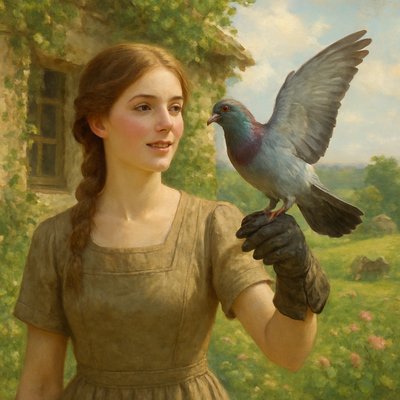
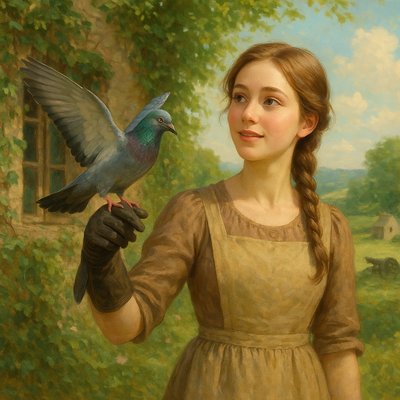
A beautiful young woman with fair skin, light brown hair styled in a braid, and rosy cheeks stands outdoors in front of a rustic stone and ivy-covered building. She is wearing a simple, practical light brown dress with an apron-style overlay, suggestive of a farm setting. Her right arm is extended, and she is wearing a dark leather glove on her hand, upon which a messenger pigeon has just landed. The pigeon is a classic racing pigeon type, with iridescent green and purple neck feathers, and it has its wings slightly spread as if in the act of landing or adjusting. A small message capsule or scroll is clearly visible attached to one of its legs. The woman looks slightly upwards and to the right with a soft, warm expression, her lips slightly parted, as if acknowledging the pigeon or looking towards the message. In the background, to the right, is a picturesque green landscape under a bright sky with scattered clouds, featuring rolling hills, a small, distant stone building, and what appears to be an old cannon or piece of artillery, hinting at a historical wartime context. The overall lighting is warm and natural, creating a serene yet significant atmosphere.
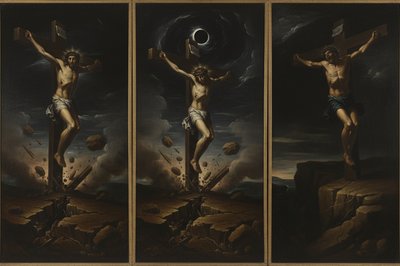
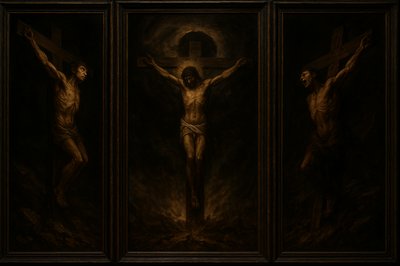
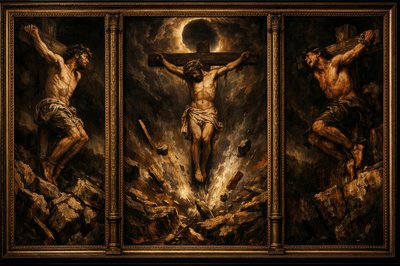
A triptych oil painting, presented as three heavily framed, connected panels in the dramatic, tenebrism style of Baroque masters like Caravaggio. The overall atmosphere is one of supernatural, oppressive darkness and violent chaos.

The Left Panel shows the penitent thief on his cross, body twisted in pain but his face turned toward the center panel with a look of sorrowful acceptance. A faint, supernatural light illuminates his face against a nearly black sky. Below him, rocks are splitting.

The Center Panel is dominated by Jesus on the cross, head bowed in finality. The sky is a swirling vortex of eclipse darkness, blotting out the sun. The ground beneath the cross is violently cracking open, emitting dust and smoke, with debris caught in mid-air from the earthquake shockwave.

The Right Panel shows the impenitent thief, writhing and screaming against his bonds, his face contorted in rage looking away from the center. He is almost swallowed by the shadows. The cross appears unstable as the cliffside crumbles beneath it. The entire triptych has a rich, dark color palette of deep browns, blacks, and muted crimson, textured with visible, frantic brushstrokes.
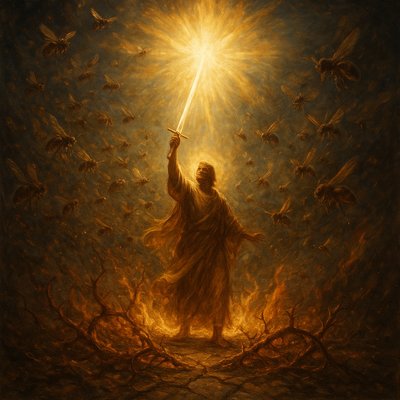
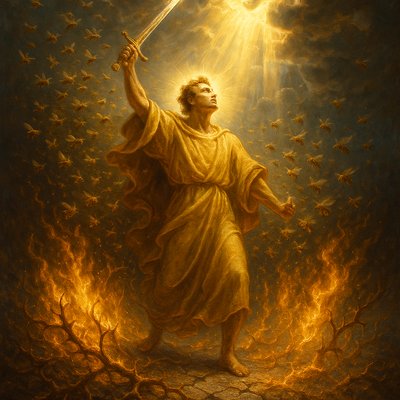
A vivid, dramatic scene depicting a lone figure standing resiliently in the center of a swirling swarm of bees, their forms illuminated by a fiery glow as thorns around them burn brightly, then fade into ash. The figure, clad in simple yet radiant robes, holds a shining sword raised triumphantly, symbolizing divine strength and victory. Behind them, a radiant light bursts forth, representing the presence of the Lord, with beams breaking through a stormy sky. The ground beneath the figure is cracked but stable, showing they were pushed but did not fall. The atmosphere is intense yet hopeful, with a harmonious blend of danger and divine protection, capturing the essence of Psalm 118:12-14--strength, salvation, and triumph through faith. The color palette includes fiery oranges, deep golds, and cool blues to contrast the chaos with divine peace. Ultra-realistic, slightly surreal. Extreme detail.
A triptych oil painting, presented as three heavily framed, connected panels in the dramatic, tenebrism style of Baroque masters like Caravaggio. The overall atmosphere is one of supernatural, oppressive darkness and violent chaos.

The Left Panel shows the penitent thief on his cross, body twisted in pain but his face turned toward the center panel with a look of sorrowful acceptance. A faint, supernatural light illuminates his face against a nearly black sky. Below him, rocks are splitting.

The Center Panel is dominated by Jesus on the cross, head bowed in finality. The sky is a swirling vortex of eclipse darkness, blotting out the sun. The ground beneath the cross is violently cracking open, emitting dust and smoke, with debris caught in mid-air from the earthquake shockwave.

The Right Panel shows the impenitent thief, writhing and screaming against his bonds, his face contorted in rage looking away from the center. He is almost swallowed by the shadows. The cross appears unstable as the cliffside crumbles beneath it. The entire triptych has a rich, dark color palette of deep browns, blacks, and muted crimson, textured with visible, frantic brushstrokes.
A triptych oil painting, presented as three heavily framed, connected panels in the dramatic, tenebrism style of Baroque masters like Caravaggio. The overall atmosphere is one of supernatural, oppressive darkness and violent chaos.

The Left Panel shows the penitent thief on his cross, body twisted in pain but his face turned toward the center panel with a look of sorrowful acceptance. A faint, supernatural light illuminates his face against a nearly black sky. Below him, rocks are splitting.

The Center Panel is dominated by Jesus on the cross, head bowed in finality. The sky is a swirling vortex of eclipse darkness, blotting out the sun. The ground beneath the cross is violently cracking open, emitting dust and smoke, with debris caught in mid-air from the earthquake shockwave.

The Right Panel shows the impenitent thief, writhing and screaming against his bonds, his face contorted in rage looking away from the center. He is almost swallowed by the shadows. The cross appears unstable as the cliffside crumbles beneath it. The entire triptych has a rich, dark color palette of deep browns, blacks, and muted crimson, textured with visible, frantic brushstrokes.