A Pop Star On Stage Art

A grizzly bear on the edge of a forest on a mountain, overlooking a beautiful partly cloudy sky. Proverbs 17:12 KJV  Let a bear robbed of her whelps meet a man, rather than a fool in his folly.
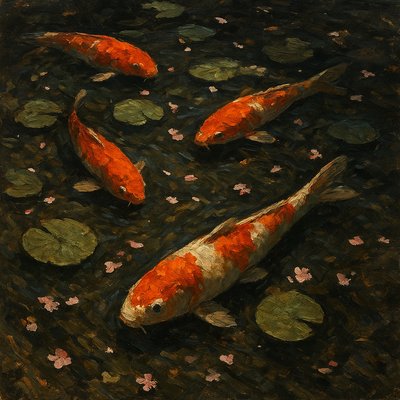
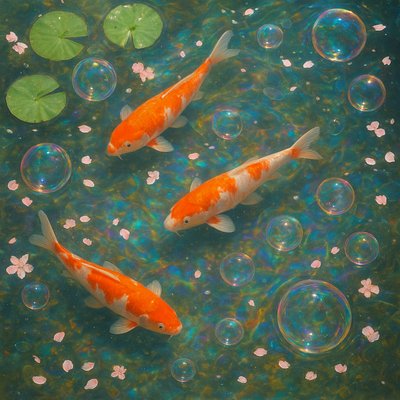
A koi pond seen from above, orange and white koi fish swimming among lily pads, clear water with subtle ripples, fallen cherry blossom petals floating on the surface, dappled sunlight
still life with everyday objects
house with front view
a woman with glasses and a star in the background
Heroic figure in classical pose against stark background in the art style of Neoclassicism --v 6.1
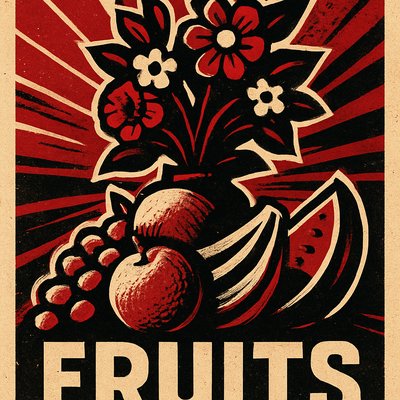
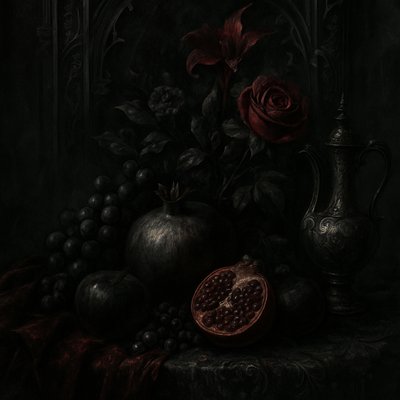
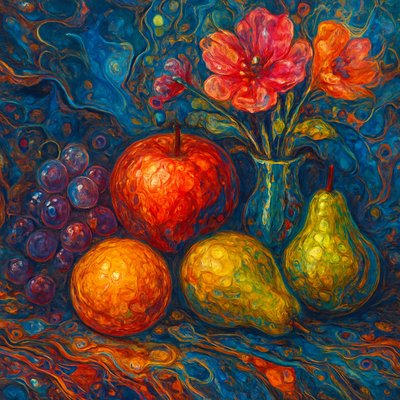
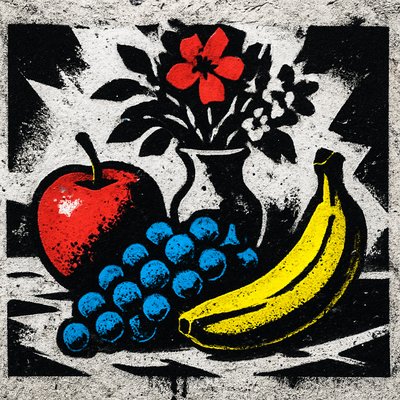
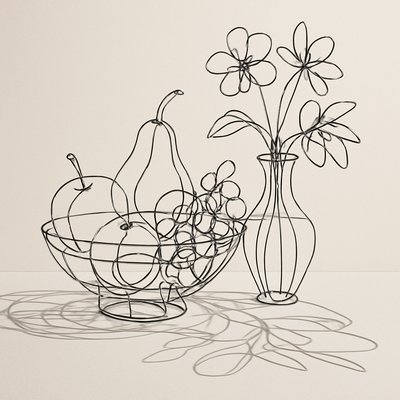
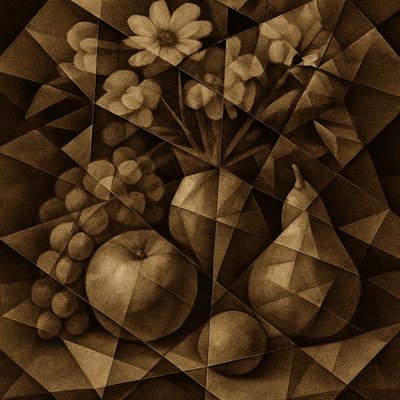
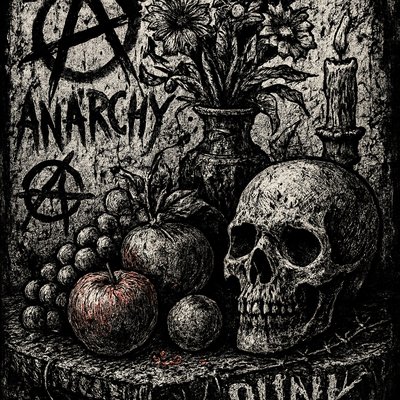
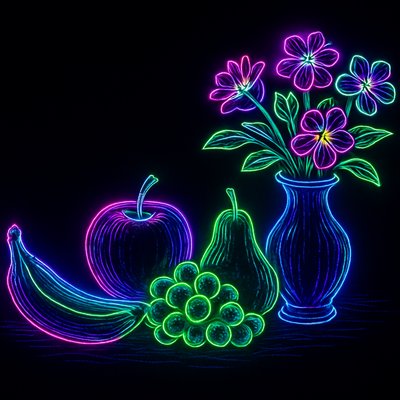
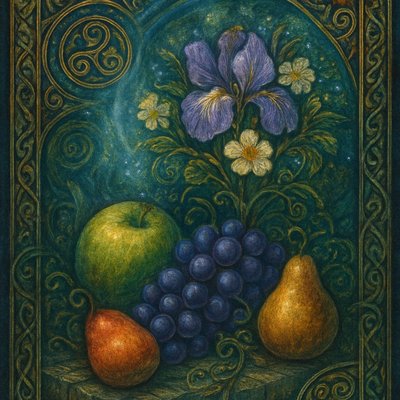
still life arrangement of fruits and flowers
Modernism Art Style Style Transfer Example
Create an image of the Motel Safari in Tucumcari, showcasing its distinctive Doo Wop or Googie architectural style. The design should feature counter-stacked brickwork with oozing mortar, cinder block walls with unique openings, and metal cylinders with perforated holes that glow softly at night. The sign should incorporate playful geometric shapes, with Clyde the Camel prominently perched on top, illuminated against a vibrant sunset sky. Include a retro Route 66 vibe with neon accents and a welcoming "VACANCY" sign.
wide landscape with natural scenery
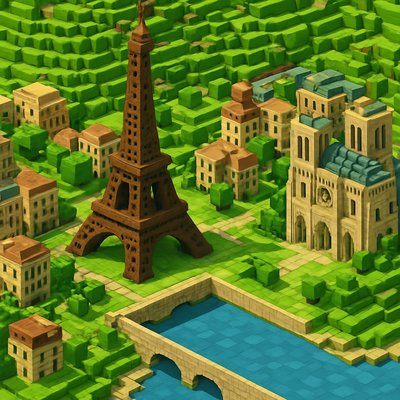
A sundrenched beach scene
A singer hitting a high note
serene landscape with mountains and water
Retro Comic Art Style Transfer Example
Manga Comic Art Style Transfer Example
portrait of a person with expressive eyes
A surreal, double-exposure art piece. Inside, a detailed architectural interior of a temple with a table of "shewbread" and a glowing altar. Outside and overlapping, a vast, swirling nebula and "heaven of heavens" filled with stars and cosmic light, suggesting the infinite nature of God. The temple walls seem translucent, unable to contain the celestial glory. Ethereal, oil painting style, deep blues and glowing golds, inspired by Rembrandt’s lighting. “And Solomon sent to Huram the king of Tyre, saying, As thou didst deal with David my father, and didst send him cedars to build him an house to dwell therein, even so deal with me. Behold, I build an house to the name of the LORD my God, to dedicate it to him, and to burn before him sweet incense, and for the continual shewbread, and for the burnt offerings morning and evening, on the sabbaths, and on the new moons, and on the solemn feasts of the LORD our God. This is an ordinance for ever to Israel. And the house which I build is great: for great is our God above all gods. But who is able to build him an house, seeing the heaven and heaven of heavens cannot contain him? who am I then, that I should build him an house, save only to burn sacrifice before him?” (2 Chronicles 2:3-6, KJV)
A historically accurate and deeply somber depiction of the immediate aftermath of the Wounded Knee Massacre in December 1890. The scene captures the desolate, snow-covered landscape of the Pine Ridge Reservation. Focus on the fallen Lakota men, women, and children, scattered across the snow, their bodies still and tragic. A few surviving individuals are shown in postures of profound grief or shock, perhaps tending to the wounded. The distant presence of U.S. soldiers, heavily armed, stands as a stark and cold counterpoint to the devastation. The atmosphere is one of profound sorrow, loss, and the brutal silence of winter. The lighting is cold and muted, emphasizing the harshness of the environment and the tragedy of the event. The artistic style should be a realistic, painterly approach, evoking the historical period with unflinching honesty but without graphic sensationalism. The intent is to serve as a memorial to the victims and a historical testament to the tragic event."
An awe-inspiring and whimsical scene featuring Willy Wonka's Great Glass Wonkavator, soaring high above the chocolate factory and ascending into a fantastical sky. The Wonkavator itself is a magnificent, multi-directional glass elevator, transparent and sparkling, with Willy Wonka (in his iconic purple coat and top hat), young Charlie Bucket, and Grandpa Joe clearly visible and enjoying the ride inside. Wonka points excitedly, Charlie looks out with wide-eyed wonder, and Grandpa Joe grins with delight. The interior of the Wonkavator shows intricate, whimsical control panels.
The Wonkavator is depicted in mid-flight, having just burst through the factory roof or rising above the clouds. Below it, the fantastical landscape of the Chocolate Factory is spread out – chocolate rivers, edible gardens, candy cane trees, and various whimsical buildings. Beyond the factory, a stunning, imaginative sky unfolds, filled with floating candy clouds, distant fantastical landmarks, and even glimpses of planets and stars. The lighting is bright and magical, emphasizing the glass's transparency and the vibrant colors of the world below and beyond. The overall mood is one of boundless adventure, limitless possibilities, and pure, joyful fantasy."
Single bird on wire
An epic, wide-angle cinematic masterwork of the 144,000 servants of God, divided into twelve massive, disciplined ranks in a valley of white stone. Each rank is led by a towering, ornate scarlet silk banner with gold-embroidered edges. 
The Banners: Distinct symbols are visible on each: a Lion (Judah), Sun over Water (Reuben), Military Tent (Gad), Olive Tree (Asher), Leaping Deer (Naphtali), Fruitful Vine (Manasseh), City Gate (Simeon), Priestly Breastplate (Levi), Celestial Stars (Issachar), Sailing Ship (Zebulun), Wheat Sheaf (Joseph), and Silver Wolf (Benjamin).
The People: In the foreground, the men wear crisp white linen robes with deep Tola-scarlet sashes. Every individual has a brilliant, glowing Golden Seal physically shimmering on their forehead, casting a divine light upward.
The Heavens: In the far distance, four colossal, translucent angels stand at the horizon, their massive wings outstretched to physically block swirling, dark storm-vortices (the four winds). A fifth angel, radiant in pearlescent light, descends from a golden sunrise in the East.
Style: High-contrast chiaroscuro, intricate embroidery textures, hyper-detailed faces, 8k resolution, ArtStation masterpiece. Absolutely no English text or letters.
a man with his hands on his head
A dramatic Soviet-style propaganda poster.
Depict a poor, sad working-class man in worn clothes, with a tired but dignified expression on his face. He stands in the foreground, slightly turned toward the viewer.
In the background: a large industrial factory with smokestacks, heavy machinery, and dark smoke rising into the sky.
The atmosphere is serious, emotional, and ideological — showing hardship, struggle, and hope for liberation.
Strong socialist realism style inspired by classic USSR propaganda posters from the 1930s–1950s.
Bold shapes, high contrast, limited color palette (red, black, beige, muted yellow).
Sharp lines, heroic composition, dramatic lighting.
Add a bold propaganda slogan in clear, vintage typography:
“Proletariusze Piri-Piri — nie jesteście sami!”
The text should be prominent and integrated into the poster design.
No modern elements, no realism photography — illustrated, painterly propaganda art style.
A triptych oil painting, presented as three heavily framed, connected panels in the dramatic, tenebrism style of Baroque masters like Caravaggio. The overall atmosphere is one of supernatural, oppressive darkness and violent chaos.

The Left Panel shows the penitent thief on his cross, body twisted in pain but his face turned toward the center panel with a look of sorrowful acceptance. A faint, supernatural light illuminates his face against a nearly black sky. Below him, rocks are splitting.

The Center Panel is dominated by Jesus on the cross, head bowed in finality. The sky is a swirling vortex of eclipse darkness, blotting out the sun. The ground beneath the cross is violently cracking open, emitting dust and smoke, with debris caught in mid-air from the earthquake shockwave.

The Right Panel shows the impenitent thief, writhing and screaming against his bonds, his face contorted in rage looking away from the center. He is almost swallowed by the shadows. The cross appears unstable as the cliffside crumbles beneath it. The entire triptych has a rich, dark color palette of deep browns, blacks, and muted crimson, textured with visible, frantic brushstrokes.
Santa's Sleigh: A highly detailed mosaic artwork depicting Santa Claus in his traditional red suit, seated in an ornate sleigh loaded with gifts, holding reins as he prepares to take flight with a team of eight reindeer poised on a snowy rooftop under a starry winter night sky. The entire scene is intricately composed of mixed tesserae, including vibrant smalti glass tiles in rich reds, deep greens, and whites for Santa's suit and fur trim, sparkling gemstones in ruby, emerald, sapphire, and diamond hues for accents and gift wrappings, metallic gold and silver leaf tiles outlining the sleigh runners, harnesses, and shimmering highlights, and opaque ceramic tiles in earthy browns and blacks for the reindeer antlers and hooves. Subtle iridescent smalti creates a glowing moon and falling snow effects, with tiny pearl-like inlays adding luminosity to the stars. Byzantine-inspired ornate style with tiny irregular tesserae, thin dark grout lines for sharp contrast, hyper-detailed texture, luminous reflections on glass and gems, slight dimensional depth from raised tiles, photorealistic mosaic rendering, sharp focus, joyful and magical festive composition
A solitary and intensely symbolic image depicting a magnificent, large black raven as the embodiment of judgment from Proverbs 30:17. The raven is portrayed with immense detail and an almost mythical presence, its feathers dark and glossy, its eyes glowing with a profound, ancient wisdom or stern disapproval. It is perched on a jagged, weathered tree branch or a sharp, craggy rock formation within a desolate, mist-shrouded valley.

The background is stark and emphasizes desolation, featuring barren, rocky slopes and a stormy, oppressive sky with heavy, dark clouds. The lighting is dramatic and stark, perhaps a single shaft of pale, cold light illuminating the raven, casting long, deep shadows around it. The focus is entirely on the raven, its sharp beak, and its piercing gaze, conveying a sense of ultimate, inescapable consequence. The overall mood is one of profound, somber judgment and the quiet, heavy weight of natural law, expressed through the powerful symbolism of the bird."
A low-angle, hyper-detailed tableau of the Mad Hatter's Tea Party, viewed under a dark, star-filled sky. The Mad Hatter sits at the table, his features not quite human, but constructed entirely from brilliant indigo and gold cosmic dust, representing the constellation Lepus. His top hat is a vortex of nebula, and one eye burns intensely—a specific star named "The Mad."

The Hatter is caught mid-sentence, demanding, "Why is a raven like a writing-desk?" As he speaks, his hands, which were merely starry, begin to shed their light, and the true form is revealed: the lower half of his coat and chair morph into coiling, dark serpentine scales, twisting around the table leg. The March Hare and Dormouse are frozen in terror. Above the table, a Raven made of pitch-black night materializes, its shadow falling directly over the Hatter. The entire scene is vibrating with the furious energy of a creature—the ancient serpent—who knows his time has been irrevocably stopped.

Style: Cinematic dark fantasy, astronomical realism, oil painting texture, emphasis on the contrast between the cold cosmic starlight and the dark, furious energy of the serpentine transformation.
bicyle resting against a wall
still life with everyday objects
A koi pond seen from above, orange and white koi fish swimming among lily pads, clear water with subtle ripples, fallen cherry blossom petals floating on the surface, dappled sunlight