A Painting Of Two Men Sitting Next To Each Other Art

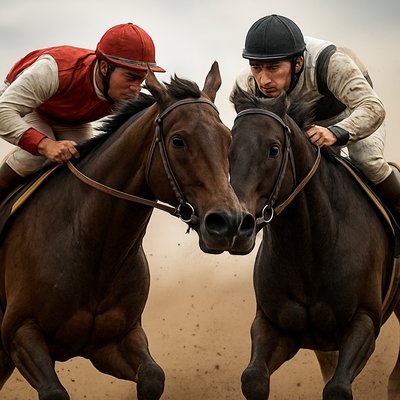
Seabiscuit vs. War Admiral (The Gaze)

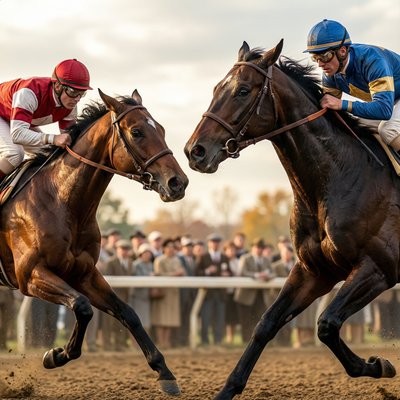
    A hyper-realistic, high-resolution photograph capturing the apex of the 1938 match race between Seabiscuit and War Admiral.

    Focus: The composition is tight, showing both horses running neck-and-neck, dominating the frame. The camera angle is side-on and slightly low, emphasizing their size and muscle. The critical focus is on the space between the horses' heads as they are running stride for stride.

    Details: War Admiral (the dark bay) should show determination and slight surprise, with his head stretched out. Seabiscuit (the smaller bay) should display his characteristic "game" look—intense, focused, and seemingly looking directly into War Admiral's eyes (or toward his rival). Both jockeys (Red Pollard or George Woolf for Seabiscuit; Charles Kurtsinger for War Admiral) are visible, leaning low and urging their mounts on.

    Atmosphere: The light should be bright but slightly diffused, suggesting an autumn afternoon at Pimlico. Dust and track debris are kicked up behind them, blurred slightly by the horses' tremendous speed. The image must convey the raw power, intense rivalry, and the exact moment when the smaller horse asserts his dominance.

    Style: Cinematic photography, realistic texture, sharp focus on the horses' eyes and muscle definition.
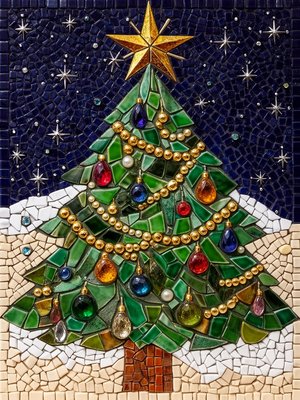
A highly detailed mosaic artwork depicting a classic Christmas tree, intricately composed of mixed tesserae including vibrant smalti glass tiles, sparkling gemstones, metallic gold and silver leaf accents, and opaque ceramic tiles. The tree features layered triangular branches in rich greens with iridescent emerald and forest smalti, adorned with multicolored gemstone ornaments in ruby, sapphire, emerald, and amber hues, metallic gold tiles forming garlands and shimmering highlights, and a radiant golden star at the top crafted from gold smalti and metallic inlays. Subtle opaque white and ivory tiles suggest snow accents, with tiny pearl-like elements for added luminosity. The background is a deep midnight blue with subtle starry specks in silver metallic tiles, evoking a festive night sky. Byzantine-inspired ornate style with tiny irregular tesserae, thin dark grout lines for contrast, hyper-detailed texture, luminous reflections on glass and gems, dimensional depth from raised tiles, photorealistic mosaic rendering, sharp focus, elegant and celebratory composition
Surreal vaporwave landscape at sunset, marble angel in a checkered grid floor, neon palm trees glowing pink and teal, VHS glitch effects, retro 90s aesthetic, dreamy nostalgic atmosphere, high detail
Surreal vaporwave landscape at sunset, marble Greek in a checkered grid floor, neon palm trees glowing pink and teal, VHS glitch effects, retro 90s aesthetic, dreamy nostalgic atmosphere, high detail
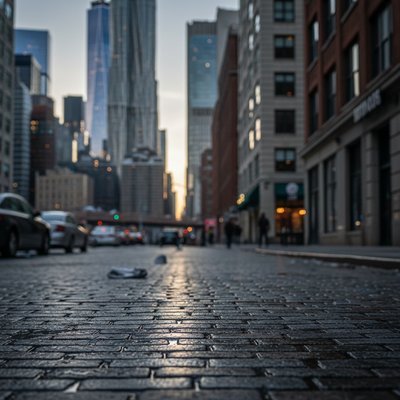
New York City
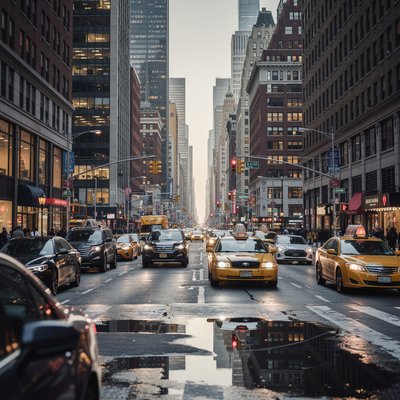
New York City
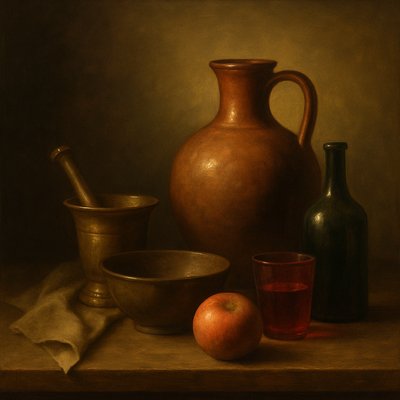
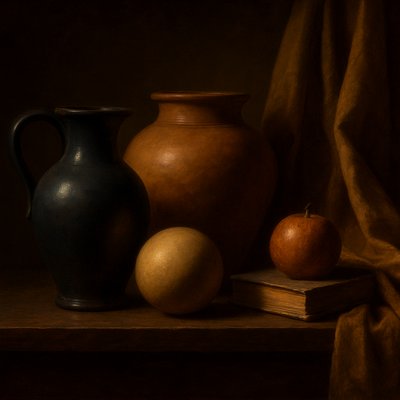
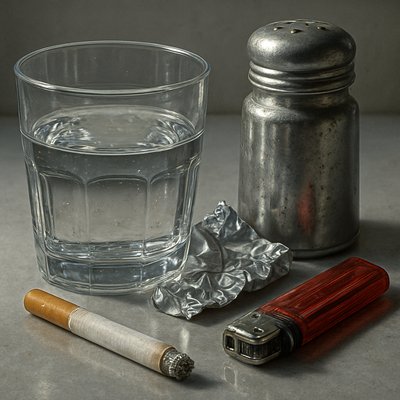
still life with everyday objects
New York City
still life with everyday objects
New York City
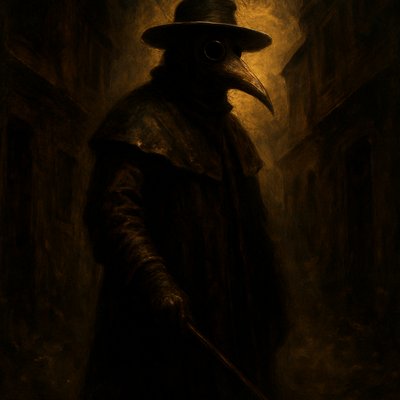
"A solitary and ominous Black Plague Doctor stands in a dimly lit, narrow cobblestone alleyway in a medieval European city. The doctor is clad head-to-toe in their iconic, dark, heavy protective gear: a long, oil-soaked waxed canvas or leather coat, dark gloves, and a wide-brimmed black hat. Their most striking feature, the beaked mask with dark, glass eyeholes, is prominent, creating an eerie, bird-like silhouette that conceals their face entirely. A wooden cane or pointer is held firmly in one gloved hand.

The atmosphere is heavy and foreboding. The background features dark, crumbling stone or timber-framed buildings with shuttered windows, hinting at a city under quarantine. Smoke or mist might subtly swirl around their feet. The lighting is stark and dramatic, perhaps from a distant lantern or a sliver of pale moonlight, casting deep shadows and highlighting the grim details of their attire. The overall mood is one of profound isolation, historical dread, and silent vigilance against an invisible enemy."
Gritty Historical Realism Style, Cinematic Film Photography, Natural Daylight. A powerful, candid medium shot of the infamous pirate duo, Anne Bonny and Mary Read, standing side-by-side on the weathered wooden deck of the sloop Revenge in the Caribbean Sea (circa 1720).

The Subjects: Both are dressed in practical, worn 18th-century male sailor's attire—loose canvas breeches, oversized linen shirts, heavy leather waistcoats, and bandanas—scruffy clothing that disguises their gender at a distance but reveals them as fiercely capable women upon closer inspection. Their faces are sun-weathered, dirty, and determined.

Specific Details: Anne Bonny (left) has fiery red hair escaping a dark bandana and a tricorn hat pushed back; she holds a drawn cutlass and has a defiant, volatile expression. Mary Read (right) looks sturdier, wearing a heavy wool coat, arms crossed over her chest with two flintlock pistols visible in her sash, looking steady and calculating.

The Setting: The background is a chaotic, working pirate ship deck with coils of tarred rope, rigging, barrels, and a cannon. Beyond the rail is the turquoise ocean and a hazy tropical coastline. The lighting is harsh, midday sun, with salt spray in the air. The mood is tense, rebellious, and authentic. Film grain texture.
A highly detailed mosaic artwork depicting a classic Christmas tree, intricately composed of mixed tesserae including vibrant smalti glass tiles, sparkling gemstones, metallic gold and silver leaf accents, and opaque ceramic tiles. The tree features layered triangular branches in rich greens with iridescent emerald and forest smalti, adorned with multicolored gemstone ornaments in ruby, sapphire, emerald, and amber hues, metallic gold tiles forming garlands and shimmering highlights, and a radiant golden star at the top crafted from gold smalti and metallic inlays. Subtle opaque white and ivory tiles suggest snow accents, with tiny pearl-like elements for added luminosity. The background is a deep midnight blue with subtle starry specks in silver metallic tiles, evoking a festive night sky. Byzantine-inspired ornate style with tiny irregular tesserae, thin dark grout lines for contrast, hyper-detailed texture, luminous reflections on glass and gems, dimensional depth from raised tiles, photorealistic mosaic rendering, sharp focus, elegant and celebratory composition
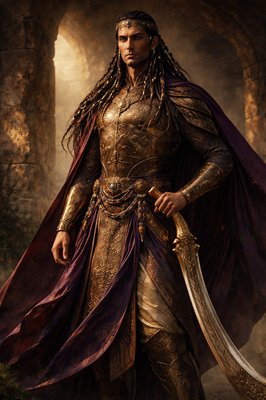
Style: A detailed, photorealistic character portrait in the style of high-fantasy historical cinema, focusing on texture, armor design, and facial structure.

The Subject: A full-body portrait of a single Gibeonite lord. He is a figure of imposing, "giant" stature, standing significantly taller than an average human (suggesting 7+ feet), but his proportions are lithe, graceful, and powerful rather than bulky or brutish.

Facial Features & Expression: He possesses a noble, almost ageless bearing reminiscent of an Elven lord, translated into ancient Near Eastern features. He has high, sculpted cheekbones, a strong aquiline nose, and intense, deep-set eyes that convey a calculating intelligence and ancient dignity. His expression is calm, watchful, and confident.

Hair & Adornment: His long, dark hair is elaborately and precisely braided, woven with hammered bronze rings and polished beads of carnelian and lapis lazuli.

Attire & Armor: He is dressed in attire that demonstrates advanced craftsmanship and sophistication. He wears a fitted breastplate of polished bronze, richly engraved with complex, swirling Canaanite motifs (stylized lions, gryphons, and geometric patterns). Beneath the armor, a tunic dyed deep Tyrian purple shows through.

Weapons: At his hip hangs a massive, curved khopesh sword, scaled to his immense height, with a hilt carved from hippopotamus ivory and inlaid with gold.

Pose & Lighting: He stands in a relaxed but formidable pose of authority, one hand resting on his sword hilt. The lighting is golden hour sunlight, catching the metallic sheen of the bronze armor and the intelligence in his eyes against a neutral, out-of-focus textured stone background.
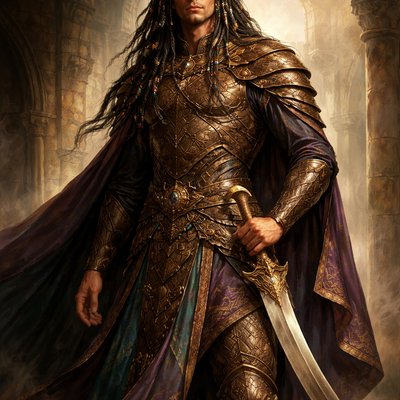
Style: A detailed, photorealistic character portrait in the style of high-fantasy historical cinema, focusing on texture, armor design, and facial structure.

The Subject: A full-body portrait of a single Gibeonite lord. He is a figure of imposing, "giant" stature, standing significantly taller than an average human (suggesting 7+ feet), but his proportions are lithe, graceful, and powerful rather than bulky or brutish.

Facial Features & Expression: He possesses a noble, almost ageless bearing reminiscent of an Elven lord, translated into ancient Near Eastern features. He has high, sculpted cheekbones, a strong aquiline nose, and intense, deep-set eyes that convey a calculating intelligence and ancient dignity. His expression is calm, watchful, and confident.

Hair & Adornment: His long, dark hair is elaborately and precisely braided, woven with hammered bronze rings and polished beads of carnelian and lapis lazuli.

Attire & Armor: He is dressed in attire that demonstrates advanced craftsmanship and sophistication. He wears a fitted breastplate of polished bronze, richly engraved with complex, swirling Canaanite motifs (stylized lions, gryphons, and geometric patterns). Beneath the armor, a tunic dyed deep Tyrian purple shows through.

Weapons: At his hip hangs a massive, curved khopesh sword, scaled to his immense height, with a hilt carved from hippopotamus ivory and inlaid with gold.

Pose & Lighting: He stands in a relaxed but formidable pose of authority, one hand resting on his sword hilt. The lighting is golden hour sunlight, catching the metallic sheen of the bronze armor and the intelligence in his eyes against a neutral, out-of-focus textured stone background.
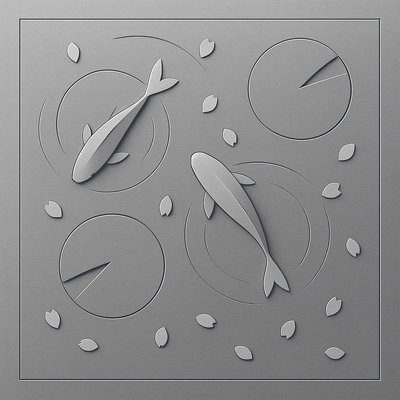
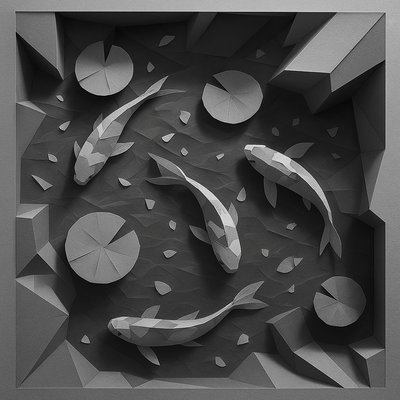
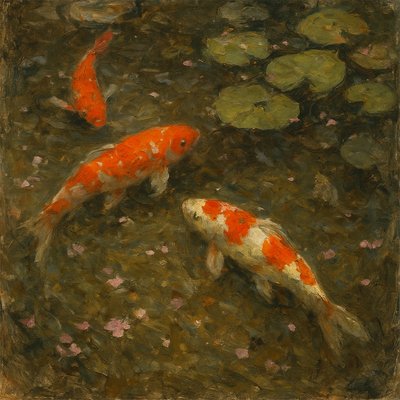
A koi pond seen from above, orange and white koi fish swimming among lily pads, clear water with subtle ripples, fallen cherry blossom petals floating on the surface, dappled sunlight
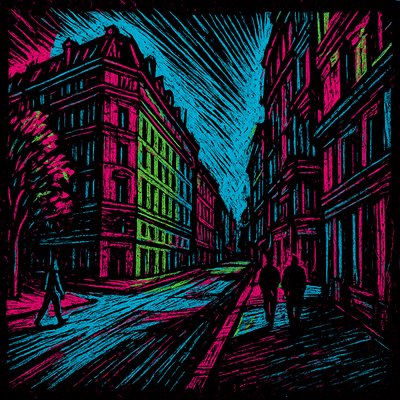
Neon Noir Woodcut Style Transfer Example
wide landscape with natural scenery
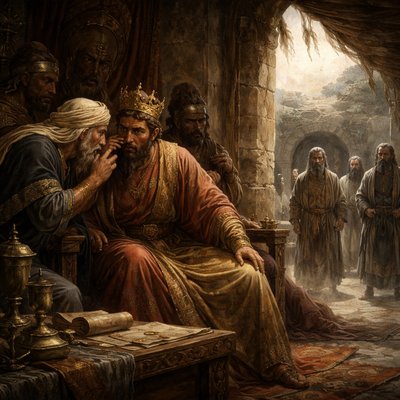
“But the princes of the children of Ammon said to Hanun, Thinkest thou that David doth honour thy father, that he hath sent comforters unto thee? are not his servants come unto thee for to search, and to overthrow, and to spy out the land?” (1 Chronicles 19:3, KJV)
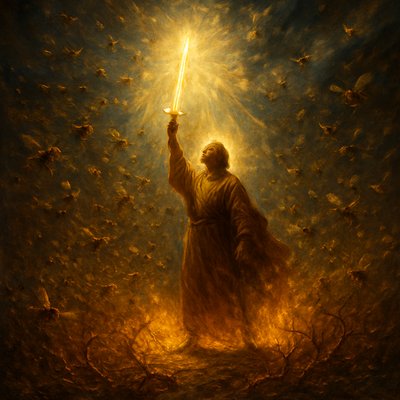
A vivid, dramatic scene depicting a lone figure standing resiliently in the center of a swirling swarm of bees, their forms illuminated by a fiery glow as thorns around them burn brightly, then fade into ash. The figure, clad in simple yet radiant robes, holds a shining sword raised triumphantly, symbolizing divine strength and victory. Behind them, a radiant light bursts forth, representing the presence of the Lord, with beams breaking through a stormy sky. The ground beneath the figure is cracked but stable, showing they were pushed but did not fall. The atmosphere is intense yet hopeful, with a harmonious blend of danger and divine protection, capturing the essence of Psalm 118:12-14--strength, salvation, and triumph through faith. The color palette includes fiery oranges, deep golds, and cool blues to contrast the chaos with divine peace. Ultra-realistic, slightly surreal. Extreme detail.
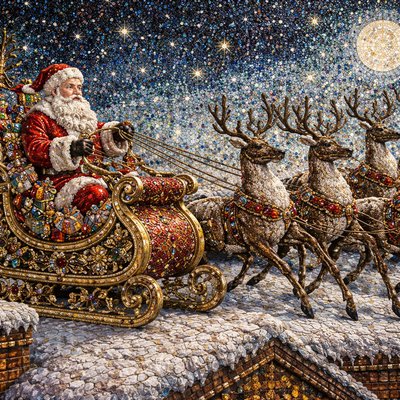
Santa's Sleigh: A highly detailed mosaic artwork depicting Santa Claus in his traditional red suit, seated in an ornate sleigh loaded with gifts, holding reins as he prepares to take flight with a team of eight reindeer poised on a snowy rooftop under a starry winter night sky. The entire scene is intricately composed of mixed tesserae, including vibrant smalti glass tiles in rich reds, deep greens, and whites for Santa's suit and fur trim, sparkling gemstones in ruby, emerald, sapphire, and diamond hues for accents and gift wrappings, metallic gold and silver leaf tiles outlining the sleigh runners, harnesses, and shimmering highlights, and opaque ceramic tiles in earthy browns and blacks for the reindeer antlers and hooves. Subtle iridescent smalti creates a glowing moon and falling snow effects, with tiny pearl-like inlays adding luminosity to the stars. Byzantine-inspired ornate style with tiny irregular tesserae, thin dark grout lines for sharp contrast, hyper-detailed texture, luminous reflections on glass and gems, slight dimensional depth from raised tiles, photorealistic mosaic rendering, sharp focus, joyful and magical festive composition
A koi pond seen from above, orange and white koi fish swimming among lily pads, clear water with subtle ripples, fallen cherry blossom petals floating on the surface, dappled sunlight
Neon Noir Woodcut Style Transfer Example
wide landscape with natural scenery
still life with everyday objects
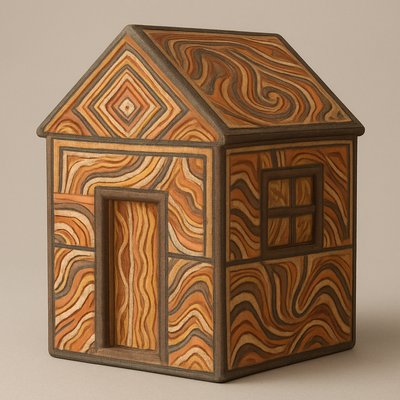
house with front view
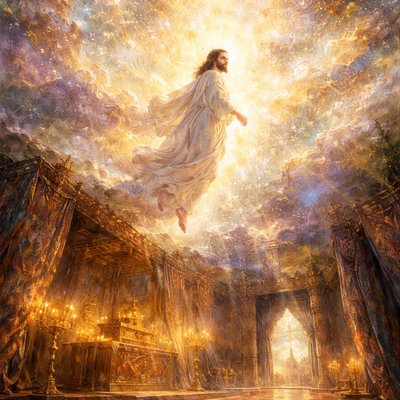
A wide-angle, cinematic masterpiece. The lower portion of the image shows the interior of an ancient, candlelit Tabernacle, detailed with tapestries and hewn stone (the "holy places made with hands"). Above it, the roof dissolves into swirling, luminous, celestial energy and golden light that is boundless ("heaven itself"). The figure of Jesus Christ, radiant with a soft inner light and wearing simple, brilliant white robes, is ascending from the shadowy temple into the infinite light, looking back with compassionate intercessory eyes. Volumetric lighting, grand scale, highly detailed, dramatic atmosphere.
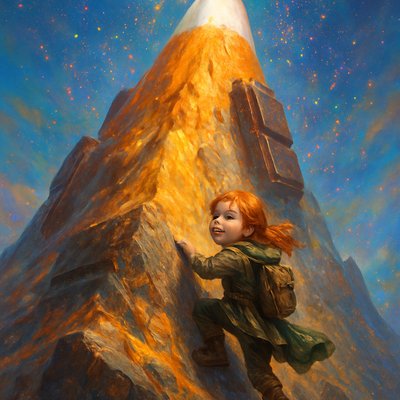
A young red-haired girl in whimsical adventurer gear, bravely climbing a colossal, mountain-sized candy corn. The candy corn mountain has realistic geological features, with crags and steep slopes, made entirely of candy corn, and integrated along its ridges are giant, sculpted chocolate bars. Shimmering, multi-colored pixie stick dust rains down around her like magical snowfall. Determined, joyful expression. Bright, fantastical sky. Hyperrealistic digital painting, fantasy illustration, surreal landscape, epic detailed, cinematic lighting, food art photography." The candy corn is a mountain landscape
Seabiscuit vs. War Admiral (The Gaze)

    A hyper-realistic, high-resolution photograph capturing the apex of the 1938 match race between Seabiscuit and War Admiral.

    Focus: The composition is tight, showing both horses running neck-and-neck, dominating the frame. The camera angle is side-on and slightly low, emphasizing their size and muscle. The critical focus is on the space between the horses' heads as they are running stride for stride.

    Details: War Admiral (the dark bay) should show determination and slight surprise, with his head stretched out. Seabiscuit (the smaller bay) should display his characteristic "game" look—intense, focused, and seemingly looking directly into War Admiral's eyes (or toward his rival). Both jockeys (Red Pollard or George Woolf for Seabiscuit; Charles Kurtsinger for War Admiral) are visible, leaning low and urging their mounts on.

    Atmosphere: The light should be bright but slightly diffused, suggesting an autumn afternoon at Pimlico. Dust and track debris are kicked up behind them, blurred slightly by the horses' tremendous speed. The image must convey the raw power, intense rivalry, and the exact moment when the smaller horse asserts his dominance.

    Style: Cinematic photography, realistic texture, sharp focus on the horses' eyes and muscle definition.
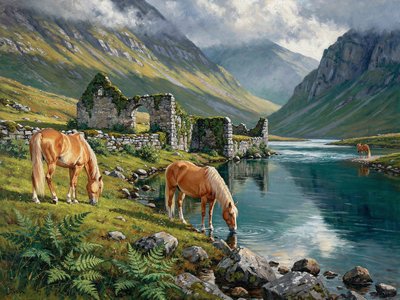
Seamless triptych artwork, continuous scene flowing left to right, left panel shows a palomino horse in the foreground on the far left side of the scene walking down a grassy slope toward a reflective teal-blue river in the Scottish Highlands with rocks and ferns around its hooves, center panel continues the same landscape as the horse now appears in the midground at the center of the scene standing at the river’s edge drinking from the reflective water beside ancient moss-covered stone ruins, right panel continues the scene as the horse appears far away in the distance on the far right side of the scene following the riverbank toward steep mist-covered mountains with dramatic sunlight breaking through the clouds, unified natural palette of greens golds and reflective teal blues, consistent cinematic lighting, shared horizon line, smooth uninterrupted left-to-right visual flow with no panel separation.
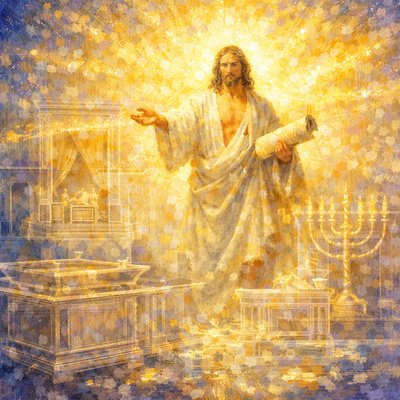
A surrealist, double-exposure art piece. In the foreground, there are translucent, architect’s blueprint lines and ghostly outlines of the ancient Temple altars, lampstands, and the Holy of Holies (representing the "figures of the true"). Overlapping and far superior to them, Jesus Christ stands before an blinding, warm, golden divine presence (representing the "presence of God"). He is actively gesturing forward, presenting a scroll or his own wounds on behalf of unseen people ("for us"). Transcendent, ethereal, glowing edges, minimal color palette of gold, white, and midnight blue.
A historically accurate and atmospheric depiction of the signing of the Mayflower Compact aboard the ship in November 1620. The scene is set in the dimly lit, cramped cabin of the Mayflower, with the ship's timbers and rigging subtly visible, conveying the challenging conditions of the voyage. A simple table or chest serves as the signing surface. The primary focus is on a small group of the last individuals signing the document: specifically, the indentured servants (or 'strangers' not directly part of the Separatist congregation) approaching or at the table. Their expressions show a mix of weary determination, understanding of the necessity, and perhaps a hint of quiet apprehension or resignation to this new social contract, given their status. They are dressed in the plain, practical clothing typical of 17th-century commoners and laborers. Figures of prominent Pilgrims or 'Saints' (like William Bradford or John Carver) are visible in the background, observing the proceedings with a sense of gravity and leadership, but they are not the central focus. The lighting is low and warm, perhaps from a lantern, creating a chiaroscuro effect that highlights the faces of the signers. The atmosphere conveys the momentousness of the act under difficult circumstances, the diverse composition of the group, and the early seeds of self-governance in a new world. The artistic style is a realistic, historically detailed oil painting, capturing the solemnity and human element of this pivotal historical moment."
A koi pond seen from above, orange and white koi fish swimming among lily pads, clear water with subtle ripples, fallen cherry blossom petals floating on the surface, dappled sunlight
house with front view
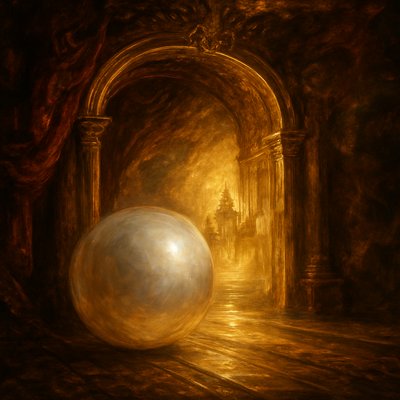
A profoundly symbolic and awe-inspiring depiction of a colossal, luminous pearl gate in the New Jerusalem, captured in the dynamic act of rolling away, similar to the stone being moved from Christ's tomb. The gate, a single, immense, perfectly spherical pearl, is shown mid-motion, having just been set aside from the entrance, revealing the glorious city beyond.

The pearl itself glows with an intense, soft iridescence, reflecting the divine light. Its surface shows subtle, exquisite details of mother-of-pearl. The frame or opening from which it has rolled away is visible, perhaps showing immense, smooth tracks or channels in the transparent gold structure of the city wall, reinforcing the idea of its monumental movement.

Through the now open gate, the radiant glory of the New Jerusalem streams forth. Pure gold streets, like transparent glass, extend into the city, illuminated by an intense, divine light that emanates from within. Heavenly architecture, impossibly beautiful and intricate, is glimpsed in the distance, beckoning. The atmosphere is one of profound sanctity, triumphant revelation, and welcoming access to the divine, with the act of the pearl rolling away symbolizing a breakthrough or an open invitation. The lighting is ethereal and grand, emphasizing the pearl's luster and the city's overwhelming glory."
still life with everyday objects
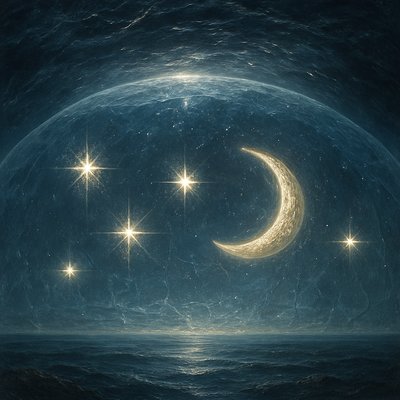
Photorealism Art Style, an incredibly realistic and majestic panoramic depiction of ancient Jewish cosmology for Psalm 8:3. The scene features a vast, immense, and slightly crystalline domed firmament (raqia), appearing as a colossal, translucent barrier stretching high above, separating realms. Above this firmament, immense, dark yet shimmering celestial waters are visibly contained, looking like an actual ocean or body of water suspended in the upper reaches, reflecting an unseen, brilliant divine light from beyond. Large, tangible stars and a realistically textured crescent moon are clearly depicted as radiant, glowing jewels "set into" or embedded within the solid, semi-transparent surface of the firmament, their light realistically illuminating its crystalline structure. Below, hints of foundational earth with discernible "waters below" are visible, all under a profound, ancient sky. Focus on the hyper-realistic textures and luminosity of the crystalline firmament, the visceral reality of the celestial waters above, and the tangible, glowing presence of the embedded moon and stars, creating an image of overwhelming, ancient, and divine majesty.
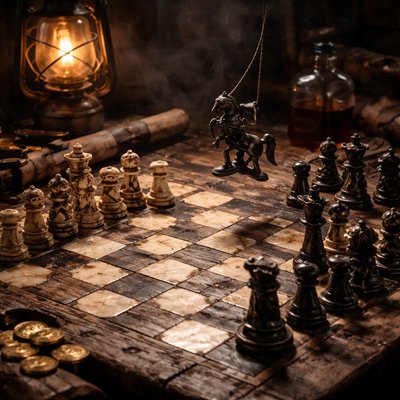
Cinematic Still Life Photography, Atmospheric Chiaroscuro Lighting, Macro Details. A high-stakes chess game mid-match, set upon a unique, well-worn board inside the dimly lit quarters of a pirate captain.

The Board: The chessboard isn't separate; the squares are carved directly into the surface of a thick, heavy oak table, stained with rum rings and knife marks. The light squares are inlaid, scratched mother-of-pearl, and the dark squares are burned wood.

The Pieces in Play: The unique pirate-themed pieces (from the previous design) are scattered across the board.

    One side (The 'White' pieces): Carved from aged, yellowed whale bone. A "King Captain" piece is cornered behind a line of "Pawn Deckhands."

    The other side (The 'Black' pieces): Cast from heavy, tarnished blackened iron. An iron "Knight Boarding Party" piece (on a rope swing) is aggressively positioned near the center.

The Atmosphere: The scene is lit dramatically by a single, smoky oil lantern hanging overhead, casting long shadows. Scattered around the board on the table are a few real gold doubloons mixed with captured pieces, a half-empty bottle of grog, and a rolled-up parchment chart. The background is dark wood paneling and a glimpse of a flintlock pistol. The focus is razor-sharp on the textures of the carved bone and corroded iron pieces.
A koi pond seen from above, orange and white koi fish swimming among lily pads, clear water with subtle ripples, fallen cherry blossom petals floating on the surface, dappled sunlight