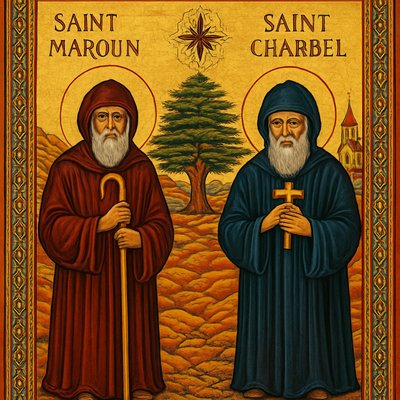
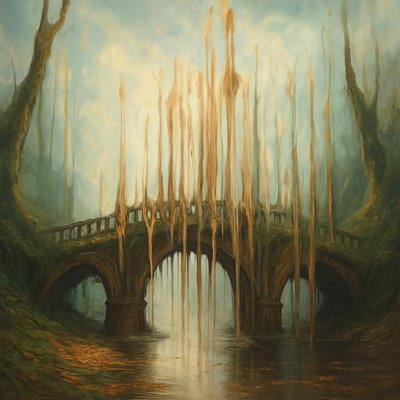
A Painting Of Saint Marquin And Saint Chabel Art

a painting of saint marquin and saint chabel
Stained glass saint
Saint's vision
Mosaic of a haloed saint with gold background in the art style of Byzantine --v 6.1
Annunciation with donor figures in ornate interior
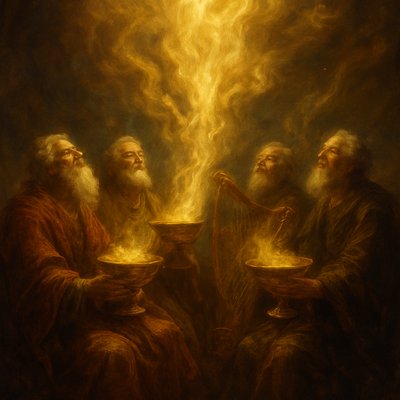
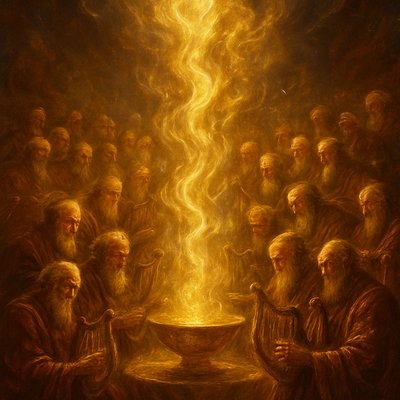
A majestic, ethereal scene depicting golden bowls brimming with luminous, swirling incense. The incense, representing the collective prayers of all saints, rises and coalesces into shimmering, golden tendrils that ascend towards an unseen heavenly throne.There elders worshipping: EACH ELDER HAS ONE BOWL AND ONE HARP. These are golden bowls of incense. Each bowl is held by a robed elder, The atmosphere is reverent and awe-inspiring, filled with soft, warm light emanating from the golden smoke. Emphasize the precious, divine, and unified nature of the prayers. Inspired by Revelation 5:8
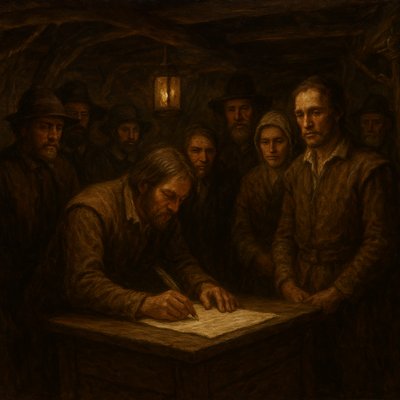
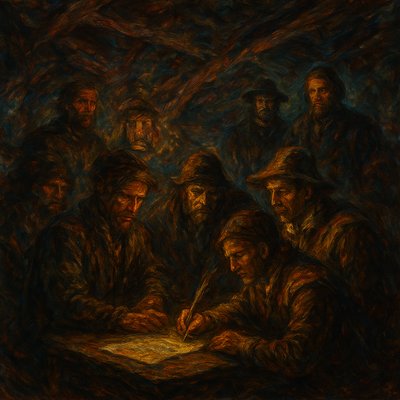
A historically accurate and atmospheric depiction of the signing of the Mayflower Compact aboard the ship in November 1620. The scene is set in the dimly lit, cramped cabin of the Mayflower, with the ship's timbers and rigging subtly visible, conveying the challenging conditions of the voyage. A simple table or chest serves as the signing surface. The primary focus is on a small group of the last individuals signing the document: specifically, the indentured servants (or 'strangers' not directly part of the Separatist congregation) approaching or at the table. Their expressions show a mix of weary determination, understanding of the necessity, and perhaps a hint of quiet apprehension or resignation to this new social contract, given their status. They are dressed in the plain, practical clothing typical of 17th-century commoners and laborers. Figures of prominent Pilgrims or 'Saints' (like William Bradford or John Carver) are visible in the background, observing the proceedings with a sense of gravity and leadership, but they are not the central focus. The lighting is low and warm, perhaps from a lantern, creating a chiaroscuro effect that highlights the faces of the signers. The atmosphere conveys the momentousness of the act under difficult circumstances, the diverse composition of the group, and the early seeds of self-governance in a new world. The artistic style is a realistic, historically detailed oil painting, capturing the solemnity and human element of this pivotal historical moment."
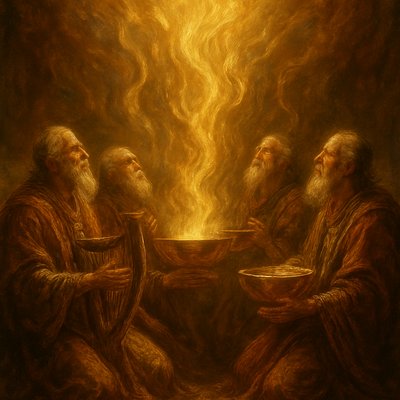
A majestic, ethereal scene depicting golden bowls brimming with luminous, swirling incense. The incense, representing the collective prayers of all saints, rises and coalesces into shimmering, golden tendrils that ascend towards an unseen heavenly throne.There elders worshipping: EACH ELDER HAS ONE BOWL AND EACH ELDER HAS ONE HARP. These are golden bowls of incense. Each bowl is held by a robed elder, KNEELING IN PRAYER TO GOD. The atmosphere is reverent and awe-inspiring, filled with soft, warm light emanating from the golden smoke. Emphasize the precious, divine, and unified nature of the prayers. Inspired by Revelation 5:8
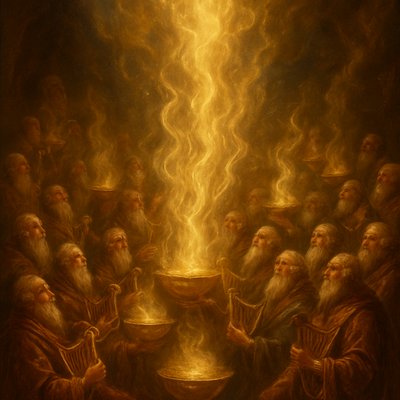
A majestic, ethereal scene depicting golden bowls brimming with luminous, swirling incense. The incense, representing the collective prayers of all saints, rises and coalesces into shimmering, golden tendrils that ascend towards an unseen heavenly throne.There are 24 golden bowls of incense. Each bowl is held by a robed elder, holding harps, in worship. The atmosphere is reverent and awe-inspiring, filled with soft, warm light emanating from the golden smoke. Emphasize the precious, divine, and unified nature of the prayers. Inspired by Revelation 5:8
A majestic, ethereal scene depicting golden bowls brimming with luminous, swirling incense. The incense, representing the collective prayers of all saints, rises and coalesces into shimmering, golden tendrils that ascend towards an unseen heavenly throne. The bowls are held by 24 robed, elder-like figures, who are also holding harps, bowing in worship. The atmosphere is reverent and awe-inspiring, filled with soft, warm light emanating from the golden smoke. Emphasize the precious, divine, and unified nature of the prayers.
A historically accurate and atmospheric depiction of the signing of the Mayflower Compact aboard the ship in November 1620. The scene is set in the dimly lit, cramped cabin of the Mayflower, with the ship's timbers and rigging subtly visible, conveying the challenging conditions of the voyage. A simple table or chest serves as the signing surface. The primary focus is on a small group of the last individuals signing the document: specifically, the indentured servants (or 'strangers' not directly part of the Separatist congregation) approaching or at the table. Their expressions show a mix of weary determination, understanding of the necessity, and perhaps a hint of quiet apprehension or resignation to this new social contract, given their status. They are dressed in the plain, practical clothing typical of 17th-century commoners and laborers. Figures of prominent Pilgrims or 'Saints' (like William Bradford or John Carver) are visible in the background, observing the proceedings with a sense of gravity and leadership, but they are not the central focus. The lighting is low and warm, perhaps from a lantern, creating a chiaroscuro effect that highlights the faces of the signers. The atmosphere conveys the momentousness of the act under difficult circumstances, the diverse composition of the group, and the early seeds of self-governance in a new world. The artistic style is a realistic, historically detailed oil painting, capturing the solemnity and human element of this pivotal historical moment."
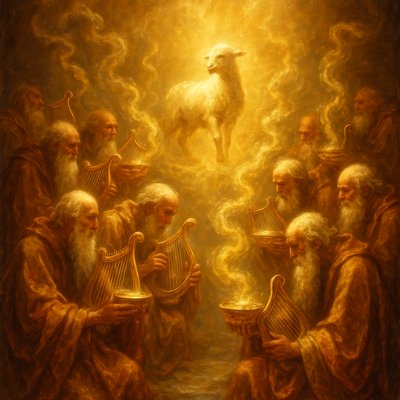
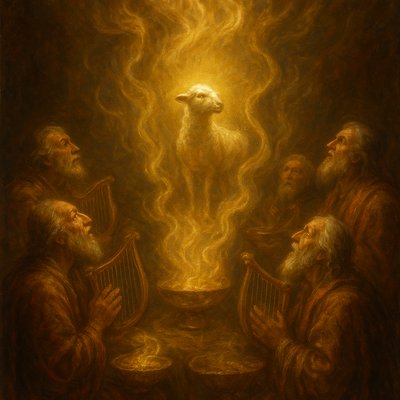
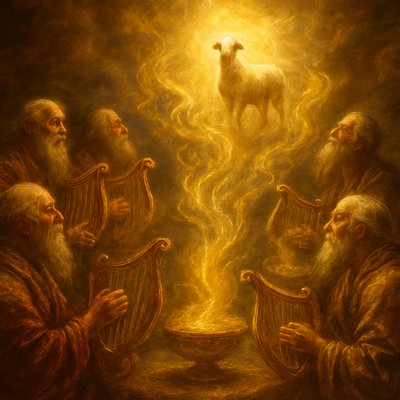
A majestic and reverent scene, directly inspired by Revelation 5:8. A group of elderly, robed figures are kneeling in worship, their faces and attention directed towards a central focal point. Each elder holds a golden harp in one hand and a golden bowl brimming with luminous, swirling incense in the other. The incense, representing the collective prayers of all saints, rises in shimmering, golden tendrils from each bowl, converging and ascending towards the central figure. At the very center of the composition, slightly elevated and bathed in radiant light, stands the Lamb who was slain, embodying divine power and sacrifice, the recipient of all this worship. The atmosphere is ethereal, filled with soft, divine golden light emanating from the incense and the Lamb, emphasizing the precious, sacred, and unified nature of the prayers being offered before Him. Focus on the rich textures of gold, the reverence of the elders, and the radiant presence of the Lamb


A historically accurate and atmospheric depiction of the signing of the Mayflower Compact aboard the ship in November 1620. The scene is set in the dimly lit, cramped cabin of the Mayflower, with the ship's timbers and rigging subtly visible, conveying the challenging conditions of the voyage. A simple table or chest serves as the signing surface. The primary focus is on a small group of the last individuals signing the document: specifically, the indentured servants (or 'strangers' not directly part of the Separatist congregation) approaching or at the table. Their expressions show a mix of weary determination, understanding of the necessity, and perhaps a hint of quiet apprehension or resignation to this new social contract, given their status. They are dressed in the plain, practical clothing typical of 17th-century commoners and laborers. Figures of prominent Pilgrims or 'Saints' (like William Bradford or John Carver) are visible in the background, observing the proceedings with a sense of gravity and leadership, but they are not the central focus. The lighting is low and warm, perhaps from a lantern, creating a chiaroscuro effect that highlights the faces of the signers. The atmosphere conveys the momentousness of the act under difficult circumstances, the diverse composition of the group, and the early seeds of self-governance in a new world. The artistic style is a realistic, historically detailed oil painting, capturing the solemnity and human element of this pivotal historical moment."
A majestic and reverent scene, directly inspired by Revelation 5:8. A group of elderly, robed figures are kneeling in worship, their faces and attention directed towards a central focal point. Each elder holds a golden harp in one hand and a golden bowl brimming with luminous, swirling incense in the other. The incense, representing the collective prayers of all saints, rises in shimmering, golden tendrils from each bowl, converging and ascending towards the central figure. At the very center of the composition, slightly elevated and bathed in radiant light, stands the Lamb who was slain, embodying divine power and sacrifice, the recipient of all this worship. The atmosphere is ethereal, filled with soft, divine golden light emanating from the incense and the Lamb, emphasizing the precious, sacred, and unified nature of the prayers being offered before Him. Focus on the rich textures of gold, the reverence of the elders, and the radiant presence of the Lamb
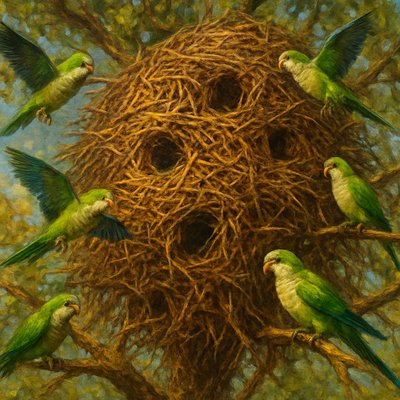
Oil Painting Art Style, a bustling scene featuring several vibrant Quaker Parrots (also known as Monk Parakeets) perched on and around their extraordinary communal nest. The nest is a massive, intricate structure built entirely from countless interwoven sticks and twigs, resembling a complex, multi-chambered apartment building for birds, integrated high within the sturdy branches of a large, leafy tree. Each visible entrance or chamber suggests multiple pairs of parrots coexisting. The Quaker Parrots themselves, with their distinctive green plumage, grey chests, and bright eyes, are actively flying to and from, bringing more sticks, or observing their bustling community. The setting is bright and lively, illuminated by clear, natural sunlight, casting detailed shadows and highlighting the texture of the sticks and feathers. Focus on the architectural complexity and scale of the stick nest, the industrious activity of the parrots, and the vibrant green and grey colors of the birds against the natural backdrop.
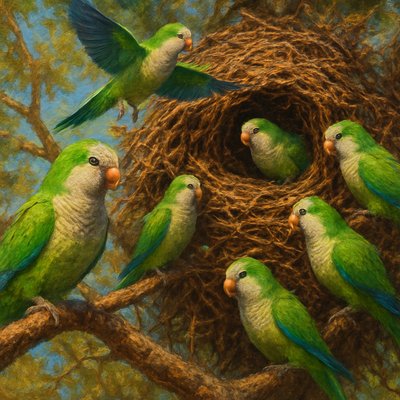
Oil Painting Art Style, a lively scene showcasing multiple vibrant Quaker Parrots (Monk Parakeets) in crisp detail, actively perched, interacting, and flying around their extraordinary communal stick nest. The nest, a massive and intricate structure woven from countless twigs, serves as a striking backdrop, resembling a complex, multi-chambered apartment building for birds high within a large, leafy tree. The focus is primarily on the parrots themselves: their distinctive bright green plumage, grey chests, and intelligent, curious eyes are rendered with exquisite detail. Several parrots are clearly visible, their individual feathers, beaks, and expressions highlighted. The setting is bright and lively, illuminated by clear, natural sunlight, casting detailed shadows. Focus on the vibrant colors and fine feather details of the Quaker Parrots, their lively activity, and the impressive scale and texture of their communal stick nest as an integral part of their environment.
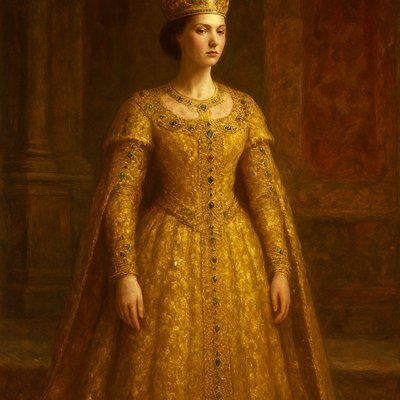
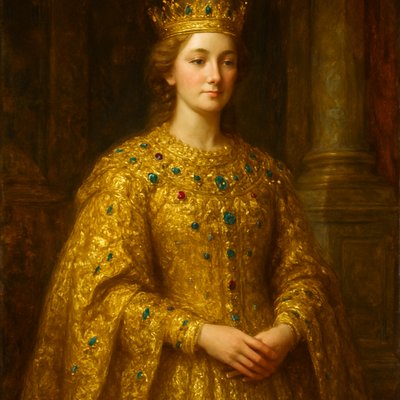
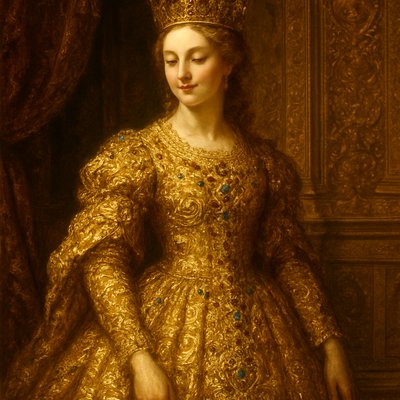
Oil Painting Art Style, a breathtakingly majestic and regal portrait of "The Queen in Gold of Ophir," inspired by Psalm 45. The Queen stands with impeccable grace and royal dignity, her posture radiating quiet power. She is adorned in an exquisitely elaborate gown woven entirely from the finest, purest gold of Ophir, shimmering with incredible richness. Her attire is intricately embellished with countless precious jewels—sapphires, rubies, and emeralds—each catching the light. A delicate yet regal golden crown rests upon her head, complementing her serene and noble expression. The setting is a grand, opulent royal palace chamber, with rich tapestries and polished marble, bathed in warm, golden, ambient light that dramatically illuminates her and her lavish garments. Focus on the unparalleled brilliance and texture of her golden gown, the sparkle of her jewels, her majestic presence, and the luxurious, sacred atmosphere befitting a queen in God's presence.
a tree in nature
still life arrangement of fruits and flowers
serene landscape with mountains and water
animal standing in natural pose
bicyle resting against a wall
portrait of a person with expressive eyes
Neo-Geo Art Style Style Transfer Example
urban street with city activity
My sincerest apologies that the Queen appeared angry! That's completely contrary to the "serene and noble expression" we aimed for and the dignity implied by Psalm 45. We need to explicitly reinforce a gentler, more gracious demeanor.

You're also right to focus on the gold's shine. We can definitely enhance that.

To address both issues—the expression and the gold's luminosity—we'll make two key adjustments:

    Refine Expression: Use stronger words for a gentle, majestic, and perhaps beatific expression.

    Enhance Gold's Shine: Introduce Baroque Art Style as a secondary influence. Baroque is famous for its dramatic light, intense gleam on metals and jewels, and dynamic richness, which will make the gold truly radiant. It pairs beautifully with Oil Painting for opulence.

Revised Prompt for "Queen in Gold of Ophir - Gentle Expression & Shining Gold"

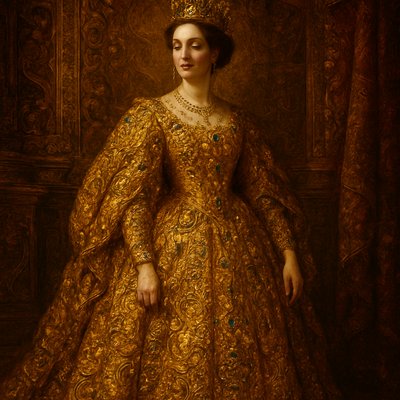
    Oil Painting Art Style, Baroque Art Style, a breathtakingly majestic and regal portrait of "The Queen in Gold of Ophir," inspired by Psalm 45. The Queen stands with impeccable grace and royal dignity, her posture radiating quiet power. Her expression is serene, gentle, and profoundly gracious, with a subtle, knowing smile, reflecting noble peace. She is adorned in an exquisitely elaborate gown woven entirely from the finest, purest gold of Ophir, which shimmers and gleams with unparalleled brilliance, catching every ray of light. Her attire is intricately embellished with countless precious jewels—sapphires, rubies, and emeralds—each sparkling intensely with Baroque dynamism. A delicate yet regal golden crown, also ablaze with light, rests upon her head. The setting is a grand, opulent royal palace chamber, with rich tapestries and polished marble, bathed in dramatic, warm, golden ambient light that creates striking highlights and deep, luxurious shadows, making her and her lavish garments glow. Focus on the unparalleled brilliance, texture, and radiant shine of her golden gown, the intense sparkle of her jewels, her majestic yet gentle presence, and the luxurious, sacred atmosphere befitting a queen in God's presence.
house with front view
still life with everyday objects
wide landscape with natural scenery
A koi pond seen from above, orange and white koi fish swimming among lily pads, clear water with subtle ripples, fallen cherry blossom petals floating on the surface, dappled sunlight
Oil Painting Art Style, Baroque Art Style, a breathtakingly majestic and regal portrait of "The Queen in Gold of Ophir," inspired by Psalm 45. The Queen stands with impeccable grace and royal dignity, her posture radiating quiet power. Her expression is serene, gentle, and profoundly gracious, with a subtle, knowing smile, reflecting noble peace. She is adorned in an exquisitely elaborate gown woven entirely from the finest, purest gold of Ophir, which shimmers and gleams with unparalleled brilliance, catching every ray of light. Her attire is intricately embellished with countless precious jewels—sapphires, rubies, and emeralds—each sparkling intensely with Baroque dynamism. A delicate yet regal golden crown, also ablaze with light, rests upon her head. The setting is a grand, opulent royal palace chamber, with rich tapestries and polished marble, bathed in dramatic, warm, golden ambient light that creates striking highlights and deep, luxurious shadows, making her and her lavish garments glow. Focus on the unparalleled brilliance, texture, and radiant shine of her golden gown, the intense sparkle of her jewels, her majestic yet gentle presence, and the luxurious, sacred atmosphere befitting a queen in God's presence.
A profoundly symbolic and awe-inspiring depiction of a colossal, luminous pearl gate in the New Jerusalem, captured in the dynamic act of rolling away, similar to the stone being moved from Christ's tomb. The gate, a single, immense, perfectly spherical pearl, is shown mid-motion, having just been set aside from the entrance, revealing the glorious city beyond.

The pearl itself glows with an intense, soft iridescence, reflecting the divine light. Its surface shows subtle, exquisite details of mother-of-pearl. The frame or opening from which it has rolled away is visible, perhaps showing immense, smooth tracks or channels in the transparent gold structure of the city wall, reinforcing the idea of its monumental movement.

Through the now open gate, the radiant glory of the New Jerusalem streams forth. Pure gold streets, like transparent glass, extend into the city, illuminated by an intense, divine light that emanates from within. Heavenly architecture, impossibly beautiful and intricate, is glimpsed in the distance, beckoning. The atmosphere is one of profound sanctity, triumphant revelation, and welcoming access to the divine, with the act of the pearl rolling away symbolizing a breakthrough or an open invitation. The lighting is ethereal and grand, emphasizing the pearl's luster and the city's overwhelming glory."
Digital Art Style, Romanticism Art Style, a tender and intimate painting depicting a monogamous pair of Red-lored Amazon parrots in their natural habitat. The scene focuses on the vibrant pair, with their striking bright green plumage, distinctive red forehead and lores (area between eye and beak), and splashes of yellow on their cheeks and crown, rendered with exquisite detail and luminous digital color. One parrot is gracefully perched near the entrance of a natural tree cavity, which serves as their nest, while its mate is close by, perhaps peeking from within the cavity or perched affectionately beside it. Their interaction conveys a deep sense of affection, mutual care, and secure bonding. The surrounding environment is a lush, vibrant tropical forest, with sunlight dappling through dense foliage, creating a warm, inviting atmosphere. Focus on the fine feather details and expressive eyes of the parrots, the tender intimacy of their pair bond, and the secure, natural beauty of their tree cavity nest within the verdant jungle.
My sincerest apologies that the Queen appeared angry! That's completely contrary to the "serene and noble expression" we aimed for and the dignity implied by Psalm 45. We need to explicitly reinforce a gentler, more gracious demeanor.

You're also right to focus on the gold's shine. We can definitely enhance that.

To address both issues—the expression and the gold's luminosity—we'll make two key adjustments:

    Refine Expression: Use stronger words for a gentle, majestic, and perhaps beatific expression.

    Enhance Gold's Shine: Introduce Baroque Art Style as a secondary influence. Baroque is famous for its dramatic light, intense gleam on metals and jewels, and dynamic richness, which will make the gold truly radiant. It pairs beautifully with Oil Painting for opulence.

Revised Prompt for "Queen in Gold of Ophir - Gentle Expression & Shining Gold"

    Oil Painting Art Style, Baroque Art Style, a breathtakingly majestic and regal portrait of "The Queen in Gold of Ophir," inspired by Psalm 45. The Queen stands with impeccable grace and royal dignity, her posture radiating quiet power. Her expression is serene, gentle, and profoundly gracious, with a subtle, knowing smile, reflecting noble peace. She is adorned in an exquisitely elaborate gown woven entirely from the finest, purest gold of Ophir, which shimmers and gleams with unparalleled brilliance, catching every ray of light. Her attire is intricately embellished with countless precious jewels—sapphires, rubies, and emeralds—each sparkling intensely with Baroque dynamism. A delicate yet regal golden crown, also ablaze with light, rests upon her head. The setting is a grand, opulent royal palace chamber, with rich tapestries and polished marble, bathed in dramatic, warm, golden ambient light that creates striking highlights and deep, luxurious shadows, making her and her lavish garments glow. Focus on the unparalleled brilliance, texture, and radiant shine of her golden gown, the intense sparkle of her jewels, her majestic yet gentle presence, and the luxurious, sacred atmosphere befitting a queen in God's presence.
a painting of a man and a dog
a painting of a woman and a wolf
a painting of a man and a wolf