A Painting Of A Motorcycle On A Couch Art

A breathtaking and dynamic close-up scene depicting two iridescent hummingbirds engaged in a vigorous mid-air duel over a cluster of vibrant, nectar-rich flowers. Their tiny wings are blurred into translucent arcs of motion, a testament to their incredible speed and agility, creating a frantic, energetic atmosphere.

One hummingbird, perhaps a brilliant emerald green, lunges forward, while the other, possibly a fiery ruby red or shimmering blue, hovers defensively, their long beaks pointed towards each other in a fierce territorial display. Their tiny, intense eyes are sharply focused on their opponent.

They are positioned directly above or fiercely guarding a cluster of brightly colored, inviting flowers, such as trumpet vines, fuchsias, or salvia, which are depicted with exquisite detail and rich, saturated hues, dripping with nectar. The background is a soft, dreamlike blur of lush green foliage and dappled sunlight, keeping the focus entirely on the intense aerial ballet. The lighting is bright and dramatic, catching the metallic sheen of their feathers and emphasizing their jewel-like colors. The overall mood is one of intense energy, fierce beauty, and natural competition dynamic illustration, vibrant fantasy art, exaggerated motion lines, glowing effects on iridescence, stylized flowers, energetic and fluid composition
A historically accurate and atmospheric depiction of the signing of the Mayflower Compact aboard the ship in November 1620. The scene is set in the dimly lit, cramped cabin of the Mayflower, with the ship's timbers and rigging subtly visible, conveying the challenging conditions of the voyage. A simple table or chest serves as the signing surface. The primary focus is on a small group of the last individuals signing the document: specifically, the indentured servants (or 'strangers' not directly part of the Separatist congregation) approaching or at the table. Their expressions show a mix of weary determination, understanding of the necessity, and perhaps a hint of quiet apprehension or resignation to this new social contract, given their status. They are dressed in the plain, practical clothing typical of 17th-century commoners and laborers. Figures of prominent Pilgrims or 'Saints' (like William Bradford or John Carver) are visible in the background, observing the proceedings with a sense of gravity and leadership, but they are not the central focus. The lighting is low and warm, perhaps from a lantern, creating a chiaroscuro effect that highlights the faces of the signers. The atmosphere conveys the momentousness of the act under difficult circumstances, the diverse composition of the group, and the early seeds of self-governance in a new world. The artistic style is a realistic, historically detailed oil painting, capturing the solemnity and human element of this pivotal historical moment."

A historically accurate, deeply reverent and spiritually evocative oil painting. Two traditional Southern Ute individuals, a man and a woman, stand side-by-side with profound solemnity and ancient peace on the high mesa overlooking the twin spires of Chimney Rock National Monument (Chimney Rock and Companion Rock). They are dressed in authentic, richly detailed traditional attire. The man holds a feathered staff, his gaze directed towards the horizon, symbolizing his role as a protector and observer of the earth. The woman gestures subtly towards the sky, her posture conveying an intimate connection to the celestial, perhaps in a gesture of spiritual offering or acknowledgment. The scene's context is the stalling of the moon's analemma, with the moon itself appearing large and prominent, hanging low in the sky, its unique position clearly marking this cyclical astronomical pause. The atmosphere is bathed in the ethereal, soft glow of early morning light, just as the sun begins to kiss the distant peaks, casting long, significant shadows that stretch across the mesa. Their faces are etched with wisdom and a quiet understanding of the cosmos. The vast, spiritual landscape of Chimney Rock is an integral part of the composition, symbolizing their deep, timeless connection to both earth and sky, and their role as guardians of this sacred knowledge. Fine art composition, conveying a powerful sense of timeless ritual, astronomical reverence, and cultural continuity
"A historically accurate depiction of a Ghost Dance, focusing on the late 19th-century context, specifically around 1890-1891. The scene shows Lakota (Sioux) or Northern Paiute people (specify one or include elements of both, but avoid anachronisms) participating in the ceremony.

Setting: A vast, open prairie or high desert landscape, under an expansive sky. The time of day could be dusk or night, with a prominent moon or stars, or a bright, clear day. Avoid overtly spiritual or ethereal elements like floating spirits unless explicitly requested for a later, more symbolic iteration. The focus should be on the earthly ceremony.

Participants: A circle of men, women, and children, hand-in-hand, moving in a slow, rhythmic shuffle or circular motion. Their faces show a mixture of devotion, hope, and determination. Some may have expressions of trance or deep concentration.

Attire:

    Ghost Dance Shirts/Dresses: Emphasize the unique Ghost Dance shirts and dresses, which were typically made of muslin or canvas. These garments should feature painted designs such as stars, crescents, birds (especially eagles or crows), buffalo, human figures, or crosses. The designs should appear hand-painted, not mass-produced.

    Hair and Adornments: Participants should have braided hair or wear it long. Some may wear feathers (e.g., eagle or hawk feathers) in their hair. Minimal traditional adornments, as the focus was often on the Ghost Dance shirt itself. Avoid overly elaborate or Hollywood-esque depictions of war bonnets unless relevant to a specific individual and context.

    Footwear: Moccasins or bare feet.

Action/Atmosphere:

    The dancers are moving in a counter-clockwise circle, with a central figure or a small group often leading.

    The overall mood is one of earnest prayer and communal spiritual effort. The dance should convey a sense of hope for renewal and the return of the old ways, rather than aggression or despair.

    There might be a central pole or small fire as a focal point, around which the dance takes place.

    Avoid any signs of direct conflict or violence; the Ghost Dance itself was a non-violent spiritual movement.

Specific Considerations for Accuracy:

    Wovoka's Influence: The teachings of Wovoka (the Northern Paiute prophet) emphasized peace, hard work, and the return of the buffalo and deceased ancestors. The scene should subtly reflect this hopeful, redemptive spirit.

    Regional Variations: If focusing on Lakota, consider their specific interpretations, which sometimes included more imagery related to their warrior traditions on the shirts, but still within the peaceful framework of the dance.

    Respectful Portrayal: Ensure the depiction is respectful and avoids any stereotypical or caricatured representations of Indigenous people. Focus on their human dignity and spiritual sincerity.
Minimalist arrangement of colored rectangles in the art style of Hard-edge Painting --v 6.1
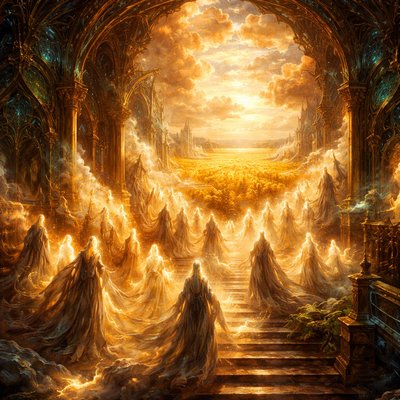
They shall build houses and inhabit them;
they shall plant vineyards and eat their fruit.
and my chosen shall long enjoy the work of their hands.
A hummingbird among flowers
Alice, wearing her blue dress, looking distressed, with her neck stretched impossibly high, vanishing into the foliage above. Her head emerges far above the trees of the Wonderland forest. A flock of angry Pigeons fly around her immense face, one landing on her ear and pecking at it, mistakenly believing her to be a serpent trying to steal their eggs. Below, the tiny, disoriented body of Alice stands near the base of the massive neck. Whimsical, detailed oil painting, saturated colors, storybook illustration by John Tenniel crossed with Salvador Dali, high contrast lighting.
The Venus Rose pattern of the ecliptic
A biblical scene of Moses anointing Aaron with oil, inspired by the Book of Exodus. Moses, an older man with a long white beard, is holding a golden goblet and pouring oil directly onto Aaron's uncovered head. Moses is not wearing glasses, and his hands do not touch Aaron's head. Aaron is a man in his 50s with a full beard, dressed in ornate priestly robes with a richly colored ephod and no head covering. The oil flows visibly onto Aaron's head, beard, and garments. The setting is a desert-like environment near the Tabernacle, with woven curtains in the background, illuminated by warm, divine light. The scene reflects a biblical atmosphere with historically accurate clothing and details.
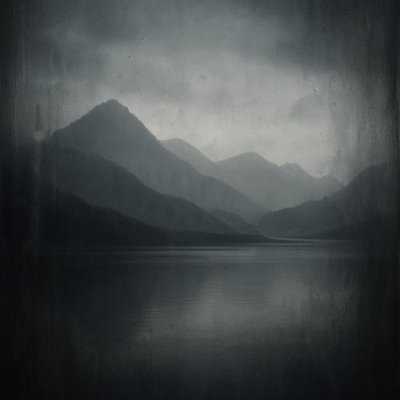
wide landscape with natural scenery
Large canvas with expansive areas of single colors in the art style of Color Field Painting --v 6.1
An extreme low-angle perspective shot, looking vertically up toward the sky. Alice’s impossibly long, pale neck stretches out of frame through the dense, gnarled canopy of the dark Wonderland forest. Her head, massive and distorted by the perspective, is visible against a turbulent, twilight sky. Her expression is one of confusion and fear. Small, furious Pigeons swarm her head like bothersome insects. The scene is lit by eerie moonlight filtering through the leaves, emphasizing the dramatic scale and height. Photorealistic fantasy, cinematic 16:9 aspect ratio, volumetric fog, moody atmosphere.
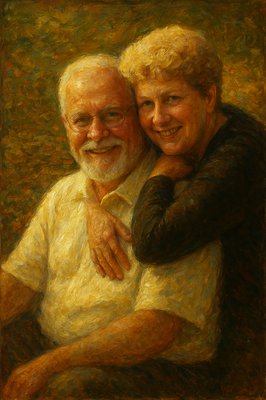
portrait of two people together
Digital Painting Art Style Style Transfer Example
Anguished figure
Inside a raindrop
My sincerest apologies that the Queen appeared angry! That's completely contrary to the "serene and noble expression" we aimed for and the dignity implied by Psalm 45. We need to explicitly reinforce a gentler, more gracious demeanor.

You're also right to focus on the gold's shine. We can definitely enhance that.

To address both issues—the expression and the gold's luminosity—we'll make two key adjustments:

    Refine Expression: Use stronger words for a gentle, majestic, and perhaps beatific expression.

    Enhance Gold's Shine: Introduce Baroque Art Style as a secondary influence. Baroque is famous for its dramatic light, intense gleam on metals and jewels, and dynamic richness, which will make the gold truly radiant. It pairs beautifully with Oil Painting for opulence.

Revised Prompt for "Queen in Gold of Ophir - Gentle Expression & Shining Gold"

    Oil Painting Art Style, Baroque Art Style, a breathtakingly majestic and regal portrait of "The Queen in Gold of Ophir," inspired by Psalm 45. The Queen stands with impeccable grace and royal dignity, her posture radiating quiet power. Her expression is serene, gentle, and profoundly gracious, with a subtle, knowing smile, reflecting noble peace. She is adorned in an exquisitely elaborate gown woven entirely from the finest, purest gold of Ophir, which shimmers and gleams with unparalleled brilliance, catching every ray of light. Her attire is intricately embellished with countless precious jewels—sapphires, rubies, and emeralds—each sparkling intensely with Baroque dynamism. A delicate yet regal golden crown, also ablaze with light, rests upon her head. The setting is a grand, opulent royal palace chamber, with rich tapestries and polished marble, bathed in dramatic, warm, golden ambient light that creates striking highlights and deep, luxurious shadows, making her and her lavish garments glow. Focus on the unparalleled brilliance, texture, and radiant shine of her golden gown, the intense sparkle of her jewels, her majestic yet gentle presence, and the luxurious, sacred atmosphere befitting a queen in God's presence.
Hard-edge interpretation of natural forms like leaves or flowers in the art style of Hard-edge Painting --v 6.1
Spontaneous color field with evidence of drips and splatters in the art style of Action Painting --v 6.1
Metropolis
Metropolis
Kinetic Geometric Art Style Transfer Example
VFX Compositing Digital Art Style Style Transfer Example
Classical Impasto Realism Style Transfer Example
Kinetic Geometric Art Style Transfer Example
Gothic Romance Art Style Transfer Example
VFX Compositing Digital Art Style Style Transfer Example
still life with everyday objects
wide landscape with natural scenery
still life with everyday objects
wide landscape with natural scenery
still life with everyday objects
Landscape Nature Art Style Transfer Example
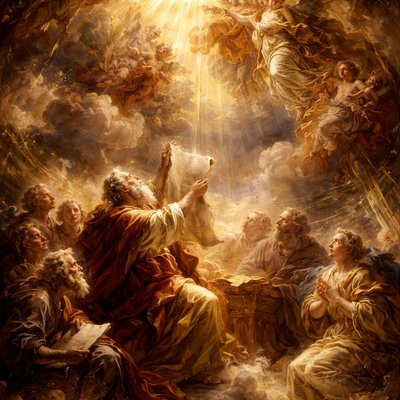
Divine Light Renaissance Art Style Style Transfer Example