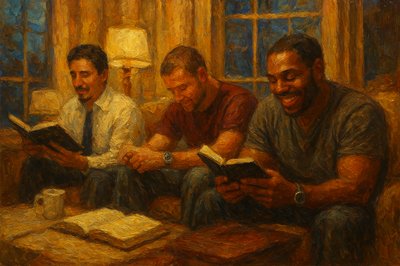
A Painting Of A Man Sitting At A Table With A Tablet Art

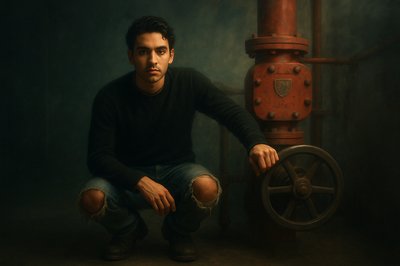
a painting of a man sitting next to a red fire hydrant
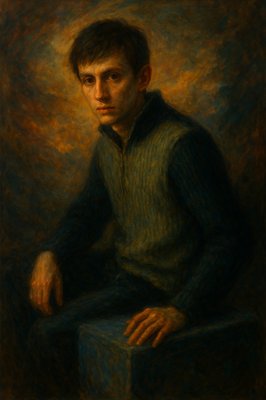
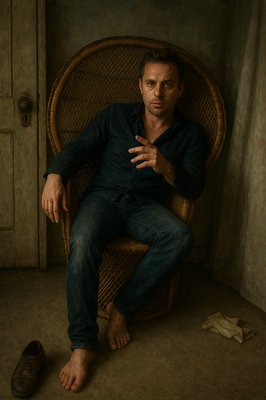
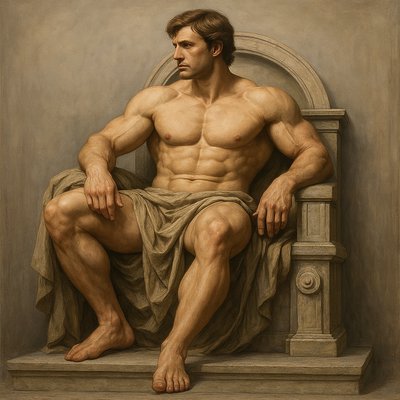
a painting of a man sitting in a chair
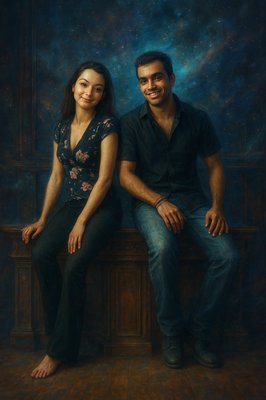
a painting of a man and a woman sitting on a bench
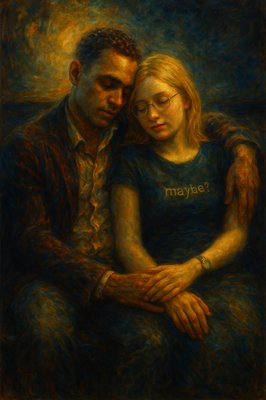
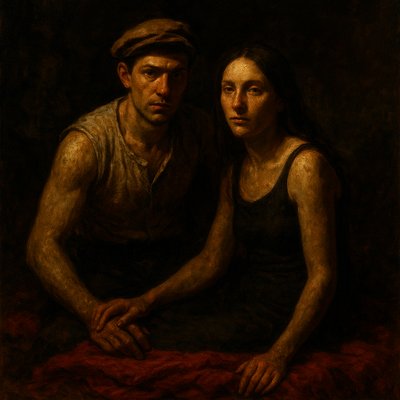
a painting of a man sitting next to a woman
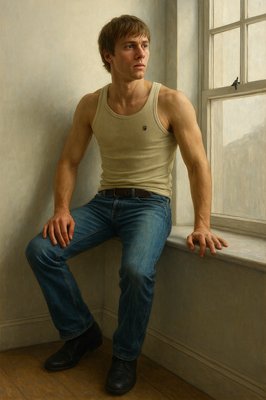
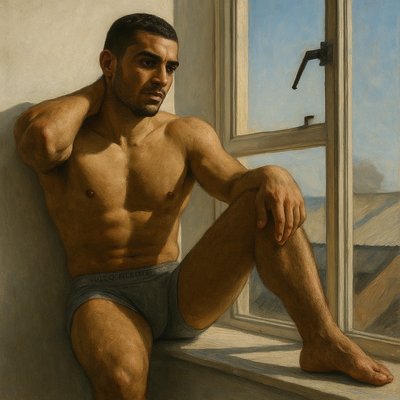
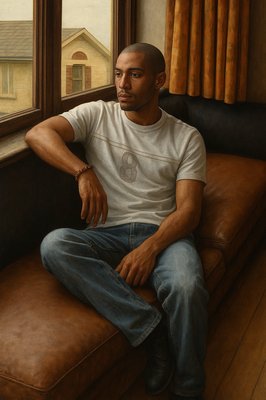
a painting of a man sitting on a window sill
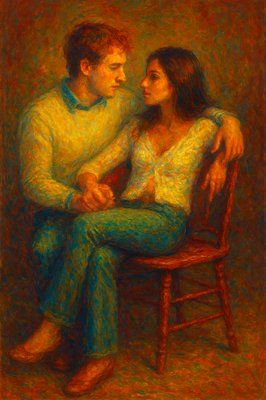
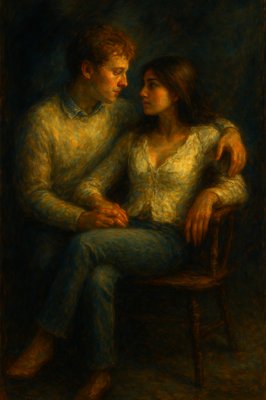
a painting of a man and a woman sitting on a chair
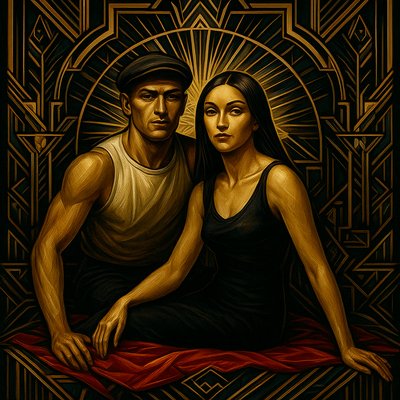
a painting of a man and woman sitting next to each other
a painting of a man sitting in a wicker chair
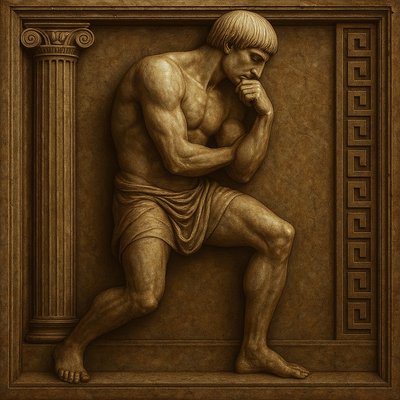
a painting of a man sitting in a niche
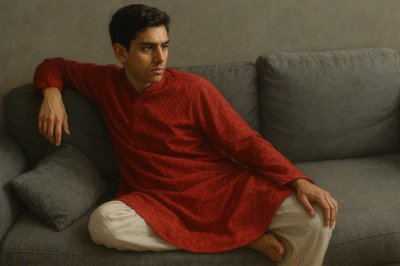
a painting of a man sitting on a couch
a painting of a man and woman sitting next to each other
a painting of a man and a woman sitting together
a painting of a man sitting on a bench
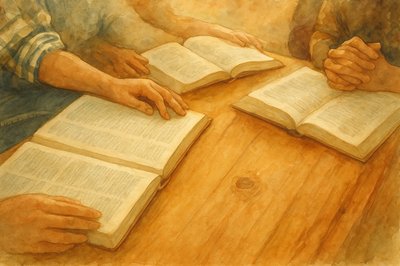
two people sitting at a table with open books
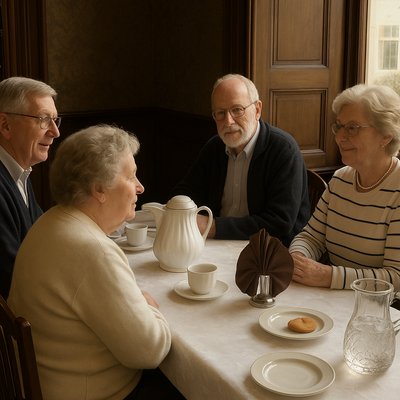
a group of people sitting around a table
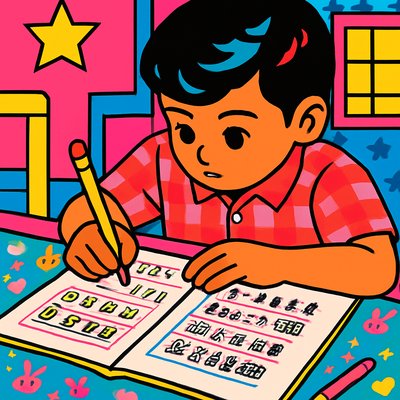
a young boy sitting at a table writing on a piece of paper
Banquet table with oysters and wine
a man sitting on the ground in the grass
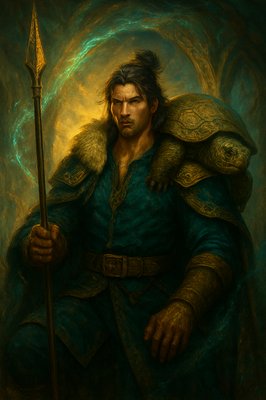
a man sitting on a chair with a turtle on his shoulders
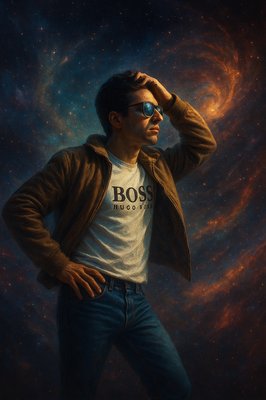
a painting of a man wearing sunglasses and a t - shirt
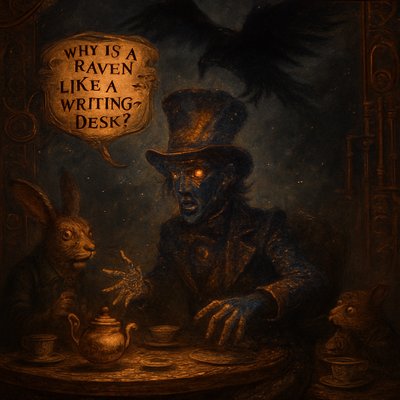
A low-angle, hyper-detailed tableau of the Mad Hatter's Tea Party, viewed under a dark, star-filled sky. The Mad Hatter sits at the table, his features not quite human, but constructed entirely from brilliant indigo and gold cosmic dust, representing the constellation Lepus. His top hat is a vortex of nebula, and one eye burns intensely—a specific star named "The Mad."

The Hatter is caught mid-sentence, demanding, "Why is a raven like a writing-desk?" As he speaks, his hands, which were merely starry, begin to shed their light, and the true form is revealed: the lower half of his coat and chair morph into coiling, dark serpentine scales, twisting around the table leg. The March Hare and Dormouse are frozen in terror. Above the table, a Raven made of pitch-black night materializes, its shadow falling directly over the Hatter. The entire scene is vibrating with the furious energy of a creature—the ancient serpent—who knows his time has been irrevocably stopped.

Style: Cinematic dark fantasy, astronomical realism, oil painting texture, emphasis on the contrast between the cold cosmic starlight and the dark, furious energy of the serpentine transformation.
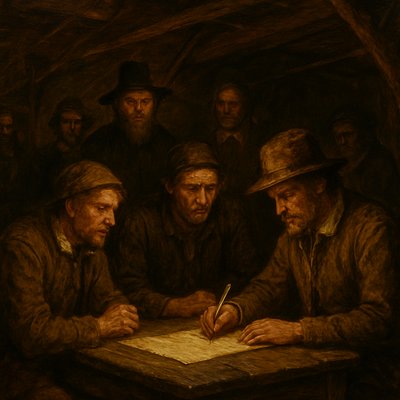
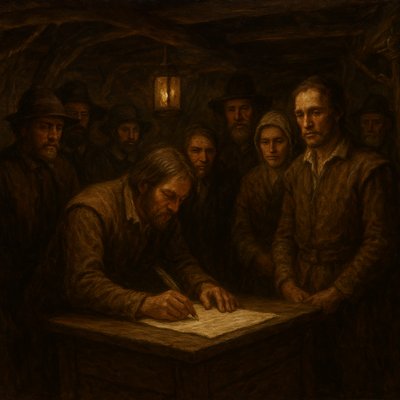
A historically accurate and atmospheric depiction of the signing of the Mayflower Compact aboard the ship in November 1620. The scene is set in the dimly lit, cramped cabin of the Mayflower, with the ship's timbers and rigging subtly visible, conveying the challenging conditions of the voyage. A simple table or chest serves as the signing surface. The primary focus is on a small group of the last individuals signing the document: specifically, the indentured servants (or 'strangers' not directly part of the Separatist congregation) approaching or at the table. Their expressions show a mix of weary determination, understanding of the necessity, and perhaps a hint of quiet apprehension or resignation to this new social contract, given their status. They are dressed in the plain, practical clothing typical of 17th-century commoners and laborers. Figures of prominent Pilgrims or 'Saints' (like William Bradford or John Carver) are visible in the background, observing the proceedings with a sense of gravity and leadership, but they are not the central focus. The lighting is low and warm, perhaps from a lantern, creating a chiaroscuro effect that highlights the faces of the signers. The atmosphere conveys the momentousness of the act under difficult circumstances, the diverse composition of the group, and the early seeds of self-governance in a new world. The artistic style is a realistic, historically detailed oil painting, capturing the solemnity and human element of this pivotal historical moment."
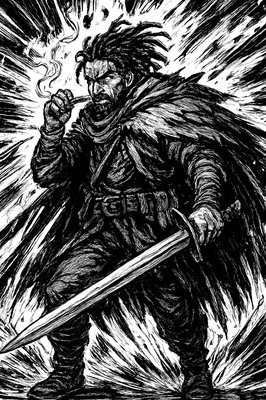

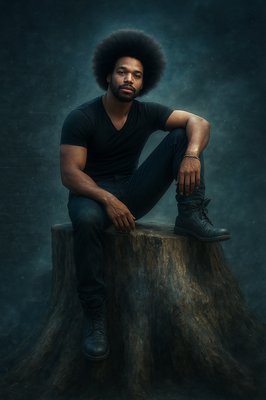
a man sitting on top of a tree stump
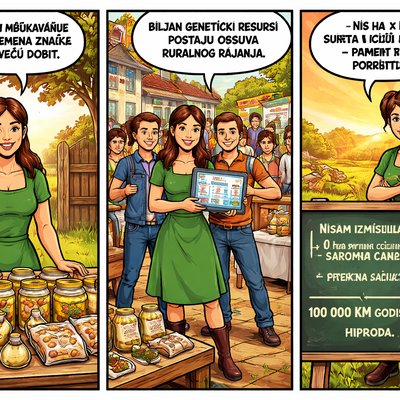
Kadar 6.:Same young rural female entrepreneur with brown hair in a ponytail, wearing a simple green dress, standing in front of her family farm gate. On a wooden table in front of her are jars of bean spread, glass jars with layered bean salads, and small eco paper packages of traditional bean seeds with labels. Warm afternoon light, optimistic atmosphere, cinematic comic illustration, semi-realistic style, detailed, storytelling panel, consistent character design, same face, same hairstyle, same clothing.

Add a speech bubble.

Speech bubble text in Serbian (ijekavian, Latin script). Use EXACTLY this text. Do not translate:

"Prerada i umnožavanje sjemena znače veću dobit."
Kadar 7:Same young rural female entrepreneur with brown ponytail and green dress, standing together with other young farmers in front of a rural cooperative building. They are smiling and holding a tablet showing online shop statistics. There are promotional banners, workshop tables with tasting samples, and rural tourism elements in the background. Bright hopeful atmosphere, cinematic comic style, semi-realistic illustration, detailed, storytelling panel, consistent character design, same face, same hairstyle, same clothing.

Add a speech bubble.

Speech bubble text in Serbian (ijekavian, Latin script). Use EXACTLY this text. Do not translate:

"Biljni genetički resursi postaju osnova ruralnog razvoja."
Kadar.:Same young rural female entrepreneur standing confidently next to a chalkboard with a written business formula. She is smiling proudly in front of her farm landscape at sunset. Warm golden light, inspirational mood, cinematic comic panel, semi-realistic illustration, detailed, consistent character design, same face, same hairstyle, same clothing.

On the chalkboard write in Serbian (ijekavian, Latin script). Use EXACTLY this text. Do not translate:

"10 ha × premium cijena × direktna prodaja × prerada = 100 000 KM godišnje prihoda"

Add a speech bubble.

Speech bubble text in Serbian (ijekavian, Latin script). Use EXACTLY this text. Do not translate:

"Nisam izmislila ništa novo. Samo sam sačuvala staro — i pametno ga iskoristila."
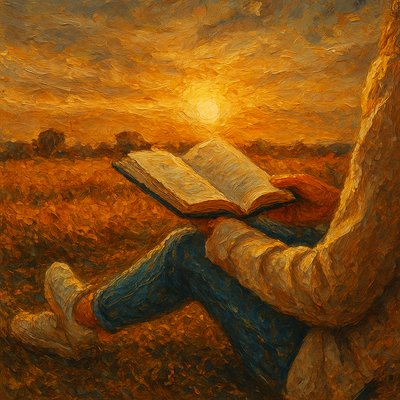
a painting of a person sitting in a field reading a book
A historically accurate and atmospheric depiction of the signing of the Mayflower Compact aboard the ship in November 1620. The scene is set in the dimly lit, cramped cabin of the Mayflower, with the ship's timbers and rigging subtly visible, conveying the challenging conditions of the voyage. A simple table or chest serves as the signing surface. The primary focus is on a small group of the last individuals signing the document: specifically, the indentured servants (or 'strangers' not directly part of the Separatist congregation) approaching or at the table. Their expressions show a mix of weary determination, understanding of the necessity, and perhaps a hint of quiet apprehension or resignation to this new social contract, given their status. They are dressed in the plain, practical clothing typical of 17th-century commoners and laborers. Figures of prominent Pilgrims or 'Saints' (like William Bradford or John Carver) are visible in the background, observing the proceedings with a sense of gravity and leadership, but they are not the central focus. The lighting is low and warm, perhaps from a lantern, creating a chiaroscuro effect that highlights the faces of the signers. The atmosphere conveys the momentousness of the act under difficult circumstances, the diverse composition of the group, and the early seeds of self-governance in a new world. The artistic style is a realistic, historically detailed oil painting, capturing the solemnity and human element of this pivotal historical moment."
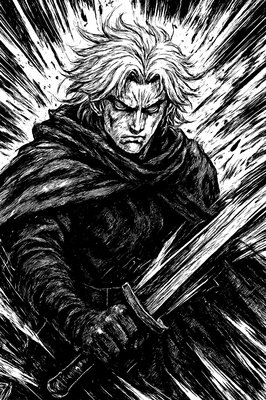
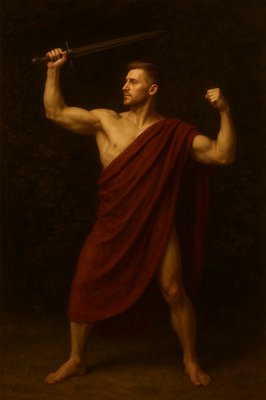
a painting of a man with a sword
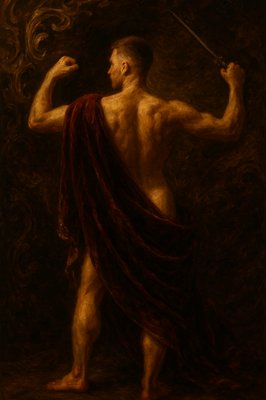
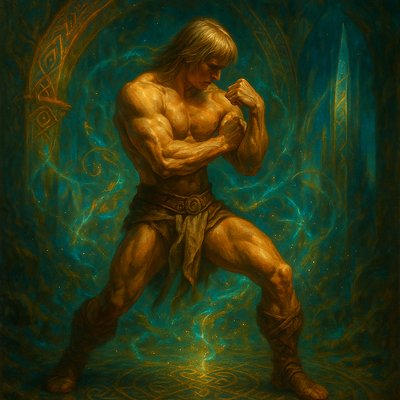
a painting of a man with a fist
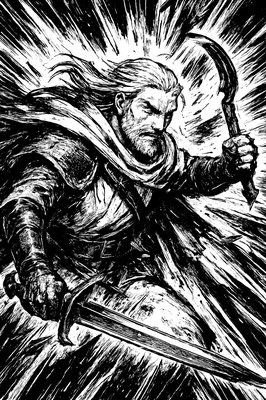
a painting of a man with a sword
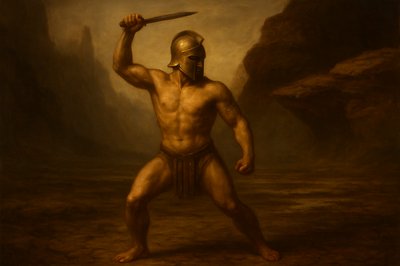
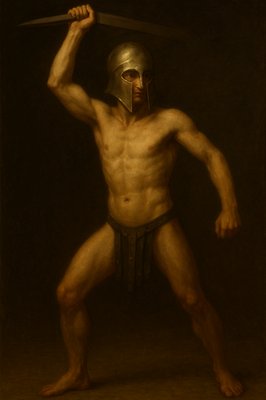
a painting of a man with a helmet holding a sword
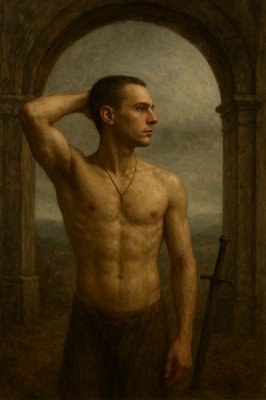
a painting of a man with a sword
a man and a woman are sitting on a blanket
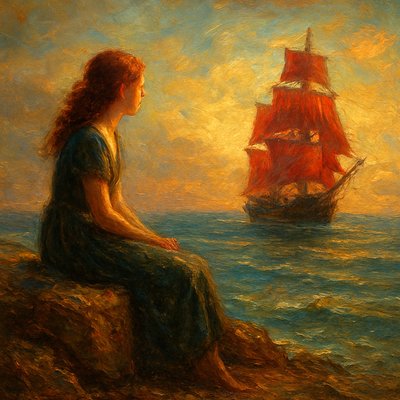
a girl sitting on a rock looking at the sea with a big ship with red sails on the horizon
a painting of three men sitting on a couch
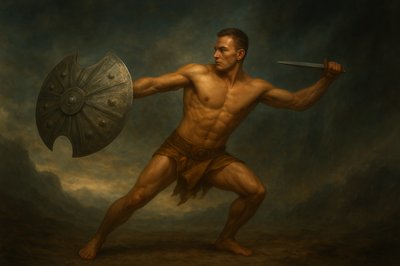
a painting of a man with a sword and shield