A Painting Of A Man And A Woman Looking Out A Window Art

Art Style: Analytical Cubism, avant-garde oil painting style reminiscent of Picasso and Braque.

Subject: A dense, tangled thicket of Rhododendrons and Mountain Laurel bushes.

Composition & Details: The entire natural scene is deconstructed into overlapping geometric planes, fractured shards, and intersecting angles. There are no curved lines; everything is rendered in cubes, cones, and trapezoids.

    The Rhododendrons: Large, showy flower trusses are broken into faceted crystalline structures of deep magenta, rose pink, and violet blocks, looking like explosions of colored quartz rather than soft petals.

    The Mountain Laurels: The smaller, intricate flowers are rendered as complex, repeating geometric star-patterns and angular cups in white and pale pink with distinct red polygonal markings.

    Foliage & Branches: The thick, leathery leaves are fragmented green triangles and parallelograms overlapping each other, creating a sense of depth without traditional perspective. The woody stems and branches are jagged, intersecting brown and grey cylinders that shatter across the frame.
Color & Texture: A palette of muted earth tones—ochre, burnt umber, forest green, and slate grey—contrasted sharply with the jewel-toned facets of the flower colors. The finish should have a heavy, textured oil paint feel with visible palette knife marks and rough brushwork.
Art Style: Analytical Cubism, avant-garde oil painting style reminiscent of Picasso and Braque.

Subject: A dense, tangled thicket of Rhododendrons and Mountain Laurel bushes.

Composition & Details: The entire natural scene is deconstructed into overlapping geometric planes, fractured shards, and intersecting angles. There are no curved lines; everything is rendered in cubes, cones, and trapezoids.

    The Rhododendrons: Large, showy flower trusses are broken into faceted crystalline structures of deep magenta, rose pink, and violet blocks, looking like explosions of colored quartz rather than soft petals.

    The Mountain Laurels: The smaller, intricate flowers are rendered as complex, repeating geometric star-patterns and angular cups in white and pale pink with distinct red polygonal markings.

    Foliage & Branches: The thick, leathery leaves are fragmented green triangles and parallelograms overlapping each other, creating a sense of depth without traditional perspective. The woody stems and branches are jagged, intersecting brown and grey cylinders that shatter across the frame.
Color & Texture: A palette of muted earth tones—ochre, burnt umber, forest green, and slate grey—contrasted sharply with the jewel-toned facets of the flower colors. The finish should have a heavy, textured oil paint feel with visible palette knife marks and rough brushwork.
Art Style: Analytical Cubism, avant-garde oil painting style reminiscent of Picasso and Braque.

Subject: A dense, tangled thicket of Rhododendrons and Mountain Laurel bushes.

Composition & Details: The entire natural scene is deconstructed into overlapping geometric planes, fractured shards, and intersecting angles. There are no curved lines; everything is rendered in cubes, cones, and trapezoids.

    The Rhododendrons: Large, showy flower trusses are broken into faceted crystalline structures of deep magenta, rose pink, and violet blocks, looking like explosions of colored quartz rather than soft petals.

    The Mountain Laurels: The smaller, intricate flowers are rendered as complex, repeating geometric star-patterns and angular cups in white and pale pink with distinct red polygonal markings.

    Foliage & Branches: The thick, leathery leaves are fragmented green triangles and parallelograms overlapping each other, creating a sense of depth without traditional perspective. The woody stems and branches are jagged, intersecting brown and grey cylinders that shatter across the frame.

Color & Texture: A palette of muted earth tones—ochre, burnt umber, forest green, and slate grey—contrasted sharply with the jewel-toned facets of the flower colors. The finish should have a heavy, textured oil paint feel with visible palette knife marks and rough brushwork.
Art Style: Analytical Cubism, avant-garde oil painting style reminiscent of Picasso and Braque.

Subject: A dense, tangled thicket of Rhododendrons and Mountain Laurel bushes.

Composition & Details: The entire natural scene is deconstructed into overlapping geometric planes, fractured shards, and intersecting angles. There are no curved lines; everything is rendered in cubes, cones, and trapezoids.

    The Rhododendrons: Large, showy flower trusses are broken into faceted crystalline structures of deep magenta, rose pink, and violet blocks, looking like explosions of colored quartz rather than soft petals.

    The Mountain Laurels: The smaller, intricate flowers are rendered as complex, repeating geometric star-patterns and angular cups in white and pale pink with distinct red polygonal markings.

    Foliage & Branches: The thick, leathery leaves are fragmented green triangles and parallelograms overlapping each other, creating a sense of depth without traditional perspective. The woody stems and branches are jagged, intersecting brown and grey cylinders that shatter across the frame.

Color & Texture: A palette of muted earth tones—ochre, burnt umber, forest green, and slate grey—contrasted sharply with the jewel-toned facets of the flower colors. The finish should have a heavy, textured oil paint feel with visible palette knife marks and rough brushwork.
Art Style: Analytical Cubism, avant-garde oil painting style reminiscent of Picasso and Braque.

Subject: A dense, tangled thicket of Rhododendrons and Mountain Laurel bushes.

Composition & Details: The entire natural scene is deconstructed into overlapping geometric planes, fractured shards, and intersecting angles. There are no curved lines; everything is rendered in cubes, cones, and trapezoids.

    The Rhododendrons: Large, showy flower trusses are broken into faceted crystalline structures of deep magenta, rose pink, and violet blocks, looking like explosions of colored quartz rather than soft petals.

    The Mountain Laurels: The smaller, intricate flowers are rendered as complex, repeating geometric star-patterns and angular cups in white and pale pink with distinct red polygonal markings.

    Foliage & Branches: The thick, leathery leaves are fragmented green triangles and parallelograms overlapping each other, creating a sense of depth without traditional perspective. The woody stems and branches are jagged, intersecting brown and grey cylinders that shatter across the frame.

Color & Texture: A palette of muted earth tones—ochre, burnt umber, forest green, and slate grey—contrasted sharply with the jewel-toned facets of the flower colors. The finish should have a heavy, textured oil paint feel with visible palette knife marks and rough brushwork.
Art Style: Analytical Cubism, avant-garde oil painting style reminiscent of Picasso and Braque.

Subject: A dense, tangled thicket of Rhododendrons and Mountain Laurel bushes.

Composition & Details: The entire natural scene is deconstructed into overlapping geometric planes, fractured shards, and intersecting angles. There are no curved lines; everything is rendered in cubes, cones, and trapezoids.

    The Rhododendrons: Large, showy flower trusses are broken into faceted crystalline structures of deep magenta, rose pink, and violet blocks, looking like explosions of colored quartz rather than soft petals.

    The Mountain Laurels: The smaller, intricate flowers are rendered as complex, repeating geometric star-patterns and angular cups in white and pale pink with distinct red polygonal markings.

    Foliage & Branches: The thick, leathery leaves are fragmented green triangles and parallelograms overlapping each other, creating a sense of depth without traditional perspective. The woody stems and branches are jagged, intersecting brown and grey cylinders that shatter across the frame.

Color & Texture: A palette of muted earth tones—ochre, burnt umber, forest green, and slate grey—contrasted sharply with the jewel-toned facets of the flower colors. The finish should have a heavy, textured oil paint feel with visible palette knife marks and rough brushwork.
A serene and majestic watercolor painting, capturing the essence of a grand, towering evergreen tree (like the dominant one in the provided image) standing proudly in a sun-dappled, open forest glade. The tree's deep green needles are rendered with varying washes, showcasing its immense height and full, tiered branches that reach towards a partly cloudy, bright blue sky.

In the foreground and around the base of this glorious tree, two or three graceful mule deer are depicted. One might be grazing peacefully, another looking up towards the viewer with its large, expressive ears, and a fawn possibly tucked nearby. Their coats are rendered in soft, earthy watercolor tones of grey-brown, with delicate highlights and shading to suggest their gentle forms and distinctive white rumps and tails.

The surrounding landscape features a subtle ground cover of dry grasses and scattered undergrowth, characteristic of a high-desert or mountain forest floor, painted with soft, blended washes of ochre, sage green, and light brown. The sky above is a classic watercolor blend of soft blues and wispy white clouds. The overall mood is one of tranquil natural beauty, quiet majesty, and a harmonious coexistence of wildlife and ancient trees, rendered with the flowing, luminous quality of watercolor art
"A cheerful and fantastical figure with a large, glowing jack-o'-lantern for a head. The pumpkin's face is carved with a distinctly happy, friendly, wide-mouthed smile and joyful eyes. Instead of traditional jagged cuts, the facial features (eyes, nose, mouth) are intricately carved with elegant, swirling, vine-like patterns, giving it a whimsical and artistic look. The pumpkin head emits a warm, inviting orange glow from within.

Dramatically bursting and cascading out of the very top of the pumpkin's head is an overflowing abundance of vibrant, colorful Halloween candy. This candy explosion includes individually wrapped chocolates, lollipops, jelly beans, candy corn, and various brightly colored sweets, all tumbling outwards in a joyous, sugary fountain.

The figure itself has a rustic, scarecrow-like body, perhaps dressed in tattered but festive autumn-colored clothing (e.g., burlap, plaid, or warm browns and oranges), standing in an autumnal setting. The background could feature a gently lit pumpkin patch, fallen autumn leaves, or a soft, blurred evening sky. The lighting is warm and enchanting, highlighting the pumpkin's glow and the glossy sheen of the candy. The overall mood is one of festive joy, playful magic, and autumnal abundance. stylized realism, intricate detail, dynamic composition, warm dramatic lighting, focus on textures (pumpkin, candy), fantasy elements"
Art Style: Analytical Cubism, avant-garde oil painting style reminiscent of Picasso and Braque.

Subject: A dense, tangled thicket of Rhododendrons and Mountain Laurel bushes.

Composition & Details: The entire natural scene is deconstructed into overlapping geometric planes, fractured shards, and intersecting angles. There are no curved lines; everything is rendered in cubes, cones, and trapezoids.

    The Rhododendrons: Large, showy flower trusses are broken into faceted crystalline structures of deep magenta, rose pink, and violet blocks, looking like explosions of colored quartz rather than soft petals.

    The Mountain Laurels: The smaller, intricate flowers are rendered as complex, repeating geometric star-patterns and angular cups in white and pale pink with distinct red polygonal markings.

    Foliage & Branches: The thick, leathery leaves are fragmented green triangles and parallelograms overlapping each other, creating a sense of depth without traditional perspective. The woody stems and branches are jagged, intersecting brown and grey cylinders that shatter across the frame.

Color & Texture: A palette of muted earth tones—ochre, burnt umber, forest green, and slate grey—contrasted sharply with the jewel-toned facets of the flower colors. The finish should have a heavy, textured oil paint feel with visible palette knife marks and rough brushwork.
Art Style: Analytical Cubism, avant-garde oil painting style reminiscent of Picasso and Braque.

Subject: A dense, tangled thicket of Rhododendrons and Mountain Laurel bushes.

Composition & Details: The entire natural scene is deconstructed into overlapping geometric planes, fractured shards, and intersecting angles. There are no curved lines; everything is rendered in cubes, cones, and trapezoids.

    The Rhododendrons: Large, showy flower trusses are broken into faceted crystalline structures of deep magenta, rose pink, and violet blocks, looking like explosions of colored quartz rather than soft petals.

    The Mountain Laurels: The smaller, intricate flowers are rendered as complex, repeating geometric star-patterns and angular cups in white and pale pink with distinct red polygonal markings.

    Foliage & Branches: The thick, leathery leaves are fragmented green triangles and parallelograms overlapping each other, creating a sense of depth without traditional perspective. The woody stems and branches are jagged, intersecting brown and grey cylinders that shatter across the frame.

Color & Texture: A palette of muted earth tones—ochre, burnt umber, forest green, and slate grey—contrasted sharply with the jewel-toned facets of the flower colors. The finish should have a heavy, textured oil paint feel with visible palette knife marks and rough brushwork.
Art Style: Analytical Cubism, avant-garde oil painting style reminiscent of Picasso and Braque.

Subject: A dense, tangled thicket of Rhododendrons and Mountain Laurel bushes.

Composition & Details: The entire natural scene is deconstructed into overlapping geometric planes, fractured shards, and intersecting angles. There are no curved lines; everything is rendered in cubes, cones, and trapezoids.

    The Rhododendrons: Large, showy flower trusses are broken into faceted crystalline structures of deep magenta, rose pink, and violet blocks, looking like explosions of colored quartz rather than soft petals.

    The Mountain Laurels: The smaller, intricate flowers are rendered as complex, repeating geometric star-patterns and angular cups in white and pale pink with distinct red polygonal markings.

    Foliage & Branches: The thick, leathery leaves are fragmented green triangles and parallelograms overlapping each other, creating a sense of depth without traditional perspective. The woody stems and branches are jagged, intersecting brown and grey cylinders that shatter across the frame.

Color & Texture: A palette of muted earth tones—ochre, burnt umber, forest green, and slate grey—contrasted sharply with the jewel-toned facets of the flower colors. The finish should have a heavy, textured oil paint feel with visible palette knife marks and rough brushwork.
Art Style: Analytical Cubism, avant-garde oil painting style reminiscent of Picasso and Braque.

Subject: A dense, tangled thicket of Rhododendrons and Mountain Laurel bushes.

Composition & Details: The entire natural scene is deconstructed into overlapping geometric planes, fractured shards, and intersecting angles. There are no curved lines; everything is rendered in cubes, cones, and trapezoids.

    The Rhododendrons: Large, showy flower trusses are broken into faceted crystalline structures of deep magenta, rose pink, and violet blocks, looking like explosions of colored quartz rather than soft petals.

    The Mountain Laurels: The smaller, intricate flowers are rendered as complex, repeating geometric star-patterns and angular cups in white and pale pink with distinct red polygonal markings.

    Foliage & Branches: The thick, leathery leaves are fragmented green triangles and parallelograms overlapping each other, creating a sense of depth without traditional perspective. The woody stems and branches are jagged, intersecting brown and grey cylinders that shatter across the frame.

Color & Texture: A palette of muted earth tones—ochre, burnt umber, forest green, and slate grey—contrasted sharply with the jewel-toned facets of the flower colors. The finish should have a heavy, textured oil paint feel with visible palette knife marks and rough brushwork.
A serene and majestic watercolor painting, capturing the essence of a grand, towering evergreen tree (like the dominant one in the provided image) standing proudly in a sun-dappled, open forest glade. The tree's deep green needles are rendered with varying washes, showcasing its immense height and full, tiered branches that reach towards a partly cloudy, bright blue sky.

In the foreground and around the base of this glorious tree, two or three graceful mule deer are depicted. One might be grazing peacefully, another looking up towards the viewer with its large, expressive ears, and a fawn possibly tucked nearby. Their coats are rendered in soft, earthy watercolor tones of grey-brown, with delicate highlights and shading to suggest their gentle forms and distinctive white rumps and tails.

The surrounding landscape features a subtle ground cover of dry grasses and scattered undergrowth, characteristic of a high-desert or mountain forest floor, painted with soft, blended washes of ochre, sage green, and light brown. The sky above is a classic watercolor blend of soft blues and wispy white clouds. The overall mood is one of tranquil natural beauty, quiet majesty, and a harmonious coexistence of wildlife and ancient trees, rendered with the flowing, luminous quality of watercolor art."
A powerfully emotional, classical sacred art style painting. A ragged figure, formerly a slave, is kneeling, their hands reaching out in submission and relief. Their heavy, rusty chains have been shattered on the dusty ground. Before them is a figure enveloped in radiant, warm, golden light (representing Christ Jesus), whose hand is gently lifting the kneeling person's chin. Above them, a shimmering dove made of pure light descends, symbolizing the Spirit of adoption witnessing to their spirit. Themes of mercy, freedom, and homecoming. Chiaroscuro lighting, deep colors.
“And to the angel of the church in Pergamos write; These things saith he which hath the sharp sword with two edges; He that hath an ear, let him hear what the Spirit saith unto the churches; To him that overcometh will I give to eat of the hidden manna, and will give him a white stone, and in the stone a new name written, which no man knoweth saving he that receiveth it.” (Revelation 2:12,17, KJV)
A serene and majestic watercolor painting, capturing the essence of a grand, towering evergreen tree (like the dominant one in the provided image) standing proudly in a sun-dappled, open forest glade. The tree's deep green needles are rendered with varying washes, showcasing its immense height and full, tiered branches that reach towards a partly cloudy, bright blue sky.

In the foreground and around the base of this glorious tree, two or three graceful mule deer are depicted. One might be grazing peacefully, another looking up towards the viewer with its large, expressive ears, and a fawn possibly tucked nearby. Their coats are rendered in soft, earthy watercolor tones of grey-brown, with delicate highlights and shading to suggest their gentle forms and distinctive white rumps and tails.

The surrounding landscape features a subtle ground cover of dry grasses and scattered undergrowth, characteristic of a high-desert or mountain forest floor, painted with soft, blended washes of ochre, sage green, and light brown. The sky above is a classic watercolor blend of soft blues and wispy white clouds. The overall mood is one of tranquil natural beauty, quiet majesty, and a harmonious coexistence of wildlife and ancient trees, rendered with the flowing, luminous quality of watercolor art loose watercolor style, vibrant yet soft washes, visible brushstrokes, luminous transparency, natural light, serene atmosphere
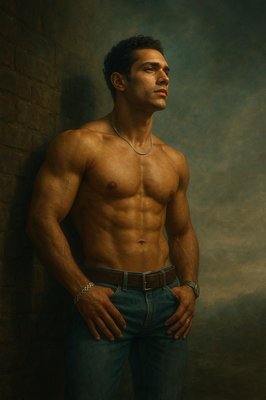
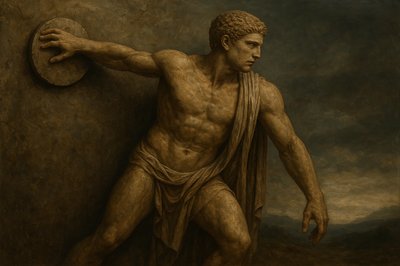
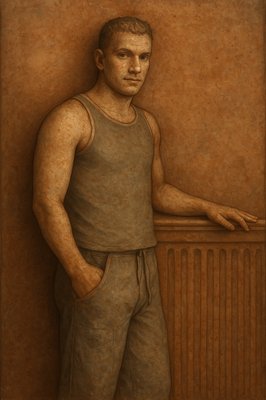
a man leaning against a stone wall next to a window
"A solitary and ominous Black Plague Doctor stands in a dimly lit, narrow cobblestone alleyway in a medieval European city. The doctor is clad head-to-toe in their iconic, dark, heavy protective gear: a long, oil-soaked waxed canvas or leather coat, dark gloves, and a wide-brimmed black hat. Their most striking feature, the beaked mask with dark, glass eyeholes, is prominent, creating an eerie, bird-like silhouette that conceals their face entirely. A wooden cane or pointer is held firmly in one gloved hand.

The atmosphere is heavy and foreboding. The background features dark, crumbling stone or timber-framed buildings with shuttered windows, hinting at a city under quarantine. Smoke or mist might subtly swirl around their feet. The lighting is stark and dramatic, perhaps from a distant lantern or a sliver of pale moonlight, casting deep shadows and highlighting the grim details of their attire. The overall mood is one of profound isolation, historical dread, and silent vigilance against an invisible enemy."
Exterior nighttime scene from Nancy Drew book #81 The Mardi Gras Mystery, the group in full festive costumes arriving at the grand, shadowy Seaton Mansion known as 'Bat Hollow' in New Orleans during Mardi Gras. Teenage detective Nancy Drew leads the way with reddish-blonde hair, wearing an elegant masquerade gown in blue and gold with purple accents, feathered half-mask, strands of colorful beads, and a mysterious smile. Beside her, Ned Nickerson in a dashing tuxedo or pirate-inspired costume with cape and tricorn hat. Bess Marvin (blonde, glamorous) in a sparkling pink feathered ball gown and elaborate headdress, George Fayne (short dark hair, sporty) in a fun jester outfit or adventurous explorer costume with mask. Brian Seaton and his father Bartholomew nearby in partial bat-themed costumes—dark capes, bat-wing collars, eerie masks with pointed ears. The historic Southern mansion looms behind: tall columns, wrought-iron balconies draped with Mardi Gras lights and purple/green/gold banners, flickering lanterns at the entrance, Spanish moss in ancient oaks, subtle bat motifs in the architecture, warm glowing windows hinting at antique interiors and the stolen portrait. Festive yet slightly eerie atmosphere—confetti in the air, distant parade sounds implied, dramatic twilight sky with stars, vibrant colors against gothic shadows. 1980s Nancy Drew book illustration style, adventurous and exciting, detailed costumes and group dynamic, cinematic wide-angle composition, lively holiday energy mixed with subtle suspense."
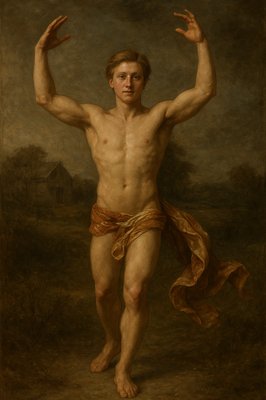
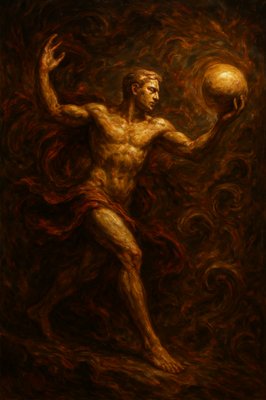
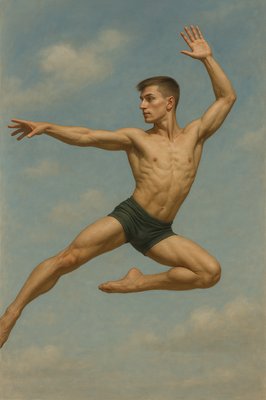
a black and white drawing of a man with his arms stretched out
Digital Art Style, Romanticism Art Style, a profoundly joyful and beautifully vibrant painting inspired by Psalm 16:11, "You make known to me the path of life; you will fill me with joy in your presence, with eternal pleasures at your right hand." The scene features a pair of exquisitely detailed Peach-faced Lovebirds, with their iconic bright peach faces, vivid green bodies, and touches of blue on their rumps. They are perched affectionately close together on a blossoming branch, their expressions conveying deep contentment and joy. Behind them, a softly glowing, ethereal 'path' of light winds gently through a lush, vibrant, and abundant natural landscape, illuminated by a warm, radiant, divine light that bathes the entire scene. The environment is rich with blooming flowers and verdant foliage, suggesting a place of eternal pleasure and divine presence. Focus intently on the vibrant, luminous colors of the Lovebirds, their tender, joyful interaction, and the glowing, symbolic 'path of life' that permeates the harmonious and blissful atmosphere
Exterior nighttime scene from Nancy Drew book #81 The Mardi Gras Mystery, the group in full festive costumes arriving at the grand, shadowy Seaton Mansion known as 'Bat Hollow' in New Orleans during Mardi Gras. Teenage detective Nancy Drew leads the way with reddish-blonde hair, wearing an elegant masquerade gown in blue and gold with purple accents, feathered half-mask, strands of colorful beads, and a mysterious smile. Beside her, Ned Nickerson in a dashing tuxedo or pirate-inspired costume with cape and tricorn hat. Bess Marvin (blonde, glamorous) in a sparkling pink feathered ball gown and elaborate headdress, George Fayne (short dark hair, sporty) in a fun jester outfit or adventurous explorer costume with mask. Brian Seaton and his father Bartholomew nearby in partial bat-themed costumes—dark capes, bat-wing collars, eerie masks with pointed ears. The historic Southern mansion looms behind: tall columns, wrought-iron balconies draped with Mardi Gras lights and purple/green/gold banners, flickering lanterns at the entrance, Spanish moss in ancient oaks, subtle bat motifs in the architecture, warm glowing windows hinting at antique interiors and the stolen portrait. Festive yet slightly eerie atmosphere—confetti in the air, distant parade sounds implied, dramatic twilight sky with stars, vibrant colors against gothic shadows. 1980s Nancy Drew book illustration style, adventurous and exciting, detailed costumes and group dynamic, cinematic wide-angle composition, lively holiday energy mixed with subtle suspense."
A grand medieval hall in King Arthur's Camelot transformed by modern invention: armored knights in shining full-plate mail and nobles in velvet robes gathered around a large wooden table, intently reading freshly printed newspapers with bold 19th-century headlines like 'Merlin's Latest Blunder Exposed!' and 'Eclipse Prediction: Yankee Wizard Triumphs Again', ink still glistening on the broadsheets, one knight holding the paper upside down in confusion while another points excitedly at an advertisement for bicycles, flickering torchlight and early electric bulbs casting warm dramatic glows on faces and paper, rich textures on crinkled newsprint, polished armor reflections, ornate tapestries and stone arches in background with subtle printing press visible through an open door belching faint steam, vibrant colors with deep crimson reds, golden yellows, and inky blacks, god rays streaming through high arched windows at golden hour, hyper-detailed photorealistic fantasy style, epic cinematic composition capturing satirical anachronism and wonder,
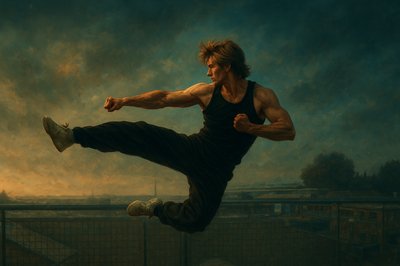
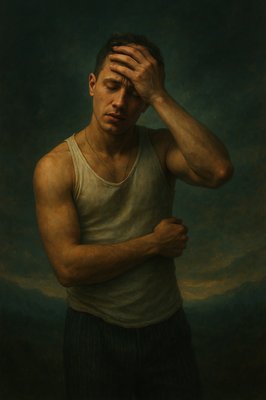
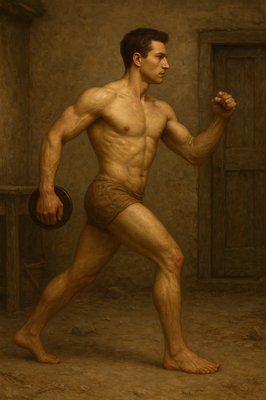
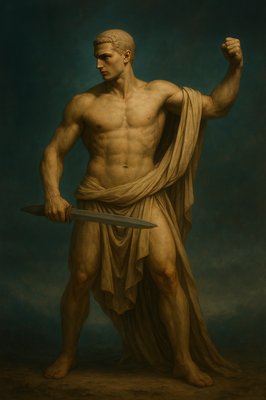
a man in a tank top holding his hands out
Style: A detailed, photorealistic character portrait in the style of high-fantasy historical cinema, focusing on texture, armor design, and facial structure.

The Subject: A full-body portrait of a single Gibeonite lord. He is a figure of imposing, "giant" stature, standing significantly taller than an average human (suggesting 7+ feet), but his proportions are lithe, graceful, and powerful rather than bulky or brutish.

Facial Features & Expression: He possesses a noble, almost ageless bearing reminiscent of an Elven lord, translated into ancient Near Eastern features. He has high, sculpted cheekbones, a strong aquiline nose, and intense, deep-set eyes that convey a calculating intelligence and ancient dignity. His expression is calm, watchful, and confident.

Hair & Adornment: His long, dark hair is elaborately and precisely braided, woven with hammered bronze rings and polished beads of carnelian and lapis lazuli.

Attire & Armor: He is dressed in attire that demonstrates advanced craftsmanship and sophistication. He wears a fitted breastplate of polished bronze, richly engraved with complex, swirling Canaanite motifs (stylized lions, gryphons, and geometric patterns). Beneath the armor, a tunic dyed deep Tyrian purple shows through.

Weapons: At his hip hangs a massive, curved khopesh sword, scaled to his immense height, with a hilt carved from hippopotamus ivory and inlaid with gold.

Pose & Lighting: He stands in a relaxed but formidable pose of authority, one hand resting on his sword hilt. The lighting is golden hour sunlight, catching the metallic sheen of the bronze armor and the intelligence in his eyes against a neutral, out-of-focus textured stone background.
Style: A detailed, photorealistic character portrait in the style of high-fantasy historical cinema, focusing on texture, armor design, and facial structure.

The Subject: A full-body portrait of a single Gibeonite lord. He is a figure of imposing, "giant" stature, standing significantly taller than an average human (suggesting 7+ feet), but his proportions are lithe, graceful, and powerful rather than bulky or brutish.

Facial Features & Expression: He possesses a noble, almost ageless bearing reminiscent of an Elven lord, translated into ancient Near Eastern features. He has high, sculpted cheekbones, a strong aquiline nose, and intense, deep-set eyes that convey a calculating intelligence and ancient dignity. His expression is calm, watchful, and confident.

Hair & Adornment: His long, dark hair is elaborately and precisely braided, woven with hammered bronze rings and polished beads of carnelian and lapis lazuli.

Attire & Armor: He is dressed in attire that demonstrates advanced craftsmanship and sophistication. He wears a fitted breastplate of polished bronze, richly engraved with complex, swirling Canaanite motifs (stylized lions, gryphons, and geometric patterns). Beneath the armor, a tunic dyed deep Tyrian purple shows through.

Weapons: At his hip hangs a massive, curved khopesh sword, scaled to his immense height, with a hilt carved from hippopotamus ivory and inlaid with gold.

Pose & Lighting: He stands in a relaxed but formidable pose of authority, one hand resting on his sword hilt. The lighting is golden hour sunlight, catching the metallic sheen of the bronze armor and the intelligence in his eyes against a neutral, out-of-focus textured stone background.
A wide, cinematic shot of six valiant ancient Hebrew warriors, the sons of Tola, standing in a vast desert valley. Each man is dressed in majestic tunics and sashes of deep scarlet, representing the Tola (scarlet worm) dye.Uzzi (My Strength): A massive, hulking commander in bronze-plated leather armor, prominently holding a modern tactical Uzi submachine gun with gold-inlay Hebrew engravings.

Jahmai (God Guards): Wrapped in a shimmering, protective golden aura that glows against his red robes.

Jibsam (Fragrant): Holding a golden censer emitting thick, fragrant clouds of white and scarlet-tinted incense. Shemuel (Heard of God): Posed in a moment of stillness, hand cupped to his ear as a faint golden light enters his mind.

Jeriel (Founded by God): Standing firmly atop a massive, ancient cornerstone carved with kermes oak branches.

Rephaiah (God Heals): Holding a wooden staff entwined with medicinal herbs and blooming red flowers. In the background, a massive army of 22,600 soldiers, all wearing scarlet standards, stretches to the horizon. High-contrast lighting, dramatic sunset, grit and hyper-detail, 8k resolution, biblical epic style. No text or letters on screen.
A giant kaiju monster
Pasta with fresh herbs and parmesan
The reverberations of sound in many waters shining with glory. No humans. only waters and brilliant light are to be expressed. But this is to be viewed as looking up from under the water.
a tree in nature
"A majestic white horse standing in a deep, snow-covered forest as a guardian of the winter solstice. The horse wears an intricate crown made of frosted silver branches and glowing quartz crystals. Fine starlight sparkles are woven into its long, flowing mane. A single vintage lantern sits on the snow at its feet, casting a warm, golden candlelight glow against the blue twilight. In the background, a faint aurora borealis dances through the trees. The style is whimsical and surreal, with a soft, painterly photographic quality—prioritizing quiet magic over loud spectacle."
The reverberations of sound in many waters shining with glory. No humans. only waters and brilliant light are to be expressed. But this is to be viewed as looking up from under the water. The reverberations are above the viewer's perspective like Genesis 1:6-8
a painting of a tree with many colors
"A majestic white horse standing in a deep, snow-covered forest as a guardian of the winter solstice. The horse wears an intricate crown made of frosted silver branches and glowing quartz crystals. Fine starlight sparkles are woven into its long, flowing mane. A single vintage lantern sits on the snow at its feet, casting a warm, golden candlelight glow against the blue twilight. In the background, a faint aurora borealis dances through the trees. The style is whimsical and surreal, with a soft, painterly photographic quality—prioritizing quiet magic over loud spectacle."
A breathtaking, highly detailed landscape and architectural illustration of historic Jonesborough, Tennessee, Appalachia, blanketed in fresh, pristine snow. The scene captures the charm of a 'Winter Wonderland' during the golden hour just before sunset. Focus on the main street (possibly Main Street or College Street) lined with preserved 18th and 19th-century Federal and Greek Revival style architecture, such as the Chester Inn or historic courthouse.

The buildings have warm, glowing lights spilling from their windows, creating a cozy contrast with the blue tones of the snow and dusk sky. Snow-dusted, bare deciduous trees frame the street. Include subtle details like a horse-drawn sleigh, tracks in the snow, and a thin wisp of smoke curling from chimneys. The style should be evocative, highly realistic, and painterly, capturing the quiet, historic ambiance of America's oldest town in Tennessee. Use a slightly elevated perspective to showcase the depth of the street and the surrounding Appalachian hillsides.
Artist in studio light
Elderly person in window light