A Highly Detailed, Cinematic Rendering Of The Colossal "Megamaid" Spaceship From Spaceballs In Its Full, Transformed State, Art

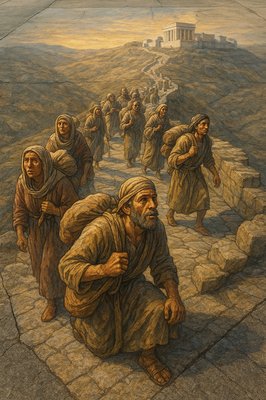
In Old Testament times a group of 12 - 15 Hebrew men and women on pilgrimage ascend a steep road toward Jerusalem and the Temple, headed for the feast of the Passover.  They each carry their own bag, sachel or bedroll.  Anticipation fills the air as the set out on their journey.
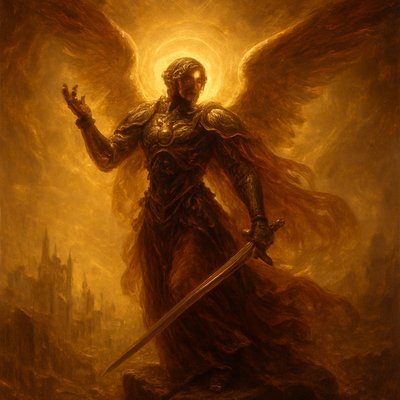
A futuristic cybernetic, dystopian, angel warrior, on a mountain top overlooking a deserted, broken city. Ultra-realistic. Extreme detail.
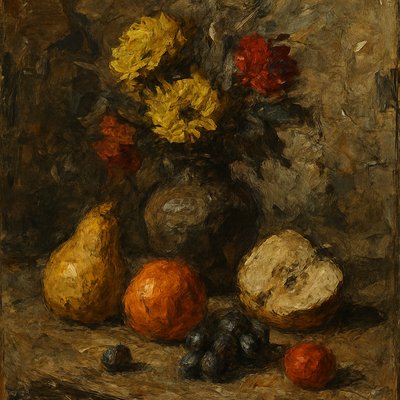
still life arrangement of fruits and flowers
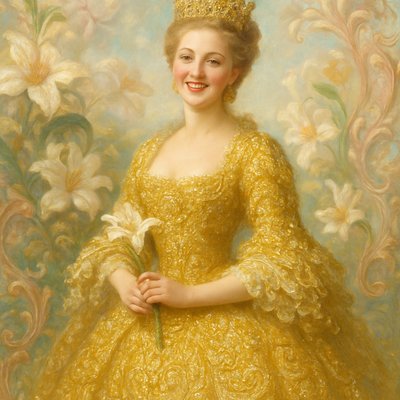
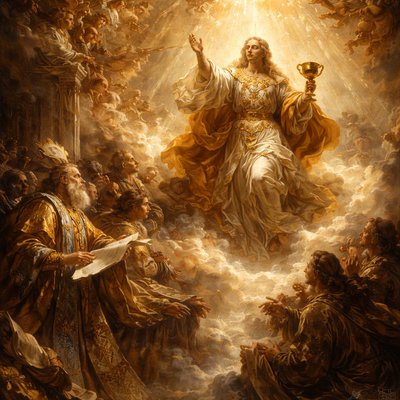
Rococo Art Style, Digital Art Style, a brilliantly joyful, opulent, and ornate three-quarter-length portrait of "The Queen in Gold of Ophir," inspired by Psalm 45. The Queen is facing the viewer with a radiant, happy, and genuinely smiling expression, her pose one of graceful delight. She is adorned in an exquisitely detailed gown woven from the finest gold, which shimmers with a dazzling, intense, almost liquid radiance, typical of Rococo opulence and digital highlight. The gold fabric is intricately embellished with countless sparkling jewels and delicate scrolling patterns in shades of ivory and pearl. A magnificent golden crown, wreathed in tiny golden lilies, rests upon her head. Her hands are gently placed, perhaps holding a single, pure white lily. She is framed by a background featuring large, lush, stylized white and golden lilies and an ornate, soft-focus garden setting bathed in sweet, cheerful daylight. Focus intently on the dazzling, reflective shimmer and ornate detail of the gold gown, the Queen's beautiful, joyous smile, and the light, ethereal quality of the Rococo setting.
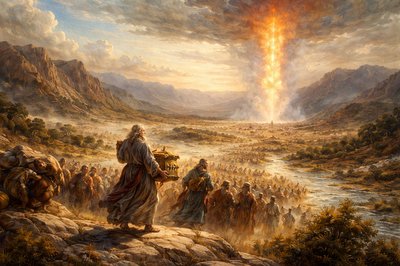
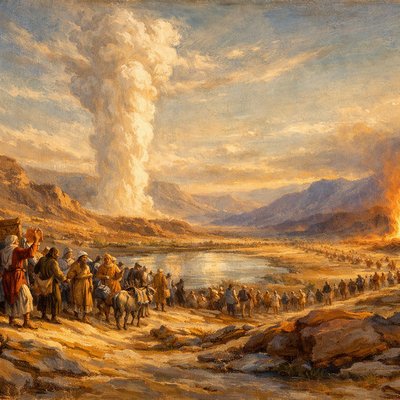
“And Moses took the bones of Joseph with him: for he had straitly sworn the children of Israel, saying, God will surely visit you; and ye shall carry up my bones away hence with you. And they took their journey from Succoth, and encamped in Etham, in the edge of the wilderness. And the LORD went before them by day in a pillar of a cloud, to lead them the way; and by night in a pillar of fire, to give them light; to go by day and night:” (Exodus 13:19-21, KJV)
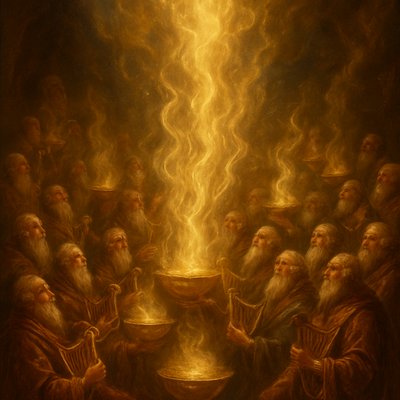
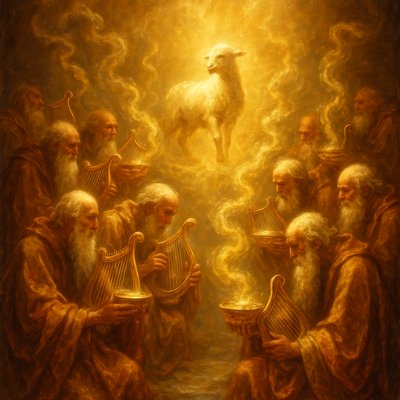
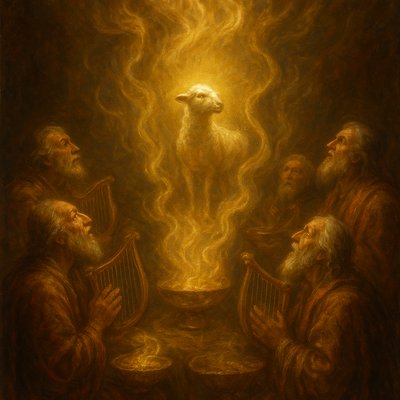
A majestic, ethereal scene depicting golden bowls brimming with luminous, swirling incense. The incense, representing the collective prayers of all saints, rises and coalesces into shimmering, golden tendrils that ascend towards an unseen heavenly throne.There are 24 golden bowls of incense. Each bowl is held by a robed elder, holding harps, in worship. The atmosphere is reverent and awe-inspiring, filled with soft, warm light emanating from the golden smoke. Emphasize the precious, divine, and unified nature of the prayers. Inspired by Revelation 5:8
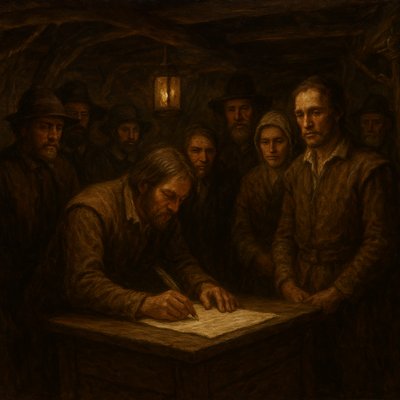
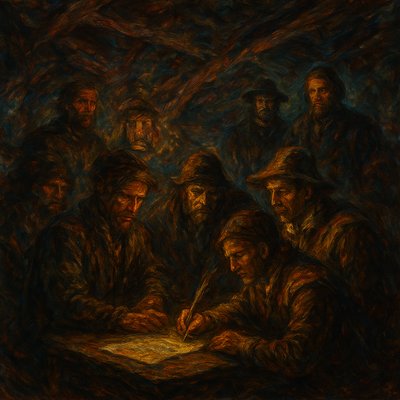
A historically accurate and atmospheric depiction of the signing of the Mayflower Compact aboard the ship in November 1620. The scene is set in the dimly lit, cramped cabin of the Mayflower, with the ship's timbers and rigging subtly visible, conveying the challenging conditions of the voyage. A simple table or chest serves as the signing surface. The primary focus is on a small group of the last individuals signing the document: specifically, the indentured servants (or 'strangers' not directly part of the Separatist congregation) approaching or at the table. Their expressions show a mix of weary determination, understanding of the necessity, and perhaps a hint of quiet apprehension or resignation to this new social contract, given their status. They are dressed in the plain, practical clothing typical of 17th-century commoners and laborers. Figures of prominent Pilgrims or 'Saints' (like William Bradford or John Carver) are visible in the background, observing the proceedings with a sense of gravity and leadership, but they are not the central focus. The lighting is low and warm, perhaps from a lantern, creating a chiaroscuro effect that highlights the faces of the signers. The atmosphere conveys the momentousness of the act under difficult circumstances, the diverse composition of the group, and the early seeds of self-governance in a new world. The artistic style is a realistic, historically detailed oil painting, capturing the solemnity and human element of this pivotal historical moment."
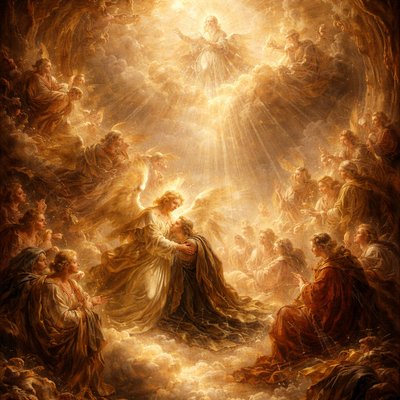
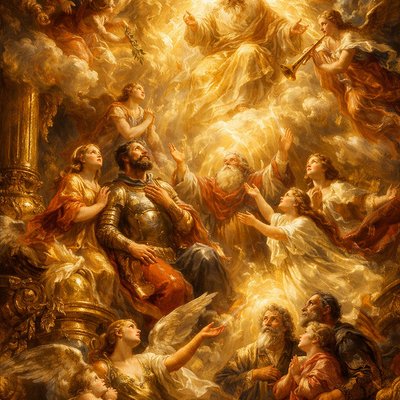
A majestic and reverent scene, directly inspired by Revelation 5:8. A group of elderly, robed figures are kneeling in worship, their faces and attention directed towards a central focal point. Each elder holds a golden harp in one hand and a golden bowl brimming with luminous, swirling incense in the other. The incense, representing the collective prayers of all saints, rises in shimmering, golden tendrils from each bowl, converging and ascending towards the central figure. At the very center of the composition, slightly elevated and bathed in radiant light, stands the Lamb who was slain, embodying divine power and sacrifice, the recipient of all this worship. The atmosphere is ethereal, filled with soft, divine golden light emanating from the incense and the Lamb, emphasizing the precious, sacred, and unified nature of the prayers being offered before Him. Focus on the rich textures of gold, the reverence of the elders, and the radiant presence of the Lamb
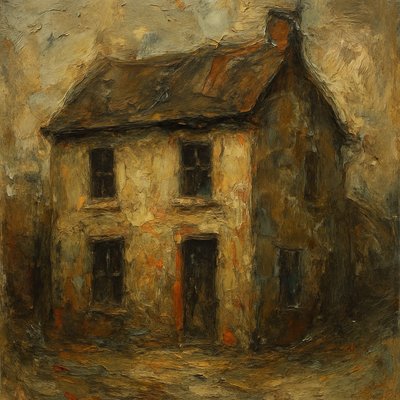
“I watch, and am as a sparrow alone upon the house top.” (Psalms 102:7, KJV)
Jesus stands at the door and knocks
a tree in nature
house with front view
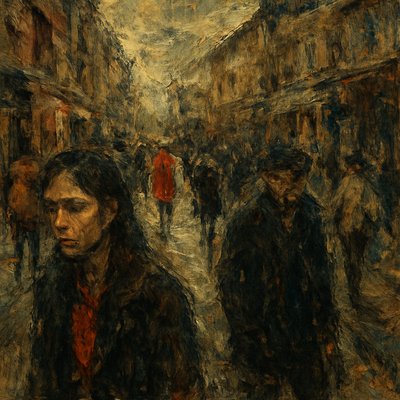
urban street with city activity
animal standing in natural pose
still life with everyday objects
wide landscape with natural scenery
a tree in nature
portrait of a person with expressive eyes
Display verse
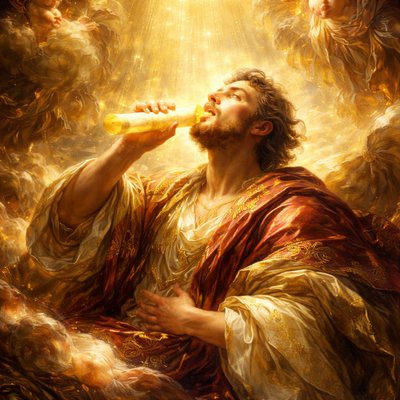
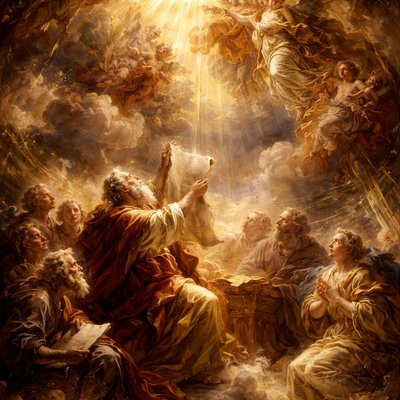
“And he said unto me, Son of man, cause thy belly to eat, and fill thy bowels with this (scroll) that I give thee. Then did I eat it; and it was in my mouth as honey for sweetness.” (Ezekiel 3:3, KJV)
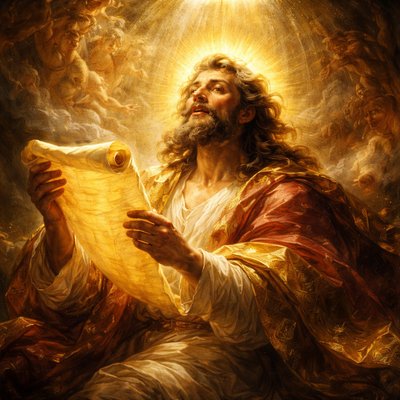
In the form of reading the scroll.
Display verse as meditation:
“And he said unto me, Son of man, cause thy belly to eat, and fill thy bowels with this (scroll) that I give thee. Then did I eat it; and it was in my mouth as honey for sweetness.” (Ezekiel 3:3, KJV)
a tree in nature
bicyle resting against a wall
house with front view
bicyle resting against a wall
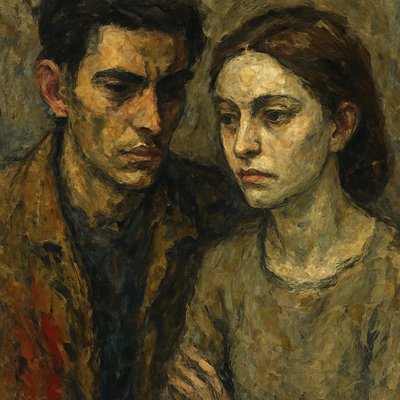
portrait of two people together
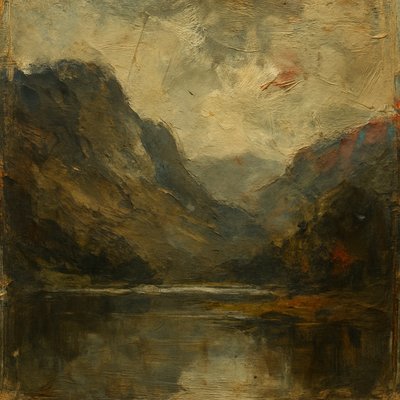
serene landscape with mountains and water
a tree in nature
bicyle resting against a wall
portrait of two people together
serene landscape with mountains and water
still life arrangement of fruits and flowers
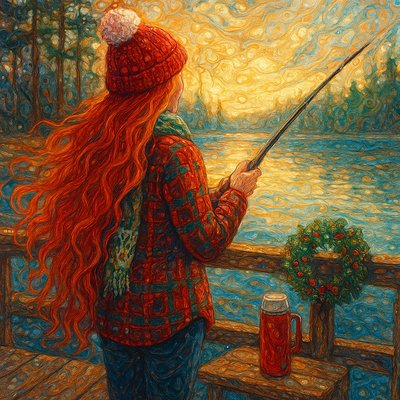
A realistic and peaceful image of a 56-year-old woman fishing on the shores of Lake Livingston, Texas, during the Christmas season. She has very long, vibrant red hair that flows all the way down to her waist, gently moving in the breeze.

She is standing on a wooden dock or sitting in a comfortable chair by the water, surrounded by the tall pine trees characteristic of East Texas. The weather is cool but pleasant (Texas winter). She is wearing cozy holiday-themed attire, such as a warm plaid flannel shirt in red and green, a festive scarf, or a beanie. Maybe there is a small Christmas wreath on the railing of the dock or a thermos of hot cocoa nearby. The lake is calm and reflects the soft winter sun. The lighting is warm and golden. High quality, photorealistic, serene atmosphere.
“If therefore perfection were by the Levitical priesthood, (for under it the people received the law,) what further need was there that another priest should rise after the order of Melchisedec, and not be called after the order of Aaron?” (Hebrews 7:11, KJV)
“Let them bring them forth, and shew us what shall happen: let them shew the former things, what they be, that we may consider them, and know the latter end of them; or declare us things for to come.” (Isaiah 41:22, KJV)
But with the righteous He will make peace.

And will protect the elect,
And mercy shall be upon them.

And they shall all belong to God,
And they shall be prospered,
And they shall ⌈all⌉ be blessed.

And He will help them all,
And light shall appear unto them,
And He will make peace with them.
1 Enoch 1:8
But with the righteous He will make peace.

And will protect the elect,
And mercy shall be upon them.

And they shall all belong to God,
And they shall be prospered,
And they shall ⌈all⌉ be blessed.

And He will help them all,
And light shall appear unto them,
And He will make peace with them.
1 Enoch 1:8
urban street with city activity