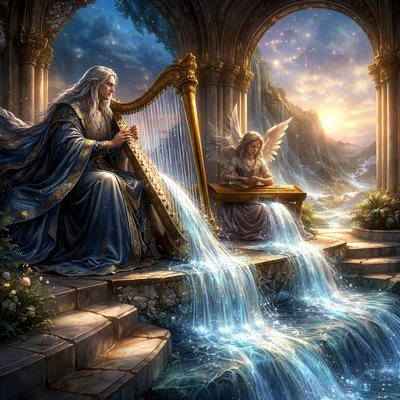
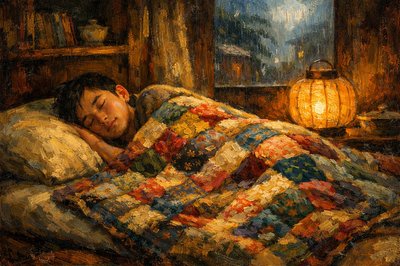
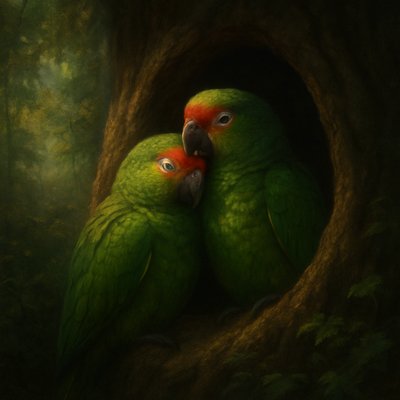
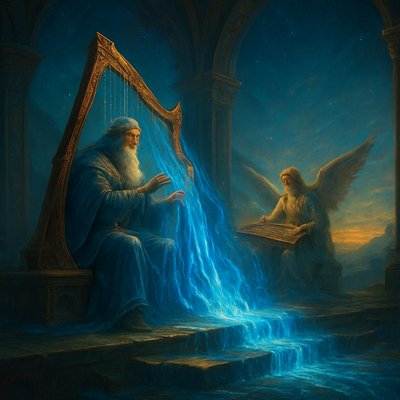
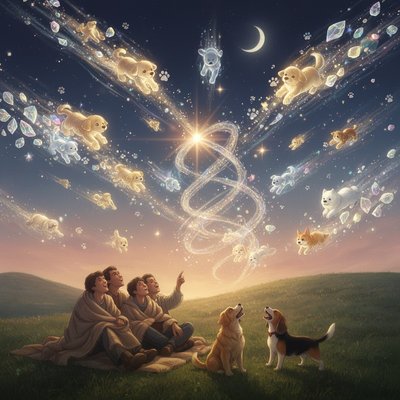
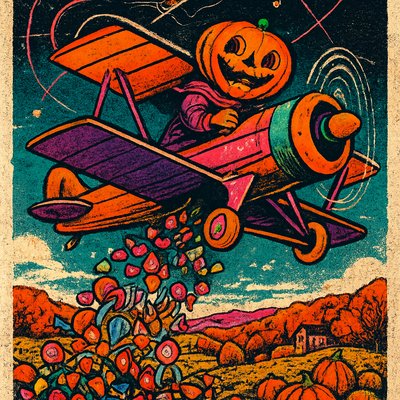
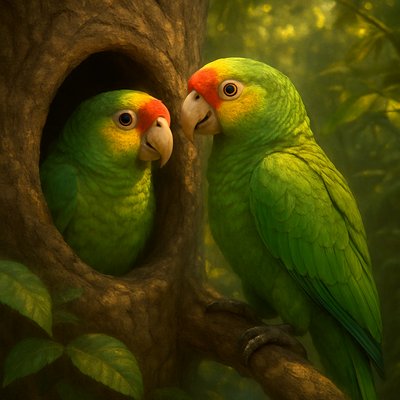
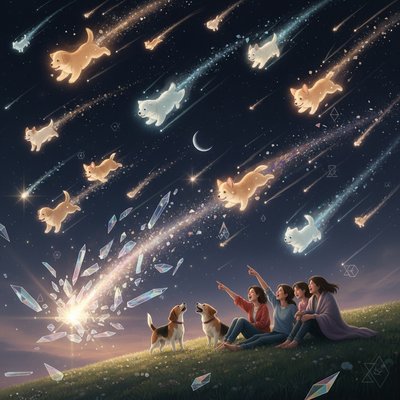
A Heartwarming Scene Under A Decorated Christmas Tree. Two Fluffy Kittens, One A Ginger Tabby And The Other A Calico, Are Art

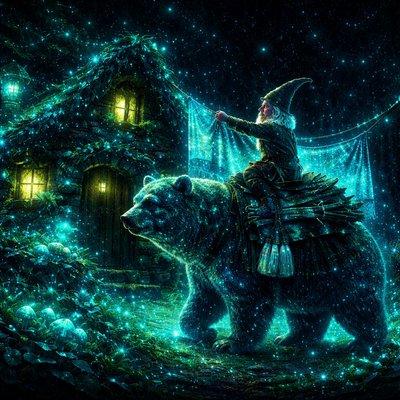
A detailed fantasy painting of a gnome and bear doing chores outside a moss-covered stone cottage. The gnome, dressed in practical work clothes and a leather apron, sits atop the bear, hoisting a large beaten rug onto a clothesline. The bear, looking stolid and helpful, is carrying bundles of firewood and has several scrub brushes hanging from its harness. The scene is one of efficient, rustic domesticity in a forest setting. Golden afternoon light.
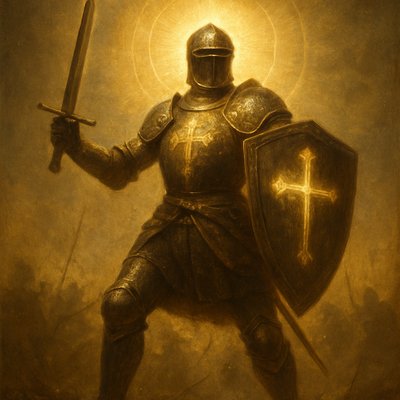
Create a hyper-realistic image with slight surreal elements and extreme detail of a medieval battlefield viewed from a worm's eye perspective, looking up at a fierce warrior in full plate armor, including a visored helmet that obscures his face, standing in a defensive battle stance with a gleaming longsword raised in one hand and a sturdy shield emblazoned with glowing cross emblems in the other, his armor radiating ethereal light from intricate cross motifs.
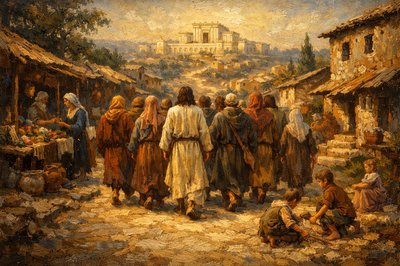
First century Palestine.  Jesus walks away from the camera along a road that goes through town with several of His disciples.   Jesus wears a plain robe like most ordinary men.  The other people are dressed like peasants, farmers, and tradesmen.  There are also women in the group, wearing plain, everyday clothing.  Some children are playing near the roadside.  Merchants are selling their goods in booths along the road.  There are houses along the road also.  The road goes upward toward the Temple in the far distance.
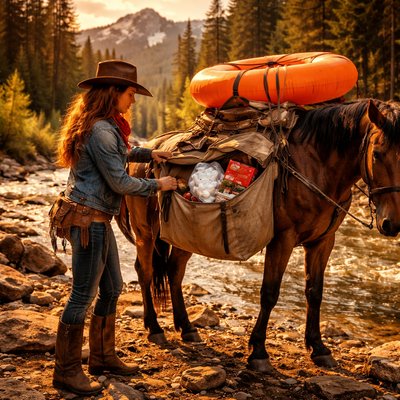
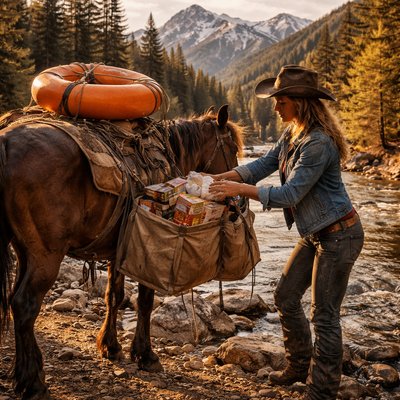
Cinematic Nature Photography, Americana Style, Golden Hour Lighting. A candid, detailed shot of an authentic cowgirl with long red hair in a worn leather hat, denim jacket, and dusty boots. She is standing beside a sturdy pack horse in a rocky creek bed, actively stuffing, rugged canvas panniers.

The details of the load are clear: A large bag of jumbo marshmallows and a red box of graham crackers are peeking out of one open saddlebag, next to chocolate bars. Strapped awkwardly to the very top of the pack saddle with ropes is a large, bright orange inflatable river tube.

The environment is stunning Colorado high country: Towering ponderosa pines and aspen trees line a rushing clear mountain river. Rugged, snow-capped Rocky Mountain peaks rise in the background under a rich blue sky. The light is warm and late-afternoon, catching the dust in the air and the textures of the horse's coat and the leather gear.
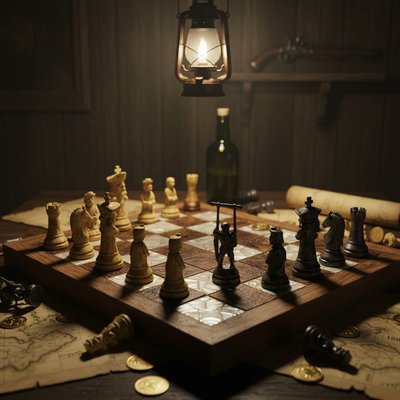
Cinematic Still Life Photography, Atmospheric Chiaroscuro Lighting, Macro Details. A high-stakes chess game mid-match, set upon a unique, well-worn board inside the dimly lit quarters of a pirate captain.

The Board: The chessboard isn't separate; the squares are carved directly into the surface of a thick, heavy oak table, stained with rum rings and knife marks. The light squares are inlaid, scratched mother-of-pearl, and the dark squares are burned wood.

The Pieces in Play: The unique pirate-themed pieces (from the previous design) are scattered across the board.

    One side (The 'White' pieces): Carved from aged, yellowed whale bone. A "King Captain" piece is cornered behind a line of "Pawn Deckhands."

    The other side (The 'Black' pieces): Cast from heavy, tarnished blackened iron. An iron "Knight Boarding Party" piece (on a rope swing) is aggressively positioned near the center.

The Atmosphere: The scene is lit dramatically by a single, smoky oil lantern hanging overhead, casting long shadows. Scattered around the board on the table are a few real gold doubloons mixed with captured pieces, a half-empty bottle of grog, and a rolled-up parchment chart. The background is dark wood paneling and a glimpse of a flintlock pistol. The focus is razor-sharp on the textures of the carved bone and corroded iron pieces.
Photorealism Art Style, a distinguished human pastor, with a calm and wise expression, stands prominently in the foreground. He is impeccably dressed in a modern, dark suit, with a noticeable, large, and intricate cross necklace hanging clearly visible. Behind him, majestic and sprawling, is a grand, beautiful cathedral, its architecture a blend of classic and natural elements, perhaps with vines or trees subtly integrated into its design. The cathedral is situated within a vibrant, lush forest city, where towering trees and greenery are woven throughout the urban landscape. In the far distance, the sun is dramatically rising, casting a warm, golden light that illuminates the scene from behind, creating a serene and powerful atmosphere. Focus on realistic textures of the suit, the cross, stone of the cathedral, and the diverse foliage, all under natural, early morning light.
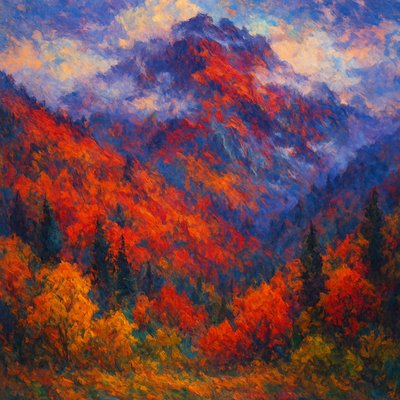
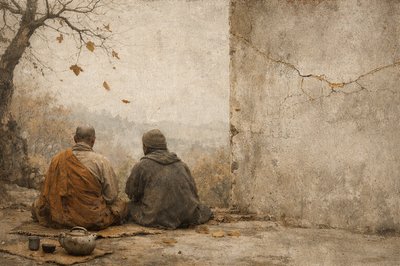
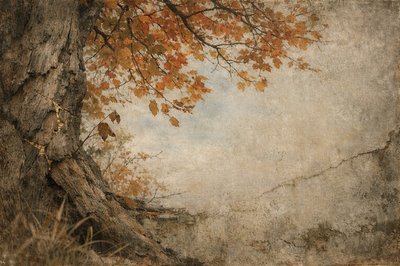
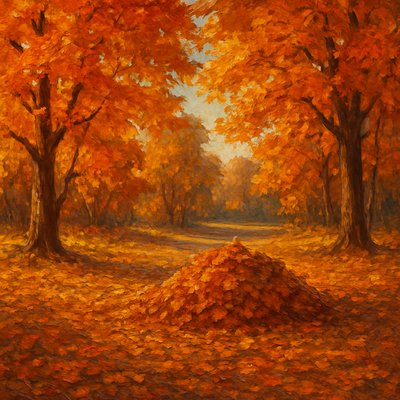
This day, though, I hiked another autumn wood.  Eastern Europe ancient; overgrown.  So thick the view was dark at just a few feet off the path.  All red and yellow; orange and brown, a million trees, each one in blazing preparation for long, frozen winter.  I cannot but recall my friend’s words, lasting long, though he did not, and the instant truth that follows.  Looking upward at the fiery canopy, matched against the bright cerulean sky beyond, I embrace autumn!  Winter surely comes one day, but spring beyond.  I have a winter to prepare for, but it is not yet.
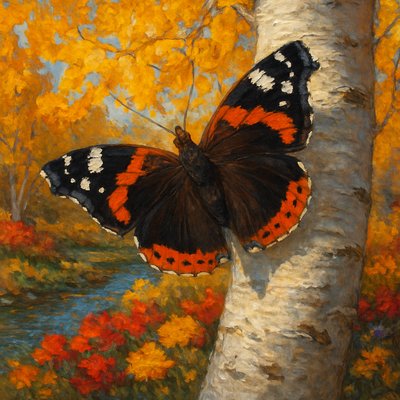
Oil Painting Art Style, a magnificent Red Admiral butterfly with its wings spread wide, revealing intricate patterns of bold black, vivid orange-red, and crisp white, firmly perched on the distinctive, textured white bark of an aspen tree. This scene is set at a lower elevation, where the aspen grows near a gently flowing stream, its banks adorned with a lush fall garden of colorful autumn flowers—deep reds, golden yellows, and fiery oranges—arranged in a picturesque display. Overhead and around, the aspen tree's own leaves are ablaze with brilliant, bright gold, adding a stunning luminosity to the scene. The entire composition is illuminated by clear, crisp autumn light, casting subtle shadows and highlighting the rich textures. Focus on the detailed brushwork on the butterfly's wings, the tangible texture of the aspen bark, and the vibrant, layered colors of the fall foliage and flowers, especially the striking golden aspen leaves, creating a detailed and serene artistic composition.
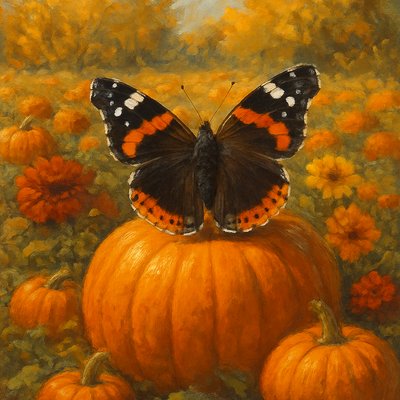
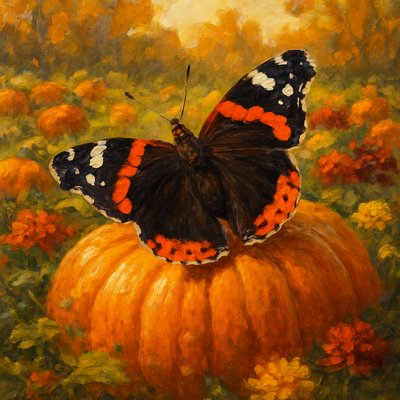
Oil Painting Art Style, a magnificent, normal-sized Red Admiral butterfly with its wings spread wide, revealing intricate patterns of bold black, vivid orange-red, and crisp white, delicately perched on the stem or curving surface of a large, plump orange pumpkin. This scene is set within a sprawling, sun-drenched autumn pumpkin patch, where numerous pumpkins of various sizes are nestled amongst lush green and fading yellow vines. Surrounding the pumpkins are vibrant fall flowers arranged like a charming garden, in hues of deep red, golden yellow, and rustic orange. In the background, hints of golden aspen-like leaves glow from distant trees, adding to the rich autumn palette. The entire composition is bathed in clear, crisp, golden autumn sunlight, casting subtle shadows and highlighting the rich textures. Focus on the detailed brushwork on the butterfly's tiny wings, the tangible texture of the pumpkin's skin, and the vibrant, layered colors of the fall foliage, flowers, and pumpkins, creating a detailed and serene artistic composition.
Cinematic Nature Photography, Americana Style, Golden Hour Lighting. A candid, detailed shot of an authentic cowgirl in a worn leather hat, denim jacket, and dusty boots. She is standing beside a sturdy pack horse in a rocky creek bed, actively stuffing overflowing, rugged canvas panniers.

The details of the load are clear: A large bag of jumbo marshmallows and a red box of graham crackers are peeking out of one open saddlebag, next to chocolate bars. Strapped awkwardly to the very top of the pack saddle with ropes is a large, bright orange inflatable river tube.

The environment is stunning Colorado high country: Towering ponderosa pines and aspen trees line a rushing clear mountain river. Rugged, snow-capped Rocky Mountain peaks rise in the background under a rich blue sky. The light is warm and late-afternoon, catching the dust in the air and the textures of the horse's coat and the leather gear.
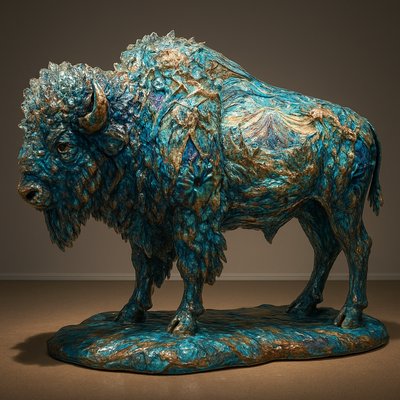
    A breathtaking, full-size artistic sculpture of a standing buffalo, rendered entirely in the style of intricate, luminous glass art, reminiscent of the painted buffalo installations found in West Yellowstone art shows. The buffalo's form is composed of countless individual pieces of vibrant, multifaceted stained glass or fused glass, meticulously cut, arranged, and joined, creating a cohesive and majestic shape.

    Instead of traditional paint, the entire surface of this glass buffalo is adorned with various miniature, finely detailed scenes and patterns etched, painted, or embedded within the glass itself, or created by the unique coloration and texture of the glass pieces. These scenes could depict:

        Western landscapes: Yellowstone's geysers, mountain ranges, pine forests, rivers.

        Wildlife: Elk, bears, wolves, eagles (in glass).

        Native American art motifs: Geometric patterns, symbols, and figures (also rendered in glass).

        Historical moments: Subtle nods to early explorers or iconic figures (stylized in glass).

    The buffalo's interior is subtly illuminated, causing the entire sculpture to glow from within. Light catches every facet of the glass, creating a dazzling play of refracted colors and intricate shadows on the ground around it. The background is a clean, modern art gallery setting with soft, focused lighting, allowing the buffalo to be the sole, radiant centerpiece. The atmosphere is one of awe, wonder, and appreciation for artistic craftsmanship and the spirit of the American West, reimagined through a unique, luminous medium. The artistic style is hyper-realistic, emphasizing the detailed texture, transparency, and brilliant light play inherent in glass art."
    A breathtaking, full-size artistic sculpture of a standing buffalo, rendered entirely in the style of intricate, luminous glass art, reminiscent of the painted buffalo installations. The buffalo's majestic form is composed of countless individual pieces of vibrant, multifaceted stained glass or fused glass, meticulously cut, arranged, and joined.

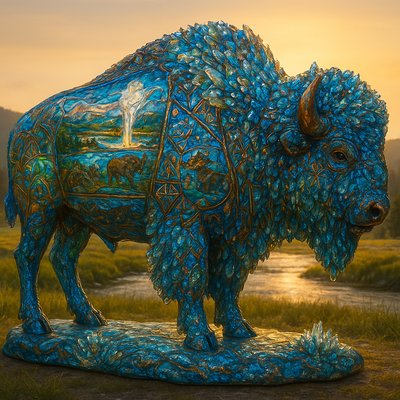
    The entire surface of this glass buffalo is adorned with various miniature, finely detailed scenes and patterns etched, painted, or embedded within the glass itself, or created by the unique coloration and texture of the glass pieces. These scenes depict:

        Iconic Yellowstone landscapes: Old Faithful erupting in miniature, the Grand Canyon of the Yellowstone, geothermal pools.

        Local wildlife: Elk, bears, wolves, eagles (all rendered in the glass medium).

        Native American art motifs: Geometric patterns, symbols, and figures (also within the glass).

    The buffalo's interior is subtly illuminated, causing the entire sculpture to glow from within, acting as a beacon of art and nature. Light catches every facet of the glass, creating a dazzling play of refracted colors that project intricate patterns onto the surrounding natural environment.
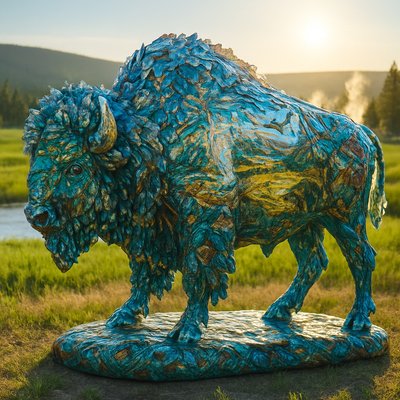
    The setting is the glory of Yellowstone National Park, specifically an expansive, iconic vista. Perhaps in a verdant meadow with distant geysers steaming, or near a crystal-clear river. The morning sun, bright and golden, backlights the buffalo, intensifying its inner glow and creating a dramatic contrast with the rugged, natural beauty of the park. The atmosphere is one of awe, harmony between art and nature, and a profound celebration of the spirit of the American West. The artistic style is hyper-realistic, emphasizing the detailed texture, transparency, and brilliant light play inherent in glass art, seamlessly integrated into a vibrant, natural landscape.
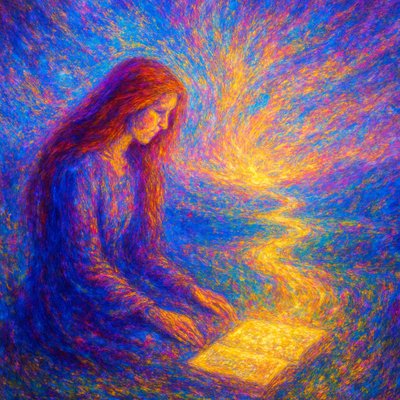
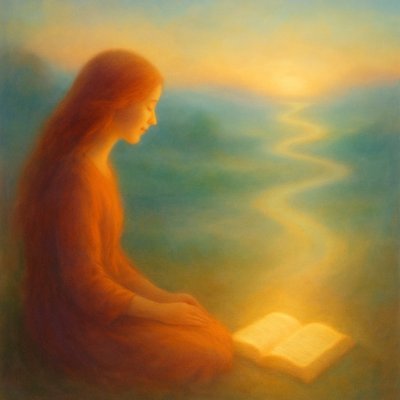
profound image representing the verse Psalm 119:15. The scene depicts a solitary lady with flowing, long red hair, in a posture of deep contemplation or meditation. She is seated or kneeling in a peaceful, natural setting – perhaps on a gentle hillside overlooking a tranquil landscape, by a calm body of water, or within a serene garden. Her expression is focused and reverent.

Before her, or subtly integrated into the scene, is an ancient scroll or open book, glowing with a soft, ethereal light, symbolizing God's precepts. Her posture and gaze are directed towards this source of wisdom, with a clear sense of 'fixing her eyes' on its profound truth.

Extending from the scroll/book, or subtly woven into the distant landscape, are luminous, ethereal pathways or guiding lights, representing 'Your ways' (God's ways). These pathways are clear and inviting, leading towards a bright, hopeful horizon, symbolizing divine guidance and understanding. The atmosphere is tranquil and reflective, bathed in soft, warm, golden light (perhaps dawn or dusk), signifying clarity and spiritual insight. The overall mood is one of peace, deep wisdom, divine guidance, and focused devotion, rendered with a beautiful, luminous quality."
profound image representing the verse Psalm 119:15. The scene depicts a solitary lady with flowing, long red hair, in a posture of deep contemplation or meditation. She is seated or kneeling in a peaceful, natural setting – perhaps on a gentle hillside overlooking a tranquil landscape, by a calm body of water, or within a serene garden. Her expression is focused and reverent.

Before her, or subtly integrated into the scene, is an ancient scroll or open book, glowing with a soft, ethereal light, symbolizing God's precepts. Her posture and gaze are directed towards this source of wisdom, with a clear sense of 'fixing her eyes' on its profound truth.

Extending from the scroll/book, or subtly woven into the distant landscape, are luminous, ethereal pathways or guiding lights, representing 'Your ways' (God's ways). These pathways are clear and inviting, leading towards a bright, hopeful horizon, symbolizing divine guidance and understanding. The atmosphere is tranquil and reflective, bathed in soft, warm, golden light (perhaps dawn or dusk), signifying clarity and spiritual insight. The overall mood is one of peace, deep wisdom, divine guidance, and focused devotion, rendered with a beautiful, luminous quality."
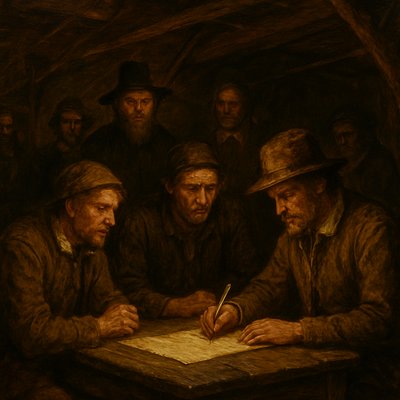
A historically accurate and atmospheric depiction of the signing of the Mayflower Compact aboard the ship in November 1620. The scene is set in the dimly lit, cramped cabin of the Mayflower, with the ship's timbers and rigging subtly visible, conveying the challenging conditions of the voyage. A simple table or chest serves as the signing surface. The primary focus is on a small group of the last individuals signing the document: specifically, the indentured servants (or 'strangers' not directly part of the Separatist congregation) approaching or at the table. Their expressions show a mix of weary determination, understanding of the necessity, and perhaps a hint of quiet apprehension or resignation to this new social contract, given their status. They are dressed in the plain, practical clothing typical of 17th-century commoners and laborers. Figures of prominent Pilgrims or 'Saints' (like William Bradford or John Carver) are visible in the background, observing the proceedings with a sense of gravity and leadership, but they are not the central focus. The lighting is low and warm, perhaps from a lantern, creating a chiaroscuro effect that highlights the faces of the signers. The atmosphere conveys the momentousness of the act under difficult circumstances, the diverse composition of the group, and the early seeds of self-governance in a new world. The artistic style is a realistic, historically detailed oil painting, capturing the solemnity and human element of this pivotal historical moment."
    A breathtaking, full-size artistic sculpture of a standing buffalo, rendered entirely in the style of intricate, luminous glass art, reminiscent of the painted buffalo installations. The buffalo's majestic form is composed of countless individual pieces of vibrant, multifaceted stained glass or fused glass, meticulously cut, arranged, and joined.

    The entire surface of this glass buffalo is adorned with various miniature, finely detailed scenes and patterns etched, painted, or embedded within the glass itself, or created by the unique coloration and texture of the glass pieces. These scenes depict:

        Iconic Yellowstone landscapes: Old Faithful erupting in miniature, the Grand Canyon of the Yellowstone, geothermal pools.

        Local wildlife: Elk, bears, wolves, eagles (all rendered in the glass medium).

        Native American art motifs: Geometric patterns, symbols, and figures (also within the glass).

    The buffalo's interior is subtly illuminated, causing the entire sculpture to glow from within, acting as a beacon of art and nature. Light catches every facet of the glass, creating a dazzling play of refracted colors that project intricate patterns onto the surrounding natural environment.

    The setting is the glory of Yellowstone National Park, specifically an expansive, iconic vista. Perhaps in a verdant meadow with distant geysers steaming, or near a crystal-clear river. The morning sun, bright and golden, backlights the buffalo, intensifying its inner glow and creating a dramatic contrast with the rugged, natural beauty of the park. The atmosphere is one of awe, harmony between art and nature, and a profound celebration of the spirit of the American West. The artistic style is hyper-realistic, emphasizing the detailed texture, transparency, and brilliant light play inherent in glass art, seamlessly integrated into a vibrant, natural landscape.
A low-angle, hyper-detailed tableau of the Mad Hatter's Tea Party, viewed under a dark, star-filled sky. The Mad Hatter sits at the table, his features not quite human, but constructed entirely from brilliant indigo and gold cosmic dust, representing the constellation Lepus. His top hat is a vortex of nebula, and one eye burns intensely—a specific star named "The Mad."

The Hatter is caught mid-sentence, demanding, "Why is a raven like a writing-desk?" As he speaks, his hands, which were merely starry, begin to shed their light, and the true form is revealed: the lower half of his coat and chair morph into coiling, dark serpentine scales, twisting around the table leg. The March Hare and Dormouse are frozen in terror. Above the table, a Raven made of pitch-black night materializes, its shadow falling directly over the Hatter. The entire scene is vibrating with the furious energy of a creature—the ancient serpent—who knows his time has been irrevocably stopped.

Style: Cinematic dark fantasy, astronomical realism, oil painting texture, emphasis on the contrast between the cold cosmic starlight and the dark, furious energy of the serpentine transformation.
My sincerest apologies that the Queen appeared angry! That's completely contrary to the "serene and noble expression" we aimed for and the dignity implied by Psalm 45. We need to explicitly reinforce a gentler, more gracious demeanor.

You're also right to focus on the gold's shine. We can definitely enhance that.

To address both issues—the expression and the gold's luminosity—we'll make two key adjustments:

    Refine Expression: Use stronger words for a gentle, majestic, and perhaps beatific expression.

    Enhance Gold's Shine: Introduce Baroque Art Style as a secondary influence. Baroque is famous for its dramatic light, intense gleam on metals and jewels, and dynamic richness, which will make the gold truly radiant. It pairs beautifully with Oil Painting for opulence.

Revised Prompt for "Queen in Gold of Ophir - Gentle Expression & Shining Gold"

    Oil Painting Art Style, Baroque Art Style, a breathtakingly majestic and regal portrait of "The Queen in Gold of Ophir," inspired by Psalm 45. The Queen stands with impeccable grace and royal dignity, her posture radiating quiet power. Her expression is serene, gentle, and profoundly gracious, with a subtle, knowing smile, reflecting noble peace. She is adorned in an exquisitely elaborate gown woven entirely from the finest, purest gold of Ophir, which shimmers and gleams with unparalleled brilliance, catching every ray of light. Her attire is intricately embellished with countless precious jewels—sapphires, rubies, and emeralds—each sparkling intensely with Baroque dynamism. A delicate yet regal golden crown, also ablaze with light, rests upon her head. The setting is a grand, opulent royal palace chamber, with rich tapestries and polished marble, bathed in dramatic, warm, golden ambient light that creates striking highlights and deep, luxurious shadows, making her and her lavish garments glow. Focus on the unparalleled brilliance, texture, and radiant shine of her golden gown, the intense sparkle of her jewels, her majestic yet gentle presence, and the luxurious, sacred atmosphere befitting a queen in God's presence.
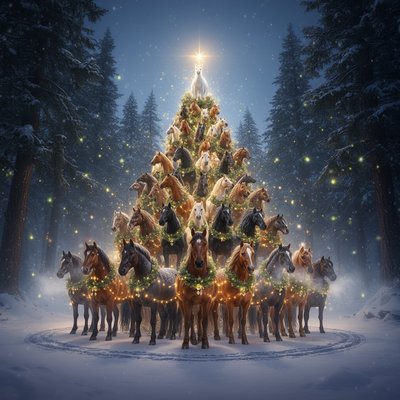
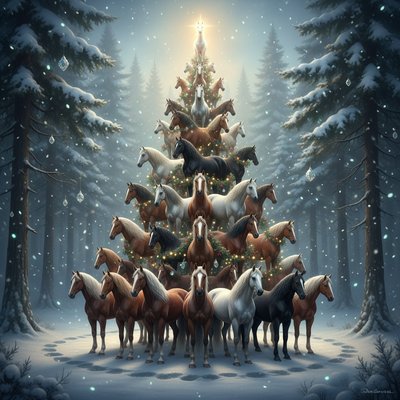
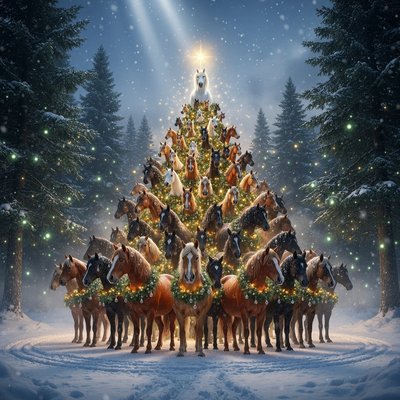
A breathtaking forest clearing at winter twilight, filled with deep emerald pines and soft ambient mist. At the center of the scene stands an extraordinary Christmas tree—its entire form cleverly created by living horses. Dozens of horses of various sizes and colors stand arranged in a perfect triangular formation from wide base to narrow peak, their bodies forming the layered silhouette of a lush holiday tree. Each horse is positioned with elegant precision so their necks, flowing manes, and arched backs mimic the contours of branches. The base layer features large, sturdy draft horses, chestnuts and bays, standing shoulder to shoulder like the lower boughs. Mid-levels transition to sleek Arabians, palominos, and black stallions, their manes fanned outward like sweeping tree limbs. Near the top, smaller ponies and miniature horses form the upper taper, culminating in a single snow-white miniature horse standing proudly at the peak, glowing with soft magical light like a star.

The horses are adorned with delicate festive accents: strands of golden fairy lights draped across their bodies, pine-needle wreath garlands resting on their necks, tiny crystal ornaments clipped lightly to their manes, and subtle silvery frost sparkling on their coats. Each horse’s breath forms soft clouds in the chilly air. Snow gently falls through shafts of moonlight filtering between towering firs. The forest floor is blanketed with untouched white snow, except for the circle of hoofprints surrounding the living tree. Fireflies and bioluminescent particles drift among the trees, adding a mystical glow. Mood is grand, magical, cinematic, hyper-realistic with extreme detail, crisp textures of fur, snow, and pine, volumetric lighting, dramatic shadows, ultra-high resolution, enchanted winter atmosphere.

Camera & Style cues:
– Wide-angle lens, low camera angle looking slightly upward
– Cinematic depth of field
– Hyper-detailed photorealism
– Soft moonlit color palette with warm golden highlights
– 8K clarity, high dynamic range, deep contrast
– Slight ethereal glow for a magical holiday feel
Cinematic Historical Photograph, Gritty Realism, Chiaroscuro Lighting. A tense, high-stakes chess match taking place between two seasoned pirates inside the cramped, dimly lit stern cabin of a rocking galleon at sea during the night.

The Players: On one side sits a grizzled, older Pirate Captain with a heavy grey beard and a scarred face, leaning over the board, his hand rubbing his chin in deep concentration. Opposite him is a younger, cunning Quartermaster with a gold tooth and a confident smirk, holding a clay pipe.

The Board & Pieces: Between them is a heavy wooden table stained with grog. The chessboard is carved directly into the tabletop, with squares made of inlaid mother-of-pearl and burned wood. They are playing with the custom pirate-themed chess set (previously designed): The Captain's side uses pieces carved from yellowed whalebone (King with tricorn, Ship Rooks), and the Quartermaster's side uses pieces cast from dark, tarnished iron. A bone "Knight" piece is currently threatening an iron "Queen."

The Atmosphere: The cabin is lit by a single, swaying oil lantern hanging overhead, casting long, moving shadows and illuminating the smoke in the air. Mugs of rum, a flintlock pistol, and rolled charts are cluttered around the board. Outside a stern window, a dark, stormy ocean is visible. The photo has a film grain texture.
A stunning and spiritually evocative depiction of the traditional Lakota Hoop Dance (or Intertribal Hoop Dance). The central figure is a single, male Hoop Dancer, captured mid-motion, demonstrating incredible agility and grace. He is adorned in vibrant, traditional regalia with intricate beadwork, feathers, and fringes, and is surrounded by a mesmerizing array of hoops, dynamically formed into various shapes and symbols, representing animals, stories, or the sacred circle of life. His face reflects intense focus, reverence, and the deep storytelling inherent in the dance. In the background, partially obscured by a light morning mist or soft haze, the monumental carving of the Crazy Horse Memorial is visible, lending a profound sense of historical continuity, honor, and enduring spirit to the scene. The setting is an open, natural area, perhaps a grassy plain or red rock outcropping, under a clear, early morning sky with the sun just beginning to illuminate the landscape, casting a soft, golden light. The atmosphere is one of dynamic energy, profound cultural pride, and deep spiritual connection to both tradition and the ancestral land. The artistic style is a vivid, realistic painting with a strong sense of movement, capturing the intricate details of the hoops and regalia, against the majestic, stoic presence of the memorial."

Key Considerations Reflected in This Prompt:

    Corrected Dance Name: Clearly states "Lakota Hoop Dance (or Intertribal Hoop Dance)."

    Central Figure: Focuses on a "single, male Hoop Dancer" to highlight the individual skill and artistry.

    Hoops & Symbolism: Emphasizes the "mesmerizing array of hoops, dynamically formed into various shapes and symbols" and their meaning.

    Crazy Horse Memorial Background: Explicitly places the "monumental carving of the Crazy Horse Memorial" in the background, noting its symbolic significance ("historical continuity, honor, and enduring spirit").

    Setting & Lighting: Suggests "early morning mist or soft haze" for the background to give the memorial an ethereal quality, and "soft, golden light" for the dancer.

    Mood: Conveys "dynamic energy, profound cultural pride, and deep spiritual connection."

    Artistic Style: "Vivid, realistic painting with a strong sense of movement.
A historically accurate and atmospheric depiction of the signing of the Mayflower Compact aboard the ship in November 1620. The scene is set in the dimly lit, cramped cabin of the Mayflower, with the ship's timbers and rigging subtly visible, conveying the challenging conditions of the voyage. A simple table or chest serves as the signing surface. The primary focus is on a small group of the last individuals signing the document: specifically, the indentured servants (or 'strangers' not directly part of the Separatist congregation) approaching or at the table. Their expressions show a mix of weary determination, understanding of the necessity, and perhaps a hint of quiet apprehension or resignation to this new social contract, given their status. They are dressed in the plain, practical clothing typical of 17th-century commoners and laborers. Figures of prominent Pilgrims or 'Saints' (like William Bradford or John Carver) are visible in the background, observing the proceedings with a sense of gravity and leadership, but they are not the central focus. The lighting is low and warm, perhaps from a lantern, creating a chiaroscuro effect that highlights the faces of the signers. The atmosphere conveys the momentousness of the act under difficult circumstances, the diverse composition of the group, and the early seeds of self-governance in a new world. The artistic style is a realistic, historically detailed oil painting, capturing the solemnity and human element of this pivotal historical moment."
Cinematic Nature Photography, Americana Style, Golden Hour Lighting. A candid, detailed shot of an authentic cowgirl in a worn leather hat, denim jacket, and dusty boots and long red hair. She is standing beside a sturdy pack horse in a rocky creek bed, actively stuffing overflowing, rugged canvas panniers.

The details of the load are clear: A large bag of jumbo marshmallows and a red box of graham crackers are peeking out of one open saddlebag, next to chocolate bars. Strapped awkwardly to the very top of the pack saddle with ropes is a large, bright orange inflatable river tube.

The environment is stunning Colorado high country: Towering ponderosa pines and aspen trees line a rushing clear mountain river. Rugged, snow-capped Rocky Mountain peaks rise in the background under a rich blue sky. The light is warm and late-afternoon, catching the dust in the air and the textures of the horse's coat and the leather gear.
Nature Photography Style, Romantic Naturalism Painting, a breathtaking, incredibly detailed scene deep within the primeval forests of Russia's Amur-Ussuri region. A massive, powerful female Amur Tiger with thick, pale orange and dark striped fur rests on a moss-covered rocky outcrop, watching over her two playful cubs who are batting at the air. The scene is absolutely swarming with hundreds of Red Admiral butterflies (distinct black wings with vibrant orange-red bands and white spots). The butterflies form swirling clouds, landing gently on the tigers' fur, their noses, and the surrounding lush ferns and Korean pine branches. The forest floor is dense with undergrowth, lichen, and a clear, cold stream nearby. The lighting is dappled golden hour sunlight filtering through a canopy of birch and ancient oak trees, creating a magical, serene atmosphere. Focus on the texture of the thick tiger fur and the delicate wings of the butterflies.
A historically accurate, deeply reverent and spiritually evocative oil painting. Two traditional Southern Ute individuals, a man and a woman, stand side-by-side with profound solemnity and ancient peace on the high mesa overlooking the twin spires of Chimney Rock National Monument (Chimney Rock and Companion Rock). They are dressed in authentic, richly detailed traditional attire. The man holds a feathered staff, his gaze directed towards the horizon, symbolizing his role as a protector and observer of the earth. The woman gestures subtly towards the sky, her posture conveying an intimate connection to the celestial, perhaps in a gesture of spiritual offering or acknowledgment. The scene's context is the stalling of the moon's analemma, with the moon itself appearing large and prominent, hanging low in the sky, its unique position clearly marking this cyclical astronomical pause. The atmosphere is bathed in the ethereal, soft glow of early morning light, just as the sun begins to kiss the distant peaks, casting long, significant shadows that stretch across the mesa. Their faces are etched with wisdom and a quiet understanding of the cosmos. The vast, spiritual landscape of Chimney Rock is an integral part of the composition, symbolizing their deep, timeless connection to both earth and sky, and their role as guardians of this sacred knowledge. Fine art composition, conveying a powerful sense of timeless ritual, astronomical reverence, and cultural continuity
profound image representing the verse Psalm 119:15. The scene depicts a solitary lady with flowing, long red hair, in a posture of deep contemplation or meditation. She is seated or kneeling in a peaceful, natural setting – perhaps on a gentle hillside overlooking a tranquil landscape, by a calm body of water, or within a serene garden. Her expression is focused and reverent.

Before her, or subtly integrated into the scene, is an ancient scroll or open book, glowing with a soft, ethereal light, symbolizing God's precepts. Her posture and gaze are directed towards this source of wisdom, with a clear sense of 'fixing her eyes' on its profound truth.

Extending from the scroll/book, or subtly woven into the distant landscape, are luminous, ethereal pathways or guiding lights, representing 'Your ways' (God's ways). These pathways are clear and inviting, leading towards a bright, hopeful horizon, symbolizing divine guidance and understanding. The atmosphere is tranquil and reflective, bathed in soft, warm, golden light (perhaps dawn or dusk), signifying clarity and spiritual insight. The overall mood is one of peace, deep wisdom, divine guidance, and focused devotion, rendered with a beautiful, luminous quality."
"A historically accurate depiction of a Ghost Dance, focusing on the late 19th-century context, specifically around 1890-1891. The scene shows Lakota (Sioux) or Northern Paiute people (specify one or include elements of both, but avoid anachronisms) participating in the ceremony.

Setting: A vast, open prairie or high desert landscape, under an expansive sky. The time of day could be dusk or night, with a prominent moon or stars, or a bright, clear day. Avoid overtly spiritual or ethereal elements like floating spirits unless explicitly requested for a later, more symbolic iteration. The focus should be on the earthly ceremony.

Participants: A circle of men, women, and children, hand-in-hand, moving in a slow, rhythmic shuffle or circular motion. Their faces show a mixture of devotion, hope, and determination. Some may have expressions of trance or deep concentration.

Attire:

    Ghost Dance Shirts/Dresses: Emphasize the unique Ghost Dance shirts and dresses, which were typically made of muslin or canvas. These garments should feature painted designs such as stars, crescents, birds (especially eagles or crows), buffalo, human figures, or crosses. The designs should appear hand-painted, not mass-produced.

    Hair and Adornments: Participants should have braided hair or wear it long. Some may wear feathers (e.g., eagle or hawk feathers) in their hair. Minimal traditional adornments, as the focus was often on the Ghost Dance shirt itself. Avoid overly elaborate or Hollywood-esque depictions of war bonnets unless relevant to a specific individual and context.

    Footwear: Moccasins or bare feet.

Action/Atmosphere:

    The dancers are moving in a counter-clockwise circle, with a central figure or a small group often leading.

    The overall mood is one of earnest prayer and communal spiritual effort. The dance should convey a sense of hope for renewal and the return of the old ways, rather than aggression or despair.

    There might be a central pole or small fire as a focal point, around which the dance takes place.

    Avoid any signs of direct conflict or violence; the Ghost Dance itself was a non-violent spiritual movement.

Specific Considerations for Accuracy:

    Wovoka's Influence: The teachings of Wovoka (the Northern Paiute prophet) emphasized peace, hard work, and the return of the buffalo and deceased ancestors. The scene should subtly reflect this hopeful, redemptive spirit.

    Regional Variations: If focusing on Lakota, consider their specific interpretations, which sometimes included more imagery related to their warrior traditions on the shirts, but still within the peaceful framework of the dance.

    Respectful Portrayal: Ensure the depiction is respectful and avoids any stereotypical or caricatured representations of Indigenous people. Focus on their human dignity and spiritual sincerity.
Cinematic Still Life Photography, Atmospheric Chiaroscuro Lighting, Macro Details. A high-stakes chess game mid-match, set upon a unique, well-worn board inside the dimly lit quarters of a pirate captain.

The Board: The chessboard isn't separate; the squares are carved directly into the surface of a thick, heavy oak table, stained with rum rings and knife marks. The light squares are inlaid, scratched mother-of-pearl, and the dark squares are burned wood.

The Pieces in Play: The unique pirate-themed pieces (from the previous design) are scattered across the board.

    One side (The 'White' pieces): Carved from aged, yellowed whale bone. A "King Captain" piece is cornered behind a line of "Pawn Deckhands."

    The other side (The 'Black' pieces): Cast from heavy, tarnished blackened iron. An iron "Knight Boarding Party" piece (on a rope swing) is aggressively positioned near the center.

The Atmosphere: The scene is lit dramatically by a single, smoky oil lantern hanging overhead, casting long shadows. Scattered around the board on the table are a few real gold doubloons mixed with captured pieces, a half-empty bottle of grog, and a rolled-up parchment chart. The background is dark wood paneling and a glimpse of a flintlock pistol. The focus is razor-sharp on the textures of the carved bone and corroded iron pieces.
19th-Century Naturalistic Oil Painting Style, Rich Earth Tones, Rustic Textures and dramatic barn lighting. A tense, detailed scene inside an old, timber-framed stable at midday.

The Antagonist (The Dog): Right in the center of a large, rough wooden manger overflowing with golden, dry hay, a scruffy, snarling terrier-mix dog is curled up aggressively. Its teeth are bared in a vicious snap, its hackles are raised, and its eyes are fixed selfishly on the intruders.

The Victims (The Oxen): Two massive, powerful oxen with large yokes and gentle, hungry eyes are leaning over the manger rail. Their huge heads are close to the hay, but they are recoiling slightly from the snapping dog. One ox has drool dripping from its mouth, looking at the hay with desperation and confusion. The size difference between the massive heads of the oxen and the small, spiteful dog is emphasized.

The Atmosphere: A strong shaft of natural sunlight cuts through an open barn door, illuminating dancing dust motes and highlighting the textures of the straw, the rough wood grain of the manger, and the matted fur of the dog. The rest of the barn is in warm shadow.