A Grand Night Time View Of The Iconic Fountains At Caesar's Palace In Las Vegas. The Water Is Illuminated From Below With Art

serene landscape with mountains and water
a tree in nature
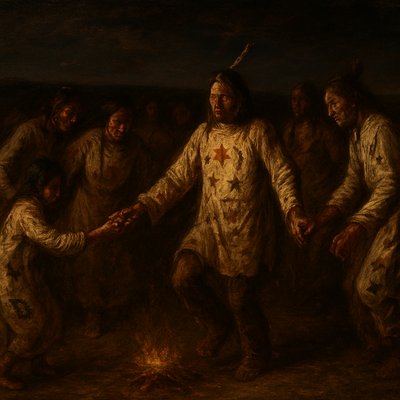
A historically accurate, deeply reverent and spiritually evocative oil painting. Two traditional Southern Ute individuals, a man and a woman, stand side-by-side with profound solemnity and ancient peace on the high mesa overlooking the twin spires of Chimney Rock National Monument (Chimney Rock and Companion Rock). They are dressed in authentic, richly detailed traditional attire. The man holds a feathered staff, his gaze directed towards the horizon, symbolizing his role as a protector and observer of the earth. The woman gestures subtly towards the sky, her posture conveying an intimate connection to the celestial, perhaps in a gesture of spiritual offering or acknowledgment. The scene's context is the stalling of the moon's analemma, with the moon itself appearing large and prominent, hanging low in the sky, its unique position clearly marking this cyclical astronomical pause. The atmosphere is bathed in the ethereal, soft glow of early morning light, just as the sun begins to kiss the distant peaks, casting long, significant shadows that stretch across the mesa. Their faces are etched with wisdom and a quiet understanding of the cosmos. The vast, spiritual landscape of Chimney Rock is an integral part of the composition, symbolizing their deep, timeless connection to both earth and sky, and their role as guardians of this sacred knowledge. Fine art composition, conveying a powerful sense of timeless ritual, astronomical reverence, and cultural continuity
serene landscape with mountains and water
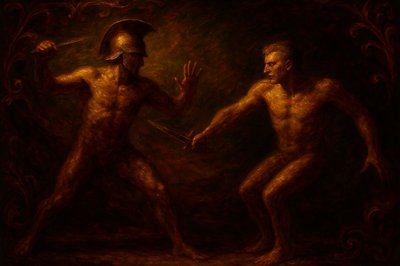
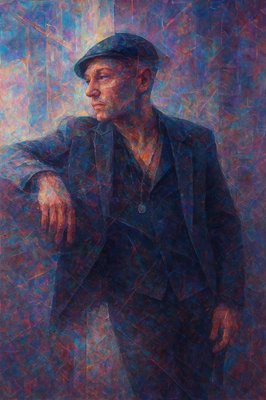
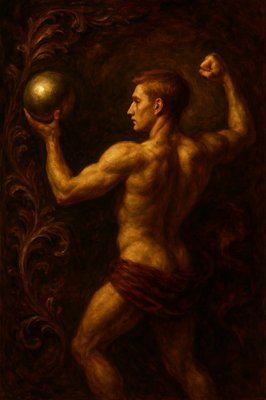
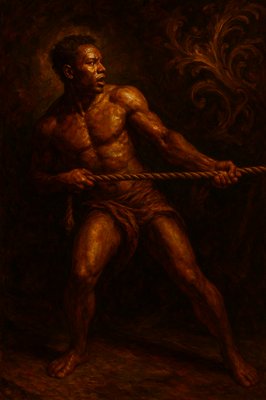
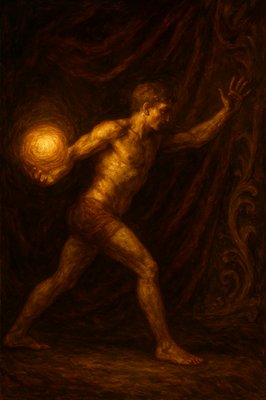
Classical Realist Figurative Art Style Style Transfer Example
serene landscape with mountains and water
Plein Air Landscape Art Style Style Transfer Example
"A dramatic, full-body portrait of Arnold Schwarzenegger as a Steampunk Terminator, standing powerfully in a dimly lit, richly detailed Victorian-era workshop. Arnold's iconic Terminator face is visible, with a glowing red eye, partially obscured by an intricate, metallic eyepatch and visible cybernetic components around his neck and face. He wears a heavy, dark brown leather duster coat over a tailored waistcoat and trousers, all adorned with brass buckles, gears, and leather straps. His left arm is a formidable steampunk prosthetic, crafted from polished brass, copper, and exposed gears, ending in a massive, Gatling-gun-like weapon integrated into the forearm. His right hand wears a finely detailed leather glove with metallic accents. The background of the workshop is filled with vintage machinery, pressure gauges, steam pipes, exposed brick walls, and the soft glow of gas lamps, casting long shadows. Smoke or steam gently drifts through the air, adding to the atmospheric industrial setting. The overall aesthetic is gritty, sophisticated, and perfectly blends the sci-fi elements of the Terminator with the intricate mechanical beauty of steampunk
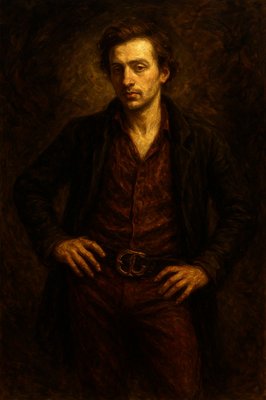
portrait of two people together
Digital Art Style, Romanticism Art Style, an overwhelmingly majestic and spiritually transformational painting inspired by Psalm 8:3-6. The scene captures a sweeping, sublime night sky, featuring a visible, prominent moon and countless brilliant stars, all rendered with luminous, dramatic glow. In the foreground, standing small against the infinite scale of the cosmos, is a solitary woman with long red hair, wearing simple, flowing attire. She is gazing upward, and a blinding shaft of pure, ethereal divine light—representing the glory and presence of the Lord—breaks through the veil of the deepest heavens, bypassing the moon and stars. This light dramatically envelops and transforms the woman, causing her clothing and hair to visibly glow with celestial energy. The artwork uses extreme digital chiaroscuro to emphasize the moment of spiritual encounter, with the vast sky and surrounding earth serving as a dark backdrop to the radiant divine presence. Focus on the sublime scale of the cosmos, the electrifying, transformative power of the pure divine light, and the solitary woman's luminous spiritual encounter against the immense majesty of the creation.
Unstressed vowels weakened to schwa.
The final -e in words like name became silent.
Endings like -ed and -es lost their full vowel sound, making English more rhythmically stress-timed.
6. The wh sound stayed distinct longer.
Which and witch sounded different—which started with a breathy hw. Today the pronunciation is similar but the difference remains in some dialects. create a picture withoud words
A historically accurate and atmospheric depiction of the signing of the Mayflower Compact aboard the ship in November 1620. The scene is set in the dimly lit, cramped cabin of the Mayflower, with the ship's timbers and rigging subtly visible, conveying the challenging conditions of the voyage. A simple table or chest serves as the signing surface. The primary focus is on a small group of the last individuals signing the document: specifically, the indentured servants (or 'strangers' not directly part of the Separatist congregation) approaching or at the table. Their expressions show a mix of weary determination, understanding of the necessity, and perhaps a hint of quiet apprehension or resignation to this new social contract, given their status. They are dressed in the plain, practical clothing typical of 17th-century commoners and laborers. Figures of prominent Pilgrims or 'Saints' (like William Bradford or John Carver) are visible in the background, observing the proceedings with a sense of gravity and leadership, but they are not the central focus. The lighting is low and warm, perhaps from a lantern, creating a chiaroscuro effect that highlights the faces of the signers. The atmosphere conveys the momentousness of the act under difficult circumstances, the diverse composition of the group, and the early seeds of self-governance in a new world. The artistic style is a realistic, historically detailed oil painting, capturing the solemnity and human element of this pivotal historical moment."
Jesus Christ Lord and King over all
A giant grouper fish, over a coral reef in the ocean, professional photography, extreme detail (
Psalms 124:1-6 KJVA  A Song of degrees of David. If it had not been the LORD who was on our side, now may Israel say;  (2)  If it had not been the LORD who was on our side, when men rose up against us:  (3)  Then they had swallowed us up quick, when their wrath was kindled against us:  (4)  Then the waters had overwhelmed us, the stream had gone over our soul:  (5)  Then the proud waters had gone over our soul.  (6)  Blessed be the LORD, who hath not given us as a prey to their teeth.
"A dramatic, full-body portrait of Arnold Schwarzenegger as a Steampunk Terminator, standing powerfully in a dimly lit, richly detailed Victorian-era workshop. Arnold's iconic Terminator face is visible, with a glowing red eye, partially obscured by an intricate, metallic eyepatch and visible cybernetic components around his neck and face. He wears a heavy, dark brown leather duster coat over a tailored waistcoat and trousers, all adorned with brass buckles, gears, and leather straps. His left arm is a formidable steampunk prosthetic, crafted from polished brass, copper, and exposed gears, ending in a massive, Gatling-gun-like weapon integrated into the forearm. His right hand wears a finely detailed leather glove with metallic accents. The background of the workshop is filled with vintage machinery, pressure gauges, steam pipes, exposed brick walls, and the soft glow of gas lamps, casting long shadows. Smoke or steam gently drifts through the air, adding to the atmospheric industrial setting. The overall aesthetic is gritty, sophisticated, and perfectly blends the sci-fi elements of the Terminator with the intricate mechanical beauty of steampunk
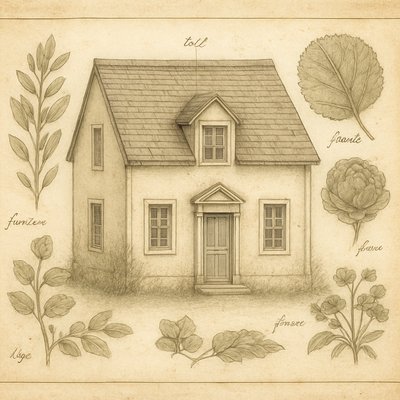
house with front view
A profound and epic scene depicting the Vision of the Dry Bones from Ezekiel 37. In a desolate, vast valley, countless dry human bones are scattered, stark white and ancient. A powerful, divine wind (ruach) swirls through the valley, imbued with a sacred, ethereal glow, causing the bones to rattle and miraculously knit together. Tendons, flesh, and skin rapidly form over the skeletal structures, transforming them into fully-formed human figures. As the divine breath enters, the figures rise, not as individuals, but as a colossal, awe-inspiring army standing upright, gazing forward with renewed life and purpose. The sky above is dramatic, perhaps with stormy clouds breaking to reveal a divine light. The overall mood is one of miraculous resurrection, immense power, and hopeful restoration."
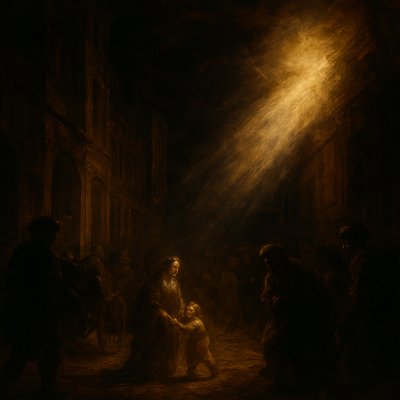
Baroque Vanitas Still Life Art Style Style Transfer Example
house with front view
serene landscape with mountains and water
 A majestic oil painting of an American landscape in the style of the Hudson River School, blending the epic vistas and vibrant atmospheric effects of Frederic Edwin Church with the heroic scale and dramatic light-shadow contrasts of Albert Bierstadt, infused with Luminist qualities of ethereal glow, soft atmospheric transitions, and concealed brushstrokes for a tranquil, meditative ambiance. Depict a vast river valley at dawn, with towering mountains in the distance, cascading waterfalls, lush forests, and a serene river reflecting golden sunlight; include subtle elements of human exploration such as a distant trail or cabin, rendered in intricate detail with rich colors, sublime grandeur, and divine illumination
serene landscape with mountains and water
 A majestic oil painting of an American landscape in the style of the Hudson River School, blending the epic vistas and vibrant atmospheric effects of Frederic Edwin Church with the heroic scale and dramatic light-shadow contrasts of Albert Bierstadt, infused with Luminist qualities of ethereal glow, soft atmospheric transitions, and concealed brushstrokes for a tranquil, meditative ambiance. Depict a vast river valley at dawn, with towering mountains in the distance, cascading waterfalls, lush forests, and a serene river reflecting golden sunlight; include subtle elements of human exploration such as a distant trail or cabin, rendered in intricate detail with rich colors, sublime grandeur, and divine illumination
house with front view
A historically accurate and atmospheric depiction of the signing of the Mayflower Compact aboard the ship in November 1620. The scene is set in the dimly lit, cramped cabin of the Mayflower, with the ship's timbers and rigging subtly visible, conveying the challenging conditions of the voyage. A simple table or chest serves as the signing surface. The primary focus is on a small group of the last individuals signing the document: specifically, the indentured servants (or 'strangers' not directly part of the Separatist congregation) approaching or at the table. Their expressions show a mix of weary determination, understanding of the necessity, and perhaps a hint of quiet apprehension or resignation to this new social contract, given their status. They are dressed in the plain, practical clothing typical of 17th-century commoners and laborers. Figures of prominent Pilgrims or 'Saints' (like William Bradford or John Carver) are visible in the background, observing the proceedings with a sense of gravity and leadership, but they are not the central focus. The lighting is low and warm, perhaps from a lantern, creating a chiaroscuro effect that highlights the faces of the signers. The atmosphere conveys the momentousness of the act under difficult circumstances, the diverse composition of the group, and the early seeds of self-governance in a new world. The artistic style is a realistic, historically detailed oil painting, capturing the solemnity and human element of this pivotal historical moment."
A statuesque, heroic portrait of Lady Mary Bailey (the aviator) standing confidently by her small biplane, the De Havilland Moth.

Style: Neoclassical painting emphasizing idealized forms, clear lines, balanced composition, and muted color palettes (such as marble white, deep blues, and sepia tones). The figures and machine should look elegant and timeless, like a heroic ancient myth.
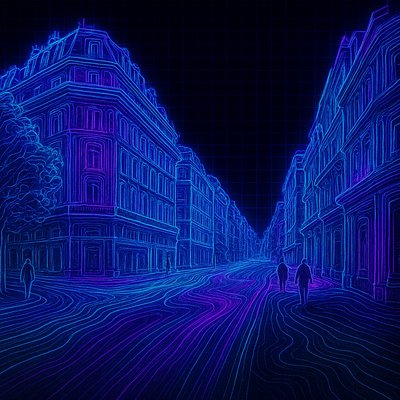
New York City aerial view
A serene and rustic autumn landscape based on the provided image, featuring an aged farm implement (a seeder or planter) in the foreground. The old machinery retains its weathered green and rust colors but is now positioned amidst a carpet of vibrant fallen autumn leaves in shades of gold, orange, and russet.

The large, leafy trees in the middle ground, which were green in the original image, are now transformed into glorious specimens of fall foliage, displaying brilliant yellows, fiery oranges, and deep reds. The distant field shows hints of freshly turned earth or dry, golden stubble. In the background, the small house with the blue roof remains, nestled amongst a dense forest that is also ablaze with autumn colors.


The sky is a clear, bright autumn blue, with warm, golden sunlight characteristic of a pleasant fall day, casting gentle shadows and highlighting the rich textures of the old equipment, the tree bark, and the colorful leaves. The overall mood is one of peaceful rural charm, autumnal beauty, and the quiet dignity of farm life as the seasons change.
serene landscape with mountains and water
house with front view
 A majestic oil painting of an American landscape in the style of the Hudson River School, blending the epic vistas and vibrant atmospheric effects of Frederic Edwin Church with the heroic scale and dramatic light-shadow contrasts of Albert Bierstadt, infused with Luminist qualities of ethereal glow, soft atmospheric transitions, and concealed brushstrokes for a tranquil, meditative ambiance. Depict a vast river valley at dawn, with towering mountains in the distance, cascading waterfalls, lush forests, and a serene river reflecting golden sunlight; include subtle elements of human exploration such as a distant trail or cabin, rendered in intricate detail with rich colors, sublime grandeur, and divine illumination
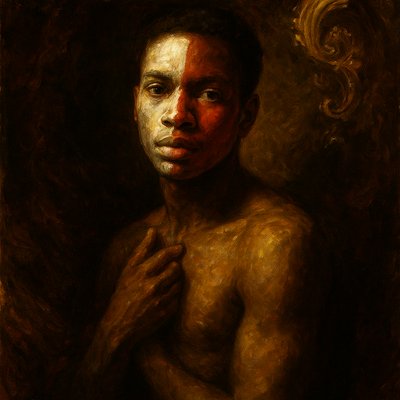
portrait of a person with expressive eyes
A young red-haired girl in whimsical adventurer gear, bravely climbing a colossal, mountain-sized candy corn. The candy corn mountain has realistic geological features, with crags and steep slopes, made entirely of candy corn, and integrated along its ridges are giant, sculpted chocolate bars. Shimmering, multi-colored pixie stick dust rains down around her like magical snowfall. Determined, joyful expression. Bright, fantastical sky. Hyperrealistic digital painting, fantasy illustration, surreal landscape, epic detailed, cinematic lighting, food art photography." The candy corn is a mountain landscape
Installation Modern Art Style Style Transfer Example