A Classical Sculpture Art

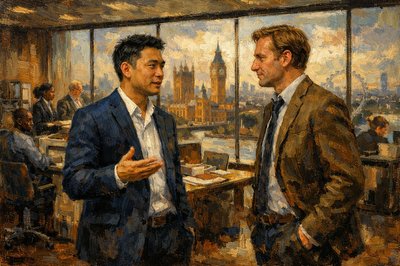
Inside an informal church in London.  Wing Sun's father has been invited to attend with his counterpart from the office.  He doesn't have anything else to do on Sunday morning, so he goes along.  we are standing in the back of the room.  There are many people of different ethnicities, the Pastor is standing up front alongside a worship leader with a guitar, and a young black woman, facing the audience.  The atmosphere is warm and welcoming, but Wing Sun's father feels a little uncomfortable.
Siu Zi is a 10 year old Chinese girl in Guangzhou. Late one humid evening, Siu Zi's father meets with a discreet man known simply as Mr. Chen.  In a quiet corner of a small teahouse near the back alleys of Guangzhou, Mr. Chen explains, in careful whispers, how he can help the family obtain the documents they needed to leave the country safely. Other patrons are in the teahouse, and a waiter stands nearby, but nobody can hear what Mr. Chen is saying.  It's safe to talk here.
Morning city scene in Petaling Jaya. A 10 year old chinese boy and his grandmother.  As they weave through the narrow sidewalk,  taxis zip by, buses screech to a halt at stoplights, motorbikes wend their way through the stopped traffic, trying to get a head start when the light turns green.  People in the informal businesses set up along the sidewalks call out greetings in a mix of Cantonese, Malay, and English. The sky, still soft with the remnants of dawn, and yet already heavy with humid heat, hinted at another sweltering afternoon ahead.
Low-poly geometric portrait of a cat's upper body facing slightly to the right, with shades of blue tones mixed with shades of. orange, brown, and golden yellow shades polygonal facets, with a large blue eye, black pupil, and subtle white highlight. The right eye is  a vibrant green eye, black pupil, and white highlight. Thin white whiskers extend from the muzzle on both sides. Solid medium-gray background. Style: minimalist vector art, faceted like origami or crystal, high contrast, no outlines except subtle edges.
An interior scene.  An old Bible with dog-eared pages, a black leather cover, and words of Christ in red sits open on a table.  The camera sees the Bible at a 45 degree angle.  The table and chair are old and worn, sitting on a worn carpet on a wood plank floor.  There are some pens and highlighters, along with a  red ribbon bookmark, a half-empty drink and some paper clips.  The room is in low-light, and a small window is in the background.  Someone has been studying and just stepped away for a moment.  Some lines in the Bible are highlighted yellow.
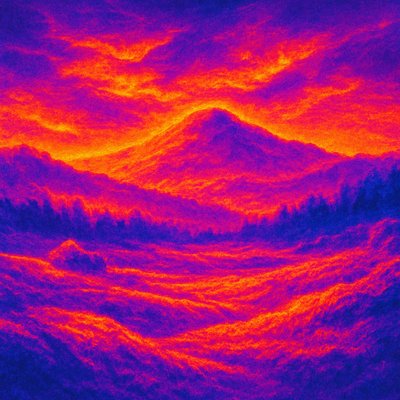
The San Gorgonio Pass, Mt. San Gorgonio) rises in the North, all hoary-frost and granite.  Snake-like clouds adorning her peak, I gaze past the big white house toward her uplifted boulders.
And at the South, Mt. San Jacinto has lost his head in cloud.  Burned bones against a blue sky backdrop.  Between the two, another sunrise gleams and beams of brilliant, white-hot day flash forth:  They accentuate the Sonora desert’s west extreme, and last night’s moon forgot to go away.
At her Mother's house in Penang, Wing Sun's mother, a beautiful chinese woman in her 30s, is standing in her bedroom looking out the window at night.  We see her from a quarter view inside the room.  She is pensive and an air of tension fills the room as she remembers growing up in this house.  Her hair is long and black, and she's wearing her housecoat.  A lantern gives low light inside the room.  It's raining outside.
At his Grandmother's house in Penang, Wing Sun is lying down on a futon in his bedroom, covered up with a beautiful lightweight quilt Grandma made.  Outside his room the rain is coming down.  In Penang, every corner of the old town—every whisper of the wind through ancient trees—seems to echo with promises of renewal and love. And as the rain softens outside, Wing-Sun closes his eyes with the comforting knowledge that every detour, every farewell, is simply a step toward a new beginning.  A lantern gives soft light to the room, and all is quiet.

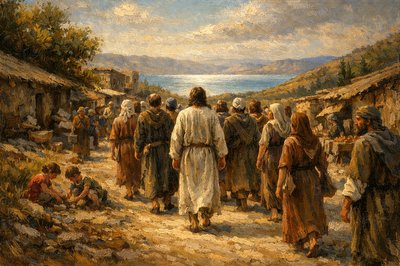
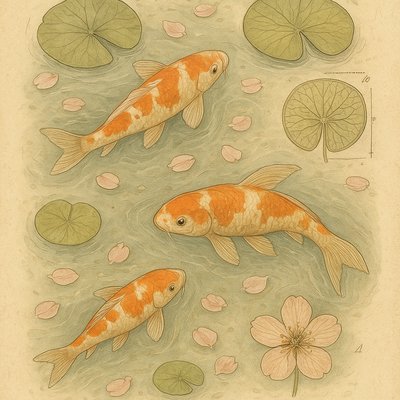
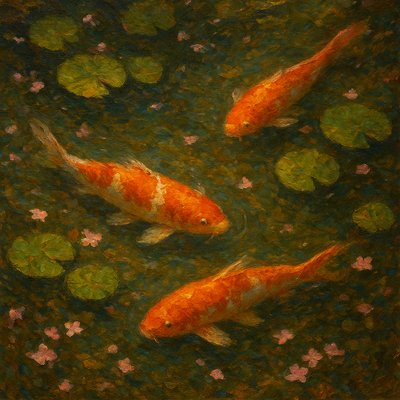
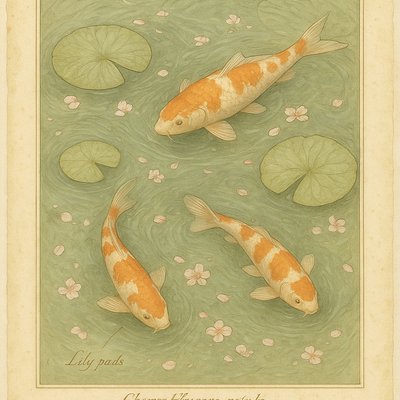
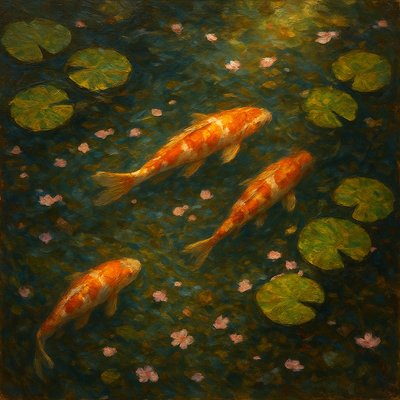
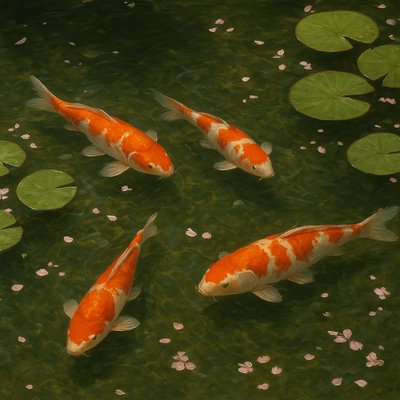
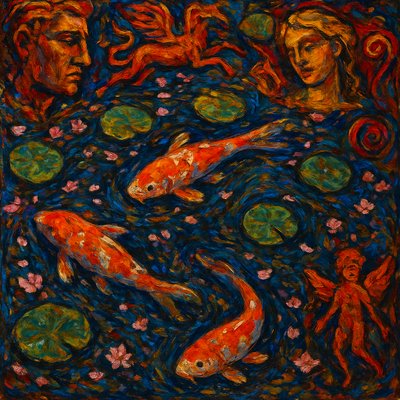
A koi pond seen from above, orange and white koi fish swimming among lily pads, clear water with subtle ripples, fallen cherry blossom petals floating on the surface, dappled sunlight
“For none of us liveth to himself, and no man dieth to himself. For whether we live, we live unto the Lord; and whether we die, we die unto the Lord: whether we live therefore, or die, we are the Lord's.” (Romans 14:7-8, KJVA)
An Asian Slice
At the dark end of an alley on a moonless night,
A youth squats low to the ground, turned toward the wall with his face in his lap.  Someone might think he’s sleeping.  He’s smoking heroin.  Soon he’ll fall over and soil himself, and stay right there until dawn.

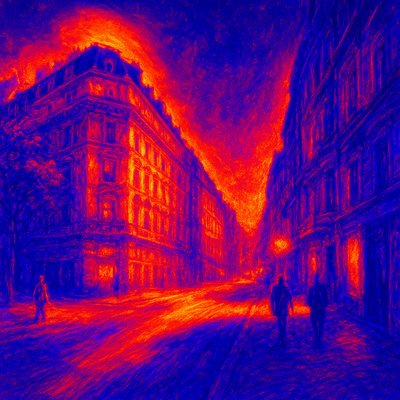
Back at the neon-lit mouth of this dark alley, 
hookers walk back and forth, hurrying to get past the alley, either for fear or because is smells so bad.  Eyelids, all painted golden, Asian whores always look like they’re made of candy.  Candy it is; but a snarling cat awaits its prey.
Inside an informal church in Kuala Lumpur.  Wing Sun and his father and mother, along with Siu Zi, his friend from school are there together.  We are standing in the back of the room, and there are many more people than there were in the London church.  There are people of different ethnicities, but mostly Chinese Malaysian.  The Pastor, a Chinese man, is standing up front speaking to the congregation, facing them.  The atmosphere is hot and sweaty, with ceiling fans running, but still welcoming, Wing Sun is happy that his family is together and also that his friend Siu Zi, who he has just learned is a Christian, can be there too.
Mr. Chen has arranged for the little family  to cross secretly into Hong Kong—a place known for its bright skyline and bustling streets. Under the cover of darkness and with careful planning, Siu Zi, her father and Grandmother, along with Mr. Chen have boarded a small boat that carries them silently across the water. The sea is calm, its surface reflecting a tapestry of starlight, as if the heavens themselves are guiding them.  Siu-Zi lies nestled between her father and grandmother, wrapped up in blankets, in the forward part of an open boat with quiet motors propelling them along. Their is an air of mystery and tension.
In Penang, Malaysia.  Wing Sun's Grandmother is elderly and lives in Penang, on the island.  Grandma's house is in a quieter part of the island, closer to the coastline where the sea breeze can be felt through the wooden windows. It's near the ocean, in Tanjung Bungah where there are old-style homes and a slower pace of life.  There are many resort "homestay" hotels, and also some high-rise condos, but Grandmother's house has been there many years.  Wing-Sun's mother grew up in that house, near the beach, with the ocean breeze.  We see the house from down the street with Grandma standing in the doorway greeting us.
Wing Sun is a 10 year old Malaysian boy. We see him from the back as he stands, looking down the street in the evening. The scent of mooncakes and burning lantern oil fills the air in the street in Petaling Jaya where Wing Sun lives.  Everything is aglow with the soft light of lanterns, their colors reflected in the puddles left by the afternoon rain.  At least 6 vendors have pulled their carts up onto the sidewalks on both sides of the street, selling moon pies and other special treats.  
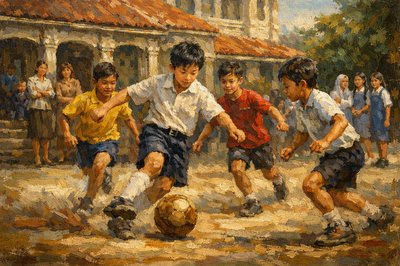
Several of Wing-Sun's neighborhood friends, some younger than he and some a little older, were standing around in a circle, waiting for him to come outside.
Morning inside the classroom at a private school in Kuala Lumpur before class begins. Students stand next to their desks as the teacher, standing in front, leads them in the usual morning recitations of the five national principles, their voices blending into one:
	"Kepercayaan kepada Tuhan." (Belief in God.)
	"Kesetiaan kepada Raja dan Negara." (Loyalty to the King and Country.)
	"Keluhuran Perlembagaan." (Supremacy of the Constitution.)
	"Kedaulatan Undang-Undang." (Rule of Law.)
	"Kesopanan dan Kesusilaan." (Courtesy and Morality.)
Wing-Sun repeats the words automatically, his eyes drift across the classroom, catching a glimpse of Siu-Zi, the new girl, standing in her usual spot near the window.
A hyper-detailed, photorealistic depiction of the High Priest of Israel performing the Feast of Weeks (Pentecost) wave offering. The High Priest is dressed in the complete set of holy vestments: a blue robe with golden bells and pomegranates on the hem, a colorful ephod, and a breastplate with twelve jewels. A golden plate engraved 'HOLINESS TO THE LORD' is tied to his linen mitre. He stands in the Tabernacle courtyard, facing the altar, holding the two leavened loaves of firstfruits and two male lambs high, performing the sacred wave offering ritual. Golden morning light, historically accurate setting, cinematic oil painting style.
“For none of us liveth to himself, and no man dieth to himself. For whether we live, we live unto the Lord; and whether we die, we die unto the Lord: whether we live therefore, or die, we are the Lord's.” (Romans 14:7-8, KJVA)
Low-poly geometric portrait of a cat's upper body facing slightly to the right, with shades of blue tones mixed with shades of. orange, brown, and golden yellow shades polygonal facets, with a large blue eye, black pupil, and subtle white highlight. The right eye is  a vibrant green eye, black pupil, and white highlight. Thin white whiskers extend from the muzzle on both sides. Solid medium-gray background. Style: minimalist vector art, faceted like origami or crystal, high contrast, no outlines except subtle edges, symmetrical split for a duality theme.
A grand British court portrait, Georgian/Regency era, Baroque/Rococo painting style, rich colours, gilded interior, dramatic oil-painting lighting. A 19-year-old Indian princess seated confidently in a wheelchair at the centre, wearing a black low-cut ballgown, black gloves, half-up half-down hairstyle, glasses, holding a hand fan, composed expression with a subtle smirk. Elegant, playful court atmosphere, refined and regal, high detail, classical portrait composition.
Title text in white serif font with black outline: ‘CROWNS & CALAMITY’.
Quote text below: ‘Princes are optional. Parties are mandatory.’
By Harpreet.
A hyper-detailed, photorealistic depiction of the High Priest of Israel performing the Feast of Weeks (Pentecost) wave offering. The High Priest is dressed in the complete set of holy vestments: a blue robe with golden bells and pomegranates on the hem, a colorful ephod, and a breastplate with twelve jewels. A golden plate engraved 'HOLINESS TO THE LORD' is tied to his linen mitre. He stands in the Tabernacle courtyard, facing the altar, holding the two leavened loaves of firstfruits and two male lambs high, performing the sacred wave offering ritual. Golden morning light, historically accurate setting, cinematic oil painting style.
cinematic, vibrant scene of Rudolph Valentino in his youthful prime, seated at a French-style outdoor café table beside a clear, highly reflective teal-blue stream in the Italian mountains. He is strikingly handsome with smooth Mediterranean features, youthful charm, and a confident presence. He wears a tailored cream linen suit with a crisp white shirt, a silk cravat in soft pastel tones, and polished leather shoes. His hair is sleek and perfectly styled in a classic 1920s fashion, evoking timeless elegance. On the table rests a delicate porcelain coffee cup of fine Italian china, painted with intricate cobalt blue, gold, and crimson patterns. Steam rises gracefully from the cup, curling upward like ethereal ribbons, catching the sunlight in cinematic detail. The atmosphere glows with radiant, vibrant colors teal waters shimmering, golden mountain light illuminating the scene, reflections dance across the café table. No dark overlay, only luminous tones and crisp clarity.
Wearable art piece blurring lines between fashion and sculpture in the art style of Body Art --v 6.1
“And Solomon sent to Huram the king of Tyre, saying, As thou didst deal with David my father, and didst send him cedars to build him an house to dwell therein, even so deal with me. Behold, I build an house to the name of the LORD my God, to dedicate it to him, and to burn before him sweet incense, and for the continual shewbread, and for the burnt offerings morning and evening, on the sabbaths, and on the new moons, and on the solemn feasts of the LORD our God. This is an ordinance for ever to Israel. And the house which I build is great: for great is our God above all gods. But who is able to build him an house, seeing the heaven and heaven of heavens cannot contain him? who am I then, that I should build him an house, save only to burn sacrifice before him?” (2 Chronicles 2:3-6, KJV)
A historically accurate, high-quality black and white photograph from 1943. The scene is a bustling village hall in wartime Britain, decorated with Union Jack flags and a large banner reading, "Wings for Victory - Raise Funds for the RAF."

The focus is on several pairs of dancers on a wooden floor. The main subjects are smartly dressed African American airmen in USAAF uniforms dancing with British women wearing fashionable 1940s floral print dresses. They are engaged in an energetic and joyous moment of the Lindy Hop (or Jitterbug/Swing dancing), characterized by dynamic movement, big smiles, and one pair caught in a mid-air 'breakaway' or 'swing-out' move. In the background, a small jazz band featuring a drummer and saxophone player is visible on a low stage. The atmosphere is warm, integrated, and full of the energy of an exciting, new dance style.
First century Jerusalem at the "gate beautiful" to the temple grounds.  Peter and John were going up to the temple at the hour of prayer, the ninth hour. And a man lame from birth was being carried, whom they laid daily at the gate of the temple that is called the Beautiful Gate to ask alms of those entering the temple. Seeing Peter and John about to go into the temple, he asked to receive alms. And Peter directed his gaze at him, as did John, and said, “Look at us.” And he fixed his attention on them, expecting to receive something from them. But Peter said, “I have no silver and gold, but what I do have I give to you. In the name of Jesus Christ of Nazareth, rise up and walk!” And he took him by the right hand and raised him up, and immediately his feet and ankles were made strong.
Inside a home in Petaling Jaya, Wing-Sun, a 10 year old Chinese boy sits cross-legged on the cool tile floor, watching the delicate tendrils of smoke rise from the joss sticks his father has just placed in the family altar’s bronze urn. The flickering candlelight casts shifting shadows over the framed portraits of the ancestors, their solemn faces gazing out from another time.
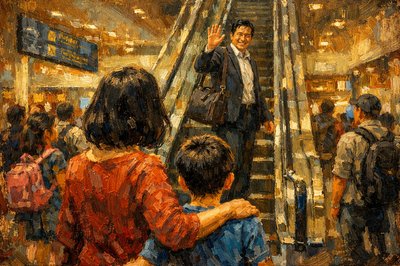
Wing-Sun's father, dressed in crisp slacks and a neatly pressed white shirt, murmurs a quiet prayer, his voice low and rhythmic. Beside him, Wing-Sun’s mother clasps her hands together in a quiet moment of respect before adjusting the jade bangle on her wrist. Their morning ritual is a quiet, practiced thing; one they perform, and Wing-Sun observes, every day.
Oil Painting Art Style, a lively scene showcasing multiple vibrant Quaker Parrots (Monk Parakeets) in crisp detail, actively perched, interacting, and flying around their extraordinary communal stick nest. The nest, a massive and intricate structure woven from countless twigs, serves as a striking backdrop, resembling a complex, multi-chambered apartment building for birds high within a large, leafy tree. The focus is primarily on the parrots themselves: their distinctive bright green plumage, grey chests, and intelligent, curious eyes are rendered with exquisite detail. Several parrots are clearly visible, their individual feathers, beaks, and expressions highlighted. The setting is bright and lively, illuminated by clear, natural sunlight, casting detailed shadows. Focus on the vibrant colors and fine feather details of the Quaker Parrots, their lively activity, and the impressive scale and texture of their communal stick nest as an integral part of their environment.
Wearable art piece blurring lines between fashion and sculpture in the art style of Body Art --v 6.1
Oil Painting Art Style, a breathtakingly majestic and regal portrait of "The Queen in Gold of Ophir," inspired by Psalm 45. The Queen stands with impeccable grace and royal dignity, her posture radiating quiet power. She is adorned in an exquisitely elaborate gown woven entirely from the finest, purest gold of Ophir, shimmering with incredible richness. Her attire is intricately embellished with countless precious jewels—sapphires, rubies, and emeralds—each catching the light. A delicate yet regal golden crown rests upon her head, complementing her serene and noble expression. The setting is a grand, opulent royal palace chamber, with rich tapestries and polished marble, bathed in warm, golden, ambient light that dramatically illuminates her and her lavish garments. Focus on the unparalleled brilliance and texture of her golden gown, the sparkle of her jewels, her majestic presence, and the luxurious, sacred atmosphere befitting a queen in God's presence.
Oil Painting Art Style, a tender and protective scene featuring a small, close-knit flock of magnificent Blue Hyacinth Macaws gathering for roosting at dusk. On a sturdy branch of a tall palm tree within an open woodland, a mother Hyacinth Macaw is prominently depicted, gently extending a wing to cover a smaller, younger macaw nestled securely beneath her. The macaws, with their incredibly vibrant, deep blue plumage and striking yellow eye rings, are nestled closely together, their bodies positioned to evoke a powerful sense of being 'covered' and finding 'refuge' under a protective wing. The soft, fading twilight glow illuminates their feathers with a deep, iridescent sheen and casts gentle, lengthening shadows. The surrounding natural environment is rendered in muted, dusky tones of green and purple, creating a tranquil atmosphere of safety and secure communal rest. Focus on the exquisite detail of the macaws' feathers and tender facial expressions, particularly the mother and young, the profound warmth and security of their huddle, and the peaceful, protective mood inspired by their collective refuge.
Oil Painting Art Style, a bustling scene featuring several vibrant Quaker Parrots (also known as Monk Parakeets) perched on and around their extraordinary communal nest. The nest is a massive, intricate structure built entirely from countless interwoven sticks and twigs, resembling a complex, multi-chambered apartment building for birds, integrated high within the sturdy branches of a large, leafy tree. Each visible entrance or chamber suggests multiple pairs of parrots coexisting. The Quaker Parrots themselves, with their distinctive green plumage, grey chests, and bright eyes, are actively flying to and from, bringing more sticks, or observing their bustling community. The setting is bright and lively, illuminated by clear, natural sunlight, casting detailed shadows and highlighting the texture of the sticks and feathers. Focus on the architectural complexity and scale of the stick nest, the industrious activity of the parrots, and the vibrant green and grey colors of the birds against the natural backdrop.
    A breathtaking, full-size artistic standing buffalo, rendered entirely in the style of intricate, luminous glass art, reminiscent of the painted buffalo installations. The buffalo's majestic form is composed of countless individual pieces of vibrant, multifaceted stained glass or fused glass, meticulously cut, arranged, and joined.

    The entire surface of this glass buffalo is adorned with various miniature, finely detailed scenes and patterns etched, painted, or embedded within the glass itself, or created by the unique coloration and texture of the glass pieces. These scenes depict:

        Iconic Yellowstone landscapes: Old Faithful erupting in miniature, the Grand Canyon of the Yellowstone, geothermal pools.

        Local wildlife: Elk, bears, wolves, eagles (all rendered in the glass medium).

        Native American art motifs: Geometric patterns, symbols, and figures (also within the glass).

    The buffalo's interior is subtly illuminated, causing the entire sculpture to glow from within, acting as a beacon of art and nature. Light catches every facet of the glass, creating a dazzling play of refracted colors that project intricate patterns onto the surrounding natural environment.

    The setting is the glory of Yellowstone National Park, specifically an expansive, iconic vista. Perhaps in a verdant meadow with distant geysers steaming, or near a crystal-clear river. The morning sun, bright and golden, backlights the buffalo, intensifying its inner glow and creating a dramatic contrast with the rugged, natural beauty of the park. The atmosphere is one of awe, harmony between art and nature, and a profound celebration of the spirit of the American West. The artistic style is hyper-realistic, emphasizing the detailed texture, transparency, and brilliant light play inherent in glass art, seamlessly integrated into a vibrant, natural landscape.
A historically accurate and atmospheric depiction of the signing of the Mayflower Compact aboard the ship in November 1620. The scene is set in the dimly lit, cramped cabin of the Mayflower, with the ship's timbers and rigging subtly visible, conveying the challenging conditions of the voyage. A simple table or chest serves as the signing surface. The primary focus is on a small group of the last individuals signing the document: specifically, the indentured servants (or 'strangers' not directly part of the Separatist congregation) approaching or at the table. Their expressions show a mix of weary determination, understanding of the necessity, and perhaps a hint of quiet apprehension or resignation to this new social contract, given their status. They are dressed in the plain, practical clothing typical of 17th-century commoners and laborers. Figures of prominent Pilgrims or 'Saints' (like William Bradford or John Carver) are visible in the background, observing the proceedings with a sense of gravity and leadership, but they are not the central focus. The lighting is low and warm, perhaps from a lantern, creating a chiaroscuro effect that highlights the faces of the signers. The atmosphere conveys the momentousness of the act under difficult circumstances, the diverse composition of the group, and the early seeds of self-governance in a new world. The artistic style is a realistic, historically detailed oil painting, capturing the solemnity and human element of this pivotal historical moment."
Renaissance Painting Art Style, Symbolism Art Style, a profoundly joyful and uplifting painting inspired by Nehemiah 8:10, emphasizing "the joy of the Lord is your strength." The scene depicts a vibrant, bustling gathering of diverse ancient Israelites, engaged in a communal feast and celebration. People of all ages are shown with radiant, happy faces, some laughing heartily, others sharing food and drinks, and many with expressions of deep, peaceful contentment and spiritual upliftment. A few figures have their heads tilted upwards or hands gently raised, as if receiving a subtle, warm, golden divine light that bathes the scene, emanating from above and symbolizing the presence and strength of the Lord. The setting is an outdoor gathering, perhaps near a restored wall or a communal square, filled with rich textures of food, drink, and colorful garments. The atmosphere is one of shared delight, spiritual renewal, and unbreakable strength. Focus on the authentic, diverse expressions of joy on each individual's face, the sense of vibrant community and shared celebration, and the ethereal, empowering golden light that symbolizes the Lord's strength.
    A breathtaking, full-size artistic standing buffalo, rendered entirely in the style of intricate, luminous glass art, reminiscent of the painted buffalo installations. The buffalo's majestic form is composed of countless individual pieces of vibrant, multifaceted stained glass or fused glass, meticulously cut, arranged, and joined.

    The entire surface of this glass buffalo is adorned with various miniature, finely detailed scenes and patterns etched, painted, or embedded within the glass itself, or created by the unique coloration and texture of the glass pieces. These scenes depict:

        Iconic Yellowstone landscapes: Old Faithful erupting in miniature, the Grand Canyon of the Yellowstone, geothermal pools.

        Local wildlife: Elk, bears, wolves, eagles (all rendered in the glass medium).

        Native American art motifs: Geometric patterns, symbols, and figures (also within the glass).

    The buffalo's interior is subtly illuminated, causing the entire sculpture to glow from within, acting as a beacon of art and nature. Light catches every facet of the glass, creating a dazzling play of refracted colors that project intricate patterns onto the surrounding natural environment.

    The setting is the glory of Yellowstone National Park, specifically an expansive, iconic vista. Perhaps in a verdant meadow with distant geysers steaming, or near a crystal-clear river. The morning sun, bright and golden, backlights the buffalo, intensifying its inner glow and creating a dramatic contrast with the rugged, natural beauty of the park. The atmosphere is one of awe, harmony between art and nature, and a profound celebration of the spirit of the American West. The artistic style is hyper-realistic, emphasizing the detailed texture, transparency, and brilliant light play inherent in glass art, seamlessly integrated into a vibrant, natural landscape.