“And Shemaiah The Son Of Nethaneel The Scribe, One Of The Levites, Wrote Them Before The King, And The Princes, And Zadok The Art

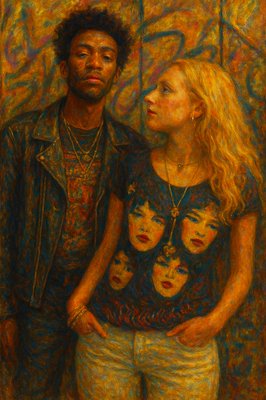
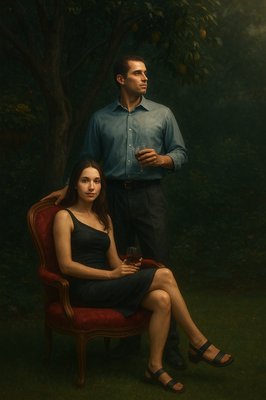
a painting of a man and woman standing next to each other
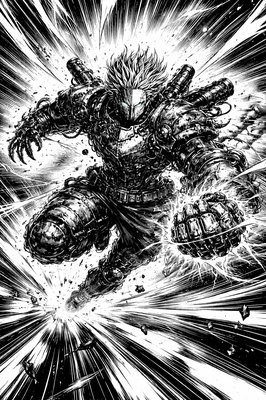
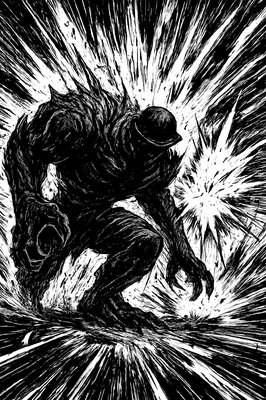
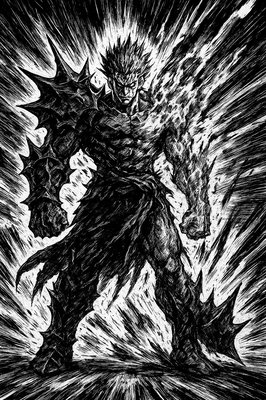
a black and white drawing of a monster
a black and white drawing of a person on a snowboard
a black and white drawing of a person on a skateboard
a black and white drawing of a monster on a surfboard
a black and white drawing of a person on a snowboard
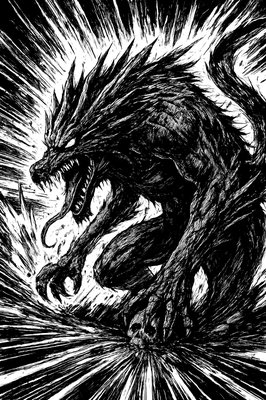
a black and white drawing of a monster
a black and white drawing of a monster attacking a man
a black and white drawing of a gorilla
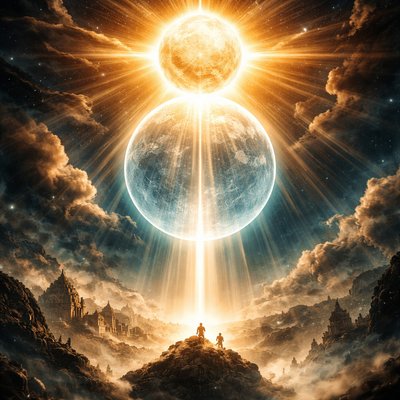
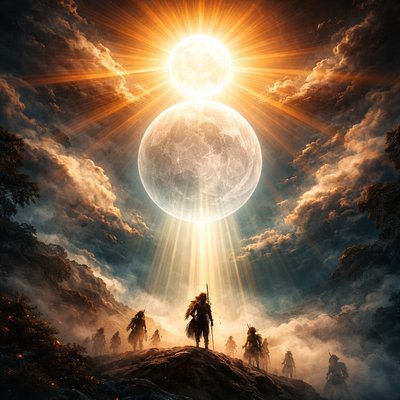
Ancient celestial vision: the blazing sun unites with a translucent moon, the moon rendered invisible, swallowed by the sun's overwhelming radiance yet delicately outlined as a glass, beams of divine light pouring through, the moon spiritual symbolism of hidden union and concealed intimacy, ethereal golden and silver tones, sun and moon the same size, golden rays enveloping a transparent moon.
Ancient celestial vision: the blazing sun unites with a completely translucent moon, the moon rendered invisible, swallowed by the sun's overwhelming radiance yet delicately outlined as a glass, beams of divine light pouring through, the moon spiritual symbolism of hidden union and concealed intimacy, ethereal golden and silver tones, sun and moon the same size, golden rays enveloping a transparent moon.
Ancient celestial vision: the blazing sun unites with a translucent moon, the moon rendered almost invisible, swallowed by the sun's overwhelming radiance yet delicately outlined as a glass, beams of divine light pouring down, the moon a silent witness beneath the sun's glory, spiritual symbolism of hidden union and concealed intimacy, ethereal golden and silver tones, sun and moon the same size, golden rays enveloping a dark transparent moon.
Ancient celestial vision: the blazing sun unites with a completely translucent moon, the moon rendered invisible except for a silvery faint outline, swallowed by the sun's overwhelming radiance yet delicately outlined as a glass, beams of divine light pouring through, the moon spiritual symbolism of hidden union and concealed intimacy, ethereal golden and silver tones, sun and moon the same size, golden rays enveloping a transparent moon. Moon is ethereal and the sky is blue. It is like the silver of the moon's features are upon the sun.
Ancient celestial vision: the blazing sun unites with a completely translucent moon, the moon rendered invisible except for a silvery faint outline, swallowed by the sun's overwhelming radiance yet delicately outlined as a glass, beams of divine light pouring through, the moon spiritual symbolism of hidden union and concealed intimacy, ethereal golden and silver tones, sun and moon the same size, golden rays enveloping a transparent moon. Moon is ethereal and the sky is blue. It is like the silver of the moon's features are upon the sun. brilliant light within the moon

Ancient celestial vision: the blazing sun hovers directly above a translucent moon, the moon rendered almost invisible, swallowed by the sun's overwhelming radiance yet delicately outlined as a glass, beams of divine light pouring down, the moon a silent witness beneath the sun's glory, spiritual symbolism of hidden union and concealed intimacy, ethereal golden and silver tones,
Ancient celestial vision: the blazing sun hovers directly above a translucent moon, the moon rendered almost invisible, swallowed by the sun's overwhelming radiance yet delicately outlined as a glass, beams of divine light pouring down, the moon a silent witness beneath the sun's glory, spiritual symbolism of hidden union and concealed intimacy, ethereal golden and silver tones, sun and moon the same size
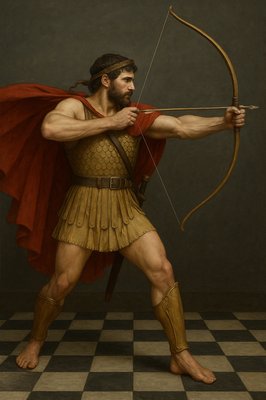
a painting of a man with a bow and arrow
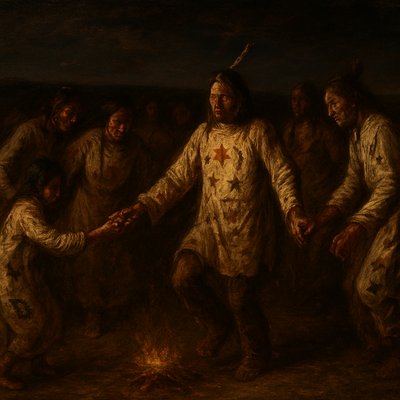
"A historically accurate depiction of a Ghost Dance, focusing on the late 19th-century context, specifically around 1890-1891. The scene shows Lakota (Sioux) or Northern Paiute people (specify one or include elements of both, but avoid anachronisms) participating in the ceremony.

Setting: A vast, open prairie or high desert landscape, under an expansive sky. The time of day could be dusk or night, with a prominent moon or stars, or a bright, clear day. Avoid overtly spiritual or ethereal elements like floating spirits unless explicitly requested for a later, more symbolic iteration. The focus should be on the earthly ceremony.

Participants: A circle of men, women, and children, hand-in-hand, moving in a slow, rhythmic shuffle or circular motion. Their faces show a mixture of devotion, hope, and determination. Some may have expressions of trance or deep concentration.

Attire:

    Ghost Dance Shirts/Dresses: Emphasize the unique Ghost Dance shirts and dresses, which were typically made of muslin or canvas. These garments should feature painted designs such as stars, crescents, birds (especially eagles or crows), buffalo, human figures, or crosses. The designs should appear hand-painted, not mass-produced.

    Hair and Adornments: Participants should have braided hair or wear it long. Some may wear feathers (e.g., eagle or hawk feathers) in their hair. Minimal traditional adornments, as the focus was often on the Ghost Dance shirt itself. Avoid overly elaborate or Hollywood-esque depictions of war bonnets unless relevant to a specific individual and context.

    Footwear: Moccasins or bare feet.

Action/Atmosphere:

    The dancers are moving in a counter-clockwise circle, with a central figure or a small group often leading.

    The overall mood is one of earnest prayer and communal spiritual effort. The dance should convey a sense of hope for renewal and the return of the old ways, rather than aggression or despair.

    There might be a central pole or small fire as a focal point, around which the dance takes place.

    Avoid any signs of direct conflict or violence; the Ghost Dance itself was a non-violent spiritual movement.

Specific Considerations for Accuracy:

    Wovoka's Influence: The teachings of Wovoka (the Northern Paiute prophet) emphasized peace, hard work, and the return of the buffalo and deceased ancestors. The scene should subtly reflect this hopeful, redemptive spirit.

    Regional Variations: If focusing on Lakota, consider their specific interpretations, which sometimes included more imagery related to their warrior traditions on the shirts, but still within the peaceful framework of the dance.

    Respectful Portrayal: Ensure the depiction is respectful and avoids any stereotypical or caricatured representations of Indigenous people. Focus on their human dignity and spiritual sincerity.
a black and white image of a comic strip
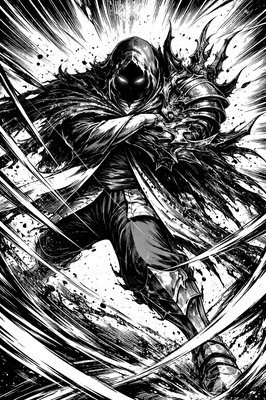
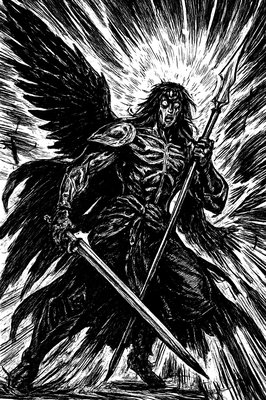
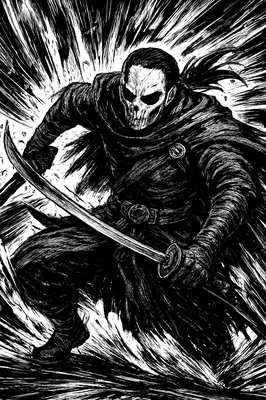
a black and white drawing of a skeleton holding a sword
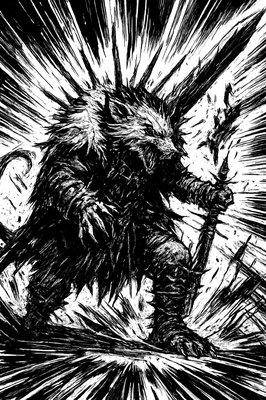
a black and white drawing of a creature holding a sword
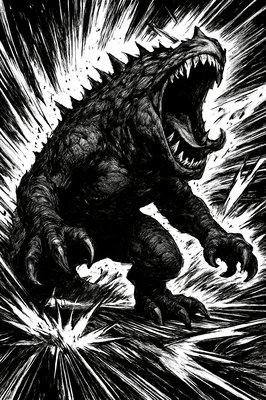
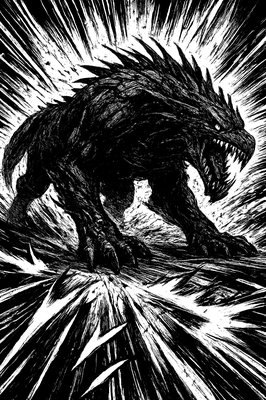
a black and white drawing of a godzilla
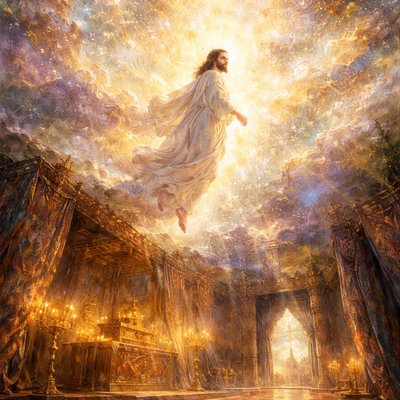
A wide-angle, cinematic masterpiece. The lower portion of the image shows the interior of an ancient, candlelit Tabernacle, detailed with tapestries and hewn stone (the "holy places made with hands"). Above it, the roof dissolves into swirling, luminous, celestial energy and golden light that is boundless ("heaven itself"). The figure of Jesus Christ, radiant with a soft inner light and wearing simple, brilliant white robes, is ascending from the shadowy temple into the infinite light, looking back with compassionate intercessory eyes. Volumetric lighting, grand scale, highly detailed, dramatic atmosphere.
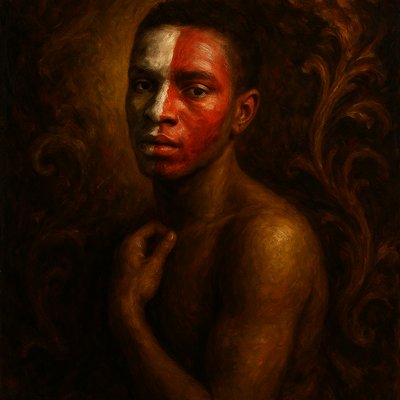
a painting of a man with red and white paint on his face
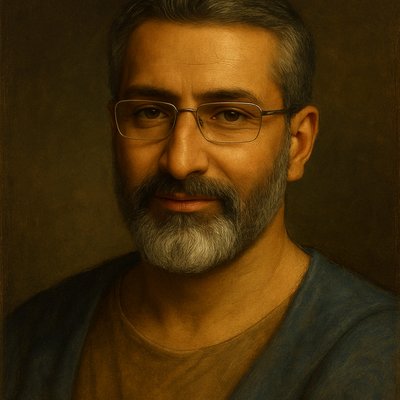
a painting of a man with glasses and a beard
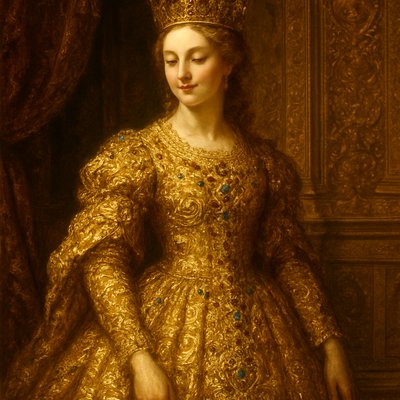
My sincerest apologies that the Queen appeared angry! That's completely contrary to the "serene and noble expression" we aimed for and the dignity implied by Psalm 45. We need to explicitly reinforce a gentler, more gracious demeanor.

You're also right to focus on the gold's shine. We can definitely enhance that.

To address both issues—the expression and the gold's luminosity—we'll make two key adjustments:

    Refine Expression: Use stronger words for a gentle, majestic, and perhaps beatific expression.

    Enhance Gold's Shine: Introduce Baroque Art Style as a secondary influence. Baroque is famous for its dramatic light, intense gleam on metals and jewels, and dynamic richness, which will make the gold truly radiant. It pairs beautifully with Oil Painting for opulence.

Revised Prompt for "Queen in Gold of Ophir - Gentle Expression & Shining Gold"

    Oil Painting Art Style, Baroque Art Style, a breathtakingly majestic and regal portrait of "The Queen in Gold of Ophir," inspired by Psalm 45. The Queen stands with impeccable grace and royal dignity, her posture radiating quiet power. Her expression is serene, gentle, and profoundly gracious, with a subtle, knowing smile, reflecting noble peace. She is adorned in an exquisitely elaborate gown woven entirely from the finest, purest gold of Ophir, which shimmers and gleams with unparalleled brilliance, catching every ray of light. Her attire is intricately embellished with countless precious jewels—sapphires, rubies, and emeralds—each sparkling intensely with Baroque dynamism. A delicate yet regal golden crown, also ablaze with light, rests upon her head. The setting is a grand, opulent royal palace chamber, with rich tapestries and polished marble, bathed in dramatic, warm, golden ambient light that creates striking highlights and deep, luxurious shadows, making her and her lavish garments glow. Focus on the unparalleled brilliance, texture, and radiant shine of her golden gown, the intense sparkle of her jewels, her majestic yet gentle presence, and the luxurious, sacred atmosphere befitting a queen in God's presence.
Ancient celestial vision: the blazing sun hovers directly above a faint translucent moon, the moon rendered almost invisible, swallowed by the sun's overwhelming radiance yet delicately outlined as a pale, ghostly disc, beams of divine light pouring down, the moon a silent witness beneath the sun's glory, spiritual symbolism of hidden union and concealed intimacy, ethereal golden and silver tones, meditative Cherokee folk ballad atmosphere, sacred and timeless, ultra detailed, cinematic, 8k
a black and white drawing of a godzilla
a black and white drawing of a skeleton holding a sword
a black and white drawing of a godzilla
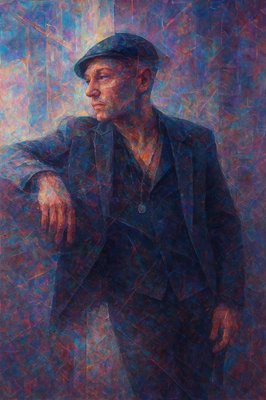
a painting of a man in a suit and hat
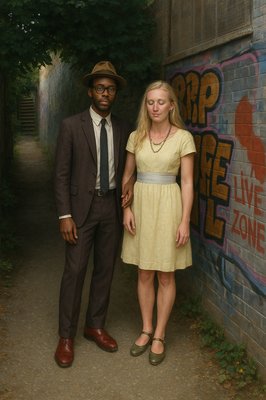
a man and a woman standing in front of a graffiti covered wall
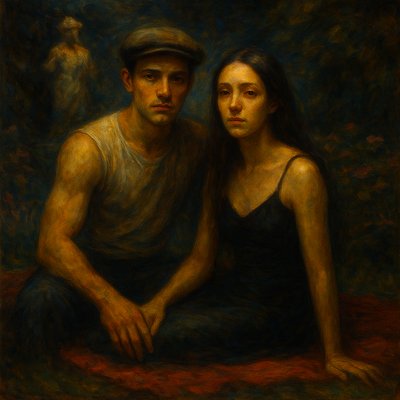
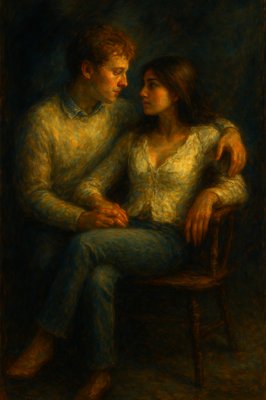
a painting of a man and woman sitting next to each other
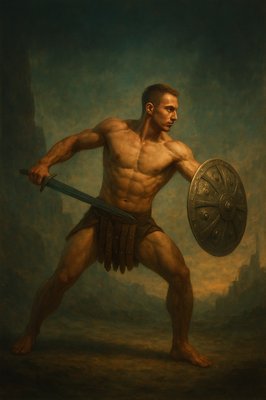
a painting of a man holding a sword and a shield
a painting of a man and a woman sitting in a chair
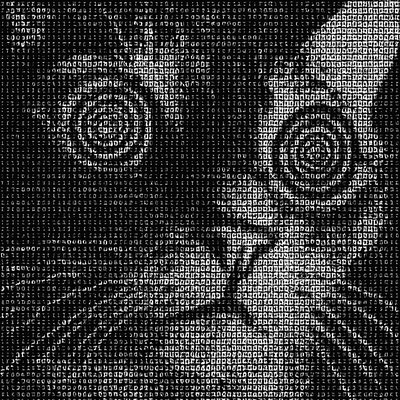
a black and white photo of a cat's face
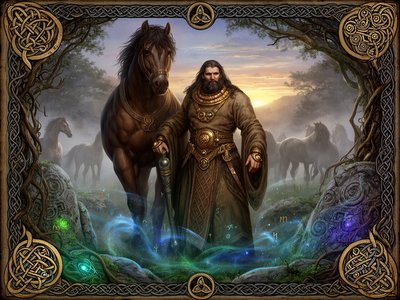
The Dagda, powerful Celtic god, standing with a massive, muscular horse at his side. Earthy robes, bronze and gold torc, long dark hair, commanding presence. Horses moving in the background like living wealth of the land. Misty forest or rolling hills, dawn light piercing fog, mythic realism, cinematic Celtic fantasy, raw authority, natural textures.
a black and white image of a face made up of numbers
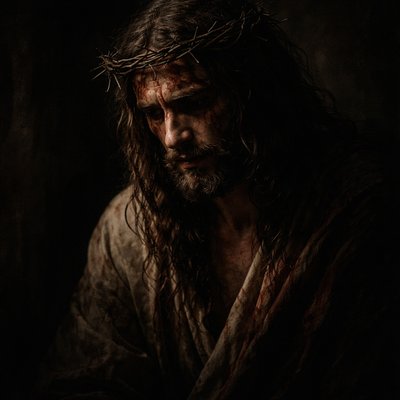
“He is despised and rejected of men; a man of sorrows, and acquainted with grief: and we hid as it were our faces from him; he was despised, and we esteemed him not.” (Isaiah 53:3, KJV)
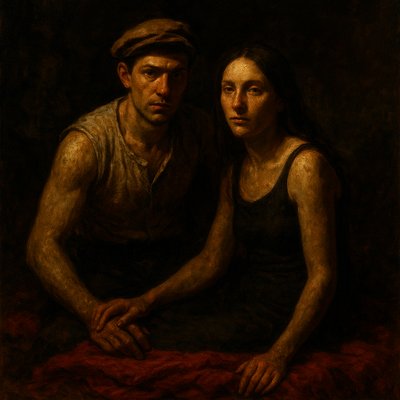
a painting of a man and woman sitting next to each other