Thermochromic Memory Painting Style Transfer Example Art

Cubist interpretation of a classic painting in the art style of Cubism --v 6.1
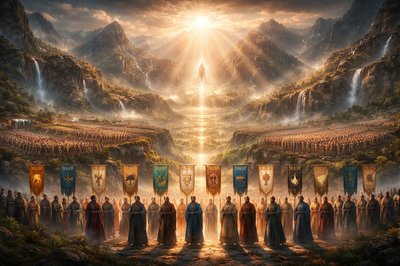
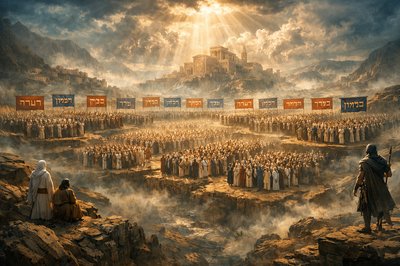
“And I heard the number of them which were sealed: and there were sealed an hundred and forty and four thousand of all the tribes of the children of Israel. Of the tribe of Juda were sealed twelve thousand. Of the tribe of Reuben were sealed twelve thousand. Of the tribe of Gad were sealed twelve thousand. Of the tribe of Aser were sealed twelve thousand. Of the tribe of Nepthalim were sealed twelve thousand. Of the tribe of Manasses were sealed twelve thousand. Of the tribe of Simeon were sealed twelve thousand. Of the tribe of Levi were sealed twelve thousand. Of the tribe of Issachar were sealed twelve thousand. Of the tribe of Zabulon were sealed twelve thousand. Of the tribe of Joseph were sealed twelve thousand. Of the tribe of Benjamin were sealed twelve thousand.” (Revelation 7:4-8, KJV)
Series of paintings depicting same subject at different times in the art style of Post-Impressionism --v 6.1
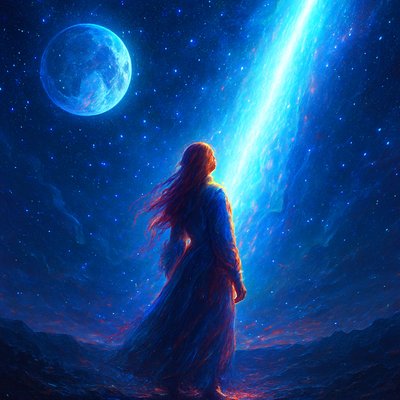
Digital Art Style, Romanticism Art Style, an overwhelmingly majestic and spiritually transformational painting inspired by Psalm 8:3-6. The scene captures a sweeping, sublime night sky, featuring a visible, prominent moon and countless brilliant stars, all rendered with luminous, dramatic glow. In the foreground, standing small against the infinite scale of the cosmos, is a solitary woman with long red hair, wearing simple, flowing attire. She is gazing upward, and a blinding shaft of pure, ethereal divine light—representing the glory and presence of the Lord—breaks through the veil of the deepest heavens, bypassing the moon and stars. This light dramatically envelops and transforms the woman, causing her clothing and hair to visibly glow with celestial energy. The artwork uses extreme digital chiaroscuro to emphasize the moment of spiritual encounter, with the vast sky and surrounding earth serving as a dark backdrop to the radiant divine presence. Focus on the sublime scale of the cosmos, the electrifying, transformative power of the pure divine light, and the solitary woman's luminous spiritual encounter against the immense majesty of the creation.
"A hyper-realistic, cinematic portrait of Zelek the Ammonite, one of King David’s elite 'Mighty Men.' He is a towering figure with a weathered, fierce expression, wearing ancient Near Eastern bronze-and-iron scale armor with heavy leather straps. He stands in a stance of immense power, holding a massive, jagged-edged broadsword or a heavy iron-headed spear. The background is a battlefield where he has literally 'broken' through the enemy line—visualized as a physical fissure or crack in the earth radiating from his feet (Baal-perazim style). The enemy 'host' is seen scattering and dissolving in his wake, depicted as shadowy figures falling back into a golden, dusty haze. Art Style: Gritty biblical realism blended with epic 2026 digital concept art; heavy emphasis on texture (hammered metal, scarred skin, desert sand), deep shadows, and high-contrast volumetric lighting. 8K resolution, wide-angle lens, masterpiece quality
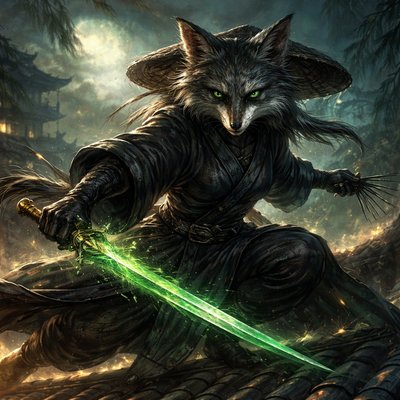
Cinematic Wuxia Art Style, Fantasy Digital Art Style, Dark Fantasy, a dynamic anthropomorphic character portrait of the villain Jade Fox from Crouching Tiger, Hidden Dragon. She is rendered as a mature, grizzled fox with fur that is a mix of deep grey and a subtle, bitter jade-green tint. Her eyes are intensely human—sharp, vengeful, and cunning. She is dressed in dark, practical Qing Dynasty assassin's robes (similar to the male disguise she wears in the film), perhaps with a wide straw hat slung across her back. She is crouched low in a masterful martial arts stance on the curved, moonlit tiled roof of an ancient Chinese building. In one clawed paw, she wields the stolen, green-glowing Green Destiny sword, while the other paw is poised, ready to throw her signature poisoned needles. The background is a misty, sprawling city at night with bamboo silhouettes. The atmosphere is tense, dangerous, and steeped in ancient secrets.
Photographic documentation of temporary body painting in the art style of Body Art --v 6.1
Series of paintings depicting same subject at different times in the art style of Post-Impressionism --v 6.1
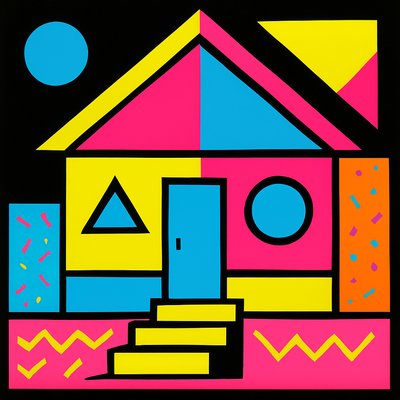
house with front view
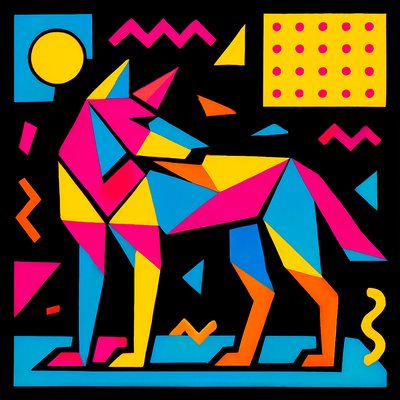
animal standing in natural pose
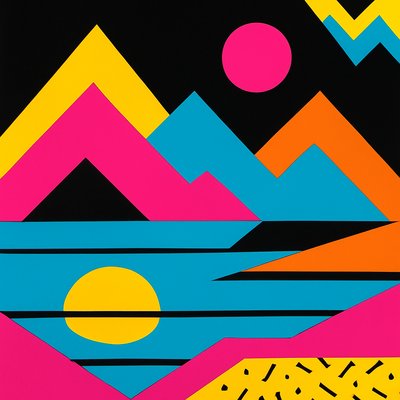
serene landscape with mountains and water
Epic Fantasy Illustration Style, Gritty Cinematic Concept Art, a dynamic, wide-angle action shot of a fierce battle amidst overgrown ancient ruins at twilight. A lone, hardened warrior clad in practical leather and partial plate armor is in a dynamic combat stance, dodging a massive vine strike. They wield a glowing, enchanted battleaxe that burns with orange fire, striking at the creature. The opponent is a colossal, serpentine Botanical Dragon construct made entirely of writhing, thick poison ivy vines, hairy root systems, and dense clusters of glossy, three-pointed leaves. The "dragon" rears up, its maw a tangled mass of thorns and dripping toxic sap, exhaling clouds of yellowish-green poisonous spores. Its eyes glow with a malevolent verdant light. The ground is treacherous swamp and broken stone. The lighting is dramatic and moody, highlighting the oily sheen of the poisonous leaves and the fire of the warrior's weapon. High detail on the plant textures.
Color field painting with hard-edged color areas in the art style of Hard-edge Painting --v 6.1
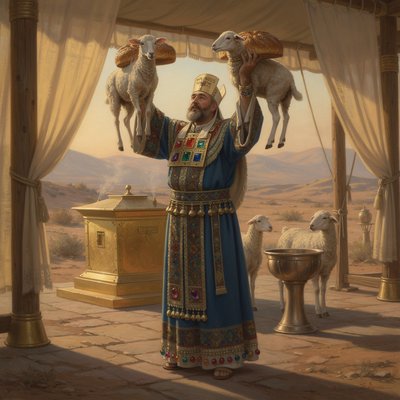
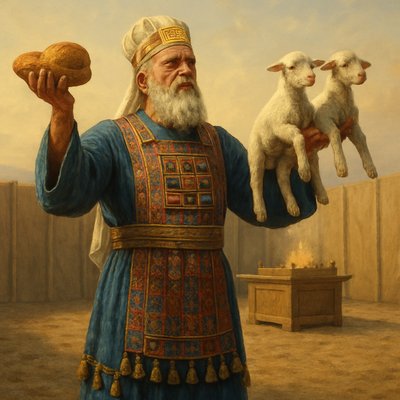
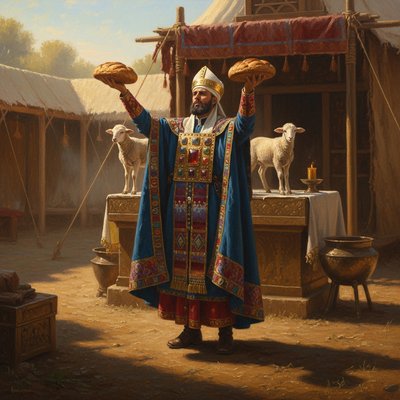
A hyper-detailed, photorealistic depiction of the High Priest of Israel performing the Feast of Weeks (Pentecost) wave offering. The High Priest is dressed in the complete set of holy vestments: a blue robe with golden bells and pomegranates on the hem, a colorful ephod, and a breastplate with twelve jewels. A golden plate engraved 'HOLINESS TO THE LORD' is tied to his linen mitre. He stands in the Tabernacle courtyard, facing the altar, holding the two leavened loaves of firstfruits and two male lambs high, performing the sacred wave offering ritual. Golden morning light, historically accurate setting, cinematic oil painting style.
Deliberately provocative and illogical painting in the art style of Dada --v 6.1
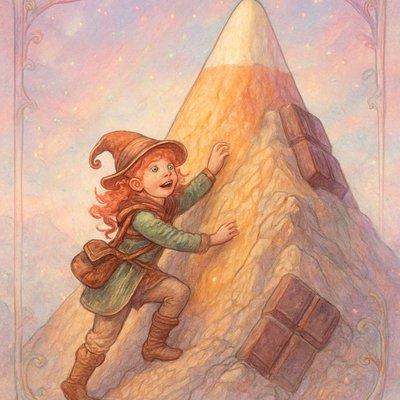
A young red-haired girl in whimsical adventurer gear, bravely climbing a colossal, mountain-sized candy corn. The candy corn mountain has realistic geological features, with crags and steep slopes, made entirely of candy corn, and integrated along its ridges are giant, sculpted chocolate bars. Shimmering, multi-colored pixie stick dust rains down around her like magical snowfall. Determined, joyful expression. Bright, fantastical sky. Hyperrealistic digital painting, fantasy illustration, surreal landscape, epic detailed, cinematic lighting, food art photography."Surrealist Digital Art, Salvador Dalí Inspired, Magical Realism, Pastel Colors, Dreamscape
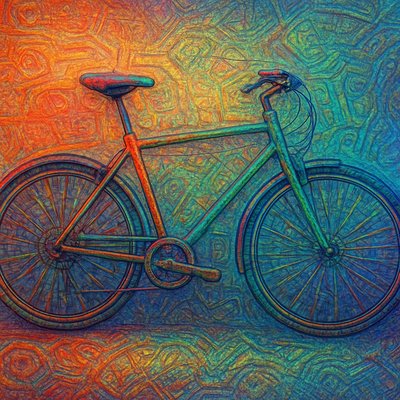
bicyle resting against a wall
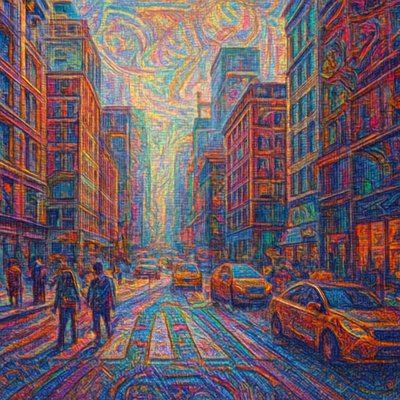
urban street with city activity
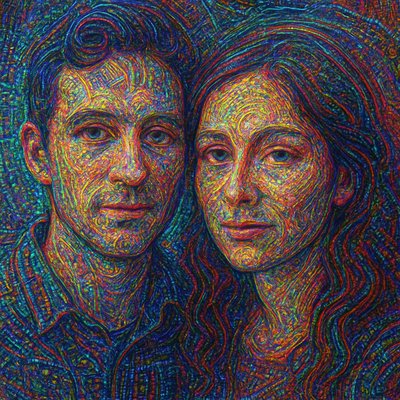
portrait of two people together
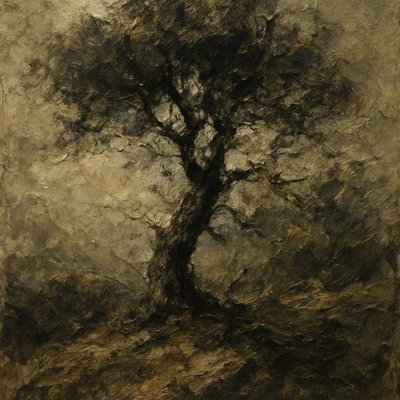
a tree in nature
animal standing in natural pose
bicyle resting against a wall
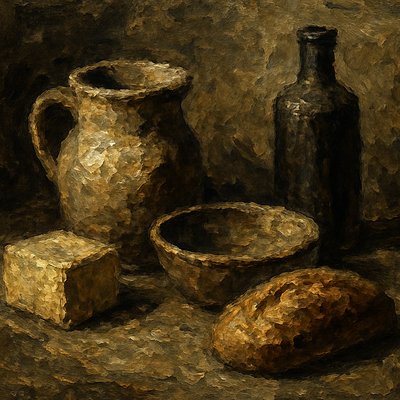
still life with everyday objects
wide landscape with natural scenery
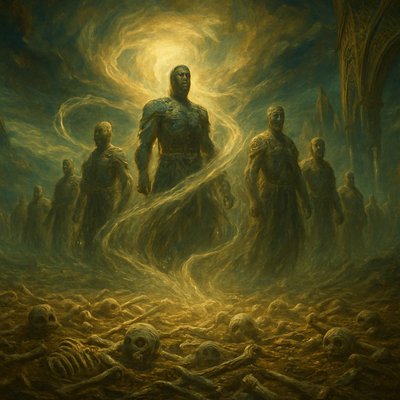
A profound and epic scene depicting the Vision of the Dry Bones from Ezekiel 37. In a desolate, vast valley, countless dry human bones are scattered, stark white and ancient. A powerful, divine wind (ruach) swirls through the valley, imbued with a sacred, ethereal glow, causing the bones to rattle and miraculously knit together. Tendons, flesh, and skin rapidly form over the skeletal structures, transforming them into fully-formed human figures. As the divine breath enters, the figures rise, not as individuals, but as a colossal, awe-inspiring army standing upright, gazing forward with renewed life and purpose. The sky above is dramatic, perhaps with stormy clouds breaking to reveal a divine light. The overall mood is one of miraculous resurrection, immense power, and hopeful restoration."
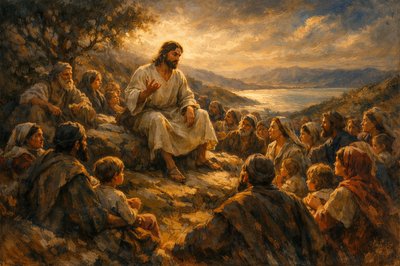
First century Palestine.  Jesus sits on a rock on a hillside teaching a large group of His disciples.  The Sermon on the Mount.  Jesus wears a plain robe like most ordinary men.  Jesus' face is kind, but intense, as He teaches. The other people are mostly peasants, farmers, and tradesmen.  There are also women present, wearing plain, everyday clothing.  Some couples have also brought their children.  The Sea of Galilee shines in the far distance.
Photographic documentation of temporary body painting in the art style of Body Art --v 6.1
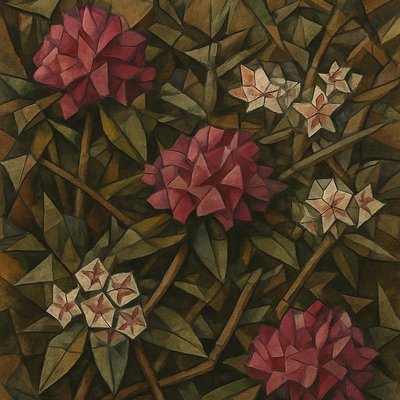
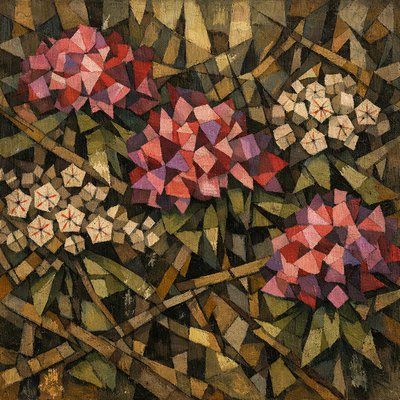
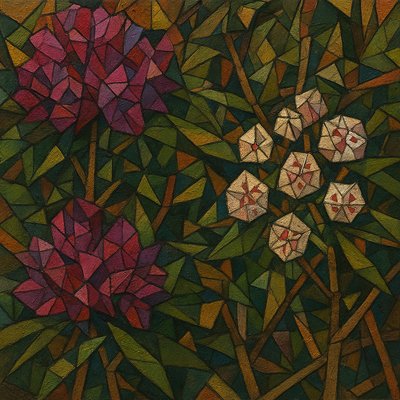
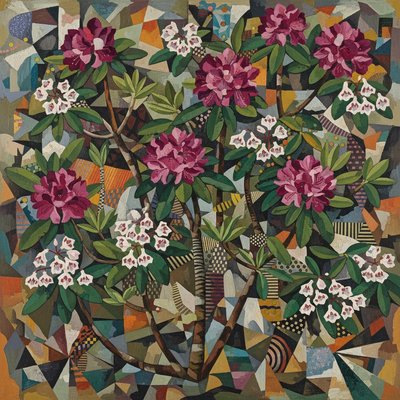
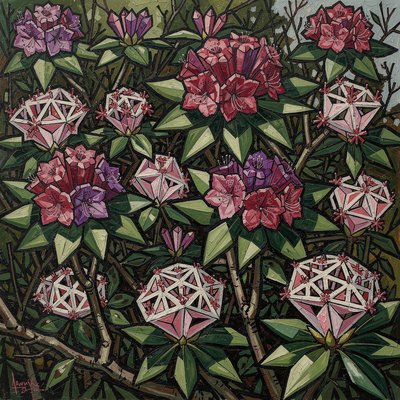
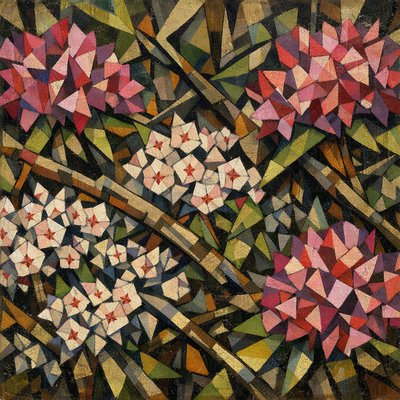
Art Style: Analytical Cubism, avant-garde oil painting style reminiscent of Picasso and Braque.

Subject: A dense, tangled thicket of Rhododendrons and Mountain Laurel bushes.

Composition & Details: The entire natural scene is deconstructed into overlapping geometric planes, fractured shards, and intersecting angles. There are no curved lines; everything is rendered in cubes, cones, and trapezoids.

    The Rhododendrons: Large, showy flower trusses are broken into faceted crystalline structures of deep magenta, rose pink, and violet blocks, looking like explosions of colored quartz rather than soft petals.

    The Mountain Laurels: The smaller, intricate flowers are rendered as complex, repeating geometric star-patterns and angular cups in white and pale pink with distinct red polygonal markings.

    Foliage & Branches: The thick, leathery leaves are fragmented green triangles and parallelograms overlapping each other, creating a sense of depth without traditional perspective. The woody stems and branches are jagged, intersecting brown and grey cylinders that shatter across the frame.

Color & Texture: A palette of muted earth tones—ochre, burnt umber, forest green, and slate grey—contrasted sharply with the jewel-toned facets of the flower colors. The finish should have a heavy, textured oil paint feel with visible palette knife marks and rough brushwork.
Art Style: Analytical Cubism, avant-garde oil painting style reminiscent of Picasso and Braque.

Subject: A dense, tangled thicket of Rhododendrons and Mountain Laurel bushes.

Composition & Details: The entire natural scene is deconstructed into overlapping geometric planes, fractured shards, and intersecting angles. There are no curved lines; everything is rendered in cubes, cones, and trapezoids.

    The Rhododendrons: Large, showy flower trusses are broken into faceted crystalline structures of deep magenta, rose pink, and violet blocks, looking like explosions of colored quartz rather than soft petals.

    The Mountain Laurels: The smaller, intricate flowers are rendered as complex, repeating geometric star-patterns and angular cups in white and pale pink with distinct red polygonal markings.

    Foliage & Branches: The thick, leathery leaves are fragmented green triangles and parallelograms overlapping each other, creating a sense of depth without traditional perspective. The woody stems and branches are jagged, intersecting brown and grey cylinders that shatter across the frame.

Color & Texture: A palette of muted earth tones—ochre, burnt umber, forest green, and slate grey—contrasted sharply with the jewel-toned facets of the flower colors. The finish should have a heavy, textured oil paint feel with visible palette knife marks and rough brushwork.
Art Style: Analytical Cubism, avant-garde oil painting style reminiscent of Picasso and Braque.

Subject: A dense, tangled thicket of Rhododendrons and Mountain Laurel bushes.

Composition & Details: The entire natural scene is deconstructed into overlapping geometric planes, fractured shards, and intersecting angles. There are no curved lines; everything is rendered in cubes, cones, and trapezoids.

    The Rhododendrons: Large, showy flower trusses are broken into faceted crystalline structures of deep magenta, rose pink, and violet blocks, looking like explosions of colored quartz rather than soft petals.

    The Mountain Laurels: The smaller, intricate flowers are rendered as complex, repeating geometric star-patterns and angular cups in white and pale pink with distinct red polygonal markings.

    Foliage & Branches: The thick, leathery leaves are fragmented green triangles and parallelograms overlapping each other, creating a sense of depth without traditional perspective. The woody stems and branches are jagged, intersecting brown and grey cylinders that shatter across the frame.

Color & Texture: A palette of muted earth tones—ochre, burnt umber, forest green, and slate grey—contrasted sharply with the jewel-toned facets of the flower colors. The finish should have a heavy, textured oil paint feel with visible palette knife marks and rough brushwork.
Art Style: Analytical Cubism, avant-garde oil painting style reminiscent of Picasso and Braque.

Subject: A dense, tangled thicket of Rhododendrons and Mountain Laurel bushes.

Composition & Details: The entire natural scene is deconstructed into overlapping geometric planes, fractured shards, and intersecting angles. There are no curved lines; everything is rendered in cubes, cones, and trapezoids.

    The Rhododendrons: Large, showy flower trusses are broken into faceted crystalline structures of deep magenta, rose pink, and violet blocks, looking like explosions of colored quartz rather than soft petals.

    The Mountain Laurels: The smaller, intricate flowers are rendered as complex, repeating geometric star-patterns and angular cups in white and pale pink with distinct red polygonal markings.

    Foliage & Branches: The thick, leathery leaves are fragmented green triangles and parallelograms overlapping each other, creating a sense of depth without traditional perspective. The woody stems and branches are jagged, intersecting brown and grey cylinders that shatter across the frame.

Color & Texture: A palette of muted earth tones—ochre, burnt umber, forest green, and slate grey—contrasted sharply with the jewel-toned facets of the flower colors. The finish should have a heavy, textured oil paint feel with visible palette knife marks and rough brushwork.
Art Style: Analytical Cubism, avant-garde oil painting style reminiscent of Picasso and Braque.

Subject: A dense, tangled thicket of Rhododendrons and Mountain Laurel bushes.

Composition & Details: The entire natural scene is deconstructed into overlapping geometric planes, fractured shards, and intersecting angles. There are no curved lines; everything is rendered in cubes, cones, and trapezoids.

    The Rhododendrons: Large, showy flower trusses are broken into faceted crystalline structures of deep magenta, rose pink, and violet blocks, looking like explosions of colored quartz rather than soft petals.

    The Mountain Laurels: The smaller, intricate flowers are rendered as complex, repeating geometric star-patterns and angular cups in white and pale pink with distinct red polygonal markings.

    Foliage & Branches: The thick, leathery leaves are fragmented green triangles and parallelograms overlapping each other, creating a sense of depth without traditional perspective. The woody stems and branches are jagged, intersecting brown and grey cylinders that shatter across the frame.

Color & Texture: A palette of muted earth tones—ochre, burnt umber, forest green, and slate grey—contrasted sharply with the jewel-toned facets of the flower colors. The finish should have a heavy, textured oil paint feel with visible palette knife marks and rough brushwork.
Art Style: Analytical Cubism, avant-garde oil painting style reminiscent of Picasso and Braque.

Subject: A dense, tangled thicket of Rhododendrons and Mountain Laurel bushes.

Composition & Details: The entire natural scene is deconstructed into overlapping geometric planes, fractured shards, and intersecting angles. There are no curved lines; everything is rendered in cubes, cones, and trapezoids.

    The Rhododendrons: Large, showy flower trusses are broken into faceted crystalline structures of deep magenta, rose pink, and violet blocks, looking like explosions of colored quartz rather than soft petals.

    The Mountain Laurels: The smaller, intricate flowers are rendered as complex, repeating geometric star-patterns and angular cups in white and pale pink with distinct red polygonal markings.

    Foliage & Branches: The thick, leathery leaves are fragmented green triangles and parallelograms overlapping each other, creating a sense of depth without traditional perspective. The woody stems and branches are jagged, intersecting brown and grey cylinders that shatter across the frame.

Color & Texture: A palette of muted earth tones—ochre, burnt umber, forest green, and slate grey—contrasted sharply with the jewel-toned facets of the flower colors. The finish should have a heavy, textured oil paint feel with visible palette knife marks and rough brushwork.
A hyper-detailed, photorealistic depiction of the High Priest of Israel performing the Feast of Weeks (Pentecost) wave offering. The High Priest is dressed in the complete set of holy vestments: a blue robe with golden bells and pomegranates on the hem, a colorful ephod, and a breastplate with twelve jewels. A golden plate engraved 'HOLINESS TO THE LORD' is tied to his linen mitre. He stands in the Tabernacle courtyard, facing the altar, holding the two leavened loaves of firstfruits and two male lambs high, performing the sacred wave offering ritual. Golden morning light, historically accurate setting, cinematic oil painting style.
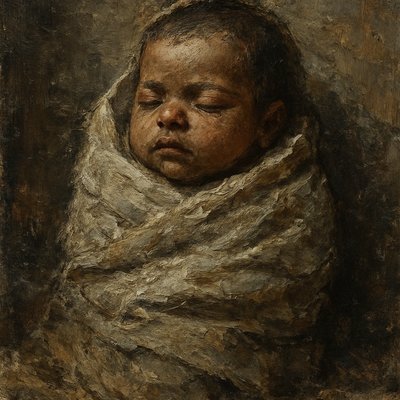
olive skinned Baby in swaddling cloths