Slice Of Life Scene Art

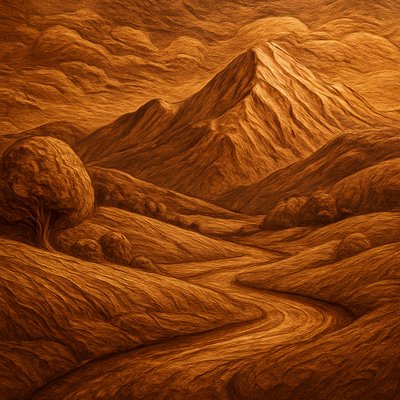
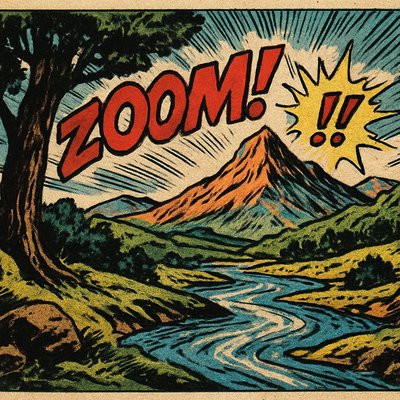
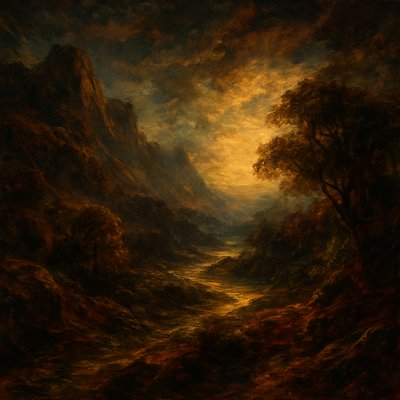
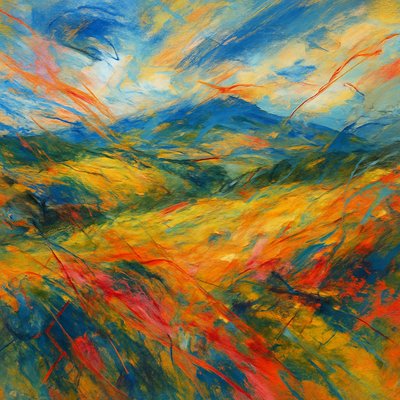
wide landscape with natural scenery
Luminous Storybook Illustration Style, Rich Color Saturation, Magical Realism. A dramatic, painterly scene capturing the precise moment of tragic error on an old, mossy stone bridge spanning a calm river at sunset.

The Reality (The Dog on the Bridge): A scruffy, hungry-looking terrier stands frozen mid-snarl on the edge of the bridge, looking downward. Its mouth is wide open in an aggressive bark. Suspended in mid-air, just inches below its open jaws, a real, decent-sized meaty bone is falling toward the water. The dog’s expression is a mix of greed and sudden confusion.

The Illusion (The Reflection): The surface of the river below is glassy and still, acting like a perfect, deceptive mirror. The reflection shows the same dog, but the reflected bone in its mouth appears impossibly huge, glistening, and juicier than the real one. The reflection is almost hypnotically bright, brighter than the reality above the water. The warm golden light of the setting sun makes the water shimmer invitingly.
A historically accurate and atmospheric depiction of the signing of the Mayflower Compact aboard the ship in November 1620. The scene is set in the dimly lit, cramped cabin of the Mayflower, with the ship's timbers and rigging subtly visible, conveying the challenging conditions of the voyage. A simple table or chest serves as the signing surface. The primary focus is on a small group of the last individuals signing the document: specifically, the indentured servants (or 'strangers' not directly part of the Separatist congregation) approaching or at the table. Their expressions show a mix of weary determination, understanding of the necessity, and perhaps a hint of quiet apprehension or resignation to this new social contract, given their status. They are dressed in the plain, practical clothing typical of 17th-century commoners and laborers. Figures of prominent Pilgrims or 'Saints' (like William Bradford or John Carver) are visible in the background, observing the proceedings with a sense of gravity and leadership, but they are not the central focus. The lighting is low and warm, perhaps from a lantern, creating a chiaroscuro effect that highlights the faces of the signers. The atmosphere conveys the momentousness of the act under difficult circumstances, the diverse composition of the group, and the early seeds of self-governance in a new world. The artistic style is a realistic, historically detailed oil painting, capturing the solemnity and human element of this pivotal historical moment."
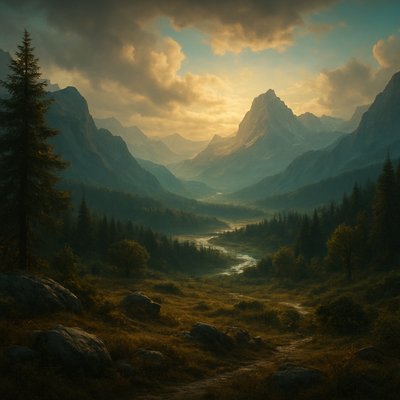
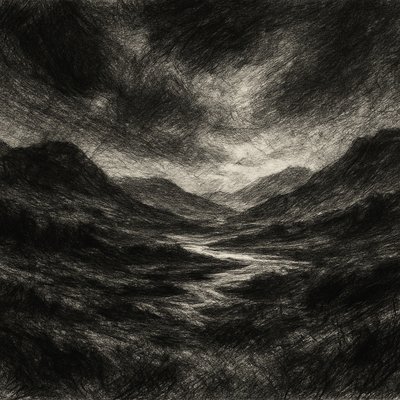
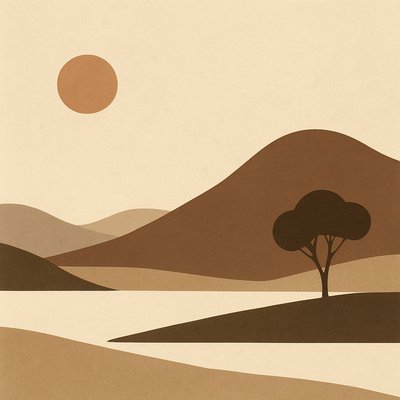
wide landscape with natural scenery
A breathtaking full-body photograph captures a woman from behind, standing in a vast, vibrant field of purple lupin flowers in Glacier National Park. Her long, rich plum purple hair is beautifully intertwined with fresh lupin blooms, forming an ethereal halo. She wears a unique 70s-inspired outfit consisting of shimmering lavender bell-bottom pants and a matching tunic-style top with bell sleeves and a square neckline, flared at the waist, adorned with subtle white horse patterns. The setting sun paints the sky in dramatic hues of fiery orange and deep red, silhouetting the majestic purple mountain ranges in the distance. The scene evokes a sense of wonder, serenity, and a deep connection to the wild beauty of nature, with a magical, almost fantastical feel, within the iconic landscape of Glacier National Park.
Neon-Futurism Digital Art Style, Bioluminescent Sci-Fi Cosmic Setting, Monolithic Scale. A perspective shot from behind the rider, looking toward a massive obstacle course in deep space.

The Rider & Bike Consistency: The lone motorcyclist—wearing the same sleek armored suit and helmet—is navigating the hubless "light-cycle" sportbike. The cyan and orange neon rings of the wheels reflect off the floating crystalline surfaces surrounding the road.

The Path & Eridanus: The glowing blue laser-grid highway winds through floating, geometric obsidian blocks. Weaving alongside and beneath the road is Eridanus, the Celestial River, rendered here as flowing, liquid fire. It isn't smoke or flame, but a stream of molten golden stars and glowing solar plasma that illuminates the dark undersides of the asteroids.

The Taurus Presence: Standing at the center of this labyrinth, spanning across the highway, is the monumental form of the Celestial Bull. He is composed of dense, glowing emerald and earth-toned circuitry. His massive, forward-curving horns are made of solid, brilliant starlight and form a natural "archway" that the highway passes beneath.

The Atmosphere: The scene is a high-contrast masterpiece. The cold, dark shadows of the geometric "city blocks" are cut through by the intense, flowing orange and gold light of the solar river.

Lighting: The "starlight horns" and the "river of fire" create a warm, amber glow that washes over the rider’s armor, contrasting sharply with the cool cyan glow of the bike's wheels.
wide landscape with natural scenery
Photorealism Art Style, a breathtaking, upward-looking perspective from the ground, portraying ancient Jewish cosmology for Psalm 8:3. In the lower frame, a young woman with long, flowing red hair, dressed in simple, ethereal white heavenly attire, stands on subtle, ancient earth, gazing upwards with an expression of profound awe and wonder. Above her, the night sky transitions into a vast, layered structure of heavens. Clearly visible is a translucent, crystalline firmament (raqia), appearing as a colossal, shimmering barrier. Within this firmament, large, distinct stars and a glowing crescent moon are vividly captured, appearing as tangible, luminous objects "set into" its surface, radiating a soft, internal light. Beyond and above this firmament, immense, dark yet shimmering celestial waters are visibly contained, looking like a real, suspended ocean reflecting an unseen, brilliant divine light from the highest reaches. The overall scene is imbued with deep blues, celestial purples, and radiant golds from the embedded lights. Focus on the woman's reverent expression, the stunning depth of the layered heavens seen from below, the realistic texture of the firmament, and the tangible, luminous quality of the stars and moon within it, creating an image of overwhelming ancient wonder and divine majesty.
Luminous Storybook Illustration Style, Rich Color Saturation, Magical Realism. A dramatic, painterly scene capturing the precise moment of tragic error on an old, mossy stone bridge spanning a calm river at sunset.

The Reality (The Dog on the Bridge): A scruffy, hungry-looking terrier stands frozen mid-snarl on the edge of the bridge, looking downward. Its mouth is wide open in an aggressive bark. Suspended in mid-air, just inches below its open jaws, a real, decent-sized meaty bone is falling toward the water. The dog’s expression is a mix of greed and sudden confusion.

The Illusion (The Reflection): The surface of the river below is glassy and still, acting like a perfect, deceptive mirror. The reflection shows the same dog, but the reflected bone in its mouth appears impossibly huge, glistening, and juicier than the real one. The reflection is almost hypnotically bright, brighter than the reality above the water. The warm golden light of the setting sun makes the water shimmer invitingly.
Luminous Storybook Illustration Style, Rich Color Saturation, Magical Realism. A dramatic, painterly scene capturing the precise moment of tragic error on an old, mossy stone bridge spanning a calm river at sunset.

The Reality (The Dog on the Bridge): A scruffy, hungry-looking terrier stands frozen mid-snarl on the edge of the bridge, looking downward. Its mouth is wide open in an aggressive bark. Suspended in mid-air, just inches below its open jaws, a real, decent-sized meaty bone is falling toward the water. The dog’s expression is a mix of greed and sudden confusion.

The Illusion (The Reflection): The surface of the river below is glassy and still, acting like a perfect, deceptive mirror. The reflection shows the same dog, but the reflected bone in its mouth appears impossibly huge, glistening, and juicier than the real one. The reflection is almost hypnotically bright, brighter than the reality above the water. The warm golden light of the setting sun makes the water shimmer invitingly.
Epic Adventure Photography Style, Cinematic Color Grading, Sub-Zero Atmosphere. A harrowing, dynamic wide-angle landscape photograph capturing the intensity of a long-distance dog sled race (like the Yukon Quest or Iditarod) in the dead of winter.

The Action & Subjects: A lead team of sixteen powerful Siberian Huskies and Alaskan Malamutes is charging directly toward the camera along a narrow, wind-blown trail. Their fur is heavily caked in ice and rime frost, and massive, crystalline plumes of frozen breath explode from their panting mouths. The musher, bundled in heavy, frost-covered furs and technical gear with goggles obscuring their face, leans aggressively into a turn on the sled, fighting to maintain control.

The "Cinematic Cold" Environment: The setting is a vast, unforgiving frozen riverbed surrounded by towering, snow-laden spruce trees and distant, jagged, glaciated mountain peaks. The air is thick with blowing snow and ice fog.

The Lighting & Mood: The scene is lit by the deep, biting blues and purples of polar twilight. A weak, cold orange glow from a distant, low sun just barely kisses the tops of the mountains, offering no warmth. The overall color palette is desaturated and cool. The image should feel incredibly vast, isolating, and brutally freezing. Film grain texture.
Epic Adventure Photography Style, Cinematic Color Grading, Sub-Zero Atmosphere. A harrowing, dynamic wide-angle landscape photograph capturing the intensity of a long-distance dog sled race (like the Yukon Quest or Iditarod) in the dead of winter.

The Action & Subjects: A lead team of sixteen powerful Siberian Huskies and Alaskan Malamutes is charging directly toward the camera along a narrow, wind-blown trail. Their fur is heavily caked in ice and rime frost, and massive, crystalline plumes of frozen breath explode from their panting mouths. The musher, bundled in heavy, frost-covered furs and technical gear with goggles obscuring their face, leans aggressively into a turn on the sled, fighting to maintain control.

The "Cinematic Cold" Environment: The setting is a vast, unforgiving frozen riverbed surrounded by towering, snow-laden spruce trees and distant, jagged, glaciated mountain peaks. The air is thick with blowing snow and ice fog.

The Lighting & Mood: The scene is lit by the deep, biting blues and purples of polar twilight. A weak, cold orange glow from a distant, low sun just barely kisses the tops of the mountains, offering no warmth. The overall color palette is desaturated and cool. The image should feel incredibly vast, isolating, and brutally freezing. Film grain texture.
Epic Adventure Photography Style, Cinematic Color Grading, Sub-Zero Atmosphere. A harrowing, dynamic wide-angle landscape photograph capturing the intensity of a long-distance dog sled race (like the Yukon Quest or Iditarod) in the dead of winter.

The Action & Subjects: A lead team of sixteen powerful Siberian Huskies and Alaskan Malamutes is charging directly toward the camera along a narrow, wind-blown trail. Their fur is heavily caked in ice and rime frost, and massive, crystalline plumes of frozen breath explode from their panting mouths. The musher, bundled in heavy, frost-covered furs and technical gear with goggles obscuring their face, leans aggressively into a turn on the sled, fighting to maintain control.

The "Cinematic Cold" Environment: The setting is a vast, unforgiving frozen riverbed surrounded by towering, snow-laden spruce trees and distant, jagged, glaciated mountain peaks. The air is thick with blowing snow and ice fog.

The Lighting & Mood: The scene is lit by the deep, biting blues and purples of polar twilight. A weak, cold orange glow from a distant, low sun just barely kisses the tops of the mountains, offering no warmth. The overall color palette is desaturated and cool. The image should feel incredibly vast, isolating, and brutally freezing. Film grain texture.
A historically accurate and atmospheric depiction of the signing of the Mayflower Compact aboard the ship in November 1620. The scene is set in the dimly lit, cramped cabin of the Mayflower, with the ship's timbers and rigging subtly visible, conveying the challenging conditions of the voyage. A simple table or chest serves as the signing surface. The primary focus is on a small group of the last individuals signing the document: specifically, the indentured servants (or 'strangers' not directly part of the Separatist congregation) approaching or at the table. Their expressions show a mix of weary determination, understanding of the necessity, and perhaps a hint of quiet apprehension or resignation to this new social contract, given their status. They are dressed in the plain, practical clothing typical of 17th-century commoners and laborers. Figures of prominent Pilgrims or 'Saints' (like William Bradford or John Carver) are visible in the background, observing the proceedings with a sense of gravity and leadership, but they are not the central focus. The lighting is low and warm, perhaps from a lantern, creating a chiaroscuro effect that highlights the faces of the signers. The atmosphere conveys the momentousness of the act under difficult circumstances, the diverse composition of the group, and the early seeds of self-governance in a new world. The artistic style is a realistic, historically detailed oil painting, capturing the solemnity and human element of this pivotal historical moment."
Epic cinematic landscape of the majestic Shaho mountain range in western Iran, part of the central Zagros Mountains, towering rugged limestone peaks rising to over 3400 meters with snow-capped summits at Havi Khani peak, dramatic steep ridges and deep valleys, lush green slopes in spring with wildflowers and scattered oak forests, Kurdish villages with stone houses clinging to terraced hillsides in the foreground near the Sirwan River valley, golden hour sunlight casting long shadows and warm glow on the rocky cliffs, misty atmosphere, ultra-detailed, photorealistic --ar 16:9 --v 6 --q 2
In the lower scene, seamlessly integrate an entrance to the ancient Quri Qala water cave at the foothills of Shaho, glowing turquoise underground river flowing through massive cavern mouth, crystal-clear water reflecting stalactites and stalagmites, illuminated chambers with sparkling mineral formations, dripping water, natural blue-green lighting from within the cave, adventurous explorer figure with headlamp standing at the entrance gazing in awe, mysterious and enchanting atmosphere, high contrast between the bright mountain exterior and the ethereal glowing cave interior, masterpiece, highly detailed, National Geographic style photography"
portrait of two people together
Art Style: Analytical Cubism, avant-garde oil painting style reminiscent of Picasso and Braque.

Subject: A dense, tangled thicket of Rhododendrons and Mountain Laurel bushes.

Composition & Details: The entire natural scene is deconstructed into overlapping geometric planes, fractured shards, and intersecting angles. There are no curved lines; everything is rendered in cubes, cones, and trapezoids.

    The Rhododendrons: Large, showy flower trusses are broken into faceted crystalline structures of deep magenta, rose pink, and violet blocks, looking like explosions of colored quartz rather than soft petals.

    The Mountain Laurels: The smaller, intricate flowers are rendered as complex, repeating geometric star-patterns and angular cups in white and pale pink with distinct red polygonal markings.

    Foliage & Branches: The thick, leathery leaves are fragmented green triangles and parallelograms overlapping each other, creating a sense of depth without traditional perspective. The woody stems and branches are jagged, intersecting brown and grey cylinders that shatter across the frame.

Color & Texture: A palette of muted earth tones—ochre, burnt umber, forest green, and slate grey—contrasted sharply with the jewel-toned facets of the flower colors. The finish should have a heavy, textured oil paint feel with visible palette knife marks and rough brushwork.
Art Style: Analytical Cubism, avant-garde oil painting style reminiscent of Picasso and Braque.

Subject: A dense, tangled thicket of Rhododendrons and Mountain Laurel bushes.

Composition & Details: The entire natural scene is deconstructed into overlapping geometric planes, fractured shards, and intersecting angles. There are no curved lines; everything is rendered in cubes, cones, and trapezoids.

    The Rhododendrons: Large, showy flower trusses are broken into faceted crystalline structures of deep magenta, rose pink, and violet blocks, looking like explosions of colored quartz rather than soft petals.

    The Mountain Laurels: The smaller, intricate flowers are rendered as complex, repeating geometric star-patterns and angular cups in white and pale pink with distinct red polygonal markings.

    Foliage & Branches: The thick, leathery leaves are fragmented green triangles and parallelograms overlapping each other, creating a sense of depth without traditional perspective. The woody stems and branches are jagged, intersecting brown and grey cylinders that shatter across the frame.

Color & Texture: A palette of muted earth tones—ochre, burnt umber, forest green, and slate grey—contrasted sharply with the jewel-toned facets of the flower colors. The finish should have a heavy, textured oil paint feel with visible palette knife marks and rough brushwork.
Neon-Futurism Digital Art Style, Bioluminescent Sci-Fi Cosmic Setting. A sleek, futuristic scene set deep in the interstellar void, with absolutely no Earth terrain, asphalt, or atmosphere visible. The Path (The Ecliptic): The "road" is a floating, translucent highway constructed entirely of glowing blue and orange laser grids and condensed stardust, arcing through infinite dark space. The Rider: A lone rider on a futuristic, hubless "light-cycle" sportbike speeds along this cosmic path. The rider is fully encased in a sleek, glowing armored suit with an integrated full-face helmet, leaving a vibrant neon light trail behind them. The Constellation (Abstract Libra Scales as Archway): Dominating the cosmic background and towering directly overhead is the immense celestial symbol of Libra: a pair of perfectly balanced, monumental golden scales made of glowing stars, luminous energy threads, and shimmering stardust. The scales' beam forms a grand, arched gateway structure high above, with the two pans hanging symmetrically on either side like massive portals or wings of equilibrium. The floating cosmic highway arcs directly under this uplifted arched scale structure, so the rider speeds beneath the balanced beam and between the hanging pans as if passing through the gateway of harmony and justice. No humanoid figure is present—only the majestic, abstract scales as the central cosmic emblem, radiating soft silver, deep indigo, and golden light against the nebula-filled void. The rider approaches and passes under the archway calmly and serenely.
Art Style: Analytical Cubism, avant-garde oil painting style reminiscent of Picasso and Braque.

Subject: A dense, tangled thicket of Rhododendrons and Mountain Laurel bushes.

Composition & Details: The entire natural scene is deconstructed into overlapping geometric planes, fractured shards, and intersecting angles. There are no curved lines; everything is rendered in cubes, cones, and trapezoids.

    The Rhododendrons: Large, showy flower trusses are broken into faceted crystalline structures of deep magenta, rose pink, and violet blocks, looking like explosions of colored quartz rather than soft petals.

    The Mountain Laurels: The smaller, intricate flowers are rendered as complex, repeating geometric star-patterns and angular cups in white and pale pink with distinct red polygonal markings.

    Foliage & Branches: The thick, leathery leaves are fragmented green triangles and parallelograms overlapping each other, creating a sense of depth without traditional perspective. The woody stems and branches are jagged, intersecting brown and grey cylinders that shatter across the frame.

Color & Texture: A palette of muted earth tones—ochre, burnt umber, forest green, and slate grey—contrasted sharply with the jewel-toned facets of the flower colors. The finish should have a heavy, textured oil paint feel with visible palette knife marks and rough brushwork.
Art Style: Analytical Cubism, avant-garde oil painting style reminiscent of Picasso and Braque.

Subject: A dense, tangled thicket of Rhododendrons and Mountain Laurel bushes.

Composition & Details: The entire natural scene is deconstructed into overlapping geometric planes, fractured shards, and intersecting angles. There are no curved lines; everything is rendered in cubes, cones, and trapezoids.

    The Rhododendrons: Large, showy flower trusses are broken into faceted crystalline structures of deep magenta, rose pink, and violet blocks, looking like explosions of colored quartz rather than soft petals.

    The Mountain Laurels: The smaller, intricate flowers are rendered as complex, repeating geometric star-patterns and angular cups in white and pale pink with distinct red polygonal markings.

    Foliage & Branches: The thick, leathery leaves are fragmented green triangles and parallelograms overlapping each other, creating a sense of depth without traditional perspective. The woody stems and branches are jagged, intersecting brown and grey cylinders that shatter across the frame.

Color & Texture: A palette of muted earth tones—ochre, burnt umber, forest green, and slate grey—contrasted sharply with the jewel-toned facets of the flower colors. The finish should have a heavy, textured oil paint feel with visible palette knife marks and rough brushwork.
Art Style: Analytical Cubism, avant-garde oil painting style reminiscent of Picasso and Braque.

Subject: A dense, tangled thicket of Rhododendrons and Mountain Laurel bushes.

Composition & Details: The entire natural scene is deconstructed into overlapping geometric planes, fractured shards, and intersecting angles. There are no curved lines; everything is rendered in cubes, cones, and trapezoids.

    The Rhododendrons: Large, showy flower trusses are broken into faceted crystalline structures of deep magenta, rose pink, and violet blocks, looking like explosions of colored quartz rather than soft petals.

    The Mountain Laurels: The smaller, intricate flowers are rendered as complex, repeating geometric star-patterns and angular cups in white and pale pink with distinct red polygonal markings.

    Foliage & Branches: The thick, leathery leaves are fragmented green triangles and parallelograms overlapping each other, creating a sense of depth without traditional perspective. The woody stems and branches are jagged, intersecting brown and grey cylinders that shatter across the frame.

Color & Texture: A palette of muted earth tones—ochre, burnt umber, forest green, and slate grey—contrasted sharply with the jewel-toned facets of the flower colors. The finish should have a heavy, textured oil paint feel with visible palette knife marks and rough brushwork.
wide landscape with natural scenery
A historically accurate and atmospheric depiction of the signing of the Mayflower Compact aboard the ship in November 1620. The scene is set in the dimly lit, cramped cabin of the Mayflower, with the ship's timbers and rigging subtly visible, conveying the challenging conditions of the voyage. A simple table or chest serves as the signing surface. The primary focus is on a small group of the last individuals signing the document: specifically, the indentured servants (or 'strangers' not directly part of the Separatist congregation) approaching or at the table. Their expressions show a mix of weary determination, understanding of the necessity, and perhaps a hint of quiet apprehension or resignation to this new social contract, given their status. They are dressed in the plain, practical clothing typical of 17th-century commoners and laborers. Figures of prominent Pilgrims or 'Saints' (like William Bradford or John Carver) are visible in the background, observing the proceedings with a sense of gravity and leadership, but they are not the central focus. The lighting is low and warm, perhaps from a lantern, creating a chiaroscuro effect that highlights the faces of the signers. The atmosphere conveys the momentousness of the act under difficult circumstances, the diverse composition of the group, and the early seeds of self-governance in a new world. The artistic style is a realistic, historically detailed oil painting, capturing the solemnity and human element of this pivotal historical moment."
Oil Painting Art Style, Baroque Art Style, a breathtakingly majestic and regal full-length portrait of "The Queen in Gold of Ophir," inspired by Psalm 45. The Queen stands with impeccable grace and royal dignity, her posture radiating quiet power. Her expression is serene, gentle, and profoundly gracious, with a subtle, noble peace. She is adorned in an exquisitely elaborate gown woven entirely from the finest, purest gold of Ophir, which shimmers and gleams with unparalleled brilliance, featuring a magnificent, flowing long train that sweeps gracefully behind her across the ground. Her attire is intricately embellished with countless precious jewels—sapphires, rubies, and emeralds—each sparkling intensely with Baroque dynamism. A delicate yet regal golden crown, also ablaze with light, rests upon her head. The setting is a serene yet grand sacred garden abundant with white and golden lilies, which bloom richly around her feet and extend into the softly focused background. The scene is bathed in dramatic, warm, golden ambient light that creates striking highlights on her golden gown and the lilies, making her and her lavish garments glow amidst the natural beauty. Focus on the unparalleled brilliance, texture, and radiant shine of her golden gown and its sweeping train, the intense sparkle of her jewels, her majestic yet gentle presence, and the luxurious, sacred atmosphere created by the golden light and the symbolic lilies, befitting a queen in God's presence.
portrait of a person with expressive eyes
Vintage Art Nouveau Lithograph Style, Highly Decorative Borders, Rich Earth Tones and Gold Leaf. A vertically split "before and after" composition illustrating the classic fable of "The Wind and the Sun."

The Left Side (The Wind's Force): A personified North Wind, depicted as a swirling, ethereal figure made of cold blue and silver clouds with puffed cheeks, blows a jagged, visible blast of air downward. Below, a traveler on a dusty road is hunched over, his face strained, gripping his heavy woolen coat tightly around his chest as the gale whips his hair and sends autumn leaves flying in a chaotic spiral. The colors are cool, muted, and turbulent.

The Right Side (The Sun's Warmth): A personified Sun, depicted as a serene, radiant golden face surrounded by a massive, ornate circular halo of sunbeams, looks down with a gentle smile. Below, the same traveler is standing tall and relaxed on the path. His coat is draped loosely over one arm, his shirt collar is open, and he is wiping a bead of sweat from his forehead. The landscape around him is bathed in warm gold and vibrant greens, with tiny flowers blooming at his feet.

The Framing: The two scenes are separated by an elegant, winding vine border. The overall mood shifts from the frantic, cold energy on the left to the peaceful, overwhelming warmth on the right.
Santa's Sleigh: A highly detailed mosaic artwork depicting Santa Claus in his traditional red suit, seated in an ornate sleigh loaded with gifts, holding reins as he prepares to take flight with a team of eight reindeer poised on a snowy rooftop under a starry winter night sky. The entire scene is intricately composed of mixed tesserae, including vibrant smalti glass tiles in rich reds, deep greens, and whites for Santa's suit and fur trim, sparkling gemstones in ruby, emerald, sapphire, and diamond hues for accents and gift wrappings, metallic gold and silver leaf tiles outlining the sleigh runners, harnesses, and shimmering highlights, and opaque ceramic tiles in earthy browns and blacks for the reindeer antlers and hooves. Subtle iridescent smalti creates a glowing moon and falling snow effects, with tiny pearl-like inlays adding luminosity to the stars. Byzantine-inspired ornate style with tiny irregular tesserae, thin dark grout lines for sharp contrast, hyper-detailed texture, luminous reflections on glass and gems, slight dimensional depth from raised tiles, photorealistic mosaic rendering, sharp focus, joyful and magical festive composition
portrait of two people together
portrait of a person with expressive eyes
Bio-Tech Contemporary Art Style Style Transfer Example
animal standing in natural pose
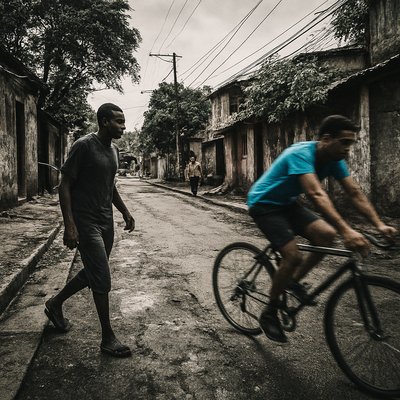
urban street with city activity
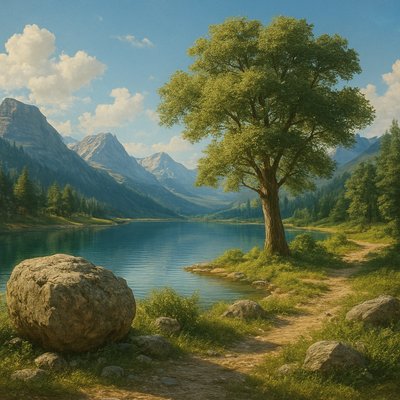
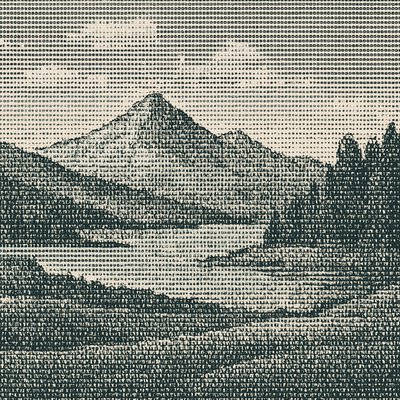
serene landscape with mountains and water
A breathtaking forest clearing at winter twilight, filled with deep emerald pines and soft ambient mist. At the center of the scene stands an extraordinary Christmas tree—its entire form cleverly created by living horses. Dozens of horses of various sizes and colors stand arranged in a perfect triangular formation from wide base to narrow peak, their bodies forming the layered silhouette of a lush holiday tree. Each horse is positioned with elegant precision so their necks, flowing manes, and arched backs mimic the contours of branches. The base layer features large, sturdy draft horses, chestnuts and bays, standing shoulder to shoulder like the lower boughs. Mid-levels transition to sleek Arabians, palominos, and black stallions, their manes fanned outward like sweeping tree limbs. Near the top, smaller ponies and miniature horses form the upper taper, culminating in a single snow-white miniature horse standing proudly at the peak, glowing with soft magical light like a star.

The horses are adorned with delicate festive accents: strands of golden fairy lights draped across their bodies, pine-needle wreath garlands resting on their necks, tiny crystal ornaments clipped lightly to their manes, and subtle silvery frost sparkling on their coats. Each horse’s breath forms soft clouds in the chilly air. Snow gently falls through shafts of moonlight filtering between towering firs. The forest floor is blanketed with untouched white snow, except for the circle of hoofprints surrounding the living tree. Fireflies and bioluminescent particles drift among the trees, adding a mystical glow. Mood is grand, magical, cinematic, hyper-realistic with extreme detail, crisp textures of fur, snow, and pine, volumetric lighting, dramatic shadows, ultra-high resolution, enchanted winter atmosphere.

Camera & Style cues:
– Wide-angle lens, low camera angle looking slightly upward
– Cinematic depth of field
– Hyper-detailed photorealism
– Soft moonlit color palette with warm golden highlights
– 8K clarity, high dynamic range, deep contrast
– Slight ethereal glow for a magical holiday feel
A breathtaking forest clearing at winter twilight, filled with deep emerald pines and soft ambient mist. At the center of the scene stands an extraordinary Christmas tree—its entire form cleverly created by living horses. Dozens of horses of various sizes and colors stand arranged in a perfect triangular formation from wide base to narrow peak, their bodies forming the layered silhouette of a lush holiday tree. Each horse is positioned with elegant precision so their necks, flowing manes, and arched backs mimic the contours of branches. The base layer features large, sturdy draft horses, chestnuts and bays, standing shoulder to shoulder like the lower boughs. Mid-levels transition to sleek Arabians, palominos, and black stallions, their manes fanned outward like sweeping tree limbs. Near the top, smaller ponies and miniature horses form the upper taper, culminating in a single snow-white miniature horse standing proudly at the peak, glowing with soft magical light like a star.

The horses are adorned with delicate festive accents: strands of golden fairy lights draped across their bodies, pine-needle wreath garlands resting on their necks, tiny crystal ornaments clipped lightly to their manes, and subtle silvery frost sparkling on their coats. Each horse’s breath forms soft clouds in the chilly air. Snow gently falls through shafts of moonlight filtering between towering firs. The forest floor is blanketed with untouched white snow, except for the circle of hoofprints surrounding the living tree. Fireflies and bioluminescent particles drift among the trees, adding a mystical glow. Mood is grand, magical, cinematic, hyper-realistic with extreme detail, crisp textures of fur, snow, and pine, volumetric lighting, dramatic shadows, ultra-high resolution, enchanted winter atmosphere.

Camera & Style cues:
– Wide-angle lens, low camera angle looking slightly upward
– Cinematic depth of field
– Hyper-detailed photorealism
– Soft moonlit color palette with warm golden highlights
– 8K clarity, high dynamic range, deep contrast
– Slight ethereal glow for a magical holiday feel
scene of a team playing handball
Elegant Mardi Gras party at the Silver Yacht Club in New Orleans at night from Nancy Drew book #81 The Mardi Gras Mystery. Luxurious yacht club deck or ballroom overlooking water, twinkling lights and purple/green/gold decorations, colorful beads and confetti in the air. Teenage detective Nancy Drew in center, reddish-blonde hair, wearing a sparkling blue masquerade gown with feathered mask, beads, and a determined yet smiling expression, dancing or mingling. Ned Nickerson beside her in a dashing tuxedo or masked costume, arm around her. Bess Marvin (blonde, glamorous) in a pink feathered ball gown laughing with George Fayne (short dark hair) in a fun jester or adventurous outfit. Brian Seaton and his father in partial bat-themed costumes with capes and masks nearby. Background: masked guests in elaborate gowns, tuxedos, and festive attire, live jazz band playing trumpets and saxophones, yacht masts or water view, chandeliers or string lights glowing, subtle suspenseful shadows hinting at mystery. Vibrant 1980s Nancy Drew book illustration style, adventurous festive atmosphere, detailed costumes, cinematic lighting with warm golden hues and colorful pops, high energy party scene