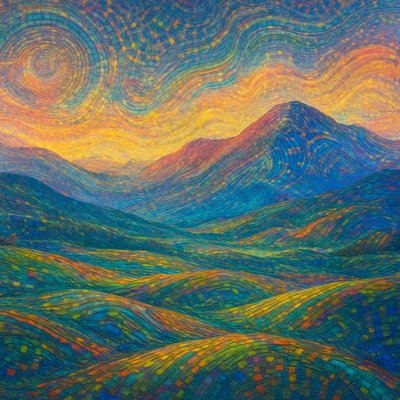
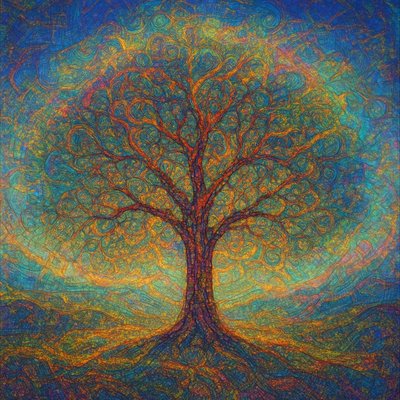
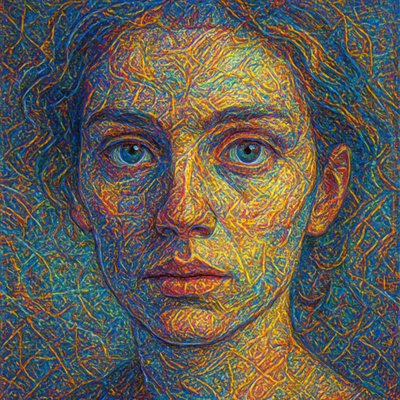
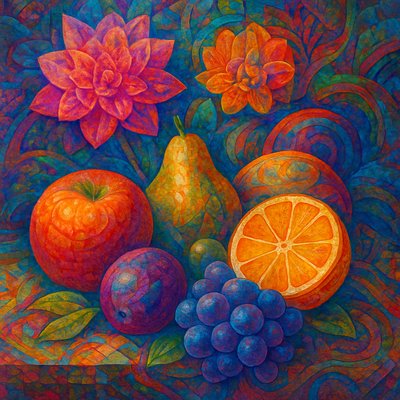
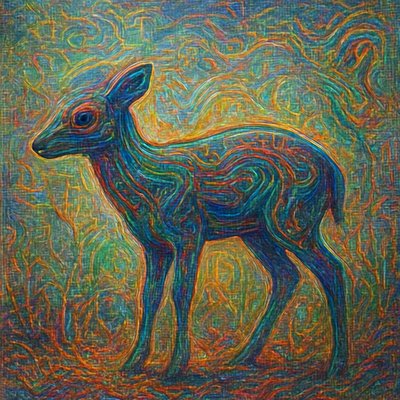
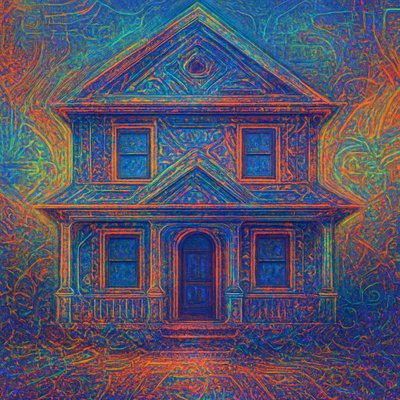
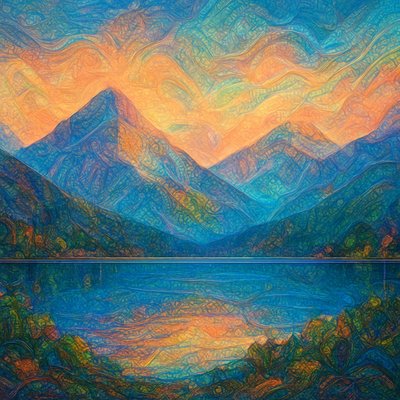
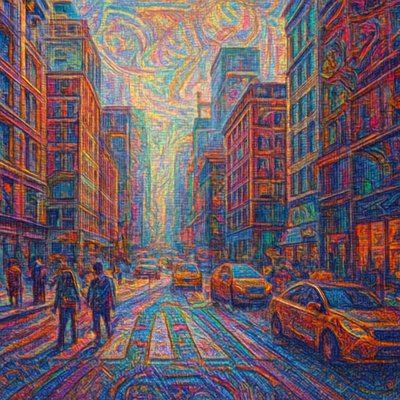
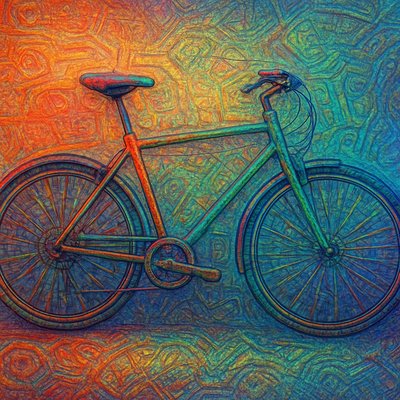
Semi Realistic Anime Art Style Style Transfer Example Art

Underwater scene with realistic water effects and marine life in the art style of Hyperrealism --v 6.1
“And as they were eating, Jesus took bread, and blessed it, and brake it, and gave it to the disciples, and said, Take, eat; this is my body. And he took the cup, and gave thanks, and gave it to them, saying, Drink ye all of it; For this is my blood of the new testament, which is shed for many for the remission of sins. But I say unto you, I will not drink henceforth of this fruit of the vine, until that day when I drink it new with you in my Father's kingdom.” (Matthew 26:26-29, KJV)
A candid, tender photograph of a person lying sick in a dimly lit, cozy bedroom, buried under a heavy quilt with only their pale face showing, eyes closed in sleep. Tissues and medicine bottles clutter a bedside table. Curled tightly against their chest is a fluffy calico cat that has a pair of detailed, feathered angel wings folded against its back. The cat is asleep too. Soft, natural light streams from a window to the left. Film grain.
A stunning conceptual art piece representing Colossians 2:2. Two vibrant, glowing human hearts are positioned in a dark, cosmic void. They are not touching, but are connected by hundreds of vibrating, iridescent "quantum threads" and swirling subatomic particles. When one heart pulses with golden light, the other reacts instantly with the same frequency, symbolizing quantum entanglement. The space between them is filled with glowing mathematical equations and sacred geometry representing the "treasures of wisdom and knowledge." Hyper-realistic, ethereal, neon-amber and deep violet palette, 8k resolution.
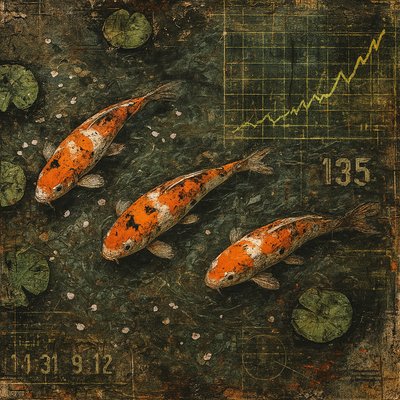
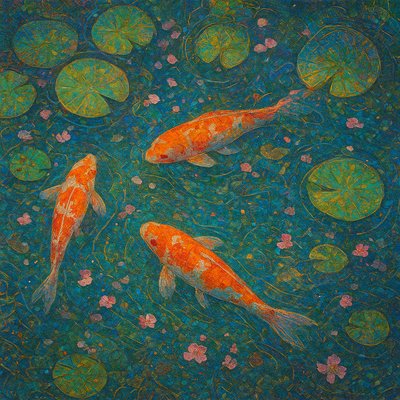
A koi pond seen from above, orange and white koi fish swimming among lily pads, clear water with subtle ripples, fallen cherry blossom petals floating on the surface, dappled sunlight
A young red-haired girl in whimsical adventurer gear, bravely climbing a colossal, mountain-sized candy corn. The candy corn mountain has realistic geological features, with crags and steep slopes, made entirely of candy corn, and integrated along its ridges are giant, sculpted chocolate bars. Shimmering, multi-colored pixie stick dust rains down around her like magical snowfall. Determined, joyful expression. Bright, fantastical sky. Hyperrealistic digital painting, fantasy illustration, surreal landscape, epic detailed, cinematic lighting, food art photography." The candy corn is a mountain landscape
A historically accurate and atmospheric depiction of the signing of the Mayflower Compact aboard the ship in November 1620. The scene is set in the dimly lit, cramped cabin of the Mayflower, with the ship's timbers and rigging subtly visible, conveying the challenging conditions of the voyage. A simple table or chest serves as the signing surface. The primary focus is on a small group of the last individuals signing the document: specifically, the indentured servants (or 'strangers' not directly part of the Separatist congregation) approaching or at the table. Their expressions show a mix of weary determination, understanding of the necessity, and perhaps a hint of quiet apprehension or resignation to this new social contract, given their status. They are dressed in the plain, practical clothing typical of 17th-century commoners and laborers. Figures of prominent Pilgrims or 'Saints' (like William Bradford or John Carver) are visible in the background, observing the proceedings with a sense of gravity and leadership, but they are not the central focus. The lighting is low and warm, perhaps from a lantern, creating a chiaroscuro effect that highlights the faces of the signers. The atmosphere conveys the momentousness of the act under difficult circumstances, the diverse composition of the group, and the early seeds of self-governance in a new world. The artistic style is a realistic, historically detailed oil painting, capturing the solemnity and human element of this pivotal historical moment."
Generate a warm and inviting image of the Silver Moon Cafe in Santa Rosa, New Mexico, as it might have appeared in the 1950s or early 1960s. The focus should be on its classic diner exterior, featuring a prominent sign with its name. Show a few vintage cars from the era, such as a Chevrolet Bel Air or a Ford Fairlane, parked outside. The lighting should evoke a late afternoon or early evening glow, with a hint of warm light emanating from the cafe's windows. Capture the nostalgic, unpretentious atmosphere of a vital stop on Route 66, suggesting a place where travelers and locals alike would find comfort food and a friendly welcome. The style should be realistic but with a slightly enhanced, cinematic feel that highlights the retro charm
A highly detailed photograph of a cheerful female Camp Host with long, flowing red hair, wearing a forest green uniform shirt and khaki pants. She is standing in the San Juan National Forest and is holding a wooden rake. She is engaged in a friendly conversation with Smokey the Bear. The forest setting features large Ponderosa pine trees with orange bark and the ground is covered in a layer of pine needles and raked debris, illustrating fire prevention efforts. The lighting is soft, natural daylight filtering through the trees, giving a warm and encouraging tone. Focus on realistic texture for the uniform, hair, and pine needles.
Figure studies for altarpiece
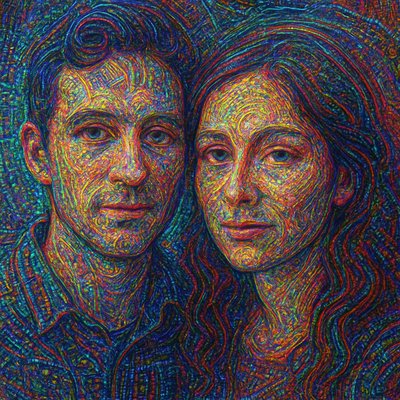
Portrait in a pixelated style in the art style of Neo-Pop Art --v 6.1
A koi pond seen from above, orange and white koi fish swimming among lily pads, clear water with subtle ripples, fallen cherry blossom petals floating on the surface, dappled sunlight
Surrealism Art Style, Digital Art Style, a brilliantly vibrant, whimsical, and exaggerated landscape depicting the mythical "Big Rock Candy Mountain." The massive mountain at the center of the scene is composed entirely of striped rock candy, glistening in the eternal sunshine. A cheerful hobo figure, relaxed and smiling, is seen lounging by a sparkling stream of pure lemonade that flows down the mountainside. The landscape is surrounded by giant peppermint stick forests and trees whose leaves are crisp dollar bills. The clouds in the sky are made of whipped cream, and the rain is a sweet syrup. There are prominent features like a cigarette tree, a luscious ham tree, and railroad tracks where the boxcars are always empty and waiting. The colors are hyper-saturated and joyful, rendered with the smooth, detailed clarity of digital art, yet maintaining a dreamlike, slightly absurd quality. Focus intently on the dazzling texture of the candy landscape, the flowing lemonade water, and the utopian, escapist joy of the scene.
Rococo Art Style, Digital Art Style, a brilliantly joyful, opulent, and ornate three-quarter-length portrait of "The Queen in Gold of Ophir," inspired by Psalm 45. The Queen is facing the viewer with a radiant, happy, and genuinely smiling expression, her pose one of graceful delight. She is adorned in an exquisitely detailed gown woven from the finest gold, which shimmers with a dazzling, intense, almost liquid radiance, typical of Rococo opulence and digital highlight. The gold fabric is intricately embellished with countless sparkling jewels and delicate scrolling patterns in shades of ivory and pearl. A magnificent golden crown, wreathed in tiny golden lilies, rests upon her head. Her hands are gently placed, perhaps holding a single, pure white lily. She is framed by a background featuring large, lush, stylized white and golden lilies and an ornate, soft-focus garden setting bathed in sweet, cheerful daylight. Focus intently on the dazzling, reflective shimmer and ornate detail of the gold gown, the Queen's beautiful, joyous smile, and the light, ethereal quality of the Rococo setting.
A historically accurate and atmospheric depiction of the signing of the Mayflower Compact aboard the ship in November 1620. The scene is set in the dimly lit, cramped cabin of the Mayflower, with the ship's timbers and rigging subtly visible, conveying the challenging conditions of the voyage. A simple table or chest serves as the signing surface. The primary focus is on a small group of the last individuals signing the document: specifically, the indentured servants (or 'strangers' not directly part of the Separatist congregation) approaching or at the table. Their expressions show a mix of weary determination, understanding of the necessity, and perhaps a hint of quiet apprehension or resignation to this new social contract, given their status. They are dressed in the plain, practical clothing typical of 17th-century commoners and laborers. Figures of prominent Pilgrims or 'Saints' (like William Bradford or John Carver) are visible in the background, observing the proceedings with a sense of gravity and leadership, but they are not the central focus. The lighting is low and warm, perhaps from a lantern, creating a chiaroscuro effect that highlights the faces of the signers. The atmosphere conveys the momentousness of the act under difficult circumstances, the diverse composition of the group, and the early seeds of self-governance in a new world. The artistic style is a realistic, historically detailed oil painting, capturing the solemnity and human element of this pivotal historical moment."
Retro-style spaceship made of cubes in the art style of voxel art --v 6.1
Distorted VHS-style video artwork in the art style of Vaporwave --v 6.1
Naive-style painting of local festivities in the art style of Folk Art --v 6.1
Distorted VHS-style video artwork in the art style of Vaporwave --v 6.1
Realism Art Style, Tonalism Art Style, A solitary coyote, alert and focused, standing amidst tall, swaying prairie grasses at golden hour. The setting sun casts a warm, ethereal glow and illuminates its fur in rich amber and russet tones. Vast, rolling plains, subtle ancient buttes in the distance, serene atmosphere.
Generate an image using the Depths of the Sea Generator style: A majestic and mysterious blue whale gliding gracefully through a surreal ocean abyss. Its massive, sleek body glows with deep blues and silvers, textured with hyper-realistic skin details and subtle bioluminescent veins. Soft sunlight filters down from the distant surface, creating volumetric god rays that pierce the crystalline water. Delicate, glistening bubbles trail behind like sparkling jewels, refracting prismatic light in the ethereal clarity. The scene blends photorealistic whale anatomy with dreamlike surrealism—vast, shimmering depths, faint silhouettes of ancient sea life, and an aura of profound awe. High resolution, 8K, wide-angle cinematic view emphasizing the whale's immense scale and serene mystery.
“And it came to pass in those days, that there went out a decree from Caesar Augustus, that all the world should be taxed. (And this taxing was first made when Cyrenius was governor of Syria.) And all went to be taxed, every one into his own city. And Joseph also went up from Galilee, out of the city of Nazareth, into Judaea, unto the city of David, which is called Bethlehem; (because he was of the house and lineage of David:) To be taxed with Mary his espoused wife, being great with child. And so it was, that, while they were there, the days were accomplished that she should be delivered. And she brought forth her firstborn son, and wrapped him in swaddling clothes, and laid him in a manger; because there was no room for them in the inn.” (Luke 2:1-7, KJV)
Judges 20:8-12 (KJV)
8 And all the people arose as one man, saying, We will not any of us go to his tent, neither will we any of us turn into his house.
9 But now this shall be the thing which we will do to Gibeah; we will go up by lot against it;
10 And we will take ten men of an hundred throughout all the tribes of Israel, and an hundred of a thousand, and a thousand out of ten thousand, to fetch victual for the people, that they may do, when they come to Gibeah of Benjamin, according to all the folly that they have wrought in Israel.
11 So all the men of Israel were gathered against the city, knit together as one man.
12 And the tribes of Israel sent men through all the tribe of Benjamin, saying, What wickedness is this that is done among you?
A historically accurate and atmospheric depiction of the signing of the Mayflower Compact aboard the ship in November 1620. The scene is set in the dimly lit, cramped cabin of the Mayflower, with the ship's timbers and rigging subtly visible, conveying the challenging conditions of the voyage. A simple table or chest serves as the signing surface. The primary focus is on a small group of the last individuals signing the document: specifically, the indentured servants (or 'strangers' not directly part of the Separatist congregation) approaching or at the table. Their expressions show a mix of weary determination, understanding of the necessity, and perhaps a hint of quiet apprehension or resignation to this new social contract, given their status. They are dressed in the plain, practical clothing typical of 17th-century commoners and laborers. Figures of prominent Pilgrims or 'Saints' (like William Bradford or John Carver) are visible in the background, observing the proceedings with a sense of gravity and leadership, but they are not the central focus. The lighting is low and warm, perhaps from a lantern, creating a chiaroscuro effect that highlights the faces of the signers. The atmosphere conveys the momentousness of the act under difficult circumstances, the diverse composition of the group, and the early seeds of self-governance in a new world. The artistic style is a realistic, historically detailed oil painting, capturing the solemnity and human element of this pivotal historical moment."
Portrait with meticulous attention to realistic detail in the art style of Academic Art --v 6.1
Retro-style spaceship made of cubes in the art style of voxel art --v 6.1
Naive-style painting of local festivities in the art style of Folk Art --v 6.1