Self Portrait With Expressive Brushwork And Psychological Intensity In The Art Style Of Neo Expressionism V 6.1 Art

Emotional tempest
Expressive landscape abstraction with loose brushwork in the art style of Art Informel --v 6.1
Urban scene blending realism and expressive brushwork in the art style of New European Painting --v 6.1
Emotional self-portrait
Portrait capturing a moment of deep introspection or melancholy in the art style of Neo-Romanticism --v 6.1
Urban scene blending realism and expressive brushwork in the art style of New European Painting --v 6.1
Portrait capturing a moment of deep introspection or melancholy in the art style of Neo-Romanticism --v 6.1
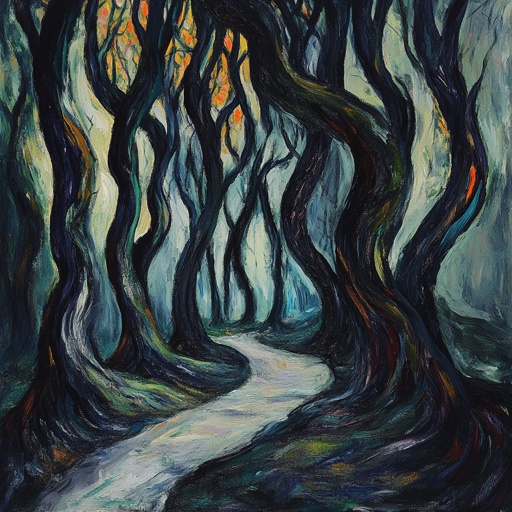
Twisted trees in a haunting forest scene in the art style of Expressionism --v 6.1
Melancholic figure alone in a stark room in the art style of Expressionism --v 6.1
Raw, expressive portrait capturing inner emotional state in the art style of Outsider Art --v 6.1
Twisted trees in a haunting forest scene in the art style of Expressionism --v 6.1
Melancholic figure alone in a stark room in the art style of Expressionism --v 6.1
Raw, expressive portrait capturing inner emotional state in the art style of Outsider Art --v 6.1
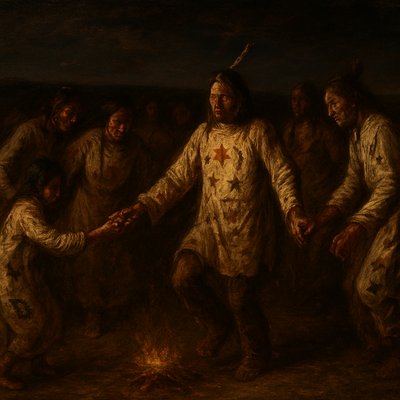
"A historically accurate depiction of a Ghost Dance, focusing on the late 19th-century context, specifically around 1890-1891. The scene shows Lakota (Sioux) or Northern Paiute people (specify one or include elements of both, but avoid anachronisms) participating in the ceremony.

Setting: A vast, open prairie or high desert landscape, under an expansive sky. The time of day could be dusk or night, with a prominent moon or stars, or a bright, clear day. Avoid overtly spiritual or ethereal elements like floating spirits unless explicitly requested for a later, more symbolic iteration. The focus should be on the earthly ceremony.

Participants: A circle of men, women, and children, hand-in-hand, moving in a slow, rhythmic shuffle or circular motion. Their faces show a mixture of devotion, hope, and determination. Some may have expressions of trance or deep concentration.

Attire:

    Ghost Dance Shirts/Dresses: Emphasize the unique Ghost Dance shirts and dresses, which were typically made of muslin or canvas. These garments should feature painted designs such as stars, crescents, birds (especially eagles or crows), buffalo, human figures, or crosses. The designs should appear hand-painted, not mass-produced.

    Hair and Adornments: Participants should have braided hair or wear it long. Some may wear feathers (e.g., eagle or hawk feathers) in their hair. Minimal traditional adornments, as the focus was often on the Ghost Dance shirt itself. Avoid overly elaborate or Hollywood-esque depictions of war bonnets unless relevant to a specific individual and context.

    Footwear: Moccasins or bare feet.

Action/Atmosphere:

    The dancers are moving in a counter-clockwise circle, with a central figure or a small group often leading.

    The overall mood is one of earnest prayer and communal spiritual effort. The dance should convey a sense of hope for renewal and the return of the old ways, rather than aggression or despair.

    There might be a central pole or small fire as a focal point, around which the dance takes place.

    Avoid any signs of direct conflict or violence; the Ghost Dance itself was a non-violent spiritual movement.

Specific Considerations for Accuracy:

    Wovoka's Influence: The teachings of Wovoka (the Northern Paiute prophet) emphasized peace, hard work, and the return of the buffalo and deceased ancestors. The scene should subtly reflect this hopeful, redemptive spirit.

    Regional Variations: If focusing on Lakota, consider their specific interpretations, which sometimes included more imagery related to their warrior traditions on the shirts, but still within the peaceful framework of the dance.

    Respectful Portrayal: Ensure the depiction is respectful and avoids any stereotypical or caricatured representations of Indigenous people. Focus on their human dignity and spiritual sincerity.
Anguished figure
Figurative painting with psychological complexity in the art style of New European Painting --v 6.1
Atmospheric landscape with dramatic lighting and emotional intensity in the art style of Neo-Romanticism --v 6.1
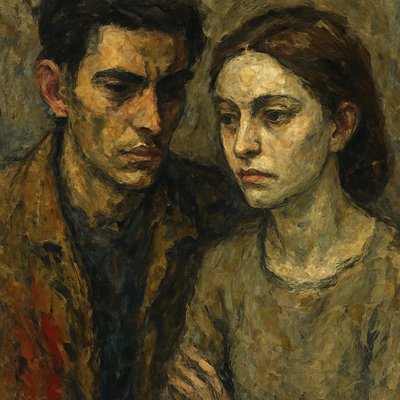
portrait of two people together
Atmospheric landscape with dramatic lighting and emotional intensity in the art style of Neo-Romanticism --v 6.1
Figurative painting with psychological complexity in the art style of New European Painting --v 6.1
Intuitive painting with personal symbolism by self-taught artist in the art style of Outsider Art --v 6.1
portrait of two people together
Intuitive painting with personal symbolism by self-taught artist in the art style of Outsider Art --v 6.1
Stormy seascape with a solitary figure in the art style of Neo-Romanticism --v 6.1