Mystical Nativity Scene "In The Style Of Sandro Botticelli" "Renaissance Elegance With Elongated Figures And Flowing Art

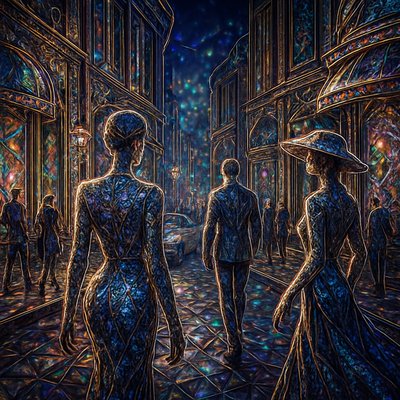
urban street with city activity
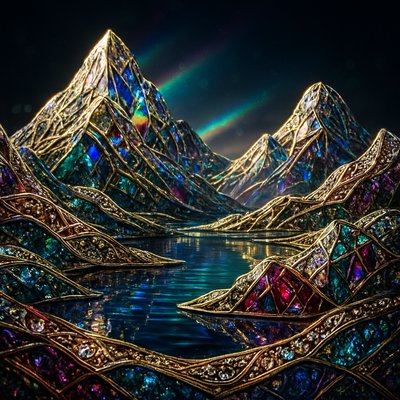
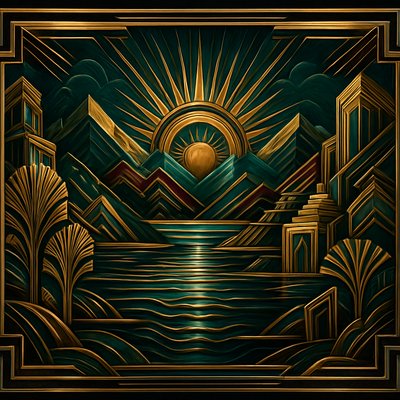
serene landscape with mountains and water
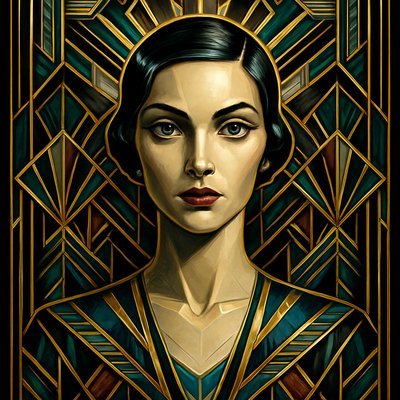
portrait of a person with expressive eyes
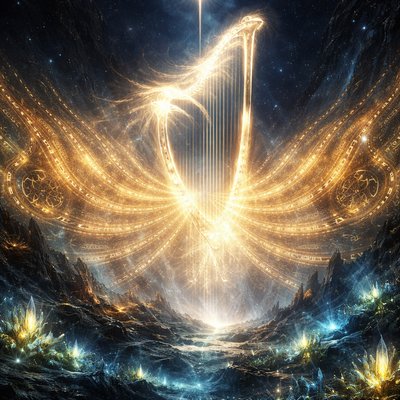
Style: Epic Sacred Art meets Cinematic Sci-Fi. A fusion of Gustave Doré’s dramatic scale with modern bioluminescent light-mapping. High contrast and majestic atmosphere.

The Source: In the center of the frame, a colossal, ancient Harp made of shimmering white-gold energy (representing the strings of creation). It is not played by a human, but by a "mighty hand of light" or simply by a "divine wind" moving through the strings.

The Frequency (Positive Force): From the vibrating strings, visible "Sound-Waves of Light" radiate outward in perfect, mathematical symmetry.

    The Appearance: These waves are composed of flowing golden Hebrew letters and Sacred Geometric patterns (like the Flower of Life or Fibonacci spirals) that pulse with a warm, amber glow.

    The Motion: The waves look like liquid gold ripples in the air, creating a "dome of protection and life."

The Impact (The Healing Force): The background is a chaotic, dark void or a shattered, grey stone landscape. Where the golden frequency ripples touch:

    The Void Becomes Form: The darkness organizes itself into beautiful, crystalline structures and lush, glowing flora.

    Resurrection: Any withered or broken elements in the scene begin to knit back together, glowing with a soft blue and gold "repair" energy.

    Atmosphere: Microscopic "sparkles" of light (like stardust) dance within the waves, representing the "joy" of the frequency.

Lighting: A singular, brilliant source of light from above (The North Star/Regulus) feeds energy into the harp, showing that the frequency has a celestial origin. The colors are dominated by Gold, Deep Indigo, and Electric Cyan.
Cubic voxel animals in a low-poly zoo scene in the art style of voxel art --v 6.1
Comic book inspired scene with Ben-Day dots in the art style of Pop Art --v 6.1
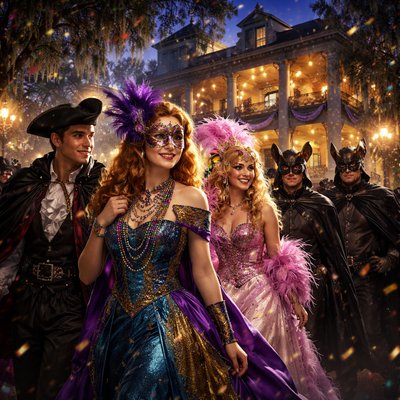
Exterior nighttime scene from Nancy Drew book #81 The Mardi Gras Mystery, the group in full festive costumes arriving at the grand, shadowy Seaton Mansion known as 'Bat Hollow' in New Orleans during Mardi Gras. Teenage detective Nancy Drew leads the way with reddish-blonde hair, wearing an elegant masquerade gown in blue and gold with purple accents, feathered half-mask, strands of colorful beads, and a mysterious smile. Beside her, Ned Nickerson in a dashing tuxedo or pirate-inspired costume with cape and tricorn hat. Bess Marvin (blonde, glamorous) in a sparkling pink feathered ball gown and elaborate headdress, George Fayne (short dark hair, sporty) in a fun jester outfit or adventurous explorer costume with mask. Brian Seaton and his father Bartholomew nearby in partial bat-themed costumes—dark capes, bat-wing collars, eerie masks with pointed ears. The historic Southern mansion looms behind: tall columns, wrought-iron balconies draped with Mardi Gras lights and purple/green/gold banners, flickering lanterns at the entrance, Spanish moss in ancient oaks, subtle bat motifs in the architecture, warm glowing windows hinting at antique interiors and the stolen portrait. Festive yet slightly eerie atmosphere—confetti in the air, distant parade sounds implied, dramatic twilight sky with stars, vibrant colors against gothic shadows. 1980s Nancy Drew book illustration style, adventurous and exciting, detailed costumes and group dynamic, cinematic wide-angle composition, lively holiday energy mixed with subtle suspense."
Scandinavian Interior Design Style Transfer Example
a tree in nature
portrait of two people together
wide landscape with natural scenery
animal standing in natural pose
wide landscape with natural scenery
serene landscape with mountains and water
portrait of a person with expressive eyes
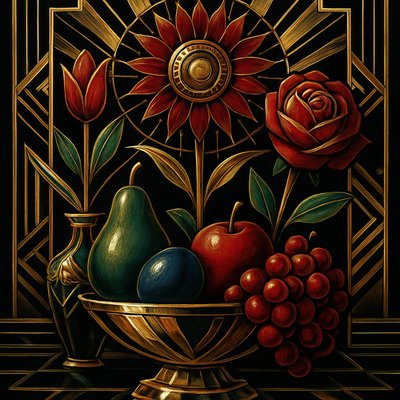
still life arrangement of fruits and flowers
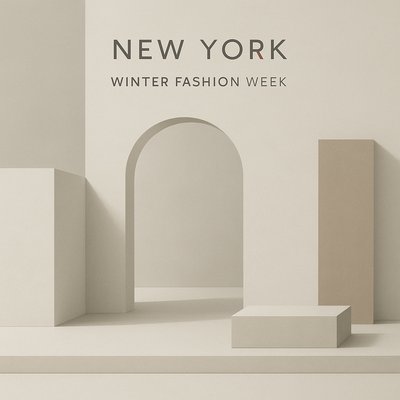
New York, Winter, Fashion Week
serene landscape with mountains and water
portrait of a person with expressive eyes
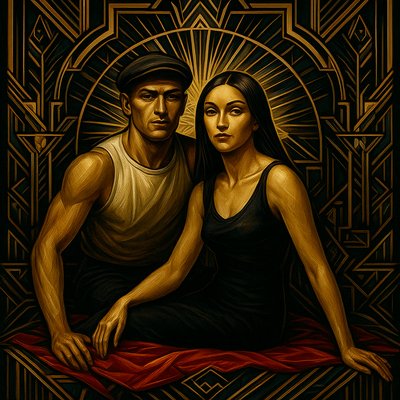
a painting of a man and a woman sitting together
A koi pond seen from above, orange and white koi fish swimming among lily pads, clear water with subtle ripples, fallen cherry blossom petals floating on the surface, dappled sunlight
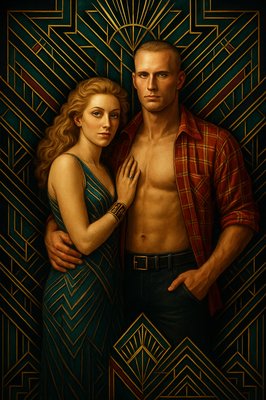
a painting of a man and a woman standing next to each other
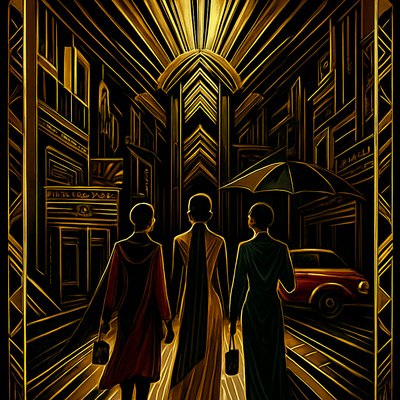
a painting of three people walking down a street
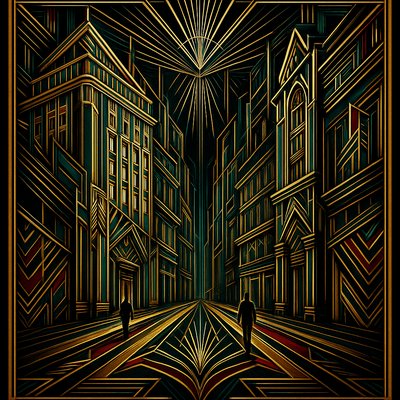
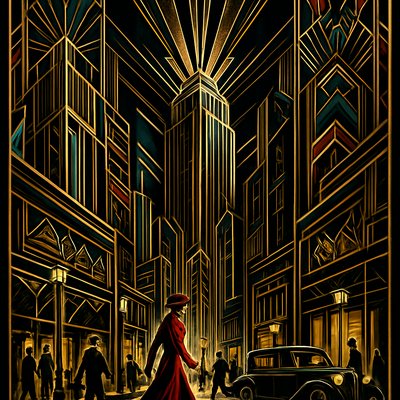
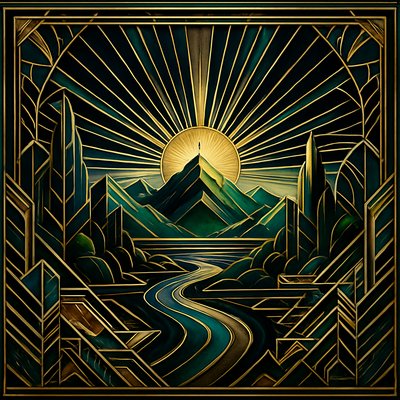
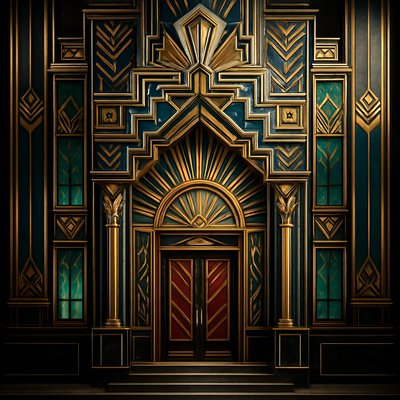
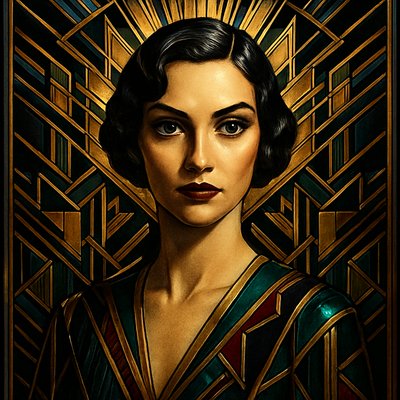
Art Deco Style Style Transfer Example
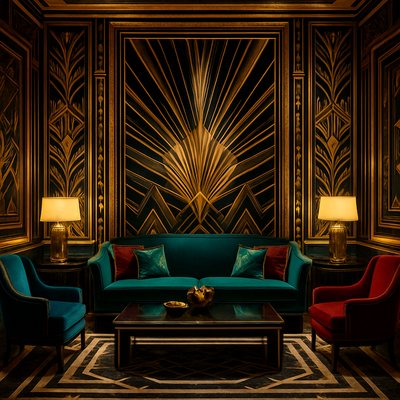
Art Deco Interior Design Style Transfer Example
urban street with city activity
wide landscape with natural scenery
house with front view
wide landscape with natural scenery
portrait of a person with expressive eyes
serene landscape with mountains and water
still life arrangement of fruits and flowers
Living Room
portrait of a person with expressive eyes
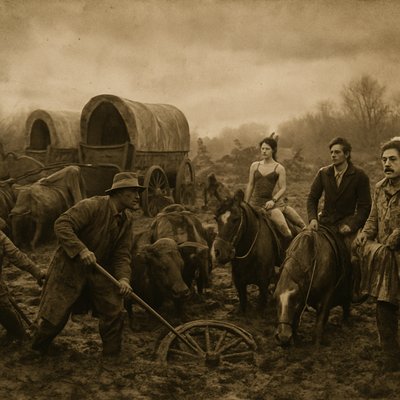
A highly realistic and historically accurate image set in the deep, waterlogged mud of the Texas Cross Timbers (Montague County) in 1840. The scene captures the frustrating moment when the Chihuahua Traders caravan is completely stuck. Foreground focus is on several heavy, wooden Conestoga freight wagons, mired up to their axles in dark, thick mud. Exhausted oxen are straining and distressed, their drivers in rough frontier attire attempting to free the wheels with ropes and levers. In the mid-ground, a small group of the American equestrian circus performers stands next to their distinctive, high-quality riding horses, which are visibly more refined than the typical pack animals. The performers are dressed in sturdy but distinct traveling clothes, looking ill-equipped and frustrated by the muddy conditions. One performer is carefully securing a colorful carriage or cart containing unique circus props, struggling to keep it from sinking. The overall mood is one of miserable delay and hardship. Cloudy, oppressive sky; detailed realism; wide-angle shot; dark, moody lighting.
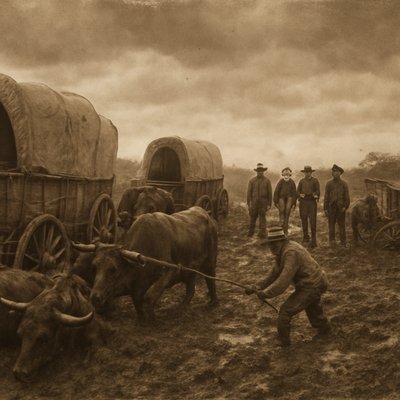
A cinematic, realistic image, set in the desolate, muddy expanse of the Texas Cross Timbers in 1840. The scene captures the return leg of the Chihuahua Traders Trail. Several heavy, wooden Conestoga wagons are hopelessly mired in deep, dark mud, pulled by straining, distressed oxen and mules. Merchants and teamsters in rugged, damp frontier clothing are struggling, using poles and ropes to try and free a wagon wheel.

In stark contrast, a group of bewildered and exasperated American equestrian circus performers, dressed in bright, slightly tattered stage costumes (e.g., a sequined acrobat, a rider in a velvet jacket, a clown attempting to keep his white makeup clean), stand nearby. They are trying to keep their fine horses and props (perhaps a small, colorful tent piece or a drum) out of the worst of the mire. The sky is overcast and oppressive, reflecting the damp, miserable conditions. The overall lighting should be dark and moody, emphasizing the frustrating five-week delay. Wide-angle shot, photorealistic quality, historical accuracy, dark realism.
A highly realistic and historically accurate image set in the deep, waterlogged mud of the Texas Cross Timbers (Montague County) in 1840. The scene captures the frustrating moment when the Chihuahua Traders caravan is completely stuck.

Foreground focus is on several heavy, wooden Conestoga freight wagons, mired up to their axles in dark, thick mud. Exhausted oxen are straining and distressed, their drivers in rough frontier attire attempting to free the wheels with ropes and levers.

In the mid-ground, a small group of the American equestrian circus performers stands next to their distinctive, high-quality riding horses, which are visibly more refined than the typical pack animals. The performers are dressed in sturdy but distinct traveling clothes, looking ill-equipped and frustrated by the muddy conditions. One performer is carefully securing a colorful carriage or cart containing unique circus props, struggling to keep it from sinking. The overall mood is one of miserable delay and hardship. Cloudy, oppressive sky; detailed realism; wide-angle shot; dark, moody lighting.
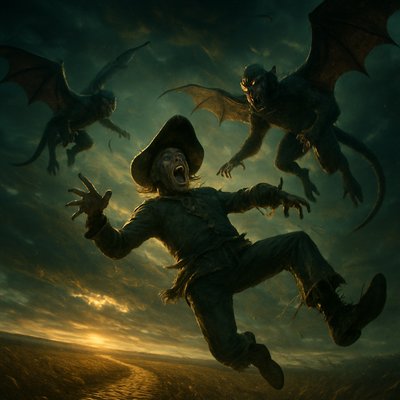
Cinematic Concept Art, High Fantasy Illustration, Wide Angle, Dynamic Lighting "A wide, epic shot of the Wizard of Oz Scarecrow being violently lifted into the air by three menacing, taloned Flying Monkeys descending from a swirling, dark-clouded sky. The Scarecrow is mid-scream, straw is bursting from a tear in his pant leg, and his hat is flying off. The scene is set over a desolate, golden field, with a tiny Yellow Brick Road receding into the distance. Volumetric light rays pierce the storm clouds, highlighting the terror and the tattered fabric of the monkeys' wings. Focal Length 24mm, 8K, highly detailed, dramatic shadow depth."