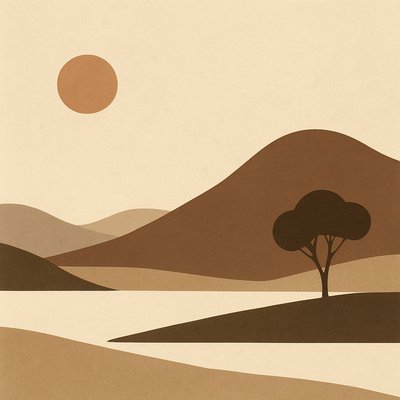
Installation Art Focusing On Spatial Relationships In The Art Style Of Neo Minimalism V 6.1 Art

Text-based artwork with nonsensical or contradictory statements in the art style of Neo-Dada --v 6.1
Figurative artwork with distorted forms and emotional rawness in the art style of Neo-Expressionism --v 6.1
Large canvas with archetypal figures and gestural marks in the art style of Neo-Expressionism --v 6.1
Sculptural piece with rough textures and primitive forms in the art style of Neo-Expressionism --v 6.1
Figurative artwork with distorted forms and emotional rawness in the art style of Neo-Expressionism --v 6.1
Emotive landscape with thick impasto and vivid palette in the art style of Neo-Expressionism --v 6.1
Self-portrait with expressive brushwork and psychological intensity in the art style of Neo-Expressionism --v 6.1
Allegorical painting addressing contemporary social issues in the art style of Neo-Romanticism --v 6.1
Text-based artwork exploring language and meaning in the art style of Neo-Conceptualism --v 6.1
Conceptual mapping project visualizing abstract data in the art style of Neo-Conceptualism --v 6.1
Portrait capturing a moment of deep introspection or melancholy in the art style of Neo-Romanticism --v 6.1
Atmospheric landscape with dramatic lighting and emotional intensity in the art style of Neo-Romanticism --v 6.1
Abstract painting incorporating graffiti-like elements in the art style of Neo-Expressionism --v 6.1
Figurative artwork with distorted forms and emotional intensity in the art style of Neo-Expressionism --v 6.1
Emotive landscape with thick impasto and vivid hues in the art style of Neo-Expressionism --v 6.1
Expressive sculpture with rough textures and bold forms in the art style of Neo-Expressionism --v 6.1
Primal symbols and mythological references in a chaotic composition in the art style of Neo-Expressionism --v 6.1
Emotive landscape with thick impasto and vivid hues in the art style of Neo-Expressionism --v 6.1
Expressive sculpture with rough textures and bold forms in the art style of Neo-Expressionism --v 6.1
Primal symbols and mythological references in a chaotic composition in the art style of Neo-Expressionism --v 6.1
wide landscape with natural scenery

Figure before digital storm
red haired lady on a Kawasaki Vulcan S
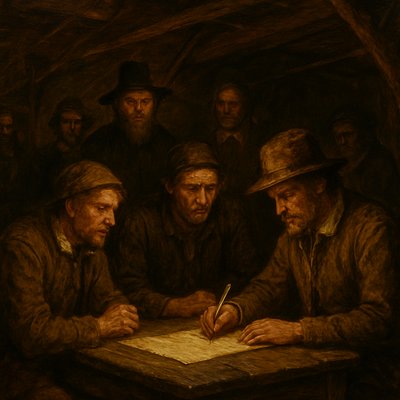
A historically accurate and atmospheric depiction of the signing of the Mayflower Compact aboard the ship in November 1620. The scene is set in the dimly lit, cramped cabin of the Mayflower, with the ship's timbers and rigging subtly visible, conveying the challenging conditions of the voyage. A simple table or chest serves as the signing surface. The primary focus is on a small group of the last individuals signing the document: specifically, the indentured servants (or 'strangers' not directly part of the Separatist congregation) approaching or at the table. Their expressions show a mix of weary determination, understanding of the necessity, and perhaps a hint of quiet apprehension or resignation to this new social contract, given their status. They are dressed in the plain, practical clothing typical of 17th-century commoners and laborers. Figures of prominent Pilgrims or 'Saints' (like William Bradford or John Carver) are visible in the background, observing the proceedings with a sense of gravity and leadership, but they are not the central focus. The lighting is low and warm, perhaps from a lantern, creating a chiaroscuro effect that highlights the faces of the signers. The atmosphere conveys the momentousness of the act under difficult circumstances, the diverse composition of the group, and the early seeds of self-governance in a new world. The artistic style is a realistic, historically detailed oil painting, capturing the solemnity and human element of this pivotal historical moment."
still life with everyday objects
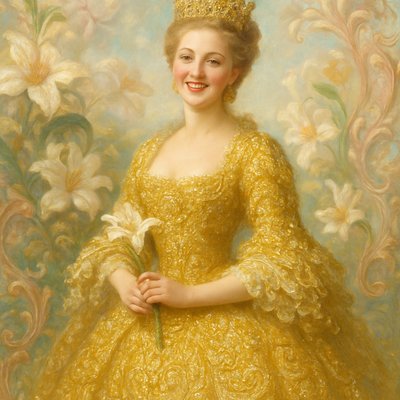
Rococo Art Style, Digital Art Style, a brilliantly joyful, opulent, and ornate three-quarter-length portrait of "The Queen in Gold of Ophir," inspired by Psalm 45. The Queen is facing the viewer with a radiant, happy, and genuinely smiling expression, her pose one of graceful delight. She is adorned in an exquisitely detailed gown woven from the finest gold, which shimmers with a dazzling, intense, almost liquid radiance, typical of Rococo opulence and digital highlight. The gold fabric is intricately embellished with countless sparkling jewels and delicate scrolling patterns in shades of ivory and pearl. A magnificent golden crown, wreathed in tiny golden lilies, rests upon her head. Her hands are gently placed, perhaps holding a single, pure white lily. She is framed by a background featuring large, lush, stylized white and golden lilies and an ornate, soft-focus garden setting bathed in sweet, cheerful daylight. Focus intently on the dazzling, reflective shimmer and ornate detail of the gold gown, the Queen's beautiful, joyous smile, and the light, ethereal quality of the Rococo setting.
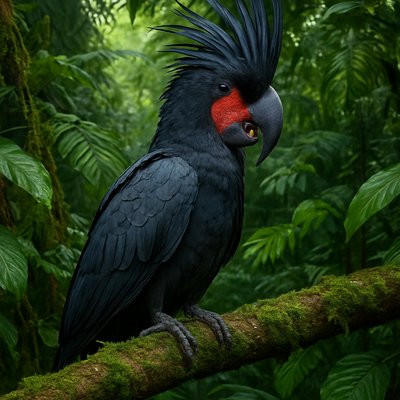
Photorealism Art Style, a magnificent Palm Cockatoo perched majestically on a thick, moss-covered tree branch in its natural environment. Its dramatic, charcoal-black plumage is highlighted, revealing subtle textures, and its distinctive large, fanned crest is partially raised. The bright red cheek patches are vibrant against its dark feathers. The cockatoo is set within a dense, lush tropical rainforest canopy, with vibrant green foliage, exotic leaves, and glimpses of deep jungle shadows in the background. Soft, dappled sunlight filters through the leaves, creating natural highlights on the bird and its surroundings. Focus on intricate feather details, the vivid red of its face, and the rich, humid atmosphere of the rainforest.
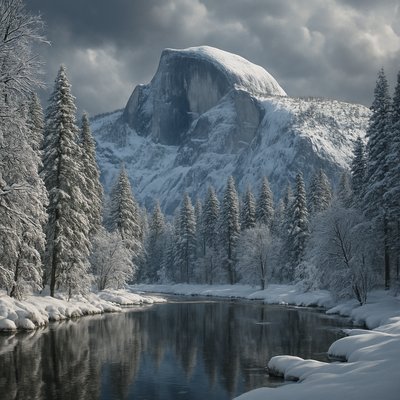
Photorealism Art Style, a serene winter landscape of Yosemite National Park featuring Half Dome majestically covered in pristine snow, under a dramatic, cloudy sky. The foreground is a tranquil expanse of snow-covered pine trees and a partially frozen Merced River. Soft, diffused light highlights the textures of the snow and the stark beauty of the granite. The atmosphere is quiet, cold, and awe-inspiring, emphasizing the park's stark winter beauty. Focus on snow textures, dramatic lighting, and the silence of winter.
a tree in nature
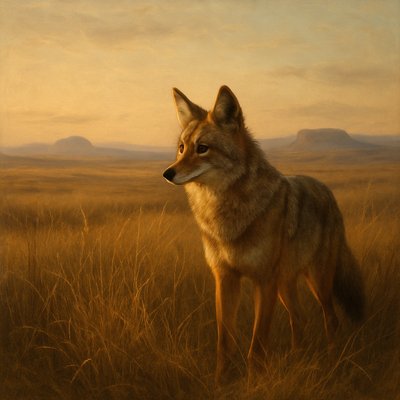
Realism Art Style, Tonalism Art Style, A solitary coyote, alert and focused, standing amidst tall, swaying prairie grasses at golden hour. The setting sun casts a warm, ethereal glow and illuminates its fur in rich amber and russet tones. Vast, rolling plains, subtle ancient buttes in the distance, serene atmosphere.