Gestural Figurative Art Style Style Transfer Example Art

Woven textile with abstract patterns in the art style of Bauhaus --v 6.1
Magical girl transformation sequence in the art style of Anime --niji 6
Futuristic cyberpunk cityscape in the art style of Anime --niji 6
Durational performance in a public space in the art style of Performance Art --v 6.1
Projection mapping on building facade in the art style of Street Art --v 6.1
Woven textile with abstract patterns in the art style of Bauhaus --v 6.1
Wind-powered outdoor installation in the art style of Kinetic Art --v 6.1
Photomontage combining urban imagery in the art style of Modernism --v 6.1
Triptych altarpiece with religious scenes in the art style of Gothic --v 6.1
Wild animals in an untamed wilderness in the art style of Romanticism --v 6.1
Kinetic sculpture with moving parts in the art style of Modernism --v 6.1
Triptych altarpiece with religious scenes in the art style of Gothic --v 6.1
Detailed study of human anatomy in the art style of Renaissance --v 6.1
Mysterious ruins in a moonlit forest in the art style of Romanticism --v 6.1
Wild animals in an untamed wilderness in the art style of Romanticism --v 6.1
Decorative panel with chinoiserie motifs in the art style of Rococo --v 6.1
Streamlined industrial product design in the art style of Modernism --v 6.1
Decorative panel with chinoiserie motifs in the art style of Rococo --v 6.1
Sunlit garden with dappled shadows in the art style of Impressionism --v 6.1
Ballet dancers in motion on stage in the art style of Impressionism --v 6.1
Dreamlike vision with symbolic imagery in the art style of Romanticism --v 6.1
Decorative panel with chinoiserie motifs in the art style of Rococo --v 6.1
Nonsensical collage of everyday objects in the art style of Dada --v 6.1
Streamlined industrial product design in the art style of Modernism --v 6.1
Nonsensical collage of everyday objects in the art style of Dada --v 6.1
Decorative panel with chinoiserie motifs in the art style of Rococo --v 6.1
Sunlit garden with dappled shadows in the art style of Impressionism --v 6.1
Artwork depicting expanded states of consciousness in the art style of Visionary Art --v 6.1
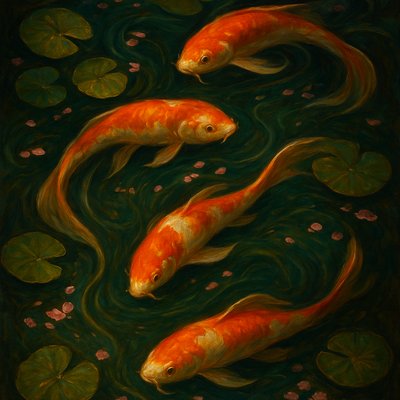
A koi pond seen from above, orange and white koi fish swimming among lily pads, clear water with subtle ripples, fallen cherry blossom petals floating on the surface, dappled sunlight
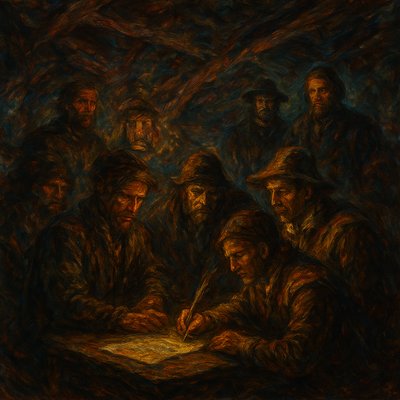
A historically accurate and atmospheric depiction of the signing of the Mayflower Compact aboard the ship in November 1620. The scene is set in the dimly lit, cramped cabin of the Mayflower, with the ship's timbers and rigging subtly visible, conveying the challenging conditions of the voyage. A simple table or chest serves as the signing surface. The primary focus is on a small group of the last individuals signing the document: specifically, the indentured servants (or 'strangers' not directly part of the Separatist congregation) approaching or at the table. Their expressions show a mix of weary determination, understanding of the necessity, and perhaps a hint of quiet apprehension or resignation to this new social contract, given their status. They are dressed in the plain, practical clothing typical of 17th-century commoners and laborers. Figures of prominent Pilgrims or 'Saints' (like William Bradford or John Carver) are visible in the background, observing the proceedings with a sense of gravity and leadership, but they are not the central focus. The lighting is low and warm, perhaps from a lantern, creating a chiaroscuro effect that highlights the faces of the signers. The atmosphere conveys the momentousness of the act under difficult circumstances, the diverse composition of the group, and the early seeds of self-governance in a new world. The artistic style is a realistic, historically detailed oil painting, capturing the solemnity and human element of this pivotal historical moment."