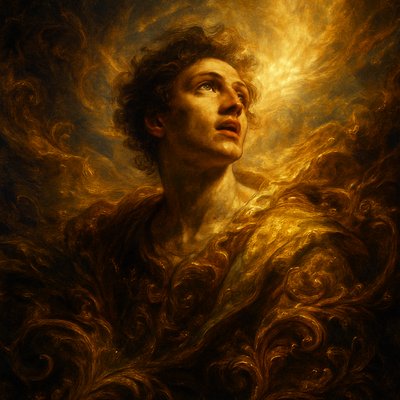
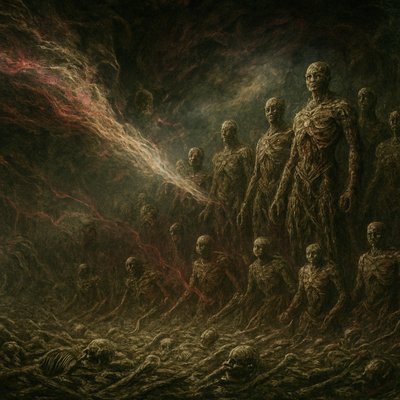
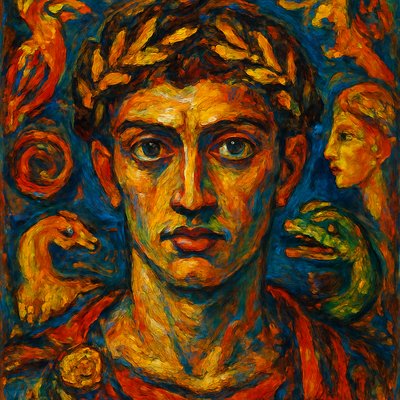
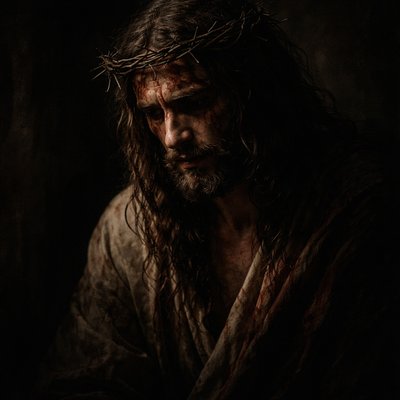
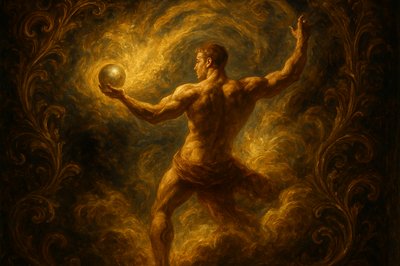
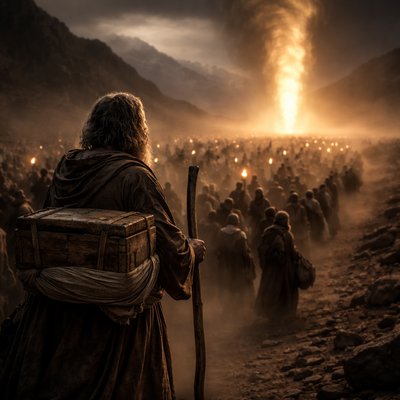
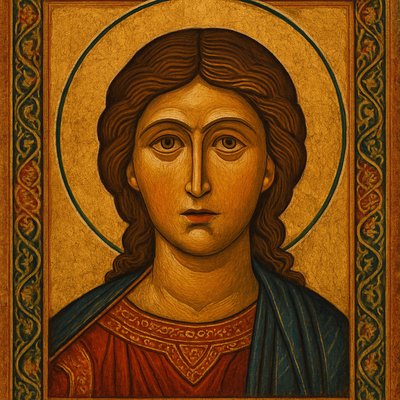
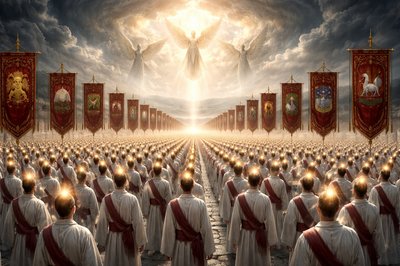
Enoch A Righteous Man, Whose Eyes Were Opened By God, Saw The Vision Of The Holy One In The Heavens Art

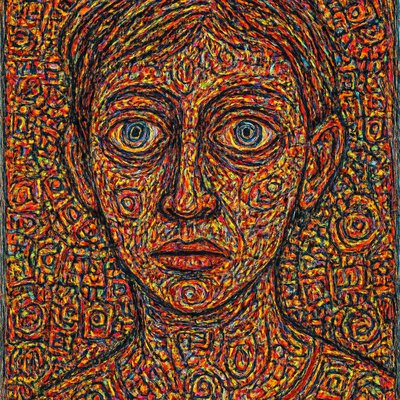
portrait of a person with expressive eyes
a tree in nature
portrait of a person with expressive eyes
A profoundly symbolic and awe-inspiring depiction of a colossal, luminous pearl gate in the New Jerusalem, captured in the dynamic act of rolling away, similar to the stone being moved from Christ's tomb. The gate, a single, immense, perfectly spherical pearl, is shown mid-motion, having just been set aside from the entrance, revealing the glorious city beyond.

The pearl itself glows with an intense, soft iridescence, reflecting the divine light. Its surface shows subtle, exquisite details of mother-of-pearl. The frame or opening from which it has rolled away is visible, perhaps showing immense, smooth tracks or channels in the transparent gold structure of the city wall, reinforcing the idea of its monumental movement.

Through the now open gate, the radiant glory of the New Jerusalem streams forth. Pure gold streets, like transparent glass, extend into the city, illuminated by an intense, divine light that emanates from within. Heavenly architecture, impossibly beautiful and intricate, is glimpsed in the distance, beckoning. The atmosphere is one of profound sanctity, triumphant revelation, and welcoming access to the divine, with the act of the pearl rolling away symbolizing a breakthrough or an open invitation. The lighting is ethereal and grand, emphasizing the pearl's luster and the city's overwhelming glory."
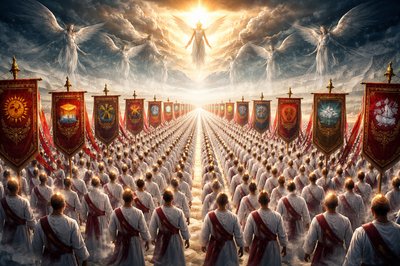
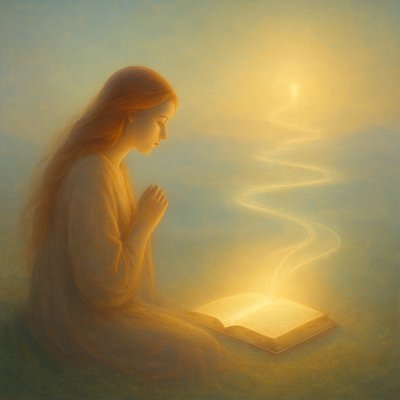
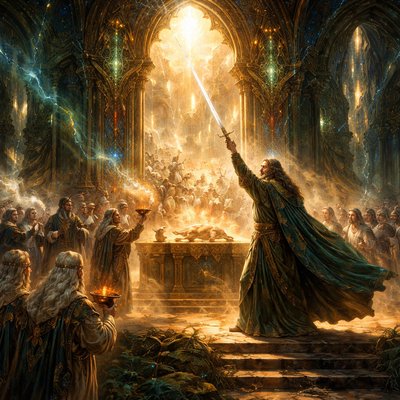
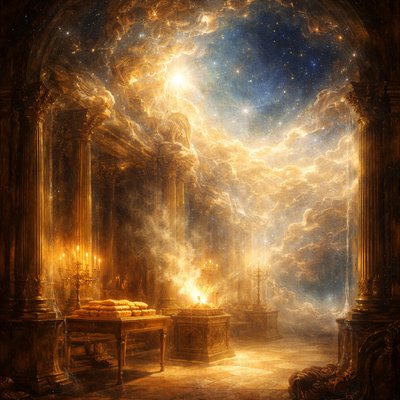
A majestic, ethereal scene depicting golden bowls brimming with luminous, swirling incense. The incense, representing the collective prayers of all saints, rises and coalesces into shimmering, golden tendrils that ascend towards an unseen heavenly throne.There elders worshipping: EACH ELDER HAS ONE BOWL AND EACH ELDER HAS ONE HARP. These are golden bowls of incense. Each bowl is held by a robed elder, KNEELING IN PRAYER TO GOD. The atmosphere is reverent and awe-inspiring, filled with soft, warm light emanating from the golden smoke. Emphasize the precious, divine, and unified nature of the prayers. Inspired by Revelation 5:8
whimsical little horse, intricate details, watercolor-dream mood, gentle movement in the mane and tail, expressive eyes, cinematic depth and color
a tree in nature
a woman with long red hair and blue eyes
My sincerest apologies that the Queen appeared angry! That's completely contrary to the "serene and noble expression" we aimed for and the dignity implied by Psalm 45. We need to explicitly reinforce a gentler, more gracious demeanor.

You're also right to focus on the gold's shine. We can definitely enhance that.

To address both issues—the expression and the gold's luminosity—we'll make two key adjustments:

    Refine Expression: Use stronger words for a gentle, majestic, and perhaps beatific expression.

    Enhance Gold's Shine: Introduce Baroque Art Style as a secondary influence. Baroque is famous for its dramatic light, intense gleam on metals and jewels, and dynamic richness, which will make the gold truly radiant. It pairs beautifully with Oil Painting for opulence.

Revised Prompt for "Queen in Gold of Ophir - Gentle Expression & Shining Gold"

    Oil Painting Art Style, Baroque Art Style, a breathtakingly majestic and regal portrait of "The Queen in Gold of Ophir," inspired by Psalm 45. The Queen stands with impeccable grace and royal dignity, her posture radiating quiet power. Her expression is serene, gentle, and profoundly gracious, with a subtle, knowing smile, reflecting noble peace. She is adorned in an exquisitely elaborate gown woven entirely from the finest, purest gold of Ophir, which shimmers and gleams with unparalleled brilliance, catching every ray of light. Her attire is intricately embellished with countless precious jewels—sapphires, rubies, and emeralds—each sparkling intensely with Baroque dynamism. A delicate yet regal golden crown, also ablaze with light, rests upon her head. The setting is a grand, opulent royal palace chamber, with rich tapestries and polished marble, bathed in dramatic, warm, golden ambient light that creates striking highlights and deep, luxurious shadows, making her and her lavish garments glow. Focus on the unparalleled brilliance, texture, and radiant shine of her golden gown, the intense sparkle of her jewels, her majestic yet gentle presence, and the luxurious, sacred atmosphere befitting a queen in God's presence.
At his Grandmother's house in Penang, while the tropical rain taps softly against the window, Wing Sun, Mother and Grandmother gather in the cozy living room. The room glows with the soft light of an oil lamp, and the walls are adorned with faded photographs and delicate calligraphy. Grandmother’s eyes sparkle as she begins to speak—a voice that carries both the wisdom of her years and the tender care of someone who’s seen many seasons change.  Wing Sun is pensive with anticipation.  What will she say?
animal standing in natural pose
A dramatic, richly detailed scene in the ancient Babylonian royal court. In the foreground, three wise and esteemed Babylonian court magicians (Chaldeans/astrologers) are gathered around a central figure, possibly the king, or intently studying an inscribed clay tablet. They are dressed in opulent, finely woven robes of deep blues, reds, and gold, with elaborate turbans or headwear. Their long, meticulously styled beards and hair indicate their status and wisdom. One magician holds a stylus, another points to intricate cuneiform script on a clay tablet, and the third gazes thoughtfully, perhaps at a celestial chart or into a symbolic brazier. The background reveals the grand, awe-inspiring architecture of the Babylonian palace, with glazed brick walls adorned with depictions of mythical creatures (like the Ishtar Gate lions) and massive, ornate columns. The atmosphere is one of profound intellectual pursuit, ancient wisdom, and mystical interpretation under the watchful eyes of the king. epic fantasy art, cinematic lighting, ultra-detailed, dramatic shadows, mystical glow"
Style: Ethereal Historical Fantasy Portrait. The mood is quiet, reverent, and deeply mystical. Soft, natural moonlight is the primary light source, creating gentle rim-lighting.

The Subject (Asonya): A woman of the ancient, antediluvian world, dressed with profound modesty. She is wrapped in multi-layered, heavy robes of woven wool dyed in deep indigo and charcoal grey that conceal her form. A textured veil covers her hair and frames her face. Her expression is contemplative and gentle, with eyes gazing upward.
The Moon Phase Connection: The current moon phase—a slender, glowing Waning Crescent—is intrinsically tied to her appearance.

    The Headpiece: A clasp made of pale, almost translucent moonstone in the exact shape of the crescent moon secures her veil. It seems to hold an internal, soft luminescence.

    The Projection: A faint, ethereal projection of the crescent moon phase is visible subtly glowing on the fabric of her veil over her forehead, as if starlight is clinging to her.

Action & Setting: She stands on an ancient, wind-worn stone platform used for observing the heavens. In her hands, she holds a simple, dark earthenware bowl filled with still water. The reflection of the actual crescent moon in the sky is perfectly captured in the water she holds.

Atmosphere: The background is a vast, clear night sky filled with countless stars. The air feels old and still.
Digital Art Style, Romanticism Art Style, a tender and intimate painting inspired by Psalm 31:20, emphasizing the security of a divine dwelling place. The scene focuses on a monogamous pair of Red-lored Amazon parrots with their vibrant green plumage, distinct red and yellow markings, rendered with luminous digital detail. They are positioned at the dark, secluded entrance of a natural tree cavity, their posture conveying mutual protection and absolute contentment within their refuge. The surrounding forest is lush, with sunlight subtly illuminating the exterior, while the area immediately around the cavity entrance is bathed in a soft, ethereal glow, representing the shelter of God's presence and symbolizing the divine security of their dwelling. The overall atmosphere is one of profound safety, peace, and intimate privacy, as if they are hidden away from the world. Focus on the detailed expressions of peace on the parrots' faces, the tender intimacy of their pair bond, and the dramatic contrast between the bright forest and the secure, glowing darkness of their hidden dwelling.
a tree in nature
Thou I walk through the valley shadow of death I shall fear no evil
Oil Painting Art Style, a breathtakingly majestic and regal portrait of "The Queen in Gold of Ophir," inspired by Psalm 45. The Queen stands with impeccable grace and royal dignity, her posture radiating quiet power. She is adorned in an exquisitely elaborate gown woven entirely from the finest, purest gold of Ophir, shimmering with incredible richness. Her attire is intricately embellished with countless precious jewels—sapphires, rubies, and emeralds—each catching the light. A delicate yet regal golden crown rests upon her head, complementing her serene and noble expression. The setting is a grand, opulent royal palace chamber, with rich tapestries and polished marble, bathed in warm, golden, ambient light that dramatically illuminates her and her lavish garments. Focus on the unparalleled brilliance and texture of her golden gown, the sparkle of her jewels, her majestic presence, and the luxurious, sacred atmosphere befitting a queen in God's presence.
Seabiscuit vs. War Admiral (The Gaze)

    A hyper-realistic, high-resolution photograph capturing the apex of the 1938 match race between Seabiscuit and War Admiral.

    Focus: The composition is tight, showing both horses running neck-and-neck, dominating the frame. The camera angle is side-on and slightly low, emphasizing their size and muscle. The critical focus is on the space between the horses' heads as they are running stride for stride.

    Details: War Admiral (the dark bay) should show determination and slight surprise, with his head stretched out. Seabiscuit (the smaller bay) should display his characteristic "game" look—intense, focused, and seemingly looking directly into War Admiral's eyes (or toward his rival). Both jockeys (Red Pollard or George Woolf for Seabiscuit; Charles Kurtsinger for War Admiral) are visible, leaning low and urging their mounts on.

    Atmosphere: The light should be bright but slightly diffused, suggesting an autumn afternoon at Pimlico. Dust and track debris are kicked up behind them, blurred slightly by the horses' tremendous speed. The image must convey the raw power, intense rivalry, and the exact moment when the smaller horse asserts his dominance.

    Style: Cinematic photography, realistic texture, sharp focus on the horses' eyes and muscle definition.
Seabiscuit vs. War Admiral (The Gaze)

    A hyper-realistic, high-resolution photograph capturing the apex of the 1938 match race between Seabiscuit and War Admiral.

    Focus: The composition is tight, showing both horses running neck-and-neck, dominating the frame. The camera angle is side-on and slightly low, emphasizing their size and muscle. The critical focus is on the space between the horses' heads as they are running stride for stride.

    Details: War Admiral (the dark bay) should show determination and slight surprise, with his head stretched out. Seabiscuit (the smaller bay) should display his characteristic "game" look—intense, focused, and seemingly looking directly into War Admiral's eyes (or toward his rival). Both jockeys (Red Pollard or George Woolf for Seabiscuit; Charles Kurtsinger for War Admiral) are visible, leaning low and urging their mounts on.

    Atmosphere: The light should be bright but slightly diffused, suggesting an autumn afternoon at Pimlico. Dust and track debris are kicked up behind them, blurred slightly by the horses' tremendous speed. The image must convey the raw power, intense rivalry, and the exact moment when the smaller horse asserts his dominance.

    Style: Cinematic photography, realistic texture, sharp focus on the horses' eyes and muscle definition.
Seabiscuit vs. War Admiral (The Gaze)

    A hyper-realistic, high-resolution photograph capturing the apex of the 1938 match race between Seabiscuit and War Admiral.

    Focus: The composition is tight, showing both horses running neck-and-neck, dominating the frame. The camera angle is side-on and slightly low, emphasizing their size and muscle. The critical focus is on the space between the horses' heads as they are running stride for stride.

    Details: War Admiral (the dark bay) should show determination and slight surprise, with his head stretched out. Seabiscuit (the smaller bay) should display his characteristic "game" look—intense, focused, and seemingly looking directly into War Admiral's eyes (or toward his rival). Both jockeys (Red Pollard or George Woolf for Seabiscuit; Charles Kurtsinger for War Admiral) are visible, leaning low and urging their mounts on.

    Atmosphere: The light should be bright but slightly diffused, suggesting an autumn afternoon at Pimlico. Dust and track debris are kicked up behind them, blurred slightly by the horses' tremendous speed. The image must convey the raw power, intense rivalry, and the exact moment when the smaller horse asserts his dominance.

    Style: Cinematic photography, realistic texture, sharp focus on the horses' eyes and muscle definition.
  A miniature horse wandering through a fantastical meadow waste high wildflowers, soft morning light, delicate sparkles drifting in the air, intricate details, watercolor-dream mood, gentle movement in the mane and tail, expressive eyes, cinematic depth and color
Seabiscuit vs. War Admiral (The Gaze)

    A hyper-realistic, high-resolution photograph capturing the apex of the 1938 match race between Seabiscuit and War Admiral.

    Focus: The composition is tight, showing both horses running neck-and-neck, dominating the frame. The camera angle is side-on and slightly low, emphasizing their size and muscle. The critical focus is on the space between the horses' heads as they are running stride for stride.

    Details: War Admiral (the dark bay) should show determination and slight surprise, with his head stretched out. Seabiscuit (the smaller bay) should display his characteristic "game" look—intense, focused, and seemingly looking directly into War Admiral's eyes (or toward his rival). Both jockeys (Red Pollard or George Woolf for Seabiscuit; Charles Kurtsinger for War Admiral) are visible, leaning low and urging their mounts on.

    Atmosphere: The light should be bright but slightly diffused, suggesting an autumn afternoon at Pimlico. Dust and track debris are kicked up behind them, blurred slightly by the horses' tremendous speed. The image must convey the raw power, intense rivalry, and the exact moment when the smaller horse asserts his dominance.

    Style: Cinematic photography, realistic texture, sharp focus on the horses' eyes and muscle definition.
bicyle resting against a wall
  A whimsical little horse wandering through a fantastical meadow of oversized flowers, soft morning light, delicate sparkles drifting in the air, intricate details, watercolor-dream mood, gentle movement in the mane and tail, expressive eyes, cinematic depth and color
animal standing in natural pose
still life arrangement of fruits and flowers
urban street with city activity
Manic Monday with coffee
portrait of two people together
Miniature horse wandering through a fantastical meadow of oversized tall wildflowers, soft morning light, delicate sparkles drifting in the air, intricate details, watercolor-dream mood, gentle movement in the mane and tail, expressive eyes, cinematic depth and color
a couple of deer standing next to each other
An incredibly detailed and profound scene depicting the Vision of the Dry Bones from Ezekiel 37. The immediate foreground features a stark, highly detailed close-up of a single ancient human skull, its empty eye sockets gazing out, perfectly rendered with realistic bone texture. Beyond this skull, stretching into the mid-ground, a vast, desolate valley is entirely carpeted with an immense, sprawling expanse of countless other ancient, stark white human bones and skulls. A powerful, divine wind (ruach), emanating an ethereal, sacred glow, swirls violently through this boneyard. This divine energy causes the bones to dramatically rattle, shift, and miraculously knit together, forming complete skeletons. Further in the background, some of these skeletons have already begun to rapidly form tendons, flesh, and skin, starting to rise as part of a nascent, colossal army. The sky above is dramatic and ominous, with streaks of divine light breaking through thick clouds. The overall mood is one of overwhelming desolation, followed by the initial, awe-inspiring moments of miraculous transformation and the promise of life."
bicyle resting against a wall
Hyper-Realistic Macro Photography, 8k Architectural Lighting a heartwarming scene under a decorated Christmas tree. Two fluffy kittens, one a ginger tabby and the other a calico, are joyfully playing in a chaotic pile of discarded Christmas wrapping paper, ribbons, and bows. The ginger kitten is tangled in a long piece of shiny red and green paper, batting at a curled ribbon. The calico kitten is pouncing from inside a torn open cardboard gift box, surrounded by crumpled tissue paper. Torn pieces of colorful wrapping paper (gold foil, snowman patterns, stripes) and empty gift tags are scattered everywhere on a plush rug. The Christmas tree above them is glowing with warm fairy lights and decorated with traditional ornaments. The background is a cozy living room with a fireplace.
Precisionism Art Style Style Transfer Example
portrait of a person with expressive eyes
serene landscape with mountains and water
still life arrangement of fruits and flowers
urban street with city activity
"A historically accurate depiction of a Ghost Dance, focusing on the late 19th-century context, specifically around 1890-1891. The scene shows Lakota (Sioux) or Northern Paiute people (specify one or include elements of both, but avoid anachronisms) participating in the ceremony.

Setting: A vast, open prairie or high desert landscape, under an expansive sky. The time of day could be dusk or night, with a prominent moon or stars, or a bright, clear day. Avoid overtly spiritual or ethereal elements like floating spirits unless explicitly requested for a later, more symbolic iteration. The focus should be on the earthly ceremony.

Participants: A circle of men, women, and children, hand-in-hand, moving in a slow, rhythmic shuffle or circular motion. Their faces show a mixture of devotion, hope, and determination. Some may have expressions of trance or deep concentration.

Attire:

    Ghost Dance Shirts/Dresses: Emphasize the unique Ghost Dance shirts and dresses, which were typically made of muslin or canvas. These garments should feature painted designs such as stars, crescents, birds (especially eagles or crows), buffalo, human figures, or crosses. The designs should appear hand-painted, not mass-produced.

    Hair and Adornments: Participants should have braided hair or wear it long. Some may wear feathers (e.g., eagle or hawk feathers) in their hair. Minimal traditional adornments, as the focus was often on the Ghost Dance shirt itself. Avoid overly elaborate or Hollywood-esque depictions of war bonnets unless relevant to a specific individual and context.

    Footwear: Moccasins or bare feet.

Action/Atmosphere:

    The dancers are moving in a counter-clockwise circle, with a central figure or a small group often leading.

    The overall mood is one of earnest prayer and communal spiritual effort. The dance should convey a sense of hope for renewal and the return of the old ways, rather than aggression or despair.

    There might be a central pole or small fire as a focal point, around which the dance takes place.

    Avoid any signs of direct conflict or violence; the Ghost Dance itself was a non-violent spiritual movement.

Specific Considerations for Accuracy:

    Wovoka's Influence: The teachings of Wovoka (the Northern Paiute prophet) emphasized peace, hard work, and the return of the buffalo and deceased ancestors. The scene should subtly reflect this hopeful, redemptive spirit.

    Regional Variations: If focusing on Lakota, consider their specific interpretations, which sometimes included more imagery related to their warrior traditions on the shirts, but still within the peaceful framework of the dance.

    Respectful Portrayal: Ensure the depiction is respectful and avoids any stereotypical or caricatured representations of Indigenous people. Focus on their human dignity and spiritual sincerity.
portrait of two people together