Crystal Cave Art

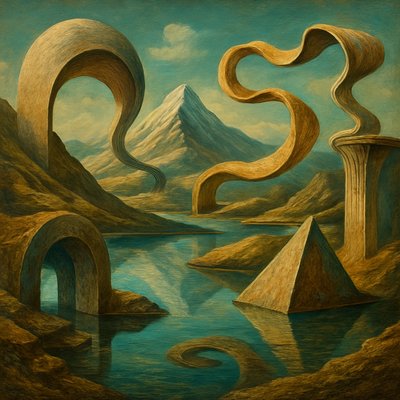
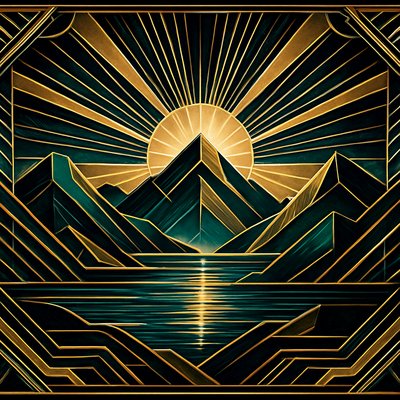
serene landscape with mountains and water
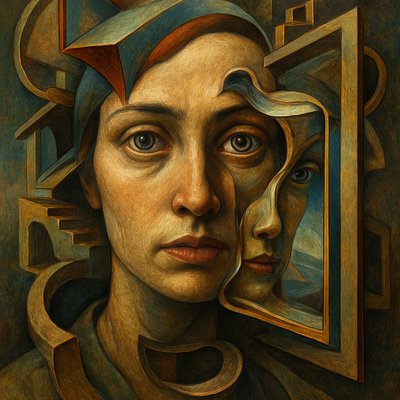
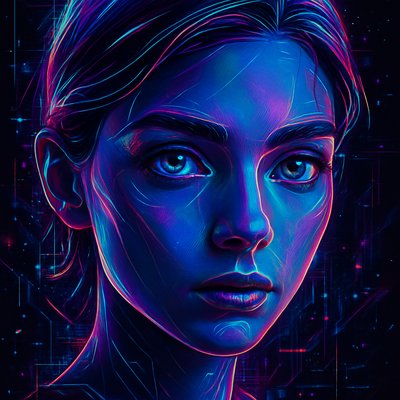
portrait of a person with expressive eyes
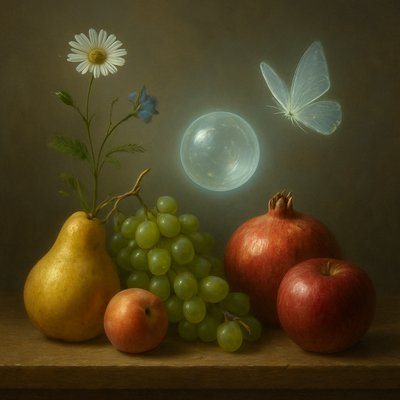
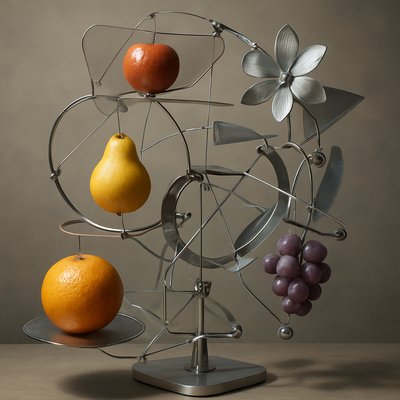
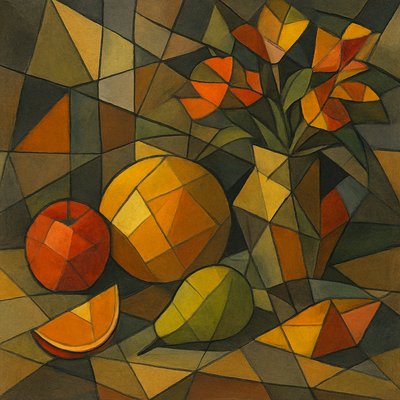
still life arrangement of fruits and flowers
serene landscape with mountains and water
Visionary Art Style, a magnificent and intricate dream catcher is centrally suspended, its delicate threads and web meticulously woven with beads and feathers that glow softly. Within the very center of its web, the dream catcher is catching a breathtaking, radiant glimpse of Heaven. This glimpse reveals a scene of ethereal golden light, celestial swirling clouds in soft pastels, and hints of majestic, serene landscapes bathed in divine luminosity. The dream catcher itself is adorned with vibrant, iridescent feathers in hues of white, pearl, and soft blue, and tiny shimmering beads, all illuminated by the heavenly light it contains. It hangs against a deep, mystical twilight sky, with distant stars twinkling softly. Focus on the stunning contrast between the detailed, earthy dream catcher and the luminous, otherworldly vision within its web, emphasizing the radiant glow and the profound, peaceful beauty of the celestial glimpse.
Ethereal Digital Art, Cosmic Surrealism, Astrophotography Aesthetic. A breathtaking scene in deep space where the constellation Cygnus physically manifests into a majestic, glowing celestial swan in mid-flight.

The Subject: The swan’s form is composed of swirling blue and violet nebulae, with its feathers shimmering like stardust. The primary stars of the constellation (Deneb at the tail, Albireo at the beak) are rendered as brilliant, multi-pointed white light-bursts that anchor the swan’s anatomy. The body of the swan is translucent, revealing distant spiral galaxies and star clusters through its wings.
The Composition: The swan is flying diagonally across the frame, leaving a trail of shimmering cosmic dust and stardust in its wake. The background is the deep, dark void of the cosmos, populated by millions of pinprick stars and faint, colorful gas clouds.

Lighting & Mood: The light source originates from the swan itself, casting a soft, divine glow on the surrounding space. The mood is transcendent, silent, and awe-inspiring. Every detail, from the "stellar feathers" to the distant nebulae, should be sharp and high-definition.
Ethereal Digital Art, Cosmic Surrealism, Astrophotography Aesthetic. A breathtaking scene in deep space where the constellation Cygnus physically manifests into a majestic, glowing celestial swan in mid-flight.

The Subject: The swan’s form is composed of swirling blue and violet nebulae, with its feathers shimmering like stardust. The primary stars of the constellation (Deneb at the tail, Albireo at the beak) are rendered as brilliant, multi-pointed white light-bursts that anchor the swan’s anatomy. The body of the swan is translucent, revealing distant spiral galaxies and star clusters through its wings.

The Composition: The swan is flying diagonally across the frame, leaving a trail of shimmering cosmic dust and stardust in its wake. The background is the deep, dark void of the cosmos, populated by millions of pinprick stars and faint, colorful gas clouds.

Lighting & Mood: The light source originates from the swan itself, casting a soft, divine glow on the surrounding space. The mood is transcendent, silent, and awe-inspiring. Every detail, from the "stellar feathers" to the distant nebulae, should be sharp and high-definition.
A koi pond seen from above, orange and white koi fish swimming among lily pads, clear water with subtle ripples, fallen cherry blossom petals floating on the surface, dappled sunlight
Surrealism Art Style, Fantasy Digital Art Style, a breathtaking and dreamlike scene. Jesus Christ, robed in soft, glowing white light, stands with a girl with long red hair (the dreamer) on massive, ancient wooden and stone cathedral rafters that curve high into a dark upper vault. They are looking downwards over the edge of a thick beam. Below them, there is no floor, only an infinite, swirling cosmic abyss filled with brilliant galaxies, nebulae, and countless glittering stars spread out like a carpet far below. The architecture seems to be floating in space. The lighting is a mix of warm gold from the divine figures and cool blues and purples from the stars below. The mood is one of overwhelming awe and peace.
A grand night-time view of the iconic fountains at Caesar's Palace in Las Vegas. The water is illuminated from below with vibrant neon magenta, electric blue, and bright tangerine lights. Surrounding the perimeter of the fountain are large, stylized Christmas trees constructed entirely of glossy, metallic ornaments in various sizes. These ornament trees are shimmering in shades of silver, gold, magenta pink, cobalt blue, and tangerine orange. No green or red anywhere in the scene. The Roman-style architecture of the hotel is visible in the background under a dark desert sky. Ultra-glamorous, high-gloss textures, cinematic wide-angle shot, 8k resolution, ray-traced reflections.
Seabiscuit vs. War Admiral (The Gaze)

    A hyper-realistic, high-resolution photograph capturing the apex of the 1938 match race between Seabiscuit and War Admiral.

    Focus: The composition is tight, showing both horses running neck-and-neck, dominating the frame. The camera angle is side-on and slightly low, emphasizing their size and muscle. The critical focus is on the space between the horses' heads as they are running stride for stride.

    Details: War Admiral (the dark bay) should show determination and slight surprise, with his head stretched out. Seabiscuit (the smaller bay) should display his characteristic "game" look—intense, focused, and seemingly looking directly into War Admiral's eyes (or toward his rival). Both jockeys (Red Pollard or George Woolf for Seabiscuit; Charles Kurtsinger for War Admiral) are visible, leaning low and urging their mounts on.

    Atmosphere: The light should be bright but slightly diffused, suggesting an autumn afternoon at Pimlico. Dust and track debris are kicked up behind them, blurred slightly by the horses' tremendous speed. The image must convey the raw power, intense rivalry, and the exact moment when the smaller horse asserts his dominance.

    Style: Cinematic photography, realistic texture, sharp focus on the horses' eyes and muscle definition.
Seabiscuit vs. War Admiral (The Gaze)

    A hyper-realistic, high-resolution photograph capturing the apex of the 1938 match race between Seabiscuit and War Admiral.

    Focus: The composition is tight, showing both horses running neck-and-neck, dominating the frame. The camera angle is side-on and slightly low, emphasizing their size and muscle. The critical focus is on the space between the horses' heads as they are running stride for stride.

    Details: War Admiral (the dark bay) should show determination and slight surprise, with his head stretched out. Seabiscuit (the smaller bay) should display his characteristic "game" look—intense, focused, and seemingly looking directly into War Admiral's eyes (or toward his rival). Both jockeys (Red Pollard or George Woolf for Seabiscuit; Charles Kurtsinger for War Admiral) are visible, leaning low and urging their mounts on.

    Atmosphere: The light should be bright but slightly diffused, suggesting an autumn afternoon at Pimlico. Dust and track debris are kicked up behind them, blurred slightly by the horses' tremendous speed. The image must convey the raw power, intense rivalry, and the exact moment when the smaller horse asserts his dominance.

    Style: Cinematic photography, realistic texture, sharp focus on the horses' eyes and muscle definition.
Seabiscuit vs. War Admiral (The Gaze)

    A hyper-realistic, high-resolution photograph capturing the apex of the 1938 match race between Seabiscuit and War Admiral.

    Focus: The composition is tight, showing both horses running neck-and-neck, dominating the frame. The camera angle is side-on and slightly low, emphasizing their size and muscle. The critical focus is on the space between the horses' heads as they are running stride for stride.

    Details: War Admiral (the dark bay) should show determination and slight surprise, with his head stretched out. Seabiscuit (the smaller bay) should display his characteristic "game" look—intense, focused, and seemingly looking directly into War Admiral's eyes (or toward his rival). Both jockeys (Red Pollard or George Woolf for Seabiscuit; Charles Kurtsinger for War Admiral) are visible, leaning low and urging their mounts on.

    Atmosphere: The light should be bright but slightly diffused, suggesting an autumn afternoon at Pimlico. Dust and track debris are kicked up behind them, blurred slightly by the horses' tremendous speed. The image must convey the raw power, intense rivalry, and the exact moment when the smaller horse asserts his dominance.

    Style: Cinematic photography, realistic texture, sharp focus on the horses' eyes and muscle definition.
Seabiscuit vs. War Admiral (The Gaze)

    A hyper-realistic, high-resolution photograph capturing the apex of the 1938 match race between Seabiscuit and War Admiral.

    Focus: The composition is tight, showing both horses running neck-and-neck, dominating the frame. The camera angle is side-on and slightly low, emphasizing their size and muscle. The critical focus is on the space between the horses' heads as they are running stride for stride.

    Details: War Admiral (the dark bay) should show determination and slight surprise, with his head stretched out. Seabiscuit (the smaller bay) should display his characteristic "game" look—intense, focused, and seemingly looking directly into War Admiral's eyes (or toward his rival). Both jockeys (Red Pollard or George Woolf for Seabiscuit; Charles Kurtsinger for War Admiral) are visible, leaning low and urging their mounts on.

    Atmosphere: The light should be bright but slightly diffused, suggesting an autumn afternoon at Pimlico. Dust and track debris are kicked up behind them, blurred slightly by the horses' tremendous speed. The image must convey the raw power, intense rivalry, and the exact moment when the smaller horse asserts his dominance.

    Style: Cinematic photography, realistic texture, sharp focus on the horses' eyes and muscle definition.
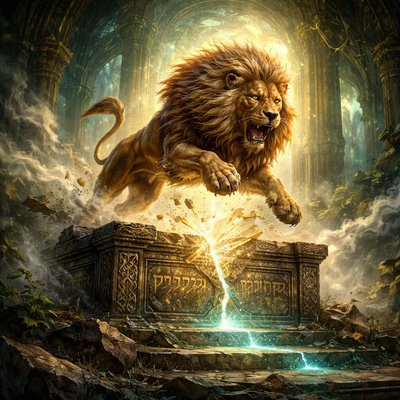
“Create an epic, dramatic depiction of the Four Horsemen of the Apocalypse from Revelation 6:1–8. Show four powerful riders emerging with force as the Lamb opens the seals in the heavens. Highlight the sacred Seals being opened—radiant, glowing, and releasing divine power. Set the scene in a storm-torn sky filled with swirling dark clouds, flashes of supernatural light, and a trembling landscape beneath their arrival. Use a dark yet vivid apocalyptic color palette with intense contrasts and dramatic, celestial lighting to emphasize the sense of unstoppable divine judgment. Style should blend high-detail fantasy realism with majestic biblical grandeur.”
A young boy, no older than 12, is intensely focused on climbing a steep, rocky hillside in the San Juan National Forest, specifically along the Piedra River. He is scrambling upwards on his hands and knees towards a cougar watching him approach from behind a bush. He is carrying a fishing rod held securely in one hand. The hill is covered in dry dirt and scattered small rocks with ponderosa pines and aspen trees in the landscape.  Far below, at the bottom of the hillside, a clear, meandering mountain stream (the Piedra River) sparkles under twilight. The atmosphere is quiet, tense, capturing the stark beauty of the remote Colorado wilderness.
Generate a realistic, eye-level photograph of a white 2002 Dodge Ram 2500 pickup truck, specifically a quad cab model, pulling a 33-foot Sunnybrook Sunset Creek travel trailer. The trailer must have distinct, painted aluminum siding. The entire rig is situated in the middle of heavy, slow-moving traffic on Interstate 40 (I-40) in Amarillo, Texas, with other cars and semi-trucks visible all around. The time of day is late afternoon, with the sun casting long shadows, and the sky is clear, typical of the Texas Panhandle. The focus is on the truck and trailer, showing the details of both vehicles amidst the bustling highway environment.
Neural Network Digital Art Style Style Transfer Example
A secret witches' party in 1920s Weimar Berlin. Opulent, crumbling ballroom, flickering gaslight, deep shadows. Flapper-era attendees in high fashion, subtle occult accessories. Decadent feast, champagne, cigarette smoke. A central antique table with mysterious ritual objects. Juxtaposition of extreme luxury and hidden magic. Cinematic realism, dark academia, chiaroscuro, rich jewel tones. Influenced by Babylon Berlin aesthetics.
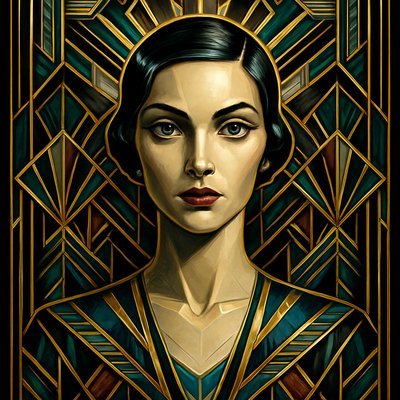
"A fashionable woman dressed in sophisticated, modest 1930s Great Depression era style, embodying an Art Deco aesthetic. She wears an elegant, tailored day dress or a chic suit-dress made of fine wool crepe or flowing rayon. The dress features a sleek, elongated silhouette with a defined natural waist, often belted. Details include a soft cowl neck or a demure V-neck with subtle draping, and perhaps gently puffed or structured sleeves. The hemline is at a modest mid-calf length, possibly with soft pleating or subtle flare. Her hair is styled in sculpted finger waves, and she wears a small, stylish cloche or tilted hat. She holds an elegant, tailored handbag and wears matching gloves. The setting is a refined Art Deco interior, perhaps a classy hotel lobby or a stylish office, with geometric patterns and warm, indirect lighting. The overall mood is one of poise, understated sophistication, and timeless chic."
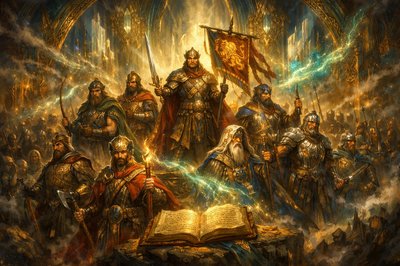
A profound and epic scene depicting the Vision of the Dry Bones from Ezekiel 37. In a desolate, vast valley, countless dry human bones are scattered, stark white and ancient. A powerful, divine wind (ruach) swirls through the valley, imbued with a sacred, ethereal glow, causing the bones to rattle and miraculously knit together. Tendons, flesh, and skin rapidly form over the skeletal structures, transforming them into fully-formed human figures. As the divine breath enters, the figures rise, not as individuals, but as a colossal, awe-inspiring army standing upright, gazing forward with renewed life and purpose. The sky above is dramatic, perhaps with stormy clouds breaking to reveal a divine light. The overall mood is one of miraculous resurrection, immense power, and hopeful restoration."
bicyle resting against a wall
urban street with city activity
portrait of two people together
wide landscape with natural scenery
still life arrangement of fruits and flowers
Art Style: Analytical Cubism, avant-garde oil painting style reminiscent of Picasso and Braque.

Subject: A dense, tangled thicket of Rhododendrons and Mountain Laurel bushes.

Composition & Details: The entire natural scene is deconstructed into overlapping geometric planes, fractured shards, and intersecting angles. There are no curved lines; everything is rendered in cubes, cones, and trapezoids.

    The Rhododendrons: Large, showy flower trusses are broken into faceted crystalline structures of deep magenta, rose pink, and violet blocks, looking like explosions of colored quartz rather than soft petals.

    The Mountain Laurels: The smaller, intricate flowers are rendered as complex, repeating geometric star-patterns and angular cups in white and pale pink with distinct red polygonal markings.

    Foliage & Branches: The thick, leathery leaves are fragmented green triangles and parallelograms overlapping each other, creating a sense of depth without traditional perspective. The woody stems and branches are jagged, intersecting brown and grey cylinders that shatter across the frame.

Color & Texture: A palette of muted earth tones—ochre, burnt umber, forest green, and slate grey—contrasted sharply with the jewel-toned facets of the flower colors. The finish should have a heavy, textured oil paint feel with visible palette knife marks and rough brushwork.
Art Style: Analytical Cubism, avant-garde oil painting style reminiscent of Picasso and Braque.

Subject: A dense, tangled thicket of Rhododendrons and Mountain Laurel bushes.

Composition & Details: The entire natural scene is deconstructed into overlapping geometric planes, fractured shards, and intersecting angles. There are no curved lines; everything is rendered in cubes, cones, and trapezoids.

    The Rhododendrons: Large, showy flower trusses are broken into faceted crystalline structures of deep magenta, rose pink, and violet blocks, looking like explosions of colored quartz rather than soft petals.

    The Mountain Laurels: The smaller, intricate flowers are rendered as complex, repeating geometric star-patterns and angular cups in white and pale pink with distinct red polygonal markings.

    Foliage & Branches: The thick, leathery leaves are fragmented green triangles and parallelograms overlapping each other, creating a sense of depth without traditional perspective. The woody stems and branches are jagged, intersecting brown and grey cylinders that shatter across the frame.

Color & Texture: A palette of muted earth tones—ochre, burnt umber, forest green, and slate grey—contrasted sharply with the jewel-toned facets of the flower colors. The finish should have a heavy, textured oil paint feel with visible palette knife marks and rough brushwork.
Art Style: Analytical Cubism, avant-garde oil painting style reminiscent of Picasso and Braque.

Subject: A dense, tangled thicket of Rhododendrons and Mountain Laurel bushes.

Composition & Details: The entire natural scene is deconstructed into overlapping geometric planes, fractured shards, and intersecting angles. There are no curved lines; everything is rendered in cubes, cones, and trapezoids.

    The Rhododendrons: Large, showy flower trusses are broken into faceted crystalline structures of deep magenta, rose pink, and violet blocks, looking like explosions of colored quartz rather than soft petals.

    The Mountain Laurels: The smaller, intricate flowers are rendered as complex, repeating geometric star-patterns and angular cups in white and pale pink with distinct red polygonal markings.

    Foliage & Branches: The thick, leathery leaves are fragmented green triangles and parallelograms overlapping each other, creating a sense of depth without traditional perspective. The woody stems and branches are jagged, intersecting brown and grey cylinders that shatter across the frame.

Color & Texture: A palette of muted earth tones—ochre, burnt umber, forest green, and slate grey—contrasted sharply with the jewel-toned facets of the flower colors. The finish should have a heavy, textured oil paint feel with visible palette knife marks and rough brushwork.
Art Style: Analytical Cubism, avant-garde oil painting style reminiscent of Picasso and Braque.

Subject: A dense, tangled thicket of Rhododendrons and Mountain Laurel bushes.

Composition & Details: The entire natural scene is deconstructed into overlapping geometric planes, fractured shards, and intersecting angles. There are no curved lines; everything is rendered in cubes, cones, and trapezoids.

    The Rhododendrons: Large, showy flower trusses are broken into faceted crystalline structures of deep magenta, rose pink, and violet blocks, looking like explosions of colored quartz rather than soft petals.

    The Mountain Laurels: The smaller, intricate flowers are rendered as complex, repeating geometric star-patterns and angular cups in white and pale pink with distinct red polygonal markings.

    Foliage & Branches: The thick, leathery leaves are fragmented green triangles and parallelograms overlapping each other, creating a sense of depth without traditional perspective. The woody stems and branches are jagged, intersecting brown and grey cylinders that shatter across the frame.

Color & Texture: A palette of muted earth tones—ochre, burnt umber, forest green, and slate grey—contrasted sharply with the jewel-toned facets of the flower colors. The finish should have a heavy, textured oil paint feel with visible palette knife marks and rough brushwork.
Neon-Futurism Digital Art Style, Bioluminescent Sci-Fi Cosmic Setting, Monolithic Scale. A perspective shot from behind the rider, looking toward a massive obstacle course in deep space.

The Rider & Bike Consistency: The lone motorcyclist—wearing the same sleek armored suit and helmet—is navigating the hubless "light-cycle" sportbike. The cyan and orange neon rings of the wheels reflect off the floating crystalline surfaces surrounding the road.

The Path & Eridanus: The glowing blue laser-grid highway winds through floating, geometric obsidian blocks. Weaving alongside and beneath the road is Eridanus, the Celestial River, rendered here as flowing, liquid fire. It isn't smoke or flame, but a stream of molten golden stars and glowing solar plasma that illuminates the dark undersides of the asteroids.

The Taurus Presence: Standing at the center of this labyrinth, spanning across the highway, is the monumental form of the Celestial Bull. He is composed of dense, glowing emerald and earth-toned circuitry. His massive, forward-curving horns are made of solid, brilliant starlight and form a natural "archway" that the highway passes beneath.

The Atmosphere: The scene is a high-contrast masterpiece. The cold, dark shadows of the geometric "city blocks" are cut through by the intense, flowing orange and gold light of the solar river.

Lighting: The "starlight horns" and the "river of fire" create a warm, amber glow that washes over the rider’s armor, contrasting sharply with the cool cyan glow of the bike's wheels.
Neon-Futurism Digital Art Style, Bioluminescent Sci-Fi Cosmic Setting, Perfectly Symmetrical Composition. A wide shot looking down a highway that seems to exist in two places at once.

The Rider & Bike Consistency: The lone motorcyclist—in the signature sleek, armored suit and helmet—is centered on the hubless "light-cycle." In this scene, the highway is made of a highly reflective, mirror-like black chrome. As the rider speeds forward, a perfect "ghost" reflection of the bike and rider is visible on the surface below, making it look like two twins are racing tire-to-tire.

The Path (The Dual Ecliptic): The glowing blue laser-grid highway is perfectly straight, but it is flanked by two parallel streams of data-light that pulse in sync, like a heartbeat.

The Gemini Presence: Looming over the path are the colossal Twin Titans. They are rendered as towering figures of translucent silver and electric-blue light. They are positioned facing each other across the highway, their hands nearly touching to form a grand "A-frame" archway over the rider.

The Atmosphere: The space between the Twins is filled with shimmering, binary code "snow" and swirling nebulae in shades of teal and indigo.

The Action: As the rider passes through the center of the Twins, the "ghost" reflection on the road glows with an intense orange light, while the real rider maintains the cyan glow, representing the two sides of a single soul.

Lighting: High-key neon reflections. The silver bodies of the Twins act as mirrors, catching the orange and cyan flashes from the bike and throwing them back across the cosmic void.
Neon-Futurism Digital Art Style, Bioluminescent Sci-Fi Cosmic Setting, Perfectly Symmetrical Composition. A wide shot looking down a highway that seems to exist in two places at once.

The Rider & Bike Consistency: The lone motorcyclist—in the signature sleek, armored suit and helmet—is centered on the hubless "light-cycle." In this scene, the highway is made of a highly reflective, mirror-like black chrome. As the rider speeds forward, a perfect "ghost" reflection of the bike and rider is visible on the surface below, making it look like two twins are racing tire-to-tire.

The Path (The Dual Ecliptic): The glowing blue laser-grid highway is perfectly straight, but it is flanked by two parallel streams of data-light that pulse in sync, like a heartbeat.

The Gemini Presence: Looming over the path are the colossal Twin Titans. They are rendered as towering figures of translucent silver and electric-blue light. They are positioned facing each other across the highway, their hands nearly touching to form a grand "A-frame" archway over the rider.

The Atmosphere: The space between the Twins is filled with shimmering, binary code "snow" and swirling nebulae in shades of teal and indigo.

The Action: As the rider passes through the center of the Twins, the "ghost" reflection on the road glows with an intense orange light, while the real rider maintains the cyan glow, representing the two sides of a single soul.

Lighting: High-key neon reflections. The silver bodies of the Twins act as mirrors, catching the orange and cyan flashes from the bike and throwing them back across the cosmic void.
The Rider & Bike: In the center foreground, a lone rider speeds away from the camera on a futuristic, hubless "light-cycle" sportbike. The bike features glowing cyan and orange wheel rings and leaves a vibrant neon reflection on the road. The rider wears a matching full-coverage armored suit with a sleek integrated helmet.

The Path: The road is a glowing blue laser-grid highway extending into the infinite horizon.

The Libra Gateway: Spanning the entire highway ahead is a monumental, rectangular cosmic archway or door frame. It is constructed of towering, glowing violet and deep blue digital circuitry and crystallized stardust.

The Scales: Hanging majestically from the center of the archway's lintel is a gigantic set of Cosmic Scales, suspended directly over the highway. The scales are perfectly balanced and composed of radiant golden energy and concentrated star clusters, shining brightly against the dark space background.
Luminous Storybook Illustration Style, Rich Color Saturation, Magical Realism. A dramatic, painterly scene capturing the precise moment of tragic error on an old, mossy stone bridge spanning a calm river at sunset.

The Reality (The Dog on the Bridge): A scruffy, hungry-looking terrier stands frozen mid-snarl on the edge of the bridge, looking downward. Its mouth is wide open in an aggressive bark. Suspended in mid-air, just inches below its open jaws, a real, decent-sized meaty bone is falling toward the water. The dog’s expression is a mix of greed and sudden confusion.

The Illusion (The Reflection): The surface of the river below is glassy and still, acting like a perfect, deceptive mirror. The reflection shows the same dog, but the reflected bone in its mouth appears impossibly huge, glistening, and juicier than the real one. The reflection is almost hypnotically bright, brighter than the reality above the water. The warm golden light of the setting sun makes the water shimmer invitingly.
Luminous Storybook Illustration Style, Rich Color Saturation, Magical Realism. A dramatic, painterly scene capturing the precise moment of tragic error on an old, mossy stone bridge spanning a calm river at sunset.

The Reality (The Dog on the Bridge): A scruffy, hungry-looking terrier stands frozen mid-snarl on the edge of the bridge, looking downward. Its mouth is wide open in an aggressive bark. Suspended in mid-air, just inches below its open jaws, a real, decent-sized meaty bone is falling toward the water. The dog’s expression is a mix of greed and sudden confusion.

The Illusion (The Reflection): The surface of the river below is glassy and still, acting like a perfect, deceptive mirror. The reflection shows the same dog, but the reflected bone in its mouth appears impossibly huge, glistening, and juicier than the real one. The reflection is almost hypnotically bright, brighter than the reality above the water. The warm golden light of the setting sun makes the water shimmer invitingly.
John Singer Sargent Oil Painting Style, Grand Manner Portraiture, Rich Impasto Brushwork. A full-length, elegant portrait of a society figure standing in a dramatic pose, wrapped in a voluminous, heavy emerald green velvet cloak.

The Fabric & Brushwork: The velvet is rendered with deep, saturated greens and near-black shadows, using sweeping, visible brushstrokes to convey weight and a luxurious, soft sheen where the light hits the folds. The ornate gold embroidery and bullion trim along the edges and collar are painted with thick, confident dashes of yellow ochre, burnt sienna, and bright white impasto that make the metal appear to sparkle and catch the light.

The Atmosphere: The lighting is dramatic and directional, coming from the upper left, highlighting the texture of the cloak and the gold. The background is a dark, atmospheric, loosely painted interior of a Gilded Age mansion, with indistinct antique furniture and deep shadows, ensuring all focus is on the figure and the magnificent garment. The overall mood is opulent and mysterious.
Epic Fantasy Illustration Style, Gritty Cinematic Concept Art, a dynamic, wide-angle action shot of a fierce battle amidst overgrown ancient ruins at twilight. A lone, hardened warrior clad in practical leather and partial plate armor is in a dynamic combat stance, dodging a massive vine strike. They wield a glowing, enchanted battleaxe that burns with orange fire, striking at the creature. The opponent is a colossal, serpentine Botanical Dragon construct made entirely of writhing, thick poison ivy vines, hairy root systems, and dense clusters of glossy, three-pointed leaves. The "dragon" rears up, its maw a tangled mass of thorns and dripping toxic sap, exhaling clouds of yellowish-green poisonous spores. Its eyes glow with a malevolent verdant light. The ground is treacherous swamp and broken stone. The lighting is dramatic and moody, highlighting the oily sheen of the poisonous leaves and the fire of the warrior's weapon. High detail on the plant textures.
A grand, cinematic wide-angle shot of Santa Claus and his reindeer team galloping across a shimmering, translucent Rainbow Bridge (Bifrost-style) in deep space.

The Bridge & Track: The bridge is a massive, glowing crystalline structure that functions like a celestial racetrack. It features distinct, glowing "cosmic lanes" separated by ribbons of starlight. Along the track are towering, ornate arches that serve as "gates" or "warps," pulsing with magical energy.

The Scene: In the center, Santa’s sleigh is a high-tech, reinforced wooden vessel, leaving a trail of sparkling gold dust. The reindeer are in mid-leap, looking powerful and heroic. They are just passing through a massive, crystalline gate that marks the entrance to a new galaxy.

Background: The background is a vibrant nebula of deep purples, teals, and golds. Distant stars and planets are visible, and the bridge itself stretches out into the infinite distance, winding through the stars.

Style Details:

Visual Style: Epic High-Fantasy meets Sci-Fi (Cyberpunk-adjacent lighting).

Lighting: Dramatic rim lighting on Santa and the reindeer from the glowing bridge below. The "gates" cast a bright, cinematic flare.

Atmosphere: Intense speed, magical wonder, and a sense of an epic, cross-universal mission.
a heartwarming scene under a decorated Christmas tree. Two fluffy kittens, one a ginger tabby and the other a calico, are joyfully playing in a chaotic pile of discarded Christmas wrapping paper, ribbons, and bows. The ginger kitten is tangled in a long piece of shiny red and green paper, batting at a curled ribbon. The calico kitten is pouncing from inside a torn open cardboard gift box, surrounded by crumpled tissue paper. Torn pieces of colorful wrapping paper (gold foil, snowman patterns, stripes) and empty gift tags are scattered everywhere on a plush rug. The Christmas tree above them is glowing with warm fairy lights and decorated with traditional ornaments. The background is a cozy living room with a fireplace. Sharp focus on the kittens' playful expressions and the texture of the crumpled paper.
Cinematic Wuxia Art Style, Fantasy Digital Art Style, Dark Fantasy, a dynamic anthropomorphic character portrait of the villain Jade Fox from Crouching Tiger, Hidden Dragon. She is rendered as a mature, grizzled fox with fur that is a mix of deep grey and a subtle, bitter jade-green tint. Her eyes are intensely human—sharp, vengeful, and cunning. She is dressed in dark, practical Qing Dynasty assassin's robes (similar to the male disguise she wears in the film), perhaps with a wide straw hat slung across her back. She is crouched low in a masterful martial arts stance on the curved, moonlit tiled roof of an ancient Chinese building. In one clawed paw, she wields the stolen, green-glowing Green Destiny sword, while the other paw is poised, ready to throw her signature poisoned needles. The background is a misty, sprawling city at night with bamboo silhouettes. The atmosphere is tense, dangerous, and steeped in ancient secrets.
A highly detailed, cinematic rendering of the colossal "Megamaid" spaceship from Spaceballs in its full, transformed state, hovering menacingly above the Earth.

Scene Focus: The Megamaid is positioned directly over the Earth's atmosphere, its massive vacuum nozzle extended. The nozzle is clearly pointed toward the planet's surface, and the mechanism is beginning to suck air out, creating a visible, swirling vortex.

The 'Firmament' Detail: Render the edge of Earth's atmosphere and sky not as a smooth fade to space, but with a highly stylized, almost cracked or crystalline appearance, suggesting the boundary is a literal "firmament." The vacuum is shown actively piercing this boundary, creating a localized, glowing "window of heaven" effect where the atmosphere is being forcefully breached and pulled into the machine.

Atmosphere: The scene is dark, cold space contrasting sharply with the bright, glowing Earth below and the massive, industrial metallic structure of the Megamaid. The lighting should be dramatic and epic, highlighting the ridiculous scale of the vacuum cleaner poised to steal a planet's air. Include a tiny, distant shot of the Eagle 5 (Winnebago) fleeing the scene.

Style: Photorealistic digital painting, sci-fi parody, emphasizing the immense, over-the-top scale and the comedic contrast between the mundane household item and the cosmic threat.