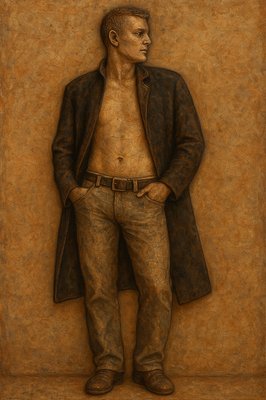
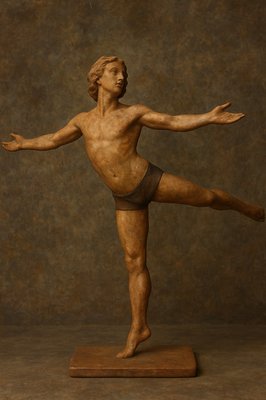
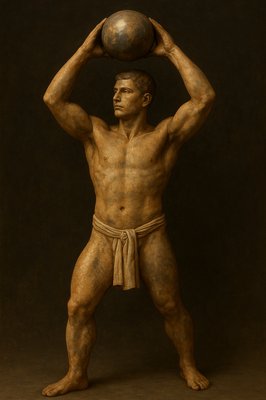
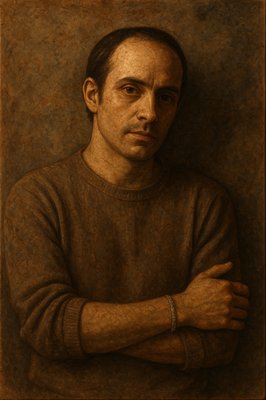
Creepy Children's Drawing Style Style Transfer Example Art

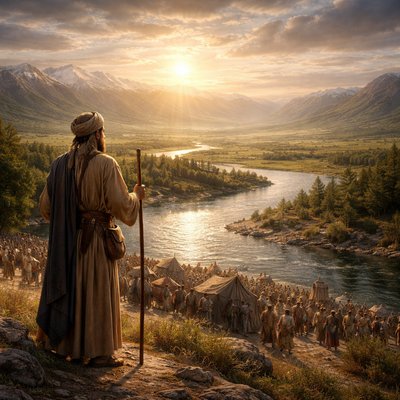
“Now after the death of Moses the servant of the LORD it came to pass, that the LORD spake unto Joshua the son of Nun, Moses' minister, saying, Moses my servant is dead; now therefore arise, go over this Jordan, thou, and all this people, unto the land which I do give to them, even to the children of Israel. Every place that the sole of your foot shall tread upon, that have I given unto you, as I said unto Moses. From the wilderness and this Lebanon even unto the great river, the river Euphrates, all the land of the Hittites, and unto the great sea toward the going down of the sun, shall be your coast.” (Joshua 1:1-4, KJV)
a group of young children holding up signs
A historically accurate and deeply somber depiction of the immediate aftermath of the Wounded Knee Massacre in December 1890. The scene captures the desolate, snow-covered landscape of the Pine Ridge Reservation. Focus on the fallen Lakota men, women, and children, scattered across the snow, their bodies still and tragic. A few surviving individuals are shown in postures of profound grief or shock, perhaps tending to the wounded. The distant presence of U.S. soldiers, heavily armed, stands as a stark and cold counterpoint to the devastation. The atmosphere is one of profound sorrow, loss, and the brutal silence of winter. The lighting is cold and muted, emphasizing the harshness of the environment and the tragedy of the event. The artistic style should be a realistic, painterly approach, evoking the historical period with unflinching honesty but without graphic sensationalism. The intent is to serve as a memorial to the victims and a historical testament to the tragic event."
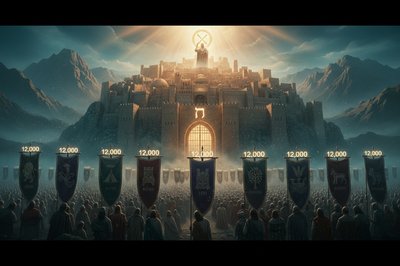
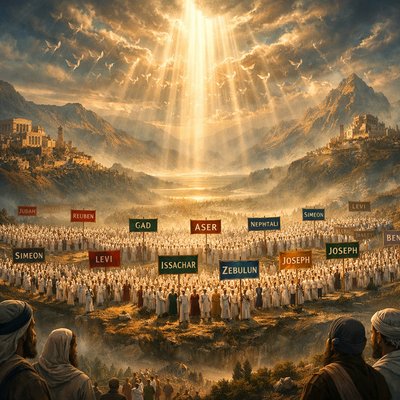
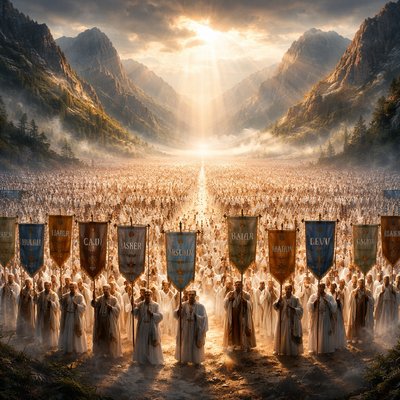
“And I heard the number of them which were sealed: and there were sealed an hundred and forty and four thousand of all the tribes of the children of Israel. Of the tribe of Juda were sealed twelve thousand. Of the tribe of Reuben were sealed twelve thousand. Of the tribe of Gad were sealed twelve thousand. Of the tribe of Aser were sealed twelve thousand. Of the tribe of Nepthalim were sealed twelve thousand. Of the tribe of Manasses were sealed twelve thousand. Of the tribe of Simeon were sealed twelve thousand. Of the tribe of Levi were sealed twelve thousand. Of the tribe of Issachar were sealed twelve thousand. Of the tribe of Zabulon were sealed twelve thousand. Of the tribe of Joseph were sealed twelve thousand. Of the tribe of Benjamin were sealed twelve thousand.” (Revelation 7:4-8, KJV)
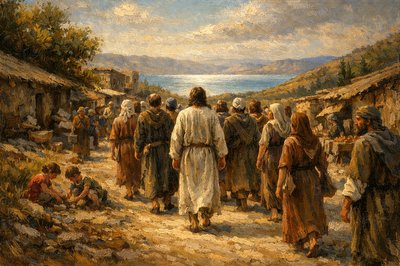
First century Palestine.  Jesus walks away from the camera down a road that goes through town with several of His disciples.   Jesus wears a plain robe like most ordinary men.  The other people are dressed like peasants, farmers, and tradesmen.  There are also women in the group, wearing plain, everyday clothing.  Some children are playing near the roadside.  The Sea of Galilee shines in the far distance.

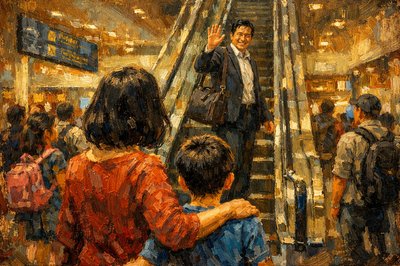
At the bustling Kuala Lumpur airport, Wing-Sun and his Mother say farewell to his father before he leaves for a six‐week business trip to London.  We see Wing Sun and his mother from the back, as Father stands on the escalator going up to his departure gate, and turns toward us to wave goodbye.  Many other passengers and children are standing around.  The airport is modern and well lit.
Looking from the street.  A 10 year old chinese girl watches as children crowd through the entrance gate at a private school in Kerinchi neighborhood, Kuala Lumpur.  Several teachers are also there.
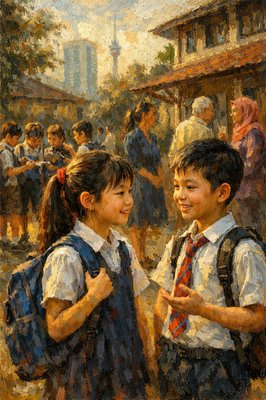
Morning scene. A 10 year old chinese girl and boy stand together talking in the schoolyard at a private school in Kerinchi neighborhood, Kuala Lumpur.  Several teachers are also there.  A circle of other children are standing off to the side playing games and comparing Pokemon cards, etc.
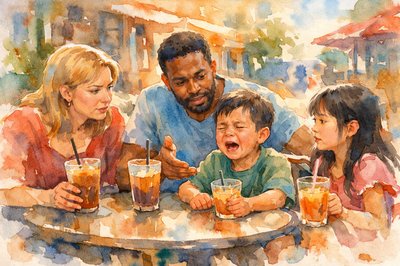
An outdoor scene on a street in town.  A White Mom and African-American Dad with their two Asian children are sitting at a sidewalk cafe.  The mood is warm and safe.  Everyone has a drink.  Mom and Dad are talking to the boy, who is making a fuss.  He is unhappy about something, and crying.  His sister is looking on.  Dad is about to say something.
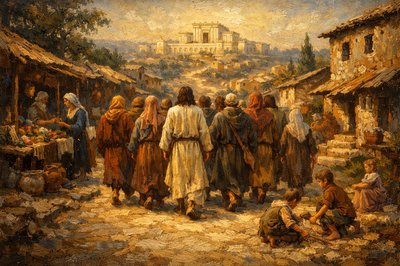
First century Palestine.  Jesus walks away from the camera along a road that goes through town with several of His disciples.   Jesus wears a plain robe like most ordinary men.  The other people are dressed like peasants, farmers, and tradesmen.  There are also women in the group, wearing plain, everyday clothing.  Some children are playing near the roadside.  Merchants are selling their goods in booths along the road.  There are houses along the road also.  The road goes upward toward the Temple in the far distance.
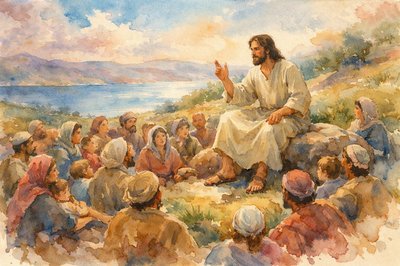
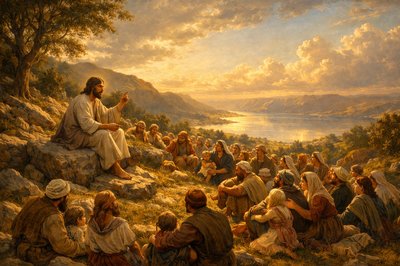
First century Palestine.  Jesus sits on a rock on a hillside teaching a large group of His disciples.  The Sermon on the Mount.  Jesus wears a plain robe like most ordinary men.  Jesus' face is kind, but intense, as He teaches. The other people are mostly peasants, farmers, and tradesmen.  There are also women present, wearing plain, everyday clothing.  Some couples have also brought their children.  The Sea of Galilee shines in the far distance.
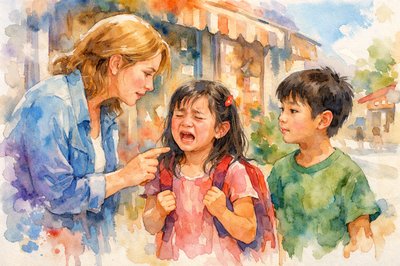
An outdoor scene on a street in town.  A White Mom with her two Asian (Chinese-looking) children are standing in front of a store. Mom is talking to the girl, who is making a fuss.  She is unhappy about something, and crying.  Her brother is looking on.  Mom is about to say something.
First century Palestine.  Jesus sits on a rock on a hillside teaching a large group of His disciples.  The Sermon on the Mount.  Jesus wears a plain robe like most ordinary men.  Jesus' face is kind, but intense, as He teaches. The other people are mostly peasants, farmers, and tradesmen.  There are also women present, wearing plain, everyday clothing.  Some couples have also brought their children.  The Sea of Galilee shines in the far distance.
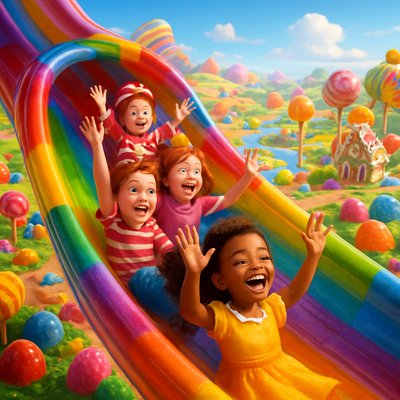
A thrilling and vibrant scene from the board game Candy Land, capturing the excitement of sliding down its biggest, most iconic slide. The slide itself is massive, curving, and made entirely of a glistening, colorful candy material, like a giant, rainbow-striped candy cane or smooth, translucent hard candy. A cheerful, diverse group of children (or classic Candy Land characters like Princess Lolly or Mr. Mint) are depicted in mid-descent, laughing and filled with joy, their hands in the air.

Below and around the slide, the fantastical landscape of Candy Land stretches out: rolling hills of frosting, lollipop trees, rivers of chocolate, gingerbread houses, and giant gumdrops. The colors are incredibly vivid and saturated, creating a truly fantastical and edible world. The perspective is dynamic, looking down the slide with the characters, enhancing the sense of speed and fun. The lighting is bright and cheerful, emphasizing the candy's sparkle and the overall joyful atmosphere.
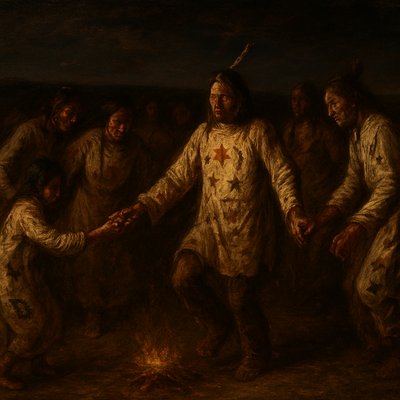
"A historically accurate depiction of a Ghost Dance, focusing on the late 19th-century context, specifically around 1890-1891. The scene shows Lakota (Sioux) or Northern Paiute people (specify one or include elements of both, but avoid anachronisms) participating in the ceremony.

Setting: A vast, open prairie or high desert landscape, under an expansive sky. The time of day could be dusk or night, with a prominent moon or stars, or a bright, clear day. Avoid overtly spiritual or ethereal elements like floating spirits unless explicitly requested for a later, more symbolic iteration. The focus should be on the earthly ceremony.

Participants: A circle of men, women, and children, hand-in-hand, moving in a slow, rhythmic shuffle or circular motion. Their faces show a mixture of devotion, hope, and determination. Some may have expressions of trance or deep concentration.

Attire:

    Ghost Dance Shirts/Dresses: Emphasize the unique Ghost Dance shirts and dresses, which were typically made of muslin or canvas. These garments should feature painted designs such as stars, crescents, birds (especially eagles or crows), buffalo, human figures, or crosses. The designs should appear hand-painted, not mass-produced.

    Hair and Adornments: Participants should have braided hair or wear it long. Some may wear feathers (e.g., eagle or hawk feathers) in their hair. Minimal traditional adornments, as the focus was often on the Ghost Dance shirt itself. Avoid overly elaborate or Hollywood-esque depictions of war bonnets unless relevant to a specific individual and context.

    Footwear: Moccasins or bare feet.

Action/Atmosphere:

    The dancers are moving in a counter-clockwise circle, with a central figure or a small group often leading.

    The overall mood is one of earnest prayer and communal spiritual effort. The dance should convey a sense of hope for renewal and the return of the old ways, rather than aggression or despair.

    There might be a central pole or small fire as a focal point, around which the dance takes place.

    Avoid any signs of direct conflict or violence; the Ghost Dance itself was a non-violent spiritual movement.

Specific Considerations for Accuracy:

    Wovoka's Influence: The teachings of Wovoka (the Northern Paiute prophet) emphasized peace, hard work, and the return of the buffalo and deceased ancestors. The scene should subtly reflect this hopeful, redemptive spirit.

    Regional Variations: If focusing on Lakota, consider their specific interpretations, which sometimes included more imagery related to their warrior traditions on the shirts, but still within the peaceful framework of the dance.

    Respectful Portrayal: Ensure the depiction is respectful and avoids any stereotypical or caricatured representations of Indigenous people. Focus on their human dignity and spiritual sincerity.
Pasta with fresh herbs and parmesan
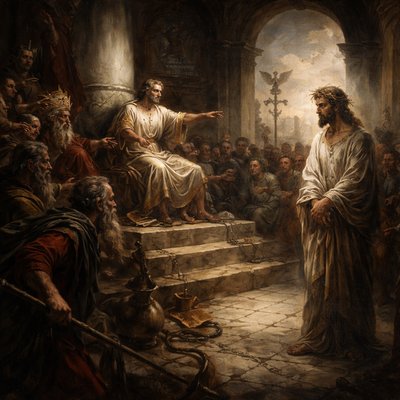
Luke 23:14 (KJV)
14 Said unto them, Ye have brought this man unto me, as one that perverteth the people: and, behold, I, having examined him before you, have found no fault in this man touching those things whereof ye accuse him:
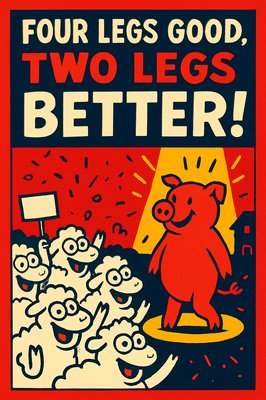
A simple cartoon-style propaganda poster drawn with bold, thick marker lines. Use a limited color palette of bright red, dark navy blue, white, and small black outlines. At the top, include a cool, bold propaganda-style font that looks hand-drawn with marker, saying: “FOUR LEGS GOOD, TWO LEGS BETTER!” Make the word “BETTER” much larger and more dramatic. In the center, show a group of white sheep with simple cartoon faces, wide excited eyes, and big happy smiles, cheering together. The sheep should look identical and drawn with simple marker outlines. They are looking at a pig who is walking upright on two legs in a bright spotlight. The pig should be glowing or surrounded by simple marker-drawn light rays to show fake admiration. Add confetti, simple celebration lines, and maybe one sheep holding a small sign. The background should use strong blocks of red and navy blue, like a simple propaganda poster. Include very simple outlines of a barn or farmhouse in the background. Overall style: cute cartoon, clean, bold marker strokes, easy shapes, limited colors, and a brainwashed, energetic vibe.
a painting of a man standing in a shower
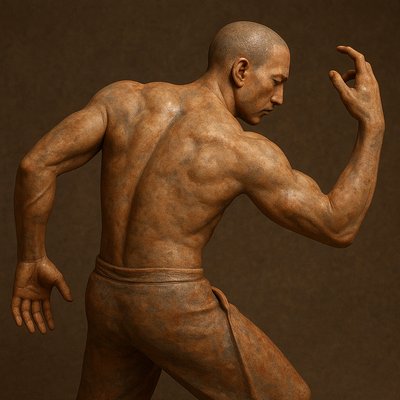
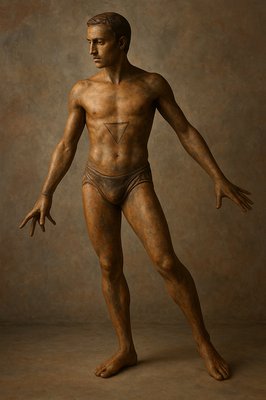
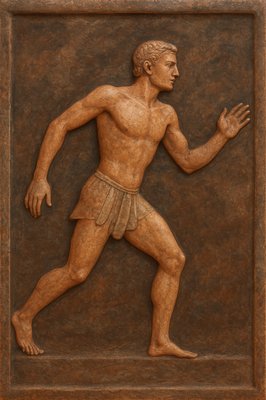
a statue of a man with no shirt on
a painting of a man with no shirt on
a wooden statue of a man doing a yoga pose
a statue of a man holding a ball on his head
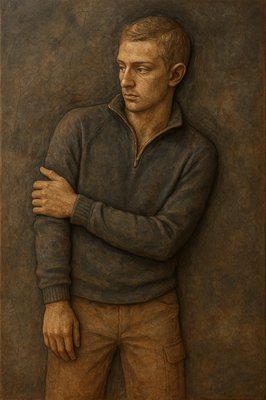
a painting of a man with his arms crossed
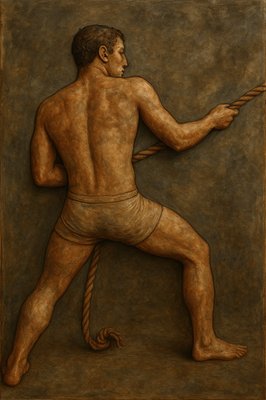
a painting of a man holding a rope
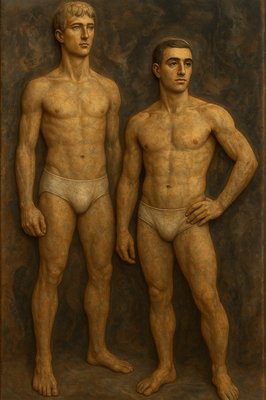
a couple of men standing next to each other
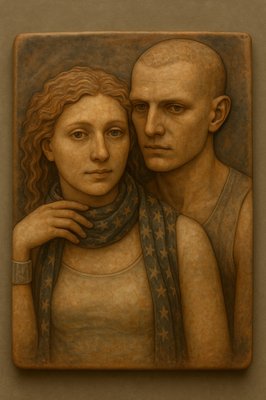
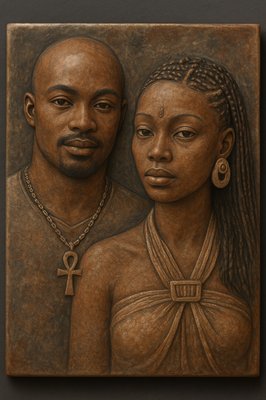
a painting of a man and a woman
a painting of a man with no shirt on
a painting of a man with his arms crossed
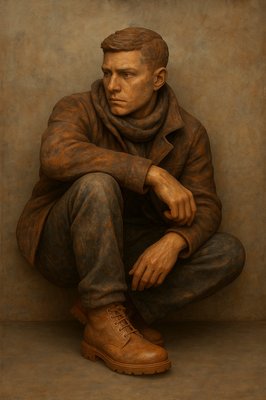
a painting of a man sitting on the ground
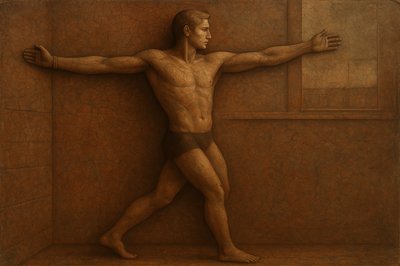
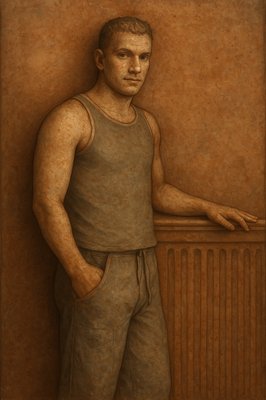
a painting of a man leaning against a wall
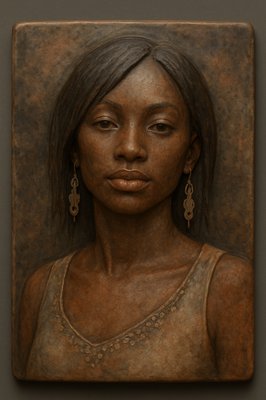
a painting of a woman with earrings on her head
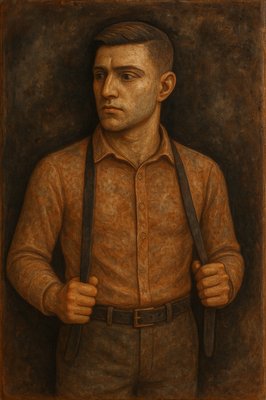
a painting of a man with suspenders and a shirt
house with front view
bicyle resting against a wall
urban street with city activity
still life with everyday objects
portrait of a person with expressive eyes