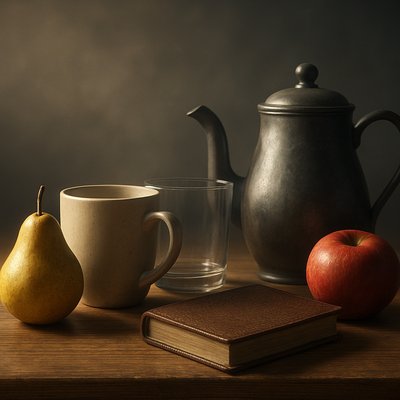
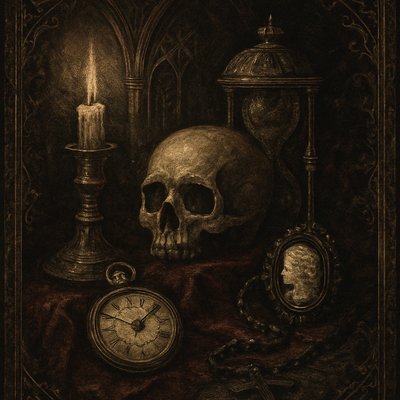
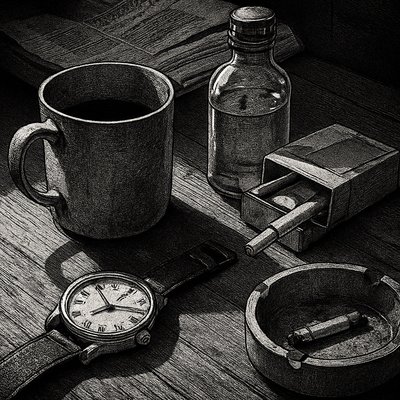
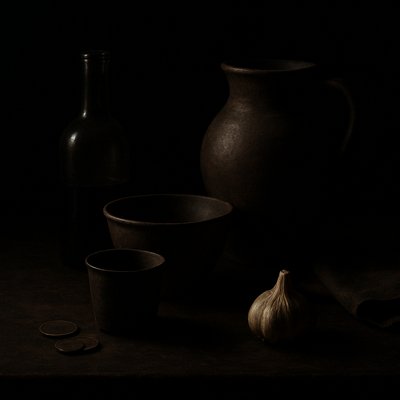
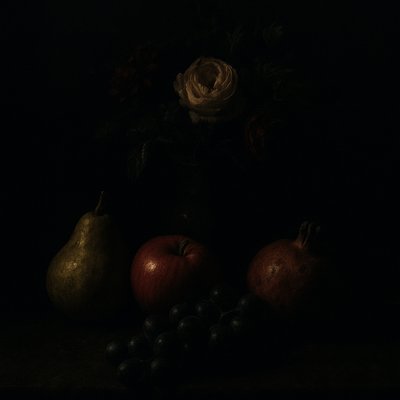
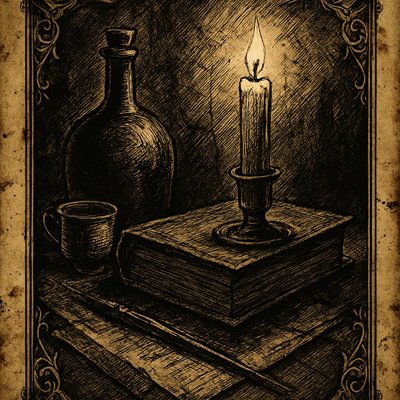
Cinematic Still Life Photography, Atmospheric Chiaroscuro Lighting, Macro Details. A High Stakes Chess Game Mid Match, Set Upon Art

a tree in nature
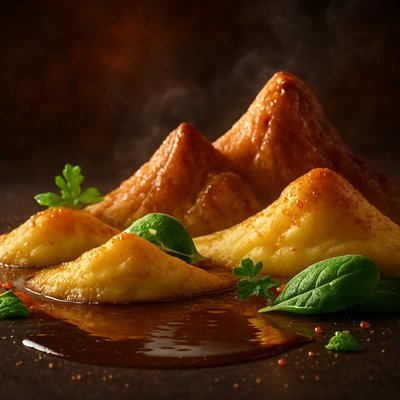
Food Photography Still Life Art Style Style Transfer Example
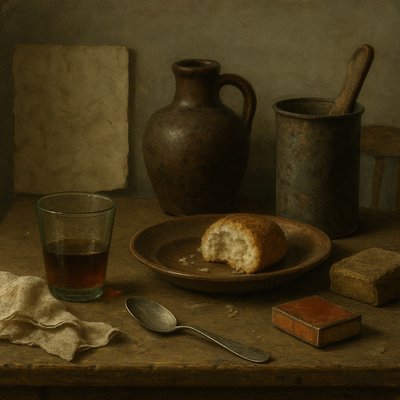
still life with everyday objects
bicyle resting against a wall
A red devil vampire crab with a red and black body and claws, and black legs, perched on a mossy stream bank, surrounded by glistening damp moss, wet leaf litter, jungle twilight, ultra-realistic macro wildlife photography, cinematic volumetric light,
urban street with city activity
animal standing in natural pose
portrait of a person with expressive eyes
still life with everyday objects
serene landscape with mountains and water
A dramatic, richly detailed scene in the ancient Babylonian royal court. In the foreground, three wise and esteemed Babylonian court magicians (Chaldeans/astrologers) are gathered around a central figure, possibly the king, or intently studying an inscribed clay tablet. They are dressed in opulent, finely woven robes of deep blues, reds, and gold, with elaborate turbans or headwear. Their long, meticulously styled beards and hair indicate their status and wisdom. One magician holds a stylus, another points to intricate cuneiform script on a clay tablet, and the third gazes thoughtfully, perhaps at a celestial chart or into a symbolic brazier. The background reveals the grand, awe-inspiring architecture of the Babylonian palace, with glazed brick walls adorned with depictions of mythical creatures (like the Ishtar Gate lions) and massive, ornate columns. The atmosphere is one of profound intellectual pursuit, ancient wisdom, and mystical interpretation under the watchful eyes of the king. epic fantasy art, cinematic lighting, ultra-detailed, dramatic shadows, mystical glow"
portrait of two people together
still life with everyday objects
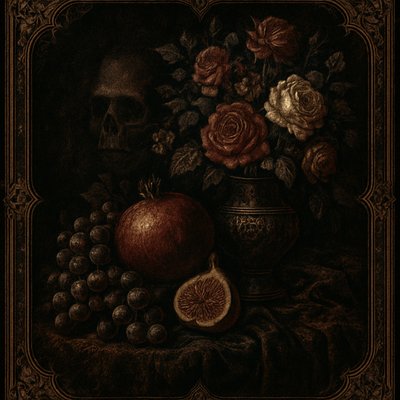
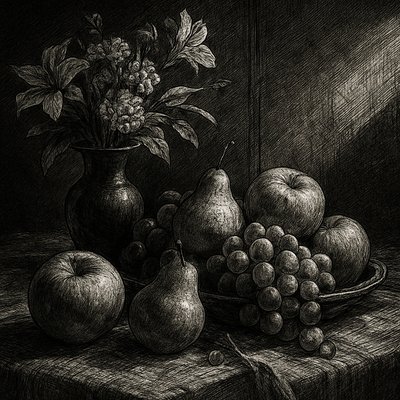
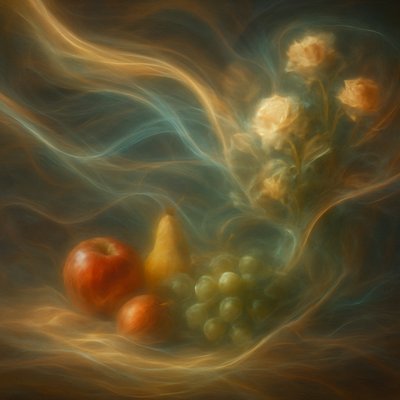
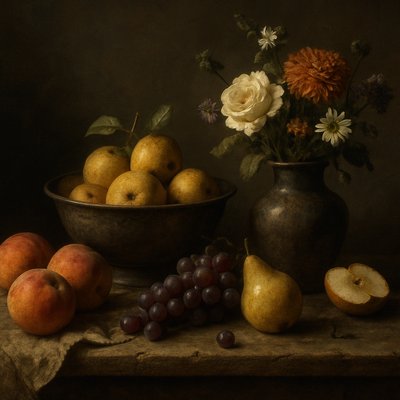
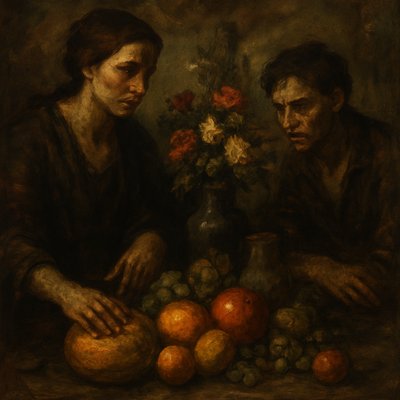
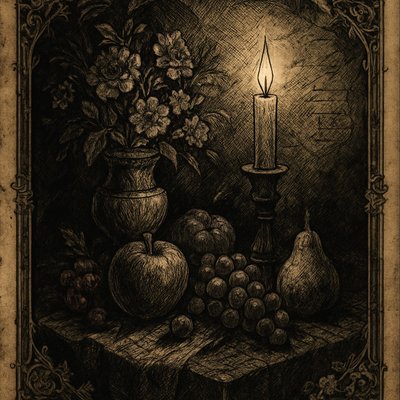
still life arrangement of fruits and flowers
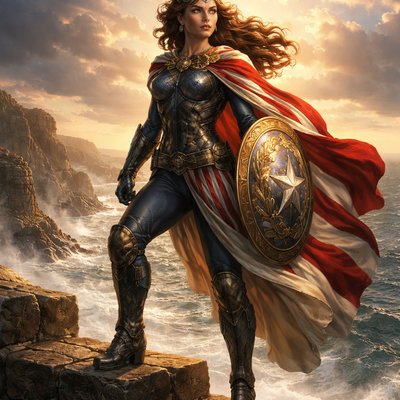
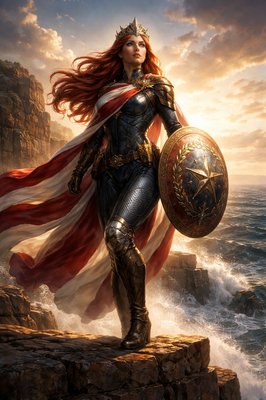
Epic Comic Book Cover Art, Neoclassical Painting Influence, Cinematic Lighting. A majestic female superhero, a fusion of Captain America's tactical practicality and the classical personification of "Columbia." She stands atop a rugged coastal fortress wall with the ocean crashing below at dawn.

The Costume: A blend of armored protection and classical drapery. She wears a fitted, reinforced tactical suit in deep ocean blue with scale-mail elements. Over this, a heavy, flowing crimson and white striped sash is draped toga-style across her chest and shoulder, held by a golden eagle clasp.

The Gear: Instead of a cowl, she wears a gleaming, stylized armored tiara/crown with a prominent central star, evoking classical statues. On her left arm is a massive, ornate round shield. The shield features a relief sculpture design: a central star surrounded by an anchor motif and an encircling laurel wreath, painted in muted red, white, blue, and antique gold. She wears heavy armored gauntlets and combat boots.

The Vibe: Powerful, statuesque, and inspiring. Her pose is strong and unwavering, looking out over the horizon. The lighting is golden sunrise light mixing with sea spray.
A massive Carolina wolf spider crouched on moonlit leaf litter at midnight, glossy charcoal body with subtle cream lance markings, eight reflective eyes glowing emerald from a flashlight beam, long hairy legs poised to strike, dewdrops on silk threads, hyper-realistic macro photography,
still life with everyday objects
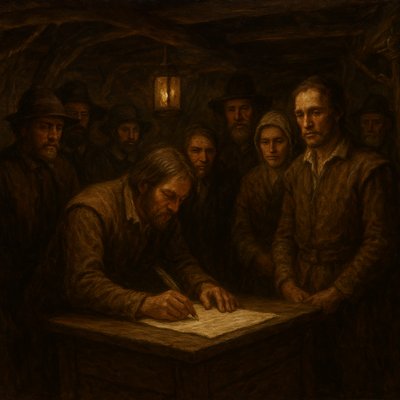
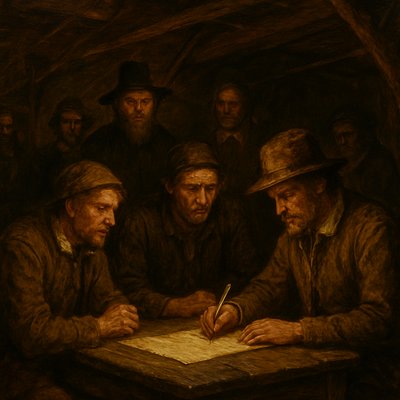
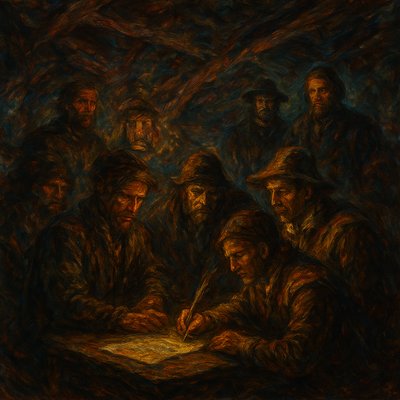
A historically accurate and atmospheric depiction of the signing of the Mayflower Compact aboard the ship in November 1620. The scene is set in the dimly lit, cramped cabin of the Mayflower, with the ship's timbers and rigging subtly visible, conveying the challenging conditions of the voyage. A simple table or chest serves as the signing surface. The primary focus is on a small group of the last individuals signing the document: specifically, the indentured servants (or 'strangers' not directly part of the Separatist congregation) approaching or at the table. Their expressions show a mix of weary determination, understanding of the necessity, and perhaps a hint of quiet apprehension or resignation to this new social contract, given their status. They are dressed in the plain, practical clothing typical of 17th-century commoners and laborers. Figures of prominent Pilgrims or 'Saints' (like William Bradford or John Carver) are visible in the background, observing the proceedings with a sense of gravity and leadership, but they are not the central focus. The lighting is low and warm, perhaps from a lantern, creating a chiaroscuro effect that highlights the faces of the signers. The atmosphere conveys the momentousness of the act under difficult circumstances, the diverse composition of the group, and the early seeds of self-governance in a new world. The artistic style is a realistic, historically detailed oil painting, capturing the solemnity and human element of this pivotal historical moment."
house with front view
wide landscape with natural scenery
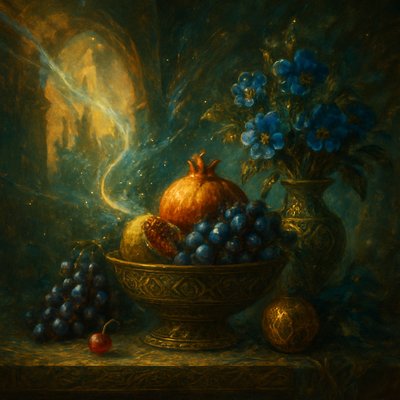
still life with everyday objects
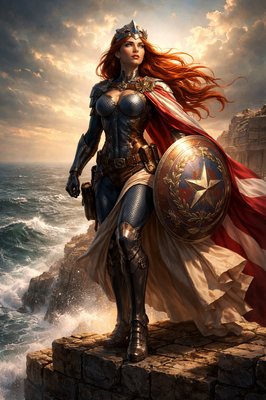
Epic Comic Book Cover Art, Neoclassical Painting Influence, Cinematic Lighting. A majestic female superhero with long red hair, a fusion of Captain America's tactical practicality and the classical personification of "Columbia." She stands atop a rugged coastal fortress wall with the ocean crashing below at dawn.

The Costume: A blend of armored protection and classical drapery. She wears a fitted, reinforced tactical suit in deep ocean blue with scale-mail elements. Over this, a heavy, flowing crimson and white striped sash is draped toga-style across her chest and shoulder, held by a golden eagle clasp. Modest styling.

The Gear: Instead of a cowl, she wears a gleaming, stylized armored tiara/crown with a prominent central star, evoking classical statues. On her left arm is a massive, ornate round shield. The shield features a relief sculpture design: a central star surrounded by an anchor motif and an encircling laurel wreath, painted in muted red, white, blue, and antique gold. She wears heavy armored gauntlets and combat boots.

The Vibe: Powerful, statuesque, and inspiring. Her pose is strong and unwavering, looking out over the horizon. The lighting is golden sunrise light mixing with sea spray.
Epic Comic Book Cover Art, Neoclassical Painting Influence, Cinematic Lighting. A majestic female superhero with long red hair, a fusion of Captain America's tactical practicality and the classical personification of "Columbia." She stands atop a rugged coastal fortress wall with the ocean crashing below at dawn.

The Costume: A blend of armored protection and classical drapery. She wears a fitted, reinforced tactical suit in deep ocean blue with scale-mail elements. Over this, a heavy, flowing crimson and white striped sash is draped toga-style across her chest and shoulder, held by a golden eagle clasp.

The Gear: Instead of a cowl, she wears a gleaming, stylized armored tiara/crown with a prominent central star, evoking classical statues. On her left arm is a massive, ornate round shield. The shield features a relief sculpture design: a central star surrounded by an anchor motif and an encircling laurel wreath, painted in muted red, white, blue, and antique gold. She wears heavy armored gauntlets and combat boots.

The Vibe: Powerful, statuesque, and inspiring. Her pose is strong and unwavering, looking out over the horizon. The lighting is golden sunrise light mixing with sea spray.
still life arrangement of fruits and flowers
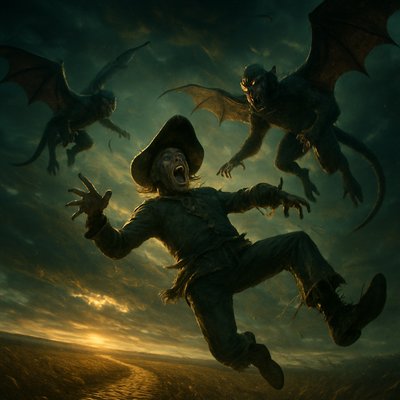
Cinematic Concept Art, High Fantasy Illustration, Wide Angle, Dynamic Lighting "A wide, epic shot of the Wizard of Oz Scarecrow being violently lifted into the air by three menacing, taloned Flying Monkeys descending from a swirling, dark-clouded sky. The Scarecrow is mid-scream, straw is bursting from a tear in his pant leg, and his hat is flying off. The scene is set over a desolate, golden field, with a tiny Yellow Brick Road receding into the distance. Volumetric light rays pierce the storm clouds, highlighting the terror and the tattered fabric of the monkeys' wings. Focal Length 24mm, 8K, highly detailed, dramatic shadow depth."
A historically accurate and atmospheric depiction of the signing of the Mayflower Compact aboard the ship in November 1620. The scene is set in the dimly lit, cramped cabin of the Mayflower, with the ship's timbers and rigging subtly visible, conveying the challenging conditions of the voyage. A simple table or chest serves as the signing surface. The primary focus is on a small group of the last individuals signing the document: specifically, the indentured servants (or 'strangers' not directly part of the Separatist congregation) approaching or at the table. Their expressions show a mix of weary determination, understanding of the necessity, and perhaps a hint of quiet apprehension or resignation to this new social contract, given their status. They are dressed in the plain, practical clothing typical of 17th-century commoners and laborers. Figures of prominent Pilgrims or 'Saints' (like William Bradford or John Carver) are visible in the background, observing the proceedings with a sense of gravity and leadership, but they are not the central focus. The lighting is low and warm, perhaps from a lantern, creating a chiaroscuro effect that highlights the faces of the signers. The atmosphere conveys the momentousness of the act under difficult circumstances, the diverse composition of the group, and the early seeds of self-governance in a new world. The artistic style is a realistic, historically detailed oil painting, capturing the solemnity and human element of this pivotal historical moment."
A triptych set of three drawings, continuous scene flowing left to right, left panel shows a palomino horse in the foreground on the far left side of the scene walking down a grassy slope toward a reflective teal-blue river in the Scottish Highlands with rocks and ferns around its hooves.
Center panel continues the same landscape as the horse now appears in the midground at the center of the scene standing at the river’s edge drinking from the reflective water beside ancient moss-covered stone ruins.
Right panel continues the scene as the horse appears far away in the distance on the far right side of the scene following the riverbank toward steep mist-covered mountains with dramatic sunlight breaking through the clouds, unified natural palette of greens golds and reflective teal blues, consistent cinematic lighting, shared horizon line, smoothf uninterrupted left-to-right visual flow with no panel separation.
still life arrangement of fruits and flowers
still life with everyday objects
A historically accurate and atmospheric depiction of the signing of the Mayflower Compact aboard the ship in November 1620. The scene is set in the dimly lit, cramped cabin of the Mayflower, with the ship's timbers and rigging subtly visible, conveying the challenging conditions of the voyage. A simple table or chest serves as the signing surface. The primary focus is on a small group of the last individuals signing the document: specifically, the indentured servants (or 'strangers' not directly part of the Separatist congregation) approaching or at the table. Their expressions show a mix of weary determination, understanding of the necessity, and perhaps a hint of quiet apprehension or resignation to this new social contract, given their status. They are dressed in the plain, practical clothing typical of 17th-century commoners and laborers. Figures of prominent Pilgrims or 'Saints' (like William Bradford or John Carver) are visible in the background, observing the proceedings with a sense of gravity and leadership, but they are not the central focus. The lighting is low and warm, perhaps from a lantern, creating a chiaroscuro effect that highlights the faces of the signers. The atmosphere conveys the momentousness of the act under difficult circumstances, the diverse composition of the group, and the early seeds of self-governance in a new world. The artistic style is a realistic, historically detailed oil painting, capturing the solemnity and human element of this pivotal historical moment."
still life arrangement of fruits and flowers
A koi pond seen from above, orange and white koi fish swimming among lily pads, clear water with subtle ripples, fallen cherry blossom petals floating on the surface, dappled sunlight
still life
still life