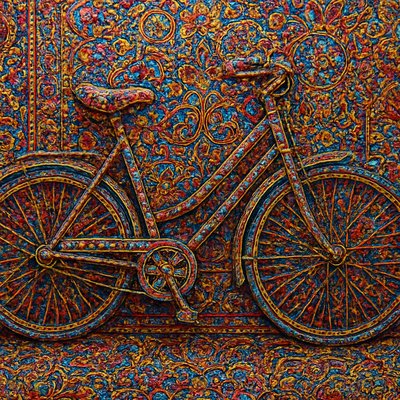
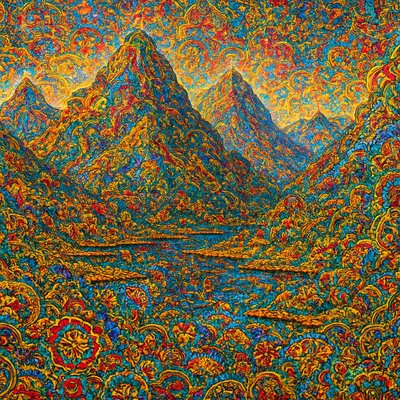
Caravaggio Realism Baroque Art Style Style Transfer Example Art

Urban poverty depicted in a tenement setting in the art style of Social Realism --v 6.1
Farmers struggling with drought conditions in the art style of Social Realism --v 6.1
Still life of old books and writing instruments in the art style of Realism --v 6.1
An incredibly detailed and profound scene depicting the Vision of the Dry Bones from Ezekiel 37. The immediate foreground features a stark, highly detailed close-up of a single ancient human skull, its empty eye sockets gazing out, perfectly rendered with realistic bone texture. Beyond this skull, stretching into the mid-ground, a vast, desolate valley is entirely carpeted with an immense, sprawling expanse of countless other ancient, stark white human bones and skulls. A powerful, divine wind (ruach), emanating an ethereal, sacred glow, swirls violently through this boneyard. This divine energy causes the bones to dramatically rattle, shift, and miraculously knit together, forming complete skeletons. Further in the background, some of these skeletons have already begun to rapidly form tendons, flesh, and skin, starting to rise as part of a nascent, colossal army. The sky above is dramatic and ominous, with streaks of divine light breaking through thick clouds. The overall mood is one of overwhelming desolation, followed by the initial, awe-inspiring moments of miraculous transformation and the promise of life."
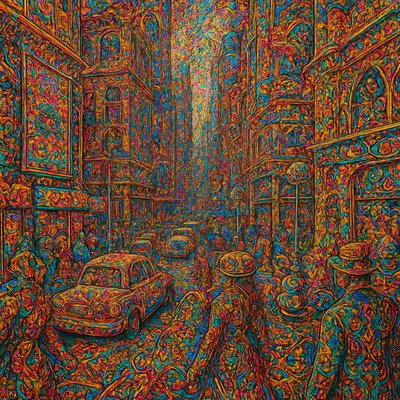
A low-angle, hyper-detailed tableau of the Mad Hatter's Tea Party, viewed under a dark, star-filled sky. The Mad Hatter sits at the table, his features not quite human, but constructed entirely from brilliant indigo and gold cosmic dust, representing the constellation Lepus. His top hat is a vortex of nebula, and one eye burns intensely—a specific star named "The Mad."

The Hatter is caught mid-sentence, demanding, "Why is a raven like a writing-desk?" As he speaks, his hands, which were merely starry, begin to shed their light, and the true form is revealed: the lower half of his coat and chair morph into coiling, dark serpentine scales, twisting around the table leg. The March Hare and Dormouse are frozen in terror. Above the table, a Raven made of pitch-black night materializes, its shadow falling directly over the Hatter. The entire scene is vibrating with the furious energy of a creature—the ancient serpent—who knows his time has been irrevocably stopped.

Style: Cinematic dark fantasy, astronomical realism, oil painting texture, emphasis on the contrast between the cold cosmic starlight and the dark, furious energy of the serpentine transformation.
Stencil art with political message in the art style of Street Art --v 6.1
Portrait of a coal miner after a long shift in the art style of Social Realism --v 6.1
Factory workers during the Great Depression in the art style of Social Realism --v 6.1
Urban poverty depicted in a tenement setting in the art style of Social Realism --v 6.1
Protest scene highlighting social injustice in the art style of Social Realism --v 6.1
Factory workers during the Great Depression in the art style of Social Realism --v 6.1
Still life of old books and writing instruments in the art style of Realism --v 6.1
Meme-inspired fine art piece in the art style of Post-Internet Art --v 6.1
Readymade object presented as art in the art style of Dada --v 6.1
physical car concept in the art style of lowbrow art --v 6.1
Portrait of a coal miner after a long shift in the art style of Social Realism --v 6.1
physical car concept in the art style of lowbrow art --v 6.1
A solitary and intensely symbolic image depicting a magnificent, large black raven as the embodiment of judgment from Proverbs 30:17. The raven is portrayed with immense detail and an almost mythical presence, its feathers dark and glossy, its eyes glowing with a profound, ancient wisdom or stern disapproval. It is perched on a jagged, weathered tree branch or a sharp, craggy rock formation within a desolate, mist-shrouded valley.

The background is stark and emphasizes desolation, featuring barren, rocky slopes and a stormy, oppressive sky with heavy, dark clouds. The lighting is dramatic and stark, perhaps a single shaft of pale, cold light illuminating the raven, casting long, deep shadows around it. The focus is entirely on the raven, its sharp beak, and its piercing gaze, conveying a sense of ultimate, inescapable consequence. The overall mood is one of profound, somber judgment and the quiet, heavy weight of natural law, expressed through the powerful symbolism of the bird."
Conceptual restaurant as an artwork in the art style of Relational Art --v 6.1
Backstage at a vaudeville theater in the art style of Ashcan School --v 6.1
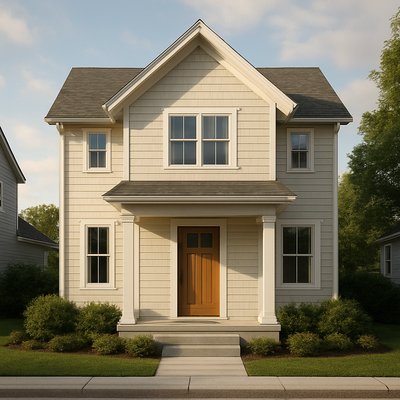
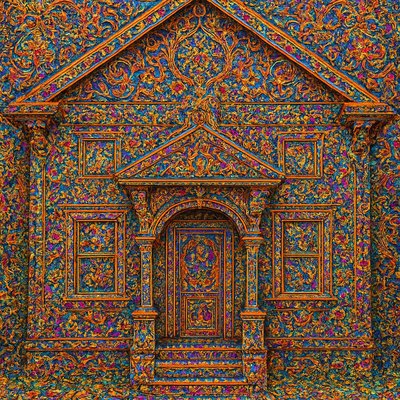
house with front view
bicyle resting against a wall