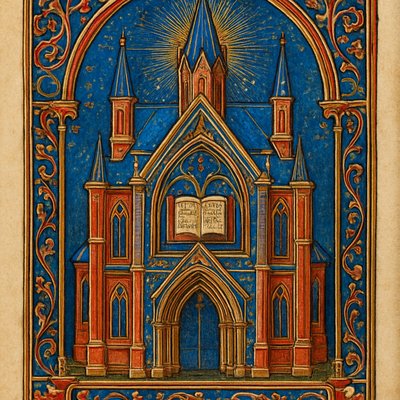
Annunciation With Donor Figures In Ornate Interior Art

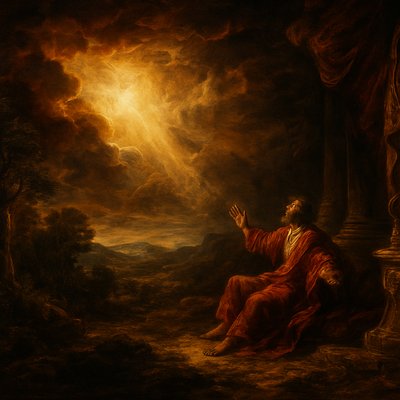
A surreal, double-exposure art piece. Inside, a detailed architectural interior of a temple with a table of "shewbread" and a glowing altar. Outside and overlapping, a vast, swirling nebula and "heaven of heavens" filled with stars and cosmic light, suggesting the infinite nature of God. The temple walls seem translucent, unable to contain the celestial glory. Ethereal, oil painting style, deep blues and glowing golds, inspired by Rembrandt’s lighting. “And Solomon sent to Huram the king of Tyre, saying, As thou didst deal with David my father, and didst send him cedars to build him an house to dwell therein, even so deal with me. Behold, I build an house to the name of the LORD my God, to dedicate it to him, and to burn before him sweet incense, and for the continual shewbread, and for the burnt offerings morning and evening, on the sabbaths, and on the new moons, and on the solemn feasts of the LORD our God. This is an ordinance for ever to Israel. And the house which I build is great: for great is our God above all gods. But who is able to build him an house, seeing the heaven and heaven of heavens cannot contain him? who am I then, that I should build him an house, save only to burn sacrifice before him?” (2 Chronicles 2:3-6, KJV)
Art Style: A fusion of "Mystical Sci-Fi" and "Cinematic Fantasy Concept Art." The look should be detailed, textured, but dominated by glowing energy effects. Think Dune meets high-fantasy magic.

The Subject: A woman with incredibly long, fiery red hair. Her hair isn't just resting; it appears almost weightless, billowing slightly around her as if charged with static electricity or magic, glowing with a faint internal copper light.
The "Tent" (The Force Field): She is inside a structure that resembles the frame of a large expedition tent. However, instead of fabric, the spaces between the poles are filled with a shimmering, translucent energy barrier.

    Appearance: The field is a dome of rippling, geometric light patterns (amber, gold, and electric blue) that hum with power. It looks solid yet transparent.

    The Action (The Protection): The force field is actively working. Outside the tent, a fierce, dark environmental threat—perhaps a swirling dust storm full of jagged rocks, or shadowy, ethereal creatures—is bombarding the outside of the dome.

    The Impact: Where the threat hits the tent, the energy field flares brightly, sending out crackling sparks of light, deflecting the danger completely.

Atmosphere & Setting: The interior of the tent is calm and warmly lit by the energy field, while the outside is chaotic and dark. The setting is a rugged, alien canyon at twilight.
Art Style: A fusion of "Mystical Sci-Fi" and "Cinematic Fantasy Concept Art." The look should be detailed, textured, but dominated by glowing energy effects. Think Dune meets high-fantasy magic.

The Subject: A woman with incredibly long, fiery red hair. Her hair isn't just resting; it appears almost weightless, billowing slightly around her as if charged with static electricity or magic, glowing with a faint internal copper light.
The "Tent" (The Force Field): She is sitting cross-legged inside a structure that resembles the frame of a large expedition tent. However, instead of fabric, the spaces between the poles are filled with a shimmering, translucent energy barrier.

    Appearance: The field is a dome of rippling, geometric light patterns (amber, gold, and electric blue) that hum with power. It looks solid yet transparent.

    The Action (The Protection): The force field is actively working. Outside the tent, a fierce, dark environmental threat—perhaps a swirling dust storm full of jagged rocks, or shadowy, ethereal creatures—is bombarding the outside of the dome.

    The Impact: Where the threat hits the tent, the energy field flares brightly, sending out crackling sparks of light, deflecting the danger completely.

Atmosphere & Setting: The interior of the tent is calm and warmly lit by the energy field, while the outside is chaotic and dark. The setting is a rugged, alien canyon at twilight.
A butterfly emerging
a tree in nature
a tree in nature
house with front view
Banquet table with oysters and wine
A high-contrast scene showing discarded ornate gold armor and a scarlet cape lying on the muddy riverbank. In the background, the silhouette of the man is chest-deep in the river, looking up at the sky in surrender. The water is churning and alive. Rich textures of metal vs. water vs. mud. 8k resolution, historical realism, profound storytelling, theme of humility and healing.
a painting of a man with his hands in the air
Macro Product Photography, Museum Archival Style, Warm Lantern Light. A detailed photograph of a complete, hand-carved set of unique pirate-themed chess pieces arranged loosely on a weathered wooden captain's desk alongside old charts and a compass. The pieces are crafted from a mix of dark aged oak, tarnished cast brass, and accents of stolen gold and rough rubies.

The Ranks:

    The King (Captain): The tallest piece, an imposing Pirate Captain figure with a grand tricorn hat, a long beard, a detailed cutlass, and one boot resting on a miniature treasure chest.

    The Queen (Quartermaster/Pirate Lord): A fierce, elegant female figure with dual flintlock pistols, a flowing coat, and a stern, commanding expression.

    The Bishops (Navigators/Voodoo Priests): Hunched figures holding sextants and mystical skull staffs, adorned with beads and feathers.

    The Knights (Boarding Party): Dynamic pieces showing a pirate mid-swing on a rope, holding a grappling hook and a boarding axe.

    The Rooks (The Ship/Fort): Heavy, fortified pieces shaped like the barnacle-covered stern castle of a galleon, bristling with tiny cannons.

    The Pawns (The Crew): A group of smaller, identical scruffy deckhands holding mops, buckets, and simple daggers.

The focus is sharp on the intricate textures of the wood grain and metalwork.
Macro Product Photography, Museum Archival Style, Warm Lantern Light. A detailed photograph of a complete, hand-carved set of unique pirate-themed chess pieces arranged loosely on a weathered wooden captain's desk alongside old charts and a compass. The pieces are crafted from a mix of dark aged oak, tarnished cast brass, and accents of stolen gold and rough rubies.

The Ranks:

    The King (Captain): The tallest piece, an imposing Pirate Captain figure with a grand tricorn hat, a long beard, a detailed cutlass, and one boot resting on a miniature treasure chest.

    The Queen (Quartermaster/Pirate Lord): A fierce, elegant female figure with dual flintlock pistols, a flowing coat, and a stern, commanding expression.

    The Bishops (Navigators/Voodoo Priests): Hunched figures holding sextants and mystical skull staffs, adorned with beads and feathers.

    The Knights (Boarding Party): Dynamic pieces showing a pirate mid-swing on a rope, holding a grappling hook and a boarding axe.

    The Rooks (The Ship/Fort): Heavy, fortified pieces shaped like the barnacle-covered stern castle of a galleon, bristling with tiny cannons.

    The Pawns (The Crew): A group of smaller, identical scruffy deckhands holding mops, buckets, and simple daggers.

The focus is sharp on the intricate textures of the wood grain and metalwork.
a painting of a bald man with a blue pacific denim shirt
A porcelain doll
A biblical scene of Moses anointing Aaron with oil, inspired by the Book of Exodus. Moses, an older man with a long white beard, is holding a golden goblet and pouring oil directly onto Aaron's uncovered head. Moses is not wearing glasses, and his hands do not touch Aaron's head. Aaron is a man in his 50s with a full beard, dressed in ornate priestly robes with a richly colored ephod and no head covering. The oil flows visibly onto Aaron's head, beard, and garments. The setting is a desert-like environment near the Tabernacle, with woven curtains in the background, illuminated by warm, divine light. The scene reflects a biblical atmosphere with historically accurate clothing and details.
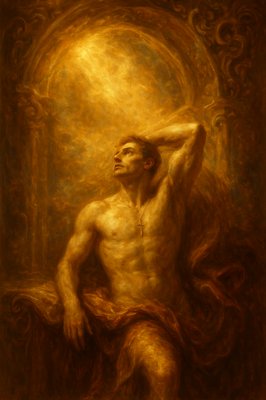
a painting of a man with a cross on his chest
urban street with city activity
animal standing in natural pose
still life with everyday objects
a painting of a bull standing in a room
wide landscape with natural scenery
Neon-Futurism Digital Art Style, Bioluminescent Sci-Fi Cosmic Setting. A sleek, futuristic scene set deep in the interstellar void, with absolutely no Earth terrain, asphalt, or atmosphere visible. The Path (The Ecliptic): The "road" is a floating, translucent highway constructed entirely of glowing blue and orange laser grids and condensed stardust, arcing through infinite dark space with dynamic curves. The Rider: A lone rider on a futuristic, hubless "light-cycle" sportbike speeds along this cosmic path at high velocity. The rider is fully encased in a sleek, glowing armored suit with an integrated full-face helmet, leaving a vibrant neon light trail behind them, evading danger with sharp maneuvers. The Constellation (Intense Scorpio and Ophiuchus): Dominating and towering overhead is the immense celestial symbol of Scorpio: a massive, menacing scorpion made of deep crimson glowing stars, luminous energy threads, and bioluminescent nebula plasma, with razor-sharp claws extended and a long curved tail with a glowing stinger poised to strike downward. Directly intertwined and looming even larger above is the abstract form of Ophiuchus, the Serpent Bearer—no full humanoid figure, but represented by powerful restraining arms of shimmering silver and emerald stardust energy that grip and coil around the great serpent (a huge, writhing, translucent serpent of deep green and indigo nebulae). The serpent's body twists through the scene, partially merging with or being restrained from the scorpion's stinger, creating a dramatic overhead struggle. The floating cosmic highway arcs directly under this chaotic overhead clash, so the rider speeds beneath the extended claws of Scorpio while evading their grasp, passing through the shadows of the restrained serpent and Ophiuchus's holding energy as if threading a needle of peril and balance. Radiating intense deep red, crimson, emerald, indigo, and silver lights against the swirling nebula-filled void. Ultra-detailed, cinematic tension, sense of motion and imminent danger.
house with front view
portrait of a person with expressive eyes
a tree in nature
a tree in nature
a tree in nature
a tree in nature
a tree in nature
A historically accurate and atmospheric depiction of the signing of the Mayflower Compact aboard the ship in November 1620. The scene is set in the dimly lit, cramped cabin of the Mayflower, with the ship's timbers and rigging subtly visible, conveying the challenging conditions of the voyage. A simple table or chest serves as the signing surface. The primary focus is on a small group of the last individuals signing the document: specifically, the indentured servants (or 'strangers' not directly part of the Separatist congregation) approaching or at the table. Their expressions show a mix of weary determination, understanding of the necessity, and perhaps a hint of quiet apprehension or resignation to this new social contract, given their status. They are dressed in the plain, practical clothing typical of 17th-century commoners and laborers. Figures of prominent Pilgrims or 'Saints' (like William Bradford or John Carver) are visible in the background, observing the proceedings with a sense of gravity and leadership, but they are not the central focus. The lighting is low and warm, perhaps from a lantern, creating a chiaroscuro effect that highlights the faces of the signers. The atmosphere conveys the momentousness of the act under difficult circumstances, the diverse composition of the group, and the early seeds of self-governance in a new world. The artistic style is a realistic, historically detailed oil painting, capturing the solemnity and human element of this pivotal historical moment."
house with front view
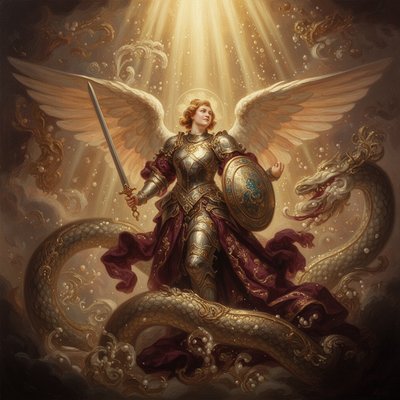
a painting of a man with angel wings