A Yokai Spirit Art

Romanticism Art Style, a profoundly emotional and majestic painting inspired by Psalm 8:3-6. The scene captures a vast, sweeping, and dramatic night sky, filled with an awe-inspiring celestial display of a luminous, prominent moon and countless brilliant stars, depicted with the grandeur and depth characteristic of Romantic landscape painting. In the foreground, set against the overwhelming scale of the cosmos, stands a solitary long red-haired woman, her back partially to the viewer or her face upturned in profound contemplation. She is small in the frame, emphasizing the immense scale, dressed in simple, flowing attire, positioned on a rugged, subtle earthly vantage point like a mountain overlook. Her posture and presence evoke a deep sense of humility, wonder, and spiritual awe at God's creation. The painting is dominated by dramatic chiaroscuro, with the intense glow of the moon and stars piercing through deep, atmospheric shadows. Focus on the sublime scale of the cosmos, the emotional resonance of the human figure contemplating the divine works, and the deep, spiritual awe that pervades the scene, reflecting God's majesty and mindfulness of humanity.
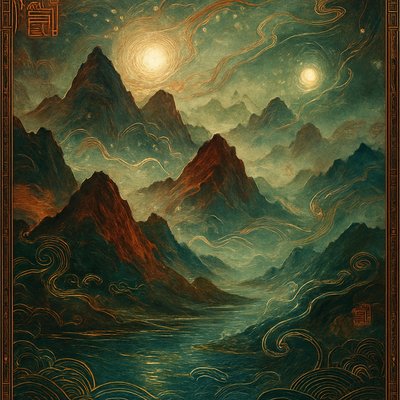
wide landscape with natural scenery
Renaissance Painting Art Style, Symbolism Art Style, a profoundly joyful and uplifting painting inspired by Nehemiah 8:10, emphasizing "the joy of the Lord is your strength." The scene depicts a vibrant, bustling gathering of diverse ancient Israelites, engaged in a communal feast and celebration. People of all ages are shown with radiant, happy faces, some laughing heartily, others sharing food and drinks, and many with expressions of deep, peaceful contentment and spiritual upliftment. A few figures have their heads tilted upwards or hands gently raised, as if receiving a subtle, warm, golden divine light that bathes the scene, emanating from above and symbolizing the presence and strength of the Lord. The setting is an outdoor gathering, perhaps near a restored wall or a communal square, filled with rich textures of food, drink, and colorful garments. The atmosphere is one of shared delight, spiritual renewal, and unbreakable strength. Focus on the authentic, diverse expressions of joy on each individual's face, the sense of vibrant community and shared celebration, and the ethereal, empowering golden light that symbolizes the Lord's strength.
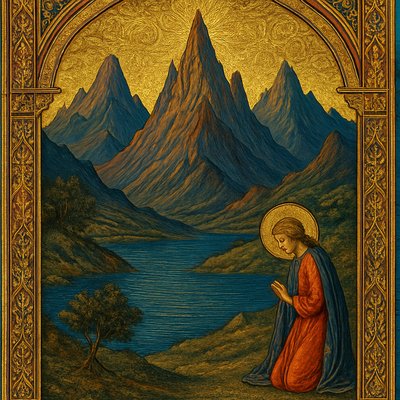
profound image representing the verse Psalm 119:15. The scene depicts a solitary lady with flowing, long red hair, in a posture of deep contemplation or meditation. She is seated or kneeling in a peaceful, natural setting – perhaps on a gentle hillside overlooking a tranquil landscape, by a calm body of water, or within a serene garden. Her expression is focused and reverent.
Before her, or subtly integrated into the scene, is an ancient scroll or open book, glowing with a soft, ethereal light, symbolizing God's precepts. Her posture and gaze are directed towards this source of wisdom, with a clear sense of 'fixing her eyes' on its profound truth.

Extending from the scroll/book, or subtly woven into the distant landscape, are luminous, ethereal pathways or guiding lights, representing 'Your ways' (God's ways). These pathways are clear and inviting, leading towards a bright, hopeful horizon, symbolizing divine guidance and understanding. The atmosphere is tranquil and reflective, bathed in soft, warm, golden light (perhaps dawn or dusk), signifying clarity and spiritual insight. The overall mood is one of peace, deep wisdom, divine guidance, and focused devotion, rendered with a beautiful, luminous quality."
house with front view
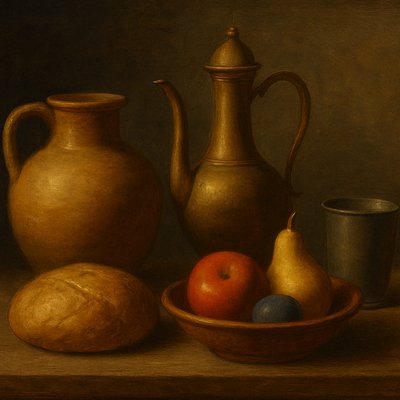
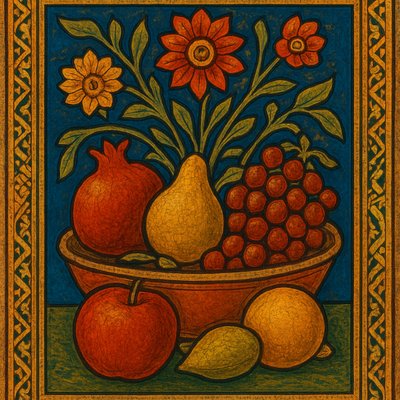
still life with everyday objects
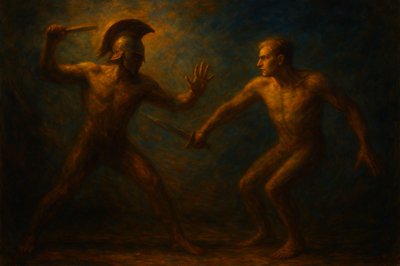
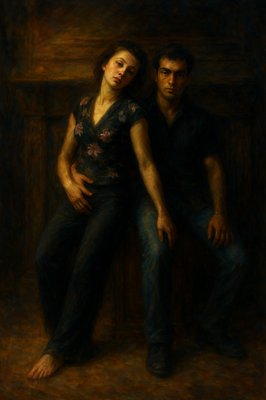
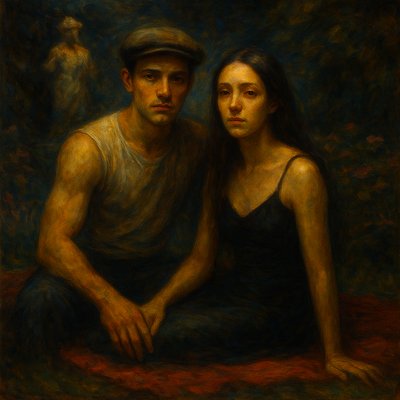
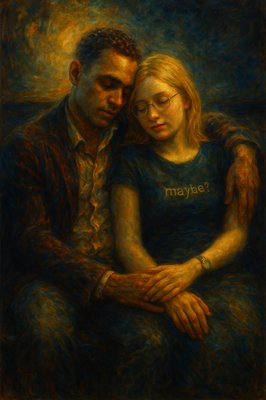
portrait of two people together
still life with everyday objects
wide landscape with natural scenery
Epic Biblical Baroque Painting Style, High-Contrast Tenebrism Lighting, Supernatural Realism. A monumental, earth-shattering scene at Golgotha at the precise moment of death.

The Central Figure: Jesus hangs lifelessly on a rough wooden cross, head bowed in finality, his body pale and scarred. A subtle, fading divine light emanates from him. The titulus above his head reads "INRI."

The Manifestation of the Roar (Jasher 54 influence): At the very instant of his death, the environment is violently convulsing, visualizing the "roar" of Judah echoing through time. Behind and above the cross, the dark, stormy clouds are being ripped apart by a massive, translucent ethereal manifestation of a roaring Lion's head formed from dust, lightning, and golden spiritual energy.

The Environmental Impact: The ground beneath the cross is cracking open with deep fissures. Massive boulders are shattering into dust mid-air. The temple veil in the distant city background is visibly tearing top-to-bottom.

The Human Reaction: Below the cross, the scene is one of absolute supernatural terror (as described in Jasher). Roman centurions are cowering on the ground, covering their ears, their helmets knocked off. Horses are rearing wildly, throwing their riders. The few followers present (Mary, John) are driven to their knees, not just in grief, but overwhelmed by the physical force of the cosmic event. The lighting is a chaotic mix of deep eclipse shadow and blinding bursts of supernatural golden-red light from the roaring manifestation.
Cinematic Film Style, Traditional Japanese Ukiyo-e Influence, a regal and incredibly poised portrait of the geisha Mameha (inspired by Michelle Yeoh). She is seated in a refined, dimly lit wooden teahouse, her posture perfectly upright and elegant. She wears a heavy silk kimono in peaceful, sophisticated colors like slate blue and silver, with delicate hand-painted motifs of plum blossoms. Her face is a "mask" of white traditional makeup, featuring sharp red lips and wise, observant eyes that convey deep intelligence. She is in the middle of a ritual, perhaps holding a delicate porcelain tea bowl with perfectly choreographed hands. The lighting is soft and atmospheric, catching the shimmer of her silk and the intricate details of her high, lacquered hairstyle adorned with a single, understated silver hairpin. Focus on the feeling of quiet power, impeccable grace, and the stillness of a master artist.
profound image representing the verse Psalm 119:15. The scene depicts a solitary lady with flowing, long red hair, in a posture of deep contemplation or meditation. She is seated or kneeling in a peaceful, natural setting – perhaps on a gentle hillside overlooking a tranquil landscape, by a calm body of water, or within a serene garden. Her expression is focused and reverent.

Before her, or subtly integrated into the scene, is an ancient scroll or open book, glowing with a soft, ethereal light, symbolizing God's precepts. Her posture and gaze are directed towards this source of wisdom, with a clear sense of 'fixing her eyes' on its profound truth.

Extending from the scroll/book, or subtly woven into the distant landscape, are luminous, ethereal pathways or guiding lights, representing 'Your ways' (God's ways). These pathways are clear and inviting, leading towards a bright, hopeful horizon, symbolizing divine guidance and understanding. The atmosphere is tranquil and reflective, bathed in soft, warm, golden light (perhaps dawn or dusk), signifying clarity and spiritual insight. The overall mood is one of peace, deep wisdom, divine guidance, and focused devotion, rendered with a beautiful, luminous quality."
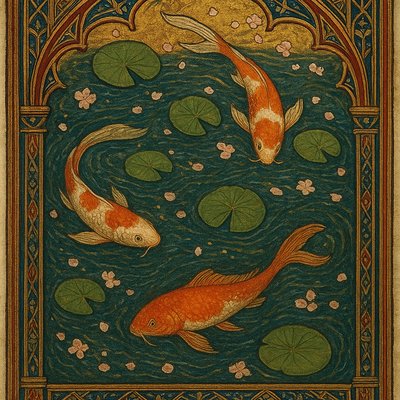
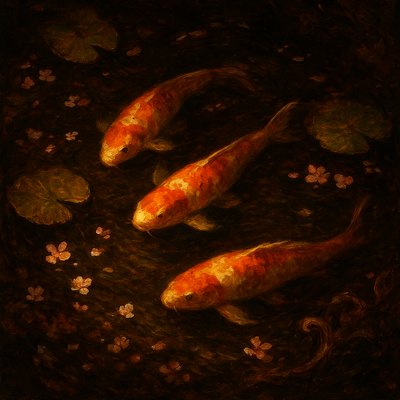
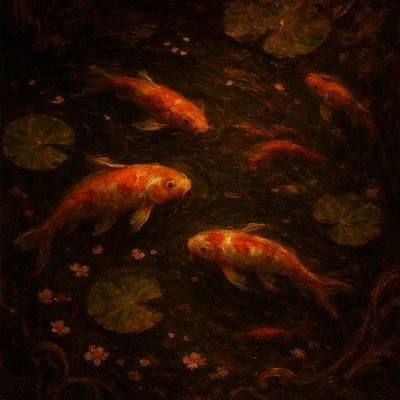
A koi pond seen from above, orange and white koi fish swimming among lily pads, clear water with subtle ripples, fallen cherry blossom petals floating on the surface, dappled sunlight
"A solitary and ominous Black Plague Doctor stands in a dimly lit, narrow cobblestone alleyway in a medieval European city. The doctor is clad head-to-toe in their iconic, dark, heavy protective gear: a long, oil-soaked waxed canvas or leather coat, dark gloves, and a wide-brimmed black hat. Their most striking feature, the beaked mask with dark, glass eyeholes, is prominent, creating an eerie, bird-like silhouette that conceals their face entirely. A wooden cane or pointer is held firmly in one gloved hand.

The atmosphere is heavy and foreboding. The background features dark, crumbling stone or timber-framed buildings with shuttered windows, hinting at a city under quarantine. Smoke or mist might subtly swirl around their feet. The lighting is stark and dramatic, perhaps from a distant lantern or a sliver of pale moonlight, casting deep shadows and highlighting the grim details of their attire. The overall mood is one of profound isolation, historical dread, and silent vigilance against an invisible enemy."
"A solitary and ominous Black Plague Doctor stands in a dimly lit, narrow cobblestone alleyway in a medieval European city. The doctor is clad head-to-toe in their iconic, dark, heavy protective gear: a long, oil-soaked waxed canvas or leather coat, dark gloves, and a wide-brimmed black hat. Their most striking feature, the beaked mask with dark, glass eyeholes, is prominent, creating an eerie, bird-like silhouette that conceals their face entirely. A wooden cane or pointer is held firmly in one gloved hand.

The atmosphere is heavy and foreboding. The background features dark, crumbling stone or timber-framed buildings with shuttered windows, hinting at a city under quarantine. Smoke or mist might subtly swirl around their feet. The lighting is stark and dramatic, perhaps from a distant lantern or a sliver of pale moonlight, casting deep shadows and highlighting the grim details of their attire. The overall mood is one of profound isolation, historical dread, and silent vigilance against an invisible enemy."
A koi pond seen from above, orange and white koi fish swimming among lily pads, clear water with subtle ripples, fallen cherry blossom petals floating on the surface, dappled sunlight
still life with everyday objects
house with front view
still life with everyday objects
A profoundly symbolic and awe-inspiring depiction of a colossal, luminous pearl gate in the New Jerusalem, captured in the dynamic act of rolling away, similar to the stone being moved from Christ's tomb. The gate, a single, immense, perfectly spherical pearl, is shown mid-motion, having just been set aside from the entrance, revealing the glorious city beyond.

The pearl itself glows with an intense, soft iridescence, reflecting the divine light. Its surface shows subtle, exquisite details of mother-of-pearl. The frame or opening from which it has rolled away is visible, perhaps showing immense, smooth tracks or channels in the transparent gold structure of the city wall, reinforcing the idea of its monumental movement.

Through the now open gate, the radiant glory of the New Jerusalem streams forth. Pure gold streets, like transparent glass, extend into the city, illuminated by an intense, divine light that emanates from within. Heavenly architecture, impossibly beautiful and intricate, is glimpsed in the distance, beckoning. The atmosphere is one of profound sanctity, triumphant revelation, and welcoming access to the divine, with the act of the pearl rolling away symbolizing a breakthrough or an open invitation. The lighting is ethereal and grand, emphasizing the pearl's luster and the city's overwhelming glory."
A historically accurate and atmospheric depiction of the signing of the Mayflower Compact aboard the ship in November 1620. The scene is set in the dimly lit, cramped cabin of the Mayflower, with the ship's timbers and rigging subtly visible, conveying the challenging conditions of the voyage. A simple table or chest serves as the signing surface. The primary focus is on a small group of the last individuals signing the document: specifically, the indentured servants (or 'strangers' not directly part of the Separatist congregation) approaching or at the table. Their expressions show a mix of weary determination, understanding of the necessity, and perhaps a hint of quiet apprehension or resignation to this new social contract, given their status. They are dressed in the plain, practical clothing typical of 17th-century commoners and laborers. Figures of prominent Pilgrims or 'Saints' (like William Bradford or John Carver) are visible in the background, observing the proceedings with a sense of gravity and leadership, but they are not the central focus. The lighting is low and warm, perhaps from a lantern, creating a chiaroscuro effect that highlights the faces of the signers. The atmosphere conveys the momentousness of the act under difficult circumstances, the diverse composition of the group, and the early seeds of self-governance in a new world. The artistic style is a realistic, historically detailed oil painting, capturing the solemnity and human element of this pivotal historical moment."
wide landscape with natural scenery
But with the righteous He will make peace.

And will protect the elect,
And mercy shall be upon them.

And they shall all belong to God,
And they shall be prospered,
And they shall ⌈all⌉ be blessed.

⌈And He will help them all⌉,
And light shall appear unto them,
⌈And He will make peace with them⌉.
John 8:12 (KJV)
12 Then spake Jesus again unto them, saying, I am the light of the world: he that followeth me shall not walk in darkness, but shall have the light of life.
A koi pond seen from above, orange and white koi fish swimming among lily pads, clear water with subtle ripples, fallen cherry blossom petals floating on the surface, dappled sunlight
house with front view
Paint a family portrait in the style of El Greco, employing the elongated figures art style for spiritual effect. --v 6.1
Cinematic Film Style, Traditional Japanese Ukiyo-e Influence, a regal and incredibly poised portrait of the geisha Mameha (inspired by Michelle Yeoh). She is seated in a refined, dimly lit wooden teahouse, her posture perfectly upright and elegant. She wears a heavy silk kimono in peaceful, sophisticated colors like slate blue and silver, with delicate hand-painted motifs of plum blossoms. Her face is a "mask" of white traditional makeup, featuring sharp red lips and wise, observant eyes that convey deep intelligence. She is in the middle of a ritual, perhaps holding a delicate porcelain tea bowl with perfectly choreographed hands. The lighting is soft and atmospheric, catching the shimmer of her silk and the intricate details of her high, lacquered hairstyle adorned with a single, understated silver hairpin. Focus on the feeling of quiet power, impeccable grace, and the stillness of a master artist.
profound image representing the verse Psalm 119:15. The scene depicts a solitary lady with flowing, long red hair, in a posture of deep contemplation or meditation. She is seated or kneeling in a peaceful, natural setting – perhaps on a gentle hillside overlooking a tranquil landscape, by a calm body of water, or within a serene garden. Her expression is focused and reverent.

Before her, or subtly integrated into the scene, is an ancient scroll or open book, glowing with a soft, ethereal light, symbolizing God's precepts. Her posture and gaze are directed towards this source of wisdom, with a clear sense of 'fixing her eyes' on its profound truth.

Extending from the scroll/book, or subtly woven into the distant landscape, are luminous, ethereal pathways or guiding lights, representing 'Your ways' (God's ways). These pathways are clear and inviting, leading towards a bright, hopeful horizon, symbolizing divine guidance and understanding. The atmosphere is tranquil and reflective, bathed in soft, warm, golden light (perhaps dawn or dusk), signifying clarity and spiritual insight. The overall mood is one of peace, deep wisdom, divine guidance, and focused devotion, rendered with a beautiful, luminous quality."
Paint a family portrait in the style of El Greco, employing the elongated figures art style for spiritual effect. --v 6.1
Style: Gritty, epic historical fantasy photograph with high textural detail. The aesthetic is a fusion of "Ancient Near Eastern Warrior" and the "High Elven" nobility established in previous prompts. Golden hour lighting.

The Subject: A single warrior standing guard on the fortified walls of David’s stronghold (Jerusalem or Ziklag). He is immense, standing over seven feet tall, possessing a lean, gladiatorial musculature rather than brute bulk.

Facial Features: He has the signature Gibeonite look: a long, ageless face with high, sculpted cheekbones and intense, calculating eyes that scan the horizon. His dark beard is neatly trimmed, and his long hair is intricately braided with bronze rings and threads of royal blue dyed wool.

The Armor (A Fusion of Cultures): His gear represents his unique status. He wears a heavy cuirass of overlapping bronze scales (Canaanite style) reinforced with iron plates (Israelite adoption). A stylized emblem of the Lion of Judah is subtly engraved onto a central shoulder plate, marking his allegiance to David.

The Weapons: He rests one hand on a massive tower shield made of reinforced cedar and hide. In the other, he holds a spear of immense scale, its shaft thicker than a normal man’s wrist, with a long, leaf-shaped bronze head. A curved khopesh sword is sheathed at his hip.

Atmosphere & Setting: The sun is setting behind the Judean hills, casting long shadows and catching the scars on his armor. His expression is one of silent, dangerous vigilance. In the background, other normal-sized Israelite soldiers are visible, emphasizing his towering presence.
A historically accurate and atmospheric depiction of the signing of the Mayflower Compact aboard the ship in November 1620. The scene is set in the dimly lit, cramped cabin of the Mayflower, with the ship's timbers and rigging subtly visible, conveying the challenging conditions of the voyage. A simple table or chest serves as the signing surface. The primary focus is on a small group of the last individuals signing the document: specifically, the indentured servants (or 'strangers' not directly part of the Separatist congregation) approaching or at the table. Their expressions show a mix of weary determination, understanding of the necessity, and perhaps a hint of quiet apprehension or resignation to this new social contract, given their status. They are dressed in the plain, practical clothing typical of 17th-century commoners and laborers. Figures of prominent Pilgrims or 'Saints' (like William Bradford or John Carver) are visible in the background, observing the proceedings with a sense of gravity and leadership, but they are not the central focus. The lighting is low and warm, perhaps from a lantern, creating a chiaroscuro effect that highlights the faces of the signers. The atmosphere conveys the momentousness of the act under difficult circumstances, the diverse composition of the group, and the early seeds of self-governance in a new world. The artistic style is a realistic, historically detailed oil painting, capturing the solemnity and human element of this pivotal historical moment."
Spiral jetty formation
Spiraling eco-tower
Rotating square spiral
Style: Gritty, epic historical fantasy photograph with high textural detail. The aesthetic is a fusion of "Ancient Near Eastern Warrior" and the "High Elven" nobility established in previous prompts. Golden hour lighting.

The Subject: A single warrior standing guard on the fortified walls of David’s stronghold (Jerusalem or Ziklag). He is immense, standing over seven feet tall, possessing a lean, gladiatorial musculature rather than brute bulk.

Facial Features: He has the signature Gibeonite look: a long, ageless face with high, sculpted cheekbones and intense, calculating eyes that scan the horizon. His dark beard is neatly trimmed, and his long hair is intricately braided with bronze rings and threads of royal blue dyed wool.

The Armor (A Fusion of Cultures): His gear represents his unique status. He wears a heavy cuirass of overlapping bronze scales (Canaanite style) reinforced with iron plates (Israelite adoption). A stylized emblem of the Lion of Judah is subtly engraved onto a central shoulder plate, marking his allegiance to David.

The Weapons: He rests one hand on a massive tower shield made of reinforced cedar and hide. In the other, he holds a spear of immense scale, its shaft thicker than a normal man’s wrist, with a long, leaf-shaped bronze head. A curved khopesh sword is sheathed at his hip.

Atmosphere & Setting: The sun is setting behind the Judean hills, casting long shadows and catching the scars on his armor. His expression is one of silent, dangerous vigilance. In the background, other normal-sized Israelite soldiers are visible, emphasizing his towering presence.
A koi pond seen from above, orange and white koi fish swimming among lily pads, clear water with subtle ripples, fallen cherry blossom petals floating on the surface, dappled sunlight
Wind-driven spiral dancer