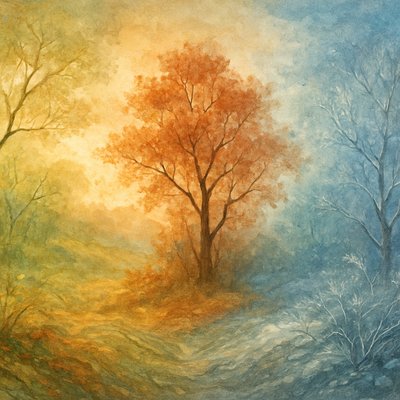
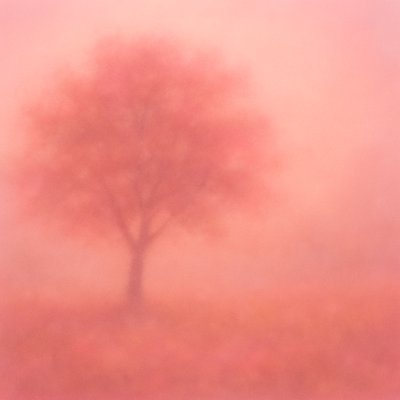
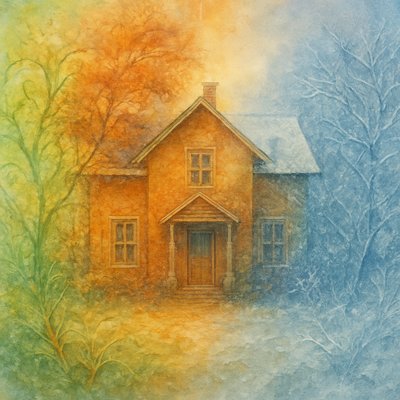
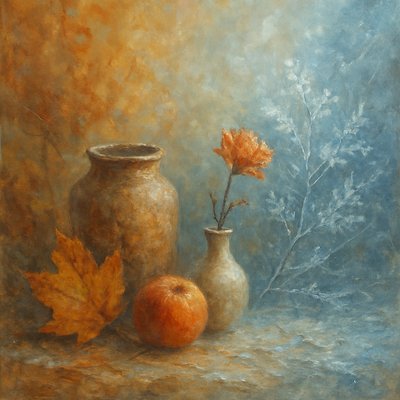
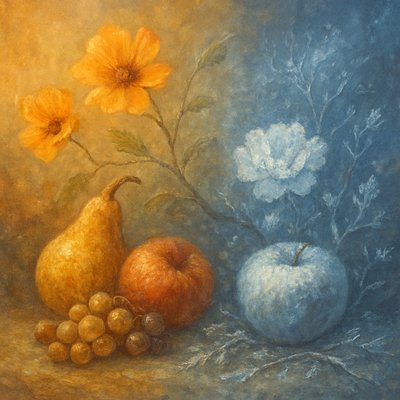
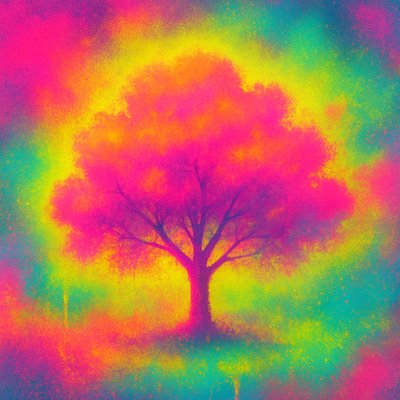
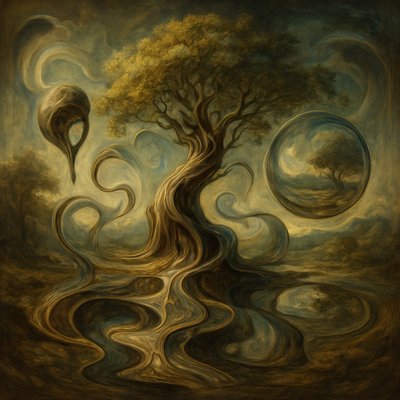
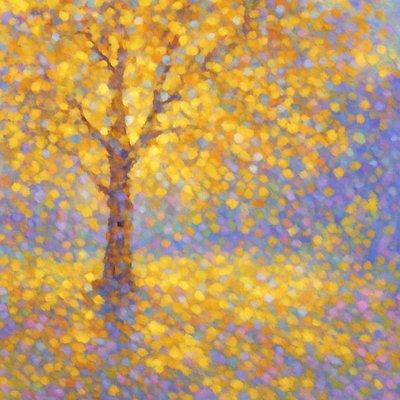
A Tree Through The Seasons Art

A young boy, no older than 12, is intensely focused on climbing a steep, rocky hillside in the San Juan National Forest, specifically along the Piedra River. He is scrambling upwards on his hands and knees. He is carrying a fishing rod held securely in one hand. The hill is covered in dry dirt and scattered small rocks with ponderosa pines and aspen trees in the landscape. Just ahead and slightly above him is a dense scrub oak). Behind this bush, the head of a cougar is visible, watching the boy. Far below, at the bottom of the hillside, a clear, meandering mountain stream (the Piedra River) sparkles under twilight. The atmosphere is quiet, tense, capturing the stark beauty of the remote Colorado wilderness.
A young boy, no older than 12, is intensely focused on climbing a steep, rocky hillside in the San Juan National Forest, specifically along the Piedra River. He is scrambling upwards on his hands and knees. He is carrying a fishing rod held securely in one hand. The hill is covered in dry dirt and scattered small rocks with ponderosa pines and aspen trees in the landscape. Just ahead and slightly above him is a dense scrub oak). Behind this bush, the head of a cougar is visible, watching the boy climbing towards him unaware. Far below, at the bottom of the hillside, a clear, meandering mountain stream (the Piedra River) sparkles under twilight. The atmosphere is quiet, tense, capturing the stark beauty of the remote Colorado wilderness.
Epic Adventure Photography Style, Cinematic Color Grading, Sub-Zero Atmosphere. A harrowing, dynamic wide-angle landscape photograph capturing the intensity of a long-distance dog sled race (like the Yukon Quest or Iditarod) in the dead of winter.

The Action & Subjects: A lead team of sixteen powerful Siberian Huskies and Alaskan Malamutes is charging directly toward the camera along a narrow, wind-blown trail. Their fur is heavily caked in ice and rime frost, and massive, crystalline plumes of frozen breath explode from their panting mouths. The musher, bundled in heavy, frost-covered furs and technical gear with goggles obscuring their face, leans aggressively into a turn on the sled, fighting to maintain control.

The "Cinematic Cold" Environment: The setting is a vast, unforgiving frozen riverbed surrounded by towering, snow-laden spruce trees and distant, jagged, glaciated mountain peaks. The air is thick with blowing snow and ice fog.

The Lighting & Mood: The scene is lit by the deep, biting blues and purples of polar twilight. A weak, cold orange glow from a distant, low sun just barely kisses the tops of the mountains, offering no warmth. The overall color palette is desaturated and cool. The image should feel incredibly vast, isolating, and brutally freezing. Film grain texture.
Epic Adventure Photography Style, Cinematic Color Grading, Sub-Zero Atmosphere. A harrowing, dynamic wide-angle landscape photograph capturing the intensity of a long-distance dog sled race (like the Yukon Quest or Iditarod) in the dead of winter.

The Action & Subjects: A lead team of sixteen powerful Siberian Huskies and Alaskan Malamutes is charging directly toward the camera along a narrow, wind-blown trail. Their fur is heavily caked in ice and rime frost, and massive, crystalline plumes of frozen breath explode from their panting mouths. The musher, bundled in heavy, frost-covered furs and technical gear with goggles obscuring their face, leans aggressively into a turn on the sled, fighting to maintain control.

The "Cinematic Cold" Environment: The setting is a vast, unforgiving frozen riverbed surrounded by towering, snow-laden spruce trees and distant, jagged, glaciated mountain peaks. The air is thick with blowing snow and ice fog.

The Lighting & Mood: The scene is lit by the deep, biting blues and purples of polar twilight. A weak, cold orange glow from a distant, low sun just barely kisses the tops of the mountains, offering no warmth. The overall color palette is desaturated and cool. The image should feel incredibly vast, isolating, and brutally freezing. Film grain texture.
Epic Adventure Photography Style, Cinematic Color Grading, Sub-Zero Atmosphere. A harrowing, dynamic wide-angle landscape photograph capturing the intensity of a long-distance dog sled race (like the Yukon Quest or Iditarod) in the dead of winter.

The Action & Subjects: A lead team of sixteen powerful Siberian Huskies and Alaskan Malamutes is charging directly toward the camera along a narrow, wind-blown trail. Their fur is heavily caked in ice and rime frost, and massive, crystalline plumes of frozen breath explode from their panting mouths. The musher, bundled in heavy, frost-covered furs and technical gear with goggles obscuring their face, leans aggressively into a turn on the sled, fighting to maintain control.

The "Cinematic Cold" Environment: The setting is a vast, unforgiving frozen riverbed surrounded by towering, snow-laden spruce trees and distant, jagged, glaciated mountain peaks. The air is thick with blowing snow and ice fog.

The Lighting & Mood: The scene is lit by the deep, biting blues and purples of polar twilight. A weak, cold orange glow from a distant, low sun just barely kisses the tops of the mountains, offering no warmth. The overall color palette is desaturated and cool. The image should feel incredibly vast, isolating, and brutally freezing. Film grain texture.
An awe-inspiring and whimsical scene featuring Willy Wonka's Great Glass Wonkavator, soaring through the sky and beyond the confines of Ontario Canada and its flag. The Wonkavator itself is a magnificent, multi-directional glass elevator, transparent and sparkling, with Willy Wonka (wearing his iconic top hat, purple coat, and bowtie) and 2 Canadian ladies looking out with expressions of joy, wonder and excitement. The interior is filled with intricate buttons and levers for controlling its magical flight. The Wonkavator is depicted in mid-flight, perhaps bursting through the factory roof or ascending above the clouds. Below it, the fantastical landscape of the Chocolate Factory is visible – chocolate rivers, edible gardens, candy cane trees, and various whimsical buildings. Beyond the factory, a stunning, imaginative sky unfolds, perhaps with floating candy clouds, distant fantastical landmarks, or even glimpses of outer space and planets. The lighting is bright and magical, emphasizing the glass's transparency and the vibrant colors of the world below and beyond. The overall mood is one of boundless adventure, limitless possibilities, and pure, joyful fantasy."
An awe-inspiring and whimsical scene featuring Willy Wonka's Great Glass Wonkavator, soaring through the sky and beyond the confines of the chocolate factory. The Wonkavator itself is a magnificent, multi-directional glass elevator, transparent and sparkling, with Willy Wonka (wearing his iconic top hat, purple coat, and bowtie) and a Victorian well dressed lady looking out with expressions of wonder and excitement. The interior is filled with intricate buttons and levers for controlling its magical flight. The Wonkavator is depicted in mid-flight, perhaps bursting through the factory roof or ascending above the clouds. Below it, the fantastical landscape of the Chocolate Factory is visible – chocolate rivers, edible gardens, candy cane trees, and various whimsical buildings. Beyond the factory, a stunning, imaginative sky unfolds, perhaps with floating candy clouds, distant fantastical landmarks, or even glimpses of outer space and planets. The lighting is bright and magical, emphasizing the glass's transparency and the vibrant colors of the world below and beyond. The overall mood is one of boundless adventure, limitless possibilities, and pure, joyful fantasy."
An awe-inspiring and whimsical scene featuring Willy Wonka's Great Glass Wonkavator, soaring through the sky and beyond the confines of the chocolate factory. The Wonkavator itself is a magnificent, multi-directional glass elevator, transparent and sparkling, with Willy Wonka (wearing his iconic top hat, purple coat, and bowtie) and a young happy Victorian well dressed lady looking out with expressions of wonder and excitement. The interior is filled with intricate buttons and levers for controlling its magical flight. The Wonkavator is depicted in mid-flight, perhaps bursting through the factory roof or ascending above the clouds. Below it, the fantastical landscape of the Chocolate Factory is visible – chocolate rivers, edible gardens, candy cane trees, and various whimsical buildings. Beyond the factory, a stunning, imaginative sky unfolds, perhaps with floating candy clouds, distant fantastical landmarks, or even glimpses of outer space and planets. The lighting is bright and magical, emphasizing the glass's transparency and the vibrant colors of the world below and beyond. The overall mood is one of boundless adventure, limitless possibilities, and pure, joyful fantasy."
Alice, wearing her blue dress, looking distressed, with her neck stretched impossibly high, vanishing into the foliage above. Her head emerges far above the trees of the Wonderland forest. A flock of angry Pigeons fly around her immense face, one landing on her ear and pecking at it, mistakenly believing her to be a serpent trying to steal their eggs. Below, the tiny, disoriented body of Alice stands near the base of the massive neck. Whimsical, detailed oil painting, saturated colors, storybook illustration by John Tenniel crossed with Salvador Dali, high contrast lighting.
An awe-inspiring and whimsical scene featuring Willy Wonka's Great Glass Wonkavator, soaring through the sky and beyond the confines of the chocolate factory. The Wonkavator itself is a magnificent, multi-directional glass elevator, transparent and sparkling, with Willy Wonka (wearing his iconic top hat, purple coat, and bowtie) and Charlie Bucket (and perhaps Grandpa Joe) inside, looking out with expressions of wonder and excitement. The interior is filled with intricate buttons and levers for controlling its magical flight.

The Wonkavator is depicted in mid-flight, perhaps bursting through the factory roof or ascending above the clouds. Below it, the fantastical landscape of the Chocolate Factory is visible – chocolate rivers, edible gardens, candy cane trees, and various whimsical buildings. Beyond the factory, a stunning, imaginative sky unfolds, perhaps with floating candy clouds, distant fantastical landmarks, or even glimpses of outer space and planets. The lighting is bright and magical, emphasizing the glass's transparency and the vibrant colors of the world below and beyond. The overall mood is one of boundless adventure, limitless possibilities, and pure, joyful fantasy."
An awe-inspiring and whimsical scene featuring Willy Wonka's Great Glass Wonkavator, soaring through the sky and beyond the confines of the chocolate factory. The Wonkavator itself is a magnificent, multi-directional glass elevator, transparent and sparkling, with Willy Wonka (wearing his iconic top hat, purple coat, and bowtie) and Charlie Bucket and Grandpa Joe inside, looking out with expressions of wonder and excitement. The interior is filled with intricate buttons and levers for controlling its magical flight.

The Wonkavator is depicted in mid-flight, perhaps bursting through the factory roof or ascending above the clouds. Below it, the fantastical landscape of the Chocolate Factory is visible – chocolate rivers, edible gardens, candy cane trees, and various whimsical buildings. Beyond the factory, a stunning, imaginative sky unfolds, perhaps with floating candy clouds, distant fantastical landmarks, or even glimpses of outer space and planets. The lighting is bright and magical, emphasizing the glass's transparency and the vibrant colors of the world below and beyond. The overall mood is one of boundless adventure, limitless possibilities, and pure, joyful fantasy."
An awe-inspiring and whimsical scene featuring Willy Wonka's Great Glass Wonkavator, soaring through the sky and beyond the confines of the chocolate factory. The Wonkavator itself is a magnificent, multi-directional glass elevator, transparent and sparkling, with Willy Wonka (wearing his iconic top hat, purple coat, and bowtie) and Charlie Bucket (and perhaps Grandpa Joe) inside, looking out with expressions of wonder and excitement. The interior is filled with intricate buttons and levers for controlling its magical flight.

The Wonkavator is depicted in mid-flight, perhaps bursting through the factory roof or ascending above the clouds. Below it, the fantastical landscape of the Chocolate Factory is visible – chocolate rivers, edible gardens, candy cane trees, and various whimsical buildings. Beyond the factory, a stunning, imaginative sky unfolds, perhaps with floating candy clouds, distant fantastical landmarks, or even glimpses of outer space and planets. The lighting is bright and magical, emphasizing the glass's transparency and the vibrant colors of the world below and beyond. The overall mood is one of boundless adventure, limitless possibilities, and pure, joyful fantasy."
An awe-inspiring and whimsical scene featuring Willy Wonka's Great Glass Wonkavator, soaring through the sky and beyond the confines of the chocolate factory. The Wonkavator itself is a magnificent, multi-directional glass elevator, transparent and sparkling, with Willy Wonka (wearing his iconic top hat, purple coat, and bowtie) and 2 young Victorian well dressed ladies looking out with expressions of joy, wonder and excitement. The interior is filled with intricate buttons and levers for controlling its magical flight. The Wonkavator is depicted in mid-flight, perhaps bursting through the factory roof or ascending above the clouds. Below it, the fantastical landscape of the Chocolate Factory is visible – chocolate rivers, edible gardens, candy cane trees, and various whimsical buildings. Beyond the factory, a stunning, imaginative sky unfolds, perhaps with floating candy clouds, distant fantastical landmarks, or even glimpses of outer space and planets. The lighting is bright and magical, emphasizing the glass's transparency and the vibrant colors of the world below and beyond. The overall mood is one of boundless adventure, limitless possibilities, and pure, joyful fantasy."
An awe-inspiring and whimsical scene featuring Willy Wonka's Great Glass Wonkavator, soaring through the sky and beyond the confines of the chocolate factory. The Wonkavator itself is a magnificent, multi-directional glass elevator, transparent and sparkling, with a middle aged Willy Wonka (wearing his iconic top hat, purple coat, and bowtie) and 2 young Victorian well dressed ladies looking out with expressions of joy, wonder and excitement. The interior is filled with intricate buttons and levers for controlling its magical flight. The Wonkavator is depicted in mid-flight, perhaps bursting through the factory roof or ascending above the clouds. Below it, the fantastical landscape of the Chocolate Factory is visible – chocolate rivers, edible gardens, candy cane trees, and various whimsical buildings. Beyond the factory, a stunning, imaginative sky unfolds, perhaps with floating candy clouds, distant fantastical landmarks, or even glimpses of outer space and planets. The lighting is bright and magical, emphasizing the glass's transparency and the vibrant colors of the world below and beyond. The overall mood is one of boundless adventure, limitless possibilities, and pure, joyful fantasy."
An awe-inspiring and whimsical scene featuring Willy Wonka's Great Glass Wonkavator, soaring through the sky and beyond the confines of the chocolate factory. The Wonkavator itself is a magnificent, multi-directional glass elevator, transparent and sparkling, with a middle aged Willy Wonka (wearing his iconic top hat, purple coat, and bowtie) and a young Victorian well dressed lady looking out with expressions of wonder and excitement. The interior is filled with intricate buttons and levers for controlling its magical flight. The Wonkavator is depicted in mid-flight, perhaps bursting through the factory roof or ascending above the clouds. Below it, the fantastical landscape of the Chocolate Factory is visible – chocolate rivers, edible gardens, candy cane trees, and various whimsical buildings. Beyond the factory, a stunning, imaginative sky unfolds, perhaps with floating candy clouds, distant fantastical landmarks, or even glimpses of outer space and planets. The lighting is bright and magical, emphasizing the glass's transparency and the vibrant colors of the world below and beyond. The overall mood is one of boundless adventure, limitless possibilities, and pure, joyful fantasy."
Alice, wearing her blue dress, looking distressed, with her neck stretched impossibly high, vanishing into the foliage above. Her head emerges far above the trees of the Wonderland forest. A flock of angry Pigeons fly around her immense face, one landing on her ear and pecking at it, mistakenly believing her to be a serpent trying to steal their eggs. Below, the tiny, disoriented body of Alice stands near the base of the massive neck. Whimsical, detailed oil painting, saturated colors, storybook illustration by John Tenniel crossed with Salvador Dali, high contrast lighting.
Cinematic Nature Photography, Americana Style, Golden Hour Lighting. A candid, detailed shot of an authentic cowgirl in a worn leather hat, denim jacket, and dusty boots and long red hair. She is standing beside a sturdy pack horse in a rocky creek bed, actively stuffing overflowing, rugged canvas panniers.

The details of the load are clear: A large bag of jumbo marshmallows and a red box of graham crackers are peeking out of one open saddlebag, next to chocolate bars. Strapped awkwardly to the very top of the pack saddle with ropes is a large, bright orange inflatable river tube.
The environment is stunning Colorado high country: Towering ponderosa pines and aspen trees line a rushing clear mountain river. Rugged, snow-capped Rocky Mountain peaks rise in the background under a rich blue sky. The light is warm and late-afternoon, catching the dust in the air and the textures of the horse's coat and the leather gear.
“And Jacob took him rods of green poplar, and of the hazel and chesnut tree; and pilled white strakes in them, and made the white appear which was in the rods. And he set the rods which he had pilled before the flocks in the gutters in the watering troughs when the flocks came to drink, that they should conceive when they came to drink. And the flocks conceived before the rods, and brought forth cattle ringstraked, speckled, and spotted. And Jacob did separate the lambs, and set the faces of the flocks toward the ringstraked, and all the brown in the flock of Laban; and he put his own flocks by themselves, and put them not unto Laban's cattle. And it came to pass, whensoever the stronger cattle did conceive, that Jacob laid the rods before the eyes of the cattle in the gutters, that they might conceive among the rods. But when the cattle were feeble, he put them not in: so the feebler were Laban's, and the stronger Jacob's. And the man increased exceedingly, and had much cattle, and maidservants, and menservants, and camels, and asses.” (Genesis 30:37-43, KJV)
Nature Photography Style, Romantic Naturalism Painting, a breathtaking, incredibly detailed scene deep within the primeval forests of Russia's Amur-Ussuri region. A massive, powerful female Amur Tiger with thick, pale orange and dark striped fur rests on a moss-covered rocky outcrop, watching over her two playful cubs who are batting at the air. The scene is absolutely swarming with hundreds of Red Admiral butterflies (distinct black wings with vibrant orange-red bands and white spots). The butterflies form swirling clouds, landing gently on the tigers' fur, their noses, and the surrounding lush ferns and Korean pine branches. The forest floor is dense with undergrowth, lichen, and a clear, cold stream nearby. The lighting is dappled golden hour sunlight filtering through a canopy of birch and ancient oak trees, creating a magical, serene atmosphere. Focus on the texture of the thick tiger fur and the delicate wings of the butterflies.
An epic, wide-angle cinematic masterwork of the 144,000 servants of God, divided into twelve massive, disciplined ranks in a valley of white stone. Each rank is led by a towering, ornate scarlet silk banner with gold-embroidered edges. 
The Banners: Distinct symbols are visible on each: a Lion (Judah), Sun over Water (Reuben), Military Tent (Gad), Olive Tree (Asher), Leaping Deer (Naphtali), Fruitful Vine (Manasseh), City Gate (Simeon), Priestly Breastplate (Levi), Celestial Stars (Issachar), Sailing Ship (Zebulun), Wheat Sheaf (Joseph), and Silver Wolf (Benjamin).
The People: In the foreground, the men wear crisp white linen robes with deep Tola-scarlet sashes. Every individual has a brilliant, glowing Golden Seal physically shimmering on their forehead, casting a divine light upward.
The Heavens: In the far distance, four colossal, translucent angels stand at the horizon, their massive wings outstretched to physically block swirling, dark storm-vortices (the four winds). A fifth angel, radiant in pearlescent light, descends from a golden sunrise in the East.
Style: High-contrast chiaroscuro, intricate embroidery textures, hyper-detailed faces, 8k resolution, ArtStation masterpiece. Absolutely no English text or letters.
An awe-inspiring and whimsical scene featuring Willy Wonka's Great Glass Wonkavator, soaring through the sky and beyond the confines of the chocolate factory. The Wonkavator itself is a magnificent, multi-directional glass elevator, transparent and sparkling, with a middle aged Willy Wonka (wearing his iconic top hat, purple coat, and bowtie) and a young Victorian well dressed lady looking out with expressions of joy, wonder and excitement. The interior is filled with intricate buttons and levers for controlling its magical flight. The Wonkavator is depicted in mid-flight, perhaps bursting through the factory roof or ascending above the clouds. Below it, the fantastical landscape of the Chocolate Factory is visible – chocolate rivers, edible gardens, candy cane trees, and various whimsical buildings. Beyond the factory, a stunning, imaginative sky unfolds, perhaps with floating candy clouds, distant fantastical landmarks, or even glimpses of outer space and planets. The lighting is bright and magical, emphasizing the glass's transparency and the vibrant colors of the world below and beyond. The overall mood is one of boundless adventure, limitless possibilities, and pure, joyful fantasy."
A thrilling and vibrant scene from the board game Candy Land, capturing the excitement of sliding down its biggest, most iconic slide. The slide itself is massive, curving, and made entirely of a glistening, colorful candy material, like a giant, rainbow-striped candy cane or smooth, translucent hard candy. A cheerful, diverse group of children (or classic Candy Land characters like Princess Lolly or Mr. Mint) are depicted in mid-descent, laughing and filled with joy, their hands in the air.

Below and around the slide, the fantastical landscape of Candy Land stretches out: rolling hills of frosting, lollipop trees, rivers of chocolate, gingerbread houses, and giant gumdrops. The colors are incredibly vivid and saturated, creating a truly fantastical and edible world. The perspective is dynamic, looking down the slide with the characters, enhancing the sense of speed and fun. The lighting is bright and cheerful, emphasizing the candy's sparkle and the overall joyful atmosphere.
Cinematic Nature Photography, Americana Style, Golden Hour Lighting. A candid, detailed shot of an authentic cowgirl in a worn leather hat, denim jacket, and dusty boots. She is standing beside a sturdy pack horse in a rocky creek bed, actively stuffing overflowing, rugged canvas panniers.

The details of the load are clear: A large bag of jumbo marshmallows and a red box of graham crackers are peeking out of one open saddlebag, next to chocolate bars. Strapped awkwardly to the very top of the pack saddle with ropes is a large, bright orange inflatable river tube.

The environment is stunning Colorado high country: Towering ponderosa pines and aspen trees line a rushing clear mountain river. Rugged, snow-capped Rocky Mountain peaks rise in the background under a rich blue sky. The light is warm and late-afternoon, catching the dust in the air and the textures of the horse's coat and the leather gear.
A fantastically cheerful and dynamic scene featuring the happy pumpkin-head figure (with the swirled, smiling carved face and internal glow) as the pilot of a classic, brightly colored biplane. The biplane itself is whimsically designed, perhaps with candy-themed accents or painted in vibrant, cheerful colors like orange, purple, and green.

The biplane is soaring through a clear, azure autumn sky, actively 'crop-dusting' a massive, exuberant stream of colorful Halloween candy from its underside. The candy (an abundant mix of wrapped chocolates, lollipops, candy corn, and various sweets) cascades downwards in a wide, joyous plume, spreading across the landscape below.

The landscape beneath the biplane is an idyllic, festive autumnal scene: rolling hills covered in vibrant fall foliage (golden, red, orange trees), a charming pumpkin patch, or a quaint, candy-colored village. The perspective is dynamic, capturing the plane in motion with the candy streaming behind it. The lighting is bright and sunny, emphasizing the vivid colors of the plane, the candy, and the autumn scenery. The overall mood is one of pure, unadulterated joy, playful magic, and festive exuberance, like a sugary parade from the sky."
A fantastically cheerful and dynamic scene featuring the happy pumpkin-head figure (with the swirled, smiling carved face and internal glow) as the pilot of a classic, brightly colored biplane. The biplane itself is whimsically designed, perhaps with candy-themed accents or painted in vibrant, cheerful colors like orange, purple, and green.

The biplane is soaring through a clear, azure autumn sky, actively 'crop-dusting' a massive, exuberant stream of colorful Halloween candy from its underside. The candy (an abundant mix of wrapped chocolates, lollipops, candy corn, and various sweets) cascades downwards in a wide, joyous plume, spreading across the landscape below.

The landscape beneath the biplane is an idyllic, festive autumnal scene: rolling hills covered in vibrant fall foliage (golden, red, orange trees), a charming pumpkin patch, or a quaint, candy-colored village. The perspective is dynamic, capturing the plane in motion with the candy streaming behind it. The lighting is bright and sunny, emphasizing the vivid colors of the plane, the candy, and the autumn scenery. The overall mood is one of pure, unadulterated joy, playful magic, and festive exuberance, like a sugary parade from the sky." "pop art style, bold outlines, vibrant flat colors, dynamic composition, graphic novel aesthetic, strong visual impact"
An awe-inspiring and whimsical scene featuring Willy Wonka's Great Glass Wonkavator, soaring high above the chocolate factory and ascending into a fantastical sky. The Wonkavator itself is a magnificent, multi-directional glass elevator, transparent and sparkling, with Willy Wonka (in his iconic purple coat and top hat), young Charlie Bucket, and Grandpa Joe clearly visible and enjoying the ride inside. Wonka points excitedly, Charlie looks out with wide-eyed wonder, and Grandpa Joe grins with delight. The interior of the Wonkavator shows intricate, whimsical control panels.

The Wonkavator is depicted in mid-flight, having just burst through the factory roof or rising above the clouds. Below it, the fantastical landscape of the Chocolate Factory is spread out – chocolate rivers, edible gardens, candy cane trees, and various whimsical buildings. Beyond the factory, a stunning, imaginative sky unfolds, filled with floating candy clouds, distant fantastical landmarks, and even glimpses of planets and stars. The lighting is bright and magical, emphasizing the glass's transparency and the vibrant colors of the world below and beyond. The overall mood is one of boundless adventure, limitless possibilities, and pure, joyful fantasy."
A fantastically cheerful and dynamic scene featuring the happy pumpkin-head figure (with the swirled, smiling carved face and internal glow) as the pilot of a classic, brightly colored biplane. The biplane itself is whimsically designed, perhaps with candy-themed accents or painted in vibrant, cheerful colors like orange, purple, and green.

The biplane is soaring through a clear, azure autumn sky, actively 'crop-dusting' a massive, exuberant stream of colorful Halloween candy from its underside. The candy (an abundant mix of wrapped chocolates, lollipops, candy corn, and various sweets) cascades downwards in a wide, joyous plume, spreading across the landscape below.

The landscape beneath the biplane is an idyllic, festive autumnal scene: rolling hills covered in vibrant fall foliage (golden, red, orange trees), a charming pumpkin patch, or a quaint, candy-colored village. The perspective is dynamic, capturing the plane in motion with the candy streaming behind it. The lighting is bright and sunny, emphasizing the vivid colors of the plane, the candy, and the autumn scenery. The overall mood is one of pure, unadulterated joy, playful magic, and festive exuberance, like a sugary parade from the sky." whimsical illustration, vibrant, dynamic motion, expressive character, detailed candy and plane design, festive atmosphere
A fantastically cheerful and dynamic scene featuring the happy pumpkin-head figure (with the swirled, smiling carved face and internal glow) as the pilot of a classic, brightly colored biplane. The biplane itself is whimsically designed, perhaps with candy-themed accents or painted in vibrant, cheerful colors like orange, purple, and green.

The biplane is soaring through a clear, azure autumn sky, actively 'crop-dusting' a massive, exuberant stream of colorful Halloween candy from its underside. The candy (an abundant mix of wrapped chocolates, lollipops, candy corn, and various sweets) cascades downwards in a wide, joyous plume, spreading across the landscape below.

The landscape beneath the biplane is an idyllic, festive autumnal scene: rolling hills covered in vibrant fall foliage (golden, red, orange trees), a charming pumpkin patch, or a quaint, candy-colored village. The perspective is dynamic, capturing the plane in motion with the candy streaming behind it. The lighting is bright and sunny, emphasizing the vivid colors of the plane, the candy, and the autumn scenery. The overall mood is one of pure, unadulterated joy, playful magic, and festive exuberance, like a sugary parade from the sky." whimsical illustration, cartoon animation style, vibrant, dynamic motion, expressive character, detailed candy and plane design, festive atmosphere
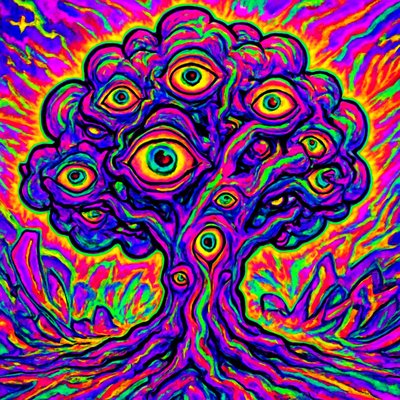
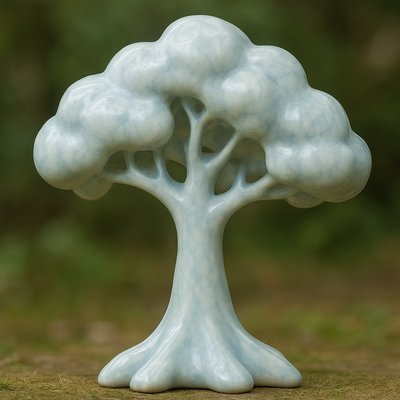
The Fourth reached out his eager hand and felt about the knee. What most this wondrous beast is like is mighty plain, said he; Tis clear enough the Elephant is very like a tree!
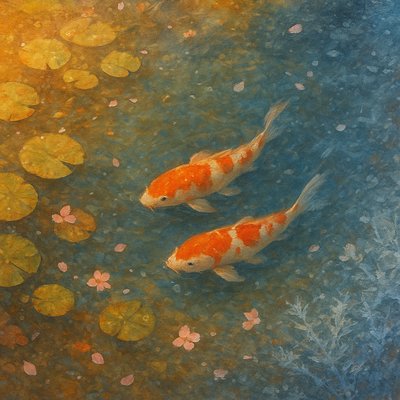
a painting of a river surrounded by trees and flowers
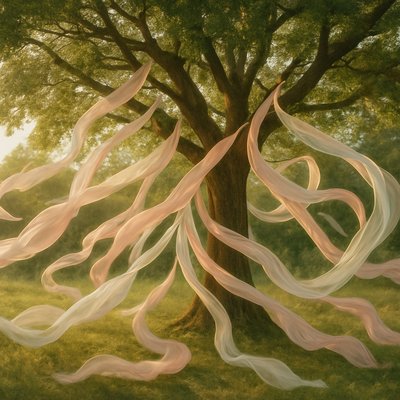
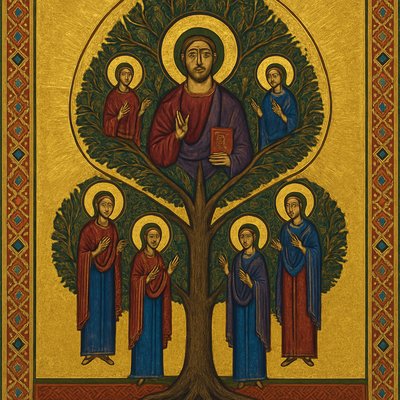
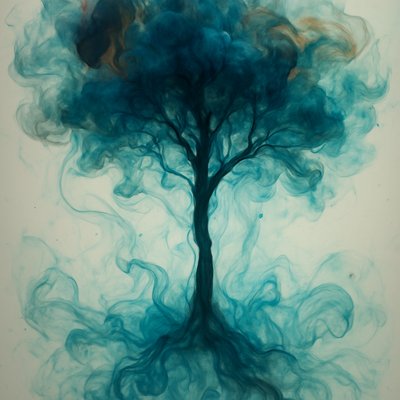
The seasons personified
bicyle resting against a wall
Morning fog lifting from river
This day, though, I hiked another autumn wood.  Eastern Europe ancient; overgrown.  So thick the view was dark at just a few feet off the path.  All red and yellow; orange and brown, a million trees, each one in blazing preparation for long, frozen winter.  I cannot but recall my friend’s words, lasting long, though he did not, and the instant truth that follows.  Looking upward at the fiery canopy, matched against the bright cerulean sky beyond, I embrace autumn!  Winter surely comes one day, but spring beyond.  I have a winter to prepare for, but it is not yet.

Conversation with Gemini
You said
I need a written prompt for ArtStyles expressing Psalm 33:17

Gemini said
This is a powerful verse that speaks to the limits of human might and reliance on military strength. Capturing "futility" and "vain hope" in a visual format requires contrasting the power of the horse with its inability to save.

Here are a few written prompts for ArtStyles, exploring different artistic interpretations of Psalm 33:17 ("An horse is a vain thing for safety: neither shall he deliver any by his great strength.").

Option 1: The Historical/Realist Approach (The Moment of Realization)
This prompt focuses on a powerful warhorse in a situation where its strength is useless.

Prompt: A hyper-realistic, cinematic shot of a magnificent, armored warhorse standing in the middle of a devastating natural disaster, such as a massive flash flood or a crumbling earthquake fissure. The horse is straining with "great strength," but its eyes show panic, unable to deliver its rider from the overwhelming force of nature. The rider is looking up, realizing the futility of their trust in the animal. Golden hour lighting, heavy atmosphere, dramatic composition, highly detailed textures.

Option 2: The Symbolic/Painterly Approach (The Crumbling Idol)
This prompt treats the horse as a symbol of misplaced trust that is failing.

Prompt: An epic, oil painting style depiction of a colossal, imposing bronze statue of a powerful rearing stallion, symbolizing military might. The statue is cracked and beginning to crumble under the weight of an dark, tumultuous sky. In the background, a vast army that trusted in this strength is retreating in disarray. The light filters through the clouds like a divine judgment, highlighting the crumbling metal. Dark baroque style, high contrast, dramatic shadows, moody atmosphere.

Option 3: The Contrasting Composition (The Weakness of Might)
This prompt uses contrast to show that even the strongest horse cannot offer true safety.

Prompt: A wide, epic fantasy landscape. In the foreground, a mighty warrior on a magnificent, heavily armored destrier, looking imposing and strong. However, they are standing on the edge of an impossibly vast, churning abyss or facing a supernatural storm that no physical strength can overcome. The horse looks small and vulnerable against the sheer scale of the threat, emphasizing the "vain hope" of physical deliverance. Etherial lighting, dramatic scale, high resolution, detailed concept art style.

You said
Let's broaden the thought of this prompt to include verses 13-22

Gemini said
Expanding the scope to Psalm 33:13-22 transforms the image from a single moment of failure into a grand narrative of Divine Sovereignty vs. Human Limitation.

This passage contrasts the "Eye of the Lord" watching from heaven with the kings, armies, and horses struggling on earth. To capture this in ArtStyles, we need to use compositional layers—showing the heavenly perspective and the earthly reality simultaneously.

Option 1: The Vertical Contrast (The Gaze from Above)
This captures verses 13–15 ("The LORD looketh from heaven") and verses 16–17 (the futility of the host).

Prompt: A vertical, epic-scale composition. In the upper third, a radiant, ethereal light breaks through golden, celestial clouds, representing "the eye of the Lord" looking down. In the lower two-thirds, a vast ancient battlefield is visible from a high-altitude "god's-eye" view. A king and his "multitude of an host" with thousands of horses look like tiny, fragile figurines. The earthly army is shrouded in dust and shadows, while the divine light illuminates a single, humble figure kneeling in prayer. Surrealism meets historical epic, cinematic lighting, 8k, dramatic atmosphere.

Option 2: The Shield of Mercy (The Spiritual Protection)
This focuses on verses 18–20 ("He is our help and our shield") and the "hope in His mercy."

Prompt: A powerful, symbolic artwork. In the center, a weary traveler or soul stands amidst a desolate landscape of "famine" and "death." A massive, warhorse and a king’s discarded crown lie in the background, broken and useless. Surrounding the traveler is a translucent, shimmering "shield" made of pure, golden light and ancient Hebrew script. The light is warm and protective, contrasting with the dark, cold environment outside the shield. Ethereal, digital painting style, intricate details, glowing highlights, Rembrandt lighting.

Option 3: The Fashioner of Hearts (The Internal & Universal)
This interprets verse 15 ("He fashioneth their hearts alike") and verse 21 ("Our heart shall rejoice in him").

Prompt: A conceptual, artistic piece showing a "heavenly habitation" above the world. From the light of heaven, glowing threads of gold descend, connecting to the "hearts" of diverse people across a vast, stylized map of the earth. In the foreground, a mighty warrior on a warhorse is fading into a ghostly transparency, while a simple person filled with "hope and mercy" is rendered in vivid, solid color and light. Artistic, symbolic, deep blues and radiant golds, high contrast, minimalist but profound.

How to Structure These Verses
When you're trying to capture a long passage like this, it helps to think of the "thematic flow." Here is a quick breakdown of how these prompts are organized:

A Quick Tip for ArtStyles
Since you are looking for "correct AI language," try adding the phrase "Double Exposure" to these prompts if you want to see the "Heavenly Gaze" and the "Earthly Army" merged into one artistic image. It creates a very sophisticated, layered look that reflects the spiritual depth of the Psalms.

Would you like me to try a prompt that focuses more on the "Famine and Death" aspect of verse 19, or should we stay with the more "Glorious and Hopeful" side of the passage?

You said
No I want the horse to represent the heart of a person upon whom the Lord is examining

Gemini said
That is a profound metaphorical shift. By making the horse a representation of the human heart, you’re capturing the essence of Verse 15 ("He fashioneth their hearts alike; he considereth all their works") alongside the warning about "vain strength."

In this visual, the horse isn't just an animal; it's the inner spirit—powerful, proud, but ultimately transparent and dependent before the Creator.

Here are three prompts for ArtStyles that use the horse as a metaphor for the heart under divine examination.

Option 1: The Luminous Anatomy (The Transparent Soul)
This focuses on the "Lord looking from heaven" (v. 13) into the very fabric of the heart/horse.

Prompt: A majestic, powerful warhorse standing in a void of deep celestial blue. The horse is translucent, made of shimmering ethereal light and "golden threads," representing the human heart. From above, a single, piercing beam of divine white light descends, illuminating the horse's "inner workings" and spirit. The horse looks strong but is bowed in submission, showing that its "great strength" is nothing under the gaze of the Creator. Highly detailed, sacred art style, glowing highlights, volumetric lighting.

Option 2: The Reflected Examination (The Eye of the Lord)
This uses the "Eye of the Lord" (v. 18) as the primary lens, with the "heart-horse" reflected within it.

Prompt: An extreme, artistic close-up of a celestial, radiant eye representing the "Eye of the Lord." In the reflection of the pupil, we see a silhouette of a rearing, powerful horse representing a proud human heart. The horse is surrounded by a faint, crumbling golden armor that is falling away, revealing a soft, humble light underneath. The composition emphasizes "considering all their works." Cinematic, macro photography style, ethereal, gold and midnight blue palette.

Option 3: The Fashioned Spirit (The Potter and the Clay)
This focuses on Verse 15 ("He fashioneth their hearts") using a horse as the form being shaped.

Prompt: A surrealist masterpiece. Large, glowing, nebulous hands made of stars are gently "fashioning" and shaping a powerful horse out of liquid gold and white light. The horse represents the "human heart" being molded by the Divine. The background is the "heaven of heavens." The horse is muscular and "strong," yet it is clearly a creation being examined for its "hope and mercy" rather than its own might. Ethereal, breathtaking scale, digital art, high contrast, shimmering textures.

Technical "AI Language" Tips for this Concept:
"Translucent" or "Ethereal": Using these words ensures the horse doesn't look like a literal farm animal, but like a spiritual symbol.

"Submission": Adding this to the horse’s posture helps convey that it knows it is being examined.

"Celestial" / "Divine": These keywords help ArtStyles understand that the light source should feel holy, not just like a lamp or the sun.

This approach really gets to the core of the Psalm—that while we might feel "strong" like a warhorse, our true safety is found in being "fashioned" and watched over by Him.

Would you like to try one of these, or should we adjust the "atmosphere" to be more vibrant and colorful?

You said
I need help also with “For the law of the Spirit of life in Christ Jesus hath made me free from the law of sin and death.” (Romans 8:2, KJVA)

as a focal point for the greater passage Romans 1-17 writing the prompt for ArtStyles.

Gemini said
This is arguably one of the most doctrinally significant and visually powerful verses in the entire New Testament. It is the hinge upon which the argument of Romans turns—moving from the struggle against sin in chapter 7 to the glorious liberty of the Spirit in chapter 8.

To capture "freedom from the law of sin and death" into "the law of the Spirit of life," we need prompts that emphasize radical contrast, transition, and breaking of bondages. We are moving from darkness and decay to light and vitality.

Here are three prompts for ArtStyles, ranging from the symbolic to the visceral, designed to serve as a visual focal point for Romans 8:1-17.

Option 1: The Bursting Chrysalis (Metaphorical Life)
This focuses heavily on the "Spirit of life" overcoming "death," echoing the transition from the "flesh" to the "Spirit" found in verses 5-11.

Prompt: A hyper-detailed, surreal masterpiece. A dark, brittle, rigid structure resembling a ribcage and chains (representing the law of sin and death) is violently bursting outward. From within, a dazzling, vibrant entity made of iridescent light, fresh green vines, glowing water, and dove-like wings is emerging, completely shattered the old structure. The setting is a transition from a shadowy abyss to a radiant sunlit expanse. Cinematic lighting, themes of resurrection and vitality, 8k resolution, intricate textures.

Option 2: The Two Paths (Classical/Allegorical)
This focuses on the "walk" mentioned in verse 4—contrasting those who walk after the flesh with those who walk after the Spirit.

Prompt: A wide, epic scale, oil painting style in the vein of John Martin. Two paths diverge. The path on the left is dry, stony, and leads into a dark, suffocating fog filled with grappling, shadowed figures and withered trees (the law of sin and death). The path on the right is bathed in a soft, warm, golden celestial light and is lush with blooming life, leading upward. A solitary figure stands at the split, looking upward on the illuminated path, having just dropped heavy iron chains on the ground. Dramatic contrast, spiritual atmosphere, high detail.

Option 3: The Embrace of Adoption (Relational/Verses 14-16)
This prompt focuses on the resulting relationship: moving from slavery and fear (v. 15) to becoming "sons" who cry "Abba, Father." It shows the freedom that comes through Christ Jesus.

Prompt: A powerfully emotional, classical sacred art style painting. A ragged figure, formerly a slave, is kneeling, their hands reaching out in submission and relief. Their heavy, rusty chains have been shattered on the dusty ground. Before them is a figure enveloped in radiant, warm, golden light (representing Christ Jesus), whose hand is gently lifting the kneeling person's chin. Above them, a shimmering dove made of pure light descends, symbolizing the Spirit of adoption witnessing to their spirit. Themes of mercy, freedom, and homecoming. Chiaroscuro lighting, deep colors.

"AI Language" Tips for Romans 8:
"Shattered" or "Bursting": Crucial for showing the active transition of "making me free" (hath made me free)—it's not passive, it's forceful.

"Iridescent" / "Vitality": Helps ArtStyles understand that "Life" in this context isn't just "not dead," but a supernatural, vibrant, glowing existence.

"Slavery vs. Sonship": If you want a more emotional tone, focus the prompt on the transition from "fear" to "Abba," which we tried to capture in Option 3.

Each of these aims to condense the theology of Romans 1-17 into a single, profound image where the transition from binding law to liberating Spirit is undeniable.

You said
I need some of your help writing the prompt for ArtStyles concerning this verse “For Christ is not entered into the holy places made with hands, which are the figures of the true; but into heaven itself, now to appear in the presence of God for us:” (Hebrews 9:24, KJV) as part of a greater passage verses 14-28

Gemini said
This passage is a beautiful and central theological pivot in the book of Hebrews. It moves the focus from the earthly rituals—which were merely "figures" or "shadows"—to the ultimate reality of Christ entering the true, heavenly sanctuary to advocate "for us."

To translate this passage (Hebrews 9:14-28, with verse 24 as the focus) for an AI image generator like ArtStyles, we need prompts that emphasize transcendence, contrast, and intercession. We must visually distinguish the "made with hands" earthly temple from "heaven itself."

Here are three written prompts for ArtStyles, exploring different artistic approaches to this powerful verse.

Option 1: The Cinematic Ascension (Focus on Contrast)
This prompt focuses on the transition from the dim, earthly "figure" to the blinding reality of "heaven itself."

Prompt: A wide-angle, cinematic masterpiece. The lower portion of the image shows the interior of an ancient, candlelit Tabernacle, detailed with tapestries and hewn stone (the "holy places made with hands"). Above it, the roof dissolves into swirling, luminous, celestial energy and golden light that is boundless ("heaven itself"). The figure of Jesus Christ, radiant with a soft inner light and wearing simple, brilliant white robes, is ascending from the shadowy temple into the infinite light, looking back with compassionate intercessory eyes. Volumetric lighting, grand scale, highly detailed, dramatic atmosphere.

Option 2: The Theological Blueprint (Focus on "Figures of the True")
This is a more symbolic, conceptual approach that treats the earthly temple as a shadow or template beneath the heavenly reality.

Prompt: A surrealist, double-exposure art piece. In the foreground, there are translucent, architect’s blueprint lines and ghostly outlines of the ancient Temple altars, lampstands, and the Holy of Holies (representing the "figures of the true"). Overlapping and far superior to them, Jesus Christ stands before an blinding, warm, golden divine presence (representing the "presence of God"). He is actively gesturing forward, presenting a scroll or his own wounds on behalf of unseen people ("for us"). Transcendent, ethereal, glowing edges, minimal color palette of gold, white, and midnight blue.

Option 3: The Heavenly Courtroom (Focus on "Appear for Us")
This focuses on the intercessory role of Christ appearing before God on our behalf, summarizing the effect of the whole passage (verses 14-28).

Prompt: A classical, baroque style oil painting with dramatic lighting (Chiaroscuro). The setting is a magnificent, infinite heavenly throne room filled with blinding, holy light. The central focus is Jesus Christ, marked with the scars of his sacrifice (v. 26), standing confidently before an incomprehensible, brilliant Light representing the Father. He is looking into the light while his arms are spread wide in an advocate's pose, symbolically standing "for us." Below his feet are broken temple curtains and shadows. Themes of victory, redemption, and holiness. Rich textures, deep colors.

Key "AI Language" for Hebrews 9:24:
If you want to tweak these or create your own, make sure to include these concepts for ArtStyles:

"Made with hands" vs. "Heaven itself": Use keywords like "Shadows", "Figures", or "Blueprints" for the earthly side, and "Infinite", "Luminous", or "Celestial" for the heavenly side.

"Appear for us": The posture of Christ is important. Use words like "Advocate", "Mediator", "Interceding", or "Presenting" to define his pose.

"Better Sacrifice" (Context of v23): You can hint at this by adding details like "radiant scars" or "remission of sins" as atmospheric elements.

You said
I also need help writing a prompt for ArtStyles about “Therefore will I divide him a portion with the great, and he shall divide the spoil with the strong; because he hath poured out his soul unto death: and he was numbered with the transgressors; and he bare the sin of many, and made intercession for the transgressors.” (Isaiah 53:12, KJV)

Gemini said
This verse is the triumphant and heartbreaking climax of the "Suffering Servant" prophecy. It presents a massive paradox: a victorious conqueror dividing the spoils of war, yet that victory was achieved only by humbling himself to the point of a shameful, criminal death ("numbered with the transgressors").

To capture Isaiah 53:12 for ArtStyles, we need imagery that balances suffering and glory, showing Christ as both the Victim and the Victor.

Here are three prompts designed to translate this complex theology into visual language.

Option 1: The Broken Victor (Focus on Triumph Through Suffering)
This prompt focuses on the "dividing the spoil" while emphasizing that his "great strength" came from his sacrifice.

Prompt: A hyper-realistic, dramatic oil painting, Chiaroscuro style. A magnificent, yet visibly wounded figure, representing Jesus Christ, stands in a landscape that is half-darkened battlefield, half-celestial light. He wears a crown that is a blend of sharp thorns and shining gold. He is extending one hand, which bears the mark of a nail, and is handing a luminous, glowing orb (representing "the spoil") to a group of humbled, "strong" figures kneeling before him. His other hand is clasped in a gesture of plea or "intercession." His expression is one of triumphant exhaustion and deep mercy. The atmosphere is solemn, epic, and highly detailed.
First century Palestine.  Jesus sits on a rock on a hillside teaching a large group of His disciples.  The Sermon on the Mount.  Jesus wears a plain robe like most ordinary men.  Jesus' face is kind, but intense, as He teaches. The other people are mostly peasants, farmers, and tradesmen.  There are also women present, wearing plain, everyday clothing.  Some couples have also brought their children.  The Sea of Galilee shines in the far distance.
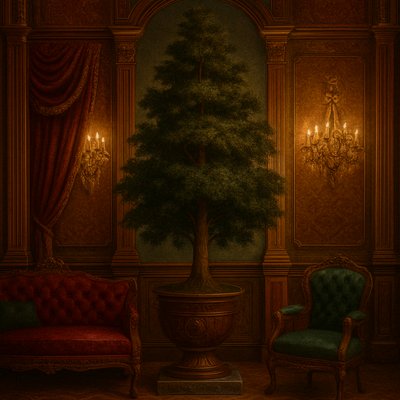
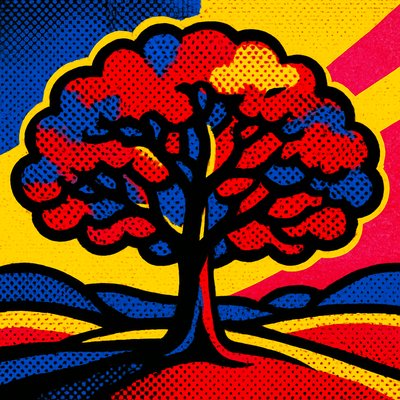
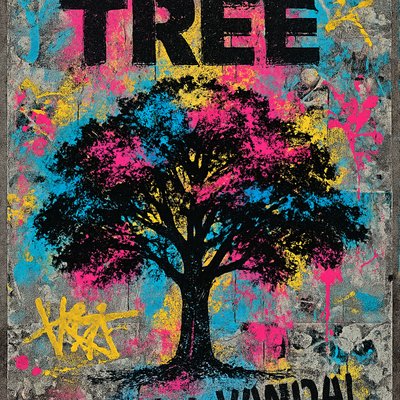
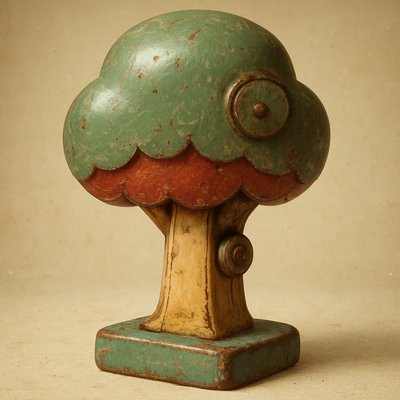
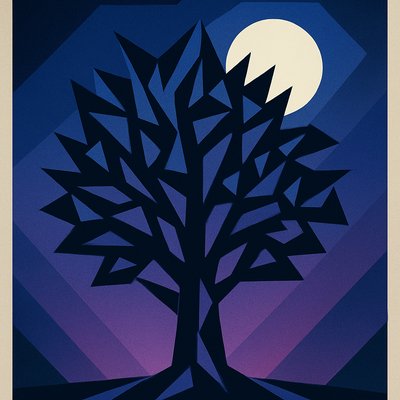
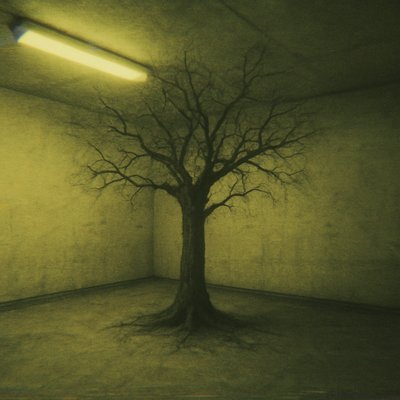
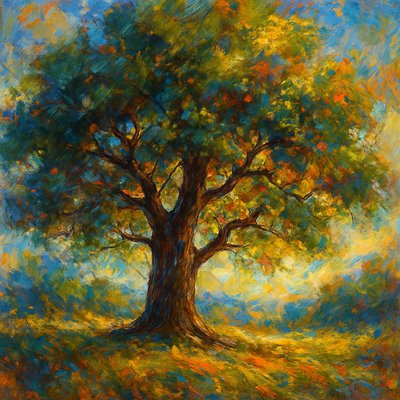
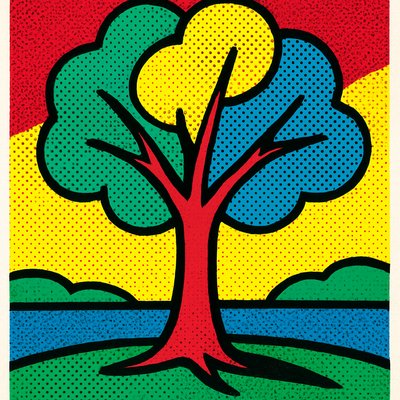
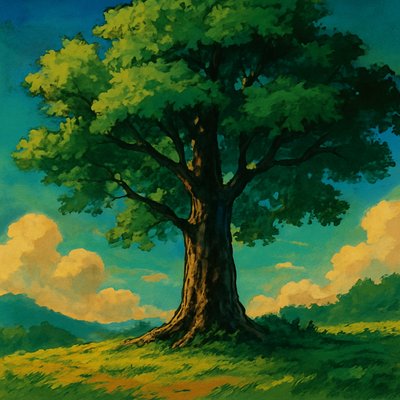
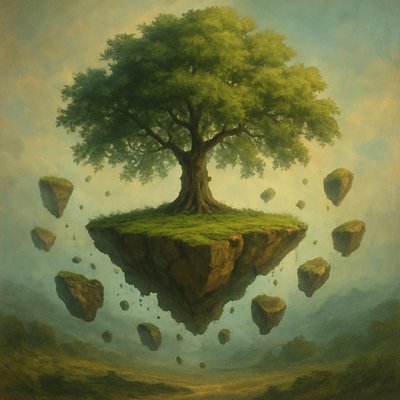
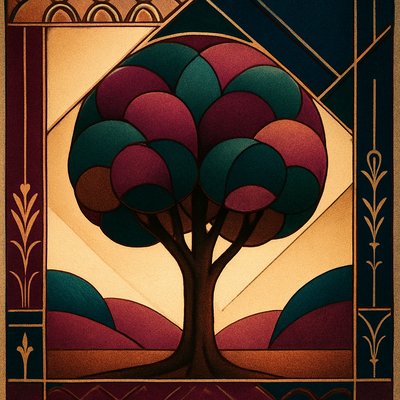
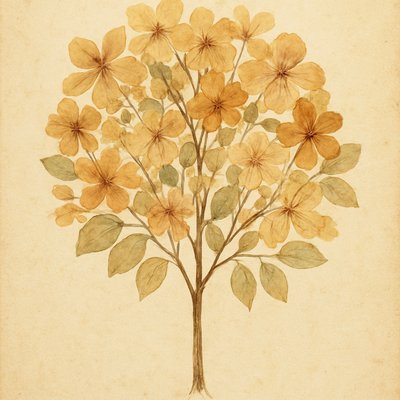
Allegorical painting representing the four seasons in the art style of Renaissance --v 6.1