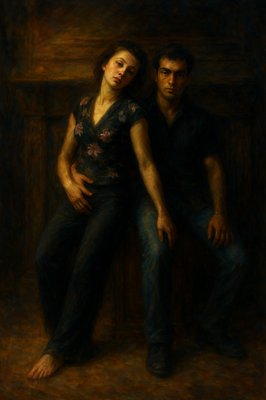
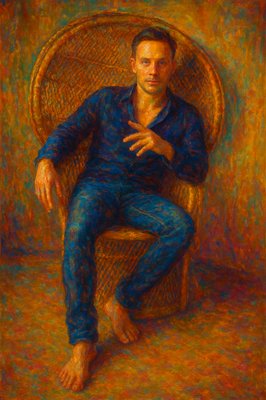
A Painting Of Three People Sitting At A Table Art

A low-angle, hyper-detailed tableau of the Mad Hatter's Tea Party, viewed under a dark, star-filled sky. The Mad Hatter sits at the table, his features not quite human, but constructed entirely from brilliant indigo and gold cosmic dust, representing the constellation Lepus. His top hat is a vortex of nebula, and one eye burns intensely—a specific star named "The Mad."

The Hatter is caught mid-sentence, demanding, "Why is a raven like a writing-desk?" As he speaks, his hands, which were merely starry, begin to shed their light, and the true form is revealed: the lower half of his coat and chair morph into coiling, dark serpentine scales, twisting around the table leg. The March Hare and Dormouse are frozen in terror. Above the table, a Raven made of pitch-black night materializes, its shadow falling directly over the Hatter. The entire scene is vibrating with the furious energy of a creature—the ancient serpent—who knows his time has been irrevocably stopped.

Style: Cinematic dark fantasy, astronomical realism, oil painting texture, emphasis on the contrast between the cold cosmic starlight and the dark, furious energy of the serpentine transformation.
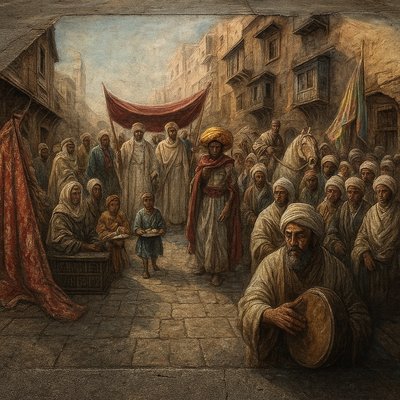
a painting of a group of people in a street
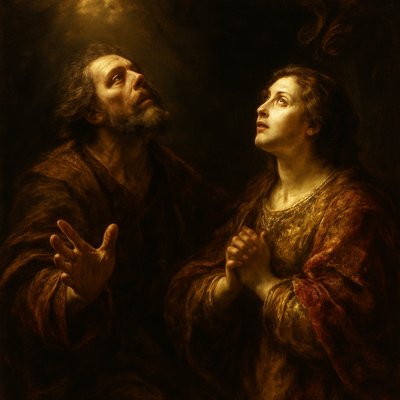
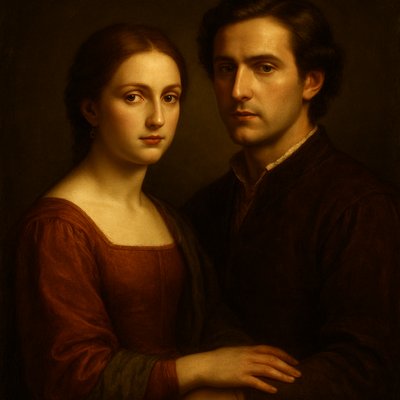
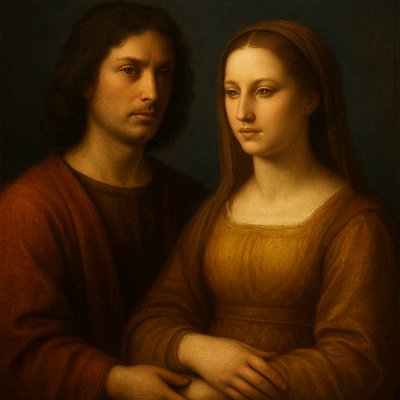
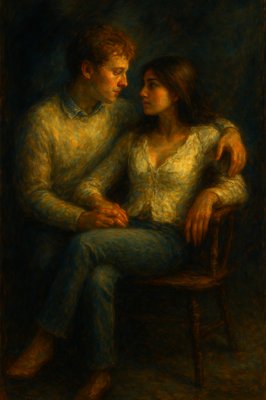
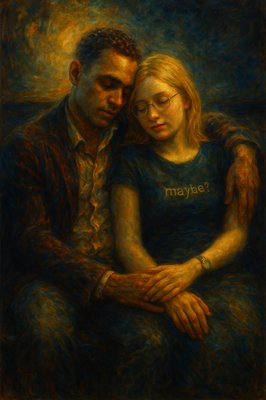
portrait of two people together
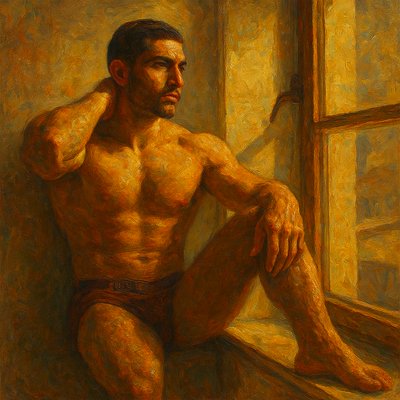
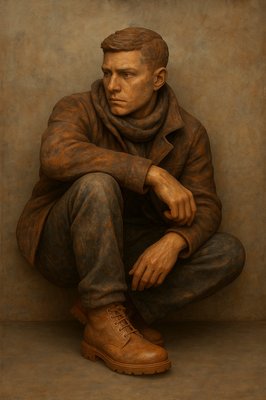
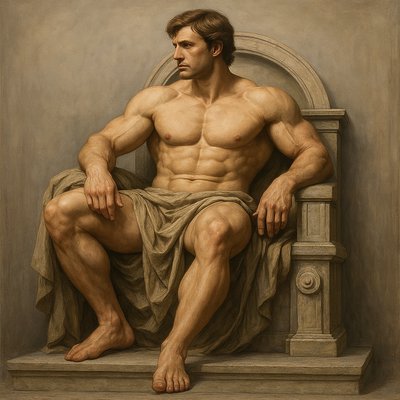
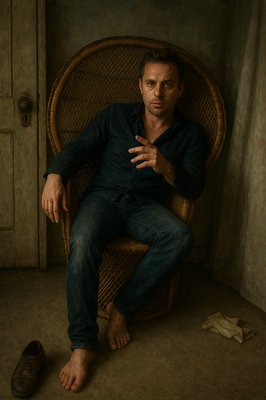
a painting of a man sitting in a chair
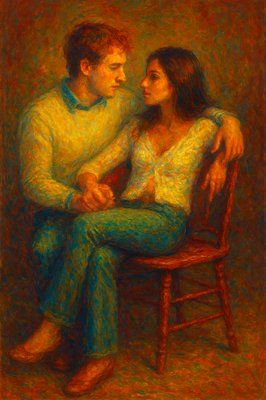
a painting of a man and woman sitting next to each other
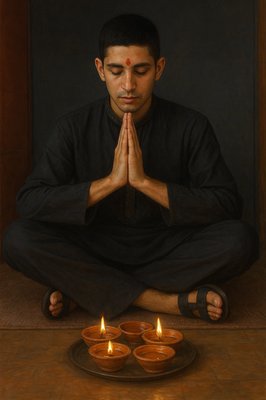
a painting of a man sitting in front of a plate of candles
a painting of a man and woman sitting next to each other
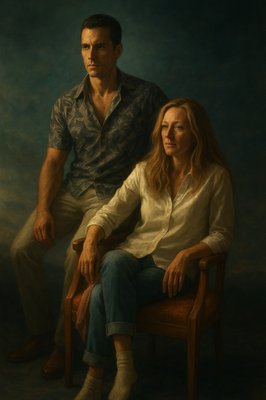
a painting of a man and a woman sitting in a chair
portrait of two people together
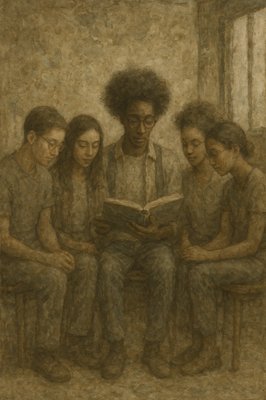
a group of people sitting next to each other
portrait of two people together
a painting of a group of people standing around a table
portrait of two people together
a painting of a man and a woman sitting on a chair
a painting of a man and woman sitting next to each other
a painting of a man sitting in a wicker chair
a painting of a man sitting on a couch
a painting of a man and woman sitting next to each other
a painting of a man and a woman sitting together
a painting of a man sitting on a bench
portrait of two people together
a painting of a group of people standing around a horse
portrait of two people together
A historically accurate and atmospheric depiction of the signing of the Mayflower Compact aboard the ship in November 1620. The scene is set in the dimly lit, cramped cabin of the Mayflower, with the ship's timbers and rigging subtly visible, conveying the challenging conditions of the voyage. A simple table or chest serves as the signing surface. The primary focus is on a small group of the last individuals signing the document: specifically, the indentured servants (or 'strangers' not directly part of the Separatist congregation) approaching or at the table. Their expressions show a mix of weary determination, understanding of the necessity, and perhaps a hint of quiet apprehension or resignation to this new social contract, given their status. They are dressed in the plain, practical clothing typical of 17th-century commoners and laborers. Figures of prominent Pilgrims or 'Saints' (like William Bradford or John Carver) are visible in the background, observing the proceedings with a sense of gravity and leadership, but they are not the central focus. The lighting is low and warm, perhaps from a lantern, creating a chiaroscuro effect that highlights the faces of the signers. The atmosphere conveys the momentousness of the act under difficult circumstances, the diverse composition of the group, and the early seeds of self-governance in a new world. The artistic style is a realistic, historically detailed oil painting, capturing the solemnity and human element of this pivotal historical moment."
a girl sitting on a rock looking at the sea with a big ship with red sails on the horizon
Gingerbread Horse Village on a table beautifully decorated for a Christmas party with  tiny gingerbread horses, little houses made of cookie and icing, warm golden bakery glow, cinnamon and molasses textures, holiday whimsy, soft shadowing, charming handcrafted style, cinematic close-up composition
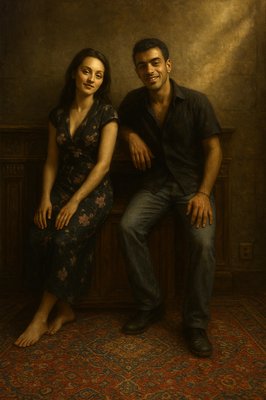
A surreal, double-exposure art piece. Inside, a detailed architectural interior of a temple with a table of "shewbread" and a glowing altar. Outside and overlapping, a vast, swirling nebula and "heaven of heavens" filled with stars and cosmic light, suggesting the infinite nature of God. The temple walls seem translucent, unable to contain the celestial glory. Ethereal, oil painting style, deep blues and glowing golds, inspired by Rembrandt’s lighting. “And Solomon sent to Huram the king of Tyre, saying, As thou didst deal with David my father, and didst send him cedars to build him an house to dwell therein, even so deal with me. Behold, I build an house to the name of the LORD my God, to dedicate it to him, and to burn before him sweet incense, and for the continual shewbread, and for the burnt offerings morning and evening, on the sabbaths, and on the new moons, and on the solemn feasts of the LORD our God. This is an ordinance for ever to Israel. And the house which I build is great: for great is our God above all gods. But who is able to build him an house, seeing the heaven and heaven of heavens cannot contain him? who am I then, that I should build him an house, save only to burn sacrifice before him?” (2 Chronicles 2:3-6, KJV)
a man sitting on the floor in front of candles
a man sitting in front of a cake with candles on it
portrait of two people together
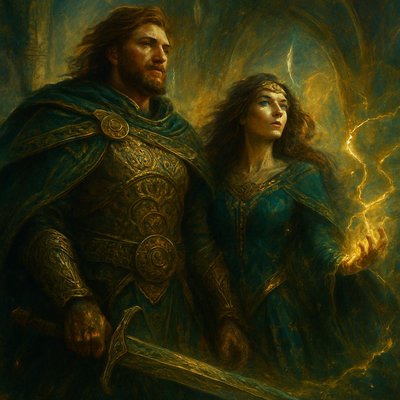
a painting of two people walking down a street
a painting of a group of people and a horse
A grand medieval hall in King Arthur's Camelot transformed by modern invention: armored knights in shining full-plate mail and nobles in velvet robes gathered around a large wooden table, intently reading freshly printed newspapers with bold 19th-century headlines like 'Merlin's Latest Blunder Exposed!' and 'Eclipse Prediction: Yankee Wizard Triumphs Again', ink still glistening on the broadsheets, one knight holding the paper upside down in confusion while another points excitedly at an advertisement for bicycles, flickering torchlight and early electric bulbs casting warm dramatic glows on faces and paper, rich textures on crinkled newsprint, polished armor reflections, ornate tapestries and stone arches in background with subtle printing press visible through an open door belching faint steam, vibrant colors with deep crimson reds, golden yellows, and inky blacks, god rays streaming through high arched windows at golden hour, hyper-detailed photorealistic fantasy style, epic cinematic composition capturing satirical anachronism and wonder,
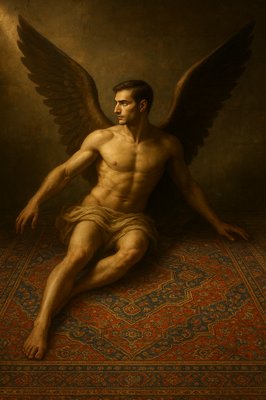

a painting of a group of people walking up a hill
a painting of a group of people standing in front of a doorway
a stack of newspapers sitting on top of each other
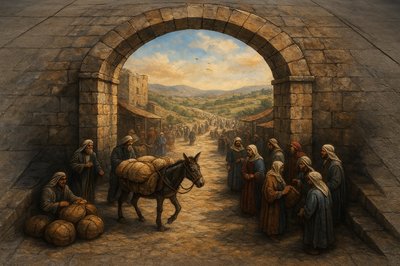
a painting of a group of people standing in front of a stone arch