A Painting Of A Woman Wearing Glasses And A Scarf Art

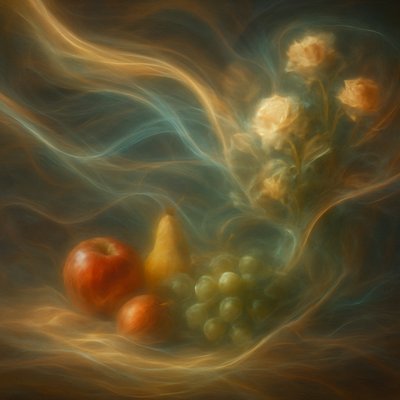
still life arrangement of fruits and flowers
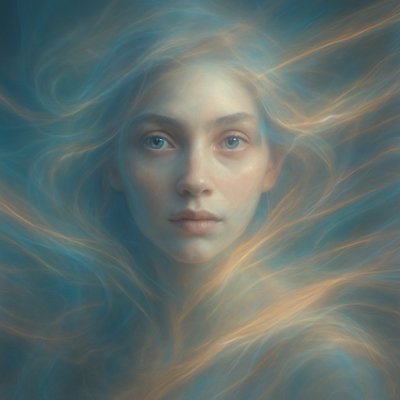
portrait of a person with expressive eyes
Gritty Historical Realism Style, Cinematic Film Photography, Natural Daylight. A powerful, candid medium shot of the infamous pirate duo, Anne Bonny and Mary Read, standing side-by-side on the weathered wooden deck of the sloop Revenge in the Caribbean Sea (circa 1720).

The Subjects: Both are dressed in practical, worn 18th-century male sailor's attire—loose canvas breeches, oversized linen shirts, heavy leather waistcoats, and bandanas—scruffy clothing that disguises their gender at a distance but reveals them as fiercely capable women upon closer inspection. Their faces are sun-weathered, dirty, and determined.

Specific Details: Anne Bonny (left) has fiery red hair escaping a dark bandana and a tricorn hat pushed back; she holds a drawn cutlass and has a defiant, volatile expression. Mary Read (right) looks sturdier, wearing a heavy wool coat, arms crossed over her chest with two flintlock pistols visible in her sash, looking steady and calculating.
The Setting: The background is a chaotic, working pirate ship deck with coils of tarred rope, rigging, barrels, and a cannon. Beyond the rail is the turquoise ocean and a hazy tropical coastline. The lighting is harsh, midday sun, with salt spray in the air. The mood is tense, rebellious, and authentic. Film grain texture.
Woman
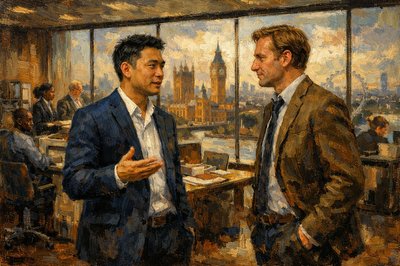
Inside a large office building in London, on the 5th floor, Wing Sun's father, a Chinese Malaysian man in his 30s, speaks to his counterpart in the company, and English man, about business.  Other workers are seated at their desks and standing at a copy machine.  There are some Black people, but mostly British.  One whole wall of the room is glass and we can see something of London outside.
serene landscape with mountains and water
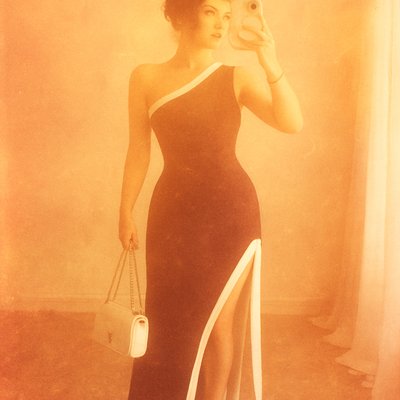
a woman in a black and white dress holding a camera
a woman standing in front of a group of people
Woman with flowing hair
An awe-inspiring and whimsical scene featuring Willy Wonka's Great Glass Wonkavator, soaring high above Louisiana and ascending into a fantastical sky. The Wonkavator itself is a magnificent, multi-directional glass elevator, transparent and sparkling, with Willy Wonka (in his iconic purple coat and top hat), and several anthrpomorphic cats in stylish New Orleans clothing clearly visible and enjoying the ride inside. The interior of the Wonkavator shows intricate, whimsical control panels. The Wonkavator is depicted in mid-flight, having just burst through the factory roof or rising above the clouds. Below it, the fantastical landscape of the Bayou and various whimsical buildings from the city of New Orleans. Beyond is the ocean. The lighting is bright and magical, emphasizing the glass's transparency and the vibrant colors of the world below and beyond. The overall mood is one of boundless adventure, limitless possibilities, and pure, joyful fantasy."
An awe-inspiring and whimsical scene featuring Willy Wonka's Great Glass Wonkavator, soaring high above Louisiana and ascending into a fantastical sky. The Wonkavator itself is a magnificent, multi-directional glass elevator, transparent and sparkling, with Willy Wonka (in his iconic purple coat and top hat), and several  cats in stylish New Orleans clothing clearly visible and enjoying the ride inside. The interior of the Wonkavator shows intricate, whimsical control panels. The Wonkavator is depicted in mid-flight, having just burst through the factory roof or rising above the clouds. Below it, the fantastical landscape of the Bayou and various whimsical buildings from the city of New Orleans. Beyond is the ocean. The lighting is bright and magical, emphasizing the glass's transparency and the vibrant colors of the world below and beyond. The overall mood is one of boundless adventure, limitless possibilities, and pure, joyful fantasy."
a woman standing in front of a colorful waterfall
Woman at window with flowers
a woman with a bubble gum in her mouth
Neon-Futurism Digital Art Style, Bioluminescent Sci-Fi Cosmic Setting, High-Altitude Perspective. An exhilarating shot where the highway feels like it is suspended at the very top of the universe.

    The Rider & Bike Consistency: The lone motorcyclist—wearing the signature sleek, armored suit and helmet—is tucked tight for aerodynamics on the hubless "light-cycle." The cyan and orange neon rings of the wheels are glowing intensely as the bike reaches top speed.

    The Path (The Rising Ecliptic): The glowing blue laser-grid highway is no longer level; it is banking sharply upward, curving through a sea of soft, white-gold clouds made of ionized gas.

    The Cancer Presence (The Eagle): Soaring directly above the rider is the colossal, majestic Celestial Eagle. Its wingspan is massive, stretching across the entire frame. The bird is composed of shimmering white light and silver-blue circuitry. Its feathers look like individual blades of glowing glass, trailing "stardust" behind them.

    The Action: The Eagle is in mid-flight, its talons tucked and its head forward, appearing to lead the rider through a turbulent nebula. The rider is positioned directly in the "slipstream" of the Eagle’s wings, where the air is filled with glowing white feathers made of pure energy.

    Atmosphere: A sense of soaring freedom and divine protection. The color palette shifts to bright whites, ethereal silvers, and soft periwinkle, contrasting with the sharp neon of the motorcycle.

    Lighting: Radiant and "heavenly." The glow from the Eagle’s wings illuminates the top of the rider’s helmet and shoulders in a brilliant white rim-light.
a woman with flowers in her hair standing in front of a computer screen
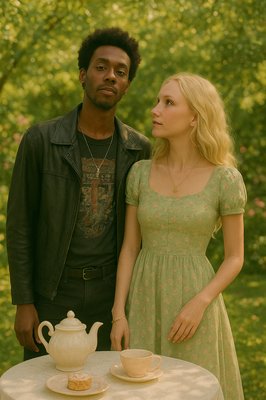
a man standing next to a woman near a table
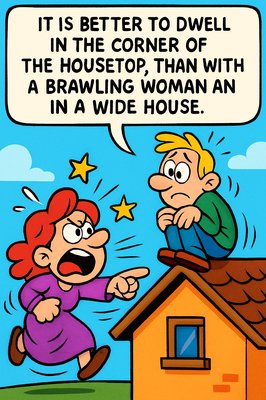
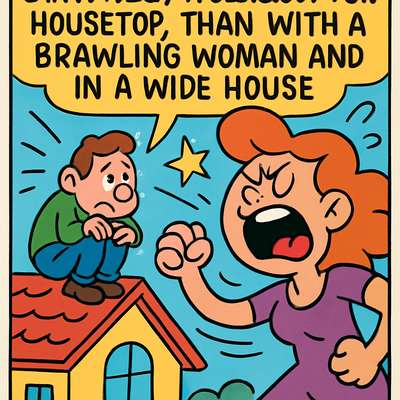
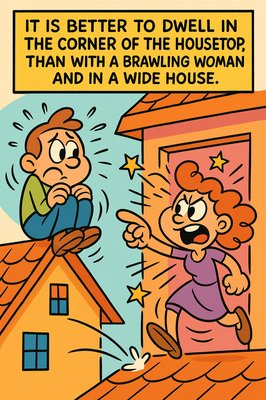
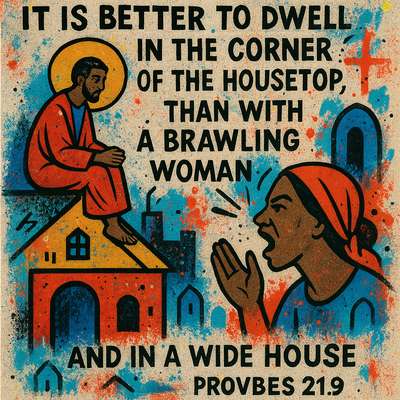
It is better to dwell in the corner of the housetop, than with a brawling woman and in a wide house.
a woman with her hair blowing in the wind
Woman with green shadows
Epic Biblical Baroque Painting Style, High-Contrast Tenebrism Lighting, Supernatural Realism. A monumental, earth-shattering scene at Golgotha at the precise moment of death.

The Central Figure: Jesus hangs lifelessly on a rough wooden cross, head bowed in finality, his body pale and scarred. A subtle, fading divine light emanates from him. The titulus above his head reads "INRI."

The Manifestation of the Roar (Jasher 54 influence): At the very instant of his death, the environment is violently convulsing, visualizing the "roar" of Judah echoing through time. Behind and above the cross, the dark, stormy clouds are being ripped apart by a massive, translucent ethereal manifestation of a roaring Lion's head formed from dust, lightning, and golden spiritual energy.

The Environmental Impact: The ground beneath the cross is cracking open with deep fissures. Massive boulders are shattering into dust mid-air. The temple veil in the distant city background is visibly tearing top-to-bottom.

The Human Reaction: Below the cross, the scene is one of absolute supernatural terror (as described in Jasher). Roman centurions are cowering on the ground, covering their ears, their helmets knocked off. Horses are rearing wildly, throwing their riders. The few followers present (Mary, John) are driven to their knees, not just in grief, but overwhelmed by the physical force of the cosmic event. The lighting is a chaotic mix of deep eclipse shadow and blinding bursts of supernatural golden-red light from the roaring manifestation.
Black long-haired anthropomorphic cat as a pilot, wearing 1930s aviator gear, flying a vintage biplane in a clear sky, dramatic 1930s aviation photography style.
Neon-Futurism Digital Art Style, Bioluminescent Sci-Fi Cosmic Setting, High-Altitude Perspective. An exhilarating shot where the highway feels like it is suspended at the very top of the universe.

    The Rider & Bike Consistency: The lone motorcyclist—wearing the signature sleek, armored suit and helmet—is tucked tight for aerodynamics on the hubless "light-cycle." The cyan and orange neon rings of the wheels are glowing intensely as the bike reaches top speed.

    The Path (The Rising Ecliptic): The glowing blue laser-grid highway is no longer level; it is banking sharply upward, curving through a sea of soft, white-gold clouds made of ionized gas.

    The Cancer Presence (The Eagle): Soaring directly above the rider is the colossal, majestic Celestial Eagle. Its wingspan is massive, stretching across the entire frame. The bird is composed of shimmering white light and silver-blue circuitry. Its feathers look like individual blades of glowing glass, trailing "stardust" behind them.

    The Action: The Eagle is in mid-flight, its talons tucked and its head forward, appearing to lead the rider through a turbulent nebula. The rider is positioned directly in the "slipstream" of the Eagle’s wings, where the air is filled with glowing white feathers made of pure energy.

    Atmosphere: A sense of soaring freedom and divine protection. The color palette shifts to bright whites, ethereal silvers, and soft periwinkle, contrasting with the sharp neon of the motorcycle.

    Lighting: Radiant and "heavenly." The glow from the Eagle’s wings illuminates the top of the rider’s helmet and shoulders in a brilliant white rim-light.
a silhouette of a woman in front of a sunset
An awe-inspiring and whimsical scene featuring Willy Wonka's Great Glass Wonkavator, soaring high above the chocolate factory and ascending into a fantastical sky. The Wonkavator itself is a magnificent, multi-directional glass elevator, transparent and sparkling, with Willy Wonka (in his iconic purple coat and top hat), young Charlie Bucket, and Grandpa Joe clearly visible and enjoying the ride inside. Wonka points excitedly, Charlie looks out with wide-eyed wonder, and Grandpa Joe grins with delight. The interior of the Wonkavator shows intricate, whimsical control panels.

The Wonkavator is depicted in mid-flight, having just burst through the factory roof or rising above the clouds. Below it, the fantastical landscape of the Chocolate Factory is spread out – chocolate rivers, edible gardens, candy cane trees, and various whimsical buildings. Beyond the factory, a stunning, imaginative sky unfolds, filled with floating candy clouds, distant fantastical landmarks, and even glimpses of planets and stars. The lighting is bright and magical, emphasizing the glass's transparency and the vibrant colors of the world below and beyond. The overall mood is one of boundless adventure, limitless possibilities, and pure, joyful fantasy."
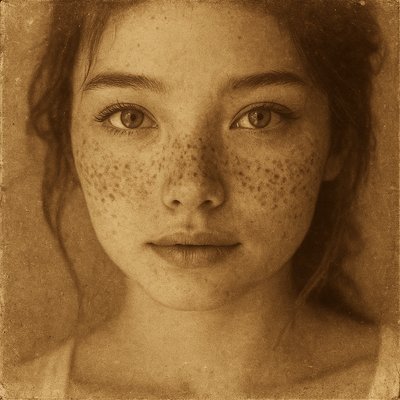
a sepia photograph of a woman with freckles on her face
A koi pond seen from above, orange and white koi fish swimming among lily pads, clear water with subtle ripples, fallen cherry blossom petals floating on the surface, dappled sunlight
Long Exposure Photography Style Style Transfer Example
wide landscape with natural scenery
house with front view
still life with everyday objects
anthropomorphic coyote in a tailored Victorian suit, wearing a brass-trimmed top hat and monocle, steampunk style, intricate mechanical accessories, standing in a forest with copper pipes and gear-laced trees, full body portrait, Vibrant Colors, heavy oil paint impasto, in the style of Peter Max with Mary Blair aspects.
New York City
a poster of a woman with a pearl necklace
a painting of a man holding a magnifying glass
A human pastor wearing a suit with a big cross necklace, standing in front of a beautiful cathedral in a forest city as the sun rises in the distance
a black and white photo of a woman
Victorian Oil Painting Art Style, Historical Digital Art Style, a rich and detailed full-body portrait of the famous giantess Anna Swan standing in the center of a lavish, gaslit exhibition hall at P.T. Barnum's American Museum in the 1860s. She is towering over the surrounding crowd of average-sized gentlemen in top hats and ladies in bonnets, whose heads only reach her waistline; they look up at her with expressions of awe and curiosity. Anna is dressed with immense dignity in a fashionable, expansive Victorian silk gown with a crinoline hoop skirt, tailored bodice, and lace trim. Her face is gentle, intelligent, and composed. The background is crowded with heavy red velvet drapery, gilded architectural details, curiosities in glass cases, and painted circus banners faintly visible. The lighting is warm, dramatic gaslight, creating deep shadows and highlighting the rich fabrics and the incredible scale of Anna Swan compared to her environment.