A Painting Of A Woman In A Green Dress Art

Woman with flowing hair
Noble woman with landscape
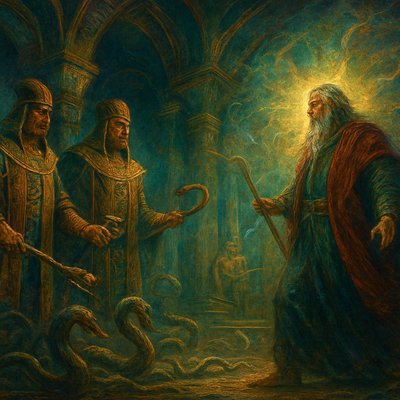
"fresco painting, stylized Egyptian profile, hieroglyphic details, vibrant earth tones"A dramatic, indoor scene from the Book of Exodus depicting the confrontation between Moses and the Egyptian magicians, Jannes and Jambres, in the court of Pharaoh. In the foreground, Jannes and Jambres stand proudly, dressed in ornate, gold-trimmed Egyptian robes, their faces stern and defiant. They are surrounded by their magical staffs and are attempting to replicate a miracle, perhaps surrounded by writhing, magically created snakes. Moses stands opposite them, his figure conveying authority and resolve, illuminated by a stark, celestial light. The background is a grand, dimly lit hall in the Egyptian palace, filled with massive columns and Pharaoh watching from his throne. The mood is one of intense rivalry, ancient power, and dramatic tension."
Style: Ethereal Historical Fantasy Portrait. The mood is quiet, reverent, and deeply mystical. Soft, natural moonlight is the primary light source, creating gentle rim-lighting.

The Subject (Asonya): A woman of the ancient, antediluvian world, dressed with profound modesty. She is wrapped in multi-layered, heavy robes of woven wool dyed in deep indigo and charcoal grey that conceal her form. A textured veil covers her hair and frames her face. Her expression is contemplative and gentle, with eyes gazing upward.

The Moon Phase Connection: The current moon phase—a slender, glowing Waning Crescent—is intrinsically tied to her appearance.

    The Headpiece: A clasp made of pale, almost translucent moonstone in the exact shape of the crescent moon secures her veil. It seems to hold an internal, soft luminescence.

    The Projection: A faint, ethereal projection of the crescent moon phase is visible subtly glowing on the fabric of her veil over her forehead, as if starlight is clinging to her.

Action & Setting: She stands on an ancient, wind-worn stone platform used for observing the heavens. In her hands, she holds a simple, dark earthenware bowl filled with still water. The reflection of the actual crescent moon in the sky is perfectly captured in the water she holds.

Atmosphere: The background is a vast, clear night sky filled with countless stars. The air feels old and still.
Style: Cinematic Fantasy Portrait, Ancient Near Eastern aesthetic with a mystical, ethereal overlay. The look should feel like a rediscovered fresco brought to life, rich in texture and deep color.

The Subject (Asonya): A woman of arresting, almost supernatural beauty belonging to a pre-flood civilization. She has a powerful, enigmatic presence. Her eyes are large, dark, and intensely knowing, rimmed heavily with kohl (antimony)—a cosmetic taught by the Watchers.

Attire & Adornment (The Forbidden Knowledge): She is dressed not just in fine linen, but in adornments that hint at celestial instruction.

    Jewelry: She wears elaborate, heavy bracelets and necklaces made of hammered metals that gleam with an unusual iridescence, set with uncut, glowing gems that seem almost alive.

    Headpiece: A complex circlet of woven silver and dark stones rests on her long, flowing dark hair, reflecting the starlight.

Action/Pose: She stands holding a polished obsidian mirror in one hand, gazing slightly off-camera with an expression that is both wise and burdened.

Setting: She is standing on the balcony of a megalithic stone structure meant to observe the heavens. The background is a dramatic night sky filled with unfamiliar constellations and perhaps a faint, ethereal glow of an aurora, hinting at the presence of celestial beings. The overall atmosphere is one of ancient mystery and profound beauty.
Photorealism Art Style, a breathtaking, upward-looking perspective from the ground, portraying ancient Jewish cosmology for Psalm 8:3. In the lower frame, a young woman with long, flowing red hair, dressed in simple, ethereal white heavenly attire, stands on subtle, ancient earth, gazing upwards with an expression of profound awe and wonder. Above her, the night sky transitions into a vast, layered structure of heavens. Clearly visible is a translucent, crystalline firmament (raqia), appearing as a colossal, shimmering barrier. Within this firmament, large, distinct stars and a glowing crescent moon are vividly captured, appearing as tangible, luminous objects "set into" its surface, radiating a soft, internal light. Beyond and above this firmament, immense, dark yet shimmering celestial waters are visibly contained, looking like a real, suspended ocean reflecting an unseen, brilliant divine light from the highest reaches. The overall scene is imbued with deep blues, celestial purples, and radiant golds from the embedded lights. Focus on the woman's reverent expression, the stunning depth of the layered heavens seen from below, the realistic texture of the firmament, and the tangible, luminous quality of the stars and moon within it, creating an image of overwhelming ancient wonder and divine majesty.
Digital Art Style, Romanticism Art Style, an overwhelmingly majestic and spiritually transformational painting inspired by Psalm 8:3-6. The scene captures a sweeping, sublime night sky, featuring a visible, prominent moon and countless brilliant stars, all rendered with luminous, dramatic glow. In the foreground, standing small against the infinite scale of the cosmos, is a solitary woman with long red hair, wearing simple, flowing attire. She is gazing upward, and a blinding shaft of pure, ethereal divine light—representing the glory and presence of the Lord—breaks through the veil of the deepest heavens, bypassing the moon and stars. This light dramatically envelops and transforms the woman, causing her clothing and hair to visibly glow with celestial energy. The artwork uses extreme digital chiaroscuro to emphasize the moment of spiritual encounter, with the vast sky and surrounding earth serving as a dark backdrop to the radiant divine presence. Focus on the sublime scale of the cosmos, the electrifying, transformative power of the pure divine light, and the solitary woman's luminous spiritual encounter against the immense majesty of the creation.
White structured coat
Woman at window with flowers
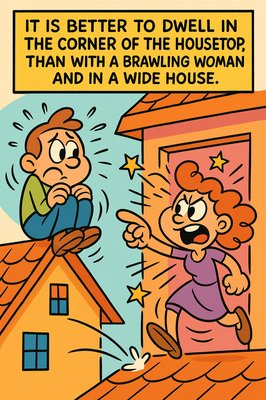
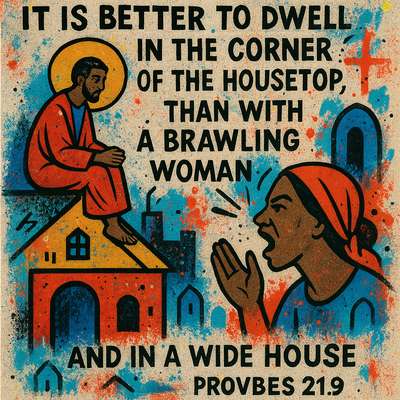
It is better to dwell in the corner of the housetop, than with a brawling woman and in a wide house.
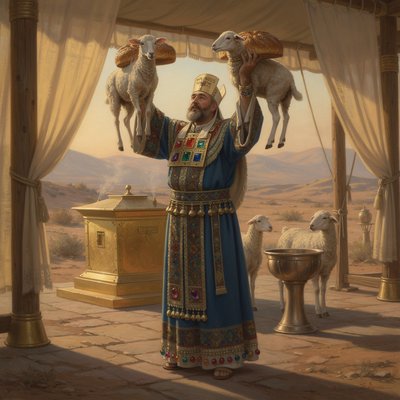
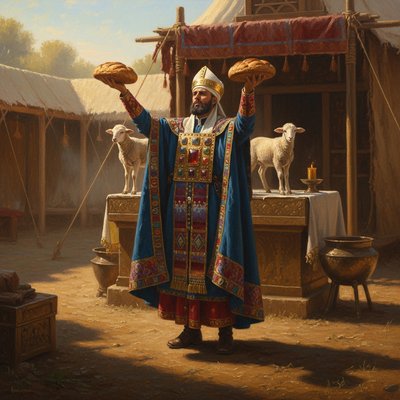
A hyper-detailed, photorealistic depiction of the High Priest of Israel performing the Feast of Weeks (Pentecost) wave offering. The High Priest is dressed in the complete set of holy vestments: a blue robe with golden bells and pomegranates on the hem, a colorful ephod, and a breastplate with twelve jewels. A golden plate engraved 'HOLINESS TO THE LORD' is tied to his linen mitre. He stands in the Tabernacle courtyard, facing the altar, holding the two leavened loaves of firstfruits and two male lambs high, performing the sacred wave offering ritual. Golden morning light, historically accurate setting, cinematic oil painting style.
It is better to dwell in the corner of the housetop, than with a brawling woman and in a wide house.
White ceramic bowl with single green apple
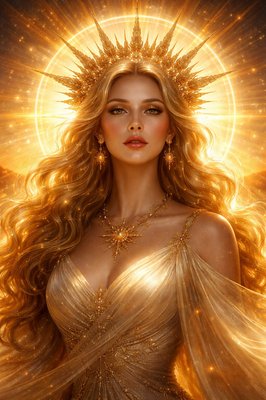
Cinematic close portrait of a radiant sun goddess, a beautiful woman with powerful serene expression, golden-blonde hair glowing in backlight, intricate sunburst crown, warm golden aura radiating from her skin, sunrise horizon behind her, dramatic rim lighting, ultra-detailed skin texture, realistic fabric movement, high contrast, cinematic realism, 8k detail
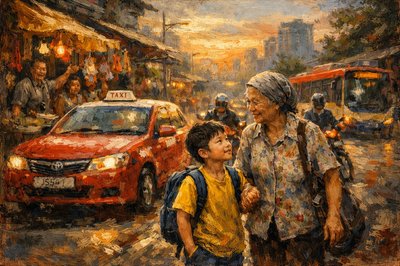
Morning city scene in Petaling Jaya. A 10 year old chinese boy and his grandmother.  As they weave through the narrow sidewalk,  taxis zip by, buses screech to a halt at stoplights, motorbikes wend their way through the stopped traffic, trying to get a head start when the light turns green.  People in the informal businesses set up along the sidewalks call out greetings in a mix of Cantonese, Malay, and English. The sky, still soft with the remnants of dawn, and yet already heavy with humid heat, hinted at another sweltering afternoon ahead.
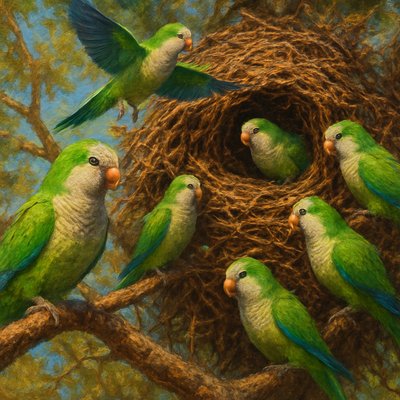
Oil Painting Art Style, a lively scene showcasing multiple vibrant Quaker Parrots (Monk Parakeets) in crisp detail, actively perched, interacting, and flying around their extraordinary communal stick nest. The nest, a massive and intricate structure woven from countless twigs, serves as a striking backdrop, resembling a complex, multi-chambered apartment building for birds high within a large, leafy tree. The focus is primarily on the parrots themselves: their distinctive bright green plumage, grey chests, and intelligent, curious eyes are rendered with exquisite detail. Several parrots are clearly visible, their individual feathers, beaks, and expressions highlighted. The setting is bright and lively, illuminated by clear, natural sunlight, casting detailed shadows. Focus on the vibrant colors and fine feather details of the Quaker Parrots, their lively activity, and the impressive scale and texture of their communal stick nest as an integral part of their environment.
A village festival
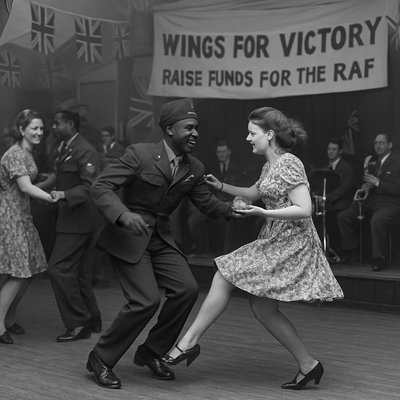
A historically accurate, high-quality black and white photograph from 1943. The scene is a bustling village hall in wartime Britain, decorated with Union Jack flags and a large banner reading, "Wings for Victory - Raise Funds for the RAF."

The focus is on several pairs of dancers on a wooden floor. The main subjects are smartly dressed African American airmen in USAAF uniforms dancing with British women wearing fashionable 1940s floral print dresses. They are engaged in an energetic and joyous moment of the Lindy Hop (or Jitterbug/Swing dancing), characterized by dynamic movement, big smiles, and one pair caught in a mid-air 'breakaway' or 'swing-out' move. In the background, a small jazz band featuring a drummer and saxophone player is visible on a low stage. The atmosphere is warm, integrated, and full of the energy of an exciting, new dance style.
"A high-energy, candid photo of the three people from the reference image—a woman with long red hair wearing a headband, an older man with white hair, and a young boy in a lime green shirt—engaged in a joyful balloon fight inside their cozy RV. Lot of colorful balloons (red, blue, and purple) are captured mid-air, appearing slightly blurred to show motion. The family is laughing, with the boy reaching up to swat a balloon and the man playfully dodging one. The interior of the RV is bright with natural light coming through the windows, showing wood cabinetry and a comfortable dinette area. The scene is full of warmth, action, and genuine family connection."
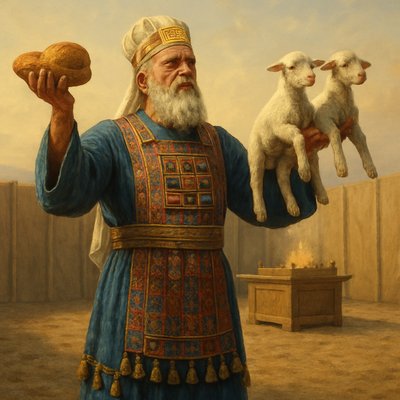
A hyper-detailed, photorealistic depiction of the High Priest of Israel performing the Feast of Weeks (Pentecost) wave offering. The High Priest is dressed in the complete set of holy vestments: a blue robe with golden bells and pomegranates on the hem, a colorful ephod, and a breastplate with twelve jewels. A golden plate engraved 'HOLINESS TO THE LORD' is tied to his linen mitre. He stands in the Tabernacle courtyard, facing the altar, holding the two leavened loaves of firstfruits and two male lambs high, performing the sacred wave offering ritual. Golden morning light, historically accurate setting, cinematic oil painting style.
It is better to dwell in the corner of the housetop, than with a brawling woman and in a wide house.
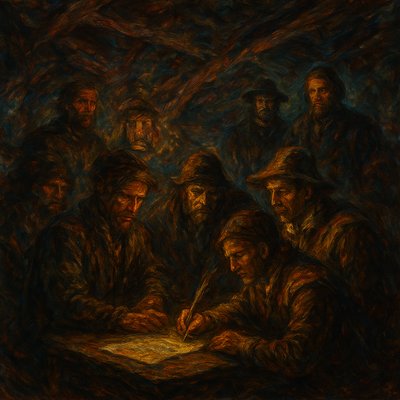
A historically accurate and atmospheric depiction of the signing of the Mayflower Compact aboard the ship in November 1620. The scene is set in the dimly lit, cramped cabin of the Mayflower, with the ship's timbers and rigging subtly visible, conveying the challenging conditions of the voyage. A simple table or chest serves as the signing surface. The primary focus is on a small group of the last individuals signing the document: specifically, the indentured servants (or 'strangers' not directly part of the Separatist congregation) approaching or at the table. Their expressions show a mix of weary determination, understanding of the necessity, and perhaps a hint of quiet apprehension or resignation to this new social contract, given their status. They are dressed in the plain, practical clothing typical of 17th-century commoners and laborers. Figures of prominent Pilgrims or 'Saints' (like William Bradford or John Carver) are visible in the background, observing the proceedings with a sense of gravity and leadership, but they are not the central focus. The lighting is low and warm, perhaps from a lantern, creating a chiaroscuro effect that highlights the faces of the signers. The atmosphere conveys the momentousness of the act under difficult circumstances, the diverse composition of the group, and the early seeds of self-governance in a new world. The artistic style is a realistic, historically detailed oil painting, capturing the solemnity and human element of this pivotal historical moment."
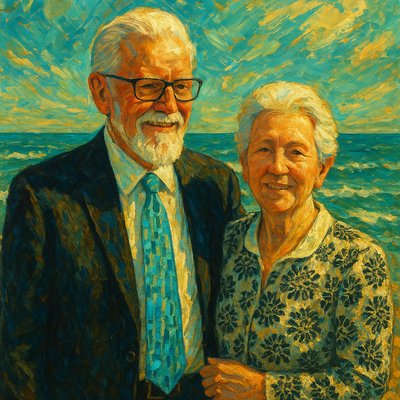
a painting of an older couple standing next to each other
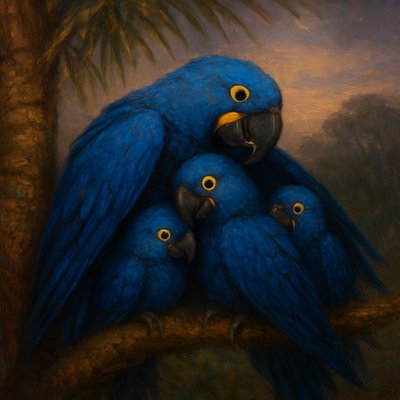
Oil Painting Art Style, a tender and protective scene featuring a small, close-knit flock of magnificent Blue Hyacinth Macaws gathering for roosting at dusk. On a sturdy branch of a tall palm tree within an open woodland, a mother Hyacinth Macaw is prominently depicted, gently extending a wing to cover a smaller, younger macaw nestled securely beneath her. The macaws, with their incredibly vibrant, deep blue plumage and striking yellow eye rings, are nestled closely together, their bodies positioned to evoke a powerful sense of being 'covered' and finding 'refuge' under a protective wing. The soft, fading twilight glow illuminates their feathers with a deep, iridescent sheen and casts gentle, lengthening shadows. The surrounding natural environment is rendered in muted, dusky tones of green and purple, creating a tranquil atmosphere of safety and secure communal rest. Focus on the exquisite detail of the macaws' feathers and tender facial expressions, particularly the mother and young, the profound warmth and security of their huddle, and the peaceful, protective mood inspired by their collective refuge.
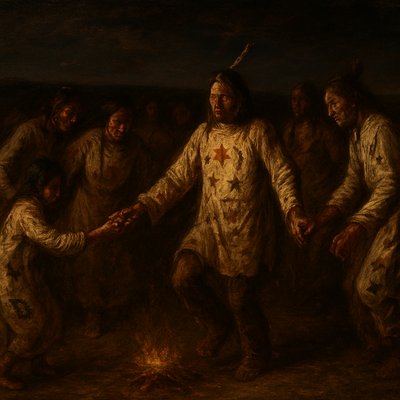
"A historically accurate depiction of a Ghost Dance, focusing on the late 19th-century context, specifically around 1890-1891. The scene shows Lakota (Sioux) or Northern Paiute people (specify one or include elements of both, but avoid anachronisms) participating in the ceremony.

Setting: A vast, open prairie or high desert landscape, under an expansive sky. The time of day could be dusk or night, with a prominent moon or stars, or a bright, clear day. Avoid overtly spiritual or ethereal elements like floating spirits unless explicitly requested for a later, more symbolic iteration. The focus should be on the earthly ceremony.

Participants: A circle of men, women, and children, hand-in-hand, moving in a slow, rhythmic shuffle or circular motion. Their faces show a mixture of devotion, hope, and determination. Some may have expressions of trance or deep concentration.

Attire:

    Ghost Dance Shirts/Dresses: Emphasize the unique Ghost Dance shirts and dresses, which were typically made of muslin or canvas. These garments should feature painted designs such as stars, crescents, birds (especially eagles or crows), buffalo, human figures, or crosses. The designs should appear hand-painted, not mass-produced.

    Hair and Adornments: Participants should have braided hair or wear it long. Some may wear feathers (e.g., eagle or hawk feathers) in their hair. Minimal traditional adornments, as the focus was often on the Ghost Dance shirt itself. Avoid overly elaborate or Hollywood-esque depictions of war bonnets unless relevant to a specific individual and context.

    Footwear: Moccasins or bare feet.

Action/Atmosphere:

    The dancers are moving in a counter-clockwise circle, with a central figure or a small group often leading.

    The overall mood is one of earnest prayer and communal spiritual effort. The dance should convey a sense of hope for renewal and the return of the old ways, rather than aggression or despair.

    There might be a central pole or small fire as a focal point, around which the dance takes place.

    Avoid any signs of direct conflict or violence; the Ghost Dance itself was a non-violent spiritual movement.

Specific Considerations for Accuracy:

    Wovoka's Influence: The teachings of Wovoka (the Northern Paiute prophet) emphasized peace, hard work, and the return of the buffalo and deceased ancestors. The scene should subtly reflect this hopeful, redemptive spirit.

    Regional Variations: If focusing on Lakota, consider their specific interpretations, which sometimes included more imagery related to their warrior traditions on the shirts, but still within the peaceful framework of the dance.

    Respectful Portrayal: Ensure the depiction is respectful and avoids any stereotypical or caricatured representations of Indigenous people. Focus on their human dignity and spiritual sincerity.
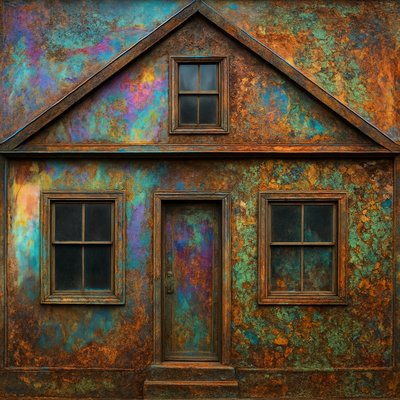
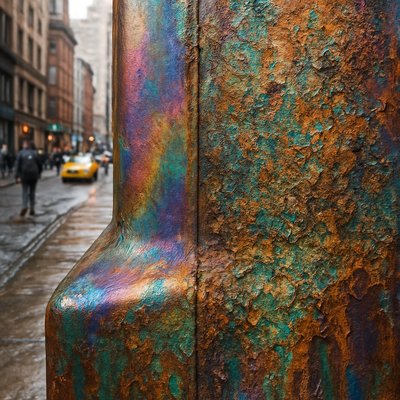
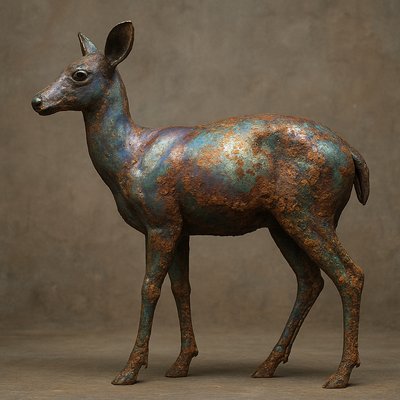
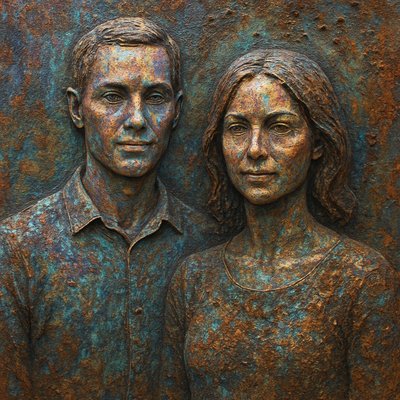
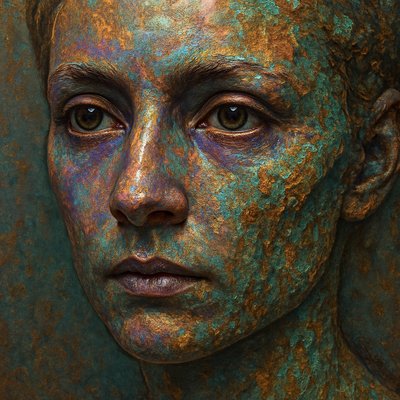
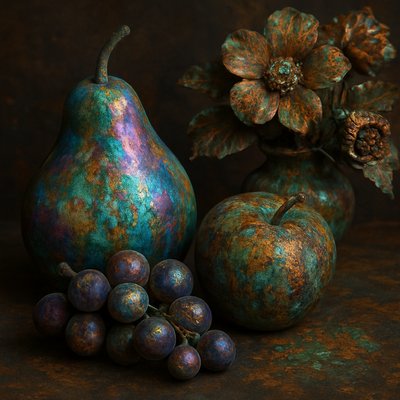
Oxidation Gradient Metalwork Style Transfer Example
house with front view
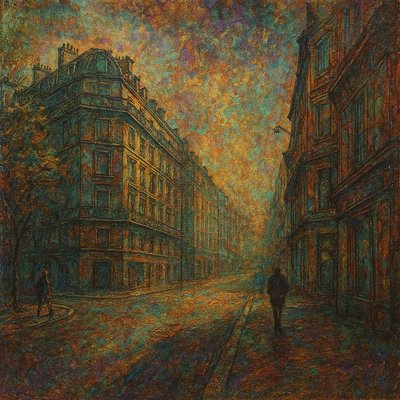
urban street with city activity
animal standing in natural pose
portrait of two people together
still life with everyday objects
portrait of a person with expressive eyes
still life arrangement of fruits and flowers
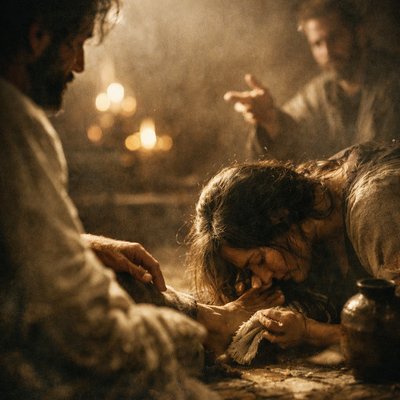
And he turned to the woman, and said unto Simon, Seest thou this woman? I entered into thine house, thou gavest me no water for my feet: but she hath washed my feet with tears, and wiped them with the hairs of her head.
Luke 7:44 (KJV)
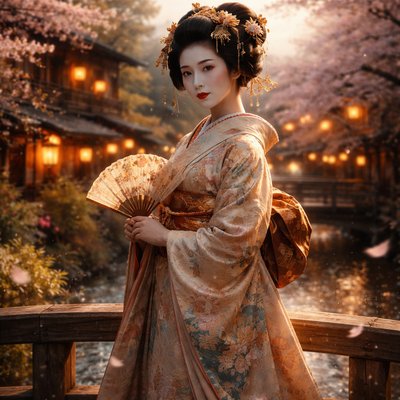
Cinematic Film Style, Romanticism Art Style, a stunningly beautiful and atmospheric portrait of a Geisha in 1930s Kyoto. She is dressed in an exquisite, flowing silk kimono with intricate floral patterns and a wide obi sash. Her face is painted in traditional white makeup with striking red lips and piercing blue-gray eyes. She is standing on a traditional wooden bridge over a stream in Gion, with soft pink cherry blossoms falling around her like snow. The lighting is a warm, golden-hour glow that creates a soft-focus, ethereal background of old wooden teahouses and paper lanterns. Focus on the shimmering texture of the silk, the delicate movement of the blossoms, and a sense of quiet, longing beauty.
a blue, green, yellow, and blue background
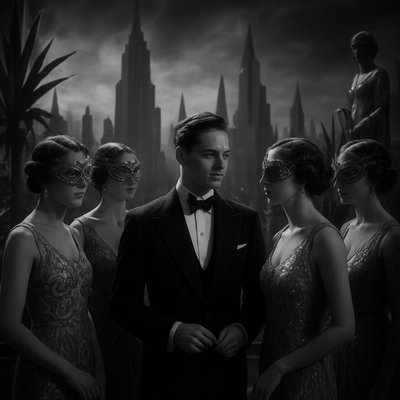
A stunning, high-contrast black and white cinematic still, mimicking the style of 1920s German Expressionism. Depict a luxurious, futuristic rooftop garden party. The scene features Freder, the young master, surrounded by several glamorous, wealthy, aristocratic ladies. The women are all dressed in ornate, art-deco-inspired gowns, their hair styled in sleek 1920s waves. Each lady wears an intricate, opulent Venetian masquerade mask that covers their eyes, adding an element of mystery and formality. In the background, the colossal, sharp, angular skyscrapers of the 'Metropolis' cityscape loom under a dramatic, moody sky. The garden is filled with exotic, highly geometric and stylized plants and gilded statues, reflecting the extreme wealth of the elite. Cinematic lighting, dramatic shadows, deep focus, silent film aesthetic, high detail, photorealistic.
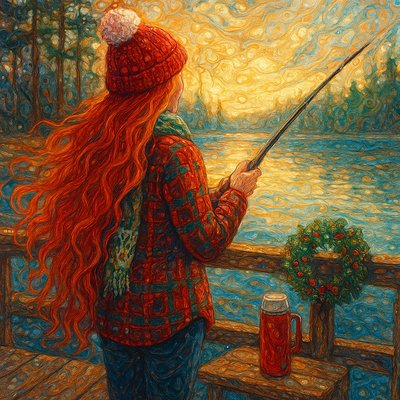
A realistic and peaceful image of a 56-year-old woman fishing on the shores of Lake Livingston, Texas, during the Christmas season. She has very long, vibrant red hair that flows all the way down to her waist, gently moving in the breeze.

She is standing on a wooden dock or sitting in a comfortable chair by the water, surrounded by the tall pine trees characteristic of East Texas. The weather is cool but pleasant (Texas winter). She is wearing cozy holiday-themed attire, such as a warm plaid flannel shirt in red and green, a festive scarf, or a beanie. Maybe there is a small Christmas wreath on the railing of the dock or a thermos of hot cocoa nearby. The lake is calm and reflects the soft winter sun. The lighting is warm and golden. High quality, photorealistic, serene atmosphere.