A Painting Of A Woman Holding A Bow And Arrow Art

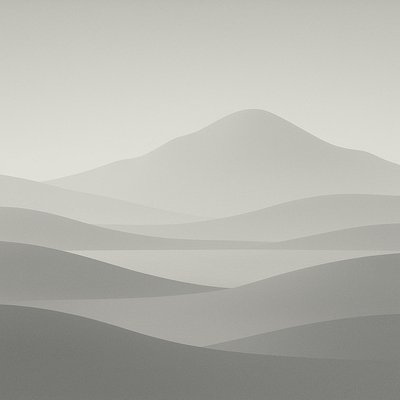
Color Field Minimalism Art Style Style Transfer Example
a drawing of a group of people standing around each other
Neon-Futurism Digital Art Style, Bioluminescent Sci-Fi Cosmic Setting. A sleek, futuristic scene set deep in the interstellar void, with absolutely no Earth terrain, asphalt, or atmosphere visible. The Path (The Ecliptic): The "road" is a floating, translucent highway constructed entirely of glowing blue and orange laser grids and condensed stardust, arcing through infinite dark space with dynamic curves. The Rider: A lone rider on a futuristic, hubless "light-cycle" sportbike speeds along this cosmic path at high velocity. The rider is fully encased in a sleek, glowing armored suit with an integrated full-face helmet, leaving a vibrant neon light trail behind them, evading danger with sharp maneuvers. The Constellation (Intense Scorpio and Ophiuchus): Dominating and towering overhead is the immense celestial symbol of Scorpio: a massive, menacing scorpion made of deep crimson glowing stars, luminous energy threads, and bioluminescent nebula plasma, with razor-sharp claws extended and a long curved tail with a glowing stinger poised to strike downward. Directly intertwined and looming even larger above is the abstract form of Ophiuchus, the Serpent Bearer—no full humanoid figure, but represented by powerful restraining arms of shimmering silver and emerald stardust energy that grip and coil around the great serpent (a huge, writhing, translucent serpent of deep green and indigo nebulae). The serpent's body twists through the scene, partially merging with or being restrained from the scorpion's stinger, creating a dramatic overhead struggle. The floating cosmic highway arcs directly under this chaotic overhead clash, so the rider speeds beneath the extended claws of Scorpio while evading their grasp, passing through the shadows of the restrained serpent and Ophiuchus's holding energy as if threading a needle of peril and balance. Radiating intense deep red, crimson, emerald, indigo, and silver lights against the swirling nebula-filled void. Ultra-detailed, cinematic tension, sense of motion and imminent danger.
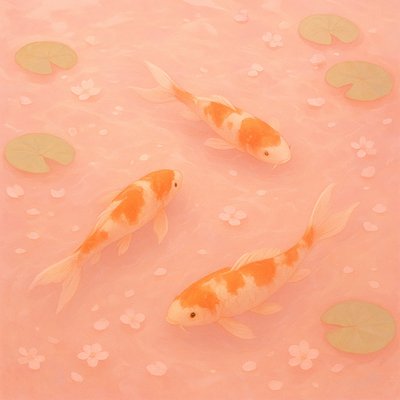
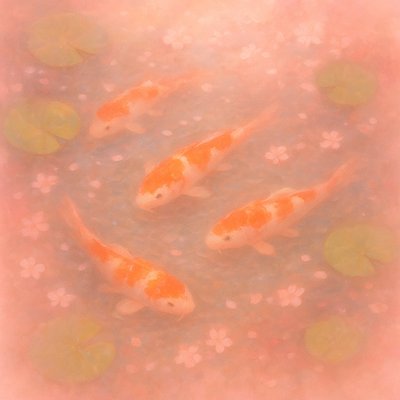
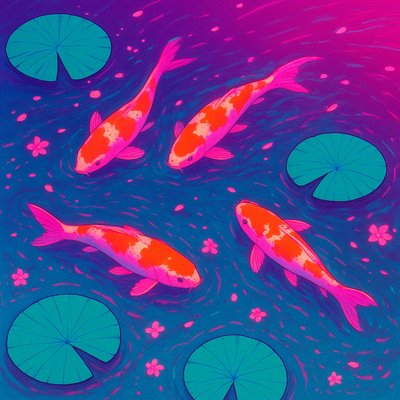
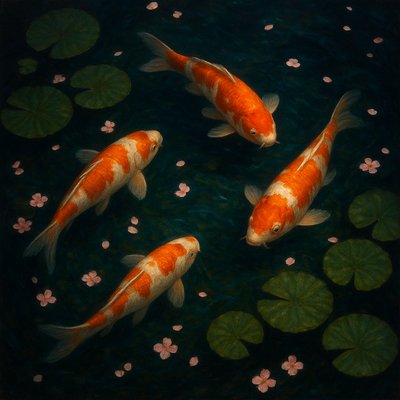
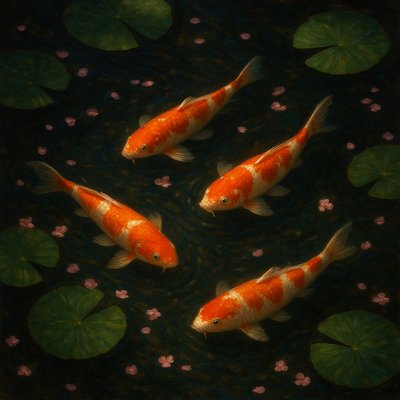
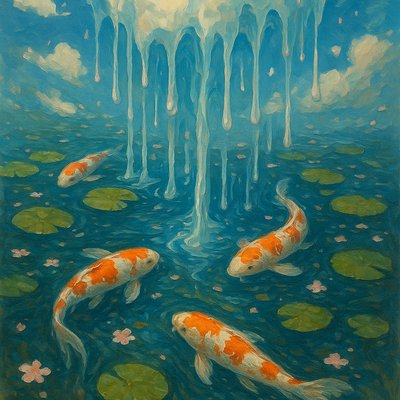
A koi pond seen from above, orange and white koi fish swimming among lily pads, clear water with subtle ripples, fallen cherry blossom petals floating on the surface, dappled sunlight
“And there was one Anna, a prophetess, the daughter of Phanuel, of the tribe of Aser: she was of a great age, and had lived with an husband seven years from her virginity; And she was a widow of about fourscore and four years, which departed not from the temple, but served God with fastings and prayers night and day. And she coming in that instant gave thanks likewise unto the Lord, and spake of him to all them that looked for redemption in Jerusalem.” (Luke 2:36-38, KJV)
Create with a photorealistic expression
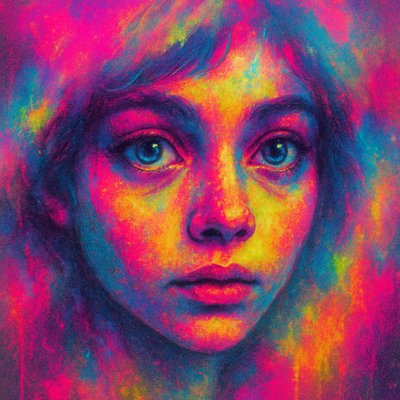
Spray Paint Dream Style Transfer Example
animal standing in natural pose
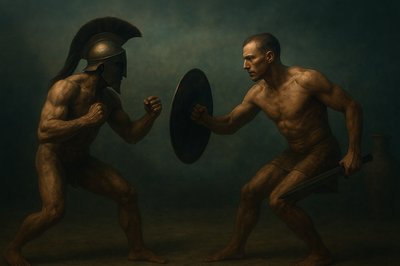
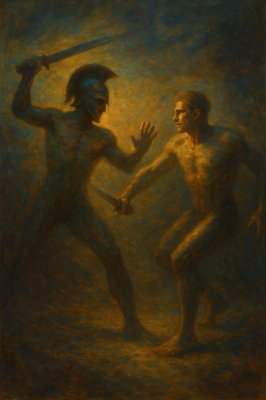
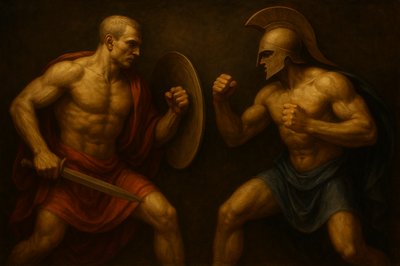
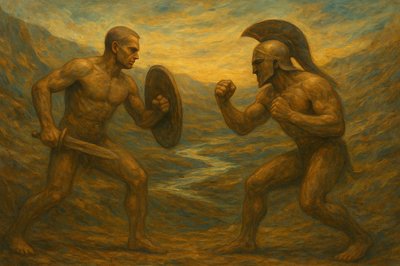
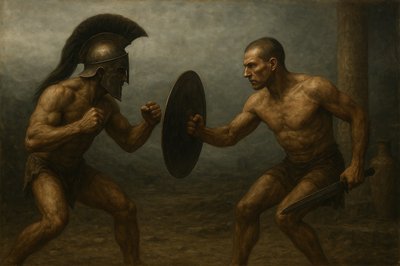
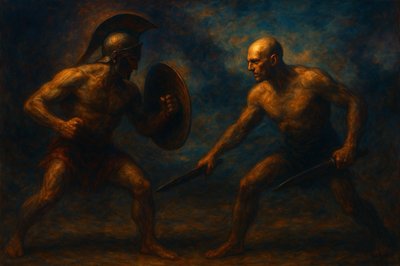
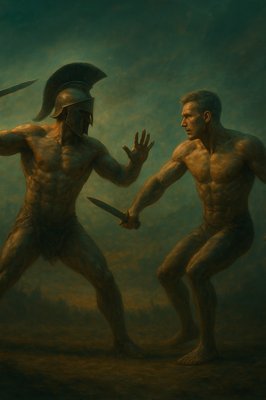
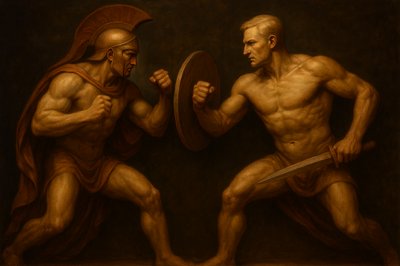
Determined warrior
Music festival poster
Graffiti print hoodie
Space mage with energy staff
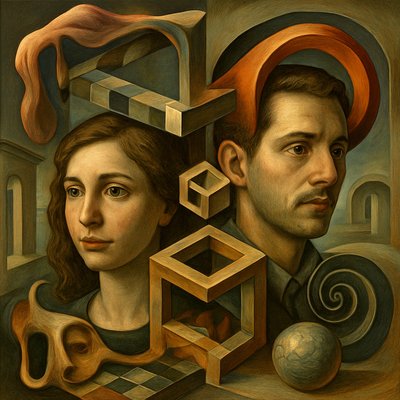
portrait of two people together
Looking from the street.  A 10 year old chinese girl watches as children crowd through the entrance gate at a private school in Kerinchi neighborhood, Kuala Lumpur.  Several teachers are also there.
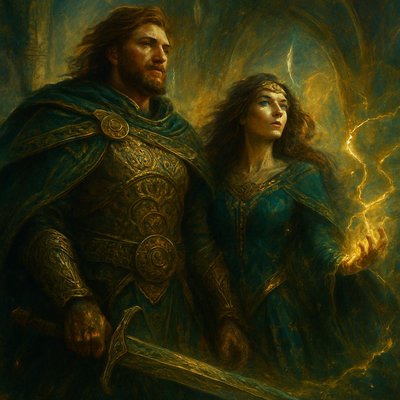
portrait of two people together
“The wicked worketh a deceitful work: but to him that soweth righteousness shall be a sure reward.” (Proverbs 11:18, KJV)
“Nay, in all these things we are more than conquerors through him that loved us.” (Romans 8:37, KJV)
wide landscape with natural scenery
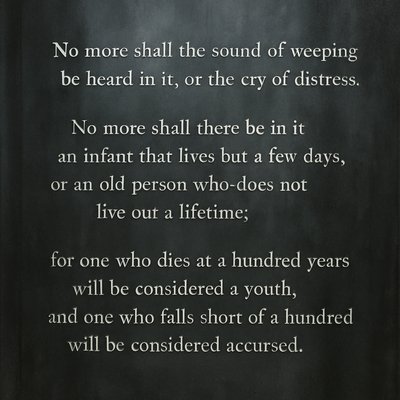
Traditional Interior Design Style Transfer Example
house with front view
A grand, cinematic wide-angle shot of Santa Claus and his reindeer team galloping across a shimmering, translucent Rainbow Bridge (Bifrost-style) in deep space.

The Bridge & Track: The bridge is a massive, glowing crystalline structure that functions like a celestial racetrack. It features distinct, glowing "cosmic lanes" separated by ribbons of starlight. Along the track are towering, ornate arches that serve as "gates" or "warps," pulsing with magical energy.

The Scene: In the center, Santa’s sleigh is a high-tech, reinforced wooden vessel, leaving a trail of sparkling gold dust. The reindeer are in mid-leap, looking powerful and heroic. They are just passing through a massive, crystalline gate that marks the entrance to a new galaxy.

Background: The background is a vibrant nebula of deep purples, teals, and golds. Distant stars and planets are visible, and the bridge itself stretches out into the infinite distance, winding through the stars.

Style Details:

Visual Style: Epic High-Fantasy meets Sci-Fi (Cyberpunk-adjacent lighting).

Lighting: Dramatic rim lighting on Santa and the reindeer from the glowing bridge below. The "gates" cast a bright, cinematic flare.

Atmosphere: Intense speed, magical wonder, and a sense of an epic, cross-universal mission.
Art Style: Analytical Cubism, avant-garde oil painting style reminiscent of Picasso and Braque.

Subject: A dense, tangled thicket of Rhododendrons and Mountain Laurel bushes.

Composition & Details: The entire natural scene is deconstructed into overlapping geometric planes, fractured shards, and intersecting angles. There are no curved lines; everything is rendered in cubes, cones, and trapezoids.

    The Rhododendrons: Large, showy flower trusses are broken into faceted crystalline structures of deep magenta, rose pink, and violet blocks, looking like explosions of colored quartz rather than soft petals.

    The Mountain Laurels: The smaller, intricate flowers are rendered as complex, repeating geometric star-patterns and angular cups in white and pale pink with distinct red polygonal markings.

    Foliage & Branches: The thick, leathery leaves are fragmented green triangles and parallelograms overlapping each other, creating a sense of depth without traditional perspective. The woody stems and branches are jagged, intersecting brown and grey cylinders that shatter across the frame.
Color & Texture: A palette of muted earth tones—ochre, burnt umber, forest green, and slate grey—contrasted sharply with the jewel-toned facets of the flower colors. The finish should have a heavy, textured oil paint feel with visible palette knife marks and rough brushwork.
Art Style: Analytical Cubism, avant-garde oil painting style reminiscent of Picasso and Braque.

Subject: A dense, tangled thicket of Rhododendrons and Mountain Laurel bushes.

Composition & Details: The entire natural scene is deconstructed into overlapping geometric planes, fractured shards, and intersecting angles. There are no curved lines; everything is rendered in cubes, cones, and trapezoids.

    The Rhododendrons: Large, showy flower trusses are broken into faceted crystalline structures of deep magenta, rose pink, and violet blocks, looking like explosions of colored quartz rather than soft petals.

    The Mountain Laurels: The smaller, intricate flowers are rendered as complex, repeating geometric star-patterns and angular cups in white and pale pink with distinct red polygonal markings.

    Foliage & Branches: The thick, leathery leaves are fragmented green triangles and parallelograms overlapping each other, creating a sense of depth without traditional perspective. The woody stems and branches are jagged, intersecting brown and grey cylinders that shatter across the frame.

Color & Texture: A palette of muted earth tones—ochre, burnt umber, forest green, and slate grey—contrasted sharply with the jewel-toned facets of the flower colors. The finish should have a heavy, textured oil paint feel with visible palette knife marks and rough brushwork.
Art Style: Analytical Cubism, avant-garde oil painting style reminiscent of Picasso and Braque.

Subject: A dense, tangled thicket of Rhododendrons and Mountain Laurel bushes.

Composition & Details: The entire natural scene is deconstructed into overlapping geometric planes, fractured shards, and intersecting angles. There are no curved lines; everything is rendered in cubes, cones, and trapezoids.

    The Rhododendrons: Large, showy flower trusses are broken into faceted crystalline structures of deep magenta, rose pink, and violet blocks, looking like explosions of colored quartz rather than soft petals.

    The Mountain Laurels: The smaller, intricate flowers are rendered as complex, repeating geometric star-patterns and angular cups in white and pale pink with distinct red polygonal markings.

    Foliage & Branches: The thick, leathery leaves are fragmented green triangles and parallelograms overlapping each other, creating a sense of depth without traditional perspective. The woody stems and branches are jagged, intersecting brown and grey cylinders that shatter across the frame.

Color & Texture: A palette of muted earth tones—ochre, burnt umber, forest green, and slate grey—contrasted sharply with the jewel-toned facets of the flower colors. The finish should have a heavy, textured oil paint feel with visible palette knife marks and rough brushwork.
Art Style: Analytical Cubism, avant-garde oil painting style reminiscent of Picasso and Braque.

Subject: A dense, tangled thicket of Rhododendrons and Mountain Laurel bushes.

Composition & Details: The entire natural scene is deconstructed into overlapping geometric planes, fractured shards, and intersecting angles. There are no curved lines; everything is rendered in cubes, cones, and trapezoids.

    The Rhododendrons: Large, showy flower trusses are broken into faceted crystalline structures of deep magenta, rose pink, and violet blocks, looking like explosions of colored quartz rather than soft petals.

    The Mountain Laurels: The smaller, intricate flowers are rendered as complex, repeating geometric star-patterns and angular cups in white and pale pink with distinct red polygonal markings.

    Foliage & Branches: The thick, leathery leaves are fragmented green triangles and parallelograms overlapping each other, creating a sense of depth without traditional perspective. The woody stems and branches are jagged, intersecting brown and grey cylinders that shatter across the frame.

Color & Texture: A palette of muted earth tones—ochre, burnt umber, forest green, and slate grey—contrasted sharply with the jewel-toned facets of the flower colors. The finish should have a heavy, textured oil paint feel with visible palette knife marks and rough brushwork.
Art Style: Analytical Cubism, avant-garde oil painting style reminiscent of Picasso and Braque.

Subject: A dense, tangled thicket of Rhododendrons and Mountain Laurel bushes.

Composition & Details: The entire natural scene is deconstructed into overlapping geometric planes, fractured shards, and intersecting angles. There are no curved lines; everything is rendered in cubes, cones, and trapezoids.

    The Rhododendrons: Large, showy flower trusses are broken into faceted crystalline structures of deep magenta, rose pink, and violet blocks, looking like explosions of colored quartz rather than soft petals.

    The Mountain Laurels: The smaller, intricate flowers are rendered as complex, repeating geometric star-patterns and angular cups in white and pale pink with distinct red polygonal markings.

    Foliage & Branches: The thick, leathery leaves are fragmented green triangles and parallelograms overlapping each other, creating a sense of depth without traditional perspective. The woody stems and branches are jagged, intersecting brown and grey cylinders that shatter across the frame.

Color & Texture: A palette of muted earth tones—ochre, burnt umber, forest green, and slate grey—contrasted sharply with the jewel-toned facets of the flower colors. The finish should have a heavy, textured oil paint feel with visible palette knife marks and rough brushwork.
Art Style: Analytical Cubism, avant-garde oil painting style reminiscent of Picasso and Braque.

Subject: A dense, tangled thicket of Rhododendrons and Mountain Laurel bushes.

Composition & Details: The entire natural scene is deconstructed into overlapping geometric planes, fractured shards, and intersecting angles. There are no curved lines; everything is rendered in cubes, cones, and trapezoids.

    The Rhododendrons: Large, showy flower trusses are broken into faceted crystalline structures of deep magenta, rose pink, and violet blocks, looking like explosions of colored quartz rather than soft petals.

    The Mountain Laurels: The smaller, intricate flowers are rendered as complex, repeating geometric star-patterns and angular cups in white and pale pink with distinct red polygonal markings.

    Foliage & Branches: The thick, leathery leaves are fragmented green triangles and parallelograms overlapping each other, creating a sense of depth without traditional perspective. The woody stems and branches are jagged, intersecting brown and grey cylinders that shatter across the frame.

Color & Texture: A palette of muted earth tones—ochre, burnt umber, forest green, and slate grey—contrasted sharply with the jewel-toned facets of the flower colors. The finish should have a heavy, textured oil paint feel with visible palette knife marks and rough brushwork.
A steampunk alchemist stands in a cluttered workshop illuminated by the warm glow of gas lamps. He wears a leather apron adorned with brass buckles and a pair of intricate goggles perched on his forehead. His gloved hands tinker with a bubbling alembic connected by coiled copper tubes to a maze of glass vials filled with glowing, iridescent liquids. The background is a mix of Victorian elegance and industrial grit--ornate wooden shelves lined with dusty tomes and jars of exotic ingredients, alongside rusted gears and steam-powered contraptions whirring softly. A faint mist of steam rises from a brass furnace, and a mechanical raven with glowing red eyes perches on a nearby stand, observing the scene with curiosity.
A historically accurate and atmospheric depiction of the signing of the Mayflower Compact aboard the ship in November 1620. The scene is set in the dimly lit, cramped cabin of the Mayflower, with the ship's timbers and rigging subtly visible, conveying the challenging conditions of the voyage. A simple table or chest serves as the signing surface. The primary focus is on a small group of the last individuals signing the document: specifically, the indentured servants (or 'strangers' not directly part of the Separatist congregation) approaching or at the table. Their expressions show a mix of weary determination, understanding of the necessity, and perhaps a hint of quiet apprehension or resignation to this new social contract, given their status. They are dressed in the plain, practical clothing typical of 17th-century commoners and laborers. Figures of prominent Pilgrims or 'Saints' (like William Bradford or John Carver) are visible in the background, observing the proceedings with a sense of gravity and leadership, but they are not the central focus. The lighting is low and warm, perhaps from a lantern, creating a chiaroscuro effect that highlights the faces of the signers. The atmosphere conveys the momentousness of the act under difficult circumstances, the diverse composition of the group, and the early seeds of self-governance in a new world. The artistic style is a realistic, historically detailed oil painting, capturing the solemnity and human element of this pivotal historical moment."
A koi pond seen from above, orange and white koi fish swimming among lily pads, clear water with subtle ripples, fallen cherry blossom petals floating on the surface, dappled sunlight
a man sitting on a chair with a turtle on his shoulders
still life with everyday objects
Flower of Life mandala
still life arrangement
Victorian Oil Painting Art Style, Historical Digital Art Style, a rich and detailed full-body portrait of the famous giantess Anna Swan standing in the center of a lavish, gaslit exhibition hall at P.T. Barnum's American Museum in the 1860s. She is towering over the surrounding crowd of average-sized gentlemen in top hats and ladies in bonnets, whose heads only reach her waistline; they look up at her with expressions of awe and curiosity. Anna is dressed with immense dignity in a fashionable, expansive Victorian silk gown with a crinoline hoop skirt, tailored bodice, and lace trim. Her face is gentle, intelligent, and composed. The background is crowded with heavy red velvet drapery, gilded architectural details, curiosities in glass cases, and painted circus banners faintly visible. The lighting is warm, dramatic gaslight, creating deep shadows and highlighting the rich fabrics and the incredible scale of Anna Swan compared to her environment.