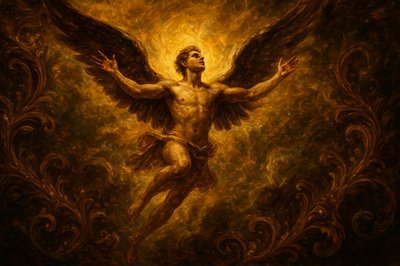
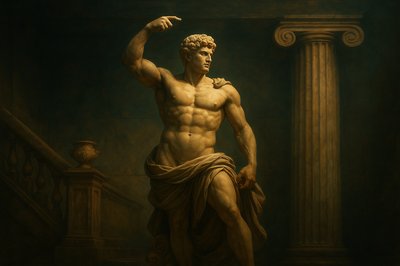
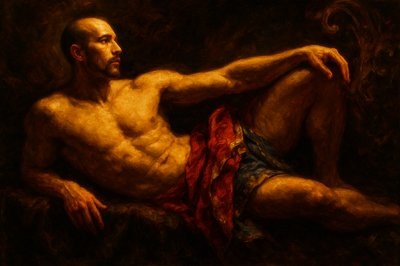
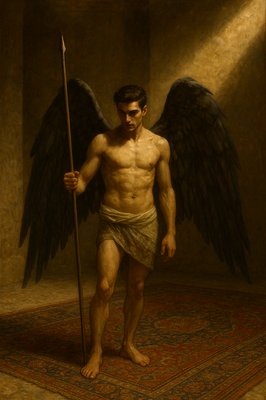
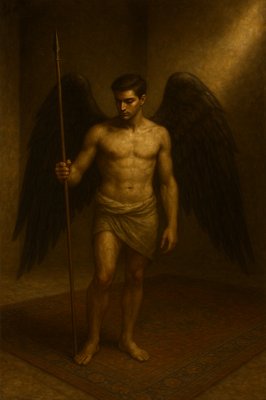
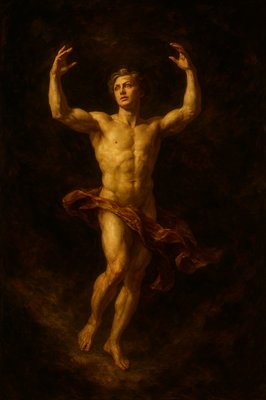
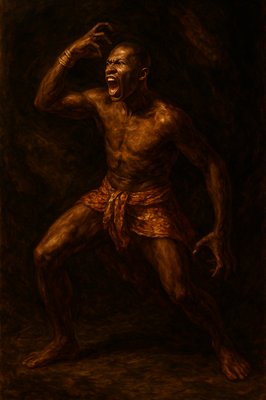
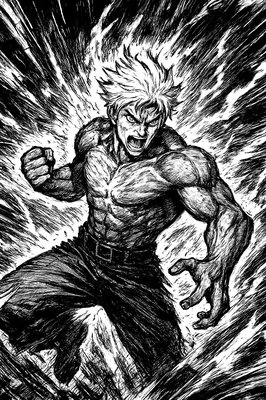
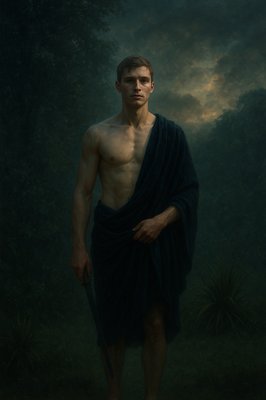
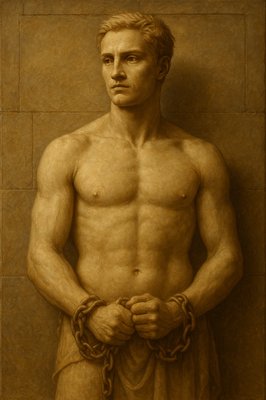
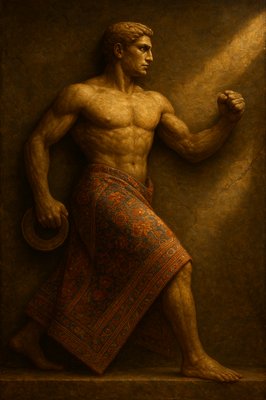
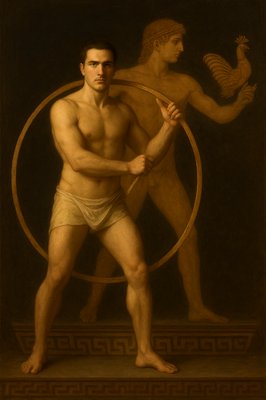
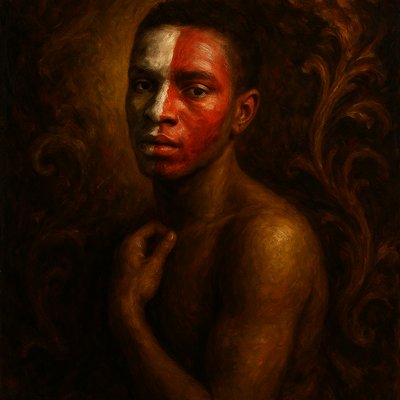
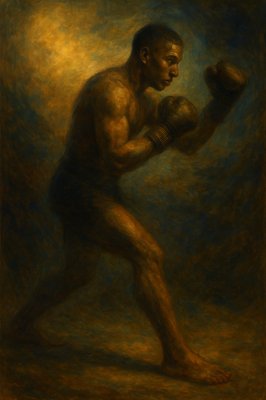
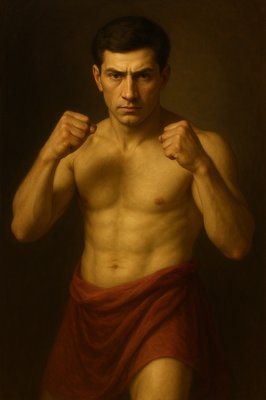
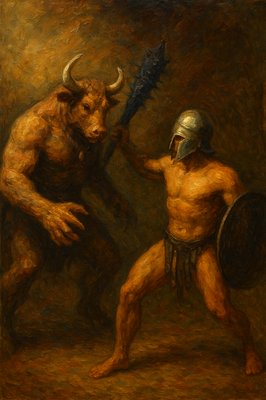
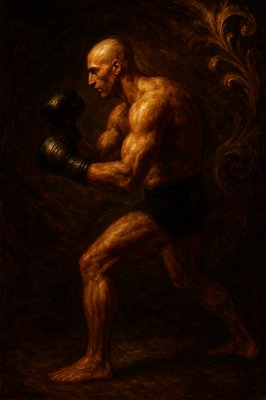
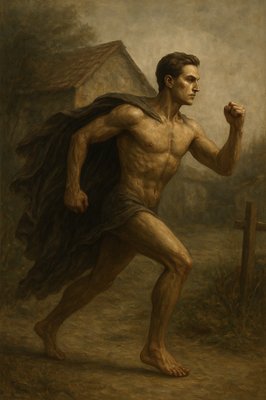
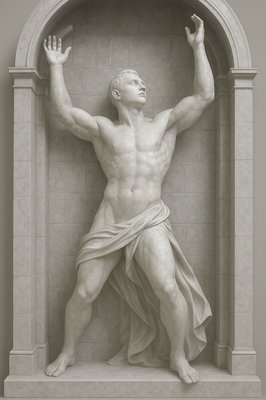
A Painting Of A Man With His Arms Outstretched Art

portrait of a person with expressive eyes
a tree in nature
Painting combining multiple historical art styles in the art style of Postmodernism --v 6.1
Triumphal procession with spoils of war
portrait of two people together
Empty plaza at twilight
bicyle resting against a wall
urban street with city activity
Urban anxiety
A roaring lion
urban street with city activity
fall of the berlin wall
a painting of a woman and a wolf
A majestic and reverent scene, directly inspired by Revelation 5:8. A group of elderly, robed figures are kneeling in worship, their faces and attention directed towards a central focal point. Each elder holds a golden harp in one hand and a golden bowl brimming with luminous, swirling incense in the other. The incense, representing the collective prayers of all saints, rises in shimmering, golden tendrils from each bowl, converging and ascending towards the central figure. At the very center of the composition, slightly elevated and bathed in radiant light, stands the Lamb who was slain, embodying divine power and sacrifice, the recipient of all this worship. The atmosphere is ethereal, filled with soft, divine golden light emanating from the incense and the Lamb, emphasizing the precious, sacred, and unified nature of the prayers being offered before Him. Focus on the rich textures of gold, the reverence of the elders, and the radiant presence of the Lamb
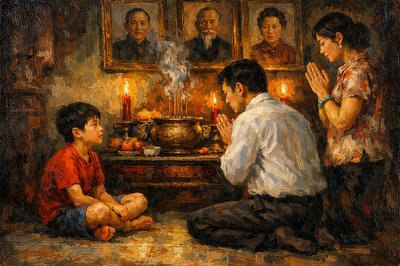
Aztec heritage
urban street with city activity
house with front view
portrait of two people together
fall of the berlin wall
portrait of two people together
still life with everyday objects
wide landscape with natural scenery

animal standing in natural pose
portrait of a person with expressive eyes
portrait of two people together
jewish couple with a new born child in a manger
serene landscape with mountains and water
A historically accurate and atmospheric depiction of the signing of the Mayflower Compact aboard the ship in November 1620. The scene is set in the dimly lit, cramped cabin of the Mayflower, with the ship's timbers and rigging subtly visible, conveying the challenging conditions of the voyage. A simple table or chest serves as the signing surface. The primary focus is on a small group of the last individuals signing the document: specifically, the indentured servants (or 'strangers' not directly part of the Separatist congregation) approaching or at the table. Their expressions show a mix of weary determination, understanding of the necessity, and perhaps a hint of quiet apprehension or resignation to this new social contract, given their status. They are dressed in the plain, practical clothing typical of 17th-century commoners and laborers. Figures of prominent Pilgrims or 'Saints' (like William Bradford or John Carver) are visible in the background, observing the proceedings with a sense of gravity and leadership, but they are not the central focus. The lighting is low and warm, perhaps from a lantern, creating a chiaroscuro effect that highlights the faces of the signers. The atmosphere conveys the momentousness of the act under difficult circumstances, the diverse composition of the group, and the early seeds of self-governance in a new world. The artistic style is a realistic, historically detailed oil painting, capturing the solemnity and human element of this pivotal historical moment."
serene landscape with mountains and water
still life arrangement of fruits and flowers