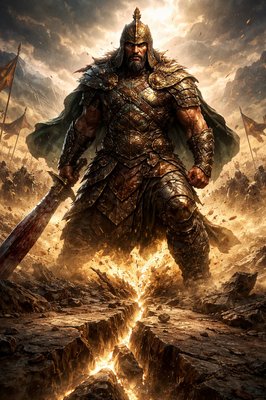
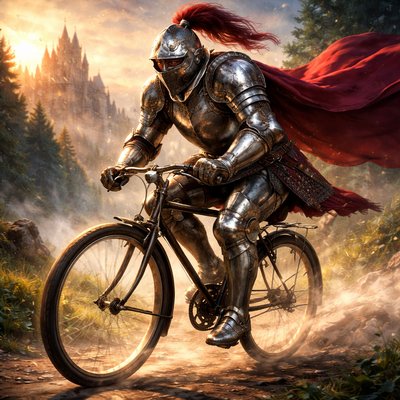
A Painting Of A Man In Armor Holding A Sword And Shield Art

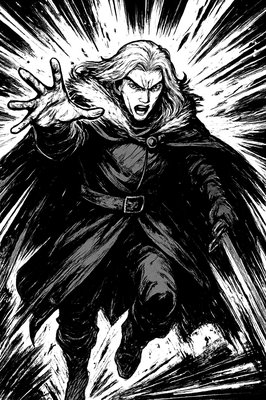
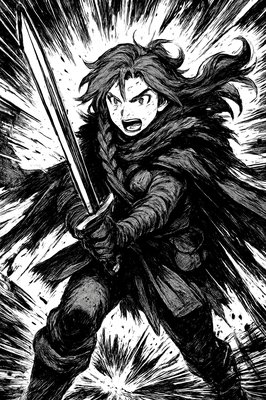
a black and white drawing of a person holding a sword
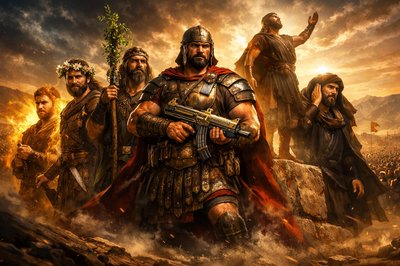
The explorers. Explorers explore a wonderful two faced world one world is morning at beautiful and night at very dangerous zombies and skeleton goblin creatures etc. Another world is hell. No day night cycle. Many Monsters in live it. Heros explore this two faced world
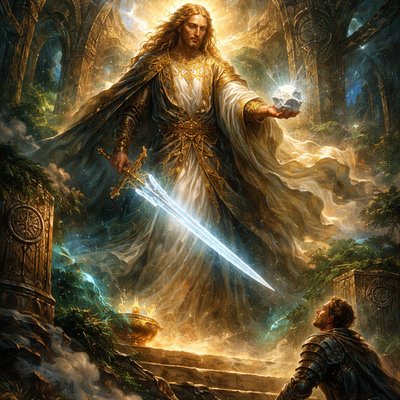
A melting clock tower
A still life with fruit and silver
Anxiety attack
A person working from home
A deep sea jellyfish garden
A librarian organizing floating books
A village festival
A coastal scene at golden hour
Harbor in morning fog
a tree in nature
a tree in nature
Rococo Art Style, Digital Art Style, a brilliantly joyful, opulent, and ornate three-quarter-length portrait of "The Queen in Gold of Ophir," inspired by Psalm 45. The Queen is facing the viewer with a radiant, happy, and genuinely smiling expression, her pose one of graceful delight. She is adorned in an exquisitely detailed gown woven from the finest gold, which shimmers with a dazzling, intense, almost liquid radiance, typical of Rococo opulence and digital highlight. The gold fabric is intricately embellished with countless sparkling jewels and delicate scrolling patterns in shades of ivory and pearl. A magnificent golden crown, wreathed in tiny golden lilies, rests upon her head. Her hands are gently placed, perhaps holding a single, pure white lily. She is framed by a background featuring large, lush, stylized white and golden lilies and an ornate, soft-focus garden setting bathed in sweet, cheerful daylight. Focus intently on the dazzling, reflective shimmer and ornate detail of the gold gown, the Queen's beautiful, joyous smile, and the light, ethereal quality of the Rococo setting.
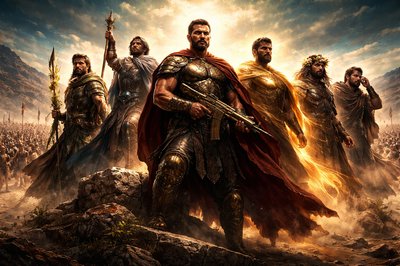
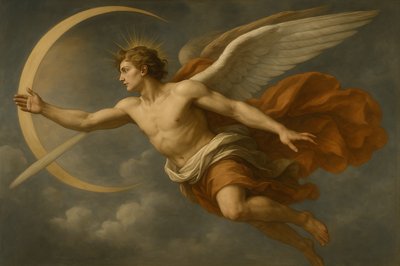
Bright
Storm clouds gathering
Sunset
Self Portrait
Dark sorceress in throne room
A simple cartoon-style propaganda poster drawn with bold, thick marker lines. Use a limited color palette of bright red, dark navy blue, white, and small black outlines. At the top, include a cool, bold propaganda-style font that looks hand-drawn with marker, saying: “FOUR LEGS GOOD, TWO LEGS BETTER!” Make the word “BETTER” much larger and more dramatic. In the center, show a group of white sheep with simple cartoon faces, wide excited eyes, and big happy smiles, cheering together. The sheep should look identical and drawn with simple marker outlines. They are looking at a pig who is walking upright on two legs in a bright spotlight. The pig should be glowing or surrounded by simple marker-drawn light rays to show fake admiration. Add confetti, simple celebration lines, and maybe one sheep holding a small sign. The background should use strong blocks of red and navy blue, like a simple propaganda poster. Include very simple outlines of a barn or farmhouse in the background. Overall style: cute cartoon, clean, bold marker strokes, easy shapes, limited colors, and a brainwashed, energetic vibe.
Oil Painting Art Style, a detailed male Northern Bobwhite Quail, its distinctive head markings and feather patterns clearly rendered with rich brushwork, peeking from behind a cluster of vivid, textured fall leaves on the ground. The quail's eyes are sharp and alert. Behind it, an old, weathered, rustic red barn is depicted with strong brushstrokes, showing its aged timber and flaking paint, under a slightly overcast, softly lit autumn sky. The setting is a quintessential Eastern farm in the mountains of Tennessee, with the surrounding hills hinted at in deep, autumnal tones. Focus on the tactile quality of the painted textures, the depth and richness of the autumn colors, and the enduring charm of the rural scene.
Battle mech in urban combat
Mystic artist painting ethereal dreams
A low-angle, hyper-detailed tableau of the Mad Hatter's Tea Party, viewed under a dark, star-filled sky. The Mad Hatter sits at the table, his features not quite human, but constructed entirely from brilliant indigo and gold cosmic dust, representing the constellation Lepus. His top hat is a vortex of nebula, and one eye burns intensely—a specific star named "The Mad."

The Hatter is caught mid-sentence, demanding, "Why is a raven like a writing-desk?" As he speaks, his hands, which were merely starry, begin to shed their light, and the true form is revealed: the lower half of his coat and chair morph into coiling, dark serpentine scales, twisting around the table leg. The March Hare and Dormouse are frozen in terror. Above the table, a Raven made of pitch-black night materializes, its shadow falling directly over the Hatter. The entire scene is vibrating with the furious energy of a creature—the ancient serpent—who knows his time has been irrevocably stopped.

Style: Cinematic dark fantasy, astronomical realism, oil painting texture, emphasis on the contrast between the cold cosmic starlight and the dark, furious energy of the serpentine transformation.
Battle cruiser entering nebula
City lights as color symphony
Renaissance Painting Art Style, Symbolism Art Style, a profoundly joyful and uplifting painting inspired by Nehemiah 8:10, emphasizing "the joy of the Lord is your strength." The scene depicts a vibrant, bustling gathering of diverse ancient Israelites, engaged in a communal feast and celebration. People of all ages are shown with radiant, happy faces, some laughing heartily, others sharing food and drinks, and many with expressions of deep, peaceful contentment and spiritual upliftment. A few figures have their heads tilted upwards or hands gently raised, as if receiving a subtle, warm, golden divine light that bathes the scene, emanating from above and symbolizing the presence and strength of the Lord. The setting is an outdoor gathering, perhaps near a restored wall or a communal square, filled with rich textures of food, drink, and colorful garments. The atmosphere is one of shared delight, spiritual renewal, and unbreakable strength. Focus on the authentic, diverse expressions of joy on each individual's face, the sense of vibrant community and shared celebration, and the ethereal, empowering golden light that symbolizes the Lord's strength.
Oil Painting Art Style, a magnificent Red Admiral butterfly with its wings spread wide, revealing intricate patterns of bold black, vivid orange-red, and crisp white, firmly perched on the distinctive, textured white bark of an aspen tree. This scene is set at a lower elevation, where the aspen grows near a gently flowing stream, its banks adorned with a lush fall garden of colorful autumn flowers—deep reds, golden yellows, and fiery oranges—arranged in a picturesque display. Overhead and around, the aspen tree's own leaves are ablaze with brilliant, bright gold, adding a stunning luminosity to the scene. The entire composition is illuminated by clear, crisp autumn light, casting subtle shadows and highlighting the rich textures. Focus on the detailed brushwork on the butterfly's wings, the tangible texture of the aspen bark, and the vibrant, layered colors of the fall foliage and flowers, especially the striking golden aspen leaves, creating a detailed and serene artistic composition.
Oil Painting Art Style, a magnificent, normal-sized Red Admiral butterfly with its wings spread wide, revealing intricate patterns of bold black, vivid orange-red, and crisp white, delicately perched on the stem or curving surface of a large, plump orange pumpkin. This scene is set within a sprawling, sun-drenched autumn pumpkin patch, where numerous pumpkins of various sizes are nestled amongst lush green and fading yellow vines. Surrounding the pumpkins are vibrant fall flowers arranged like a charming garden, in hues of deep red, golden yellow, and rustic orange. In the background, hints of golden aspen-like leaves glow from distant trees, adding to the rich autumn palette. The entire composition is bathed in clear, crisp, golden autumn sunlight, casting subtle shadows and highlighting the rich textures. Focus on the detailed brushwork on the butterfly's tiny wings, the tangible texture of the pumpkin's skin, and the vibrant, layered colors of the fall foliage, flowers, and pumpkins, creating a detailed and serene artistic composition.
Dancer mid-leap
Oil Painting Art Style, a magnificent Red Admiral butterfly with its wings spread wide, revealing intricate patterns of bold black, vivid orange-red, and crisp white, gently perched on the stem or surface of a perfect, plump orange pumpkin. This scene is set within a sprawling, sun-drenched autumn pumpkin patch, where numerous pumpkins of various sizes are nestled amongst lush green and fading yellow vines. Surrounding the pumpkins are vibrant fall flowers arranged like a charming garden, in hues of deep red, golden yellow, and rustic orange. In the background, hints of golden aspen-like leaves glow from distant trees, adding to the rich autumn palette. The entire composition is bathed in clear, crisp, golden autumn sunlight, casting subtle shadows and highlighting the rich textures. Focus on the detailed brushwork on the butterfly's wings, the tangible texture of the pumpkin's skin, and the vibrant, layered colors of the fall foliage, flowers, and pumpkins, creating a detailed and serene artistic composition.
Hyper-realistic Andean condor flying in the sky over a forest, leaving a shimmering trail of glittering sparkles where it goes, extreme detail, photorealistic, cinematic lighting
Dancers in rehearsal
Tech entrepreneur with data visualization elements
Elderly person in natural window light
"A historically accurate depiction of a Ghost Dance, focusing on the late 19th-century context, specifically around 1890-1891. The scene shows Lakota (Sioux) or Northern Paiute people (specify one or include elements of both, but avoid anachronisms) participating in the ceremony.

Setting: A vast, open prairie or high desert landscape, under an expansive sky. The time of day could be dusk or night, with a prominent moon or stars, or a bright, clear day. Avoid overtly spiritual or ethereal elements like floating spirits unless explicitly requested for a later, more symbolic iteration. The focus should be on the earthly ceremony.

Participants: A circle of men, women, and children, hand-in-hand, moving in a slow, rhythmic shuffle or circular motion. Their faces show a mixture of devotion, hope, and determination. Some may have expressions of trance or deep concentration.

Attire:

    Ghost Dance Shirts/Dresses: Emphasize the unique Ghost Dance shirts and dresses, which were typically made of muslin or canvas. These garments should feature painted designs such as stars, crescents, birds (especially eagles or crows), buffalo, human figures, or crosses. The designs should appear hand-painted, not mass-produced.

    Hair and Adornments: Participants should have braided hair or wear it long. Some may wear feathers (e.g., eagle or hawk feathers) in their hair. Minimal traditional adornments, as the focus was often on the Ghost Dance shirt itself. Avoid overly elaborate or Hollywood-esque depictions of war bonnets unless relevant to a specific individual and context.

    Footwear: Moccasins or bare feet.

Action/Atmosphere:

    The dancers are moving in a counter-clockwise circle, with a central figure or a small group often leading.

    The overall mood is one of earnest prayer and communal spiritual effort. The dance should convey a sense of hope for renewal and the return of the old ways, rather than aggression or despair.

    There might be a central pole or small fire as a focal point, around which the dance takes place.

    Avoid any signs of direct conflict or violence; the Ghost Dance itself was a non-violent spiritual movement.

Specific Considerations for Accuracy:

    Wovoka's Influence: The teachings of Wovoka (the Northern Paiute prophet) emphasized peace, hard work, and the return of the buffalo and deceased ancestors. The scene should subtly reflect this hopeful, redemptive spirit.

    Regional Variations: If focusing on Lakota, consider their specific interpretations, which sometimes included more imagery related to their warrior traditions on the shirts, but still within the peaceful framework of the dance.

    Respectful Portrayal: Ensure the depiction is respectful and avoids any stereotypical or caricatured representations of Indigenous people. Focus on their human dignity and spiritual sincerity.
The triumph of wisdom
When you pass through the waters,
    I will be with you;
and when you pass through the rivers,
    they will not sweep over you.
When you walk through the fire,
    you will not be burned;
    the flames will not set you ablaze.
Hyper-realistic Andean condor flying in the sky over a forest, leaving a shimmering trail of glittering sparkles where it goes, extreme detail, photorealistic, cinematic lighting
Dragon rider above mountain castle
A detailed, ancient-style map of the land of Canaan, with distinct, labeled territories for the Hivites, Arkite, and Sinite people groups. Each territory should have subtle visual cues reflecting their possible historical characteristics or natural environments. For example, the Hivite territory could show some hilly or forested areas, the Arkite territory might feature a coastal city, and the Sinite territory could suggest a more inland or mountainous region. The map should have a weathered, parchment-like texture, with an elegant, old-world font for the labels. In one corner, a small, illuminated manuscript-style illustration could depict three distinct figures, each subtly representing one of the groups, perhaps dressed in period-appropriate attire and engaging in an activity typical of their region. The overall aesthetic should evoke historical scholarship and cartography."
a tree in nature