A Painting Of A Knight With A Bird On His Arm Art

An awe-inspiring and whimsical scene featuring Willy Wonka's Great Glass Wonkavator, soaring through the sky and beyond the confines of the chocolate factory. The Wonkavator itself is a magnificent, multi-directional glass elevator, transparent and sparkling, with Willy Wonka (wearing his iconic top hat, purple coat, and bowtie) and a Victorian well dressed lady looking out with expressions of wonder and excitement. The interior is filled with intricate buttons and levers for controlling its magical flight. The Wonkavator is depicted in mid-flight, perhaps bursting through the factory roof or ascending above the clouds. Below it, the fantastical landscape of the Chocolate Factory is visible – chocolate rivers, edible gardens, candy cane trees, and various whimsical buildings. Beyond the factory, a stunning, imaginative sky unfolds, perhaps with floating candy clouds, distant fantastical landmarks, or even glimpses of outer space and planets. The lighting is bright and magical, emphasizing the glass's transparency and the vibrant colors of the world below and beyond. The overall mood is one of boundless adventure, limitless possibilities, and pure, joyful fantasy."
An awe-inspiring and whimsical scene featuring Willy Wonka's Great Glass Wonkavator, soaring through the sky and beyond the confines of the chocolate factory. The Wonkavator itself is a magnificent, multi-directional glass elevator, transparent and sparkling, with Willy Wonka (wearing his iconic top hat, purple coat, and bowtie) and a young happy Victorian well dressed lady looking out with expressions of wonder and excitement. The interior is filled with intricate buttons and levers for controlling its magical flight. The Wonkavator is depicted in mid-flight, perhaps bursting through the factory roof or ascending above the clouds. Below it, the fantastical landscape of the Chocolate Factory is visible – chocolate rivers, edible gardens, candy cane trees, and various whimsical buildings. Beyond the factory, a stunning, imaginative sky unfolds, perhaps with floating candy clouds, distant fantastical landmarks, or even glimpses of outer space and planets. The lighting is bright and magical, emphasizing the glass's transparency and the vibrant colors of the world below and beyond. The overall mood is one of boundless adventure, limitless possibilities, and pure, joyful fantasy."
a painting of a man with a ring around his neck
An awe-inspiring and whimsical scene featuring Willy Wonka's Great Glass Wonkavator, soaring through the sky and beyond the confines of the chocolate factory. The Wonkavator itself is a magnificent, multi-directional glass elevator, transparent and sparkling, with Willy Wonka (wearing his iconic top hat, purple coat, and bowtie) and 2 young Victorian well dressed ladies looking out with expressions of joy, wonder and excitement. The interior is filled with intricate buttons and levers for controlling its magical flight. The Wonkavator is depicted in mid-flight, perhaps bursting through the factory roof or ascending above the clouds. Below it, the fantastical landscape of the Chocolate Factory is visible – chocolate rivers, edible gardens, candy cane trees, and various whimsical buildings. Beyond the factory, a stunning, imaginative sky unfolds, perhaps with floating candy clouds, distant fantastical landmarks, or even glimpses of outer space and planets. The lighting is bright and magical, emphasizing the glass's transparency and the vibrant colors of the world below and beyond. The overall mood is one of boundless adventure, limitless possibilities, and pure, joyful fantasy."
An awe-inspiring and whimsical scene featuring Willy Wonka's Great Glass Wonkavator, soaring through the sky and beyond the confines of the chocolate factory. The Wonkavator itself is a magnificent, multi-directional glass elevator, transparent and sparkling, with a middle aged Willy Wonka (wearing his iconic top hat, purple coat, and bowtie) and 2 young Victorian well dressed ladies looking out with expressions of joy, wonder and excitement. The interior is filled with intricate buttons and levers for controlling its magical flight. The Wonkavator is depicted in mid-flight, perhaps bursting through the factory roof or ascending above the clouds. Below it, the fantastical landscape of the Chocolate Factory is visible – chocolate rivers, edible gardens, candy cane trees, and various whimsical buildings. Beyond the factory, a stunning, imaginative sky unfolds, perhaps with floating candy clouds, distant fantastical landmarks, or even glimpses of outer space and planets. The lighting is bright and magical, emphasizing the glass's transparency and the vibrant colors of the world below and beyond. The overall mood is one of boundless adventure, limitless possibilities, and pure, joyful fantasy."
An awe-inspiring and whimsical scene featuring Willy Wonka's Great Glass Wonkavator, soaring through the sky and beyond the confines of the chocolate factory. The Wonkavator itself is a magnificent, multi-directional glass elevator, transparent and sparkling, with a middle aged Willy Wonka (wearing his iconic top hat, purple coat, and bowtie) and a young Victorian well dressed lady looking out with expressions of wonder and excitement. The interior is filled with intricate buttons and levers for controlling its magical flight. The Wonkavator is depicted in mid-flight, perhaps bursting through the factory roof or ascending above the clouds. Below it, the fantastical landscape of the Chocolate Factory is visible – chocolate rivers, edible gardens, candy cane trees, and various whimsical buildings. Beyond the factory, a stunning, imaginative sky unfolds, perhaps with floating candy clouds, distant fantastical landmarks, or even glimpses of outer space and planets. The lighting is bright and magical, emphasizing the glass's transparency and the vibrant colors of the world below and beyond. The overall mood is one of boundless adventure, limitless possibilities, and pure, joyful fantasy."
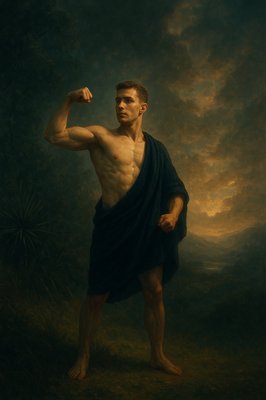
a painting of a shirtless man flexing his muscles
a painting of a man with a towel around his waist
a painting of a shirtless man flexing his muscles
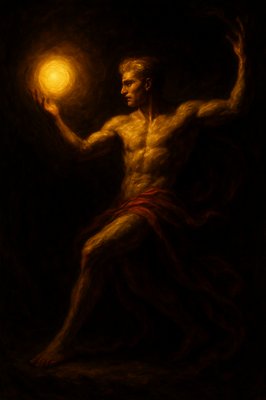
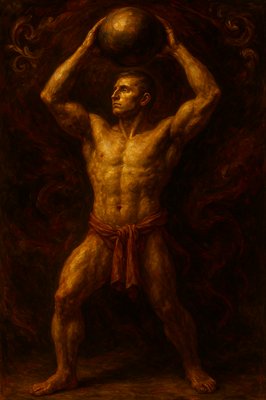
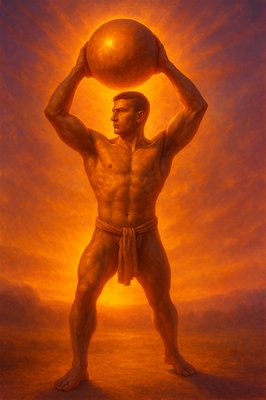
a painting of a man holding a ball in his hand
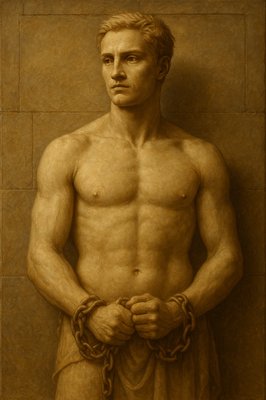
a painting of a man with chains around his waist
a painting of a man holding a ball in his hand
a painting of a shirtless man flexing his muscles
"A historically accurate depiction of a Ghost Dance, focusing on the late 19th-century context, specifically around 1890-1891. The scene shows Lakota (Sioux) or Northern Paiute people (specify one or include elements of both, but avoid anachronisms) participating in the ceremony.

Setting: A vast, open prairie or high desert landscape, under an expansive sky. The time of day could be dusk or night, with a prominent moon or stars, or a bright, clear day. Avoid overtly spiritual or ethereal elements like floating spirits unless explicitly requested for a later, more symbolic iteration. The focus should be on the earthly ceremony.

Participants: A circle of men, women, and children, hand-in-hand, moving in a slow, rhythmic shuffle or circular motion. Their faces show a mixture of devotion, hope, and determination. Some may have expressions of trance or deep concentration.

Attire:

    Ghost Dance Shirts/Dresses: Emphasize the unique Ghost Dance shirts and dresses, which were typically made of muslin or canvas. These garments should feature painted designs such as stars, crescents, birds (especially eagles or crows), buffalo, human figures, or crosses. The designs should appear hand-painted, not mass-produced.

    Hair and Adornments: Participants should have braided hair or wear it long. Some may wear feathers (e.g., eagle or hawk feathers) in their hair. Minimal traditional adornments, as the focus was often on the Ghost Dance shirt itself. Avoid overly elaborate or Hollywood-esque depictions of war bonnets unless relevant to a specific individual and context.

    Footwear: Moccasins or bare feet.

Action/Atmosphere:

    The dancers are moving in a counter-clockwise circle, with a central figure or a small group often leading.

    The overall mood is one of earnest prayer and communal spiritual effort. The dance should convey a sense of hope for renewal and the return of the old ways, rather than aggression or despair.

    There might be a central pole or small fire as a focal point, around which the dance takes place.

    Avoid any signs of direct conflict or violence; the Ghost Dance itself was a non-violent spiritual movement.

Specific Considerations for Accuracy:

    Wovoka's Influence: The teachings of Wovoka (the Northern Paiute prophet) emphasized peace, hard work, and the return of the buffalo and deceased ancestors. The scene should subtly reflect this hopeful, redemptive spirit.

    Regional Variations: If focusing on Lakota, consider their specific interpretations, which sometimes included more imagery related to their warrior traditions on the shirts, but still within the peaceful framework of the dance.
    Respectful Portrayal: Ensure the depiction is respectful and avoids any stereotypical or caricatured representations of Indigenous people. Focus on their human dignity and spiritual sincerity.
A grand, cinematic wide-angle shot of Santa Claus and his reindeer team galloping across a shimmering, translucent Rainbow Bridge (Bifrost-style) in deep space.

The Bridge & Track: The bridge is a massive, glowing crystalline structure that functions like a celestial racetrack. It features distinct, glowing "cosmic lanes" separated by ribbons of starlight. Along the track are towering, ornate arches that serve as "gates" or "warps," pulsing with magical energy.

The Scene: In the center, Santa’s sleigh is a high-tech, reinforced wooden vessel, leaving a trail of sparkling gold dust. The reindeer are in mid-leap, looking powerful and heroic. They are just passing through a massive, crystalline gate that marks the entrance to a new galaxy.

Background: The background is a vibrant nebula of deep purples, teals, and golds. Distant stars and planets are visible, and the bridge itself stretches out into the infinite distance, winding through the stars.

Style Details:

Visual Style: Epic High-Fantasy meets Sci-Fi (Cyberpunk-adjacent lighting).

Lighting: Dramatic rim lighting on Santa and the reindeer from the glowing bridge below. The "gates" cast a bright, cinematic flare.

Atmosphere: Intense speed, magical wonder, and a sense of an epic, cross-universal mission.
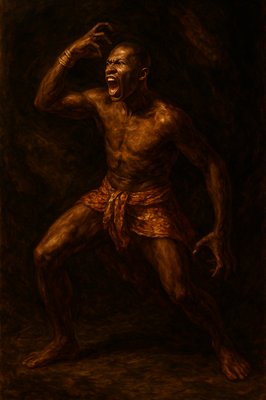
a painting of a man with red and white paint on his face
Atmospheric interior scene from Nancy Drew book #81 The Mardi Gras Mystery, set inside the grand, dimly lit Seaton Mansion nicknamed 'Bat Hollow' in New Orleans during Mardi Gras. Teenage detective Nancy Drew with her classic reddish-blonde hair, blue eyes, and determined smile, trying on an elegant masquerade costume—perhaps a sparkling gown with purple, green, and gold accents, feathered mask in hand, beads around her neck. Her friends Bess (blonde, bubbly, in a glamorous pink feathered outfit) and George (short dark hair, athletic, in a fun jester or adventurous costume) are nearby, laughing and adjusting outfits in front of a large antique mirror. Ned Nickerson helps Nancy with a clasp, smiling. In the background: Brian Seaton and his father Bartholomew in partial bat-themed costumes (capes, masks with bat ears/wings), an old grand staircase with wrought-iron details, flickering candlelight or chandeliers casting shadows, antique furniture, a framed portrait on the wall hinting at the stolen painting mystery, Mardi Gras beads and confetti scattered around. Moody yet festive lighting—warm glows against dark wood paneling and high ceilings—evoking a haunted Southern mansion vibe mixed with holiday excitement. 1980s Nancy Drew book illustration style, adventurous, detailed costumes, cinematic composition, vibrant colors popping against gothic shadows
A stunning and spiritually evocative depiction of the traditional Lakota Hoop Dance (or Intertribal Hoop Dance). The central figure is a single, male Hoop Dancer, captured mid-motion, demonstrating incredible agility and grace. He is adorned in vibrant, traditional regalia with intricate beadwork, feathers, and fringes, and is surrounded by a mesmerizing array of hoops, dynamically formed into various shapes and symbols, representing animals, stories, or the sacred circle of life. His face reflects intense focus, reverence, and the deep storytelling inherent in the dance. In the background, partially obscured by a light morning mist or soft haze, the monumental carving of the Crazy Horse Memorial is visible, lending a profound sense of historical continuity, honor, and enduring spirit to the scene. The setting is an open, natural area, perhaps a grassy plain or red rock outcropping, under a clear, early morning sky with the sun just beginning to illuminate the landscape, casting a soft, golden light. The atmosphere is one of dynamic energy, profound cultural pride, and deep spiritual connection to both tradition and the ancestral land. The artistic style is a vivid, realistic painting with a strong sense of movement, capturing the intricate details of the hoops and regalia, against the majestic, stoic presence of the memorial."

Key Considerations Reflected in This Prompt:

    Corrected Dance Name: Clearly states "Lakota Hoop Dance (or Intertribal Hoop Dance)."

    Central Figure: Focuses on a "single, male Hoop Dancer" to highlight the individual skill and artistry.

    Hoops & Symbolism: Emphasizes the "mesmerizing array of hoops, dynamically formed into various shapes and symbols" and their meaning.

    Crazy Horse Memorial Background: Explicitly places the "monumental carving of the Crazy Horse Memorial" in the background, noting its symbolic significance ("historical continuity, honor, and enduring spirit").

    Setting & Lighting: Suggests "early morning mist or soft haze" for the background to give the memorial an ethereal quality, and "soft, golden light" for the dancer.

    Mood: Conveys "dynamic energy, profound cultural pride, and deep spiritual connection."

    Artistic Style: "Vivid, realistic painting with a strong sense of movement.
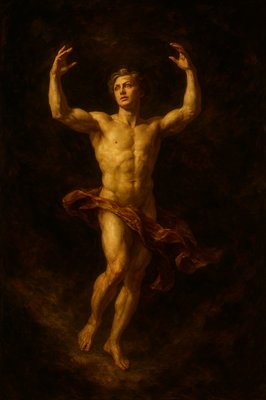
a painting of a man holding a ball above his head
a painting of a man holding a rope over his head
a painting of a man holding a ball over his head
a painting of a man holding a ball on his head
a painting of a man holding a light in his hand
a painting of a man with a towel around his neck
a painting of a man with a towel around his waist
a painting of a man with a chain around his waist
This is a great idea. For this version, let's lean even further into that "Elven High-Fantasy" aesthetic you like, but ground it in their specific Biblical legacy as the "hewers of wood and drawers of water" for the Tabernacle.

In this prompt, we will portray their service not as a lowly task, but as a display of superhuman strength and grace—showing that even in their "servant" role, their "giant" nature and ancient wisdom remained visible.
Written Prompt: The Sage-Giants of Gibeon

    Style: Cinematic High-Fantasy, 8k Resolution, Epic Scale. A blend of The Lord of the Rings aesthetic with Ancient Near Eastern Bronze Age history.

    The Subject: A group of three Gibeonite men, standing at a staggering height of 7.5 feet. They possess the ethereal, noble beauty of High Elves—sharp, intelligent Semitic features, high cheekbones, and long, dark hair intricately braided with silver and lapis lazuli.

    The Stature & Grace: They are lithe and muscular, moving with a fluid grace that defies their size. Despite their "giant" classification, they are elegant, not monstrous.

    The Role (Hewers and Drawers): > * One Gibeonite is seen effortlessly carrying a massive, ornate stone water jar on one shoulder that would require four normal men to lift.

        Another holds a bundle of enormous cedar logs, his posture straight and regal, showing no sign of strain.

    The Attire: They wear a mixture of their new culture and their old heritage. Fine linen tunics in ivory and deep blue are accented by ornate bronze bracers etched with ancient Canaanite geometry. Their clothing is weathered with the dust of the road but still looks "high-born."
    The Setting: They are standing on a high limestone ridge overlooking the ancient city of Gibeon. In the background, the Tabernacle's smoke rises into a golden sunset sky. The architecture around them consists of massive, "cyclopean" stone blocks that match their scale.

    Lighting & Atmosphere: Dramatic "God-rays" of sunlight pierce through the clouds, catching the metallic glint of their jewelry and the profound, wise expressions in their eyes. The mood is one of "Dignity in Service" and "Ancient Wisdom."
Dark sorceress in throne room
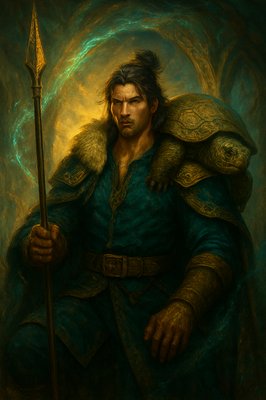
a man sitting on a chair with a turtle on his shoulders
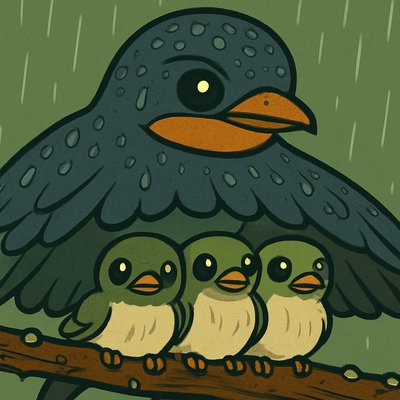
“Wilt thou play with him as with a bird? or wilt thou bind him for thy maidens?” (Job 41:5, KJV)
Lady with flowers
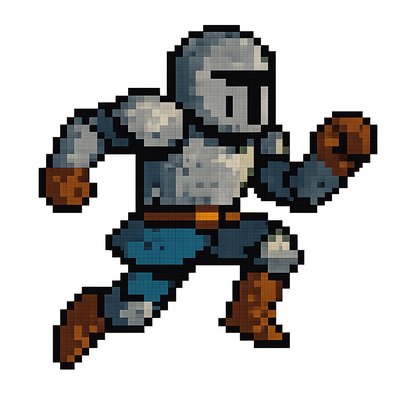
8-bit knight sprite
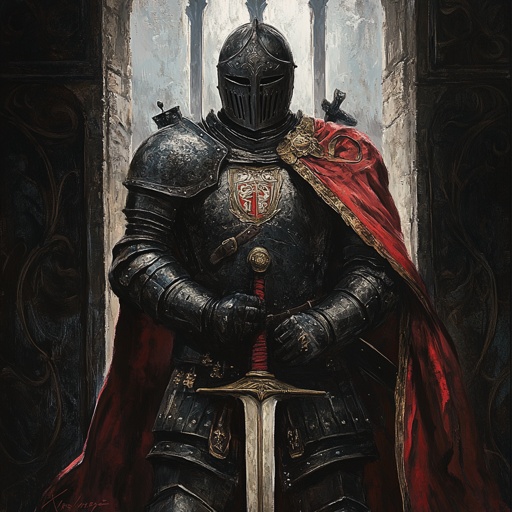
Knight in full plate armor with heraldic symbols in the art style of Gothic --v 6.1
City birds
“And Jacob was left alone; and there wrestled a man with him until the breaking of the day. And when he saw that he prevailed not against him, he touched the hollow of his thigh; and the hollow of Jacob's thigh was out of joint, as he wrestled with him. And he said, Let me go, for the day breaketh. And he said, I will not let thee go, except thou bless me.” (Genesis 32:24-26, KJVA)
Fantasy knight character
Knight in full plate armor with heraldic symbols in the art style of Gothic --v 6.1
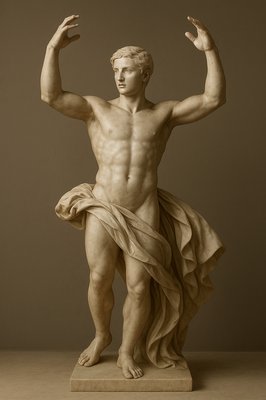
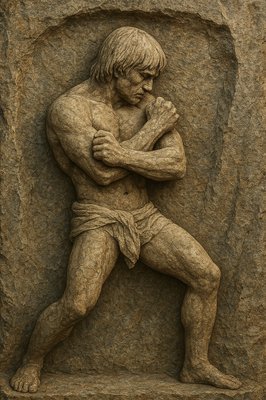
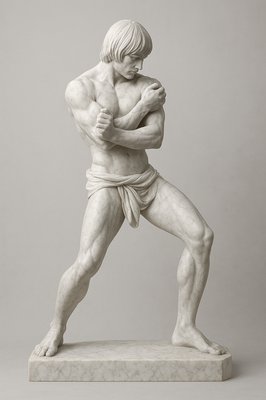
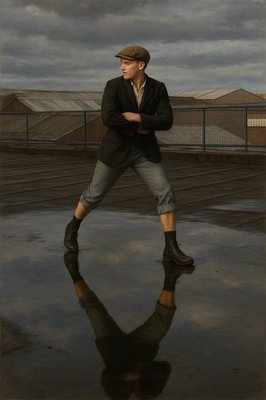
a statue of a man with his arms crossed