A Painting Of A Group Of Men Riding Horses Art

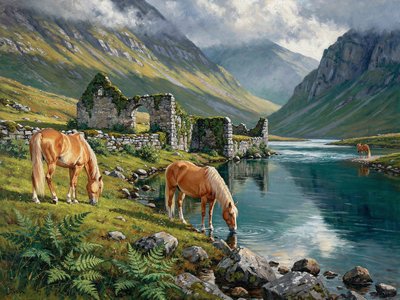
Seamless triptych artwork, continuous scene flowing left to right, left panel shows a palomino horse in the foreground on the far left side of the scene walking down a grassy slope toward a reflective teal-blue river in the Scottish Highlands with rocks and ferns around its hooves, center panel continues the same landscape as the horse now appears in the midground at the center of the scene standing at the river’s edge drinking from the reflective water beside ancient moss-covered stone ruins, right panel continues the scene as the horse appears far away in the distance on the far right side of the scene following the riverbank toward steep mist-covered mountains with dramatic sunlight breaking through the clouds, unified natural palette of greens golds and reflective teal blues, consistent cinematic lighting, shared horizon line, smooth uninterrupted left-to-right visual flow with no panel separation.
A triptych set of three drawings, continuous scene flowing left to right, left panel shows a palomino horse in the foreground on the far left side of the scene walking down a grassy slope toward a reflective teal-blue river in the Scottish Highlands with rocks and ferns around its hooves.
Center panel continues the same landscape as the horse now appears in the midground at the center of the scene standing at the river’s edge drinking from the reflective water beside ancient moss-covered stone ruins.
Right panel continues the scene as the horse appears far away in the distance on the far right side of the scene following the riverbank toward steep mist-covered mountains with dramatic sunlight breaking through the clouds, unified natural palette of greens golds and reflective teal blues, consistent cinematic lighting, shared horizon line, smoothf uninterrupted left-to-right visual flow with no panel separation.
Seamless triptych artwork with no dividing lines or borders, continuous scene flowing left to right, left panel shows a palomino horse in the foreground on the far left side of the scene walking down a grassy slope toward a reflective teal-blue river in the Scottish Highlands with rocks and ferns around its hooves, center panel continues the same landscape as the horse now appears in the midground at the center of the scene standing at the river’s edge drinking from the reflective water beside ancient moss-covered stone ruins, right panel continues the scene as the horse appears far away in the distance on the far right side of the scene following the riverbank toward steep mist-covered mountains with dramatic sunlight breaking through the clouds, unified natural palette of greens golds and reflective teal blues, consistent cinematic lighting, shared horizon line, smooth uninterrupted left-to-right visual flow with no panel separation.
"A historically accurate depiction of a Ghost Dance, focusing on the late 19th-century context, specifically around 1890-1891. The scene shows Lakota (Sioux) or Northern Paiute people (specify one or include elements of both, but avoid anachronisms) participating in the ceremony.

Setting: A vast, open prairie or high desert landscape, under an expansive sky. The time of day could be dusk or night, with a prominent moon or stars, or a bright, clear day. Avoid overtly spiritual or ethereal elements like floating spirits unless explicitly requested for a later, more symbolic iteration. The focus should be on the earthly ceremony.

Participants: A circle of men, women, and children, hand-in-hand, moving in a slow, rhythmic shuffle or circular motion. Their faces show a mixture of devotion, hope, and determination. Some may have expressions of trance or deep concentration.

Attire:

    Ghost Dance Shirts/Dresses: Emphasize the unique Ghost Dance shirts and dresses, which were typically made of muslin or canvas. These garments should feature painted designs such as stars, crescents, birds (especially eagles or crows), buffalo, human figures, or crosses. The designs should appear hand-painted, not mass-produced.

    Hair and Adornments: Participants should have braided hair or wear it long. Some may wear feathers (e.g., eagle or hawk feathers) in their hair. Minimal traditional adornments, as the focus was often on the Ghost Dance shirt itself. Avoid overly elaborate or Hollywood-esque depictions of war bonnets unless relevant to a specific individual and context.

    Footwear: Moccasins or bare feet.

Action/Atmosphere:

    The dancers are moving in a counter-clockwise circle, with a central figure or a small group often leading.

    The overall mood is one of earnest prayer and communal spiritual effort. The dance should convey a sense of hope for renewal and the return of the old ways, rather than aggression or despair.

    There might be a central pole or small fire as a focal point, around which the dance takes place.

    Avoid any signs of direct conflict or violence; the Ghost Dance itself was a non-violent spiritual movement.

Specific Considerations for Accuracy:

    Wovoka's Influence: The teachings of Wovoka (the Northern Paiute prophet) emphasized peace, hard work, and the return of the buffalo and deceased ancestors. The scene should subtly reflect this hopeful, redemptive spirit.

    Regional Variations: If focusing on Lakota, consider their specific interpretations, which sometimes included more imagery related to their warrior traditions on the shirts, but still within the peaceful framework of the dance.
    Respectful Portrayal: Ensure the depiction is respectful and avoids any stereotypical or caricatured representations of Indigenous people. Focus on their human dignity and spiritual sincerity.
Create an image of the short-lived U.S. Army post known as Fort Lowell, New Mexico, circa 1868. The buildings are made of rough-hewn, rustic logs and timber, surrounded by a high mountain valley and coniferous trees, reflecting the high altitude of the New Mexico territory. Show a small number of New Mexico volunteers in period uniforms and their horses within a simple log palisade or fence line. The scene should be overcast and rugged, capturing the isolation of a frontier outpost
urban street with city activity
a tree in nature
bicyle resting against a wall
still life with everyday objects
wide landscape with natural scenery
still life arrangement of fruits and flowers
portrait of a person with expressive eyes
The Wizard of Oz Scarecrow, looking surprised and slightly alarmed, as a group of winged flying monkeys descends rapidly from the sky towards him, their taloned feet reaching out. The scene is set in a vibrant, slightly fantastical field with a yellow brick road visible in the distance. Emphasize dynamic motion and the contrast between the playful yet menacing monkeys and the innocent Scarecrow
house with front view
A stunning and spiritually evocative depiction of the traditional Lakota Hoop Dance (or Intertribal Hoop Dance). The central figure is a single, male Hoop Dancer, captured mid-motion, demonstrating incredible agility and grace. He is adorned in vibrant, traditional regalia with intricate beadwork, feathers, and fringes, and is surrounded by a mesmerizing array of hoops, dynamically formed into various shapes and symbols, representing animals, stories, or the sacred circle of life. His face reflects intense focus, reverence, and the deep storytelling inherent in the dance. In the background, partially obscured by a light morning mist or soft haze, the monumental carving of the Crazy Horse Memorial is visible, lending a profound sense of historical continuity, honor, and enduring spirit to the scene. The setting is an open, natural area, perhaps a grassy plain or red rock outcropping, under a clear, early morning sky with the sun just beginning to illuminate the landscape, casting a soft, golden light. The atmosphere is one of dynamic energy, profound cultural pride, and deep spiritual connection to both tradition and the ancestral land. The artistic style is a vivid, realistic painting with a strong sense of movement, capturing the intricate details of the hoops and regalia, against the majestic, stoic presence of the memorial."

Key Considerations Reflected in This Prompt:

    Corrected Dance Name: Clearly states "Lakota Hoop Dance (or Intertribal Hoop Dance)."

    Central Figure: Focuses on a "single, male Hoop Dancer" to highlight the individual skill and artistry.

    Hoops & Symbolism: Emphasizes the "mesmerizing array of hoops, dynamically formed into various shapes and symbols" and their meaning.

    Crazy Horse Memorial Background: Explicitly places the "monumental carving of the Crazy Horse Memorial" in the background, noting its symbolic significance ("historical continuity, honor, and enduring spirit").

    Setting & Lighting: Suggests "early morning mist or soft haze" for the background to give the memorial an ethereal quality, and "soft, golden light" for the dancer.

    Mood: Conveys "dynamic energy, profound cultural pride, and deep spiritual connection."

    Artistic Style: "Vivid, realistic painting with a strong sense of movement.
Neo-Geo Art Style Style Transfer Example
animal standing in natural pose
serene landscape with mountains and water
The Wizard of Oz Scarecrow, looking surprised and slightly alarmed, as a group of winged flying monkeys descends rapidly from the sky towards him, their taloned feet reaching out. The scene is set in a vibrant, slightly fantastical field with a yellow brick road visible in the distance. Emphasize dynamic motion and the contrast between the playful yet menacing monkeys and the innocent Scarecrow
A koi pond seen from above, orange and white koi fish swimming among lily pads, clear water with subtle ripples, fallen cherry blossom petals floating on the surface, dappled sunlight
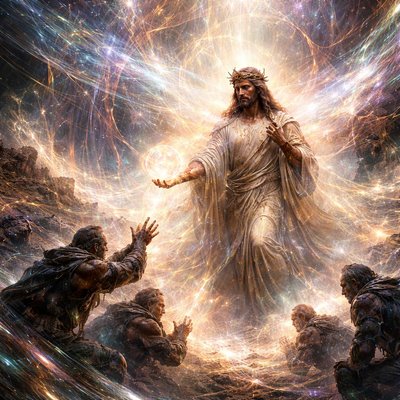
Epic Biblical Baroque Painting Style, High-Contrast Tenebrism Lighting, Supernatural Realism. A monumental, earth-shattering scene at Golgotha at the precise moment of death.

The Central Figure: Jesus hangs lifelessly on a rough wooden cross, head bowed in finality, his body pale and scarred. A subtle, fading divine light emanates from him. The titulus above his head reads "INRI."

The Manifestation of the Roar (Jasher 54 influence): At the very instant of his death, the environment is violently convulsing, visualizing the "roar" of Judah echoing through time. Behind and above the cross, the dark, stormy clouds are being ripped apart by a massive, translucent ethereal manifestation of a roaring Lion's head formed from dust, lightning, and golden spiritual energy.

The Environmental Impact: The ground beneath the cross is cracking open with deep fissures. Massive boulders are shattering into dust mid-air. The temple veil in the distant city background is visibly tearing top-to-bottom.

The Human Reaction: Below the cross, the scene is one of absolute supernatural terror (as described in Jasher). Roman centurions are cowering on the ground, covering their ears, their helmets knocked off. Horses are rearing wildly, throwing their riders. The few followers present (Mary, John) are driven to their knees, not just in grief, but overwhelmed by the physical force of the cosmic event. The lighting is a chaotic mix of deep eclipse shadow and blinding bursts of supernatural golden-red light from the roaring manifestation.
A majestic and inspiring depiction of the Crazy Horse National Memorial, captured from a slightly elevated, wide-angle perspective that emphasizes its immense scale and ongoing construction. The colossal carving of Crazy Horse on his war pony is the dominant feature, shown in its current state of detailed progress, with the iconic outstretched arm and pointing finger prominent against the rugged Black Hills. Visible elements of the carving process, such as scaffolding, construction equipment (subtly integrated), or evidence of rock removal, are present, highlighting the monumental effort and generations of work involved. The surrounding landscape of the Black Hills is an integral part of the composition, with pine forests, granite formations, and the vast, open sky providing a dramatic and respectful setting. The lighting is strong and clear, perhaps mid-morning or late afternoon sun, casting dramatic shadows that define the contours of the mountain and the carving. The atmosphere conveys a sense of enduring tribute, cultural pride, determination, and the sheer scale of human endeavor dedicated to honoring a legendary figure. The artistic style is a highly realistic, detailed landscape painting or photograph, emphasizing grandeur and reverence
Steampunk Historical Fantasy, Satirical Illustration Style, Cinematic Lighting. A bizarre, anachronistic scene inside a drafty medieval castle great hall (Camelot). A group of noblewomen, dressed in elaborate 6th-century velvet gowns, wimples, and tall pointed hennin hats with veils, are seated on rough wooden stools. They are furiously working a massive, makeshift telephone switchboard operator station.

The Technology: The switchboard is constructed from rough-hewn oak timbers, gleaming brass gears, porcelain insulators, and hundreds of thick, chaotic copper wires that are strung haphazardly across ancient tapestries and stone walls, disappearing out narrow arrow-slit windows.

The Action: The ladies hold bulky, antique Victorian-era earpieces and large brass mouthpieces, plugging heavy cables with oversized jacks into the board with expressions of intense concentration and mild confusion. Knights in armor walk past in the background, looking bewildered. Sunlight streams through gothic windows, illuminating the dust and the clash of eras.
Steampunk Historical Fantasy, Satirical Illustration Style, Cinematic Lighting. A bizarre, anachronistic scene inside a drafty medieval castle great hall (Camelot). A group of noblewomen, dressed in elaborate 6th-century velvet gowns, wimples, and tall pointed hennin hats with veils, are seated on rough wooden stools. They are furiously working a massive, makeshift telephone switchboard operator station.

The Technology: The switchboard is constructed from rough-hewn oak timbers, gleaming brass gears, porcelain insulators, and hundreds of thick, chaotic copper wires that are strung haphazardly across ancient tapestries and stone walls, disappearing out narrow arrow-slit windows.

The Action: The ladies hold bulky, antique Victorian-era earpieces and large brass mouthpieces, plugging heavy cables with oversized jacks into the board with expressions of intense concentration and mild confusion. Knights in armor walk past in the background, looking bewildered. Sunlight streams through gothic windows, illuminating the dust and the clash of eras.
A majestic and reverent scene, directly inspired by Revelation 5:8. A group of elderly, robed figures are kneeling in worship, their faces and attention directed towards a central focal point. Each elder holds a golden harp in one hand and a golden bowl brimming with luminous, swirling incense in the other. The incense, representing the collective prayers of all saints, rises in shimmering, golden tendrils from each bowl, converging and ascending towards the central figure. At the very center of the composition, slightly elevated and bathed in radiant light, stands the Lamb who was slain, embodying divine power and sacrifice, the recipient of all this worship. The atmosphere is ethereal, filled with soft, divine golden light emanating from the incense and the Lamb, emphasizing the precious, sacred, and unified nature of the prayers being offered before Him. Focus on the rich textures of gold, the reverence of the elders, and the radiant presence of the Lamb
Cinematic Nature Photography, Americana Style, Golden Hour Lighting. A candid, detailed shot of an authentic cowgirl in a worn leather hat, denim jacket, and dusty boots. She is standing beside a sturdy pack horse in a rocky creek bed, actively stuffing overflowing, rugged canvas panniers.

The details of the load are clear: A large bag of jumbo marshmallows and a red box of graham crackers are peeking out of one open saddlebag, next to chocolate bars. Strapped awkwardly to the very top of the pack saddle with ropes is a large, bright orange inflatable river tube.

The environment is stunning Colorado high country: Towering ponderosa pines and aspen trees line a rushing clear mountain river. Rugged, snow-capped Rocky Mountain peaks rise in the background under a rich blue sky. The light is warm and late-afternoon, catching the dust in the air and the textures of the horse's coat and the leather gear.
Cinematic Nature Photography, Americana Style, Golden Hour Lighting. A candid, detailed shot of an authentic cowgirl in a worn leather hat, denim jacket, and dusty boots and long red hair. She is standing beside a sturdy pack horse in a rocky creek bed, actively stuffing overflowing, rugged canvas panniers.

The details of the load are clear: A large bag of jumbo marshmallows and a red box of graham crackers are peeking out of one open saddlebag, next to chocolate bars. Strapped awkwardly to the very top of the pack saddle with ropes is a large, bright orange inflatable river tube.

The environment is stunning Colorado high country: Towering ponderosa pines and aspen trees line a rushing clear mountain river. Rugged, snow-capped Rocky Mountain peaks rise in the background under a rich blue sky. The light is warm and late-afternoon, catching the dust in the air and the textures of the horse's coat and the leather gear.
Steampunk Historical Fantasy, Satirical Illustration Style, Cinematic Lighting. A bizarre, anachronistic scene inside a drafty medieval castle great hall (Camelot). A group of noblewomen, dressed in elaborate 6th-century velvet gowns, wimples, and tall pointed hennin hats with veils, are seated on rough wooden stools. They are furiously working a massive, makeshift telephone switchboard operator station.

The Technology: The switchboard is constructed from rough-hewn oak timbers, gleaming brass gears, porcelain insulators, and hundreds of thick, chaotic copper wires that are strung haphazardly across ancient tapestries and stone walls, disappearing out narrow arrow-slit windows.

The Action: The ladies hold bulky, antique Victorian-era earpieces and large brass mouthpieces, plugging heavy cables with oversized jacks into the board with expressions of intense concentration and mild confusion. Knights in armor walk past in the background, looking bewildered. Sunlight streams through gothic windows, illuminating the dust and the clash of eras.
Steampunk Historical Fantasy, Satirical Illustration Style, Cinematic Lighting. A bizarre, anachronistic scene inside a drafty medieval castle great hall (Camelot). A group of noblewomen, dressed in elaborate 6th-century velvet gowns, wimples, and tall pointed hennin hats with veils, are seated on rough wooden stools. They are furiously working a massive, makeshift telephone switchboard operator station.

The Technology: The switchboard is constructed from rough-hewn oak timbers, gleaming brass gears, porcelain insulators, and hundreds of thick, chaotic copper wires that are strung haphazardly across ancient tapestries and stone walls, disappearing out narrow arrow-slit windows.

The Action: The ladies hold bulky, antique Victorian-era earpieces and large brass mouthpieces, plugging heavy cables with oversized jacks into the board with expressions of intense concentration and mild confusion. Knights in armor walk past in the background, looking bewildered. Sunlight streams through gothic windows, illuminating the dust and the clash of eras.
A majestic and reverent scene, directly inspired by Revelation 5:8. A group of elderly, robed figures are kneeling in worship, their faces and attention directed towards a central focal point. Each elder holds a golden harp in one hand and a golden bowl brimming with luminous, swirling incense in the other. The incense, representing the collective prayers of all saints, rises in shimmering, golden tendrils from each bowl, converging and ascending towards the central figure. At the very center of the composition, slightly elevated and bathed in radiant light, stands the Lamb who was slain, embodying divine power and sacrifice, the recipient of all this worship. The atmosphere is ethereal, filled with soft, divine golden light emanating from the incense and the Lamb, emphasizing the precious, sacred, and unified nature of the prayers being offered before Him. Focus on the rich textures of gold, the reverence of the elders, and the radiant presence of the Lamb
a black and white drawing of a man riding a horse
A breathtaking full-body photograph captures a woman from behind, standing in a vast, vibrant field of purple lupin flowers in Glacier National Park. Her long, rich plum purple hair is beautifully intertwined with fresh lupin blooms, forming an ethereal halo. She wears a unique 70s-inspired outfit consisting of shimmering lavender bell-bottom pants and a matching tunic-style top with bell sleeves and a square neckline, flared at the waist, adorned with subtle white horse patterns. The setting sun paints the sky in dramatic hues of fiery orange and deep red, silhouetting the majestic purple mountain ranges in the distance. The scene evokes a sense of wonder, serenity, and a deep connection to the wild beauty of nature, with a magical, almost fantastical feel, within the iconic landscape of Glacier National Park.
house with front view
a tree in nature
animal standing in natural pose
still life arrangement of fruits and flowers
bicyle resting against a wall
portrait of a person with expressive eyes