A Painting Of A Gazebo On The Water Art

Painting combining multiple historical art styles in the art style of Postmodernism --v 6.1
Fresco-style painting with architectural elements in the art style of Renaissance --v 6.1
Allegorical painting depicting abstract concepts in the art style of Symbolism --v 6.1
Painting combining classical themes with contemporary imagery in the art style of Transavantgarde --v 6.1
Large-scale canvas with spontaneous drip painting in the art style of Abstract Expressionism --v 6.1
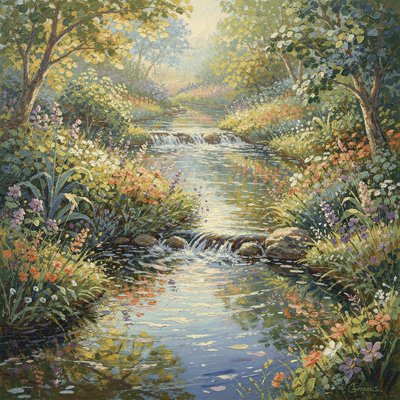
serene landscape with mountains and water
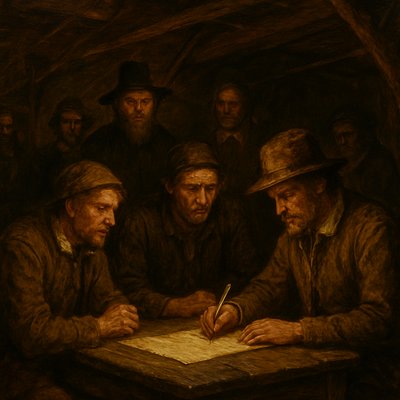
A historically accurate and atmospheric depiction of the signing of the Mayflower Compact aboard the ship in November 1620. The scene is set in the dimly lit, cramped cabin of the Mayflower, with the ship's timbers and rigging subtly visible, conveying the challenging conditions of the voyage. A simple table or chest serves as the signing surface. The primary focus is on a small group of the last individuals signing the document: specifically, the indentured servants (or 'strangers' not directly part of the Separatist congregation) approaching or at the table. Their expressions show a mix of weary determination, understanding of the necessity, and perhaps a hint of quiet apprehension or resignation to this new social contract, given their status. They are dressed in the plain, practical clothing typical of 17th-century commoners and laborers. Figures of prominent Pilgrims or 'Saints' (like William Bradford or John Carver) are visible in the background, observing the proceedings with a sense of gravity and leadership, but they are not the central focus. The lighting is low and warm, perhaps from a lantern, creating a chiaroscuro effect that highlights the faces of the signers. The atmosphere conveys the momentousness of the act under difficult circumstances, the diverse composition of the group, and the early seeds of self-governance in a new world. The artistic style is a realistic, historically detailed oil painting, capturing the solemnity and human element of this pivotal historical moment."
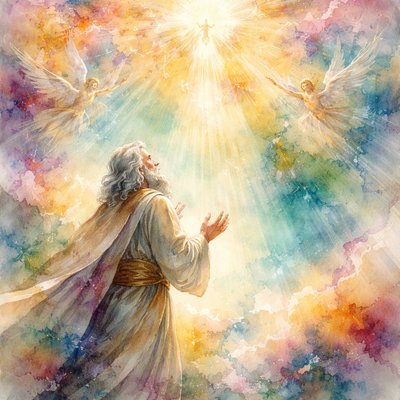
Enoch a righteous man, whose eyes were opened by God, saw the vision of the Holy One in the heavens
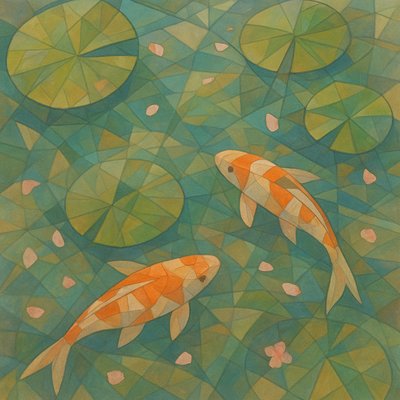
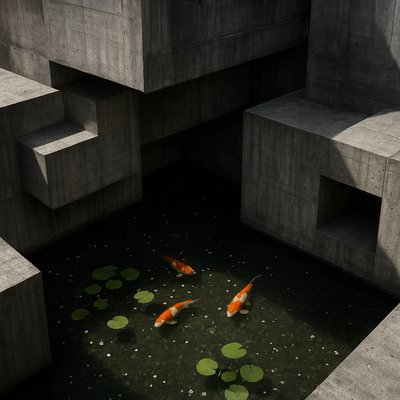
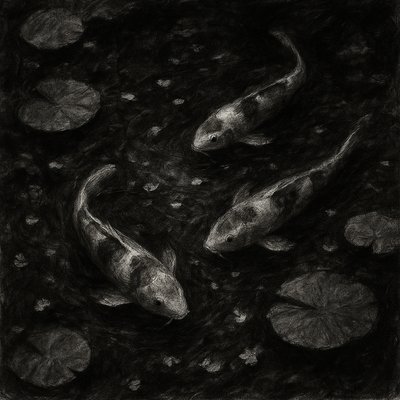
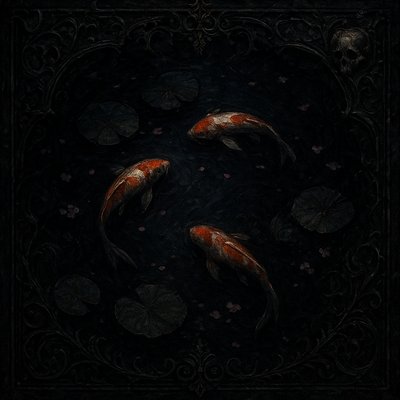
A koi pond seen from above, orange and white koi fish swimming among lily pads, clear water with subtle ripples, fallen cherry blossom petals floating on the surface, dappled sunlight
Display verse as meditation:
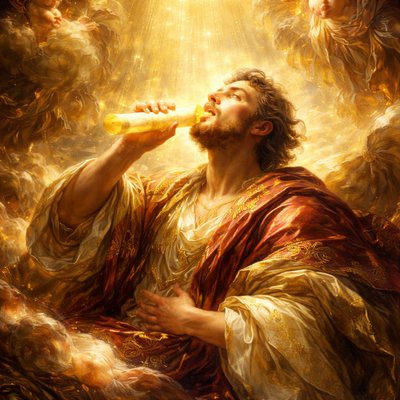
“And he said unto me, Son of man, cause thy belly to eat, and fill thy bowels with this (scroll) that I give thee. Then did I eat it; and it was in my mouth as honey for sweetness.” (Ezekiel 3:3, KJV)
A koi pond seen from above, orange and white koi fish swimming among lily pads, clear water with subtle ripples, fallen cherry blossom petals floating on the surface, dappled sunlight
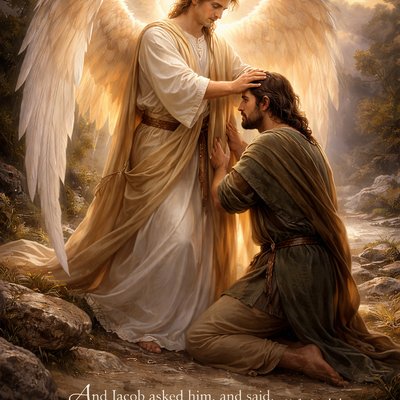
“And Jacob asked him, and said, Tell me, I pray thee, thy name. And he said, Wherefore is it that thou dost ask after my name? And he blessed him there.” (Genesis 32:29, KJVA) The angel blessing Jacob is masculine.
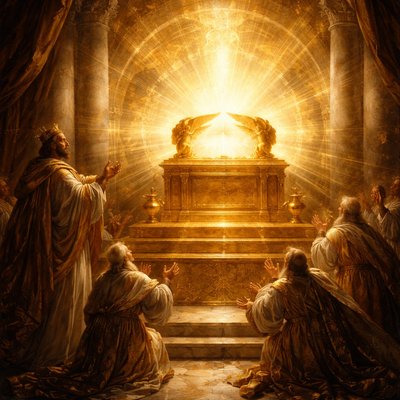
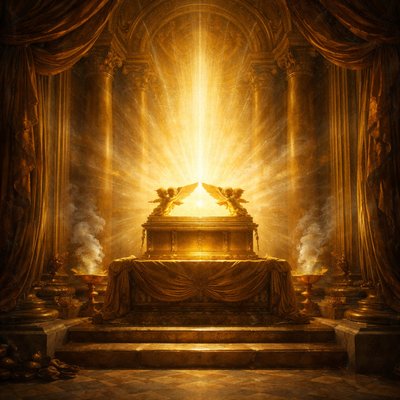
“And I have set there a place for the ark, wherein is the covenant of the LORD, which he made with our fathers, when he brought them out of the land of Egypt.” (1 Kings 8:21, KJV)
“And I have set there a place for the ark, wherein is the covenant of the LORD, which he made with our fathers, when he brought them out of the land of Egypt.” (1 Kings 8:21, KJV) No people are present in the Holy of Holies.
Painting of symbolic doorway or portal to another realm in the art style of Symbolism --v 6.1
Photorealistic painting of vintage car with chrome reflections in the art style of Photorealism --v 6.1
Expressive painting with elements of Italian cultural heritage in the art style of Transavantgarde --v 6.1
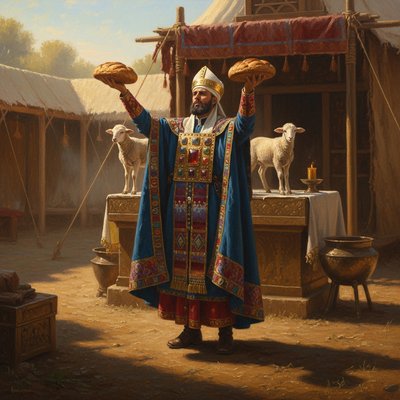
A hyper-detailed, photorealistic depiction of the High Priest of Israel performing the Feast of Weeks (Pentecost) wave offering. The High Priest is dressed in the complete set of holy vestments: a blue robe with golden bells and pomegranates on the hem, a colorful ephod, and a breastplate with twelve jewels. A golden plate engraved 'HOLINESS TO THE LORD' is tied to his linen mitre. He stands in the Tabernacle courtyard, facing the altar, holding the two leavened loaves of firstfruits and two male lambs high, performing the sacred wave offering ritual. Golden morning light, historically accurate setting, cinematic oil painting style.
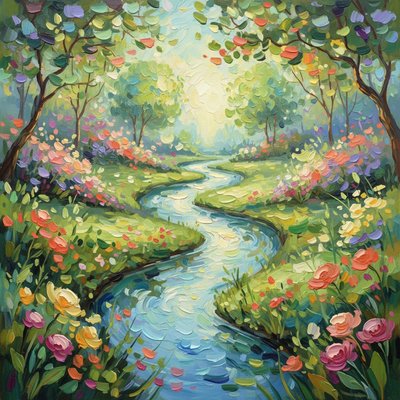
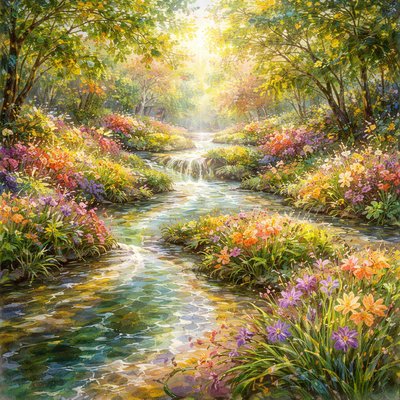
And a river went out of Eden to water the garden; and from thence it was parted, and became into four heads. 
(Genesis 2:10 KJV)
And a river went out of Eden to water the garden; and from thence it was parted, and became into four heads. 
(Genesis 2:10 KJV)
And a river went out of Eden to water the garden; and from thence it was parted, and became into four heads. 
(Genesis 2:10 KJV)
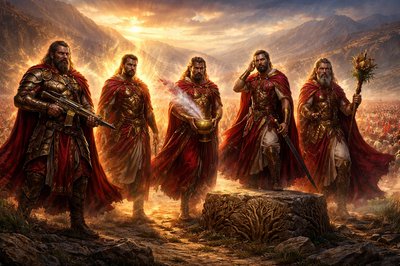
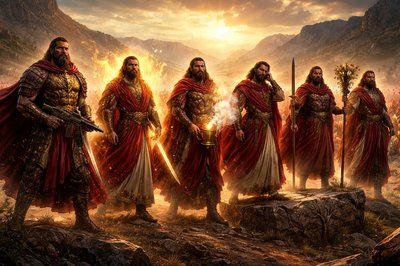
A wide, cinematic shot of six valiant ancient Hebrew warriors, the sons of Tola, standing in a vast desert valley. Each man is dressed in majestic tunics and sashes of deep scarlet, representing the Tola (scarlet worm) dye.Uzzi (My Strength): A massive, hulking commander in bronze-plated leather armor, prominently holding a modern tactical Uzi submachine gun with gold-inlay Hebrew engravings.

Jahmai (God Guards): Wrapped in a shimmering, protective golden aura that glows against his red robes.

Jibsam (Fragrant): Holding a golden censer emitting thick, fragrant clouds of white and scarlet-tinted incense. Shemuel (Heard of God): Posed in a moment of stillness, hand cupped to his ear as a faint golden light enters his mind.

Jeriel (Founded by God): Standing firmly atop a massive, ancient cornerstone carved with kermes oak branches.

Rephaiah (God Heals): Holding a wooden staff entwined with medicinal herbs and blooming red flowers. In the background, a massive army of 22,600 soldiers, all wearing scarlet standards, stretches to the horizon. High-contrast lighting, dramatic sunset, grit and hyper-detail, 8k resolution, biblical epic style. No text or letters on screen.
A wide, cinematic shot of six valiant ancient Hebrew warriors, the sons of Tola, standing in a vast desert valley. Each man is dressed in majestic tunics and sashes of deep scarlet, representing the Tola (scarlet worm) dye.Uzzi (My Strength): A massive, hulking commander in bronze-plated leather armor, prominently holding a modern tactical Uzi submachine gun with gold-inlay Hebrew engravings.

Jahmai (God Guards): Wrapped in a shimmering, protective golden aura that glows against his red robes.

Jibsam (Fragrant): Holding a golden censer emitting thick, fragrant clouds of white and scarlet-tinted incense. Shemuel (Heard of God): Posed in a moment of stillness, hand cupped to his ear as a faint golden light enters his mind.

Jeriel (Founded by God): Standing firmly atop a massive, ancient cornerstone carved with kermes oak branches.

Rephaiah (God Heals): Holding a wooden staff entwined with medicinal herbs and blooming red flowers. In the background, a massive army of 22,600 soldiers, all wearing scarlet standards, stretches to the horizon. High-contrast lighting, dramatic sunset, grit and hyper-detail, 8k resolution, biblical epic style. No text or letters on screen. Each man should look unique not cloned.
A koi pond seen from above, orange and white koi fish swimming among lily pads, clear water with subtle ripples, fallen cherry blossom petals floating on the surface, dappled sunlight