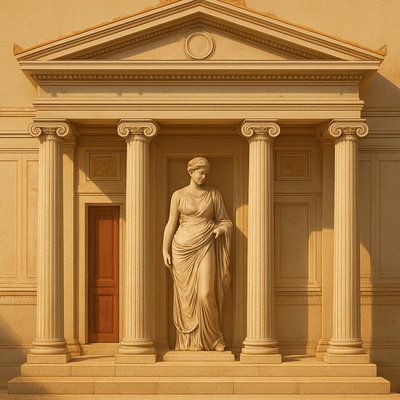
A Memorial Statue Art

still life with everyday objects
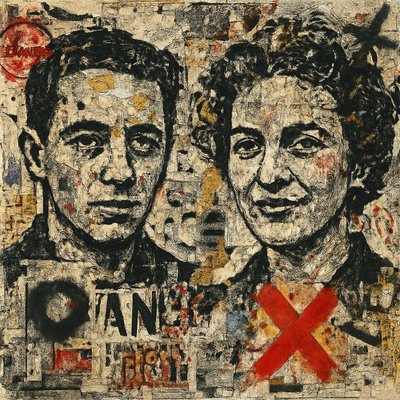
portrait of two people together
house with front view
portrait of two people together
still life with everyday objects
wide landscape with natural scenery
portrait of a person with expressive eyes
still life arrangement of fruits and flowers
serene landscape with mountains and water
still life arrangement of fruits and flowers
serene landscape with mountains and water
portrait of a person with expressive eyes
still life arrangement of fruits and flowers
portrait of a person with expressive eyes
serene landscape with mountains and water
still life arrangement of fruits and flowers
serene landscape with mountains and water
portrait of a person with expressive eyes
still life
Still life
A dramatic, richly detailed scene in the ancient Babylonian royal court. In the foreground, three wise and esteemed Babylonian court magicians (Chaldeans/astrologers) are gathered around a central figure, possibly the king, or intently studying an inscribed clay tablet. They are dressed in opulent, finely woven robes of deep blues, reds, and gold, with elaborate turbans or headwear. Their long, meticulously styled beards and hair indicate their status and wisdom. One magician holds a stylus, another points to intricate cuneiform script on a clay tablet, and the third gazes thoughtfully, perhaps at a celestial chart or into a symbolic brazier. The background reveals the grand, awe-inspiring architecture of the Babylonian palace, with glazed brick walls adorned with depictions of mythical creatures (like the Ishtar Gate lions) and massive, ornate columns. The atmosphere is one of profound intellectual pursuit, ancient wisdom, and mystical interpretation under the watchful eyes of the king. epic fantasy art, cinematic lighting, ultra-detailed, dramatic shadows, mystical glow"
A historically accurate and atmospheric depiction of the signing of the Mayflower Compact aboard the ship in November 1620. The scene is set in the dimly lit, cramped cabin of the Mayflower, with the ship's timbers and rigging subtly visible, conveying the challenging conditions of the voyage. A simple table or chest serves as the signing surface. The primary focus is on a small group of the last individuals signing the document: specifically, the indentured servants (or 'strangers' not directly part of the Separatist congregation) approaching or at the table. Their expressions show a mix of weary determination, understanding of the necessity, and perhaps a hint of quiet apprehension or resignation to this new social contract, given their status. They are dressed in the plain, practical clothing typical of 17th-century commoners and laborers. Figures of prominent Pilgrims or 'Saints' (like William Bradford or John Carver) are visible in the background, observing the proceedings with a sense of gravity and leadership, but they are not the central focus. The lighting is low and warm, perhaps from a lantern, creating a chiaroscuro effect that highlights the faces of the signers. The atmosphere conveys the momentousness of the act under difficult circumstances, the diverse composition of the group, and the early seeds of self-governance in a new world. The artistic style is a realistic, historically detailed oil painting, capturing the solemnity and human element of this pivotal historical moment."

New York City
In the style of Franz Marc, create a horse startled from his rest. The horse is in a grassy field, fenced, with mountains in the background. The horse is a light tan with dark mane. The horse is sensitive to a coyote nearby, emerging from a stand of Ponderosa pines. The atmosphere is quiet and calm with some morning fog misting around.
Gradient Abstract Art Style Style Transfer Example
Ferrofluid Typography Style Transfer Example
Fluxus Art Style Style Transfer Example
Glitch Art Style Style Transfer Example
a painting of blue and red shapes
a painting of a blue and orange swirl
a painting of a motorcycle driving through a forest
Augmented Reality Graffiti Style Transfer Example
Glitch Art Style Style Transfer Example
bicyle resting against a wall
portrait of two people together
still life with everyday objects
house with front view
animal standing in natural pose
a tree in nature