A Man Standing In Front Of A Bush Art

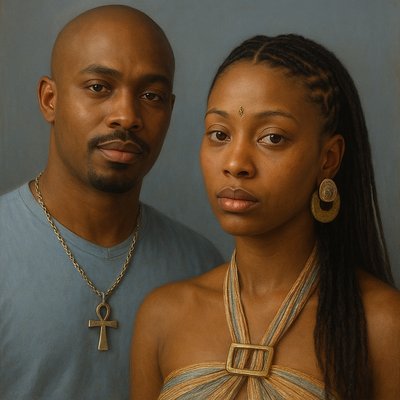
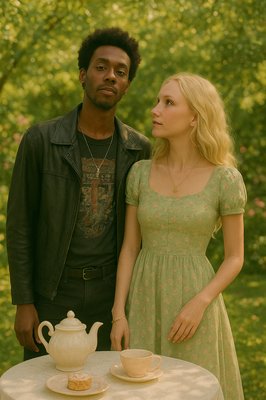
a man and a woman standing next to each other
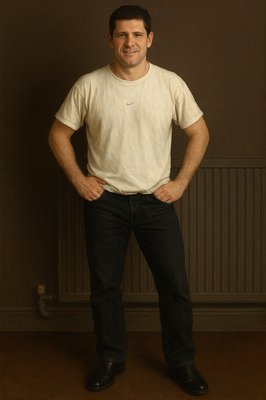
a man standing with his hands on his hips
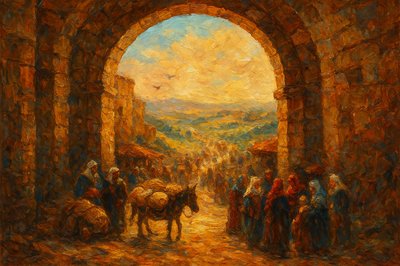
a painting of a group of people standing in front of a doorway
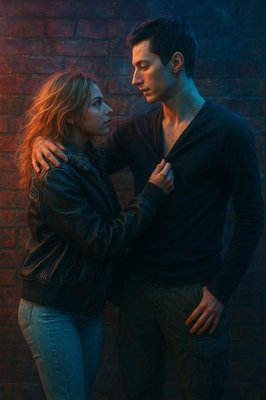
a man standing next to a woman near a table
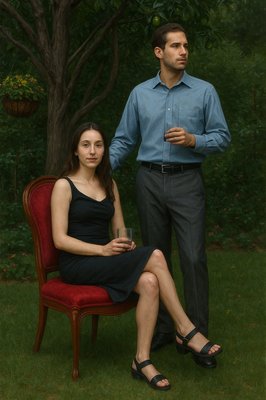
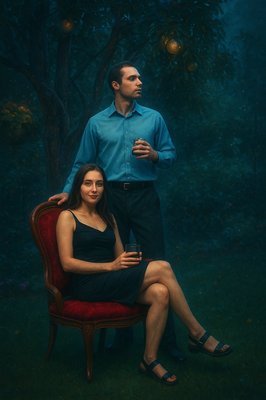
a man standing next to a woman sitting on a red chair
a man standing next to a woman on a red chair
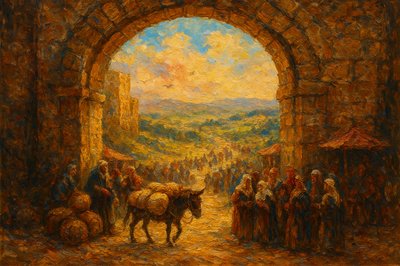
a painting of a group of people standing in front of a stone arch
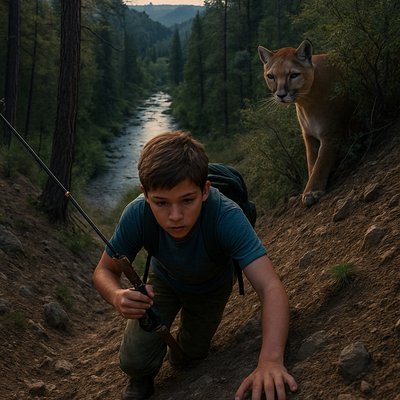
A young boy, no older than 12, is intensely focused on climbing a steep, rocky hillside in the San Juan National Forest, specifically along the Piedra River. He is scrambling upwards on his hands and knees towards a cougar watching him approach from behind a bush above the boy. He is carrying a fishing rod held securely in one hand. The hill is covered in dry dirt and scattered small rocks with ponderosa pines and aspen trees in the landscape.  Far below, at the bottom of the hillside, a clear, meandering mountain stream (the Piedra River) sparkles under twilight. The atmosphere is quiet, tense, capturing the stark beauty of the remote Colorado wilderness.
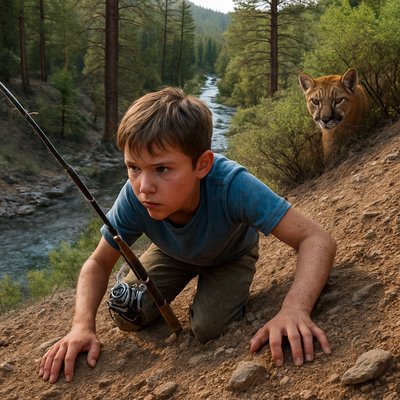
A young boy, no older than 12, is intensely focused on climbing a steep, rocky hillside in the San Juan National Forest, specifically along the Piedra River. He is scrambling upwards on his hands and knees. He is carrying a fishing rod held securely in one hand. The hill is covered in dry dirt and scattered small rocks with ponderosa pines and aspen trees in the landscape. Just ahead and slightly above him is a dense scrub oak). Behind this bush, the head of a cougar is visible, watching the boy. Far below, at the bottom of the hillside, a clear, meandering mountain stream (the Piedra River) sparkles under twilight. The atmosphere is quiet, tense, capturing the stark beauty of the remote Colorado wilderness.
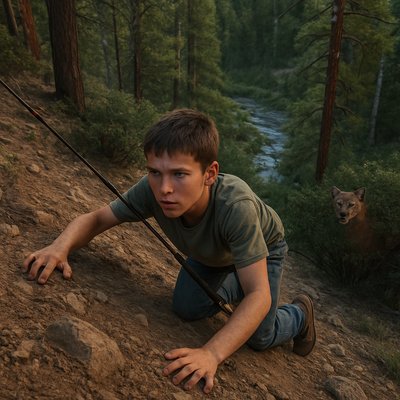
A young boy, no older than 12, is intensely focused on climbing a steep, rocky hillside in the San Juan National Forest, specifically along the Piedra River. He is scrambling upwards on his hands and knees. He is carrying a fishing rod held securely in one hand. The hill is covered in dry dirt and scattered small rocks with ponderosa pines and aspen trees in the landscape. Just ahead and slightly above him is a dense scrub oak). Behind this bush, the head of a cougar is visible, watching the boy climbing towards him unaware. Far below, at the bottom of the hillside, a clear, meandering mountain stream (the Piedra River) sparkles under twilight. The atmosphere is quiet, tense, capturing the stark beauty of the remote Colorado wilderness.
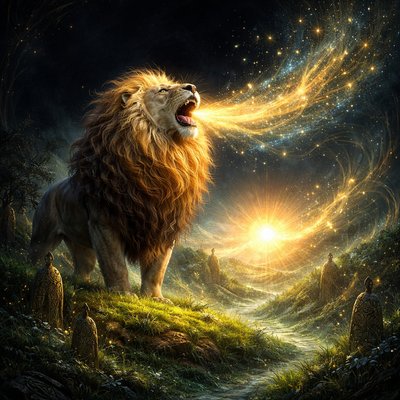
A majestic, golden-maned lion standing alone in a dark, empty void. The lion's mouth is open in a calm, melodic song. From his breath, golden ripples of light flow outward, transforming into stars, a rising sun, and lush green grass erupting from the shadows. High fantasy style, cinematic lighting, ethereal glow, divine atmosphere, 8k resolution.
a painting of a group of people standing in front of a large red object
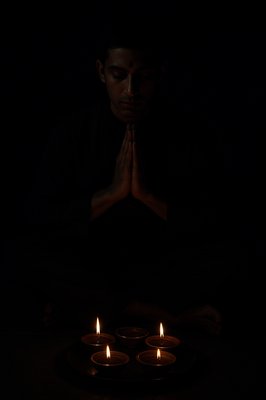
a man sitting in the dark with his hands folded in front of him
estroom sign, minimalistic ASCII art, simple black silhouettes of a man and a woman, standing side by side, iconic style, no background, clear and bold outlines, terminal-style ASCII characters, high contrast
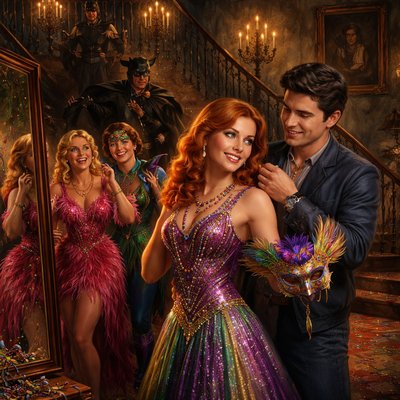
Atmospheric interior scene from Nancy Drew book #81 The Mardi Gras Mystery, set inside the grand, dimly lit Seaton Mansion nicknamed 'Bat Hollow' in New Orleans during Mardi Gras. Teenage detective Nancy Drew with her classic reddish-blonde hair, blue eyes, and determined smile, trying on an elegant masquerade costume—perhaps a sparkling gown with purple, green, and gold accents, feathered mask in hand, beads around her neck. Her friends Bess (blonde, bubbly, in a glamorous pink feathered outfit) and George (short dark hair, athletic, in a fun jester or adventurous costume) are nearby, laughing and adjusting outfits in front of a large antique mirror. Ned Nickerson helps Nancy with a clasp, smiling. In the background: Brian Seaton and his father Bartholomew in partial bat-themed costumes (capes, masks with bat ears/wings), an old grand staircase with wrought-iron details, flickering candlelight or chandeliers casting shadows, antique furniture, a framed portrait on the wall hinting at the stolen painting mystery, Mardi Gras beads and confetti scattered around. Moody yet festive lighting—warm glows against dark wood paneling and high ceilings—evoking a haunted Southern mansion vibe mixed with holiday excitement. 1980s Nancy Drew book illustration style, adventurous, detailed costumes, cinematic composition, vibrant colors popping against gothic shadows
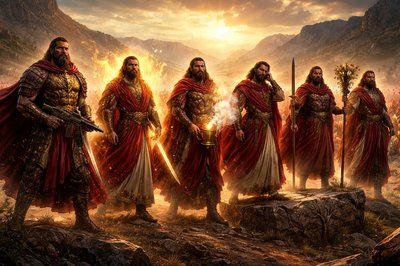
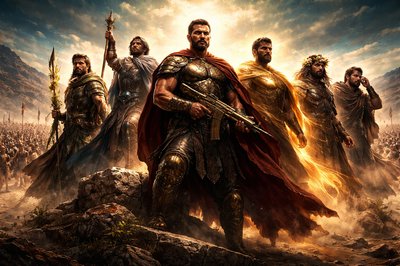
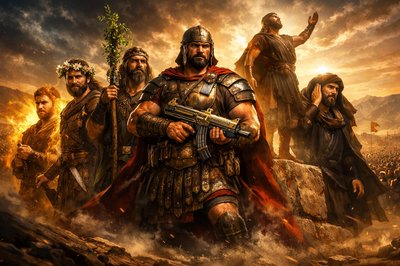
A wide, cinematic shot of six valiant ancient Hebrew warriors, the sons of Tola, standing in a vast desert valley. Each man is dressed in majestic tunics and sashes of deep scarlet, representing the Tola (scarlet worm) dye.Uzzi (My Strength): A massive, hulking commander in bronze-plated leather armor, prominently holding a modern tactical Uzi submachine gun with gold-inlay Hebrew engravings.

Jahmai (God Guards): Wrapped in a shimmering, protective golden aura that glows against his red robes.

Jibsam (Fragrant): Holding a golden censer emitting thick, fragrant clouds of white and scarlet-tinted incense. Shemuel (Heard of God): Posed in a moment of stillness, hand cupped to his ear as a faint golden light enters his mind.

Jeriel (Founded by God): Standing firmly atop a massive, ancient cornerstone carved with kermes oak branches.

Rephaiah (God Heals): Holding a wooden staff entwined with medicinal herbs and blooming red flowers. In the background, a massive army of 22,600 soldiers, all wearing scarlet standards, stretches to the horizon. High-contrast lighting, dramatic sunset, grit and hyper-detail, 8k resolution, biblical epic style. No text or letters on screen.

Conversation with Gemini
You said
Please help me write a prompt for ArtStyles about 1 Chronicles 7:2 (KJV)

2 And the sons of Tola; Uzzi, and Rephaiah, and Jeriel, and Jahmai, and Jibsam, and Shemuel, heads of their father's house, to wit, of Tola: they were valiant men of might in their generations; whose number was in the days of David two and twenty thousand and six hundred

. I would like each man have some aspect of the meaning of his Hebrew name present and I want Uzzi to actually have an Uzi.

Gemini said
That is a wild and creative request—I love the literal interpretation of "Uzzi" having an Uzi! It adds a fun, "anachronistic-action-movie" vibe to a classic biblical genealogy.

Since you’re using ArtStyles, we’ll want to lean into high-contrast lighting, epic scale, and specific visual metaphors for those Hebrew names.

The ArtStyles Prompt
Prompt: A cinematic, hyper-realistic wide shot of six valiant biblical warriors, the sons of Tola, standing as "heads of their father’s house" in an ancient Levantine desert landscape. In the center, Uzzi is a massive, muscular commander clad in bronze armor, incongruously wielding a modern tactical Uzi submachine gun with gold engravings. Surrounding him are his brothers: Rephaiah holding a staff entwined with healing herbs; Jeriel standing atop a massive foundation stone looking toward heaven; Jahmai enveloped in a warm, protective golden aura; Jibsam wearing a garland of fragrant desert lilies; and Shemuel in a posture of listening, hand to his ear as if hearing a divine whisper. In the background, a vast army of 22,600 soldiers stretches to the horizon under the golden sun of King David’s era. Epic composition, dramatic chiaroscuro lighting, intricate leather and metal textures, 8k resolution, ArtStation style.
“For if any be a hearer of the word, and not a doer, he is like unto a man beholding his natural face in a glass: For he beholdeth himself, and goeth his way, and straightway forgetteth what manner of man he was. But whoso looketh into the perfect law of liberty, and continueth therein, he being not a forgetful hearer, but a doer of the work, this man shall be blessed in his deed.” (James 1:23-25, KJV)

Conversation with Gemini
You said
Please help me write a prompt for ArtStyles about 1 Chronicles 7:2 (KJV)

2 And the sons of Tola; Uzzi, and Rephaiah, and Jeriel, and Jahmai, and Jibsam, and Shemuel, heads of their father's house, to wit, of Tola: they were valiant men of might in their generations; whose number was in the days of David two and twenty thousand and six hundred

. I would like each man have some aspect of the meaning of his Hebrew name present and I want Uzzi to actually have an Uzi.

Gemini said
That is a wild and creative request—I love the literal interpretation of "Uzzi" having an Uzi! It adds a fun, "anachronistic-action-movie" vibe to a classic biblical genealogy.

Since you’re using ArtStyles, we’ll want to lean into high-contrast lighting, epic scale, and specific visual metaphors for those Hebrew names.

The ArtStyles Prompt
Prompt: A cinematic, hyper-realistic wide shot of six valiant biblical warriors, the sons of Tola, standing as "heads of their father’s house" in an ancient Levantine desert landscape. In the center, Uzzi is a massive, muscular commander clad in bronze armor, incongruously wielding a modern tactical Uzi submachine gun with gold engravings. Surrounding him are his brothers: Rephaiah holding a staff entwined with healing herbs; Jeriel standing atop a massive foundation stone looking toward heaven; Jahmai enveloped in a warm, protective golden aura; Jibsam wearing a garland of fragrant desert lilies; and Shemuel in a posture of listening, hand to his ear as if hearing a divine whisper. In the background, a vast army of 22,600 soldiers stretches to the horizon under the golden sun of King David’s era. Epic composition, dramatic chiaroscuro lighting, intricate leather and metal textures, 8k resolution, ArtStation style.
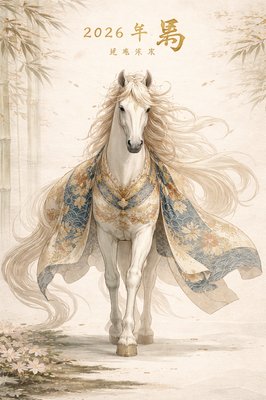
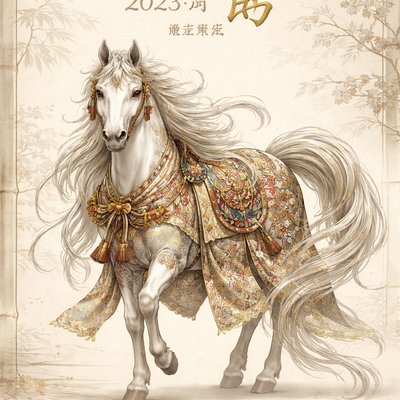
Masterpiece of Japanese fantasy illustration, ultra-detailed, refined high-end aesthetic, majestic horse as a Shōgatsu New Year symbol, complete and graceful form, body adorned with intricate traditional Japanese motifs inspired by kimono textiles and Edo-period patterns, including seigaiha waves, asanoha geometry, and subtle sakura accents, delicate gold leaf and fine metallic ink tracing contours, ultra-fine linework with hand-inked precision, standing against a minimal washi-paper background in soft ivory with muted crimson and ink-black accents, flowing mane and tail with elegant, elongated motion conveying calm strength and forward momentum, mid-shot, front-facing composition, balanced use of negative space, refined textile-like textures, quiet ceremonial atmosphere, 8K resolution, hyper-detailed yet painterly rendering, museum-quality illustration, subtle gold calligraphy text at top reading “2026 年 馬” with a smaller inscription “謹賀新年”, in the style of Japanese ink illustration blended with contemporary fantasy art, delicate line-art, restrained color palette, timeless and elegant
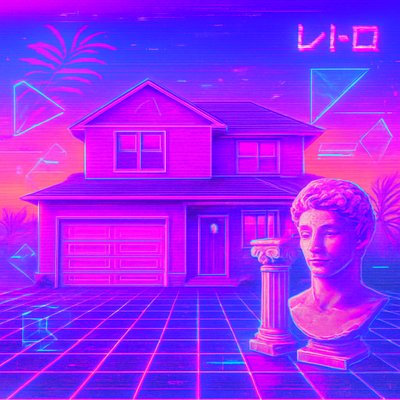
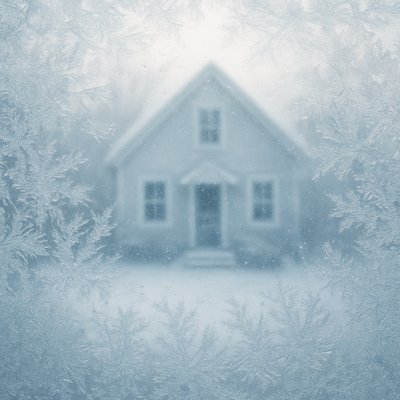
house with front view
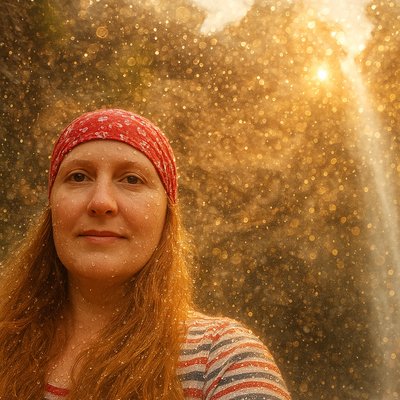
a woman wearing a red bandana standing in front of a waterfall
house with front view
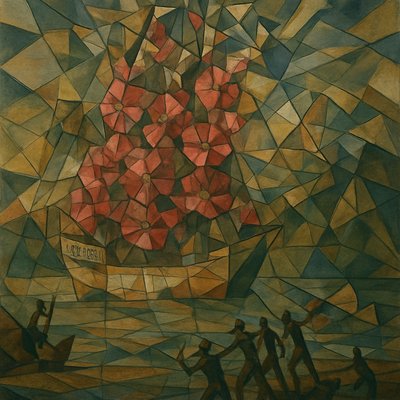
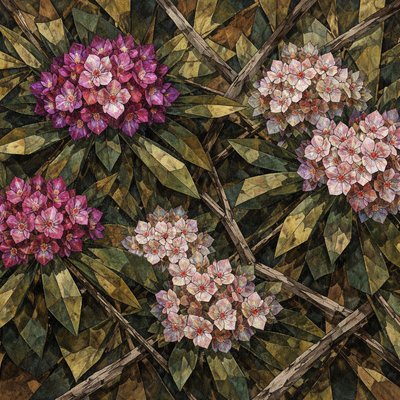
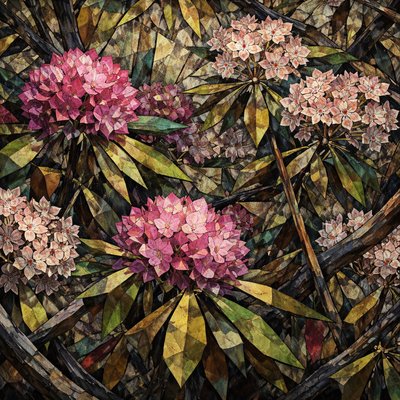
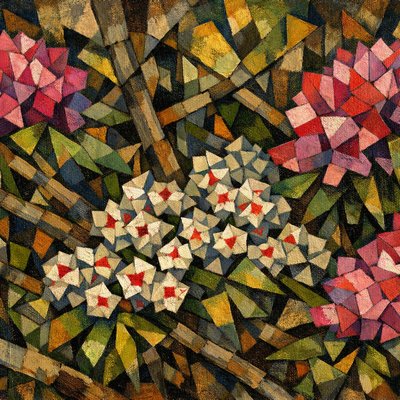
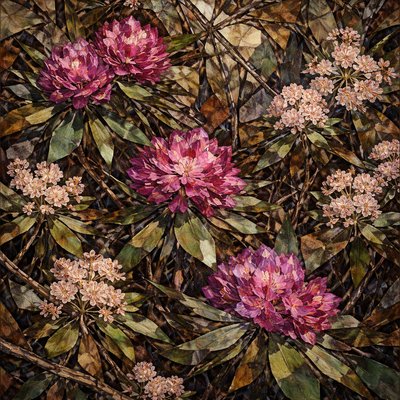
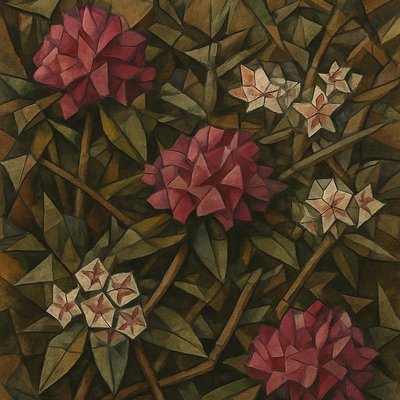
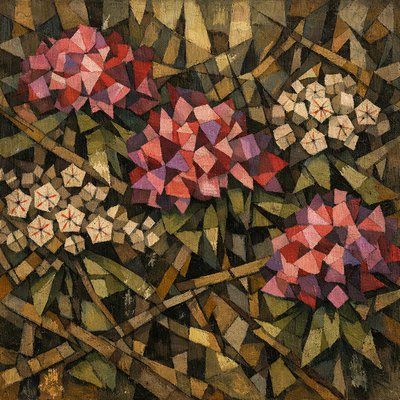
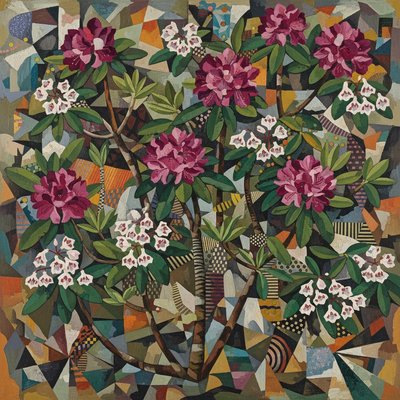
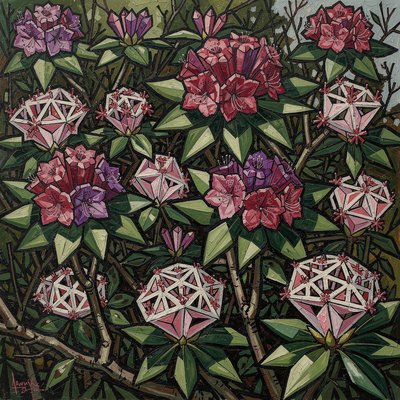
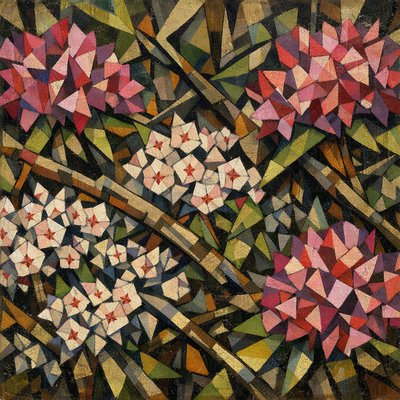
Art Style: Analytical Cubism, avant-garde oil painting style reminiscent of Picasso and Braque.

Subject: A dense, tangled thicket of Rhododendrons and Mountain Laurel bushes.

Composition & Details: The entire natural scene is deconstructed into overlapping geometric planes, fractured shards, and intersecting angles. There are no curved lines; everything is rendered in cubes, cones, and trapezoids.

    The Rhododendrons: Large, showy flower trusses are broken into faceted crystalline structures of deep magenta, rose pink, and violet blocks, looking like explosions of colored quartz rather than soft petals.

    The Mountain Laurels: The smaller, intricate flowers are rendered as complex, repeating geometric star-patterns and angular cups in white and pale pink with distinct red polygonal markings.

    Foliage & Branches: The thick, leathery leaves are fragmented green triangles and parallelograms overlapping each other, creating a sense of depth without traditional perspective. The woody stems and branches are jagged, intersecting brown and grey cylinders that shatter across the frame.
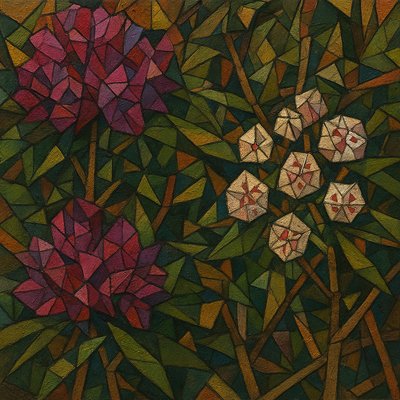
Color & Texture: A palette of muted earth tones—ochre, burnt umber, forest green, and slate grey—contrasted sharply with the jewel-toned facets of the flower colors. The finish should have a heavy, textured oil paint feel with visible palette knife marks and rough brushwork.
Art Style: Analytical Cubism, avant-garde oil painting style reminiscent of Picasso and Braque.

Subject: A dense, tangled thicket of Rhododendrons and Mountain Laurel bushes.

Composition & Details: The entire natural scene is deconstructed into overlapping geometric planes, fractured shards, and intersecting angles. There are no curved lines; everything is rendered in cubes, cones, and trapezoids.

    The Rhododendrons: Large, showy flower trusses are broken into faceted crystalline structures of deep magenta, rose pink, and violet blocks, looking like explosions of colored quartz rather than soft petals.

    The Mountain Laurels: The smaller, intricate flowers are rendered as complex, repeating geometric star-patterns and angular cups in white and pale pink with distinct red polygonal markings.

    Foliage & Branches: The thick, leathery leaves are fragmented green triangles and parallelograms overlapping each other, creating a sense of depth without traditional perspective. The woody stems and branches are jagged, intersecting brown and grey cylinders that shatter across the frame.

Color & Texture: A palette of muted earth tones—ochre, burnt umber, forest green, and slate grey—contrasted sharply with the jewel-toned facets of the flower colors. The finish should have a heavy, textured oil paint feel with visible palette knife marks and rough brushwork.
Art Style: Analytical Cubism, avant-garde oil painting style reminiscent of Picasso and Braque.

Subject: A dense, tangled thicket of Rhododendrons and Mountain Laurel bushes.

Composition & Details: The entire natural scene is deconstructed into overlapping geometric planes, fractured shards, and intersecting angles. There are no curved lines; everything is rendered in cubes, cones, and trapezoids.

    The Rhododendrons: Large, showy flower trusses are broken into faceted crystalline structures of deep magenta, rose pink, and violet blocks, looking like explosions of colored quartz rather than soft petals.

    The Mountain Laurels: The smaller, intricate flowers are rendered as complex, repeating geometric star-patterns and angular cups in white and pale pink with distinct red polygonal markings.

    Foliage & Branches: The thick, leathery leaves are fragmented green triangles and parallelograms overlapping each other, creating a sense of depth without traditional perspective. The woody stems and branches are jagged, intersecting brown and grey cylinders that shatter across the frame.

Color & Texture: A palette of muted earth tones—ochre, burnt umber, forest green, and slate grey—contrasted sharply with the jewel-toned facets of the flower colors. The finish should have a heavy, textured oil paint feel with visible palette knife marks and rough brushwork.
Art Style: Analytical Cubism, avant-garde oil painting style reminiscent of Picasso and Braque.

Subject: A dense, tangled thicket of Rhododendrons and Mountain Laurel bushes.

Composition & Details: The entire natural scene is deconstructed into overlapping geometric planes, fractured shards, and intersecting angles. There are no curved lines; everything is rendered in cubes, cones, and trapezoids.

    The Rhododendrons: Large, showy flower trusses are broken into faceted crystalline structures of deep magenta, rose pink, and violet blocks, looking like explosions of colored quartz rather than soft petals.

    The Mountain Laurels: The smaller, intricate flowers are rendered as complex, repeating geometric star-patterns and angular cups in white and pale pink with distinct red polygonal markings.

    Foliage & Branches: The thick, leathery leaves are fragmented green triangles and parallelograms overlapping each other, creating a sense of depth without traditional perspective. The woody stems and branches are jagged, intersecting brown and grey cylinders that shatter across the frame.

Color & Texture: A palette of muted earth tones—ochre, burnt umber, forest green, and slate grey—contrasted sharply with the jewel-toned facets of the flower colors. The finish should have a heavy, textured oil paint feel with visible palette knife marks and rough brushwork.
A RUGGED MAN, 
TESTIFY ABOUT YOUR LIFE HIDDEN IN CHRIST
A RUGGED MAN, 
TESTIFY ABOUT YOUR LIFE HIDDEN IN CHRIST
Art Style: Analytical Cubism, avant-garde oil painting style reminiscent of Picasso and Braque.

Subject: A dense, tangled thicket of Rhododendrons and Mountain Laurel bushes.

Composition & Details: The entire natural scene is deconstructed into overlapping geometric planes, fractured shards, and intersecting angles. There are no curved lines; everything is rendered in cubes, cones, and trapezoids.

    The Rhododendrons: Large, showy flower trusses are broken into faceted crystalline structures of deep magenta, rose pink, and violet blocks, looking like explosions of colored quartz rather than soft petals.

    The Mountain Laurels: The smaller, intricate flowers are rendered as complex, repeating geometric star-patterns and angular cups in white and pale pink with distinct red polygonal markings.

    Foliage & Branches: The thick, leathery leaves are fragmented green triangles and parallelograms overlapping each other, creating a sense of depth without traditional perspective. The woody stems and branches are jagged, intersecting brown and grey cylinders that shatter across the frame.

Color & Texture: A palette of muted earth tones—ochre, burnt umber, forest green, and slate grey—contrasted sharply with the jewel-toned facets of the flower colors. The finish should have a heavy, textured oil paint feel with visible palette knife marks and rough brushwork.
Art Style: Analytical Cubism, avant-garde oil painting style reminiscent of Picasso and Braque.

Subject: A dense, tangled thicket of Rhododendrons and Mountain Laurel bushes.

Composition & Details: The entire natural scene is deconstructed into overlapping geometric planes, fractured shards, and intersecting angles. There are no curved lines; everything is rendered in cubes, cones, and trapezoids.

    The Rhododendrons: Large, showy flower trusses are broken into faceted crystalline structures of deep magenta, rose pink, and violet blocks, looking like explosions of colored quartz rather than soft petals.

    The Mountain Laurels: The smaller, intricate flowers are rendered as complex, repeating geometric star-patterns and angular cups in white and pale pink with distinct red polygonal markings.

    Foliage & Branches: The thick, leathery leaves are fragmented green triangles and parallelograms overlapping each other, creating a sense of depth without traditional perspective. The woody stems and branches are jagged, intersecting brown and grey cylinders that shatter across the frame.

Color & Texture: A palette of muted earth tones—ochre, burnt umber, forest green, and slate grey—contrasted sharply with the jewel-toned facets of the flower colors. The finish should have a heavy, textured oil paint feel with visible palette knife marks and rough brushwork.
Art Style: Analytical Cubism, avant-garde oil painting style reminiscent of Picasso and Braque.

Subject: A dense, tangled thicket of Rhododendrons and Mountain Laurel bushes.

Composition & Details: The entire natural scene is deconstructed into overlapping geometric planes, fractured shards, and intersecting angles. There are no curved lines; everything is rendered in cubes, cones, and trapezoids.

    The Rhododendrons: Large, showy flower trusses are broken into faceted crystalline structures of deep magenta, rose pink, and violet blocks, looking like explosions of colored quartz rather than soft petals.

    The Mountain Laurels: The smaller, intricate flowers are rendered as complex, repeating geometric star-patterns and angular cups in white and pale pink with distinct red polygonal markings.

    Foliage & Branches: The thick, leathery leaves are fragmented green triangles and parallelograms overlapping each other, creating a sense of depth without traditional perspective. The woody stems and branches are jagged, intersecting brown and grey cylinders that shatter across the frame.

Color & Texture: A palette of muted earth tones—ochre, burnt umber, forest green, and slate grey—contrasted sharply with the jewel-toned facets of the flower colors. The finish should have a heavy, textured oil paint feel with visible palette knife marks and rough brushwork.
Art Style: Analytical Cubism, avant-garde oil painting style reminiscent of Picasso and Braque.

Subject: A dense, tangled thicket of Rhododendrons and Mountain Laurel bushes.

Composition & Details: The entire natural scene is deconstructed into overlapping geometric planes, fractured shards, and intersecting angles. There are no curved lines; everything is rendered in cubes, cones, and trapezoids.

    The Rhododendrons: Large, showy flower trusses are broken into faceted crystalline structures of deep magenta, rose pink, and violet blocks, looking like explosions of colored quartz rather than soft petals.

    The Mountain Laurels: The smaller, intricate flowers are rendered as complex, repeating geometric star-patterns and angular cups in white and pale pink with distinct red polygonal markings.

    Foliage & Branches: The thick, leathery leaves are fragmented green triangles and parallelograms overlapping each other, creating a sense of depth without traditional perspective. The woody stems and branches are jagged, intersecting brown and grey cylinders that shatter across the frame.

Color & Texture: A palette of muted earth tones—ochre, burnt umber, forest green, and slate grey—contrasted sharply with the jewel-toned facets of the flower colors. The finish should have a heavy, textured oil paint feel with visible palette knife marks and rough brushwork.
Art Style: Analytical Cubism, avant-garde oil painting style reminiscent of Picasso and Braque.

Subject: A dense, tangled thicket of Rhododendrons and Mountain Laurel bushes.

Composition & Details: The entire natural scene is deconstructed into overlapping geometric planes, fractured shards, and intersecting angles. There are no curved lines; everything is rendered in cubes, cones, and trapezoids.

    The Rhododendrons: Large, showy flower trusses are broken into faceted crystalline structures of deep magenta, rose pink, and violet blocks, looking like explosions of colored quartz rather than soft petals.

    The Mountain Laurels: The smaller, intricate flowers are rendered as complex, repeating geometric star-patterns and angular cups in white and pale pink with distinct red polygonal markings.

    Foliage & Branches: The thick, leathery leaves are fragmented green triangles and parallelograms overlapping each other, creating a sense of depth without traditional perspective. The woody stems and branches are jagged, intersecting brown and grey cylinders that shatter across the frame.

Color & Texture: A palette of muted earth tones—ochre, burnt umber, forest green, and slate grey—contrasted sharply with the jewel-toned facets of the flower colors. The finish should have a heavy, textured oil paint feel with visible palette knife marks and rough brushwork.
Art Style: Analytical Cubism, avant-garde oil painting style reminiscent of Picasso and Braque.

Subject: A dense, tangled thicket of Rhododendrons and Mountain Laurel bushes.

Composition & Details: The entire natural scene is deconstructed into overlapping geometric planes, fractured shards, and intersecting angles. There are no curved lines; everything is rendered in cubes, cones, and trapezoids.

    The Rhododendrons: Large, showy flower trusses are broken into faceted crystalline structures of deep magenta, rose pink, and violet blocks, looking like explosions of colored quartz rather than soft petals.

    The Mountain Laurels: The smaller, intricate flowers are rendered as complex, repeating geometric star-patterns and angular cups in white and pale pink with distinct red polygonal markings.

    Foliage & Branches: The thick, leathery leaves are fragmented green triangles and parallelograms overlapping each other, creating a sense of depth without traditional perspective. The woody stems and branches are jagged, intersecting brown and grey cylinders that shatter across the frame.

Color & Texture: A palette of muted earth tones—ochre, burnt umber, forest green, and slate grey—contrasted sharply with the jewel-toned facets of the flower colors. The finish should have a heavy, textured oil paint feel with visible palette knife marks and rough brushwork.
A MOBSTER
 MAN, 
TESTIFY ABOUT YOUR LIFE HIDDEN IN CHRIST
A man and woman long distance thinking about each other
A MOBSTER
 MAN, WITH A BEARD
TESTIFY ABOUT YOUR LIFE HIDDEN IN CHRIST
A MOBSTER
 MAN, WITH A BEARD
TESTIFY ABOUT YOUR LIFE HIDDEN IN CHRIST
A MOBSTER
 MAN, WITH A BEARD
TESTIFY ABOUT YOUR LIFE HIDDEN IN CHRIST