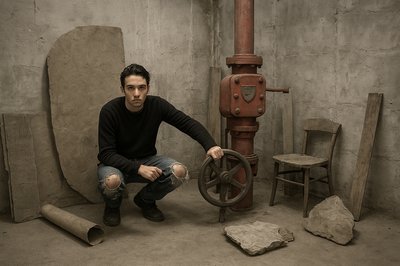
A Man Sitting On The Ground With His Hand On His Head Art

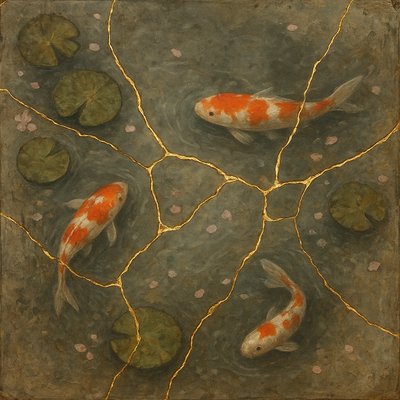
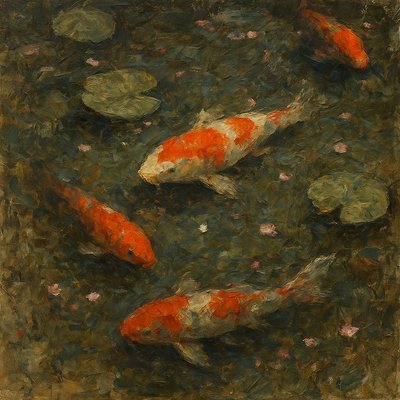
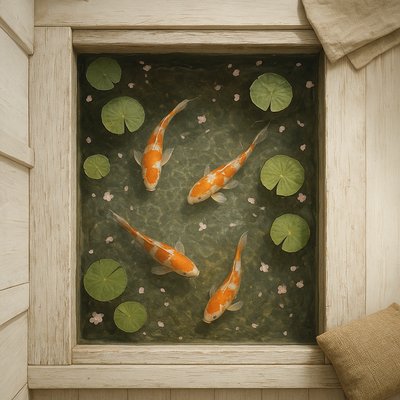
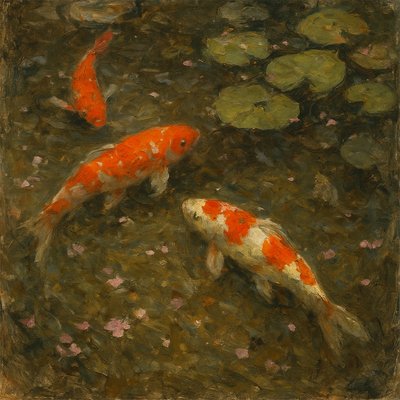
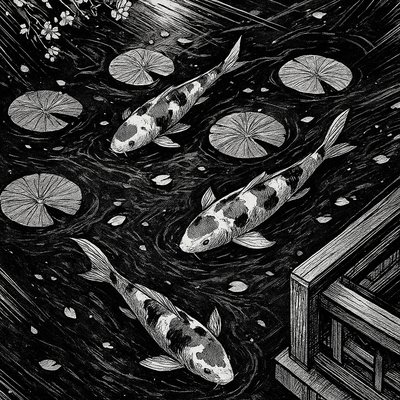
A koi pond seen from above, orange and white koi fish swimming among lily pads, clear water with subtle ripples, fallen cherry blossom petals floating on the surface, dappled sunlight
A highly realistic and historically accurate image set in the deep, waterlogged mud of the Texas Cross Timbers (Montague County) in 1840. The scene captures the frustrating moment when the Chihuahua Traders caravan is completely stuck. Foreground focus is on several heavy, wooden Conestoga freight wagons, mired up to their axles in dark, thick mud. Exhausted oxen are straining and distressed, their drivers in rough frontier attire attempting to free the wheels with ropes and levers. In the mid-ground, a small group of the American equestrian circus performers stands next to their distinctive, high-quality riding horses, which are visibly more refined than the typical pack animals. The performers are dressed in sturdy but distinct traveling clothes, looking ill-equipped and frustrated by the muddy conditions. One performer is carefully securing a colorful carriage or cart containing unique circus props, struggling to keep it from sinking. The overall mood is one of miserable delay and hardship. Cloudy, oppressive sky; detailed realism; wide-angle shot; dark, moody lighting.
A highly realistic and historically accurate image set in the deep, waterlogged mud of the Texas Cross Timbers (Montague County) in 1840. The scene captures the frustrating moment when the Chihuahua Traders caravan is completely stuck.

Foreground focus is on several heavy, wooden Conestoga freight wagons, mired up to their axles in dark, thick mud. Exhausted oxen are straining and distressed, their drivers in rough frontier attire attempting to free the wheels with ropes and levers.

In the mid-ground, a small group of the American equestrian circus performers stands next to their distinctive, high-quality riding horses, which are visibly more refined than the typical pack animals. The performers are dressed in sturdy but distinct traveling clothes, looking ill-equipped and frustrated by the muddy conditions. One performer is carefully securing a colorful carriage or cart containing unique circus props, struggling to keep it from sinking. The overall mood is one of miserable delay and hardship. Cloudy, oppressive sky; detailed realism; wide-angle shot; dark, moody lighting.
A highly realistic and historically accurate image set in the deep, waterlogged mud of the Texas Cross Timbers (Montague County) in 1840. The scene captures the frustrating moment when the Chihuahua Traders caravan is completely stuck.

Foreground focus is on several heavy, wooden Conestoga freight wagons, mired up to their axles in dark, thick mud. Exhausted oxen are straining and distressed, their drivers in rough frontier attire attempting to free the wheels with ropes and levers.

In the mid-ground, a small group of the American equestrian circus performers stands next to their distinctive, high-quality riding horses, which are visibly more refined than the typical pack animals. The performers are dressed in sturdy but distinct traveling clothes—perhaps featuring slightly tailored jackets or vests—rather than performance costumes, looking ill-equipped and frustrated by the muddy conditions. One performer is carefully securing a small, colorful carriage or cart containing unique circus props, struggling to keep it from sinking. The overall mood is one of miserable delay and hardship. Cloudy, oppressive sky; detailed realism; wide-angle shot; dark, moody lighting.
Platter with peacock and fruit garland border
a drawing of a woman sitting on the ground
A beautiful young woman with fair skin, light brown hair styled in a braid, and rosy cheeks stands outdoors in front of a rustic stone and ivy-covered building. She is wearing a simple, practical light brown dress with an apron-style overlay, suggestive of a farm setting. Her right arm is extended, and she is wearing a dark leather glove on her hand, upon which a messenger pigeon has just landed. The pigeon is a classic racing pigeon type, with iridescent green and purple neck feathers, and it has its wings slightly spread as if in the act of landing or adjusting. A small message capsule or scroll is clearly visible attached to one of its legs. The woman looks slightly upwards and to the right with a soft, warm expression, her lips slightly parted, as if acknowledging the pigeon or looking towards the message. In the background, to the right, is a picturesque green landscape under a bright sky with scattered clouds, featuring rolling hills, a small, distant stone building, and what appears to be an old cannon or piece of artillery, hinting at a historical wartime context. The overall lighting is warm and natural, creating a serene yet significant atmosphere.
A historically accurate and deeply somber depiction of the immediate aftermath of the Wounded Knee Massacre in December 1890. The scene captures the desolate, snow-covered landscape of the Pine Ridge Reservation. Focus on the fallen Lakota men, women, and children, scattered across the snow, their bodies still and tragic. A few surviving individuals are shown in postures of profound grief or shock, perhaps tending to the wounded. The distant presence of U.S. soldiers, heavily armed, stands as a stark and cold counterpoint to the devastation. The atmosphere is one of profound sorrow, loss, and the brutal silence of winter. The lighting is cold and muted, emphasizing the harshness of the environment and the tragedy of the event. The artistic style should be a realistic, painterly approach, evoking the historical period with unflinching honesty but without graphic sensationalism. The intent is to serve as a memorial to the victims and a historical testament to the tragic event."
a painting of a woman sitting on the ground
And behold! He comes with ten thousands of ⌈His⌉ holy ones (1 Enoch 1:9)
A beautiful young woman with fair skin, light brown hair styled in a braid, and rosy cheeks stands outdoors in front of a rustic stone and ivy-covered building. She is wearing a simple, practical light brown dress with an apron-style overlay, suggestive of a farm setting. Her right arm is extended, and she is wearing a dark leather glove on her hand, upon which a messenger pigeon has just landed. The pigeon is a classic racing pigeon type, with iridescent green and purple neck feathers, and it has its wings slightly spread as if in the act of landing or adjusting. A small message capsule or scroll is clearly visible attached to one of its legs. The woman looks slightly upwards and to the right with a soft, warm expression, her lips slightly parted, as if acknowledging the pigeon or looking towards the message. In the background, to the right, is a picturesque green landscape under a bright sky with scattered clouds, featuring rolling hills, a small, distant stone building, and what appears to be an old cannon or piece of artillery, hinting at a historical wartime context. The overall lighting is warm and natural, creating a serene yet significant atmosphere.
A majestic and reverent scene, directly inspired by Revelation 5:8. A group of elderly, robed figures are kneeling in worship, their faces and attention directed towards a central focal point. Each elder holds a golden harp in one hand and a golden bowl brimming with luminous, swirling incense in the other. The incense, representing the collective prayers of all saints, rises in shimmering, golden tendrils from each bowl, converging and ascending towards the central figure. At the very center of the composition, slightly elevated and bathed in radiant light, stands the Lamb who was slain, embodying divine power and sacrifice, the recipient of all this worship. The atmosphere is ethereal, filled with soft, divine golden light emanating from the incense and the Lamb, emphasizing the precious, sacred, and unified nature of the prayers being offered before Him. Focus on the rich textures of gold, the reverence of the elders, and the radiant presence of the Lamb
a man sitting on the floor in front of candles
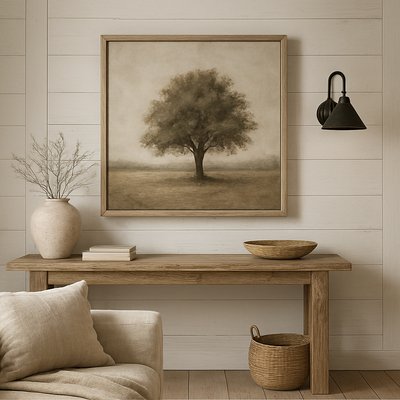
a tree in nature
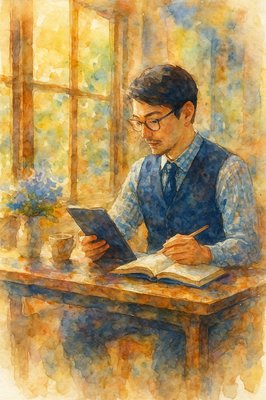
a man sitting at a table writing on a piece of paper
A koi pond seen from above, orange and white koi fish swimming among lily pads, clear water with subtle ripples, fallen cherry blossom petals floating on the surface, dappled sunlight
A majestic and reverent scene, directly inspired by Revelation 5:8. A group of elderly, robed figures are kneeling in worship, their faces and attention directed towards a central focal point. Each elder holds a golden harp in one hand and a golden bowl brimming with luminous, swirling incense in the other. The incense, representing the collective prayers of all saints, rises in shimmering, golden tendrils from each bowl, converging and ascending towards the central figure. At the very center of the composition, slightly elevated and bathed in radiant light, stands the Lamb who was slain, embodying divine power and sacrifice, the recipient of all this worship. The atmosphere is ethereal, filled with soft, divine golden light emanating from the incense and the Lamb, emphasizing the precious, sacred, and unified nature of the prayers being offered before Him. Focus on the rich textures of gold, the reverence of the elders, and the radiant presence of the Lamb
And behold! He comes with ten thousands of ⌈His⌉ holy ones (1 Enoch 1:9)
Personal anxiety levels as mountain range
a painting of a man sitting on a window sill
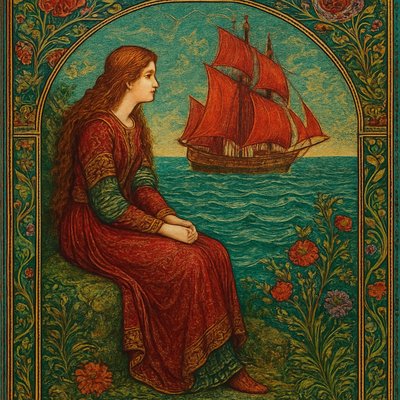
a girl sitting on a rock looking at the sea with a big ship with red sails on the horizon
a man sitting at a table with an open book
Victorian Oil Painting Art Style, Historical Digital Art Style, a rich and detailed full-body portrait of the famous giantess Anna Swan standing in the center of a lavish, gaslit exhibition hall at P.T. Barnum's American Museum in the 1860s. She is towering over the surrounding crowd of average-sized gentlemen in top hats and ladies in bonnets, whose heads only reach her waistline; they look up at her with expressions of awe and curiosity. Anna is dressed with immense dignity in a fashionable, expansive Victorian silk gown with a crinoline hoop skirt, tailored bodice, and lace trim. Her face is gentle, intelligent, and composed. The background is crowded with heavy red velvet drapery, gilded architectural details, curiosities in glass cases, and painted circus banners faintly visible. The lighting is warm, dramatic gaslight, creating deep shadows and highlighting the rich fabrics and the incredible scale of Anna Swan compared to her environment.
An ancient stone Mikveh located in an underground limestone cavern. Soft, warm candlelight flickering against damp, textured walls. Hand-carved stone steps leading down into crystal-clear natural spring water. Moody, cinematic lighting, historical realism, high detail, 8k, serene and sacred atmosphere.
A majestic and reverent scene, directly inspired by Revelation 5:8. A group of elderly, robed figures are kneeling in worship, their faces and attention directed towards a central focal point. Each elder holds a golden harp in one hand and a golden bowl brimming with luminous, swirling incense in the other. The incense, representing the collective prayers of all saints, rises in shimmering, golden tendrils from each bowl, converging and ascending towards the central figure. At the very center of the composition, slightly elevated and bathed in radiant light, stands the Lamb who was slain, embodying divine power and sacrifice, the recipient of all this worship. The atmosphere is ethereal, filled with soft, divine golden light emanating from the incense and the Lamb, emphasizing the precious, sacred, and unified nature of the prayers being offered before Him. Focus on the rich textures of gold, the reverence of the elders, and the radiant presence of the Lamb
A koi pond seen from above, orange and white koi fish swimming among lily pads, clear water with subtle ripples, fallen cherry blossom petals floating on the surface, dappled sunlight
bicyle resting against a wall
a stack of newspapers sitting on top of each other
The weight of silence
urban street with city activity
Historical scene with emphasis on authentic period details in the art style of Pre-Raphaelite --v 6.1
a painting of a man sitting at a desk with a book
Aztec heritage
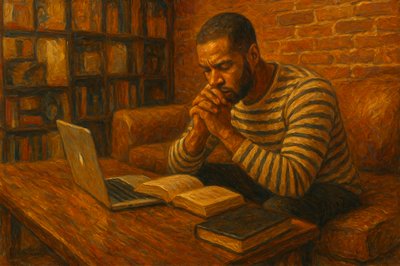
a painting of a man sitting at a table in front of a laptop
a girl sitting on a rock looking at the sea with a big ship with red sails on the horizon
house with front view
A 10 year old asian boy with his grandmother standing in front of the subway station in Kuala Lumpur.  Getting ready to ride the train to school.