A Man Sitting In Front Of A Cake With Candles On It Art

bicyle resting against a wall
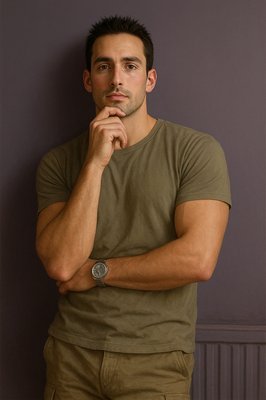
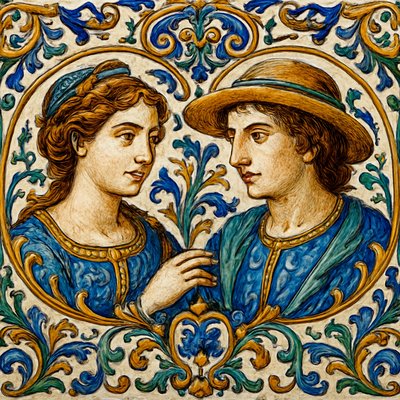
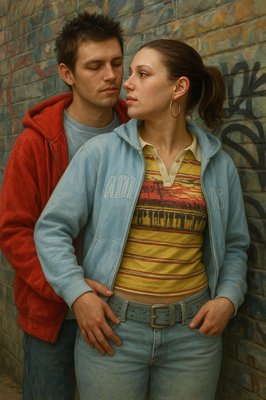
portrait of two people together
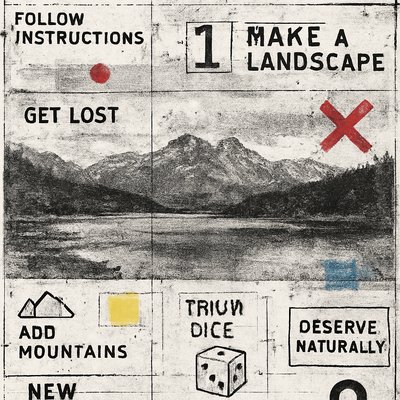
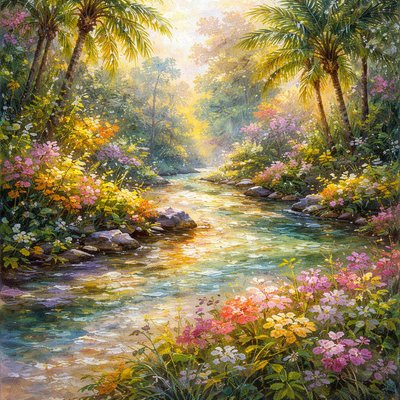
wide landscape with natural scenery

Now, those captains must learn what the river will do
when it makes that great turn out of sight.
How it dashes them up on the rocks of the shore
How it spins to the left and the right.
It beats them and breaks them and crushes their pride
Leaves them dizzy and sick and all jumbled inside
‘til they’ve all but forgotten that glorious ride
lying flat on their deck in the sun.
There they lie, drying out in the sun.

As you round the point where the river was bent
and survey the great wideness ahead,
you can see all those captains alone on their decks,
beat and broken and very near dead.
Then the current takes hold and there’s naught you can do
as it drags you down into its maw.
Headed straight for those rocks, you make ready to crash
but at last, you rise up, roll and yaw.

Going back and away, then forward again,
fearing each time, the rocks will prevail!
You’re trapped in a cycling, circling tide,
in an eddy withstanding a gale.
But each time you circle that great whirling tide
and you’ve not hit the rocks or been thrown to the side
and you’re kept from the falls, cascading and wide,
for the eddy’s small mercy give praise.
Give the merciful currents your praise!
Seabiscuit vs. War Admiral (The Gaze)

    A hyper-realistic, high-resolution photograph capturing the apex of the 1938 match race between Seabiscuit and War Admiral.

    Focus: The composition is tight, showing both horses running neck-and-neck, dominating the frame. The camera angle is side-on and slightly low, emphasizing their size and muscle. The critical focus is on the space between the horses' heads as they are running stride for stride.

    Details: War Admiral (the dark bay) should show determination and slight surprise, with his head stretched out. Seabiscuit (the smaller bay) should display his characteristic "game" look—intense, focused, and seemingly looking directly into War Admiral's eyes (or toward his rival). Both jockeys (Red Pollard or George Woolf for Seabiscuit; Charles Kurtsinger for War Admiral) are visible, leaning low and urging their mounts on.

    Atmosphere: The light should be bright but slightly diffused, suggesting an autumn afternoon at Pimlico. Dust and track debris are kicked up behind them, blurred slightly by the horses' tremendous speed. The image must convey the raw power, intense rivalry, and the exact moment when the smaller horse asserts his dominance.

    Style: Cinematic photography, realistic texture, sharp focus on the horses' eyes and muscle definition.
Seabiscuit vs. War Admiral (The Gaze)

    A hyper-realistic, high-resolution photograph capturing the apex of the 1938 match race between Seabiscuit and War Admiral.

    Focus: The composition is tight, showing both horses running neck-and-neck, dominating the frame. The camera angle is side-on and slightly low, emphasizing their size and muscle. The critical focus is on the space between the horses' heads as they are running stride for stride.

    Details: War Admiral (the dark bay) should show determination and slight surprise, with his head stretched out. Seabiscuit (the smaller bay) should display his characteristic "game" look—intense, focused, and seemingly looking directly into War Admiral's eyes (or toward his rival). Both jockeys (Red Pollard or George Woolf for Seabiscuit; Charles Kurtsinger for War Admiral) are visible, leaning low and urging their mounts on.

    Atmosphere: The light should be bright but slightly diffused, suggesting an autumn afternoon at Pimlico. Dust and track debris are kicked up behind them, blurred slightly by the horses' tremendous speed. The image must convey the raw power, intense rivalry, and the exact moment when the smaller horse asserts his dominance.

    Style: Cinematic photography, realistic texture, sharp focus on the horses' eyes and muscle definition.
Seabiscuit vs. War Admiral (The Gaze)

    A hyper-realistic, high-resolution photograph capturing the apex of the 1938 match race between Seabiscuit and War Admiral.

    Focus: The composition is tight, showing both horses running neck-and-neck, dominating the frame. The camera angle is side-on and slightly low, emphasizing their size and muscle. The critical focus is on the space between the horses' heads as they are running stride for stride.

    Details: War Admiral (the dark bay) should show determination and slight surprise, with his head stretched out. Seabiscuit (the smaller bay) should display his characteristic "game" look—intense, focused, and seemingly looking directly into War Admiral's eyes (or toward his rival). Both jockeys (Red Pollard or George Woolf for Seabiscuit; Charles Kurtsinger for War Admiral) are visible, leaning low and urging their mounts on.

    Atmosphere: The light should be bright but slightly diffused, suggesting an autumn afternoon at Pimlico. Dust and track debris are kicked up behind them, blurred slightly by the horses' tremendous speed. The image must convey the raw power, intense rivalry, and the exact moment when the smaller horse asserts his dominance.

    Style: Cinematic photography, realistic texture, sharp focus on the horses' eyes and muscle definition.
portrait of two people together
A triptych oil painting, presented as three heavily framed, connected panels in the dramatic, tenebrism style of Baroque masters like Caravaggio. The overall atmosphere is one of supernatural, oppressive darkness and violent chaos.

The Left Panel shows the penitent thief on his cross, body twisted in pain but his face turned toward the center panel with a look of sorrowful acceptance. A faint, supernatural light illuminates his face against a nearly black sky. Below him, rocks are splitting.

The Center Panel is dominated by Jesus on the cross, head bowed in finality. The sky is a swirling vortex of eclipse darkness, blotting out the sun. The ground beneath the cross is violently cracking open, emitting dust and smoke, with debris caught in mid-air from the earthquake shockwave.

The Right Panel shows the impenitent thief, writhing and screaming against his bonds, his face contorted in rage looking away from the center. He is almost swallowed by the shadows. The cross appears unstable as the cliffside crumbles beneath it. The entire triptych has a rich, dark color palette of deep browns, blacks, and muted crimson, textured with visible, frantic brushstrokes.
"Create a realistic image of a majestic California Condor in flight, soaring high above the dramatic red sandstone cliffs and deep canyons of Zion National Park in Utah. The condor has black feathers with white patches under its massive wings, a bald head with orange hues, and a wingspan of about 10 feet. Below, show the iconic landscape with towering rock formations, sparse green vegetation, the Virgin River winding through the valley, and distant snow-capped peaks under a clear blue sky at golden hour sunset for warm lighting and long shadows. High detail, photorealistic style, wide-angle view to capture the vastness of the park."
urban street with city activity
animal standing in natural pose
tree in nature
house with front view
bicyle resting against a wall
cat with fish
First love confession
Butterflies migrating in a meadow in the morning, enjoying a light breeze as they lite upon fall flowers.
Neon-Futurism Digital Art Style, Bioluminescent Sci-Fi Cosmic Setting, High-Contrast Composition. A wide, cinematic view looking down the infinite highway.

The Rider & Bike Consistency: The lone motorcyclist—in the signature sleek, armored suit and helmet—is speeding forward on the hubless "light-cycle" sportbike. The cyan and orange neon rings of the wheels cast a sharp glow on the road surface as the rider leans forward for maximum speed.

The Path (The Ecliptic Divide): The glowing blue laser-grid highway acts as a clear boundary line, cutting a straight path through a turbulent sector of space.

The Aries Presence (The Right): To the right of the highway towers the colossal, majestic Aries. The ram is a construct of burning white-gold energy and crystalline horns. Its form is noble and steady, radiating a protective, warrior-like light across the path.

The Leviathan Presence (The Left): To the left of the highway, emerging from a dark, swirling indigo nebula, is the massive, mysterious Leviathan. It is a serpentine cosmic entity made of obsidian scales and deep violet bioluminescence, representing the vast unknown of the deep cosmos.

The Action: The rider is perfectly centered between these two titanic forces, representing the balance of courage as they move toward the next horizon.

Atmosphere: A "clash of lights" where the warm gold of the Ram meets the cool violets of the Leviathan, with the rider’s cyan bike acting as the bridge between them.
Neon-Futurism Digital Art Style, Bioluminescent Sci-Fi Cosmic Setting, High-Contrast Composition. A wide, cinematic view looking down the infinite highway.

The Rider & Bike Consistency: The lone motorcyclist—in the signature sleek, armored suit and helmet—is speeding forward on the hubless "light-cycle" sportbike. The cyan and orange neon rings of the wheels cast a sharp glow on the road surface as the rider leans forward for maximum speed.

The Path (The Ecliptic Divide): The glowing blue laser-grid highway acts as a clear boundary line, cutting a straight path through a turbulent sector of space.

The Aries Presence (The Right): To the right of the highway towers the colossal, majestic Aries. The ram is a construct of burning white-gold energy and crystalline horns. Its form is noble and steady, radiating a protective, warrior-like light across the path.

The Leviathan Presence (The Left): To the left of the highway, emerging from a dark, swirling indigo nebula, is the massive, mysterious Leviathan. It is a serpentine cosmic entity made of obsidian scales and deep violet bioluminescence, representing the vast unknown of the deep cosmos.

The Action: The rider is perfectly centered between these two titanic forces, representing the balance of courage as they move toward the next horizon.

Atmosphere: A "clash of lights" where the warm gold of the Ram meets the cool violets of the Leviathan, with the rider’s cyan bike acting as the bridge between them.
Neon-Futurism Digital Art Style, Bioluminescent Sci-Fi Cosmic Setting, Grandiose Architectural Scale. A sweeping vista of deep space, where the Ecliptic is a glowing laser-grid highway curving towards a monumental structure.

The Rider: The lone rider in the sleek, glowing armored suit and helmet on the neon light-sportbike is small in the frame, speeding along the light path, giving a sense of immense scale to the scene.

The Heavenly Mountain: Rising from the cosmic void ahead is not an earthen mountain, but a colossal "Heavenly Mountain" formation made of crystallized nebulae, glowing geometric rockforms, and compressed stardust in shades of deep indigo, violet, and electric blue.

The Temple of Libra: Perched majestically at the flat summit of this cosmic mountain is the "Great Courtly Temple of Libra." It is a massive, balanced structure of glowing classical architecture re-imagined with light-lines—towering columns of cyan light, archways of golden data streams, and balanced spires.

The Icon: The central feature, integrated into the highest point of the temple, is a gigantic set of perfectly balanced Cosmic Scales. The pans and beam of the scales are constructed from radiant, golden energy and concentrated star clusters, shining brightly against the dark space background, symbolizing divine justice and order
A serene and majestic watercolor painting, capturing the essence of a grand, towering evergreen tree (like the dominant one in the provided image) standing proudly in a sun-dappled, open forest glade. The tree's deep green needles are rendered with varying washes, showcasing its immense height and full, tiered branches that reach towards a partly cloudy, bright blue sky.

In the foreground and around the base of this glorious tree, two or three graceful mule deer are depicted. One might be grazing peacefully, another looking up towards the viewer with its large, expressive ears, and a fawn possibly tucked nearby. Their coats are rendered in soft, earthy watercolor tones of grey-brown, with delicate highlights and shading to suggest their gentle forms and distinctive white rumps and tails.

The surrounding landscape features a subtle ground cover of dry grasses and scattered undergrowth, characteristic of a high-desert or mountain forest floor, painted with soft, blended washes of ochre, sage green, and light brown. The sky above is a classic watercolor blend of soft blues and wispy white clouds. The overall mood is one of tranquil natural beauty, quiet majesty, and a harmonious coexistence of wildlife and ancient trees, rendered with the flowing, luminous quality of watercolor art
portrait of a person with expressive eyes
Oil Painting Art Style, Baroque Art Style, a breathtakingly majestic and regal full-length portrait of "The Queen in Gold of Ophir," inspired by Psalm 45. The Queen stands with impeccable grace and royal dignity, her posture radiating quiet power. Her expression is serene, gentle, and profoundly gracious, with a subtle, noble peace. She is adorned in an exquisitely elaborate gown woven entirely from the finest, purest gold of Ophir, which shimmers and gleams with unparalleled brilliance, featuring a magnificent, flowing long train that sweeps gracefully behind her across the ground. Her attire is intricately embellished with countless precious jewels—sapphires, rubies, and emeralds—each sparkling intensely with Baroque dynamism. A delicate yet regal golden crown, also ablaze with light, rests upon her head. The setting is a serene yet grand sacred garden abundant with white and golden lilies, which bloom richly around her feet and extend into the softly focused background. The scene is bathed in dramatic, warm, golden ambient light that creates striking highlights on her golden gown and the lilies, making her and her lavish garments glow amidst the natural beauty. Focus on the unparalleled brilliance, texture, and radiant shine of her golden gown and its sweeping train, the intense sparkle of her jewels, her majestic yet gentle presence, and the luxurious, sacred atmosphere created by the golden light and the symbolic lilies, befitting a queen in God's presence.
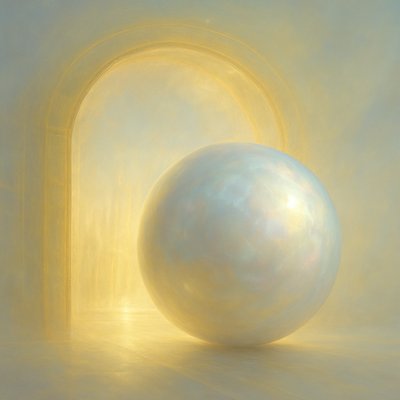
A profoundly symbolic and awe-inspiring depiction of a colossal, luminous pearl gate in the New Jerusalem, captured in the dynamic act of rolling away, similar to the stone being moved from Christ's tomb. The gate, a single, immense, perfectly spherical pearl, is shown mid-motion, having just been set aside from the entrance, revealing the glorious city beyond.

The pearl itself glows with an intense, soft iridescence, reflecting the divine light. Its surface shows subtle, exquisite details of mother-of-pearl. The frame or opening from which it has rolled away is visible, perhaps showing immense, smooth tracks or channels in the transparent gold structure of the city wall, reinforcing the idea of its monumental movement.

Through the now open gate, the radiant glory of the New Jerusalem streams forth. Pure gold streets, like transparent glass, extend into the city, illuminated by an intense, divine light that emanates from within. Heavenly architecture, impossibly beautiful and intricate, is glimpsed in the distance, beckoning. The atmosphere is one of profound sanctity, triumphant revelation, and welcoming access to the divine, with the act of the pearl rolling away symbolizing a breakthrough or an open invitation. The lighting is ethereal and grand, emphasizing the pearl's luster and the city's overwhelming glory."
still life with everyday objects
a painting of a man jumping in the air