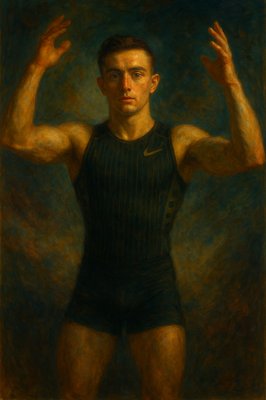
A Man And A Woman Are Posing For A Picture Art

urban street with city activity
bicyle resting against a wall
"A historically accurate depiction of a Ghost Dance, focusing on the late 19th-century context, specifically around 1890-1891. The scene shows Lakota (Sioux) or Northern Paiute people (specify one or include elements of both, but avoid anachronisms) participating in the ceremony.

Setting: A vast, open prairie or high desert landscape, under an expansive sky. The time of day could be dusk or night, with a prominent moon or stars, or a bright, clear day. Avoid overtly spiritual or ethereal elements like floating spirits unless explicitly requested for a later, more symbolic iteration. The focus should be on the earthly ceremony.

Participants: A circle of men, women, and children, hand-in-hand, moving in a slow, rhythmic shuffle or circular motion. Their faces show a mixture of devotion, hope, and determination. Some may have expressions of trance or deep concentration.

Attire:

    Ghost Dance Shirts/Dresses: Emphasize the unique Ghost Dance shirts and dresses, which were typically made of muslin or canvas. These garments should feature painted designs such as stars, crescents, birds (especially eagles or crows), buffalo, human figures, or crosses. The designs should appear hand-painted, not mass-produced.

    Hair and Adornments: Participants should have braided hair or wear it long. Some may wear feathers (e.g., eagle or hawk feathers) in their hair. Minimal traditional adornments, as the focus was often on the Ghost Dance shirt itself. Avoid overly elaborate or Hollywood-esque depictions of war bonnets unless relevant to a specific individual and context.

    Footwear: Moccasins or bare feet.

Action/Atmosphere:

    The dancers are moving in a counter-clockwise circle, with a central figure or a small group often leading.

    The overall mood is one of earnest prayer and communal spiritual effort. The dance should convey a sense of hope for renewal and the return of the old ways, rather than aggression or despair.

    There might be a central pole or small fire as a focal point, around which the dance takes place.

    Avoid any signs of direct conflict or violence; the Ghost Dance itself was a non-violent spiritual movement.

Specific Considerations for Accuracy:

    Wovoka's Influence: The teachings of Wovoka (the Northern Paiute prophet) emphasized peace, hard work, and the return of the buffalo and deceased ancestors. The scene should subtly reflect this hopeful, redemptive spirit.

    Regional Variations: If focusing on Lakota, consider their specific interpretations, which sometimes included more imagery related to their warrior traditions on the shirts, but still within the peaceful framework of the dance.
    Respectful Portrayal: Ensure the depiction is respectful and avoids any stereotypical or caricatured representations of Indigenous people. Focus on their human dignity and spiritual sincerity.
a tree in nature
Coral reef formation
Every house on suburban street photographed identically
Profile with flowing hair
Singer with vintage microphone
Swan with detailed feathers
Mountain landscape in granite
serene landscape with mountains and water
a tree in nature
urban street with city activity
Passing time
bicyle resting against a wall
still life arrangement of fruits and flowers
City heartbeat
Lone tree on snowy hill
portrait of a person with expressive eyes
a tree in nature
New York City
Two dancers in embrace
a tree in nature
a tree in nature
urban street with city activity
Fragmented figure emerging from geometric forms
a tree in nature
Dewdrops on spider web
A person's cherished memories
Mage summoning forest guardian
Historical event
Anime girl song
a tree in nature
Hyper-realistic Andean condor flying in the sky over a forest, leaving a shimmering trail of glittering sparkles where it goes, extreme detail, photorealistic, cinematic lighting
a tree in nature
A dynamic, action-filled scene capturing four excited children (diverse ages and genders, bundled in bright winter clothing) engaged in an intense snowball fight while riding ponies/horses.

Scene Details: The setting is a wide-open, snow-covered winter field bordered by dark, snow-dusted evergreen trees. Snow is actively falling, adding texture to the air. The children are positioned dramatically: one child is leaning far back on a brown pony, aiming a snowball with intense focus; another is mid-giggle, ducking behind their white horse's mane for cover. The ponies are sturdy, slightly shaggy, and seem to be enjoying the chaos, snorting visible steam into the cold air. The ground is churned up with snow from the horses' hooves.

Key Atmosphere: Focus on joyful aggression, speed, and chaotic motion.
whimsical little horse, intricate details, watercolor-dream mood, gentle movement in the mane and tail, expressive eyes, cinematic depth and color
a tree in nature
a tree in nature
a tree in nature
a tree in nature
a tree in nature