A Drawing Of A Woman Looking In A Mirror Art

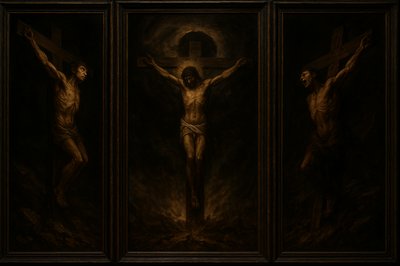
A triptych oil painting, presented as three heavily framed, connected panels in the dramatic, tenebrism style of Baroque masters like Caravaggio. The overall atmosphere is one of supernatural, oppressive darkness and violent chaos.

The Left Panel shows the penitent thief on his cross, body twisted in pain but his face turned toward the center panel with a look of sorrowful acceptance. A faint, supernatural light illuminates his face against a nearly black sky. Below him, rocks are splitting.

The Center Panel is dominated by Jesus on the cross, head bowed in finality. The sky is a swirling vortex of eclipse darkness, blotting out the sun. The ground beneath the cross is violently cracking open, emitting dust and smoke, with debris caught in mid-air from the earthquake shockwave.

The Right Panel shows the impenitent thief, writhing and screaming against his bonds, his face contorted in rage looking away from the center. He is almost swallowed by the shadows. The cross appears unstable as the cliffside crumbles beneath it. The entire triptych has a rich, dark color palette of deep browns, blacks, and muted crimson, textured with visible, frantic brushstrokes.
Ornate interior with gilded mirrors and cherubs in the art style of Rococo --v 6.1
Childlike drawing with bold colors and simplified forms in the art style of Art Brut --v 6.1
Visionary drawing filled with cryptic symbols in the art style of Outsider Art --v 6.1
Inside a raindrop
New York City
A portrait of Tesla
A portrait of Tesla
A koi pond seen from above, orange and white koi fish swimming among lily pads, clear water with subtle ripples, fallen cherry blossom petals floating on the surface, dappled sunlight
Figure studies for altarpiece
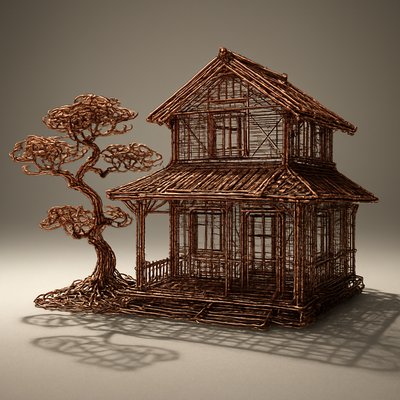
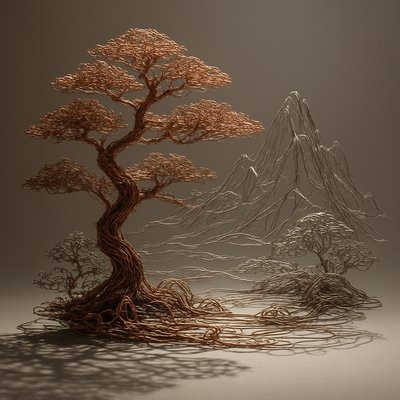
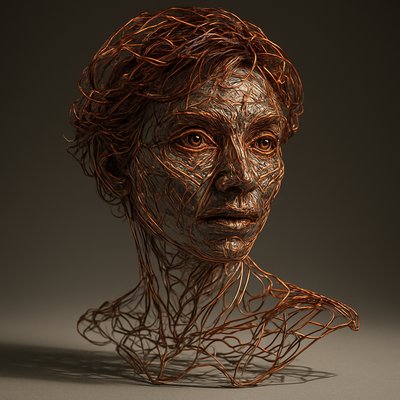
Bonsai Wire Sculpture Style Transfer Example
house with front view
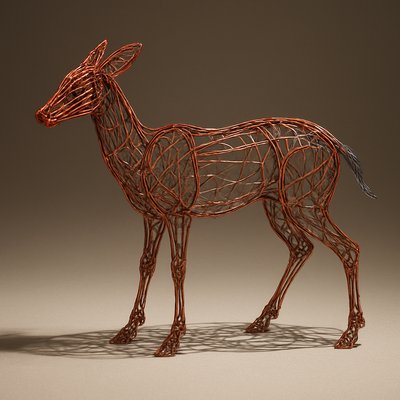
animal standing in natural pose
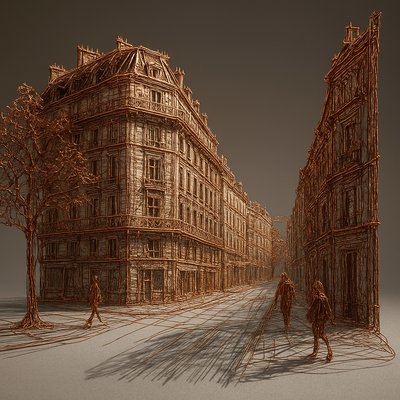
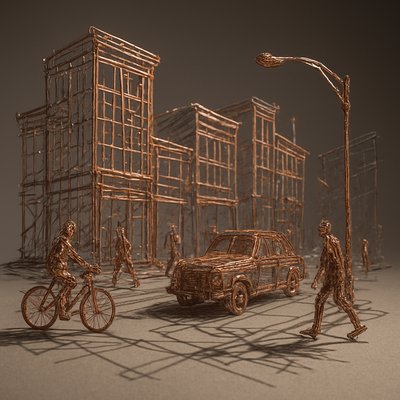
urban street with city activity
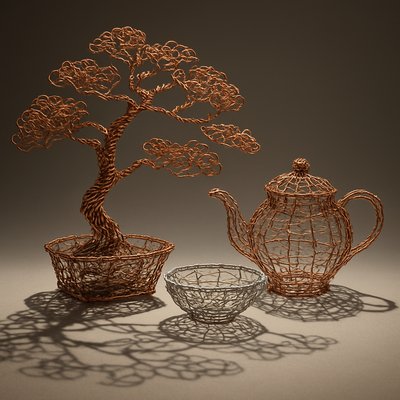
still life with everyday objects
wide landscape with natural scenery
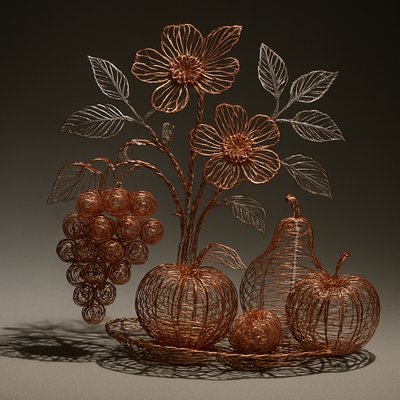
still life arrangement of fruits and flowers
portrait of a person with expressive eyes
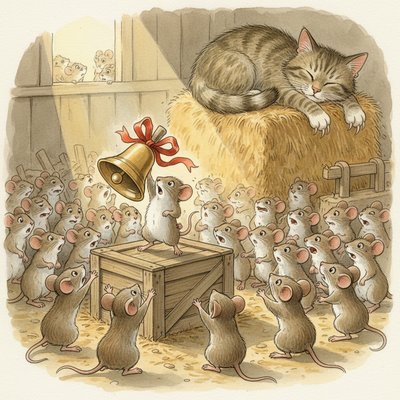
Whimsical Storybook Illustration Style, Warm Color Palette, Soft Textures and Detailed Linework. A wide-angle view of a secret, crowded meeting of dozens of anthropomorphic field mice taking place on an upturned wooden crate in the corner of a cluttered, dusty barn.

The Focal Point (The Plan): In the center of the crate spotlighted by a beam of sunlight coming through a crack in the roof, a small, earnest mouse stands on its hind legs, triumphantly holding aloft a shiny brass sleigh bell tied with a bright red ribbon. The bell looks impossibly large and heavy for the mouse.

The Reaction (The Hesitation): The surrounding crowd of mice is a mix of emotions. Some in the front row are cheering with tiny paws raised. However, many others towards the back are exchanging nervous, sidelong glances, scratching their heads, or looking fearfully over their shoulders.

The Threat (The Reality): In the background, on top of a high stack of hay bales, a giant, fluffy tabby cat is fast asleep. Though sleeping, its size and sharp claws are evident, casting a shadow over the edge of the meeting area. The contrast between the small, shiny bell and the enormous sleeping predator is central to the image.
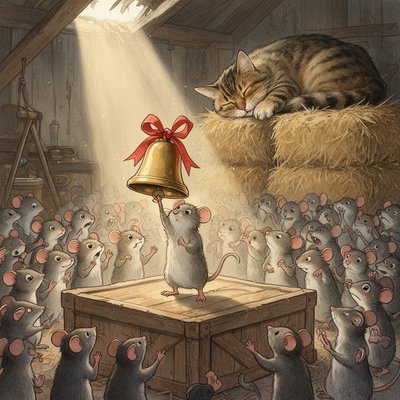
Whimsical Storybook Illustration Style, Warm Color Palette, Soft Textures and Detailed Linework. A wide-angle view of a secret, crowded meeting of dozens of anthropomorphic field mice taking place on an upturned wooden crate in the corner of a cluttered, dusty barn.

The Focal Point (The Plan): In the center of the crate spotlighted by a beam of sunlight coming through a crack in the roof, a small, earnest mouse stands on its hind legs, triumphantly holding aloft a shiny brass sleigh bell tied with a bright red ribbon. The bell looks impossibly large and heavy for the mouse.

The Reaction (The Hesitation): The surrounding crowd of mice is a mix of emotions. Some in the front row are cheering with tiny paws raised. However, many others towards the back are exchanging nervous, sidelong glances, scratching their heads, or looking fearfully over their shoulders.

The Threat (The Reality): In the background, on top of a high stack of hay bales, a giant, fluffy tabby cat is fast asleep. Though sleeping, its size and sharp claws are evident, casting a shadow over the edge of the meeting area. The contrast between the small, shiny bell and the enormous sleeping predator is central to the image.
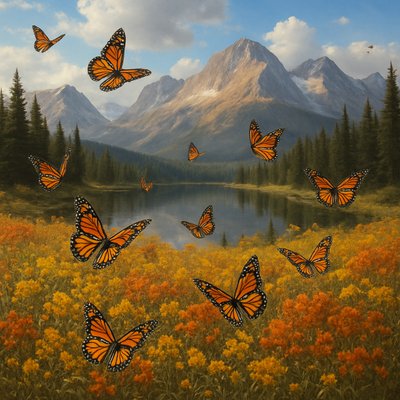
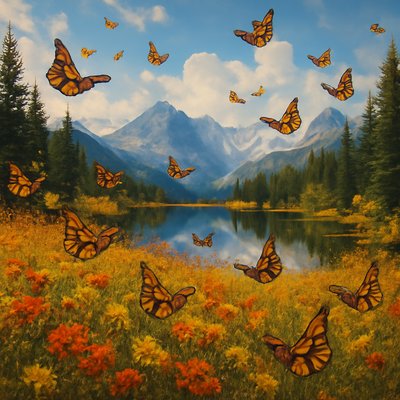
Butterflies migrating across a field of fall flowers in the Rocky Mountains
The triumph of wisdom
Butterflies migrating across a field of fall flowers in the Rocky Mountains
Mountain lake with perfect reflections
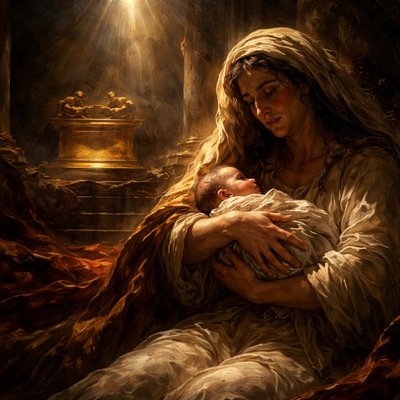
A cinematic, low-angle shot of a weary woman in ancient Near Eastern linen garments, cradling a newborn infant in a dimly lit stone room. Her expression is one of profound grief and exhaustion. In the background, a silhouette of an empty golden pedestal where a sacred artifact once sat. High contrast, dramatic chiaroscuro lighting, earthy tones of ochre and deep shadow.
Factory worker's lament
Dancers in rehearsal
Speeding locomotive through urban landscape
Greek hero's triumphant return
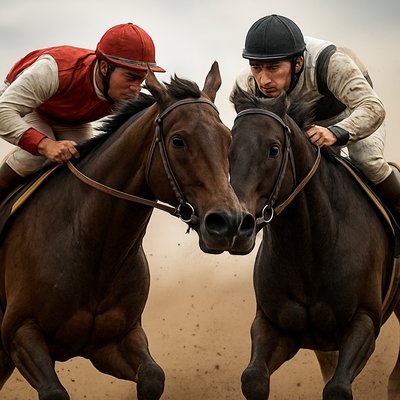
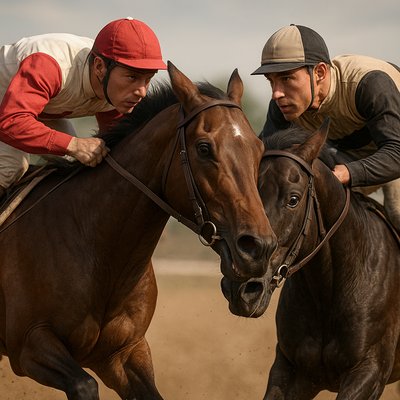
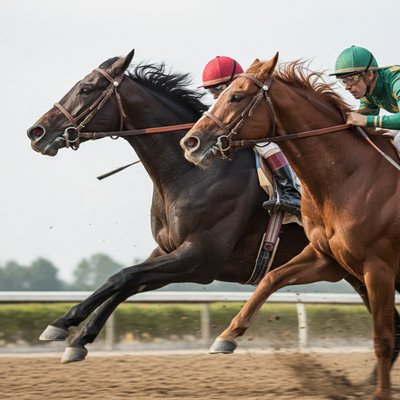
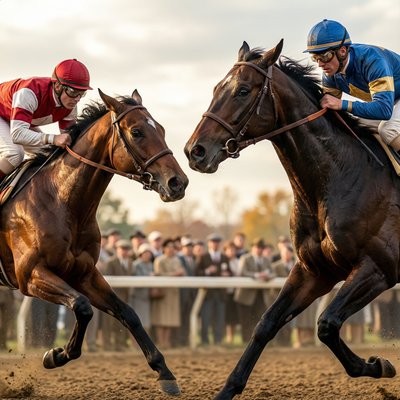
Seabiscuit vs. War Admiral (The Gaze)

    A hyper-realistic, high-resolution photograph capturing the apex of the 1938 match race between Seabiscuit and War Admiral.

    Focus: The composition is tight, showing both horses running neck-and-neck, dominating the frame. The camera angle is side-on and slightly low, emphasizing their size and muscle. The critical focus is on the space between the horses' heads as they are running stride for stride.

    Details: War Admiral (the dark bay) should show determination and slight surprise, with his head stretched out. Seabiscuit (the smaller bay) should display his characteristic "game" look—intense, focused, and seemingly looking directly into War Admiral's eyes (or toward his rival). Both jockeys (Red Pollard or George Woolf for Seabiscuit; Charles Kurtsinger for War Admiral) are visible, leaning low and urging their mounts on.

    Atmosphere: The light should be bright but slightly diffused, suggesting an autumn afternoon at Pimlico. Dust and track debris are kicked up behind them, blurred slightly by the horses' tremendous speed. The image must convey the raw power, intense rivalry, and the exact moment when the smaller horse asserts his dominance.

    Style: Cinematic photography, realistic texture, sharp focus on the horses' eyes and muscle definition.
Seabiscuit vs. War Admiral (The Gaze)

    A hyper-realistic, high-resolution photograph capturing the apex of the 1938 match race between Seabiscuit and War Admiral.

    Focus: The composition is tight, showing both horses running neck-and-neck, dominating the frame. The camera angle is side-on and slightly low, emphasizing their size and muscle. The critical focus is on the space between the horses' heads as they are running stride for stride.

    Details: War Admiral (the dark bay) should show determination and slight surprise, with his head stretched out. Seabiscuit (the smaller bay) should display his characteristic "game" look—intense, focused, and seemingly looking directly into War Admiral's eyes (or toward his rival). Both jockeys (Red Pollard or George Woolf for Seabiscuit; Charles Kurtsinger for War Admiral) are visible, leaning low and urging their mounts on.

    Atmosphere: The light should be bright but slightly diffused, suggesting an autumn afternoon at Pimlico. Dust and track debris are kicked up behind them, blurred slightly by the horses' tremendous speed. The image must convey the raw power, intense rivalry, and the exact moment when the smaller horse asserts his dominance.

    Style: Cinematic photography, realistic texture, sharp focus on the horses' eyes and muscle definition.
Seabiscuit vs. War Admiral (The Gaze)

    A hyper-realistic, high-resolution photograph capturing the apex of the 1938 match race between Seabiscuit and War Admiral.

    Focus: The composition is tight, showing both horses running neck-and-neck, dominating the frame. The camera angle is side-on and slightly low, emphasizing their size and muscle. The critical focus is on the space between the horses' heads as they are running stride for stride.

    Details: War Admiral (the dark bay) should show determination and slight surprise, with his head stretched out. Seabiscuit (the smaller bay) should display his characteristic "game" look—intense, focused, and seemingly looking directly into War Admiral's eyes (or toward his rival). Both jockeys (Red Pollard or George Woolf for Seabiscuit; Charles Kurtsinger for War Admiral) are visible, leaning low and urging their mounts on.

    Atmosphere: The light should be bright but slightly diffused, suggesting an autumn afternoon at Pimlico. Dust and track debris are kicked up behind them, blurred slightly by the horses' tremendous speed. The image must convey the raw power, intense rivalry, and the exact moment when the smaller horse asserts his dominance.

    Style: Cinematic photography, realistic texture, sharp focus on the horses' eyes and muscle definition.
Seabiscuit vs. War Admiral (The Gaze)

    A hyper-realistic, high-resolution photograph capturing the apex of the 1938 match race between Seabiscuit and War Admiral.

    Focus: The composition is tight, showing both horses running neck-and-neck, dominating the frame. The camera angle is side-on and slightly low, emphasizing their size and muscle. The critical focus is on the space between the horses' heads as they are running stride for stride.

    Details: War Admiral (the dark bay) should show determination and slight surprise, with his head stretched out. Seabiscuit (the smaller bay) should display his characteristic "game" look—intense, focused, and seemingly looking directly into War Admiral's eyes (or toward his rival). Both jockeys (Red Pollard or George Woolf for Seabiscuit; Charles Kurtsinger for War Admiral) are visible, leaning low and urging their mounts on.

    Atmosphere: The light should be bright but slightly diffused, suggesting an autumn afternoon at Pimlico. Dust and track debris are kicked up behind them, blurred slightly by the horses' tremendous speed. The image must convey the raw power, intense rivalry, and the exact moment when the smaller horse asserts his dominance.

    Style: Cinematic photography, realistic texture, sharp focus on the horses' eyes and muscle definition.
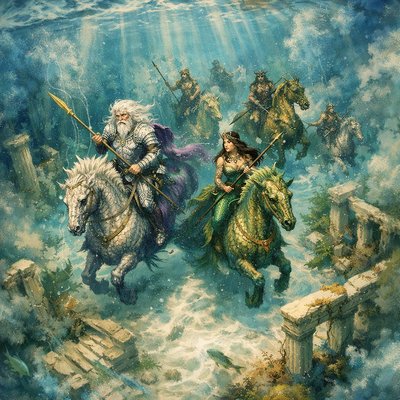
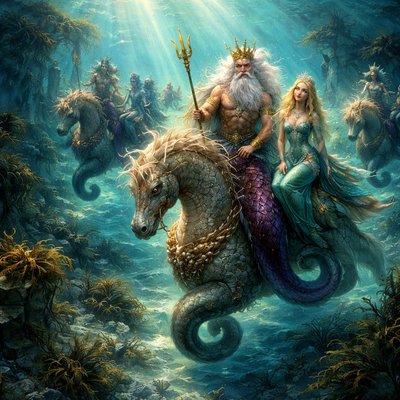
Golden Age Fantasy Illustration Style, Painterly Realism, Crystalline Underwater Photography Aesthetic. A stunning view looking down through impossibly clear ocean water at a royal hunting party of Narnian Merpeople riding through ancient, seaweed-covered ruins on the seabed.

The Crucial Riding Posture: The Merpeople are riding large, powerful, scaled hippocamps (mythical sea-horses). Crucially, the merfolk are perched securely in a distinct side-saddle position on the backs of their mounts. Their powerful, scaled fish tails are coiled elegantly around the side flank of the hippocampus for stability, rather than straddling them like a human.

The Seahorse Anatomy: The hippocamps themselves have massive, armored tails that curl tightly forward beneath their own bodies, pushing them through the water.

Key Figures & Details: The Mer-King, with flowing white hair and fierce eyes, sits side-saddle, holding a gold-tipped spear. His deep amethyst tail is visible coiled against the mount’s scales. A Mer-Queen rides beside him wearing a shimmering gown. Bright shafts of sunlight pierce the water, illuminating the specific details of their riding posture and glittering scales.
Golden Age Fantasy Illustration Style, Painterly Realism, Crystalline Underwater Photography Aesthetic. A stunning view looking straight down through impossibly clear, glassy ocean water, as if peering over the edge of a ship. Below, on the white sand seabed, are the seaweed-covered ruins of a sunken, ancient civilization.

The Merpeople: A royal hunting party of Narnian Mermen and Mermaids are riding through the submerged streets on the backs of sea horses with their own tails astride the seahorse sitting side saddle. They are not gentle, fairy-tale creatures, but possess a wild, fierce majesty. They ride large, powerful, scaled hippocamps (mythical sea-horses). 

Key Figures & Details: The Mer-King, with flowing white hair and a stern expression, wears armor crafted from iridescent pearl and abalone shells, brandishing a long spear tipped with gold. His powerful tail is deep amethyst. A fierce Mer-Queen rides beside him, her colors shimmering emerald and gold. Smaller merfolk follow, shaking spears.

Lighting & Atmosphere: Bright shafts of sunlight pierce the deep water, illuminating the underwater dust motes and making the scales of the merfolk and their mounts sparkle intensely. The mood is silent, ancient, and awe-inspiring.
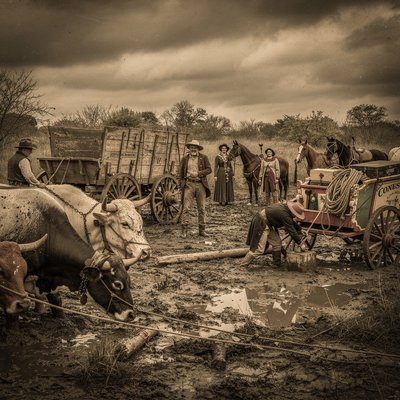
A highly realistic and historically accurate image set in the deep, waterlogged mud of the Texas Cross Timbers (Montague County) in 1840. The scene captures the frustrating moment when the Chihuahua Traders caravan is completely stuck. Foreground focus is on several heavy, wooden Conestoga freight wagons, mired up to their axles in dark, thick mud. Exhausted oxen are straining and distressed, their drivers in rough frontier attire attempting to free the wheels with ropes and levers. In the mid-ground, a small group of the American equestrian circus performers stands next to their distinctive, high-quality riding horses, which are visibly more refined than the typical pack animals. The performers are dressed in sturdy but distinct traveling clothes, looking ill-equipped and frustrated by the muddy conditions. One performer is carefully securing a colorful carriage or cart containing unique circus props, struggling to keep it from sinking. The overall mood is one of miserable delay and hardship. Cloudy, oppressive sky; detailed realism; wide-angle shot; dark, moody lighting.