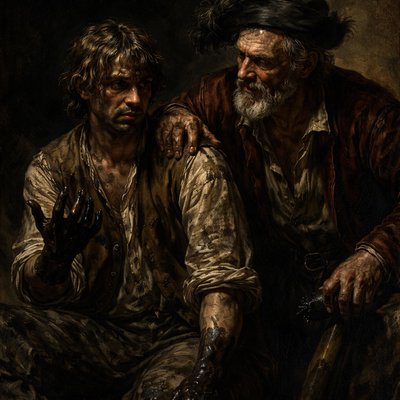
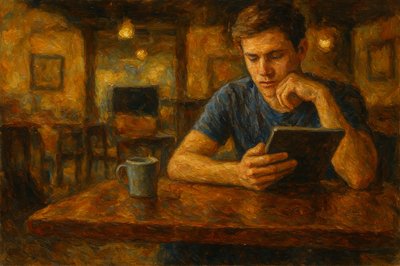
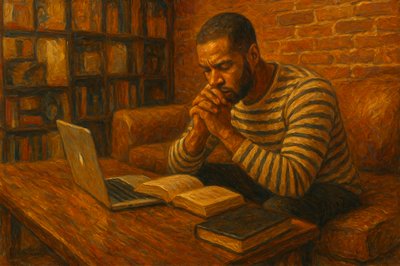
A Dramatic Soviet Style Propaganda Poster. Depict A Poor, Sad Working Class Man In Worn Clothes, With A Tired But Dignified Art

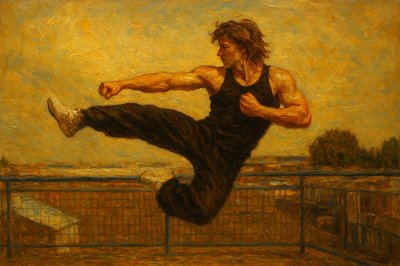
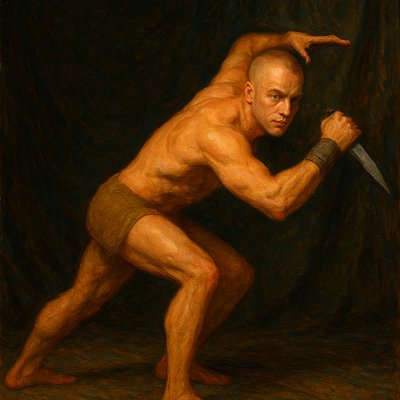
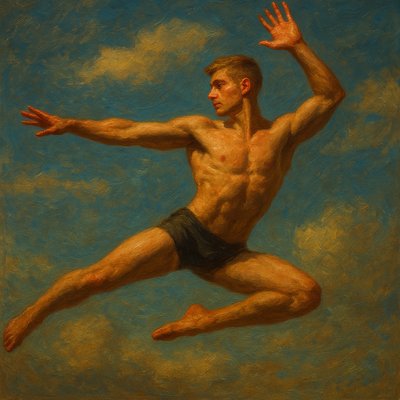
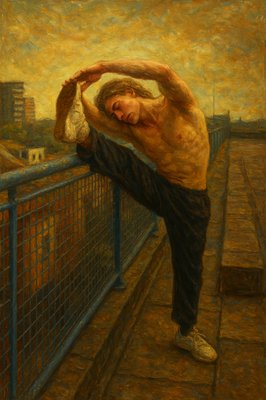
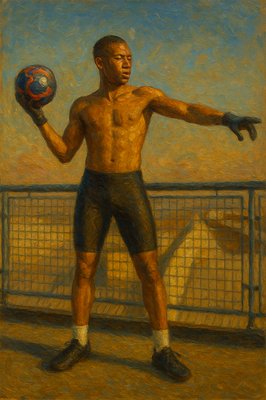
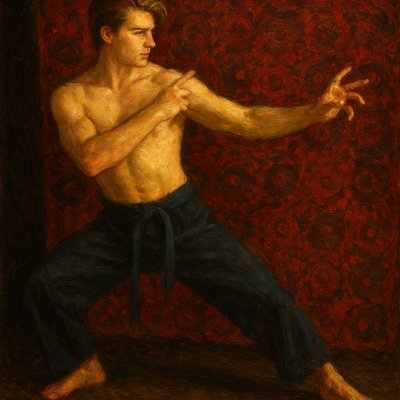
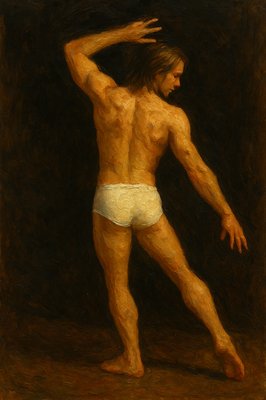
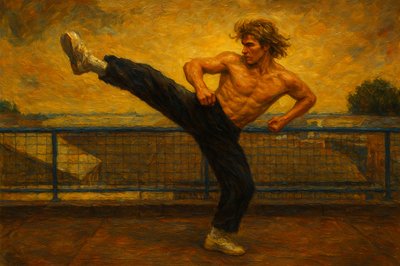
a painting of a shirtless man doing karate
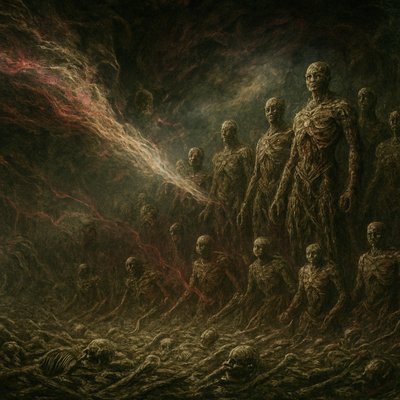
A profound and epic scene depicting the Vision of the Dry Bones from Ezekiel 37. In a desolate, vast valley, countless dry human bones are scattered, stark white and ancient. A powerful, divine wind (ruach) swirls through the valley, imbued with a sacred, ethereal glow, causing the bones to rattle and miraculously knit together. Tendons, flesh, and skin rapidly form over the skeletal structures, transforming them into fully-formed human figures. As the divine breath enters, the figures rise, not as individuals, but as a colossal, awe-inspiring army standing upright, gazing forward with renewed life and purpose. The sky above is dramatic, perhaps with stormy clouds breaking to reveal a divine light. The overall mood is one of miraculous resurrection, immense power, and hopeful restoration."
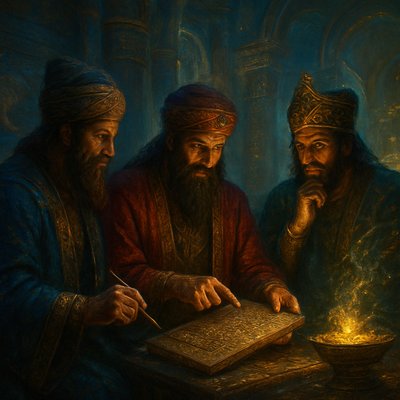
A dramatic, richly detailed scene in the ancient Babylonian royal court. In the foreground, three wise and esteemed Babylonian court magicians (Chaldeans/astrologers) are gathered around a central figure, possibly the king, or intently studying an inscribed clay tablet. They are dressed in opulent, finely woven robes of deep blues, reds, and gold, with elaborate turbans or headwear. Their long, meticulously styled beards and hair indicate their status and wisdom. One magician holds a stylus, another points to intricate cuneiform script on a clay tablet, and the third gazes thoughtfully, perhaps at a celestial chart or into a symbolic brazier. The background reveals the grand, awe-inspiring architecture of the Babylonian palace, with glazed brick walls adorned with depictions of mythical creatures (like the Ishtar Gate lions) and massive, ornate columns. The atmosphere is one of profound intellectual pursuit, ancient wisdom, and mystical interpretation under the watchful eyes of the king. epic fantasy art, cinematic lighting, ultra-detailed, dramatic shadows, mystical glow"
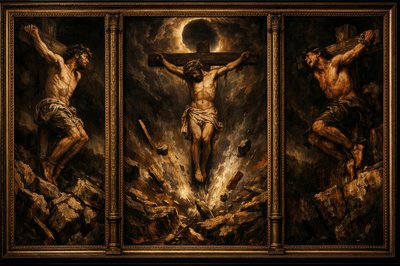
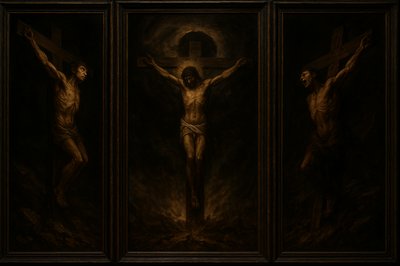
A triptych oil painting, presented as three heavily framed, connected panels in the dramatic, tenebrism style of Baroque masters like Caravaggio. The overall atmosphere is one of supernatural, oppressive darkness and violent chaos.

The Left Panel shows the penitent thief on his cross, body twisted in pain but his face turned toward the center panel with a look of sorrowful acceptance. A faint, supernatural light illuminates his face against a nearly black sky. Below him, rocks are splitting.

The Center Panel is dominated by Jesus on the cross, head bowed in finality. The sky is a swirling vortex of eclipse darkness, blotting out the sun. The ground beneath the cross is violently cracking open, emitting dust and smoke, with debris caught in mid-air from the earthquake shockwave.

The Right Panel shows the impenitent thief, writhing and screaming against his bonds, his face contorted in rage looking away from the center. He is almost swallowed by the shadows. The cross appears unstable as the cliffside crumbles beneath it. The entire triptych has a rich, dark color palette of deep browns, blacks, and muted crimson, textured with visible, frantic brushstrokes.
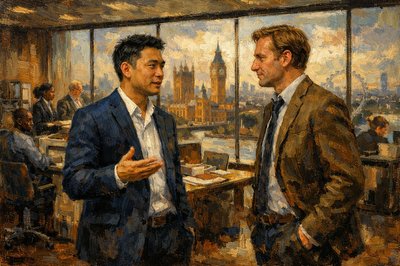
Inside a large office building in London, on the 5th floor, Wing Sun's father, a Chinese Malaysian man in his 30s, speaks to his counterpart in the company, and English man, about business.  Other workers are seated at their desks and standing at a copy machine.  There are some Black people, but mostly British.  One whole wall of the room is glass and we can see something of London outside.
A triptych oil painting, presented as three heavily framed, connected panels in the dramatic, tenebrism style of Baroque masters like Caravaggio. The overall atmosphere is one of supernatural, oppressive darkness and violent chaos.

The Left Panel shows the penitent thief on his cross, body twisted in pain but his face turned toward the center panel with a look of sorrowful acceptance. A faint, supernatural light illuminates his face against a nearly black sky. Below him, rocks are splitting.

The Center Panel is dominated by Jesus on the cross, head bowed in finality. The sky is a swirling vortex of eclipse darkness, blotting out the sun. The ground beneath the cross is violently cracking open, emitting dust and smoke, with debris caught in mid-air from the earthquake shockwave.

The Right Panel shows the impenitent thief, writhing and screaming against his bonds, his face contorted in rage looking away from the center. He is almost swallowed by the shadows. The cross appears unstable as the cliffside crumbles beneath it. The entire triptych has a rich, dark color palette of deep browns, blacks, and muted crimson, textured with visible, frantic brushstrokes.
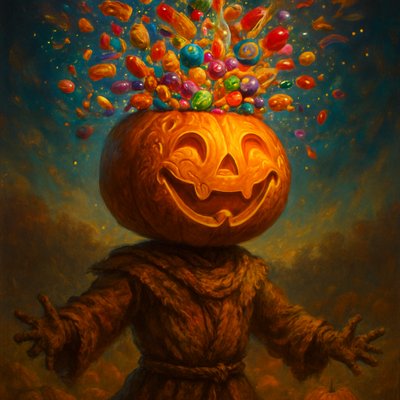
This sounds like a wonderfully whimsical and festive image! Combining the classic pumpkin head with a burst of candy and unique carving will make for a very creative Halloween or autumn piece.
Here's a prompt for a Happy Pumpkin Head Figure with Candy Bursting Out for ArtStyles.com:

Happy Pumpkin Head with Candy Burst Prompt

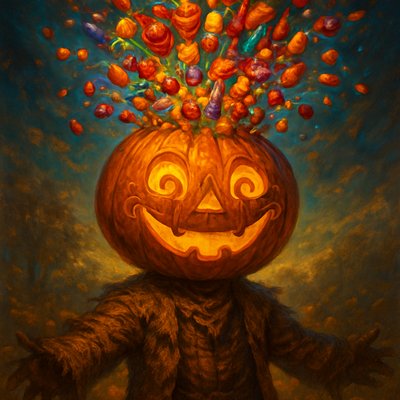
"A cheerful and fantastical figure with a large, glowing jack-o'-lantern for a head. The pumpkin's face is carved with a distinctly happy, friendly, wide-mouthed smile and joyful eyes. Instead of traditional jagged cuts, the facial features (eyes, nose, mouth) are intricately carved with elegant, swirling, vine-like patterns, giving it a whimsical and artistic look. The pumpkin head emits a warm, inviting orange glow from within.

Dramatically bursting and cascading out of the very top of the pumpkin's head is an overflowing abundance of vibrant, colorful Halloween candy. This candy explosion includes individually wrapped chocolates, lollipops, jelly beans, candy corn, and various brightly colored sweets, all tumbling outwards in a joyous, sugary fountain.
The figure itself has a rustic, scarecrow-like body, perhaps dressed in tattered but festive autumn-colored clothing (e.g., burlap, plaid, or warm browns and oranges), standing in an autumnal setting. The background could feature a gently lit pumpkin patch, fallen autumn leaves, or a soft, blurred evening sky. The lighting is warm and enchanting, highlighting the pumpkin's glow and the glossy sheen of the candy. The overall mood is one of festive joy, playful magic, and autumnal abundance. stylized realism, intricate detail, dynamic composition, warm dramatic lighting, focus on textures (pumpkin, candy), fantasy elements"
This sounds like a wonderfully whimsical and festive image! Combining the classic pumpkin head with a burst of candy and unique carving will make for a very creative Halloween or autumn piece.

Here's a prompt for a Happy Pumpkin Head Figure with Candy Bursting Out for ArtStyles.com:

Happy Pumpkin Head with Candy Burst Prompt

"A cheerful and fantastical figure with a large, glowing jack-o'-lantern for a head. The pumpkin's face is carved with a distinctly happy, friendly, wide-mouthed smile and joyful eyes. Instead of traditional jagged cuts, the facial features (eyes, nose, mouth) are intricately carved with elegant, swirling, vine-like patterns, giving it a whimsical and artistic look. The pumpkin head emits a warm, inviting orange glow from within.

Dramatically bursting and cascading out of the very top of the pumpkin's head is an overflowing abundance of vibrant, colorful Halloween candy. This candy explosion includes individually wrapped chocolates, lollipops, jelly beans, candy corn, and various brightly colored sweets, all tumbling outwards in a joyous, sugary fountain.

The figure itself has a rustic, scarecrow-like body, perhaps dressed in tattered but festive autumn-colored clothing (e.g., burlap, plaid, or warm browns and oranges), standing in an autumnal setting. The background could feature a gently lit pumpkin patch, fallen autumn leaves, or a soft, blurred evening sky. The lighting is warm and enchanting, highlighting the pumpkin's glow and the glossy sheen of the candy. The overall mood is one of festive joy, playful magic, and autumnal abundance."whimsical illustration, vibrant autumn colors, detailed candy textures, glowing effects, playful character design, festive atmosphere
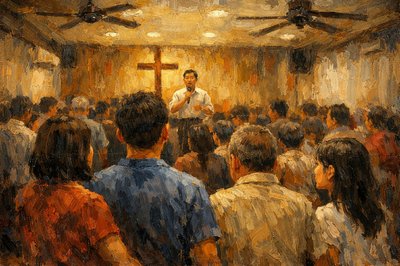
Inside an informal church in Kuala Lumpur.  Wing Sun and his father and mother, along with Siu Zi, his friend from school are there together.  We are standing in the back of the room, and there are many more people than there were in the London church.  There are people of different ethnicities, but mostly Chinese Malaysian.  The Pastor, a Chinese man, is standing up front speaking to the congregation, facing them.  The atmosphere is hot and sweaty, with ceiling fans running, but still welcoming, Wing Sun is happy that his family is together and also that his friend Siu Zi, who he has just learned is a Christian, can be there too.
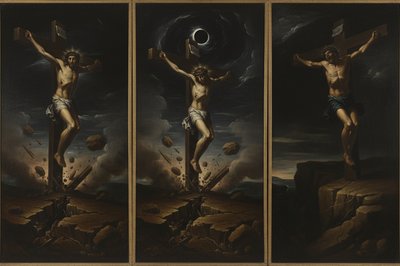
A triptych oil painting, presented as three heavily framed, connected panels in the dramatic, tenebrism style of Baroque masters like Caravaggio. The overall atmosphere is one of supernatural, oppressive darkness and violent chaos.

The Left Panel shows the penitent thief on his cross, body twisted in pain but his face turned toward the center panel with a look of sorrowful acceptance. A faint, supernatural light illuminates his face against a nearly black sky. Below him, rocks are splitting.

The Center Panel is dominated by Jesus on the cross, head bowed in finality. The sky is a swirling vortex of eclipse darkness, blotting out the sun. The ground beneath the cross is violently cracking open, emitting dust and smoke, with debris caught in mid-air from the earthquake shockwave.

The Right Panel shows the impenitent thief, writhing and screaming against his bonds, his face contorted in rage looking away from the center. He is almost swallowed by the shadows. The cross appears unstable as the cliffside crumbles beneath it. The entire triptych has a rich, dark color palette of deep browns, blacks, and muted crimson, textured with visible, frantic brushstrokes.
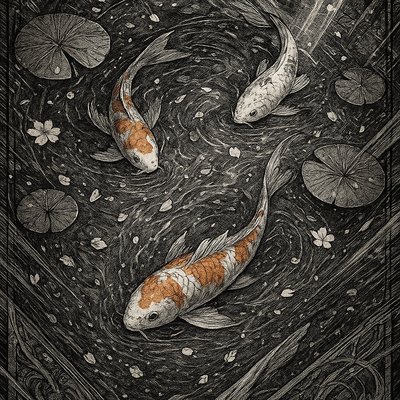
A koi pond seen from above, orange and white koi fish swimming among lily pads, clear water with subtle ripples, fallen cherry blossom petals floating on the surface, dappled sunlight
First century Palestine on the road toward Jericho.  In a treacherous pass, a man lies on the roadside, beaten half to death.  A passerby with a donkey is trying to help.  The story of the good samaritan.
Inside an informal church in London.  Wing Sun's father has been invited to attend with his counterpart from the office.  He doesn't have anything else to do on Sunday morning, so he goes along.  we are standing in the back of the room.  There are many people of different ethnicities, the Pastor is standing up front alongside a worship leader with a guitar, and a young black woman, facing the audience.  The atmosphere is warm and welcoming, but Wing Sun's father feels a little uncomfortable.
This is a great idea. For this version, let's lean even further into that "Elven High-Fantasy" aesthetic you like, but ground it in their specific Biblical legacy as the "hewers of wood and drawers of water" for the Tabernacle.

In this prompt, we will portray their service not as a lowly task, but as a display of superhuman strength and grace—showing that even in their "servant" role, their "giant" nature and ancient wisdom remained visible.
Written Prompt: The Sage-Giants of Gibeon

    Style: Cinematic High-Fantasy, 8k Resolution, Epic Scale. A blend of The Lord of the Rings aesthetic with Ancient Near Eastern Bronze Age history.

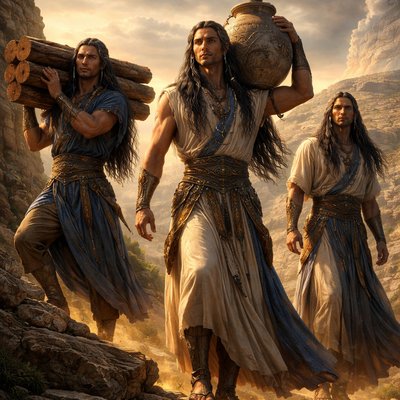
    The Subject: A group of three Gibeonite men, standing at a staggering height of 7.5 feet. They possess the ethereal, noble beauty of High Elves—sharp, intelligent Semitic features, high cheekbones, and long, dark hair intricately braided with silver and lapis lazuli.

    The Stature & Grace: They are lithe and muscular, moving with a fluid grace that defies their size. Despite their "giant" classification, they are elegant, not monstrous.

    The Role (Hewers and Drawers): > * One Gibeonite is seen effortlessly carrying a massive, ornate stone water jar on one shoulder that would require four normal men to lift.

        Another holds a bundle of enormous cedar logs, his posture straight and regal, showing no sign of strain.

    The Attire: They wear a mixture of their new culture and their old heritage. Fine linen tunics in ivory and deep blue are accented by ornate bronze bracers etched with ancient Canaanite geometry. Their clothing is weathered with the dust of the road but still looks "high-born."

    The Setting: They are standing on a high limestone ridge overlooking the ancient city of Gibeon. In the background, the Tabernacle's smoke rises into a golden sunset sky. The architecture around them consists of massive, "cyclopean" stone blocks that match their scale.

    Lighting & Atmosphere: Dramatic "God-rays" of sunlight pierce through the clouds, catching the metallic glint of their jewelry and the profound, wise expressions in their eyes. The mood is one of "Dignity in Service" and "Ancient Wisdom."
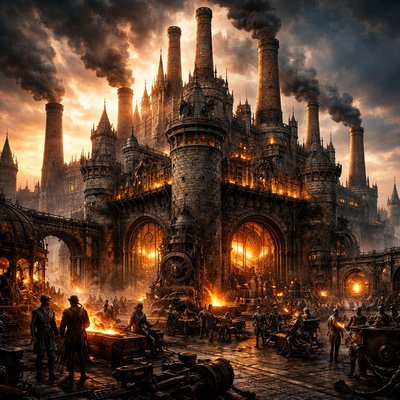
"A majestic medieval Camelot castle transformed into an industrial powerhouse, massive stone towers with tall brick smokestacks rising from battlements emitting thick plumes of black smoke against a dramatic stormy sunset sky, interior visible through arched windows showing glowing forges, massive steam engines, whirring belts, and assembly lines churning out revolvers and bicycle parts, medieval peasants and armored knights working alongside Yankee engineers in 19th-century overalls, sparks flying from anvils, molten metal pouring, flickering torchlight mixing with harsh electric bulbs, rich textures on weathered stone walls cracked by iron pipes and gears, vibrant industrial reds and oranges contrasting deep castle grays and blues, god rays piercing through smoke and dust, hyper-detailed photorealistic fantasy style, epic cinematic composition with wide angle view showing the absurd fusion of Arthurian architecture and 19th-century factory chaos, satirical anachronism from Mark Twain's A Connecticut Yankee in King Arthur's Court,
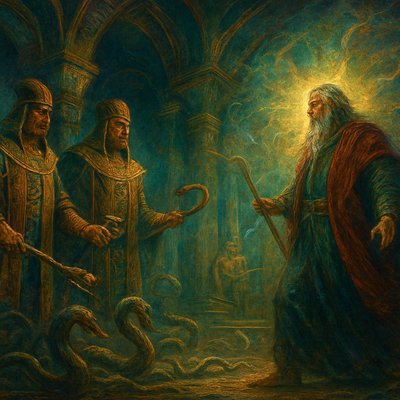
"fresco painting, stylized Egyptian profile, hieroglyphic details, vibrant earth tones"A dramatic, indoor scene from the Book of Exodus depicting the confrontation between Moses and the Egyptian magicians, Jannes and Jambres, in the court of Pharaoh. In the foreground, Jannes and Jambres stand proudly, dressed in ornate, gold-trimmed Egyptian robes, their faces stern and defiant. They are surrounded by their magical staffs and are attempting to replicate a miracle, perhaps surrounded by writhing, magically created snakes. Moses stands opposite them, his figure conveying authority and resolve, illuminated by a stark, celestial light. The background is a grand, dimly lit hall in the Egyptian palace, filled with massive columns and Pharaoh watching from his throne. The mood is one of intense rivalry, ancient power, and dramatic tension."
At the bustling Kuala Lumpur airport, Wing-Sun and his Mother say farewell to his father before he leaves for a six‐week business trip to London.  We see Wing Sun and his mother from the back, as Father stands on the escalator going up to his departure gate, and turns toward us to wave goodbye.  Many other passengers and children are standing around.  The airport is modern and well lit.
A historically accurate and atmospheric depiction of the signing of the Mayflower Compact aboard the ship in November 1620. The scene is set in the dimly lit, cramped cabin of the Mayflower, with the ship's timbers and rigging subtly visible, conveying the challenging conditions of the voyage. A simple table or chest serves as the signing surface. The primary focus is on a small group of the last individuals signing the document: specifically, the indentured servants (or 'strangers' not directly part of the Separatist congregation) approaching or at the table. Their expressions show a mix of weary determination, understanding of the necessity, and perhaps a hint of quiet apprehension or resignation to this new social contract, given their status. They are dressed in the plain, practical clothing typical of 17th-century commoners and laborers. Figures of prominent Pilgrims or 'Saints' (like William Bradford or John Carver) are visible in the background, observing the proceedings with a sense of gravity and leadership, but they are not the central focus. The lighting is low and warm, perhaps from a lantern, creating a chiaroscuro effect that highlights the faces of the signers. The atmosphere conveys the momentousness of the act under difficult circumstances, the diverse composition of the group, and the early seeds of self-governance in a new world. The artistic style is a realistic, historically detailed oil painting, capturing the solemnity and human element of this pivotal historical moment."
That's an excellent idea for a powerful, dramatic image. Jannes and Jambres opposing Moses is a scene that calls for intense figures and a sense of divine confrontation.

Here is a prompt for ArtStyles.com focusing on Jannes and Jambres, the Egyptian magicians who tried to replicate Moses's miracles:

Jannes and Jambres Prompt

"A dramatic, indoor scene from the Book of Exodus depicting the confrontation between Moses and the Egyptian magicians, Jannes and Jambres, in the court of Pharaoh. In the foreground, Jannes and Jambres stand proudly, dressed in ornate, gold-trimmed Egyptian robes, their faces stern and defiant. They are surrounded by their magical staffs and are attempting to replicate a miracle, perhaps surrounded by writhing, magically created snakes. Moses stands opposite them, his figure conveying authority and resolve, illuminated by a stark, celestial light. The background is a grand, dimly lit hall in the Egyptian palace, filled with massive columns and Pharaoh watching from his throne. The mood is one of intense rivalry, ancient power, and dramatic tension." "cinematic lighting, ultra-realistic, epic scale, magical energy effects"
At his Grandmother's house in Penang, while the tropical rain taps softly against the window, Wing Sun, Mother and Grandmother gather in the cozy living room. The room glows with the soft light of an oil lamp, and the walls are adorned with faded photographs and delicate calligraphy. Grandmother’s eyes sparkle as she begins to speak—a voice that carries both the wisdom of her years and the tender care of someone who’s seen many seasons change.  Wing Sun is pensive with anticipation.  What will she say?
Siu Zi is a 10 year old Chinese girl in Guangzhou. Late one humid evening, Siu Zi's father meets with a discreet man known simply as Mr. Chen.  In a quiet corner of a small teahouse near the back alleys of Guangzhou, Mr. Chen explains, in careful whispers, how he can help the family obtain the documents they needed to leave the country safely. Other patrons are in the teahouse, and a waiter stands nearby, but nobody can hear what Mr. Chen is saying.  It's safe to talk here.
Photorealism Art Style, a profoundly dramatic and intensely luminous image depicting a vision of Heaven seen from the ground. The scene is dominated by a blazing, overwhelming celestial light that is violently breaking through the darkness of the night sky. This light is not the sun, but the pure glory of God, manifesting as swirling gold, brilliant white, and ethereal blue luminescence that seems to pull the viewer upward. A long red-haired woman, wearing simple, flowing heavenly attire, stands below, gazing upward with an expression of ecstatic awe and reverence. She is bathed in the brilliant, otherworldly light streaming down, suggesting the moment of divine revelation where the heavens are torn open. The focus is on the raw, blinding intensity of the divine light, the realistic texture of the woman's awe-struck face, and the vibrant, chaotic energy of the celestial vision, creating a powerful image of a direct, momentary glimpse into the boundless presence of Heaven.
A historically accurate and atmospheric depiction of the signing of the Mayflower Compact aboard the ship in November 1620. The scene is set in the dimly lit, cramped cabin of the Mayflower, with the ship's timbers and rigging subtly visible, conveying the challenging conditions of the voyage. A simple table or chest serves as the signing surface. The primary focus is on a small group of the last individuals signing the document: specifically, the indentured servants (or 'strangers' not directly part of the Separatist congregation) approaching or at the table. Their expressions show a mix of weary determination, understanding of the necessity, and perhaps a hint of quiet apprehension or resignation to this new social contract, given their status. They are dressed in the plain, practical clothing typical of 17th-century commoners and laborers. Figures of prominent Pilgrims or 'Saints' (like William Bradford or John Carver) are visible in the background, observing the proceedings with a sense of gravity and leadership, but they are not the central focus. The lighting is low and warm, perhaps from a lantern, creating a chiaroscuro effect that highlights the faces of the signers. The atmosphere conveys the momentousness of the act under difficult circumstances, the diverse composition of the group, and the early seeds of self-governance in a new world. The artistic style is a realistic, historically detailed oil painting, capturing the solemnity and human element of this pivotal historical moment."
First century Jerusalem at the "gate beautiful" to the temple grounds.  Peter and John were going up to the temple at the hour of prayer, the ninth hour. And a man lame from birth was being carried, whom they laid daily at the gate of the temple that is called the Beautiful Gate to ask alms of those entering the temple. Seeing Peter and John about to go into the temple, he asked to receive alms. And Peter directed his gaze at him, as did John, and said, “Look at us.” And he fixed his attention on them, expecting to receive something from them. But Peter said, “I have no silver and gold, but what I do have I give to you. In the name of Jesus Christ of Nazareth, rise up and walk!” And he took him by the right hand and raised him up, and immediately his feet and ankles were made strong.
In Penang, Malaysia.  Wing Sun's Grandmother is elderly and lives in Penang, on the island.  Grandma's house is in a quieter part of the island, closer to the coastline where the sea breeze can be felt through the wooden windows. It's near the ocean, in Tanjung Bungah where there are old-style homes and a slower pace of life.  There are many resort "homestay" hotels, and also some high-rise condos, but Grandmother's house has been there many years.  Wing-Sun's mother grew up in that house, near the beach, with the ocean breeze.  We see the house from down the street with Grandma standing in the doorway greeting us.
A fantastically cheerful and dynamic scene featuring the happy pumpkin-head figure (with the swirled, smiling carved face and internal glow) as the pilot of a classic, brightly colored biplane. The biplane itself is whimsically designed, perhaps with candy-themed accents or painted in vibrant, cheerful colors like orange, purple, and green.

The biplane is soaring through a clear, azure autumn sky, actively 'crop-dusting' a massive, exuberant stream of colorful Halloween candy from its underside. The candy (an abundant mix of wrapped chocolates, lollipops, candy corn, and various sweets) cascades downwards in a wide, joyous plume, spreading across the landscape below.

The landscape beneath the biplane is an idyllic, festive autumnal scene: rolling hills covered in vibrant fall foliage (golden, red, orange trees), a charming pumpkin patch, or a quaint, candy-colored village. The perspective is dynamic, capturing the plane in motion with the candy streaming behind it. The lighting is bright and sunny, emphasizing the vivid colors of the plane, the candy, and the autumn scenery. The overall mood is one of pure, unadulterated joy, playful magic, and festive exuberance, like a sugary parade from the sky."
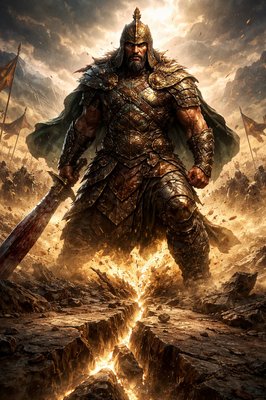
Style: A detailed, photorealistic character portrait in the style of high-fantasy historical cinema, focusing on texture, armor design, and facial structure.

The Subject: A full-body portrait of a single Gibeonite lord. He is a figure of imposing, "giant" stature, standing significantly taller than an average human (suggesting 7+ feet), but his proportions are lithe, graceful, and powerful rather than bulky or brutish.

Facial Features & Expression: He possesses a noble, almost ageless bearing reminiscent of an Elven lord, translated into ancient Near Eastern features. He has high, sculpted cheekbones, a strong aquiline nose, and intense, deep-set eyes that convey a calculating intelligence and ancient dignity. His expression is calm, watchful, and confident.

Hair & Adornment: His long, dark hair is elaborately and precisely braided, woven with hammered bronze rings and polished beads of carnelian and lapis lazuli.

Attire & Armor: He is dressed in attire that demonstrates advanced craftsmanship and sophistication. He wears a fitted breastplate of polished bronze, richly engraved with complex, swirling Canaanite motifs (stylized lions, gryphons, and geometric patterns). Beneath the armor, a tunic dyed deep Tyrian purple shows through.

Weapons: At his hip hangs a massive, curved khopesh sword, scaled to his immense height, with a hilt carved from hippopotamus ivory and inlaid with gold.

Pose & Lighting: He stands in a relaxed but formidable pose of authority, one hand resting on his sword hilt. The lighting is golden hour sunlight, catching the metallic sheen of the bronze armor and the intelligence in his eyes against a neutral, out-of-focus textured stone background.
Style: A detailed, photorealistic character portrait in the style of high-fantasy historical cinema, focusing on texture, armor design, and facial structure.

The Subject: A full-body portrait of a single Gibeonite lord. He is a figure of imposing, "giant" stature, standing significantly taller than an average human (suggesting 7+ feet), but his proportions are lithe, graceful, and powerful rather than bulky or brutish.

Facial Features & Expression: He possesses a noble, almost ageless bearing reminiscent of an Elven lord, translated into ancient Near Eastern features. He has high, sculpted cheekbones, a strong aquiline nose, and intense, deep-set eyes that convey a calculating intelligence and ancient dignity. His expression is calm, watchful, and confident.

Hair & Adornment: His long, dark hair is elaborately and precisely braided, woven with hammered bronze rings and polished beads of carnelian and lapis lazuli.

Attire & Armor: He is dressed in attire that demonstrates advanced craftsmanship and sophistication. He wears a fitted breastplate of polished bronze, richly engraved with complex, swirling Canaanite motifs (stylized lions, gryphons, and geometric patterns). Beneath the armor, a tunic dyed deep Tyrian purple shows through.

Weapons: At his hip hangs a massive, curved khopesh sword, scaled to his immense height, with a hilt carved from hippopotamus ivory and inlaid with gold.

Pose & Lighting: He stands in a relaxed but formidable pose of authority, one hand resting on his sword hilt. The lighting is golden hour sunlight, catching the metallic sheen of the bronze armor and the intelligence in his eyes against a neutral, out-of-focus textured stone background.
A magical, high-fantasy illustration capturing the final scene of Reepicheep's journey from C.S. Lewis's The Voyage of the Dawn Treader. A very small, simple, wooden coracle (boat) is drifting alone across the vast, calm, crystalline waters of the Silver Sea, which is covered in a dense carpet of large, creamy-white and luminous purple sea flowers (lilies or star-shaped blossoms).

The noble Mouse, Reepicheep, stands bravely in the little boat. He is wearing his formal armor and sword, and his tiny sail is lowered. He is looking ahead with an expression of hope and determination toward the far, shimmering horizon where the sky and sea meet the edge of the world, represented by a column or curtain of bright, clear light. The lighting is ethereal and soft, emphasizing the profound stillness and peacefulness of the scene. The overall style should be reminiscent of classic book illustrations, rich in detail, color, and wonder. Golden light of Aethel-red, epic atmosphere, fantasy illustration."