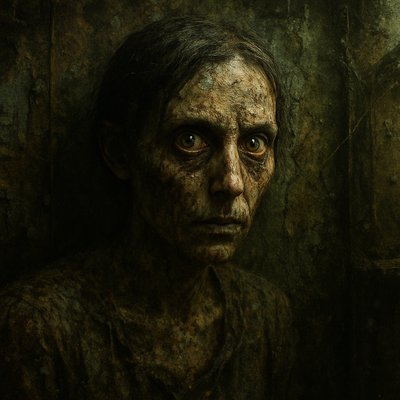
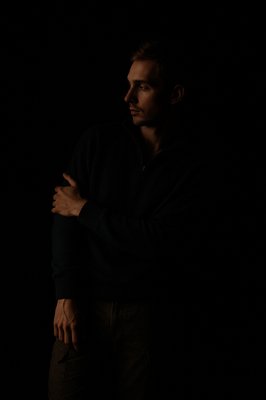
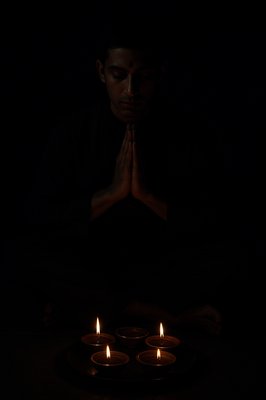
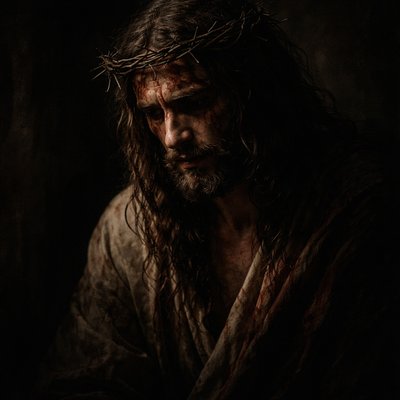
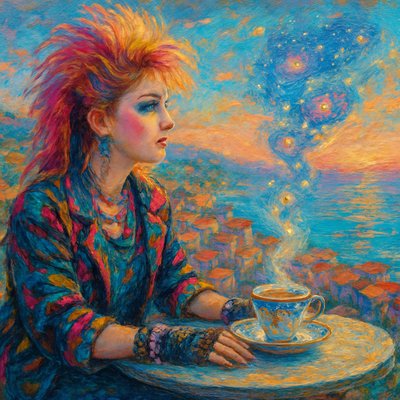
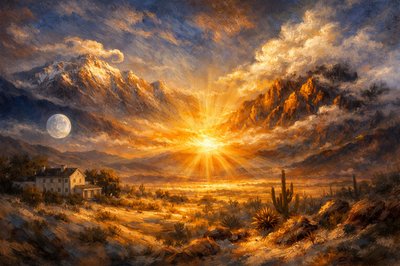
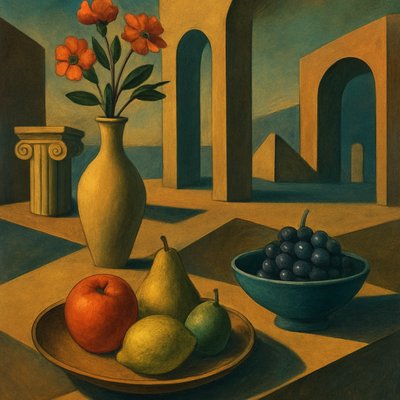
A Dramatic, Close Up, High Contrast Portrait Inspired By Song Of Songs 5:11. The Subject's Head Is Crowned With Dramatically Art

still life arrangement of fruits and flowers
"A historically accurate depiction of a Ghost Dance, focusing on the late 19th-century context, specifically around 1890-1891. The scene shows Lakota (Sioux) or Northern Paiute people (specify one or include elements of both, but avoid anachronisms) participating in the ceremony.

Setting: A vast, open prairie or high desert landscape, under an expansive sky. The time of day could be dusk or night, with a prominent moon or stars, or a bright, clear day. Avoid overtly spiritual or ethereal elements like floating spirits unless explicitly requested for a later, more symbolic iteration. The focus should be on the earthly ceremony.

Participants: A circle of men, women, and children, hand-in-hand, moving in a slow, rhythmic shuffle or circular motion. Their faces show a mixture of devotion, hope, and determination. Some may have expressions of trance or deep concentration.

Attire:

    Ghost Dance Shirts/Dresses: Emphasize the unique Ghost Dance shirts and dresses, which were typically made of muslin or canvas. These garments should feature painted designs such as stars, crescents, birds (especially eagles or crows), buffalo, human figures, or crosses. The designs should appear hand-painted, not mass-produced.

    Hair and Adornments: Participants should have braided hair or wear it long. Some may wear feathers (e.g., eagle or hawk feathers) in their hair. Minimal traditional adornments, as the focus was often on the Ghost Dance shirt itself. Avoid overly elaborate or Hollywood-esque depictions of war bonnets unless relevant to a specific individual and context.

    Footwear: Moccasins or bare feet.

Action/Atmosphere:

    The dancers are moving in a counter-clockwise circle, with a central figure or a small group often leading.

    The overall mood is one of earnest prayer and communal spiritual effort. The dance should convey a sense of hope for renewal and the return of the old ways, rather than aggression or despair.

    There might be a central pole or small fire as a focal point, around which the dance takes place.

    Avoid any signs of direct conflict or violence; the Ghost Dance itself was a non-violent spiritual movement.

Specific Considerations for Accuracy:

    Wovoka's Influence: The teachings of Wovoka (the Northern Paiute prophet) emphasized peace, hard work, and the return of the buffalo and deceased ancestors. The scene should subtly reflect this hopeful, redemptive spirit.

    Regional Variations: If focusing on Lakota, consider their specific interpretations, which sometimes included more imagery related to their warrior traditions on the shirts, but still within the peaceful framework of the dance.

    Respectful Portrayal: Ensure the depiction is respectful and avoids any stereotypical or caricatured representations of Indigenous people. Focus on their human dignity and spiritual sincerity.
A tranquil and inviting autumn landscape based on the provided image, depicting a park-like setting with large trees and a central pile of fallen leaves. The trees framing the foreground and extending into the middle ground are now in their full, glorious fall colors, displaying a rich tapestry of brilliant yellows, deep oranges, fiery reds, and warm russets.
The ground is generously covered with a soft, thick carpet of fallen autumn leaves, rendered in various warm hues. A prominent, neatly gathered pile of raked leaves sits in the middle ground, inviting curiosity or play, with its textures and colors clearly visible. In the background, hints of a path or road gently wind through more fall foliage, suggesting a peaceful stroll.

The sky above is a soft, clear autumn blue, allowing warm, diffused sunlight to filter through the canopy, casting gentle shadows and highlighting the vibrant colors of the leaves both on the trees and on the ground. The overall mood is one of serene autumnal beauty, crisp air, and the pleasant, nostalgic feeling of a beautiful fall day in a park."
portrait of a person with expressive eyes
a tree in nature
house with front view
still life with everyday objects
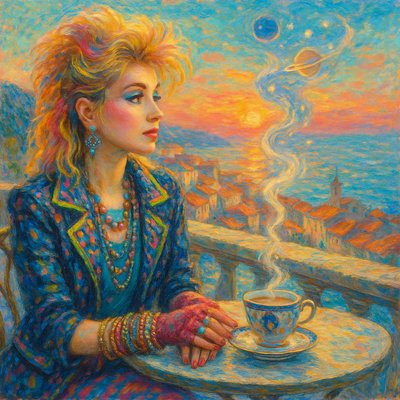
portrait of a person with expressive eyes
A surreal sculpture of a humanoid shape made of magnetic liquid metal, caught in a state of transformation, ArtStyle liquid metal. The composition is split between water and land. On the water side, the entity's leg is a vortex of water and metal swirling together, zero gravity liquid droplets rising up. On the land side, the other leg creates heavy, thick strands of magnetic fluid stretching and snapping as it steps onto the terrain, pulling the ocean with it. Intense texture of ferrofluid spikes and smooth metallic curves. Dramatic shadows, wet surface rendering, hyper-realistic physics.
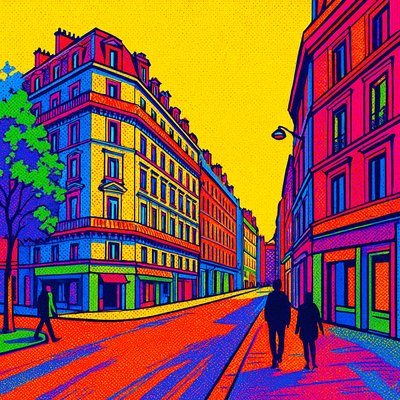
a painting of three people walking down a street
portrait of a person with expressive eyes
house with front view
wide landscape with natural scenery
portrait of a person with expressive eyes
bicyle resting against a wall
portrait of two people together
bicyle resting against a wall
Caravaggio Realism Baroque Art Style Style Transfer Example
Pure white unicorn with spiraling pearl horn drinking from a crystal-clear forest pool, surrounded by ancient oaks with golden autumn leaves, soft god-rays filtering through canopy, delicate fairy figures in the distance, romantic Hildebrandt brothers style, luminous and ethereal, highly detailed fantasy oil painting, warm color palette
Dutch Golden Age Still Life Art Style Style Transfer Example
portrait of two people together
animal standing in natural pose
Yarn Bombing Street Art Style Style Transfer Example
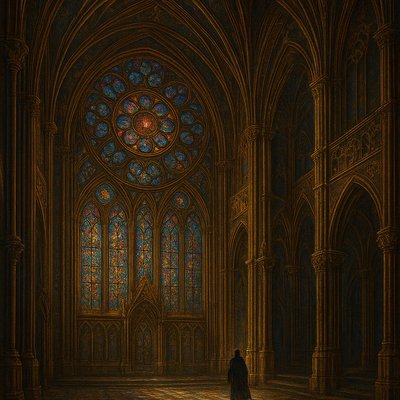
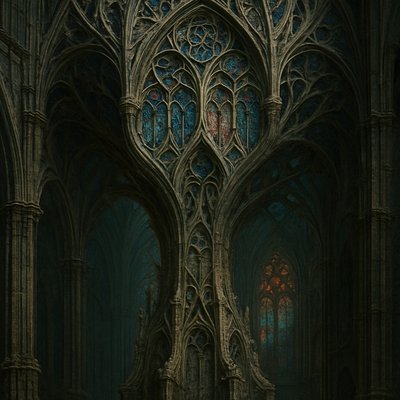
Modern Gothic Art Style Transfer Example
Dark Gothic Anime Art Style Style Transfer Example
still life with everyday objects
portrait of two people together
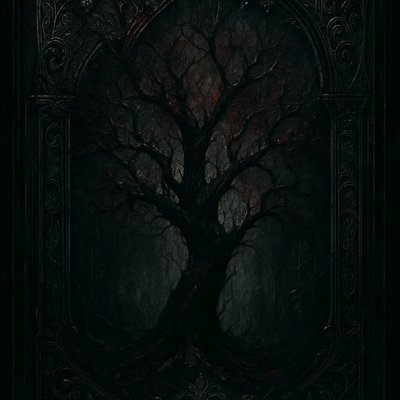
Gothic Punk Art Style Transfer Example
still life with everyday objects
A profoundly symbolic and awe-inspiring depiction of a colossal, luminous pearl gate in the New Jerusalem, captured in the dynamic act of rolling away, similar to the stone being moved from Christ's tomb. The gate, a single, immense, perfectly spherical pearl, is shown mid-motion, having just been set aside from the entrance, revealing the glorious city beyond.

The pearl itself glows with an intense, soft iridescence, reflecting the divine light. Its surface shows subtle, exquisite details of mother-of-pearl. The frame or opening from which it has rolled away is visible, perhaps showing immense, smooth tracks or channels in the transparent gold structure of the city wall, reinforcing the idea of its monumental movement.

Through the now open gate, the radiant glory of the New Jerusalem streams forth. Pure gold streets, like transparent glass, extend into the city, illuminated by an intense, divine light that emanates from within. Heavenly architecture, impossibly beautiful and intricate, is glimpsed in the distance, beckoning. The atmosphere is one of profound sanctity, triumphant revelation, and welcoming access to the divine, with the act of the pearl rolling away symbolizing a breakthrough or an open invitation. The lighting is ethereal and grand, emphasizing the pearl's luster and the city's overwhelming glory."
still life arrangement of fruits and flowers
Ferrofluid Typography Style Transfer Example
urban street with city activity
Thermal Camera Romanticism Style Transfer Example
Expressionism Art Style Style Transfer Example
Create a surrealist artwork in high definition, blending gold and white tones. Depict ethereal, dreamlike landscapes with shimmering golden structures-like floating palaces or delicate filigree towers-emerging from a misty, white void. Add surreal elements, such as clocks melting over golden cliffs or white-winged creatures with metallic feathers, inspired by Dalí's style. Ensure vibrant contrast between the radiant gold and crisp, luminous white, with smooth textures and intricate details for a hyper-realistic yet fantastical effect.
Divine Light Renaissance Art Style Style Transfer Example
A profound and epic scene depicting the Vision of the Dry Bones from Ezekiel 37. In a desolate, vast valley, countless dry human bones are scattered, stark white and ancient. A powerful, divine wind (ruach) swirls through the valley, imbued with a sacred, ethereal glow, causing the bones to rattle and miraculously knit together. Tendons, flesh, and skin rapidly form over the skeletal structures, transforming them into fully-formed human figures. As the divine breath enters, the figures rise, not as individuals, but as a colossal, awe-inspiring army standing upright, gazing forward with renewed life and purpose. The sky above is dramatic, perhaps with stormy clouds breaking to reveal a divine light. The overall mood is one of miraculous resurrection, immense power, and hopeful restoration."
portrait of two people together
Historical Samurai Manga Art Style Style Transfer Example