“Therefore Will Not We Fear, Though The Earth Be Removed, And Though The Mountains Be Carried Into The Midst Of The Sea; Though Art

a tree in nature
house with front view
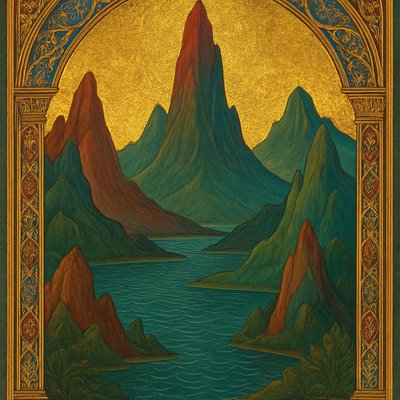
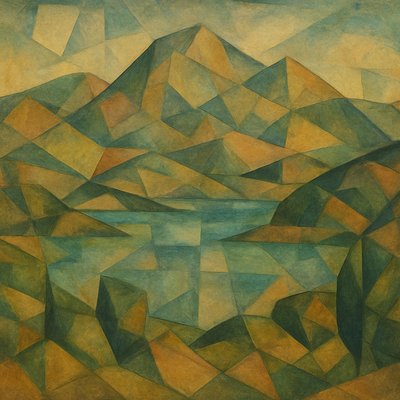
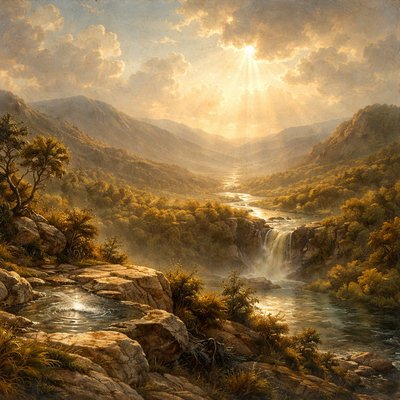
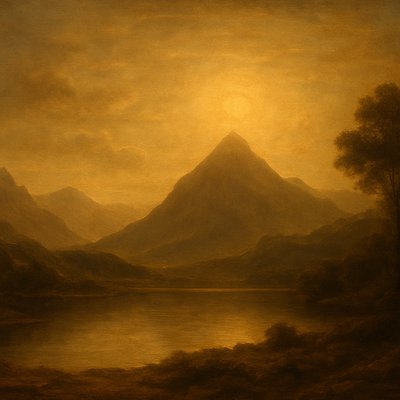
serene landscape with mountains and water
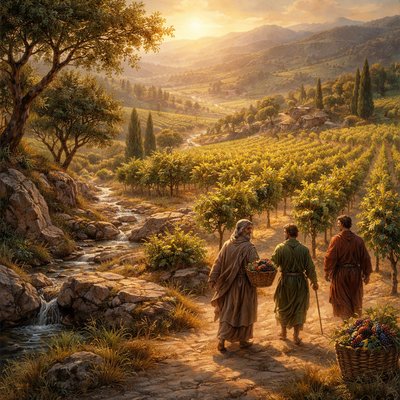
And when the time of the fruit drew near, he sent his servants to the husbandmen, that they might receive the fruits of it. Matthew 21:34 (KJV) setting is a vineyard
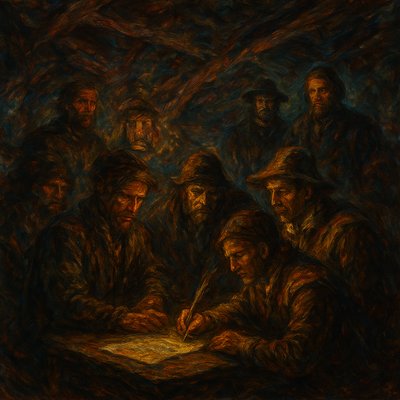
A historically accurate and atmospheric depiction of the signing of the Mayflower Compact aboard the ship in November 1620. The scene is set in the dimly lit, cramped cabin of the Mayflower, with the ship's timbers and rigging subtly visible, conveying the challenging conditions of the voyage. A simple table or chest serves as the signing surface. The primary focus is on a small group of the last individuals signing the document: specifically, the indentured servants (or 'strangers' not directly part of the Separatist congregation) approaching or at the table. Their expressions show a mix of weary determination, understanding of the necessity, and perhaps a hint of quiet apprehension or resignation to this new social contract, given their status. They are dressed in the plain, practical clothing typical of 17th-century commoners and laborers. Figures of prominent Pilgrims or 'Saints' (like William Bradford or John Carver) are visible in the background, observing the proceedings with a sense of gravity and leadership, but they are not the central focus. The lighting is low and warm, perhaps from a lantern, creating a chiaroscuro effect that highlights the faces of the signers. The atmosphere conveys the momentousness of the act under difficult circumstances, the diverse composition of the group, and the early seeds of self-governance in a new world. The artistic style is a realistic, historically detailed oil painting, capturing the solemnity and human element of this pivotal historical moment."
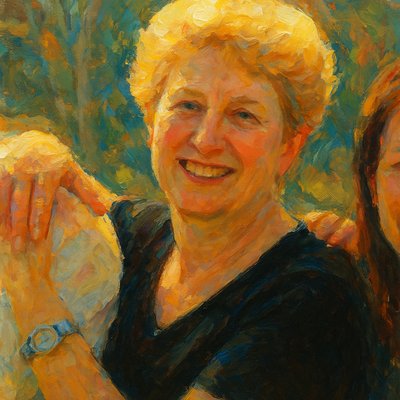
a painting of a woman smiling for the camera
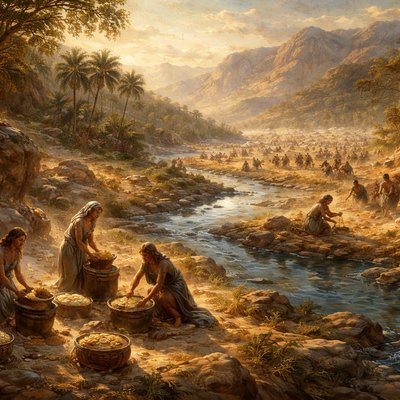
“And the people went about, and gathered it, and ground it in mills, or beat it in a mortar, and baked it in pans, and made cakes of it: and the taste of it was as the taste of fresh oil.” (Numbers 11:8, KJVA)
“Let them bring them forth, and shew us what shall happen: let them shew the former things, what they be, that we may consider them, and know the latter end of them; or declare us things for to come.” (Isaiah 41:22, KJV)
serene landscape with mountains and water
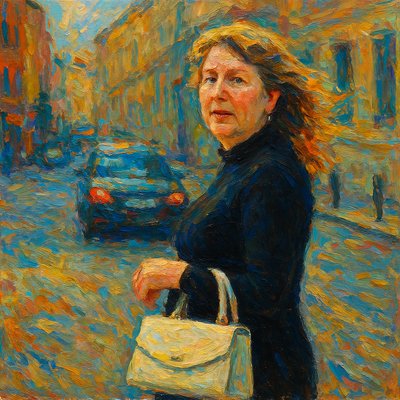
a painting of a woman walking down the street
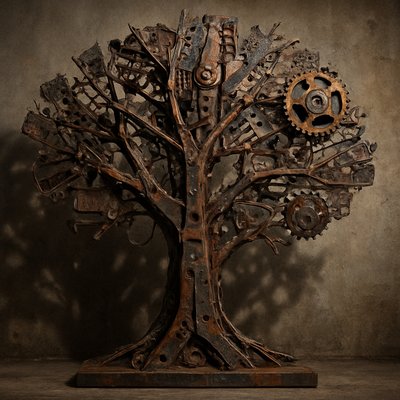
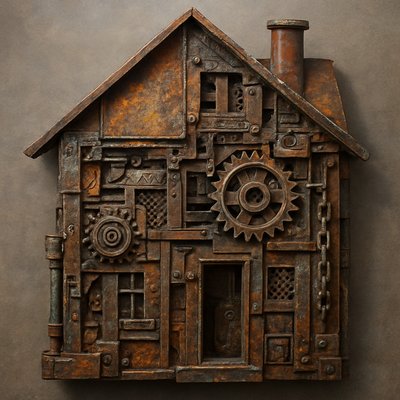
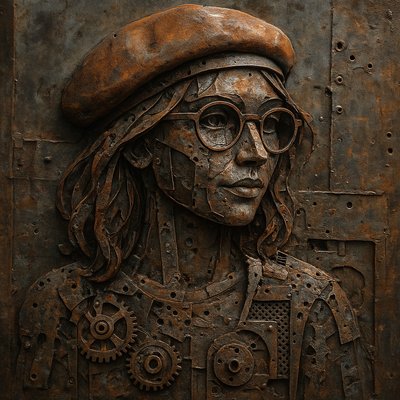
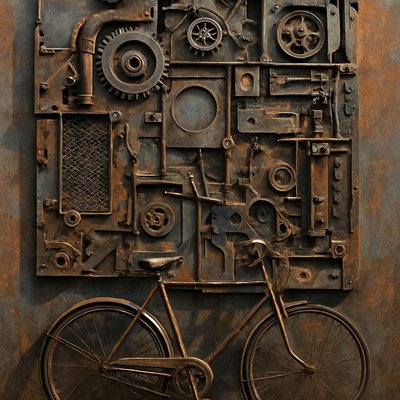
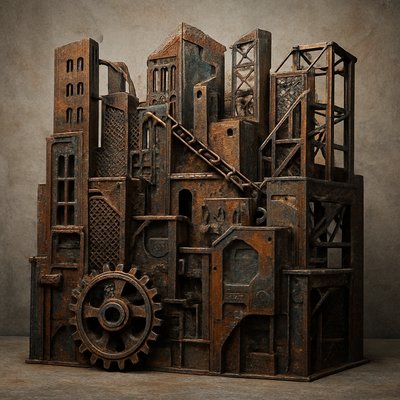
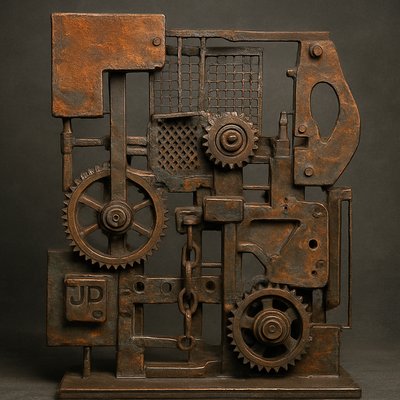
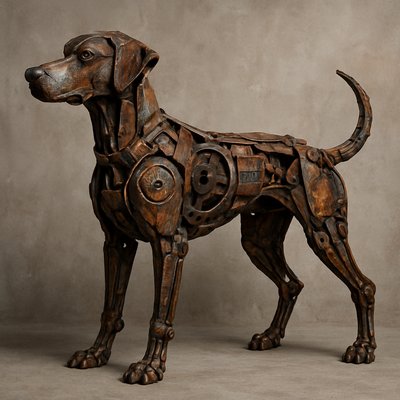
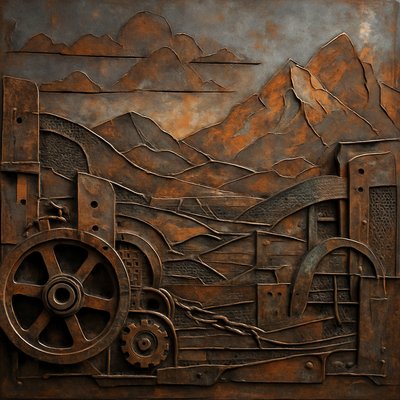
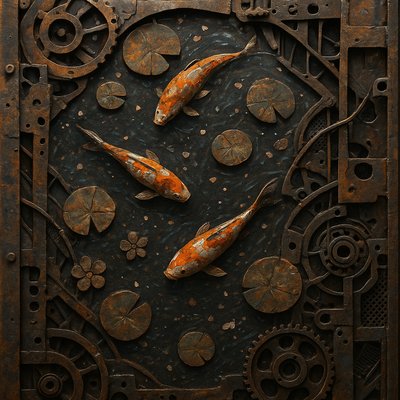
Metal Assemblage Sculpture Art Style Style Transfer Example
bicyle resting against a wall
urban street with city activity
still life with everyday objects
animal standing in natural pose
wide landscape with natural scenery
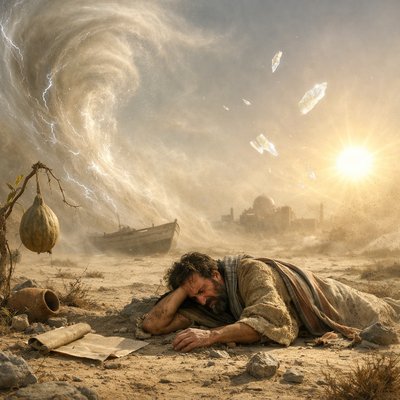
“And it came to pass, when the sun did arise, that God prepared a vehement east wind; and the sun beat upon the head of Jonah, that he fainted, and wished in himself to die, and said, It is better for me to die than to live.” (Jonah 4:8, KJV)
wide landscape with natural scenery
a painting of two women smiling for the camera
serene landscape with mountains and water
“In the beginning God created the heaven and the earth. And the earth was without form, and void; and darkness was upon the face of the deep. And the Spirit of God moved upon the face of the waters.” (Genesis 1:1-2, KJV)
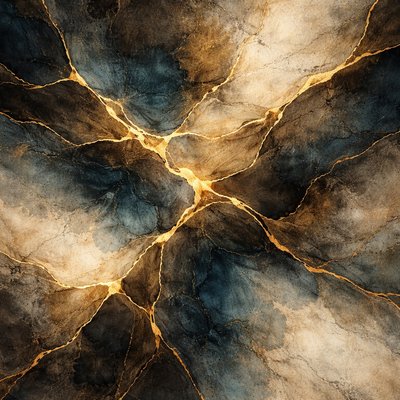
“abstract fluid art with deep blues and gold seams inspired by kintsugi, no recognizable objects, high resolution, seamless texture”
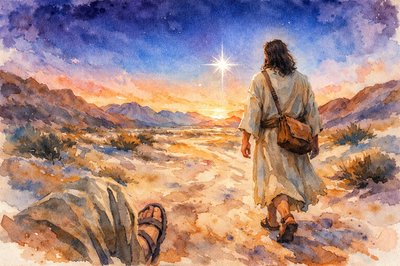
Personal POV scene. Me and Jesus in the desert on a cool morning at daybreak walking toward a bright star. Jesus is wearing old clothes and carrying a satchel. I’m wearing old clothes and sandals just like Him. The air is cool and crisp. The sky is bright blue on the horizon with deep purple fading into black at the upper atmosphere. The air is crisp and clear. It’s like the desert in California looking east toward Arizona. There are desert hills on the north and south sides and mountains in the distance.
a tree in nature
“And on the seventh day God ended his work which he had made; and he rested on the seventh day from all his work which he had made.” (Genesis 2:2, KJV)
serene landscape with mountains and water
A koi pond seen from above, orange and white koi fish swimming among lily pads, clear water with subtle ripples, fallen cherry blossom petals floating on the surface, dappled sunlight
“And on the seventh day God ended his work which he had made; and he rested on the seventh day from all his work which he had made.” (Genesis 2:2, KJV)
serene landscape with mountains and water
“For Christ is not entered into the holy places made with hands, which are the figures of the true; but into heaven itself, now to appear in the presence of God for us:” (Hebrews 9:24, KJV)
serene landscape with mountains and water
A massive, solid metal USSR emblem glows harshly in red and gold, radiating intense, blinding light. The emblem is firmly pressed down onto the back of a large, dark eagle, which is clearly pinned and crushed beneath its weight. The eagle’s wings are forcibly flattened and bent outward, feathers distorted, body warped under the relentless pressure. Its legs and torso are pressed into the ground, unable to move, showing literal physical force. The emblem dominates the composition, casting sharp, dramatic shadows across the dark eagle. The scene is rendered in bold, graphic socialist propaganda poster style, with high-contrast colors, simplified forms, exaggerated perspective, and stylized lighting. Harsh rays of light radiate from the emblem, emphasizing power and oppression. No abstract symbolism, no heroic balance, no floating elements — only a monumental emblem pressing down, physically immobilizing the eagle.
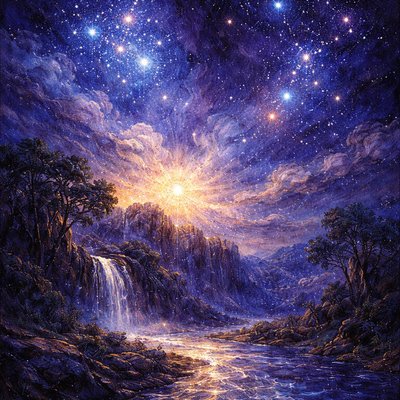
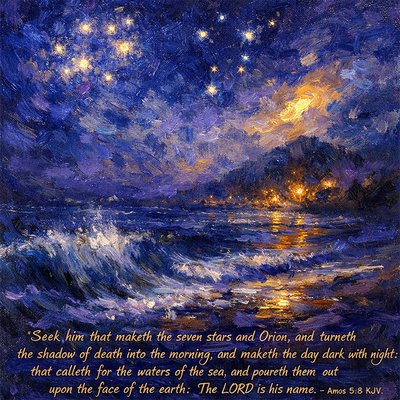
Seek him that maketh the seven stars and Orion, and turneth the shadow of death into the morning, and maketh the day dark with night: that calleth for the waters of the sea, and poureth them out upon the face of the earth: The LORD is his name: 
(Amos 5:8 KJV)
Seek him that maketh the seven stars and Orion, and turneth the shadow of death into the morning, and maketh the day dark with night: that calleth for the waters of the sea, and poureth them out upon the face of the earth: The LORD is his name: 
(Amos 5:8 KJV)
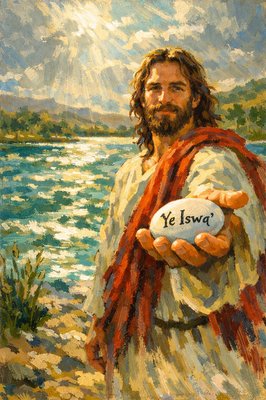
“Oh that my words were now written! oh that they were printed in a book! That they were graven with an iron pen and lead in the rock for ever! For I know that my redeemer liveth, and that he shall stand at the latter day upon the earth:” (Job 19:23-25, KJV) please depict this as Jesus holding out a polished white stone with "Ye Iswąˀ" written on it in Jesus palm as He stands by the Jordan river.
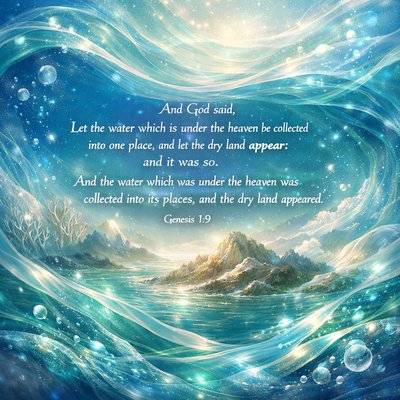
And God said, Let the water which is under the heaven be collected into one place, and let the dry land appear, and it was so. And the water which was under the heaven was collected into its places, and the dry land appeared.
Genesis 1:9 (Brenton)
serene landscape with mountains and water