“He Was Taken From Prison And From Judgment: And Who Shall Declare His Generation? For He Was Cut Off Out Of The Land Of The Art

a painting of a man in armor holding a sword
serene landscape with mountains and water
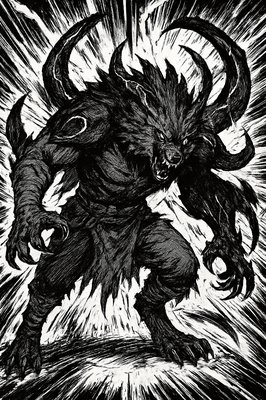
a drawing of a man in a horned costume
a painting of a demon holding a sword
a painting of a man in armor holding an axe
a painting of a man holding a lantern
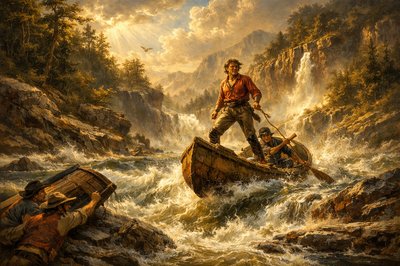
Out where the river runs wild and free
and only the brave dare row;
where the rapids are deep, and the challenge is fresh
and it takes them where it means to go.
With breakneck speed, grinning into the wind,
standing straight on the bow of their craft,
just a glimpse now and then of those captains you’ll catch
flying by, near capsizing your raft.

They’ve no time for advice to those standing on shore
or to aid the ones just wading out,
for their task is to pilot this current, they think,
and it’s all they can do to stay out of the drink,
and their lives could be gone in the space of a wink
should they lose but a moment to doubt.
Standing tall, they never must doubt!
a drawing of a man with an axe
a green and brown monster with horns on it's head
a drawing of a troll holding a baseball bat and a skull
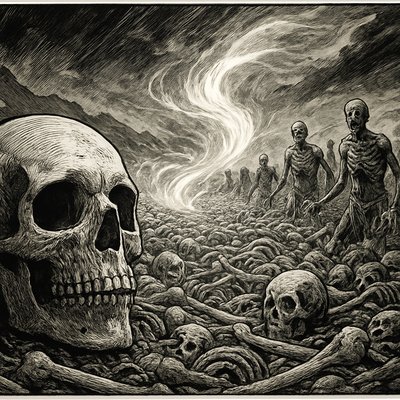
An incredibly detailed and profound scene depicting the Vision of the Dry Bones from Ezekiel 37. The immediate foreground features a stark, highly detailed close-up of a single ancient human skull, its empty eye sockets gazing out, perfectly rendered with realistic bone texture. Beyond this skull, stretching into the mid-ground, a vast, desolate valley is entirely carpeted with an immense, sprawling expanse of countless other ancient, stark white human bones and skulls. A powerful, divine wind (ruach), emanating an ethereal, sacred glow, swirls violently through this boneyard. This divine energy causes the bones to dramatically rattle, shift, and miraculously knit together, forming complete skeletons. Further in the background, some of these skeletons have already begun to rapidly form tendons, flesh, and skin, starting to rise as part of a nascent, colossal army. The sky above is dramatic and ominous, with streaks of divine light breaking through thick clouds. The overall mood is one of overwhelming desolation, followed by the initial, awe-inspiring moments of miraculous transformation and the promise of life."
a drawing of a furry creature with blue eyes
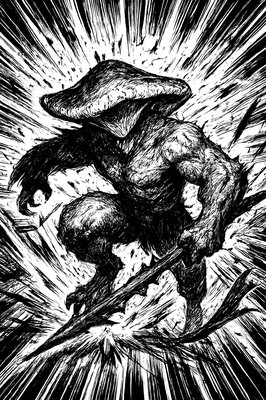
a painting of a creature with a mushroom on its head
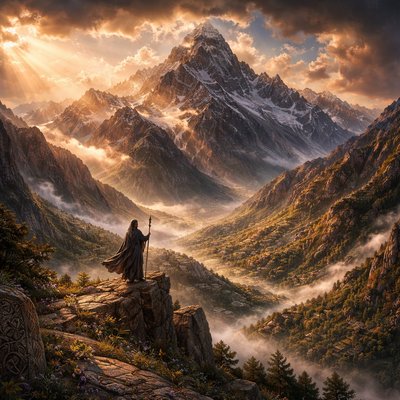
Epic majestic vista of the Shaho mountain range in western Iran's central Zagros Mountains, embodying the ancient name 'Mountain of the King' and 'Lord of the Realm,' towering rugged limestone peaks soaring over 3400 meters with snow-capped summits at Havi Khani peak reigning supreme like a royal throne, dramatic steep ridges and deep shadowed valleys stretching as vast domains under the ruler's gaze, lush green terraced slopes with ancient oak forests, wildflowers, and mist-shrouded gorges symbolizing fertile kingdoms below, golden hour sunlight at dawn breaking through clouds with divine volumetric god rays illuminating the peaks in regal amber and crimson hues, ethereal crown-like clouds encircling the highest summit, subtle ancient Persian/Kurdish royal motifs in the rock formations and distant stone villages resembling fortified citadels clinging to the foothills, a solitary majestic figure in flowing robes standing atop a prominent ridge like the eternal Lord of the Realm surveying his dominion, faint rainbow or auroral glow evoking timeless sovereignty, ultra-detailed, photorealistic cinematic masterpiece blending National Geographic realism with epic biblical/classical fantasy art in the style of Caspar David Friedrich, John Martin, and Rembrandt's dramatic lighting, high dynamic range, rich earthy regal tones of gold, deep green, and royal purple shadows, commanding and noble atmosphere of absolute authority over nature's realm
a woman with glasses and a star in the background
a drawing of a woman's head with lines on it
still life arrangement of fruits and flowers
portrait of a person with expressive eyes
 He (God) setteth an end to darkness, and searcheth out all perfection: the stones of darkness, and the shadow of death. From Job 28:3
a painting of a man with a sword
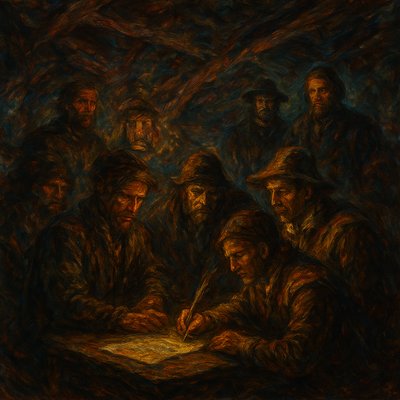
A historically accurate and atmospheric depiction of the signing of the Mayflower Compact aboard the ship in November 1620. The scene is set in the dimly lit, cramped cabin of the Mayflower, with the ship's timbers and rigging subtly visible, conveying the challenging conditions of the voyage. A simple table or chest serves as the signing surface. The primary focus is on a small group of the last individuals signing the document: specifically, the indentured servants (or 'strangers' not directly part of the Separatist congregation) approaching or at the table. Their expressions show a mix of weary determination, understanding of the necessity, and perhaps a hint of quiet apprehension or resignation to this new social contract, given their status. They are dressed in the plain, practical clothing typical of 17th-century commoners and laborers. Figures of prominent Pilgrims or 'Saints' (like William Bradford or John Carver) are visible in the background, observing the proceedings with a sense of gravity and leadership, but they are not the central focus. The lighting is low and warm, perhaps from a lantern, creating a chiaroscuro effect that highlights the faces of the signers. The atmosphere conveys the momentousness of the act under difficult circumstances, the diverse composition of the group, and the early seeds of self-governance in a new world. The artistic style is a realistic, historically detailed oil painting, capturing the solemnity and human element of this pivotal historical moment."
a painting of a woman with a sword
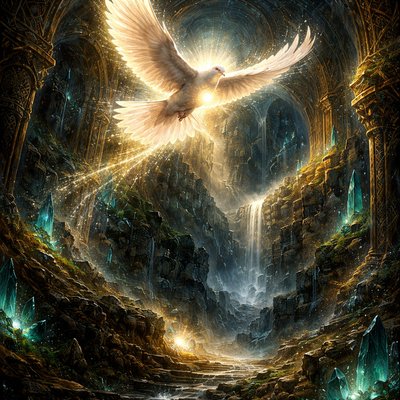
 He (God) setteth an end to darkness, and searcheth out all perfection: the stones of darkness, and the shadow of death. From Job 28:3 using a Spiritual figure as a dove to represent the one searching.
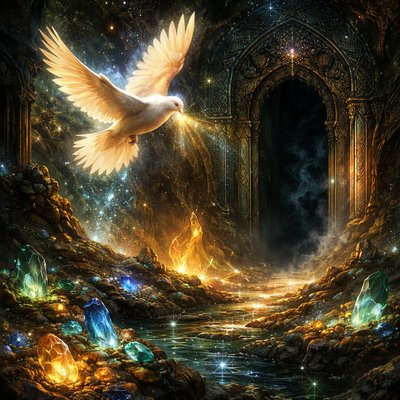
 He (God) setteth an end to darkness, and searcheth out all perfection: the stones of darkness, and the shadow of death. From Job 28:3 using a Spiritual figure as a dove to represent the one searching. There are many glowing stones in the darkness and a door representing the shadows of death.
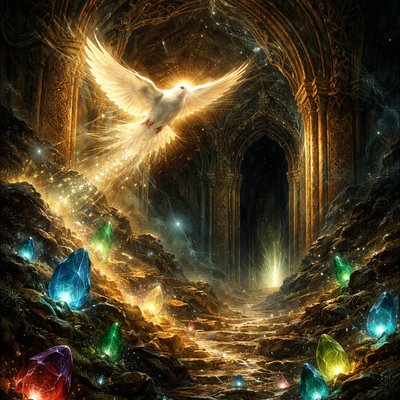
 He (God) setteth an end to darkness, and searcheth out all perfection: the stones of darkness, and the shadow of death. From Job 28:3 using a Spiritual figure as a dove to represent the one searching. There are many glowing stones in the darkness and a door representing the shadows of death.
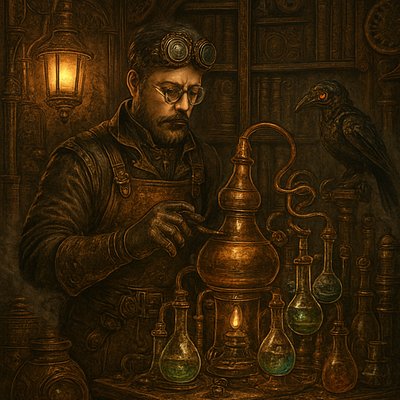
A steampunk alchemist stands in a cluttered workshop illuminated by the warm glow of gas lamps. He wears a leather apron adorned with brass buckles and a pair of intricate goggles perched on his forehead. His gloved hands tinker with a bubbling alembic connected by coiled copper tubes to a maze of glass vials filled with glowing, iridescent liquids. The background is a mix of Victorian elegance and industrial grit--ornate wooden shelves lined with dusty tomes and jars of exotic ingredients, alongside rusted gears and steam-powered contraptions whirring softly. A faint mist of steam rises from a brass furnace, and a mechanical raven with glowing red eyes perches on a nearby stand, observing the scene with curiosity.
wide landscape with natural scenery
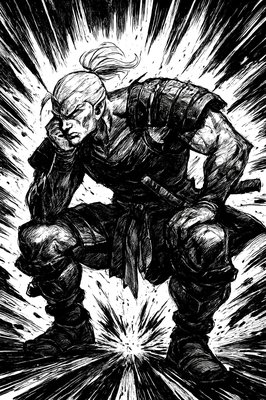
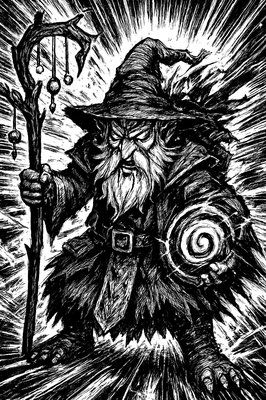
a cartoon character with a hat and a wand
a painting of a woman in a red cape
a drawing of a man with white hair
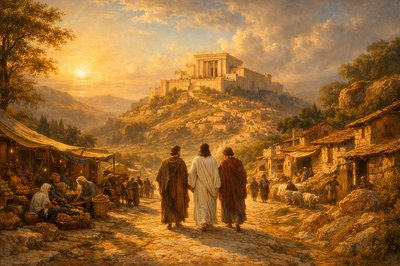
First century Palestine.  Jesus walking away from the camera with 2 of His disciples.  The Temple sits high on a hill in the distance with the road going up to it.  Merchants and houses line the road.  People are coming and going both ways.
a drawing of a man with wings flying through the air
a painting of a woman in a medieval costume holding a sword
a drawing of a man in armor holding a sword