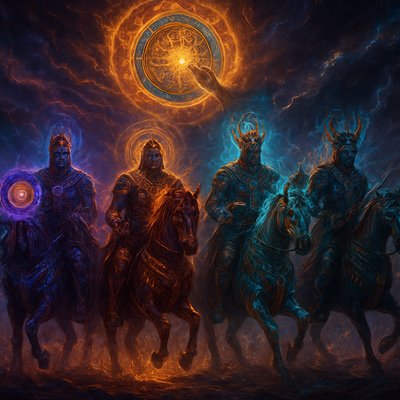
“Create An Epic, Dramatic Depiction Of The Four Horsemen Of The Apocalypse From Revelation 6:1–8. Show Four Powerful Riders Art

“Create an epic, dramatic depiction of the Four Horsemen of the Apocalypse from Revelation 6:1–8. Show four powerful riders emerging with force as the Lamb opens the seals in the heavens. Highlight the sacred Seals being opened—radiant, glowing, and releasing divine power. Set the scene in a storm-torn sky filled with swirling dark clouds, flashes of supernatural light, and a trembling landscape beneath their arrival. Use a dark yet vivid apocalyptic color palette with intense contrasts and dramatic, celestial lighting to emphasize the sense of unstoppable divine judgment. Style should blend high-detail fantasy realism with majestic biblical grandeur.”
Photorealism Art Style, a chaotic and dynamic downhill ski race featuring four WWF-style wrestlers: two muscular women and two powerful men. All four are fiercely competing, wearing over-the-top, classic 90s-era WWF wrestling attire (like bright spandex, signature logos, and knee pads) over their ski boots, on skis. They are actively engaged in wrestling-like maneuvers while skiing—one wrestler might be attempting a headlock, another is pushing an opponent, and one is dramatically dodging. They are speeding down a pristine, snowy mountain slope under bright, clear daylight with pine trees visible in the background. Focus on intense facial expressions, exaggerated action, realistic snow spray, and detailed textures of both wrestling gear and ski equipment.
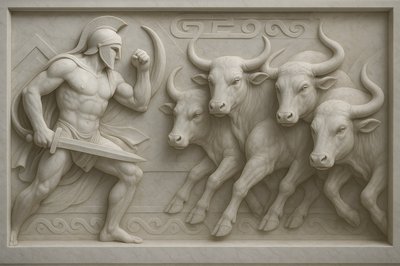
Triumphal procession with spoils of war
A majestic, ethereal scene depicting golden bowls brimming with luminous, swirling incense. The incense, representing the collective prayers of all saints, rises and coalesces into shimmering, golden tendrils that ascend towards an unseen heavenly throne.There elders worshipping: EACH ELDER HAS ONE BOWL AND ONE HARP. These are golden bowls of incense. Each bowl is held by a robed elder, The atmosphere is reverent and awe-inspiring, filled with soft, warm light emanating from the golden smoke. Emphasize the precious, divine, and unified nature of the prayers. Inspired by Revelation 5:8
A majestic, ethereal scene depicting golden bowls brimming with luminous, swirling incense. The incense, representing the collective prayers of all saints, rises and coalesces into shimmering, golden tendrils that ascend towards an unseen heavenly throne.There are 24 golden bowls of incense. Each bowl is held by a robed elder, holding harps, in worship. The atmosphere is reverent and awe-inspiring, filled with soft, warm light emanating from the golden smoke. Emphasize the precious, divine, and unified nature of the prayers. Inspired by Revelation 5:8
A profoundly symbolic and awe-inspiring depiction of a colossal, luminous pearl gate in the New Jerusalem, captured in the dynamic act of rolling away, similar to the stone being moved from Christ's tomb. The gate, a single, immense, perfectly spherical pearl, is shown mid-motion, having just been set aside from the entrance, revealing the glorious city beyond.

The pearl itself glows with an intense, soft iridescence, reflecting the divine light. Its surface shows subtle, exquisite details of mother-of-pearl. The frame or opening from which it has rolled away is visible, perhaps showing immense, smooth tracks or channels in the transparent gold structure of the city wall, reinforcing the idea of its monumental movement.

Through the now open gate, the radiant glory of the New Jerusalem streams forth. Pure gold streets, like transparent glass, extend into the city, illuminated by an intense, divine light that emanates from within. Heavenly architecture, impossibly beautiful and intricate, is glimpsed in the distance, beckoning. The atmosphere is one of profound sanctity, triumphant revelation, and welcoming access to the divine, with the act of the pearl rolling away symbolizing a breakthrough or an open invitation. The lighting is ethereal and grand, emphasizing the pearl's luster and the city's overwhelming glory."
A profound and epic scene depicting the Vision of the Dry Bones from Ezekiel 37. In a desolate, vast valley, countless dry human bones are scattered, stark white and ancient. A powerful, divine wind (ruach) swirls through the valley, imbued with a sacred, ethereal glow, causing the bones to rattle and miraculously knit together. Tendons, flesh, and skin rapidly form over the skeletal structures, transforming them into fully-formed human figures. As the divine breath enters, the figures rise, not as individuals, but as a colossal, awe-inspiring army standing upright, gazing forward with renewed life and purpose. The sky above is dramatic, perhaps with stormy clouds breaking to reveal a divine light. The overall mood is one of miraculous resurrection, immense power, and hopeful restoration."
A majestic, ethereal scene depicting golden bowls brimming with luminous, swirling incense. The incense, representing the collective prayers of all saints, rises and coalesces into shimmering, golden tendrils that ascend towards an unseen heavenly throne.There elders worshipping: EACH ELDER HAS ONE BOWL AND EACH ELDER HAS ONE HARP. These are golden bowls of incense. Each bowl is held by a robed elder, KNEELING IN PRAYER TO GOD. The atmosphere is reverent and awe-inspiring, filled with soft, warm light emanating from the golden smoke. Emphasize the precious, divine, and unified nature of the prayers. Inspired by Revelation 5:8
That's an excellent idea for a powerful, dramatic image. Jannes and Jambres opposing Moses is a scene that calls for intense figures and a sense of divine confrontation.

Here is a prompt for ArtStyles.com focusing on Jannes and Jambres, the Egyptian magicians who tried to replicate Moses's miracles:

Jannes and Jambres Prompt

"A dramatic, indoor scene from the Book of Exodus depicting the confrontation between Moses and the Egyptian magicians, Jannes and Jambres, in the court of Pharaoh. In the foreground, Jannes and Jambres stand proudly, dressed in ornate, gold-trimmed Egyptian robes, their faces stern and defiant. They are surrounded by their magical staffs and are attempting to replicate a miracle, perhaps surrounded by writhing, magically created snakes. Moses stands opposite them, his figure conveying authority and resolve, illuminated by a stark, celestial light. The background is a grand, dimly lit hall in the Egyptian palace, filled with massive columns and Pharaoh watching from his throne. The mood is one of intense rivalry, ancient power, and dramatic tension." "cinematic lighting, ultra-realistic, epic scale, magical energy effects"
Romanticism Art Style, a profoundly emotional and majestic painting inspired by Psalm 8:3-6. The scene captures a vast, sweeping, and dramatic night sky, filled with an awe-inspiring celestial display of a luminous, prominent moon and countless brilliant stars, depicted with the grandeur and depth characteristic of Romantic landscape painting. In the foreground, set against the overwhelming scale of the cosmos, stands a solitary long red-haired woman, her back partially to the viewer or her face upturned in profound contemplation. She is small in the frame, emphasizing the immense scale, dressed in simple, flowing attire, positioned on a rugged, subtle earthly vantage point like a mountain overlook. Her posture and presence evoke a deep sense of humility, wonder, and spiritual awe at God's creation. The painting is dominated by dramatic chiaroscuro, with the intense glow of the moon and stars piercing through deep, atmospheric shadows. Focus on the sublime scale of the cosmos, the emotional resonance of the human figure contemplating the divine works, and the deep, spiritual awe that pervades the scene, reflecting God's majesty and mindfulness of humanity.
A profoundly symbolic and awe-inspiring depiction of a colossal, luminous pearl gate in the New Jerusalem, captured in the dynamic act of rolling away, similar to the stone being moved from Christ's tomb. The gate, a single, immense, perfectly spherical pearl, is shown mid-motion, having just been set aside from the entrance, revealing the glorious city beyond.

The pearl itself glows with an intense, soft iridescence, reflecting the divine light. Its surface shows subtle, exquisite details of mother-of-pearl. The frame or opening from which it has rolled away is visible, perhaps showing immense, smooth tracks or channels in the transparent gold structure of the city wall, reinforcing the idea of its monumental movement.

Through the now open gate, the radiant glory of the New Jerusalem streams forth. Pure gold streets, like transparent glass, extend into the city, illuminated by an intense, divine light that emanates from within. Heavenly architecture, impossibly beautiful and intricate, is glimpsed in the distance, beckoning. The atmosphere is one of profound sanctity, triumphant revelation, and welcoming access to the divine, with the act of the pearl rolling away symbolizing a breakthrough or an open invitation. The lighting is ethereal and grand, emphasizing the pearl's luster and the city's overwhelming glory."
A majestic and awe-inspiring depiction of one of the twelve gates of the New Jerusalem, as described in Revelation 21:21, with an intense emphasis on the pearl. The gate itself is monumental, fashioned entirely from a single, colossal, luminous pearl, radiating an otherworldly, soft, iridescent glow. The pearl's surface exhibits incredible detail, showing subtle layers, mother-of-pearl sheen, and a perfect, smooth, spherical quality even in its flat gate form.

The gate stands open, revealing a glimpse of the glorious city within – a city made of pure gold, as transparent as glass, with streets of pure gold like transparent glass. Brilliant, divine light streams from within the city, casting ethereal glows and soft shadows. The architecture seen beyond the gate is grand and heavenly, hinting at impossible beauty.

The surroundings of the gate are similarly divine but serve to highlight the pearl: perhaps the foundations are adorned with precious stones as described in Revelation 21:19-20, or the approach to the gate is paved with the transparent gold. The sky above is a glorious, clear, and vibrant heavenly blue, possibly hinting at the glory of God. The lighting is transcendent and soft, emphasizing the pearl's luminous quality and its immaculate perfection. The overall mood is one of profound sanctity, overwhelming beauty, divine welcome, and immense glory.
An incredibly detailed and profound scene depicting the Vision of the Dry Bones from Ezekiel 37. The immediate foreground features a stark, highly detailed close-up of a single ancient human skull, its empty eye sockets gazing out, perfectly rendered with realistic bone texture. Beyond this skull, stretching into the mid-ground, a vast, desolate valley is entirely carpeted with an immense, sprawling expanse of countless other ancient, stark white human bones and skulls. A powerful, divine wind (ruach), emanating an ethereal, sacred glow, swirls violently through this boneyard. This divine energy causes the bones to dramatically rattle, shift, and miraculously knit together, forming complete skeletons. Further in the background, some of these skeletons have already begun to rapidly form tendons, flesh, and skin, starting to rise as part of a nascent, colossal army. The sky above is dramatic and ominous, with streaks of divine light breaking through thick clouds. The overall mood is one of overwhelming desolation, followed by the initial, awe-inspiring moments of miraculous transformation and the promise of life."
Photorealism Art Style, a profoundly dramatic and intensely luminous image depicting a vision of Heaven seen from the ground. The scene is dominated by a blazing, overwhelming celestial light that is violently breaking through the darkness of the night sky. This light is not the sun, but the pure glory of God, manifesting as swirling gold, brilliant white, and ethereal blue luminescence that seems to pull the viewer upward. A long red-haired woman, wearing simple, flowing heavenly attire, stands below, gazing upward with an expression of ecstatic awe and reverence. She is bathed in the brilliant, otherworldly light streaming down, suggesting the moment of divine revelation where the heavens are torn open. The focus is on the raw, blinding intensity of the divine light, the realistic texture of the woman's awe-struck face, and the vibrant, chaotic energy of the celestial vision, creating a powerful image of a direct, momentary glimpse into the boundless presence of Heaven.
A profoundly symbolic and awe-inspiring depiction of a colossal, luminous pearl which rolls to open a gate in the New Jerusalem, captured in the dynamic act of rolling away, similar to the stone being moved from Christ's tomb. The gate, a single, immense, perfectly spherical pearl, is shown mid-motion, having just been set aside from the entrance, revealing the glorious city beyond. The pearl and the entrance opening are the same size.

The pearl itself glows with an intense, soft iridescence, reflecting the divine light. Its surface shows subtle, exquisite details of mother-of-pearl. The frame or opening from which it has rolled away is visible, perhaps showing immense, smooth tracks or channels in the transparent gold structure of the city wall, reinforcing the idea of its monumental movement.

Through the now open gate, the radiant glory of the New Jerusalem streams forth. Pure gold streets, like transparent glass, extend into the city, illuminated by an intense, divine light that emanates from within. Heavenly architecture, impossibly beautiful and intricate, is glimpsed in the distance, beckoning. The atmosphere is one of profound sanctity, triumphant revelation, and welcoming access to the divine, with the act of the pearl rolling away symbolizing a breakthrough or an open invitation. The lighting is ethereal and grand, emphasizing the pearl's luster and the city's overwhelming glory."
A breathtaking and intensely dramatic cinematic landscape photograph based on the provided image of a mountain valley. The scene captures a majestic mountainside vibrant with dramatized autumn foliage, showcasing an explosion of rich, saturated reds, fiery oranges, and brilliant golds across the slopes. Interspersed among the deciduous trees are towering dark green evergreens, providing a striking contrast against the warm fall colors.

Wisps of ethereal mist or low-hanging clouds cling to the upper reaches and valleys of the mountain, adding depth and a sense of mystique. The sky above, partially visible, shows patches of dramatic, cloud-dappled blue peeking through, hinting at a powerful natural setting. The foreground features a mix of vibrant green and gold trees, framing the grand scale of the mountain.

The image uses vibrant color grading and dramatic contrast to enhance the luminosity and intensity of the fall colors, making them truly pop. The lighting is rich and moody, highlighting textures on the rocky cliffs and the varied foliage. The overall mood is one of awe-inspiring natural beauty, epic scale, and profound autumnal splendor, rendered with the high visual impact of a cinematic scene."
A historically accurate and atmospheric depiction of the signing of the Mayflower Compact aboard the ship in November 1620. The scene is set in the dimly lit, cramped cabin of the Mayflower, with the ship's timbers and rigging subtly visible, conveying the challenging conditions of the voyage. A simple table or chest serves as the signing surface. The primary focus is on a small group of the last individuals signing the document: specifically, the indentured servants (or 'strangers' not directly part of the Separatist congregation) approaching or at the table. Their expressions show a mix of weary determination, understanding of the necessity, and perhaps a hint of quiet apprehension or resignation to this new social contract, given their status. They are dressed in the plain, practical clothing typical of 17th-century commoners and laborers. Figures of prominent Pilgrims or 'Saints' (like William Bradford or John Carver) are visible in the background, observing the proceedings with a sense of gravity and leadership, but they are not the central focus. The lighting is low and warm, perhaps from a lantern, creating a chiaroscuro effect that highlights the faces of the signers. The atmosphere conveys the momentousness of the act under difficult circumstances, the diverse composition of the group, and the early seeds of self-governance in a new world. The artistic style is a realistic, historically detailed oil painting, capturing the solemnity and human element of this pivotal historical moment."
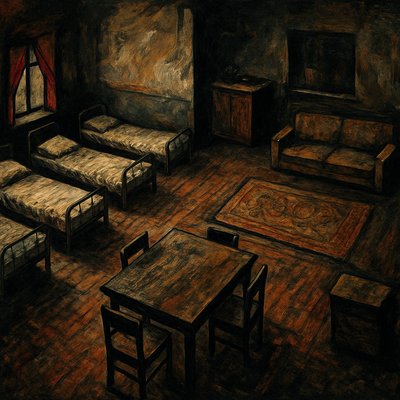
a painting of a man wearing a colorful hat
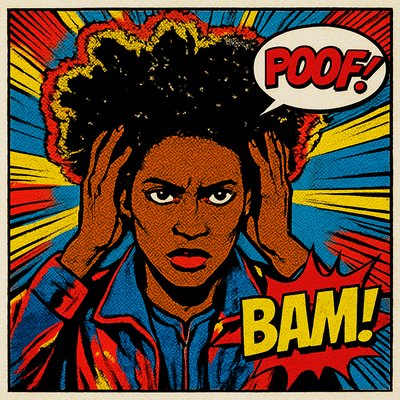
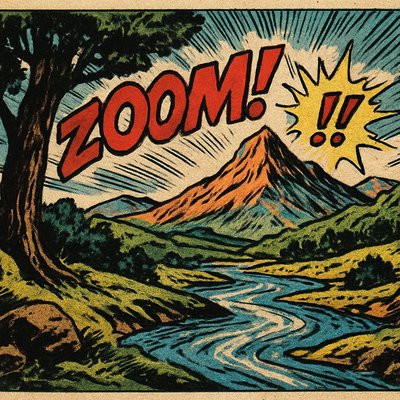
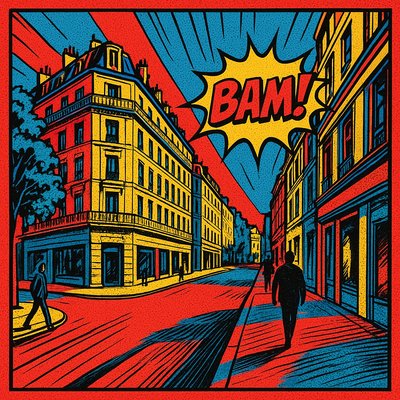
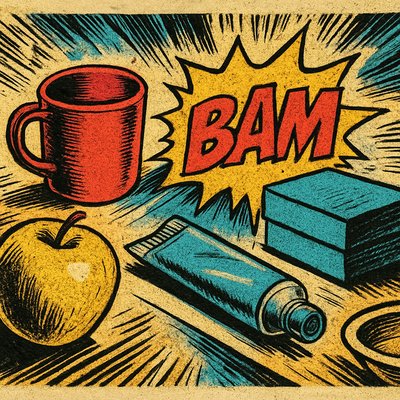
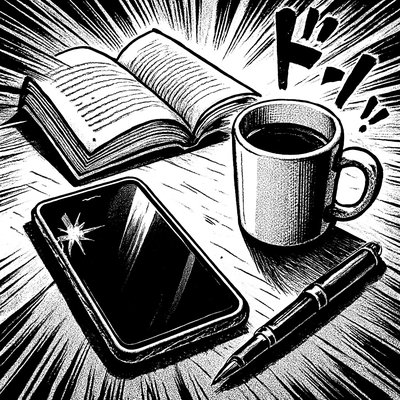
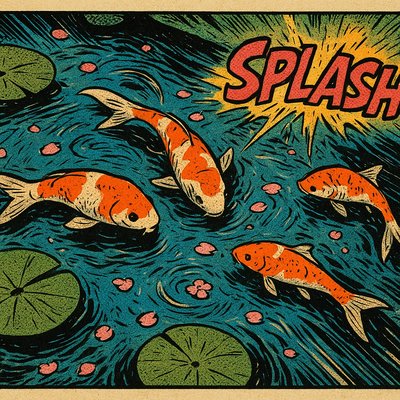
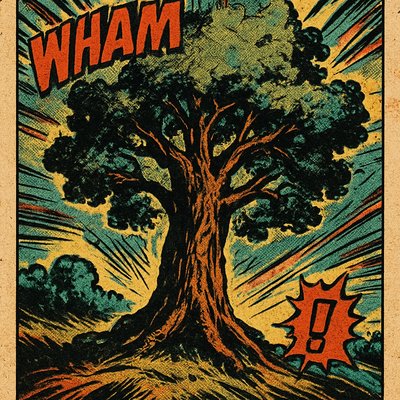
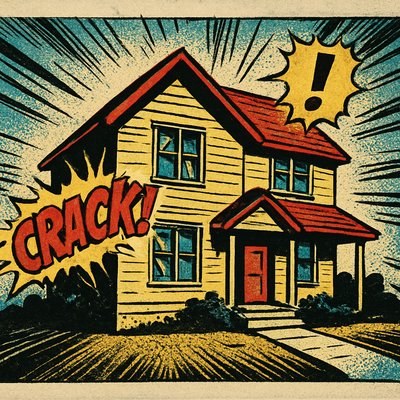
Comic Book Pop Art Style Style Transfer Example
wide landscape with natural scenery
portrait of two people together
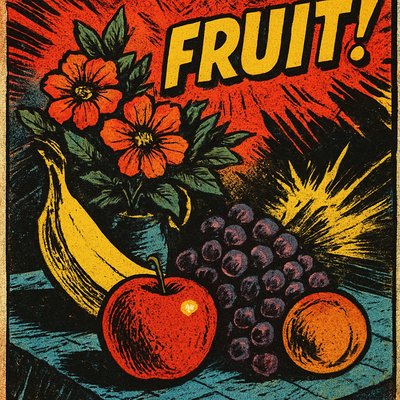
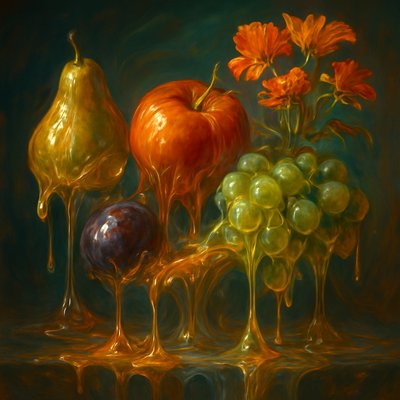
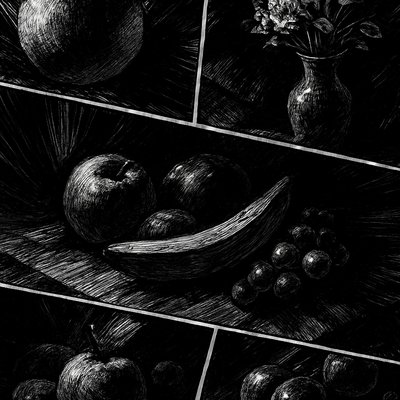
still life with everyday objects
bicyle resting against a wall
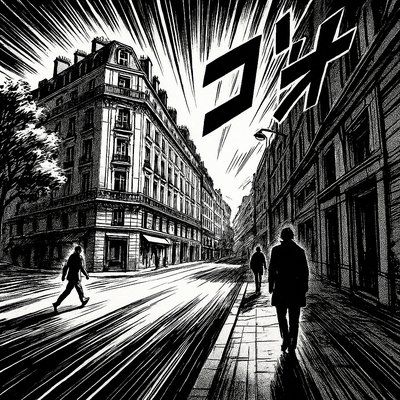
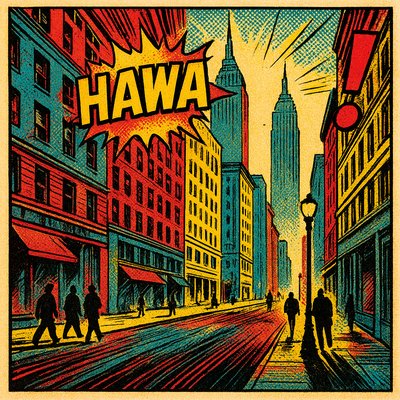
urban street with city activity
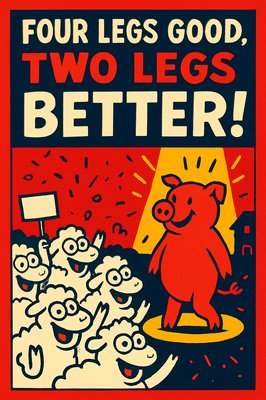
A simple cartoon-style propaganda poster drawn with bold, thick marker lines. Use a limited color palette of bright red, dark navy blue, white, and small black outlines. At the top, include a cool, bold propaganda-style font that looks hand-drawn with marker, saying: “FOUR LEGS GOOD, TWO LEGS BETTER!” Make the word “BETTER” much larger and more dramatic. In the center, show a group of white sheep with simple cartoon faces, wide excited eyes, and big happy smiles, cheering together. The sheep should look identical and drawn with simple marker outlines. They are looking at a pig who is walking upright on two legs in a bright spotlight. The pig should be glowing or surrounded by simple marker-drawn light rays to show fake admiration. Add confetti, simple celebration lines, and maybe one sheep holding a small sign. The background should use strong blocks of red and navy blue, like a simple propaganda poster. Include very simple outlines of a barn or farmhouse in the background. Overall style: cute cartoon, clean, bold marker strokes, easy shapes, limited colors, and a brainwashed, energetic vibe.
 A majestic oil painting of an American landscape in the style of the Hudson River School, blending the epic vistas and vibrant atmospheric effects of Frederic Edwin Church with the heroic scale and dramatic light-shadow contrasts of Albert Bierstadt, infused with Luminist qualities of ethereal glow, soft atmospheric transitions, and concealed brushstrokes for a tranquil, meditative ambiance. Depict a vast river valley at dawn, with towering mountains in the distance, cascading waterfalls, lush forests, and a serene river reflecting golden sunlight; include subtle elements of human exploration such as a distant trail or cabin, rendered in intricate detail with rich colors, sublime grandeur, and divine illumination
A dramatic, richly detailed scene in the ancient Babylonian royal court. In the foreground, three wise and esteemed Babylonian court magicians (Chaldeans/astrologers) are gathered around a central figure, possibly the king, or intently studying an inscribed clay tablet. They are dressed in opulent, finely woven robes of deep blues, reds, and gold, with elaborate turbans or headwear. Their long, meticulously styled beards and hair indicate their status and wisdom. One magician holds a stylus, another points to intricate cuneiform script on a clay tablet, and the third gazes thoughtfully, perhaps at a celestial chart or into a symbolic brazier. The background reveals the grand, awe-inspiring architecture of the Babylonian palace, with glazed brick walls adorned with depictions of mythical creatures (like the Ishtar Gate lions) and massive, ornate columns. The atmosphere is one of profound intellectual pursuit, ancient wisdom, and mystical interpretation under the watchful eyes of the king. epic fantasy art, cinematic lighting, ultra-detailed, dramatic shadows, mystical glow"
 A majestic oil painting of an American landscape in the style of the Hudson River School, blending the epic vistas and vibrant atmospheric effects of Frederic Edwin Church with the heroic scale and dramatic light-shadow contrasts of Albert Bierstadt, infused with Luminist qualities of ethereal glow, soft atmospheric transitions, and concealed brushstrokes for a tranquil, meditative ambiance. Depict a vast river valley at dawn, with towering mountains in the distance, cascading waterfalls, lush forests, and a serene river reflecting golden sunlight; include subtle elements of human exploration such as a distant trail or cabin, rendered in intricate detail with rich colors, sublime grandeur, and divine illumination
"A historically accurate depiction of a Ghost Dance, focusing on the late 19th-century context, specifically around 1890-1891. The scene shows Lakota (Sioux) or Northern Paiute people (specify one or include elements of both, but avoid anachronisms) participating in the ceremony.

Setting: A vast, open prairie or high desert landscape, under an expansive sky. The time of day could be dusk or night, with a prominent moon or stars, or a bright, clear day. Avoid overtly spiritual or ethereal elements like floating spirits unless explicitly requested for a later, more symbolic iteration. The focus should be on the earthly ceremony.

Participants: A circle of men, women, and children, hand-in-hand, moving in a slow, rhythmic shuffle or circular motion. Their faces show a mixture of devotion, hope, and determination. Some may have expressions of trance or deep concentration.

Attire:

    Ghost Dance Shirts/Dresses: Emphasize the unique Ghost Dance shirts and dresses, which were typically made of muslin or canvas. These garments should feature painted designs such as stars, crescents, birds (especially eagles or crows), buffalo, human figures, or crosses. The designs should appear hand-painted, not mass-produced.

    Hair and Adornments: Participants should have braided hair or wear it long. Some may wear feathers (e.g., eagle or hawk feathers) in their hair. Minimal traditional adornments, as the focus was often on the Ghost Dance shirt itself. Avoid overly elaborate or Hollywood-esque depictions of war bonnets unless relevant to a specific individual and context.

    Footwear: Moccasins or bare feet.

Action/Atmosphere:

    The dancers are moving in a counter-clockwise circle, with a central figure or a small group often leading.

    The overall mood is one of earnest prayer and communal spiritual effort. The dance should convey a sense of hope for renewal and the return of the old ways, rather than aggression or despair.

    There might be a central pole or small fire as a focal point, around which the dance takes place.

    Avoid any signs of direct conflict or violence; the Ghost Dance itself was a non-violent spiritual movement.

Specific Considerations for Accuracy:

    Wovoka's Influence: The teachings of Wovoka (the Northern Paiute prophet) emphasized peace, hard work, and the return of the buffalo and deceased ancestors. The scene should subtly reflect this hopeful, redemptive spirit.

    Regional Variations: If focusing on Lakota, consider their specific interpretations, which sometimes included more imagery related to their warrior traditions on the shirts, but still within the peaceful framework of the dance.

    Respectful Portrayal: Ensure the depiction is respectful and avoids any stereotypical or caricatured representations of Indigenous people. Focus on their human dignity and spiritual sincerity.
still life with everyday objects
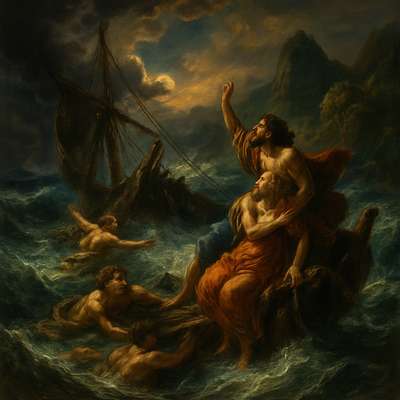
Shipwreck in stormy seas with survivors
A profoundly symbolic and awe-inspiring depiction of a colossal, luminous gate of the New Jerusalem, where the entire gate IS a single, immense, perfectly spherical pearl. This monumental pearl gate is captured in the dynamic act of rolling away, similar to a massive stone being moved from an entrance. The spherical pearl is shown mid-motion, having just begun to slide or pivot within its vast, golden, celestial frame, creating an opening into the glorious city beyond.

The pearl itself glows with an intense, soft iridescence, reflecting the divine light. Its surface shows exquisite details of mother-of-pearl, and its sheer scale emphasizes that it is a single, perfect gem. The massive, transparent golden wall of the city forms the structure around this pearl gate, with visible tracks or an immense opening indicating where the pearl has moved from.

Through the now open segment of the gate, the radiant glory of the New Jerusalem streams forth. Pure gold streets, like transparent glass, extend into the city, illuminated by an intense, divine light that emanates from within. Heavenly architecture, impossibly beautiful and intricate, is glimpsed in the distance, beckoning. The atmosphere is one of profound sanctity, triumphant revelation, and welcoming access to the divine, with the act of the pearl gate rolling away symbolizing a breakthrough or an open invitation. The lighting is ethereal and grand, emphasizing the pearl's luster and the city's overwhelming glory."
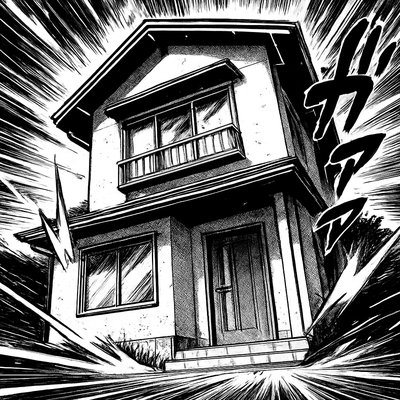
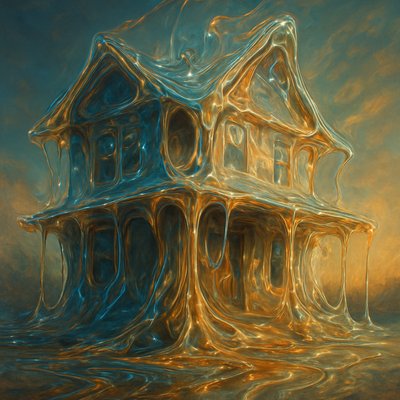
house with front view
urban street with city activity
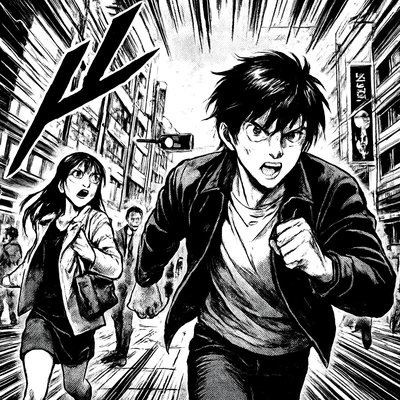
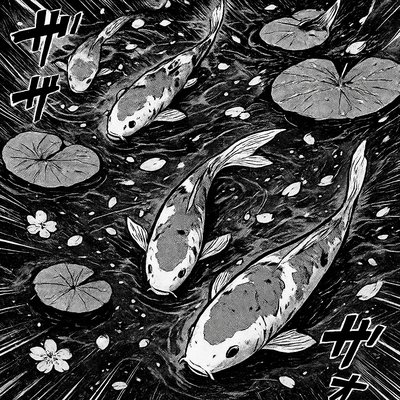
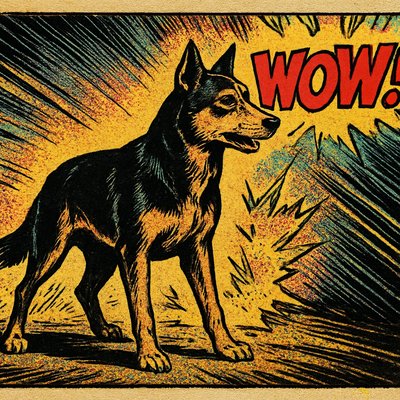
Manga Comic Art Style Transfer Example
Photorealism Art Style, a distinguished human pastor, with a calm and wise expression, stands prominently in the foreground. He is impeccably dressed in a modern, dark suit, with a noticeable, large, and intricate cross necklace hanging clearly visible. Behind him, majestic and sprawling, is a grand, beautiful cathedral, its architecture a blend of classic and natural elements, perhaps with vines or trees subtly integrated into its design. The cathedral is situated within a vibrant, lush forest city, where towering trees and greenery are woven throughout the urban landscape. In the far distance, the sun is dramatically rising, casting a warm, golden light that illuminates the scene from behind, creating a serene and powerful atmosphere. Focus on realistic textures of the suit, the cross, stone of the cathedral, and the diverse foliage, all under natural, early morning light.
A solitary and intensely symbolic image depicting a magnificent, large black raven as the embodiment of judgment from Proverbs 30:17. The raven is portrayed with immense detail and an almost mythical presence, its feathers dark and glossy, its eyes glowing with a profound, ancient wisdom or stern disapproval. It is perched on a jagged, weathered tree branch or a sharp, craggy rock formation within a desolate, mist-shrouded valley.

The background is stark and emphasizes desolation, featuring barren, rocky slopes and a stormy, oppressive sky with heavy, dark clouds. The lighting is dramatic and stark, perhaps a single shaft of pale, cold light illuminating the raven, casting long, deep shadows around it. The focus is entirely on the raven, its sharp beak, and its piercing gaze, conveying a sense of ultimate, inescapable consequence. The overall mood is one of profound, somber judgment and the quiet, heavy weight of natural law, expressed through the powerful symbolism of the bird."
An awe-inspiring and whimsical scene featuring Willy Wonka's Great Glass Wonkavator, soaring high above Louisiana and ascending into a fantastical sky. The Wonkavator itself is a magnificent, multi-directional glass elevator, transparent and sparkling, with Willy Wonka (in his iconic purple coat and top hat), and several  cats in stylish New Orleans clothing clearly visible and enjoying the ride inside. The interior of the Wonkavator shows intricate, whimsical control panels. The Wonkavator is depicted in mid-flight, having just burst through the factory roof or rising above the clouds. Below it, the fantastical landscape of the Bayou and various whimsical buildings from the city of New Orleans. Beyond is the ocean. The lighting is bright and magical, emphasizing the glass's transparency and the vibrant colors of the world below and beyond. The overall mood is one of boundless adventure, limitless possibilities, and pure, joyful fantasy."
A historically accurate, deeply reverent and spiritually evocative oil painting. Two traditional Southern Ute individuals, a man and a woman, stand side-by-side with profound solemnity and ancient peace on the high mesa overlooking the twin spires of Chimney Rock National Monument (Chimney Rock and Companion Rock). They are dressed in authentic, richly detailed traditional attire. The man holds a feathered staff, his gaze directed towards the horizon, symbolizing his role as a protector and observer of the earth. The woman gestures subtly towards the sky, her posture conveying an intimate connection to the celestial, perhaps in a gesture of spiritual offering or acknowledgment. The scene's context is the stalling of the moon's analemma, with the moon itself appearing large and prominent, hanging low in the sky, its unique position clearly marking this cyclical astronomical pause. The atmosphere is bathed in the ethereal, soft glow of early morning light, just as the sun begins to kiss the distant peaks, casting long, significant shadows that stretch across the mesa. Their faces are etched with wisdom and a quiet understanding of the cosmos. The vast, spiritual landscape of Chimney Rock is an integral part of the composition, symbolizing their deep, timeless connection to both earth and sky, and their role as guardians of this sacred knowledge. Fine art composition, conveying a powerful sense of timeless ritual, astronomical reverence, and cultural continuity
An awe-inspiring and whimsical scene featuring Willy Wonka's Great Glass Wonkavator, soaring high above Louisiana and ascending into a fantastical sky. The Wonkavator itself is a magnificent, multi-directional glass elevator, transparent and sparkling, with Willy Wonka (in his iconic purple coat and top hat), and several  cats in stylish New Orleans clothing clearly visible and enjoying the ride inside. The interior of the Wonkavator shows intricate, whimsical control panels. The Wonkavator is depicted in mid-flight, having just burst through the factory roof or rising above the clouds. Below it, the fantastical landscape of the Bayou and various whimsical buildings from the city of New Orleans. Beyond is the ocean. The lighting is bright and magical, emphasizing the glass's transparency and the vibrant colors of the world below and beyond. The overall mood is one of boundless adventure, limitless possibilities, and pure, joyful fantasy."
Oil Painting Art Style, a tender and protective scene featuring a small, close-knit flock of magnificent Blue Hyacinth Macaws gathering for roosting at dusk. On a sturdy branch of a tall palm tree within an open woodland, a mother Hyacinth Macaw is prominently depicted, gently extending a wing to cover a smaller, younger macaw nestled securely beneath her. The macaws, with their incredibly vibrant, deep blue plumage and striking yellow eye rings, are nestled closely together, their bodies positioned to evoke a powerful sense of being 'covered' and finding 'refuge' under a protective wing. The soft, fading twilight glow illuminates their feathers with a deep, iridescent sheen and casts gentle, lengthening shadows. The surrounding natural environment is rendered in muted, dusky tones of green and purple, creating a tranquil atmosphere of safety and secure communal rest. Focus on the exquisite detail of the macaws' feathers and tender facial expressions, particularly the mother and young, the profound warmth and security of their huddle, and the peaceful, protective mood inspired by their collective refuge.