"Abandoned Nursery" Decrepit Children's Room With One Rocking Chair Still Moving, Peeling Wallpaper Revealing Disturbing Art

portrait of two people together
house with front view
animal standing in natural pose
portrait of a person with expressive eyes
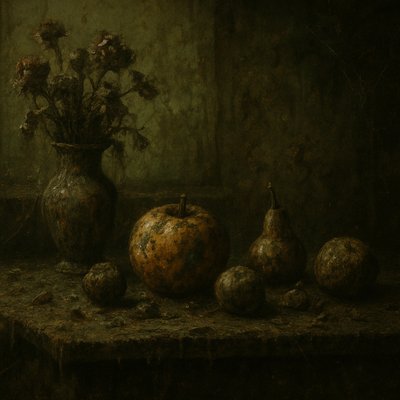
still life arrangement of fruits and flowers
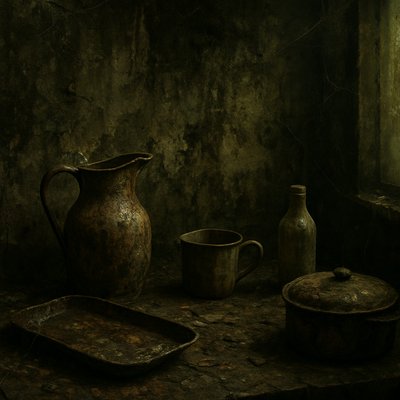
still life with everyday objects
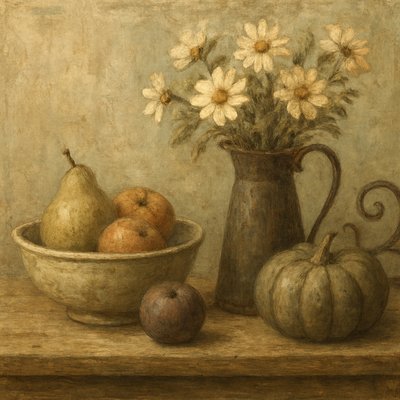
still life arrangement of fruits and flowers
Formal dining room
still life with everyday objects
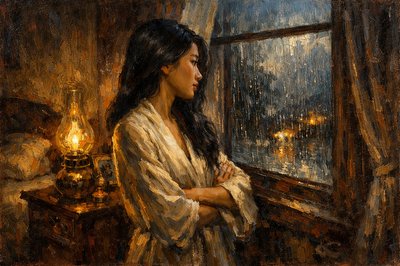
At her Mother's house in Penang, Wing Sun's mother, a beautiful chinese woman in her 30s, is standing in her bedroom looking out the window at night.  We see her from a quarter view inside the room.  She is pensive and an air of tension fills the room as she remembers growing up in this house.  Her hair is long and black, and she's wearing her housecoat.  A lantern gives low light inside the room.  It's raining outside.
Functional chair design emphasizing simplicity in the art style of Bauhaus --v 6.1
A koi pond seen from above, orange and white koi fish swimming among lily pads, clear water with subtle ripples, fallen cherry blossom petals floating on the surface, dappled sunlight
still life with everyday objects
still life arrangement of fruits and flowers
Wind-driven spiral dancer
still life with everyday objects
still life arrangement of fruits and flowers
still life with everyday objects
still life arrangement of fruits and flowers
still life with everyday objects
still life arrangement of fruits and flowers
a heartwarming scene under a decorated Christmas tree. Two fluffy kittens, one a ginger tabby and the other a calico, are joyfully playing in a chaotic pile of discarded Christmas wrapping paper, ribbons, and bows. The ginger kitten is tangled in a long piece of shiny red and green paper, batting at a curled ribbon. The calico kitten is pouncing from inside a torn open cardboard gift box, surrounded by crumpled tissue paper. Torn pieces of colorful wrapping paper (gold foil, snowman patterns, stripes) and empty gift tags are scattered everywhere on a plush rug. The Christmas tree above them is glowing with warm fairy lights and decorated with traditional ornaments. The background is a cozy living room with a fireplace. Sharp focus on the kittens' playful expressions and the texture of the crumpled paper.
"A historically accurate depiction of a Ghost Dance, focusing on the late 19th-century context, specifically around 1890-1891. The scene shows Lakota (Sioux) or Northern Paiute people (specify one or include elements of both, but avoid anachronisms) participating in the ceremony.

Setting: A vast, open prairie or high desert landscape, under an expansive sky. The time of day could be dusk or night, with a prominent moon or stars, or a bright, clear day. Avoid overtly spiritual or ethereal elements like floating spirits unless explicitly requested for a later, more symbolic iteration. The focus should be on the earthly ceremony.

Participants: A circle of men, women, and children, hand-in-hand, moving in a slow, rhythmic shuffle or circular motion. Their faces show a mixture of devotion, hope, and determination. Some may have expressions of trance or deep concentration.

Attire:

    Ghost Dance Shirts/Dresses: Emphasize the unique Ghost Dance shirts and dresses, which were typically made of muslin or canvas. These garments should feature painted designs such as stars, crescents, birds (especially eagles or crows), buffalo, human figures, or crosses. The designs should appear hand-painted, not mass-produced.

    Hair and Adornments: Participants should have braided hair or wear it long. Some may wear feathers (e.g., eagle or hawk feathers) in their hair. Minimal traditional adornments, as the focus was often on the Ghost Dance shirt itself. Avoid overly elaborate or Hollywood-esque depictions of war bonnets unless relevant to a specific individual and context.

    Footwear: Moccasins or bare feet.

Action/Atmosphere:

    The dancers are moving in a counter-clockwise circle, with a central figure or a small group often leading.

    The overall mood is one of earnest prayer and communal spiritual effort. The dance should convey a sense of hope for renewal and the return of the old ways, rather than aggression or despair.

    There might be a central pole or small fire as a focal point, around which the dance takes place.

    Avoid any signs of direct conflict or violence; the Ghost Dance itself was a non-violent spiritual movement.

Specific Considerations for Accuracy:

    Wovoka's Influence: The teachings of Wovoka (the Northern Paiute prophet) emphasized peace, hard work, and the return of the buffalo and deceased ancestors. The scene should subtly reflect this hopeful, redemptive spirit.

    Regional Variations: If focusing on Lakota, consider their specific interpretations, which sometimes included more imagery related to their warrior traditions on the shirts, but still within the peaceful framework of the dance.
    Respectful Portrayal: Ensure the depiction is respectful and avoids any stereotypical or caricatured representations of Indigenous people. Focus on their human dignity and spiritual sincerity.
A detailed fantasy painting of a gnome and bear doing chores outside a moss-covered stone cottage. The gnome, dressed in practical work clothes and a leather apron, sits atop the bear, hoisting a large beaten rug onto a clothesline. The bear, looking stolid and helpful, is carrying bundles of firewood and has several scrub brushes hanging from its harness. The scene is one of efficient, rustic domesticity in a forest setting. Golden afternoon light.
Zen rock garden with raked sand patterns in the art style of Religious Art --v 6.1
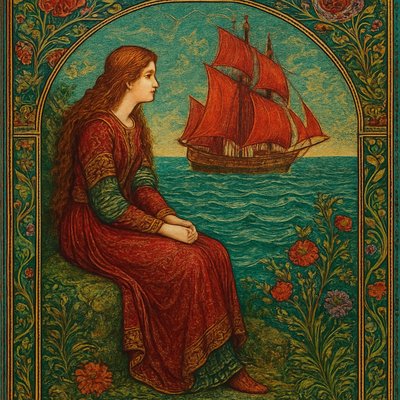
a girl sitting on a rock looking at the sea with a big ship with red sails on the horizon
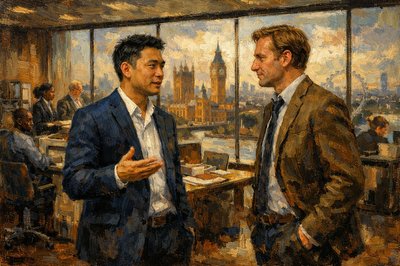
Inside a large office building in London, on the 5th floor, Wing Sun's father, a Chinese Malaysian man in his 30s, speaks to his counterpart in the company, and English man, about business.  Other workers are seated at their desks and standing at a copy machine.  There are some Black people, but mostly British.  One whole wall of the room is glass and we can see something of London outside.
At his Grandmother's house in Penang, Wing Sun is lying down on a futon in his bedroom, covered up with a beautiful lightweight quilt Grandma made.  Outside his room the rain is coming down.  In Penang, every corner of the old town—every whisper of the wind through ancient trees—seems to echo with promises of renewal and love. And as the rain softens outside, Wing-Sun closes his eyes with the comforting knowledge that every detour, every farewell, is simply a step toward a new beginning.  A lantern gives soft light to the room, and all is quiet.
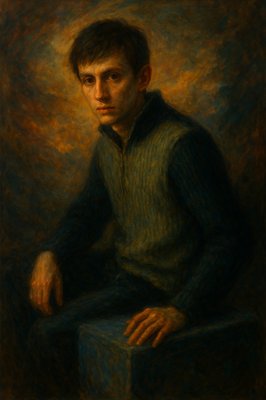
a drawing of a man sitting in a chair
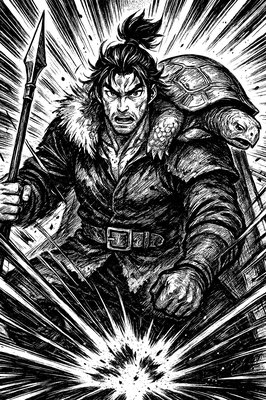
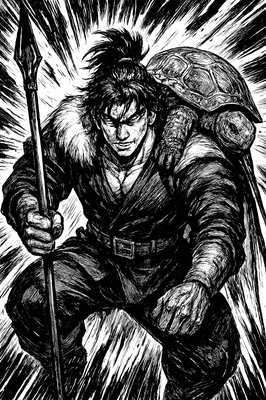
a man sitting on a chair with a turtle on his shoulders
Functional chair design emphasizing simplicity in the art style of Bauhaus --v 6.1
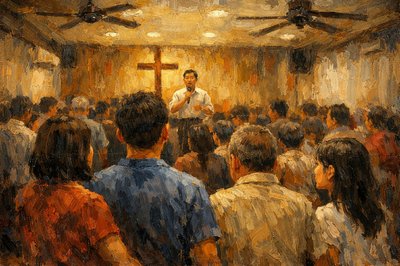
Inside an informal church in Kuala Lumpur.  Wing Sun and his father and mother, along with Siu Zi, his friend from school are there together.  We are standing in the back of the room, and there are many more people than there were in the London church.  There are people of different ethnicities, but mostly Chinese Malaysian.  The Pastor, a Chinese man, is standing up front speaking to the congregation, facing them.  The atmosphere is hot and sweaty, with ceiling fans running, but still welcoming, Wing Sun is happy that his family is together and also that his friend Siu Zi, who he has just learned is a Christian, can be there too.